After over two weeks in Cusco, it was time to move on. We bought a ticket with PeruHop, and spent from the 19th to the 27th working our way around what is commonly known as the ‘Gringo Trail’. This is a route that makes a loop through the south of the country before heading back up to Lima. It takes in some of the most popular and visited places in Peru, so there’s not going to be anything original in this post, but these places are popular for a reason.
I have written up some of our stops in full on separate pages but this post is to give an overview of what we got up to on the loop. So if you’re interested then please read on…
First stop – Puno and Lake Titicaca

The first part of our journey involved taking an overnight bus from Cusco to Puno. We arrived in the early hours and were taken to PeruHop’s affiliate hostel. Here we could relax and get some breakfast. Having places to go such as this were a real benefit of booking with PeruHop. We were not actually staying for a night in Puno, so having somewhere to base yourself and to store your luggage during the day was invaluable. We waited here until we were picked up around 7am for the main event of the day – a trip on Lake Titicaca.
If you are interested in reading about our day trip in full, then please click the link here.
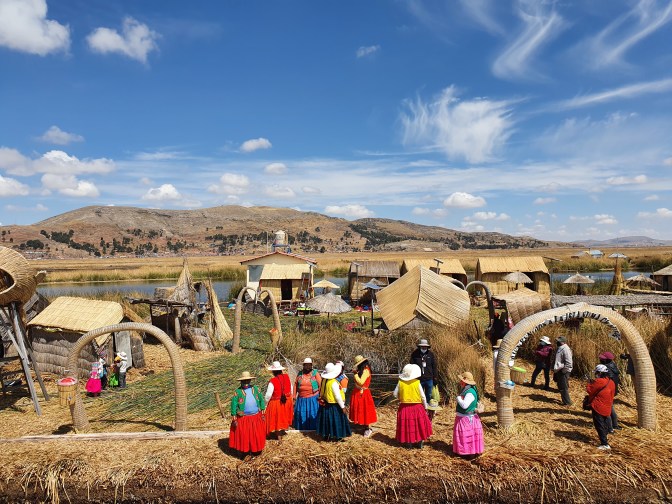
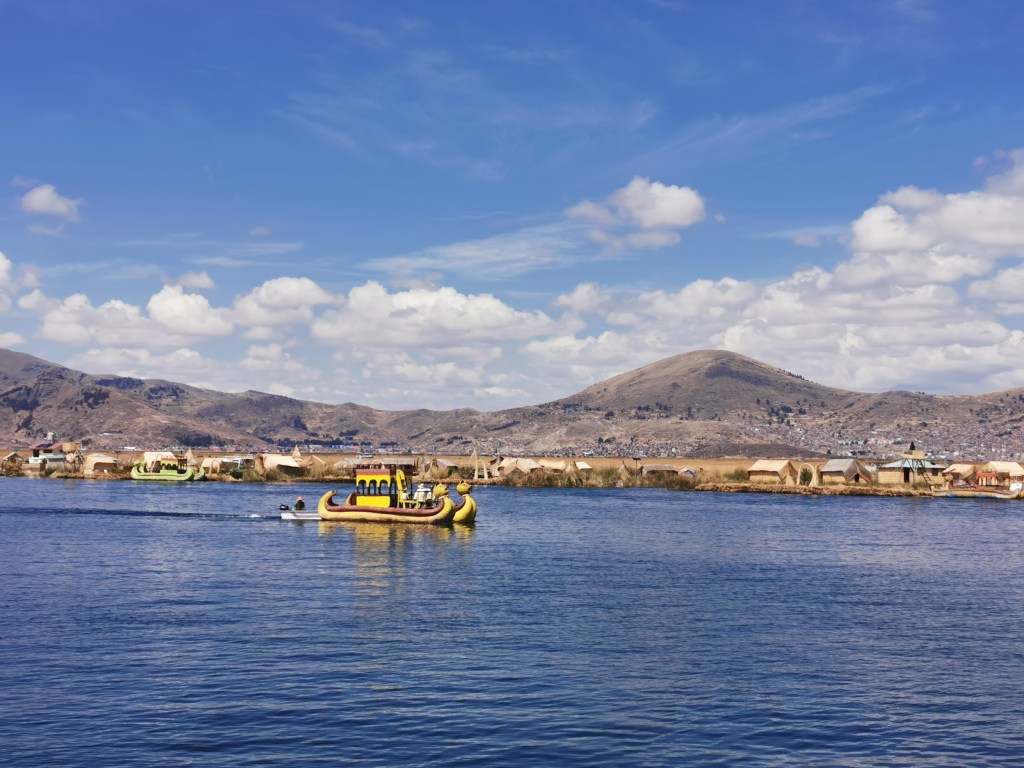
The day was really enjoyable. The first stop was to one of the ‘floating islands’. Communities have lived on these islands made of reeds for generations. It was a surreal experience to even step on one of these islands, never mind meet some of the inhabitants and see inside their houses, which are also made of reeds. I had heard about these islands but didn’t really expect there to still be functioning communities living there. I was more expecting it to be like an outdoor museum, to act as a display for tourists to show what it would have been like at some stage. And yet this wasn’t the case at all. Despite the touristy nature of our trip, the actual place and the people seemed to be very genuine. It was a really fascinating experience and completely different to anything I’d seen before.
The second part of the tour involved carrying on to the main part of the lake to visit a ‘real’ island. This journey really allowed us to appreciate the scale of the lake. I knew where Bolivia should be, but I couldn’t see it. It was incredible just how big the lake is.
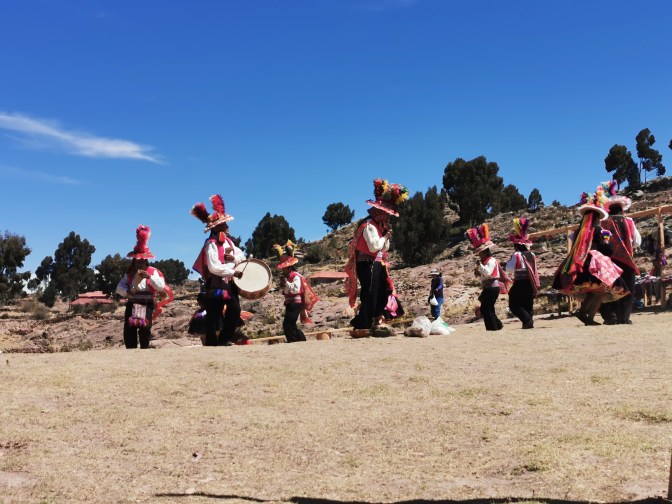
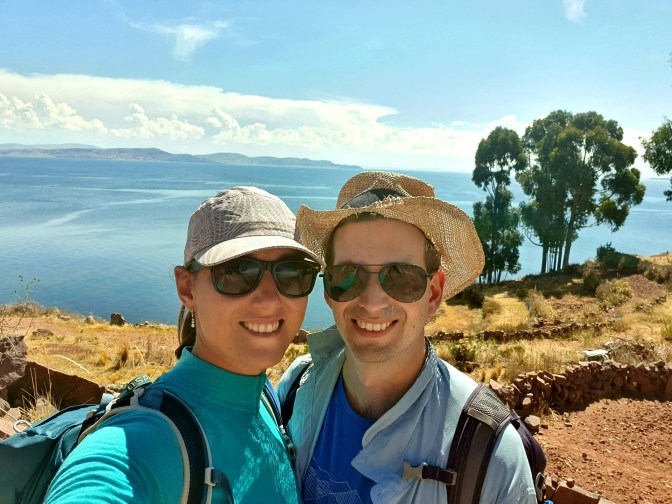
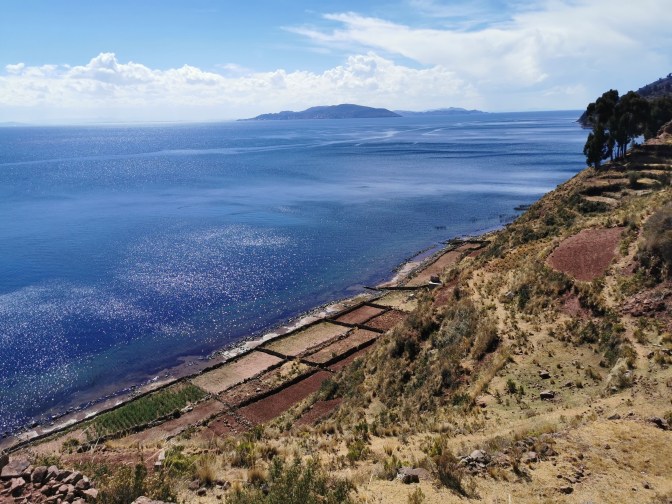
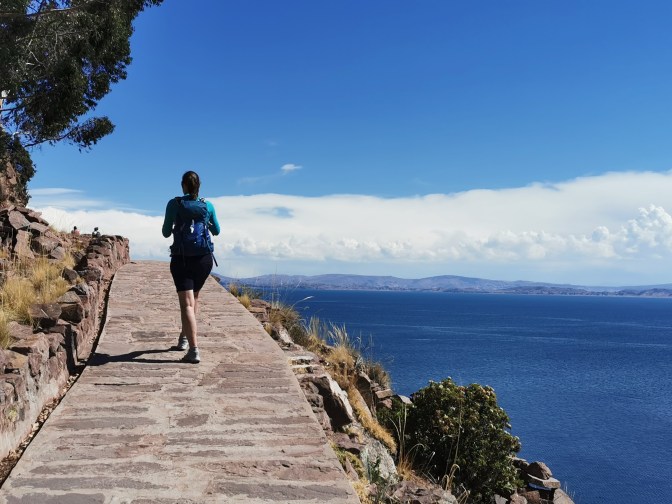
The island we visited at this point also had a different community living there. We were told about their customs and beliefs and were entertained with a traditional dance and musical performance. We then got to walk across the island, admiring the beautiful views in every direction.
It was then time to head back to Puno. It had been a thoroughly enjoyable day and it was so interesting to experience these different ways of living. It is certainly a must-do if you’re ever in this area of Peru.
In Puno, we had a few hours until our next night bus, so we wandered to the main square and had a nice meal. Then it was time to head to Arequipa…

Arequipa
The second night bus in a row was not a pleasant experience. There is a significant difference in altitude between Puno and Arequipa, and as such we kept waking up due to the pain caused by the change in pressure. We arrived to the bus terminal in the early hours and were transferred to our hostel. Thank goodness our hostel allowed us to check in (very) early as we were completely exhausted. Having an extra couple of hours sleep made all of the difference in being able to enjoy the day.
The main activity from that first day was a free walking tour around Arequipa. Those of you who have read my other posts will know I’m a big fan of these types of tours. If you haven’t come across them before, they are a very popular concept around the world. A guide will take you around the city, pointing out interesting places and giving you some of the history of the place you are visiting. Just like a normal walking tour. The difference is that on a free walking tour, it is completely tip-based, there is no up-front fee.
I’ve found that free walking tours tend to be very good quality, and this one was no different. We explored different parts of the city over the two and a half hours, finishing at a rooftop bar overlooking the main square for sunset. Arequipa is a very nice city with a distinctly European feel. It seemed a lot more relaxed then the other places we’d visited in Peru, and cars even stopped for pedestrians to cross the road.
The beauty of walking tours is that you end up in places you would never have found by yourself. 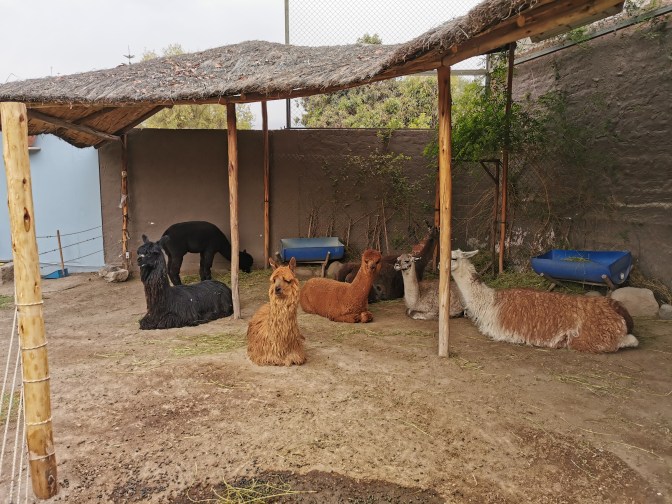
Mundo Alpaca (Alpaca World) is a fun place to visit and is free to enter – the expensive gift shop attached is certainly not free… 
The guide took us through how to make garments from the wool of alpacas and the other camelids. 
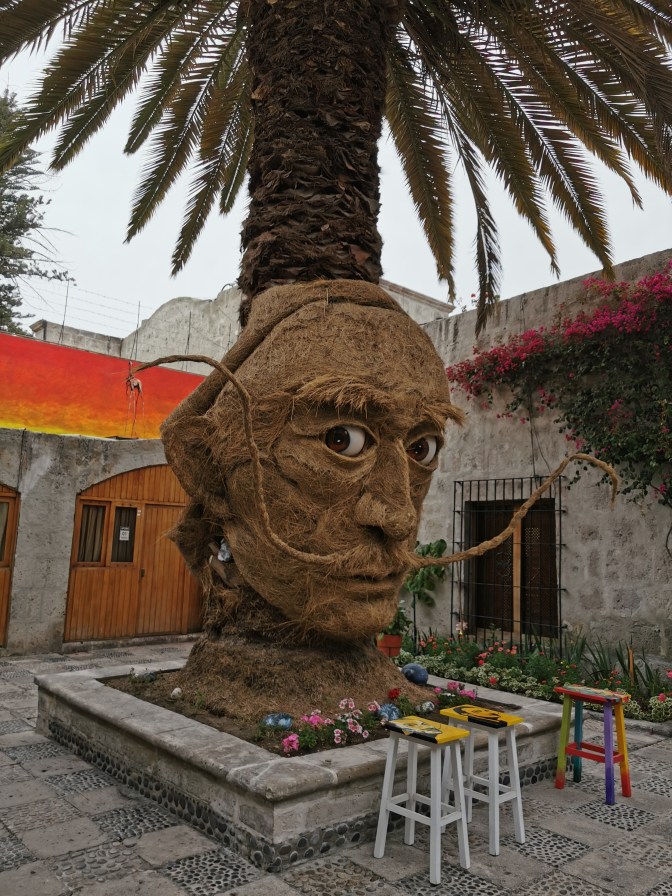
Another pretty courtyard that we would have never known was there. 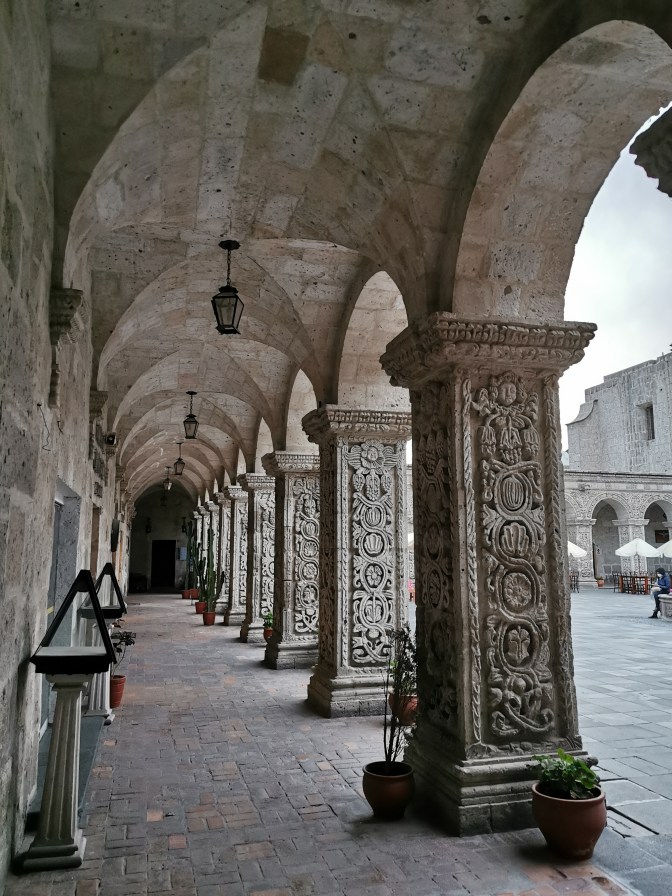
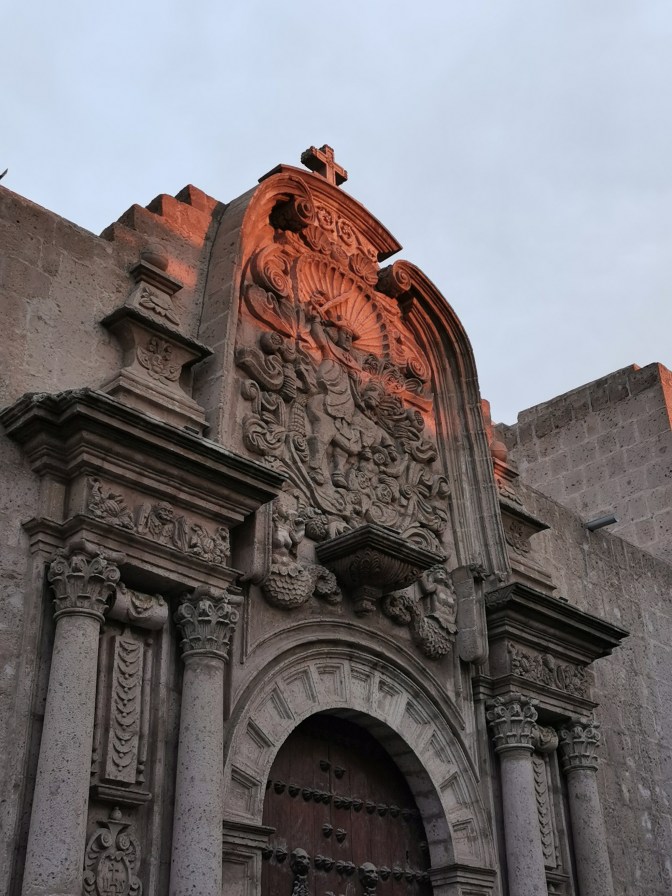
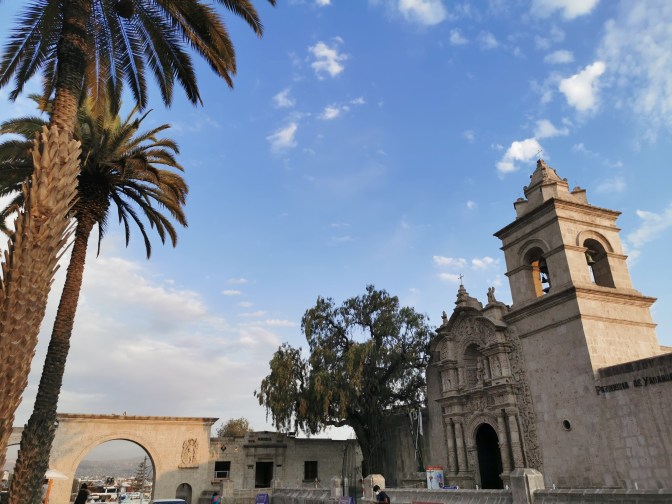
We passed by multiple churches. This one has a facade of St James killing a load of non-believers – a not-so-subtle message to the local indigenous communities at the time… 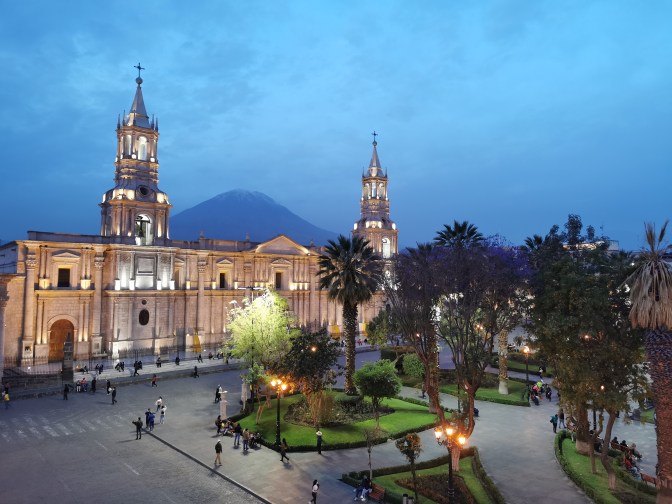
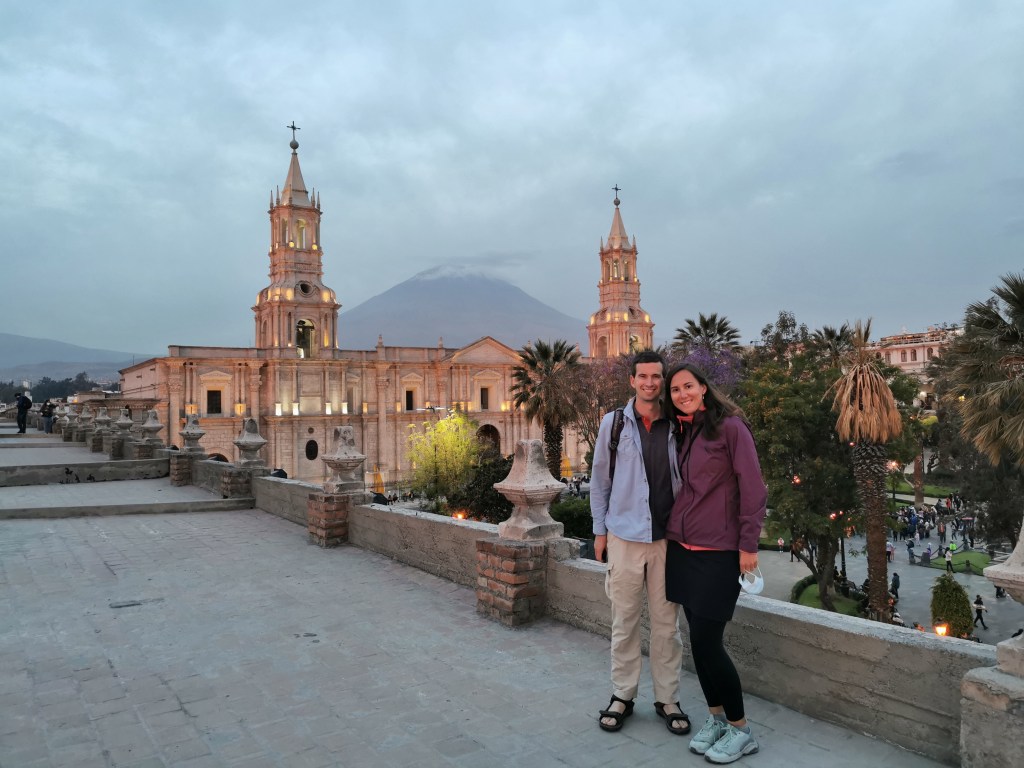
The tour ended by over-looking the beautiful Plaza de Armas.
The second and third days of our time in Arequipa were taken up by trekking in the Colca Canyon, but I’ll get to that in a bit…
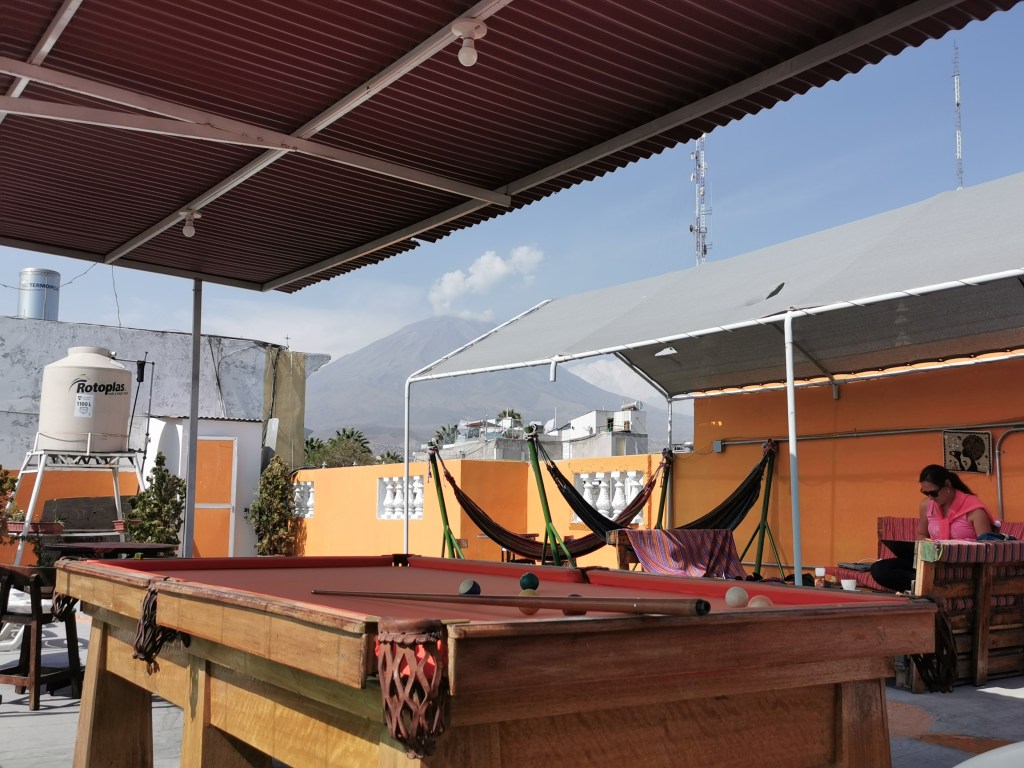
Our fourth day was also spent in Arequipa. We were exhausted, so most of the day was spent at the rooftop bar of the hostel relaxing, sorting photos, reading etc.
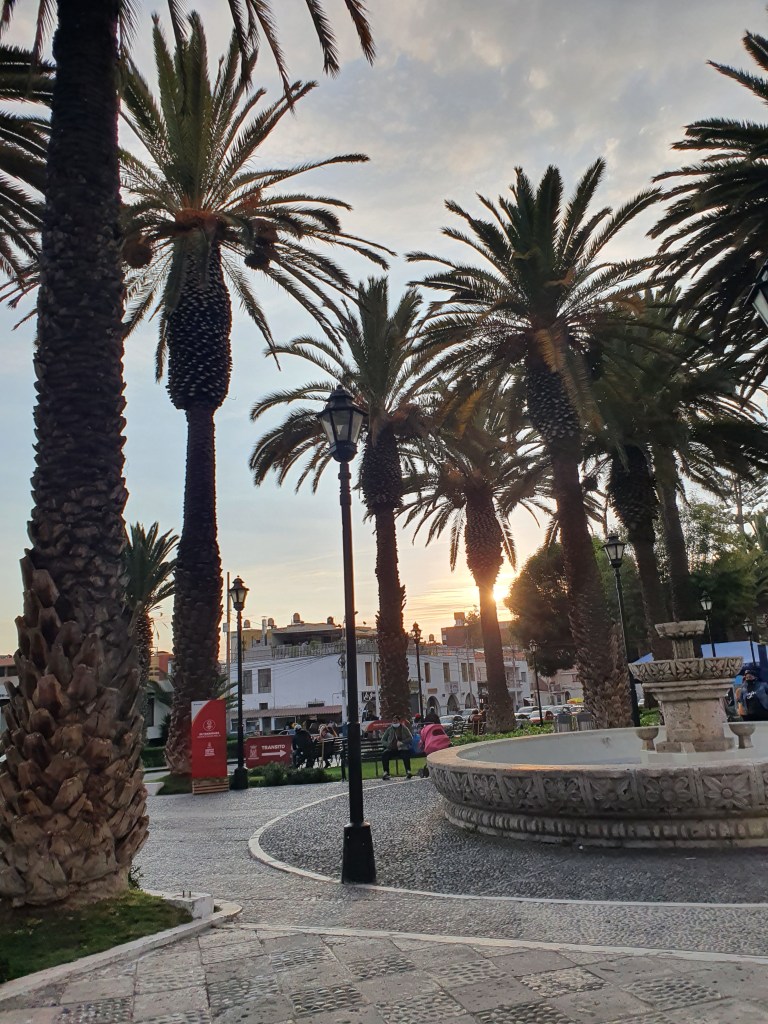
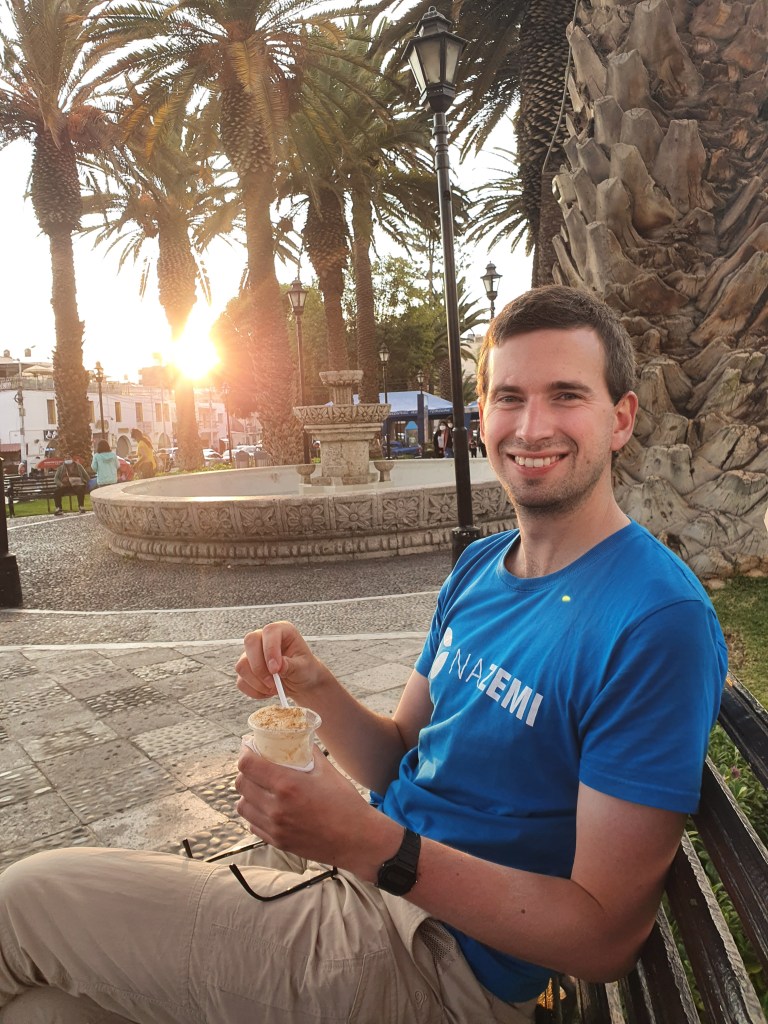
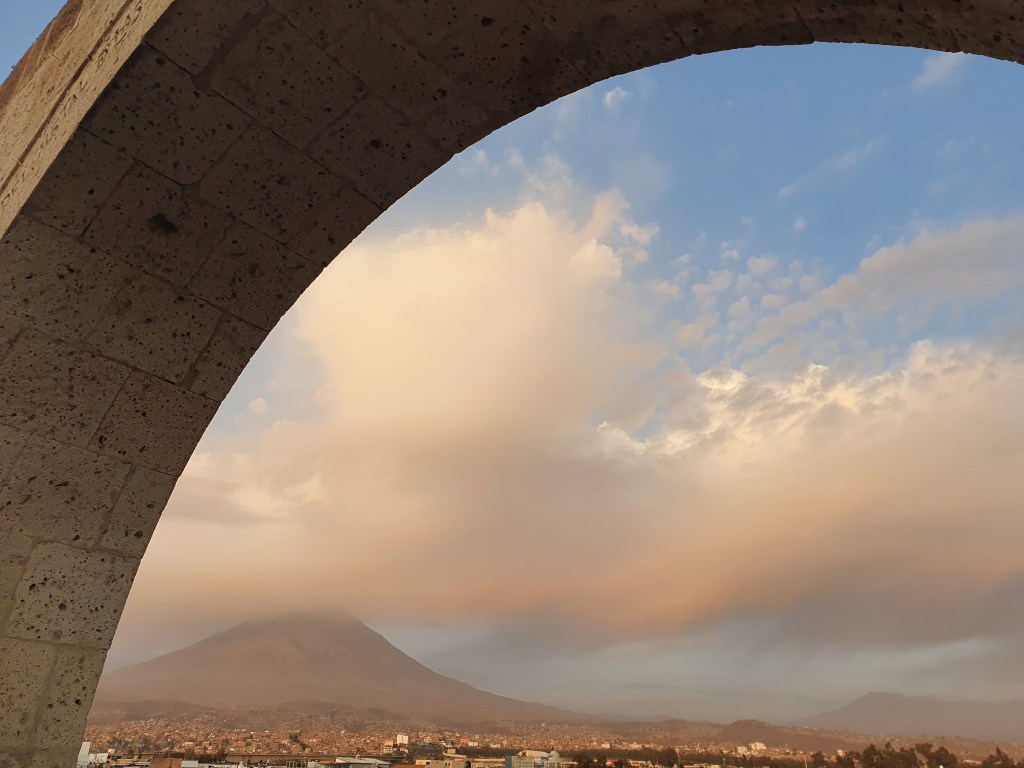
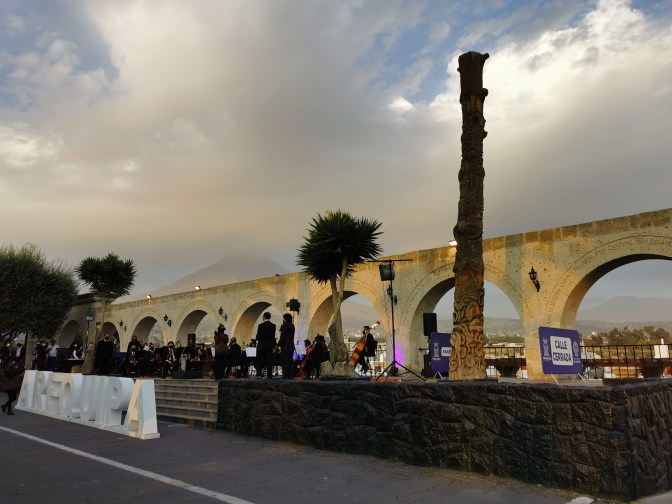
But in the late afternoon, we left to walk up to Yanahuara for sunset. This area is a bit of a walk up the hill from the centre of the city but is famous for its panoramic views. When we got there, however, we were treated to an orchestra playing classical music for some sort of graduation / birthday party / celebration. With the old church on one side of the plaza, the arched viewpoint on another, the music really made this an atmospheric occasion. So we bought some Queso Helado, sat under the palm trees, and enjoyed the experience. And yes, your Spanish is not deserting you – I did just say ‘cheese ice-cream’. This is a delicacy that came from Arequipa and does not actually contain any cheese. I have no idea why it has that name but it was really tasty. We could have stayed there for hours but, unfortunately, we had to get back down so that we could catch our next night bus. Even without the music, this would have been a lovely place to come and relax and eat cheese ice-cream.
We weren’t actually in Arequipa for that long but what we did see, we really liked. If we ever come back to this part of Peru, I wouldn’t mind being based here for a longer time to really get to explore this city and its surrounding area.

Colca Canyon

Just above I mentioned that we spent two days hiking in the Colca Canyon. Well I’ve written up this experienece in more detail on a separate page, so if you are interested in finding out more, then please click on the link here.
For those of you happy with just a quick summary, Colca Canyon is one of the deepest canyons in the world and is a very popular trip from Arequipa. There are many options for visiting this natural wonder, which I’ve touched upon in the link above, but we decided to do a two-day trek.
The first day involved a very early start (3am pick-up) as, despite Arequipa being the base for trips to the canyon, it’s not actually that close. A six hour journey ensued until we reached the Cruz del Condor viewing point at the top of the canyon. This is supposed to be one of the best places to spot Andean Condors and despite only being there for twenty minutes, we were lucky enough to spot a few soaring past. The sheer size of them really makes this an inspiring sight.
From there, it is another short drive to the start of the hike. The next few hours were spent hiking down to the bottom of the canyon. It is not overly steep, so you get to enjoy the spectacular views as you descend. Once you reach the bottom, its another few hours walking deeper into the canyon before you reach an oasis, where we spent the night.
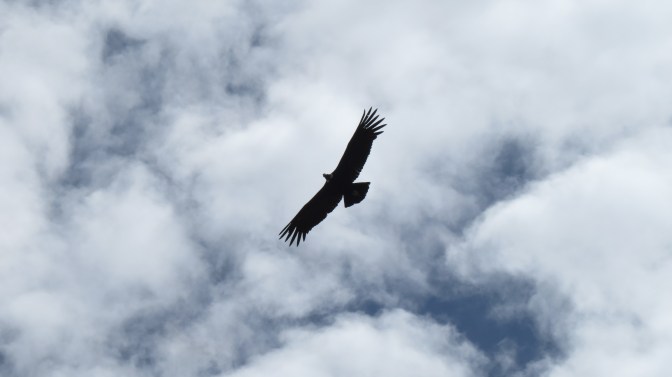
They really are huge 
View point at the start of the canyon 
Still a fair way to go to the river 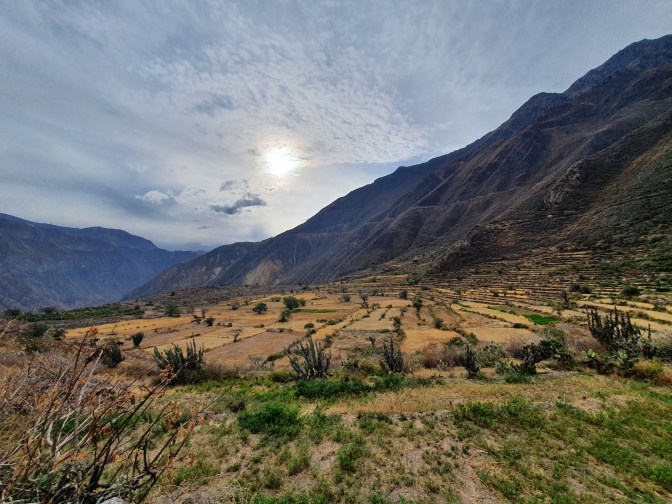
The pre-Incan terraces 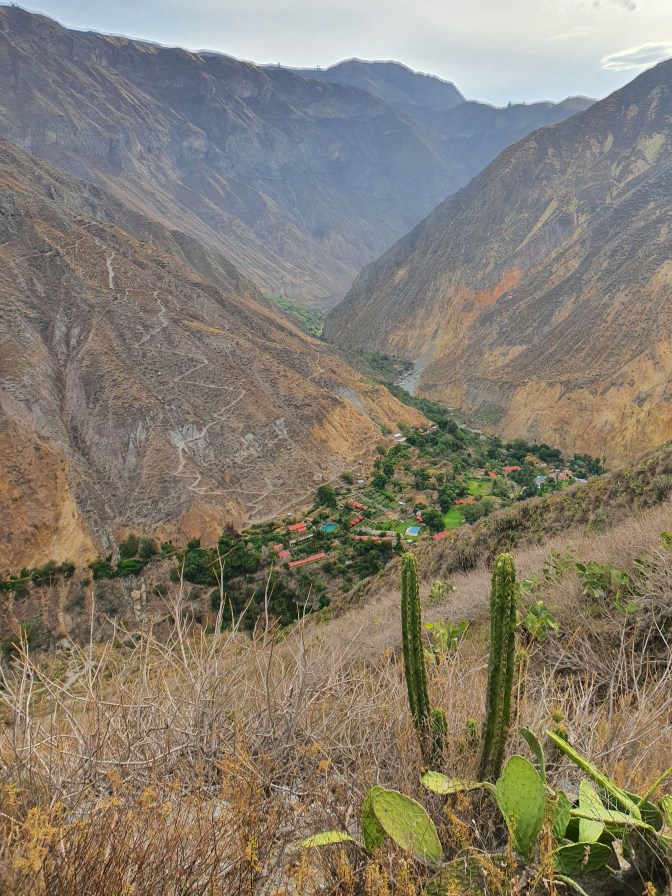
The oasis of Sangalle, where we’d be spending the night. The menacing zig-zag path is what awaited us in the morning… 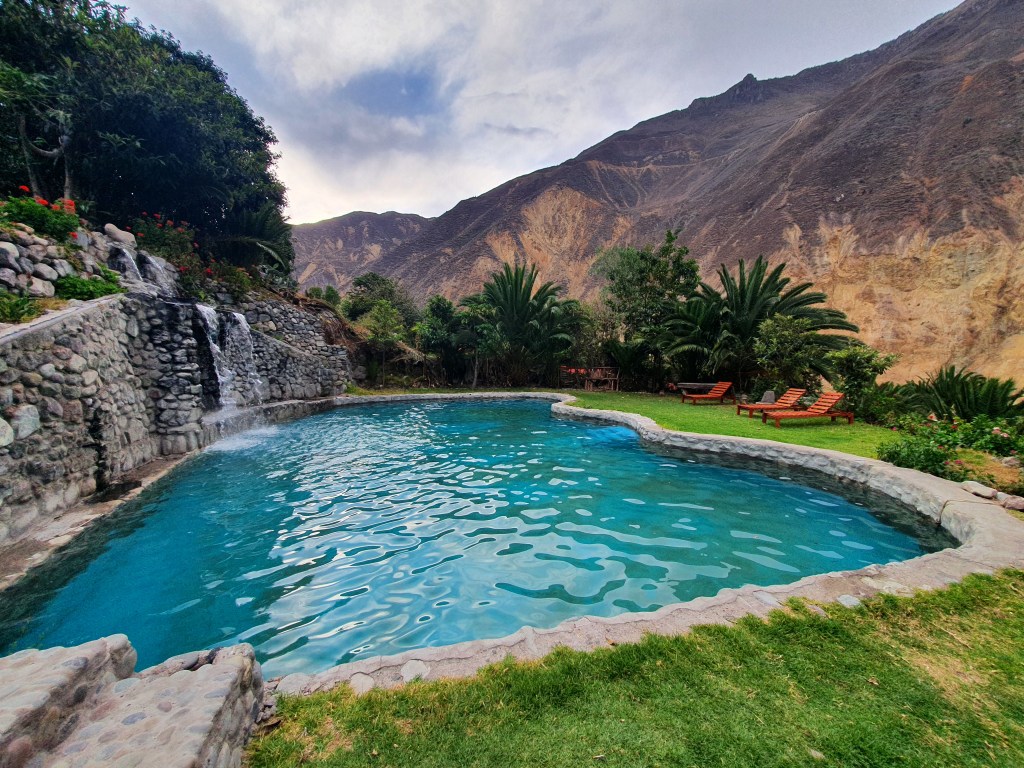
It was a shame it was getting dark as we arrived as we couldn’t take full advantage of this beautiful place.
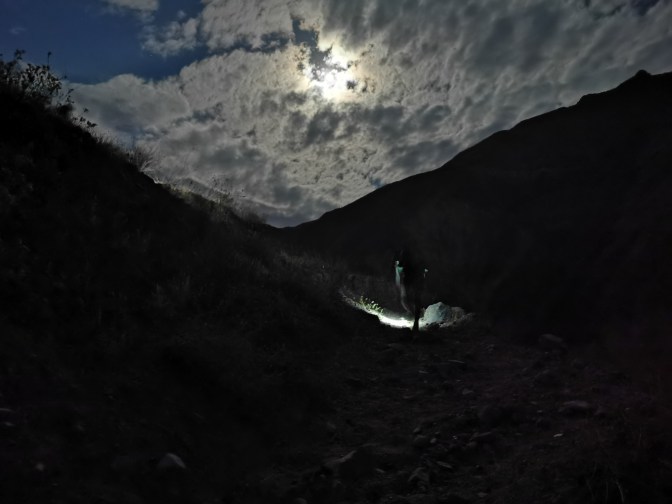
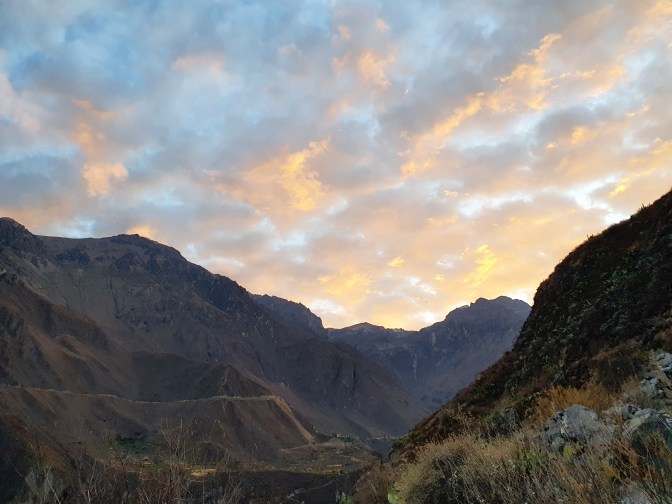
The second day involves hiking straight up and out of the canyon before you even get breakfast. Starting in the dark meant that you got to enjoy the sun first getting into the canyon, plus it means that most of the climb is done in the shade. After finally eating, it was time to start the journey back. But this trip was interspersed by visits to a hot springs to rest our aching muscles, and a brief stop at a nature reserve, where we got to view a heard of llamas in their natural habitat. The drive itself was also pretty stunning.
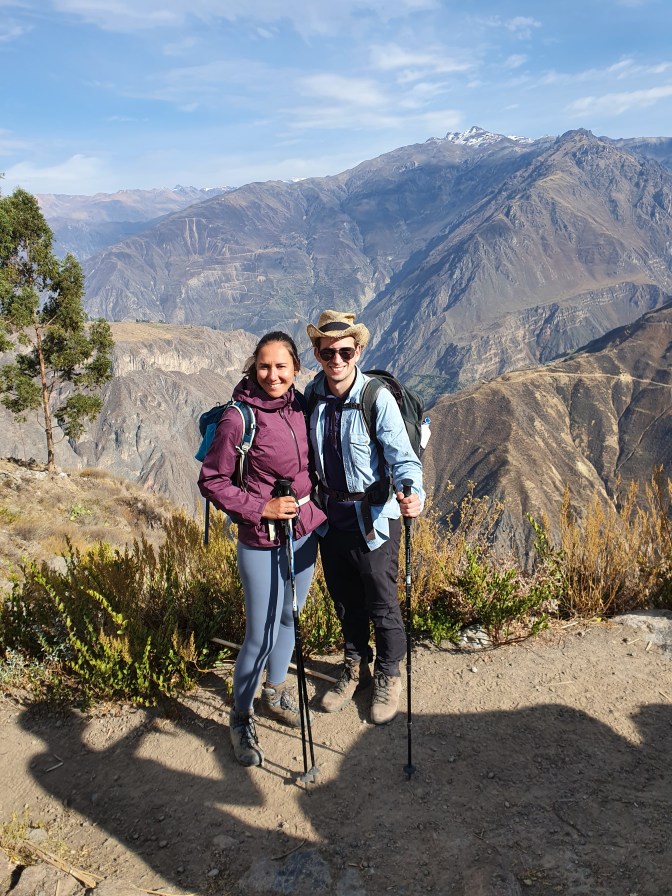


Whilst not as amazing as some other blogs make out, hiking in the Colca Canyon was still pretty cool. It was nice to hike somewhere other than just in the mountains and it made it an interesting experience. Seeing condors before the descent was also pretty special – it was almost worth going just for this twenty minute experience.
The Nazca Lines
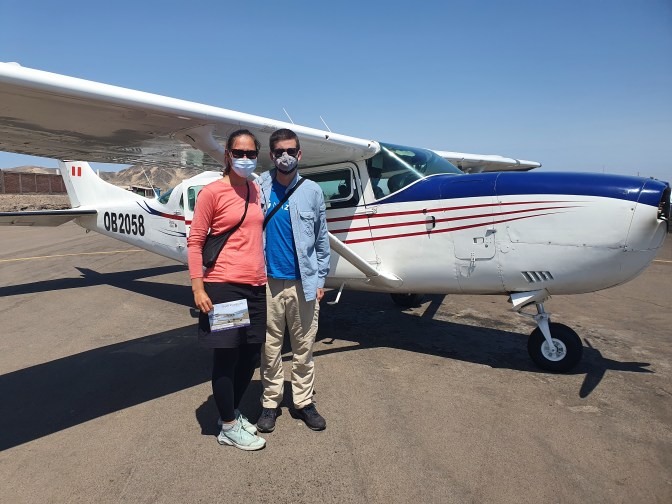
We were going to skip taking the flight to see the Nazca Lines. It is an expensive half an hour and we saw this as an opportunity to recoup some of the money we had spent on the Salkantay Trek and Inca Trail, experiences that had put us beyond budget. Then we met a German gentleman on the Colca Canyon trek and he managed to persuade us that it was an experience that should not be missed. So we changed our minds and PeruHop was still able to fit us in. And we are so glad that we did it.
The overnight bus from Arequipa to Nazca arrived at 5am after another poor nights sleep. This was the one place where a PeruHop guide was not picking us up, instead the owner of the affiliate hostel was doing so. He was half an hour late, so we were pretty grouchy by the time he brought us to his hostel. We were not staying the night, so instead we slept for a bit longer on the couches in the communal room. We were then grateful to be able to buy breakfast before heading to the local airport.
Given that we had not planned on doing the flight, we hadn’t really done any research on what we were going to see. So there was an excited anticipation as we sorted the required paperwork and waited for our turn. There were six of us tourists to go with the two pilots, so after taking some photos with the plane, it was time to head off.
As I said, we weren’t sure what to expect, so when we saw our first image I was super impressed. Despite the ‘Whale’ not being the best of the images, it was still clear what it was supposed to be. It was amazing that people had been able to make this without actually seeing it from above. They had to be so precise with their lines and shapes, it really is incredible. And the images just got better. My favourites were the ‘Spider’ and the ‘Condor’, whereas Radka really liked the ‘Monkey’. One awful thing, however, was that the Panamerican Highway crossed right over the middle of the ‘Lizard’. It’s crazy to think that the government of the time allowed such blatant destruction of an important historical monument.
One mistake we made was the amount of photos we took. The plane would take two turns past each image, so that both sides of the plane had an opportunity to see the images properly. We would just look for the first run past and then try and take a photo the second time. But staring at a small screen to try and focus the camera, combined with the small nature of the plane and the bit of turbulence we experienced, left us both feeling a bit sick by the end of the flight. So if you are going to do the flight – just watch and enjoy the sights and then later, steal someone else’s pictures… It was still definitely worth the nausea though!
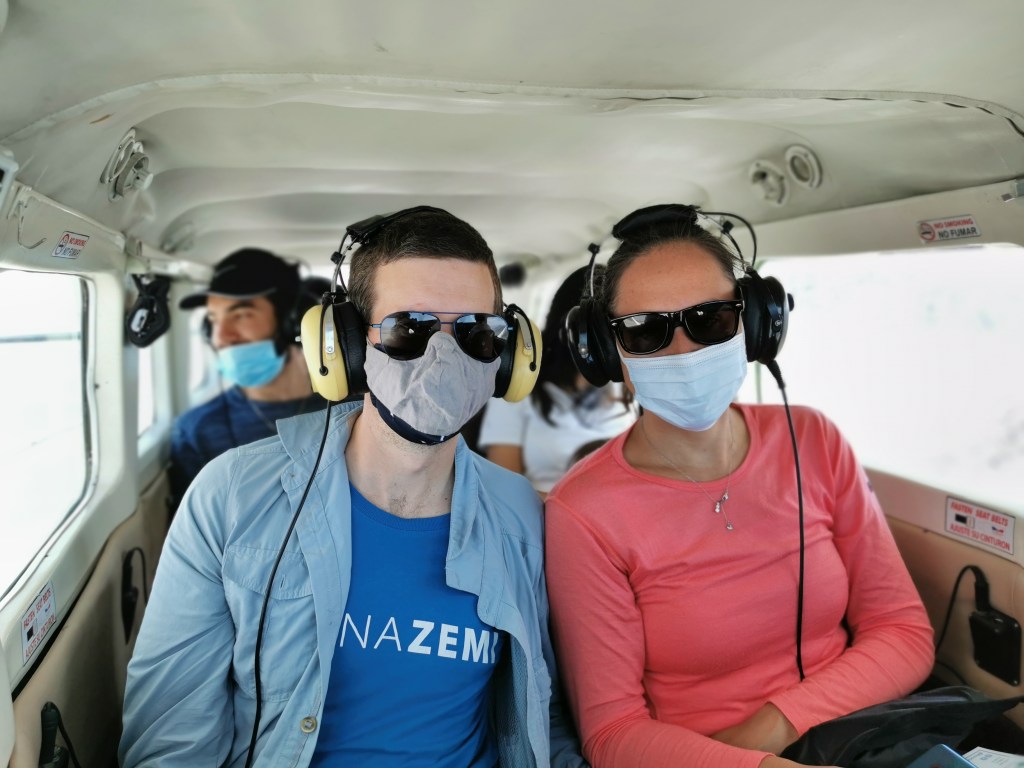
The headphones were so that the pilot could point out the different images. 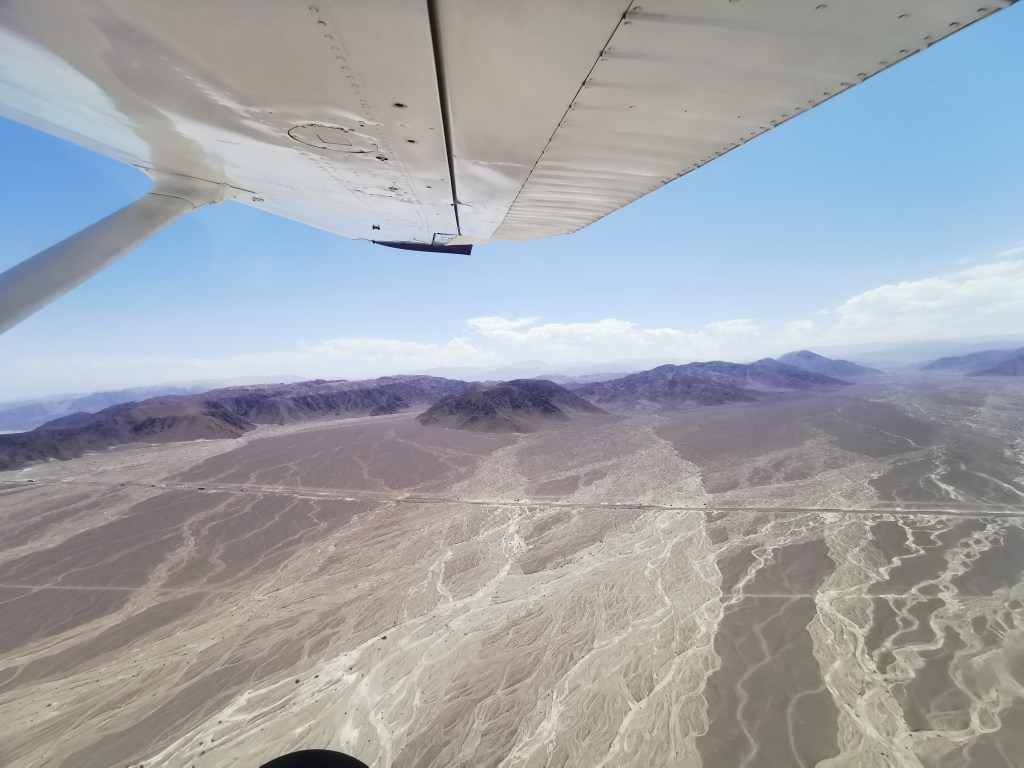
It was fun being up there, even without the amazing images. 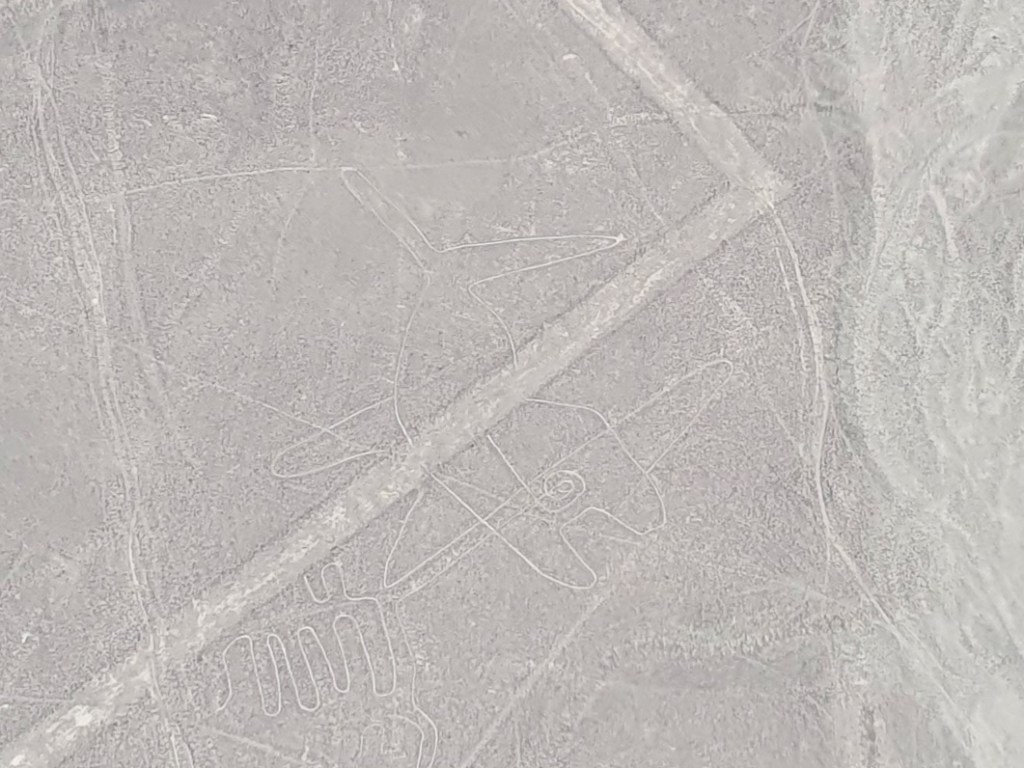
The Whale. 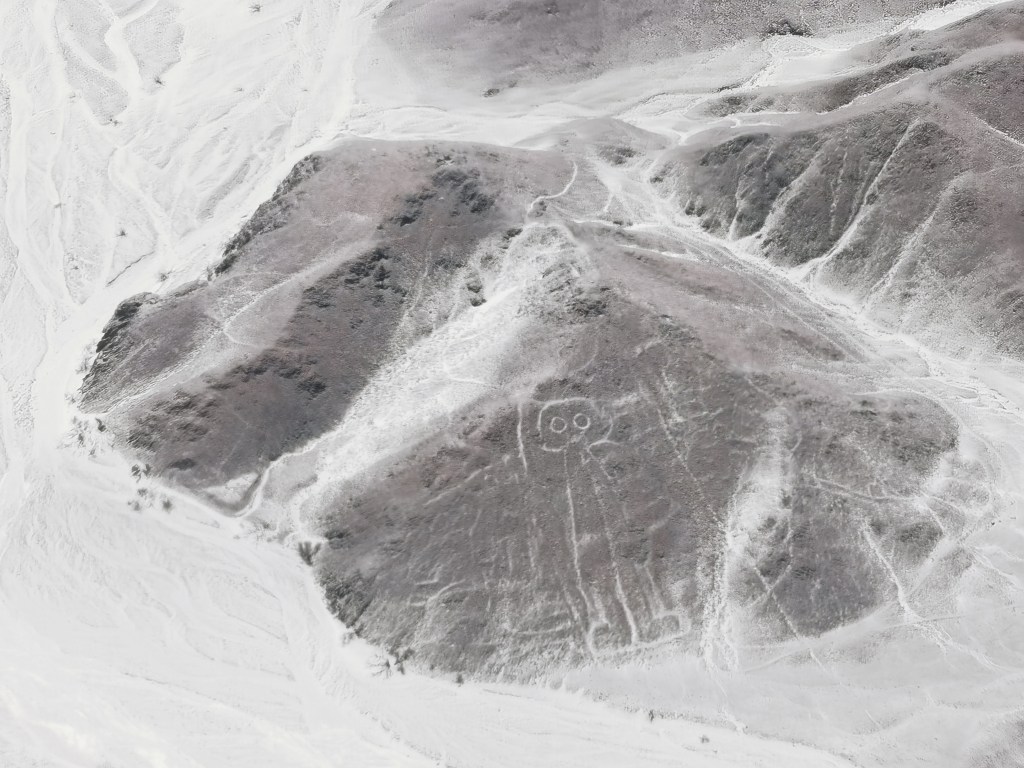
The Astronaut. 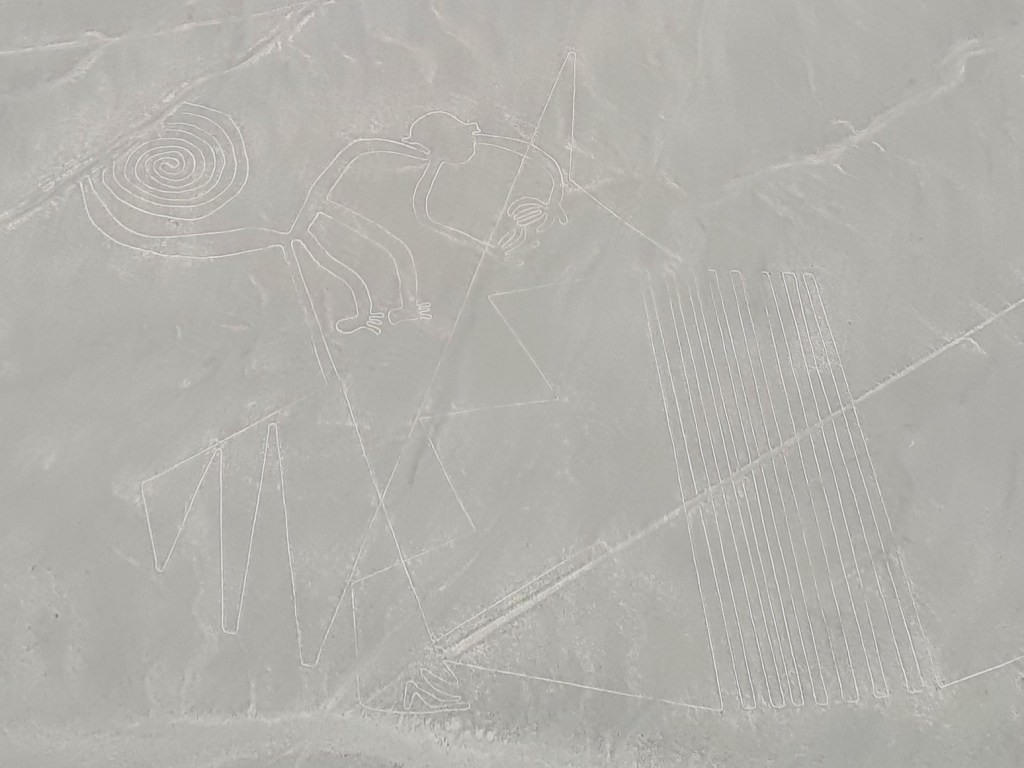
The Monkey. 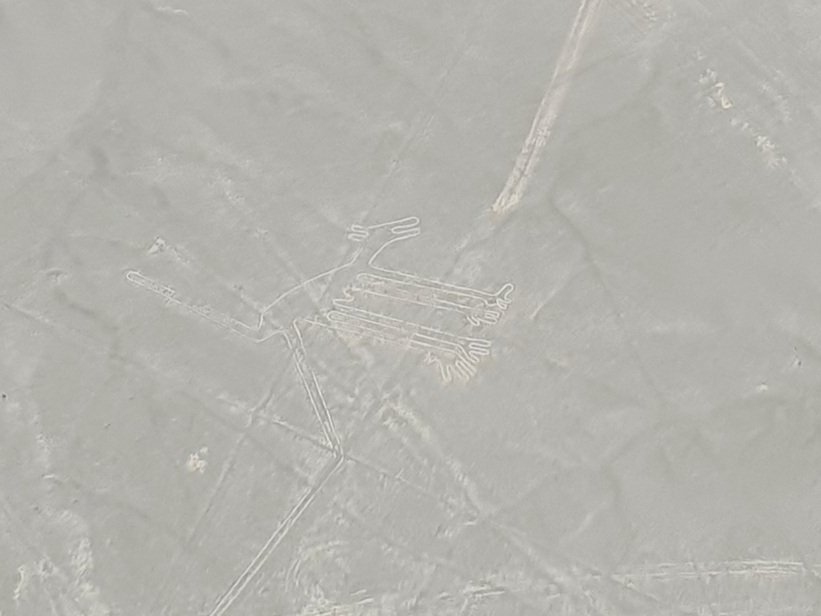
The Dog. 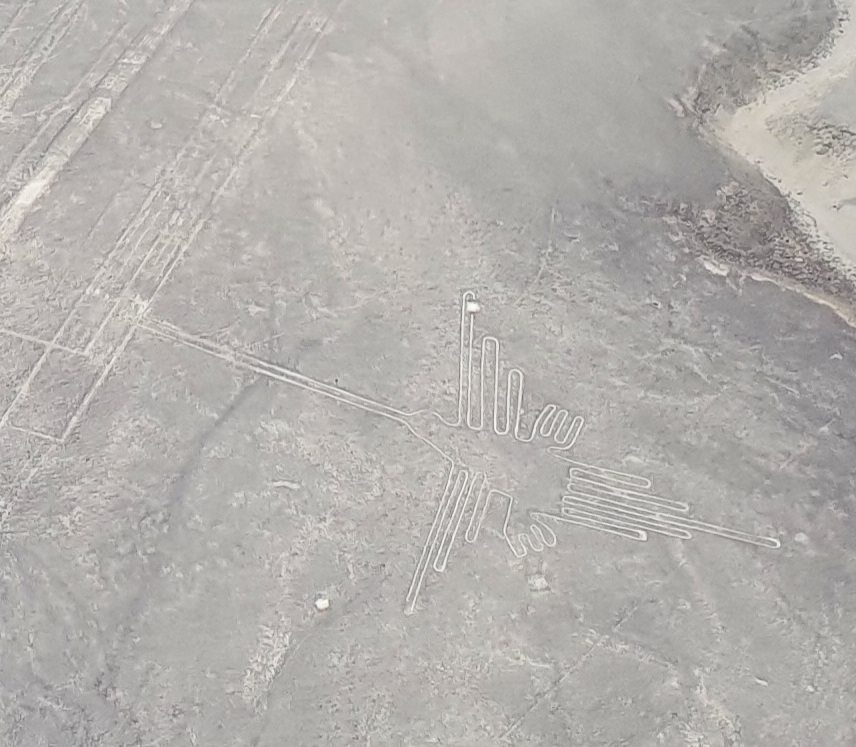
The Hummingbird. 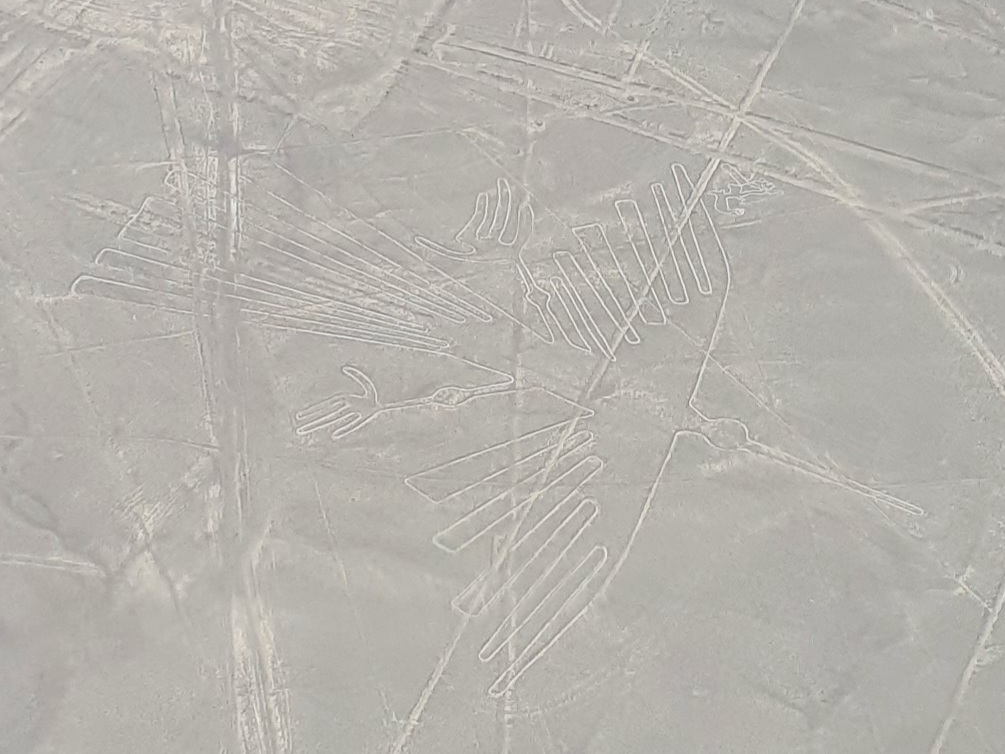
The Condor. 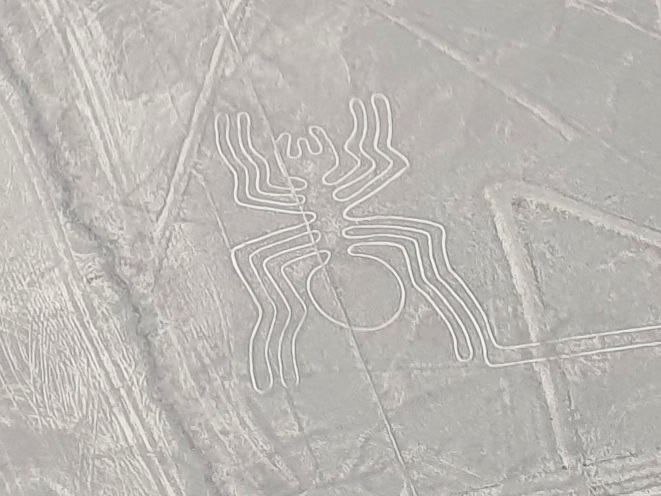
The Spider. 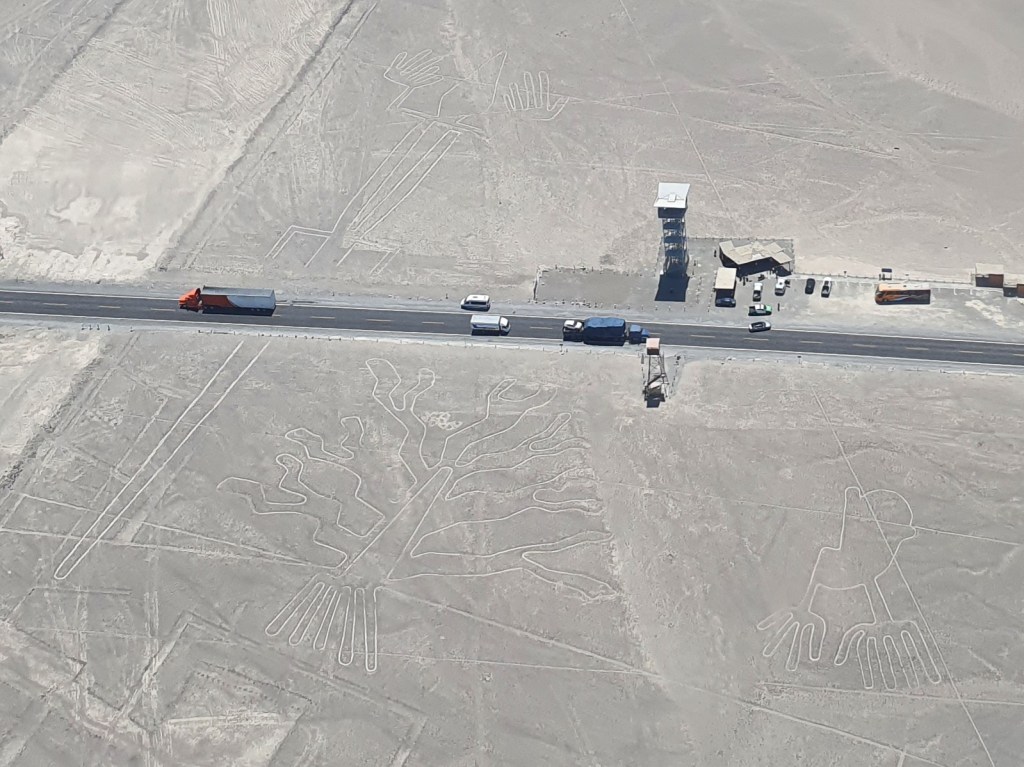
The Panamerican Highway just missing the Tree, and cutting off the tail of the Lizard. 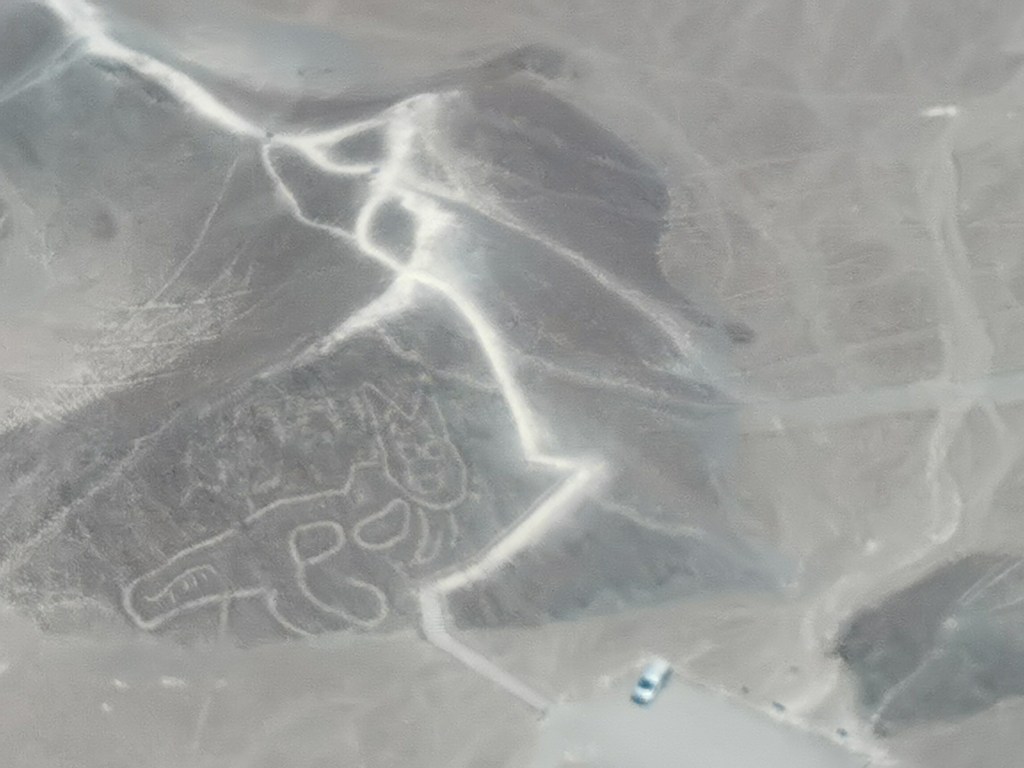
The Cat.
Huacachina and Ica
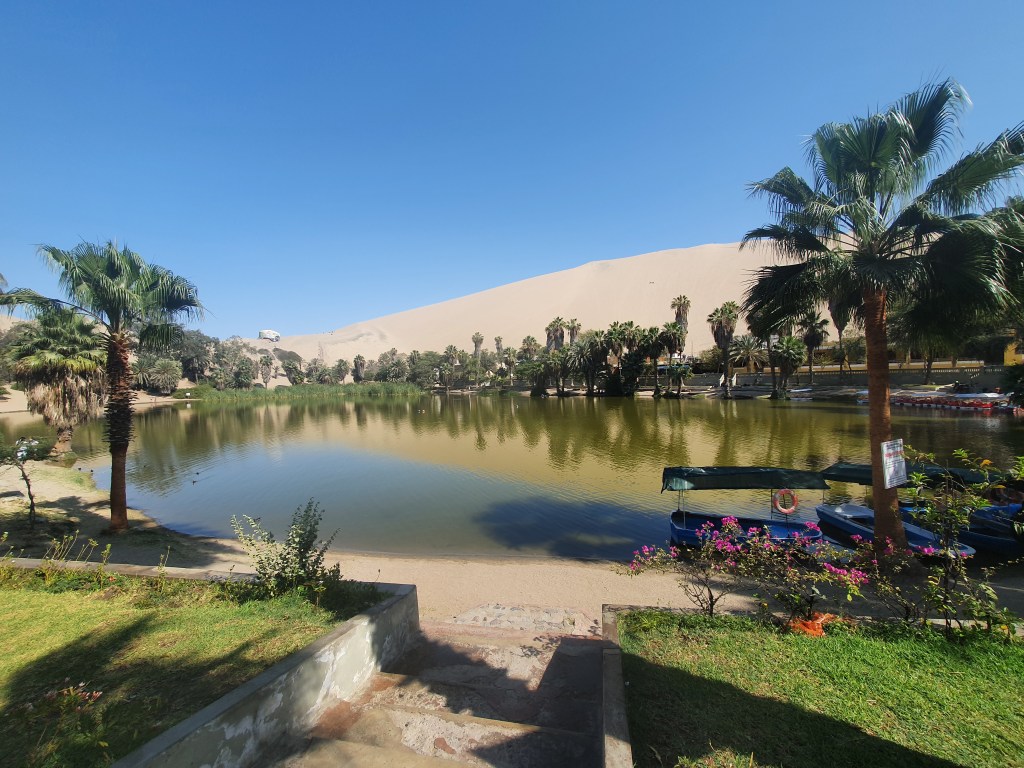
In the afternoon after the Nazca Lines flight, we were picked up and transported to Huacachina. Unfortunately, we were supposed to stop off at a viewing tower, as one of the free activities, to see a couple of the images up close but the driver of the minibus forgot and by the time we mentioned it to him we were already well past it. It would have been interesting to see the work up close to provide some context to what we had seen from the air, but missing it it would have been more annoying if we hadn’t taken the flight and we got a bottle of wine from PeruHop as an apology.
Huacachina is an oasis in the desert and, despite being geared almost exclusively to tourists, is an amazing place to visit. As well as being beautiful in it’s own right, it was just totally different to what we had experienced before. Plus, the dune-buggy and sand-boarding trip was one of the highlights of our time in Peru. I’ve written up this part of our trip in more detail, so if you are interested then please click here.
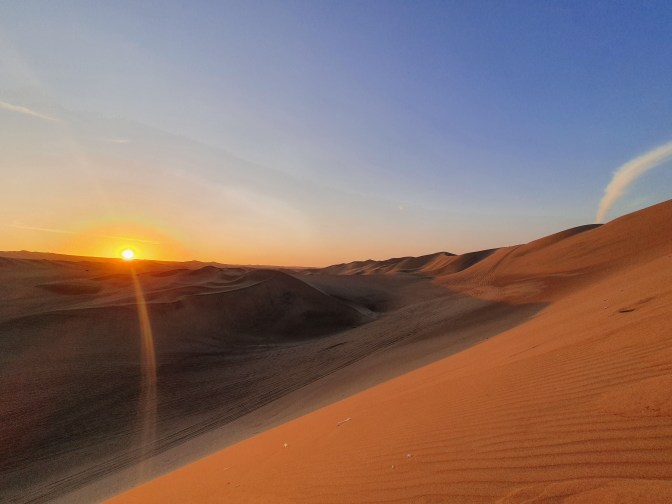
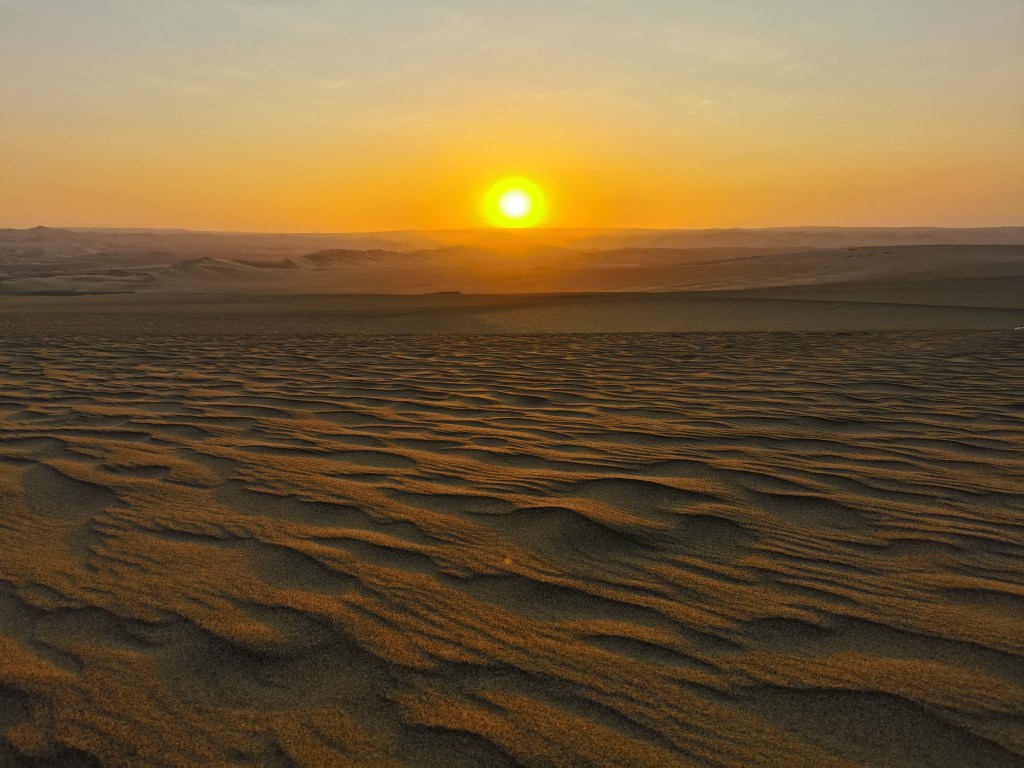
The first evening was spent walking up a sand dune, a packet of popcorn in hand, so that we could watch the sunset over the desert. It was a pretty magical experience but better was to come the day after…
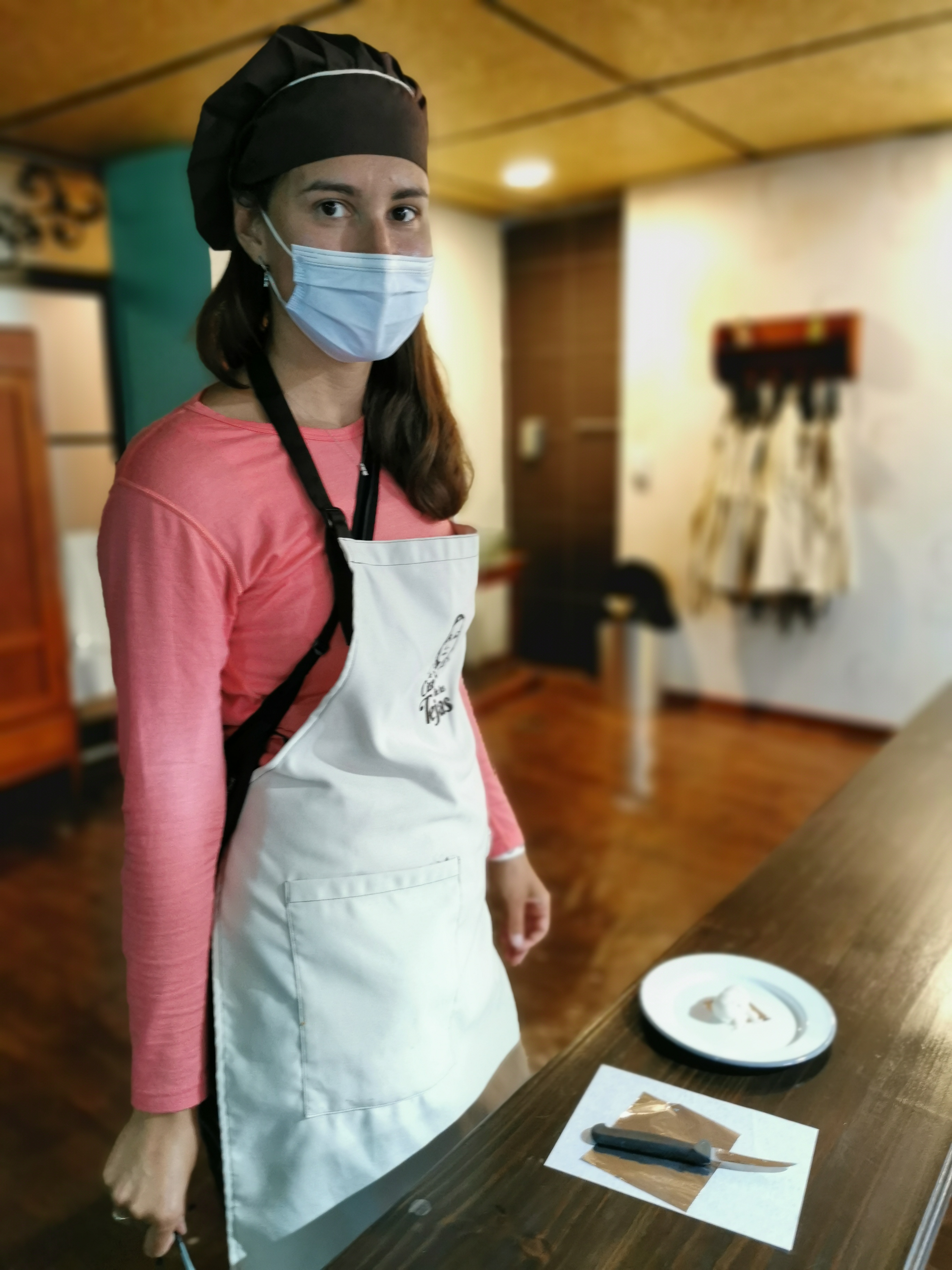
The following morning started with pancakes overlooking the lagoon before being picked up to go on two of the ‘free activities’ provided by PeruHop. Both of these activities occurred away from Huacachina in Ica, and the first was a visit to La Casa de las Tajas. Tajas are a local delicacy and have been made at this location for decades. The visit included a small workshop where we made our own Tajas. It was a brief but fun visit and the tajas are very tasty. We would definitely have bought some to bring home if we were returning any time soon. The second visit was to the Nietto vineyard. This vineyard produces a series of popular wines and pisco, a common drink in this region of the world. The tour was okay, as a guide took us through the process of making the drinks but the best part was the tasting at the end. The Mistela Italia dessert wine was particularly nice. After we were finished sampling their various products, we were driven back to Huacachina.
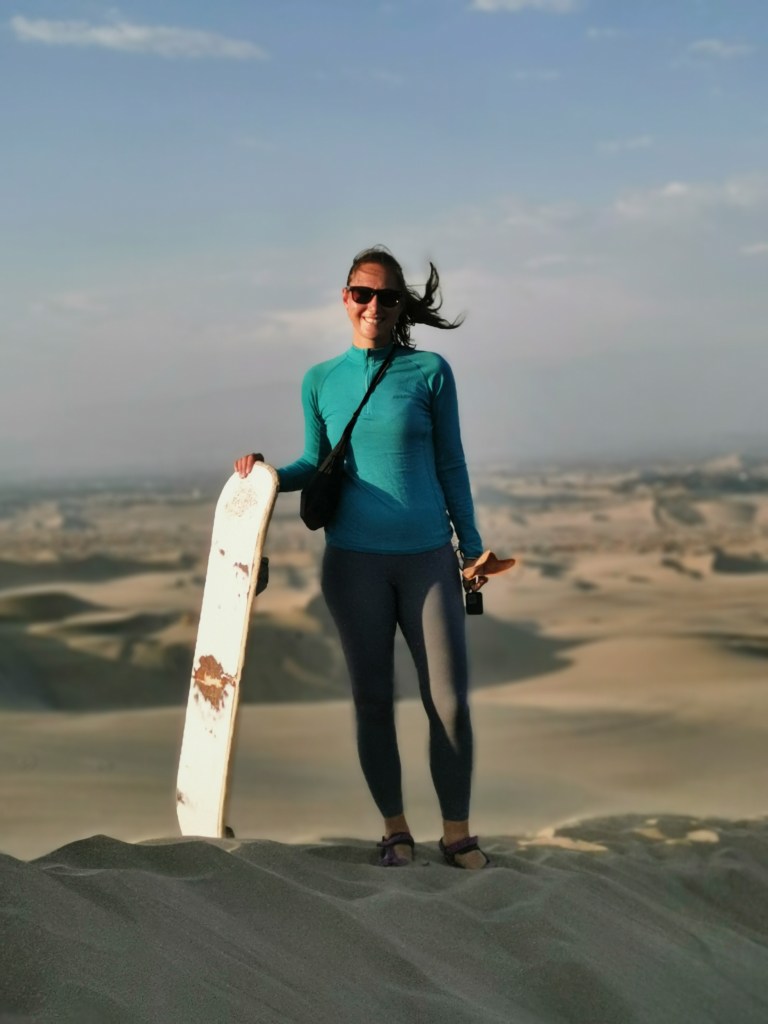
After a couple of hours to get something to eat and relax, it was time for the dune-buggy and sand-boarding trip. As I mentioned previously, this was amazing. The sand-boarding was fun but the trip in the dune-buggy was unbelievable. It was like being on a rollercoaster, but with better scenery. The driver was just throwing it about, powering up dunes before careening down the slopes. Our PeruHop guide had said we’d be going with the craziest and best driver. I thought he was just saying that but now, I can fully believe it. The experience concluded with a stop so that we could watch the sunset. Whilst it had been really nice the evening before, being further out in the dunes and being able to actually see the horizon made this time significantly more impressive. Despite only lasting for two hours, this was one of the most fun things we did during our time in Peru.
Paracas
Straight after we got back into Huacachina, we were heading off again to our final destination before ending in Lima. We finally got to experience a PeruHop bus as we made our way to Paracas. It was quite late by the time we got to this seaside town, so there was just time to grab a bite to eat and then head off to bed.
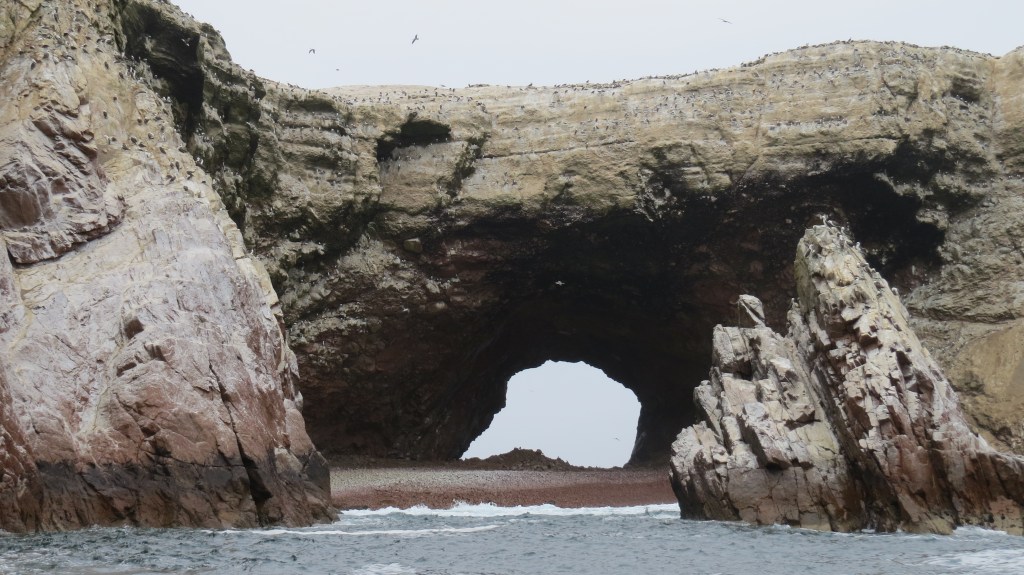
In the morning, our first activity was a trip to the Islas Ballestas, known to some as the ‘poor man’s Galapagos’. The islands are a 20-30 minute ride from the harbour and are teeming with wildlife. The vast majority of these are sea-birds, such as terns, cormorants and blue-footed boobies, which coated the surfaces in perpetual movement. But we also got to see a handful of penguins and a whole host of sea-lions lounging on the rocks. Whilst it was very cool to see all of the wildlife, the trip itself was simply to head there, go in between a few of the islands and head back. It gave the impression of trying to be over with as quickly as possible so that the boat could get back and pick up another batch of tourists. Seeing penguins in their natural habitat will always be a highlight but the trip as a whole does not make it into our ‘must-do’ recommendations.
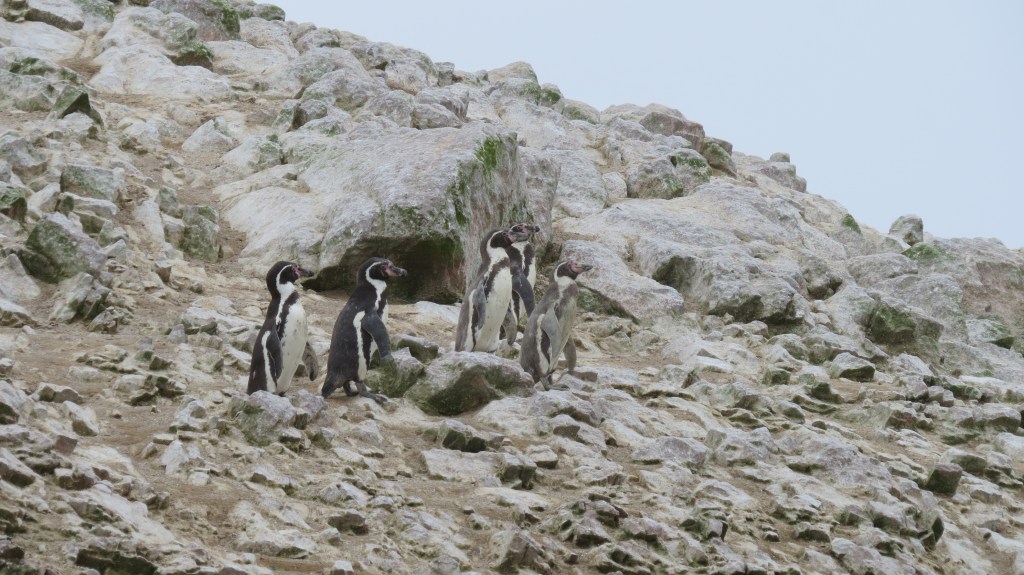
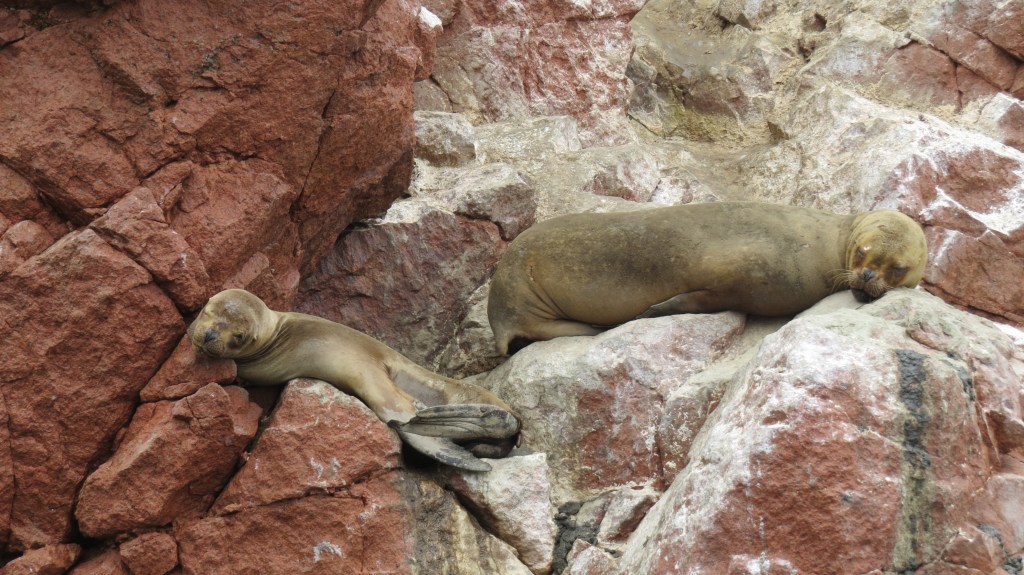
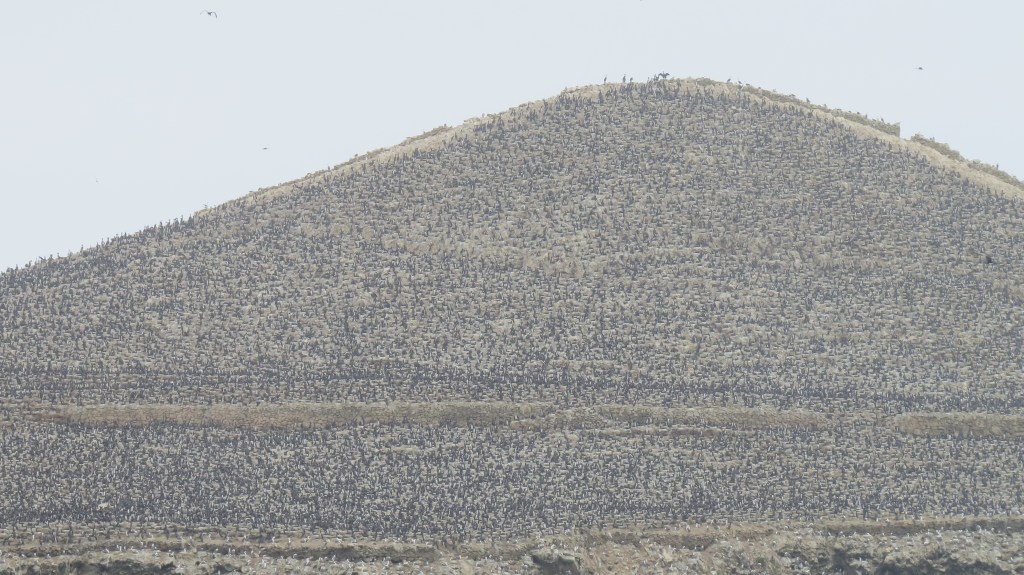
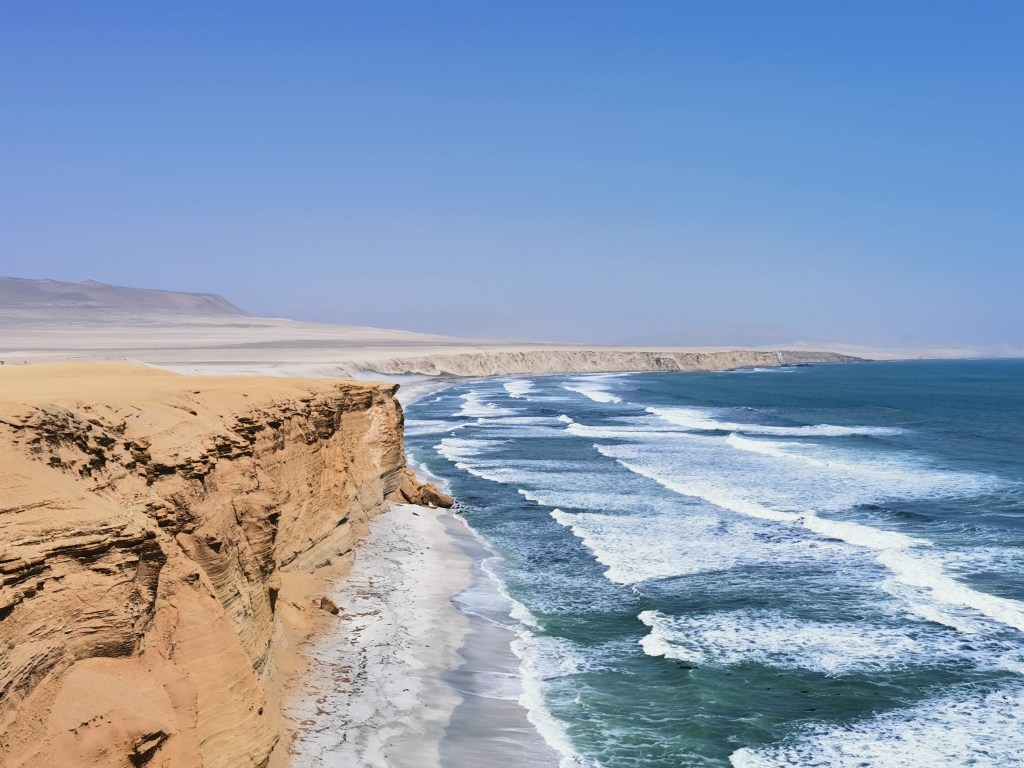
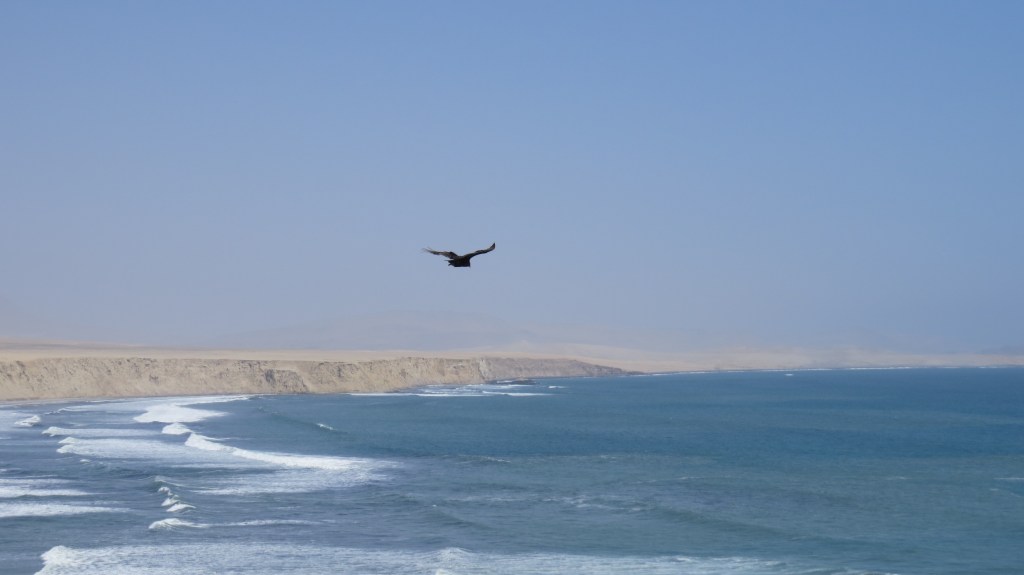
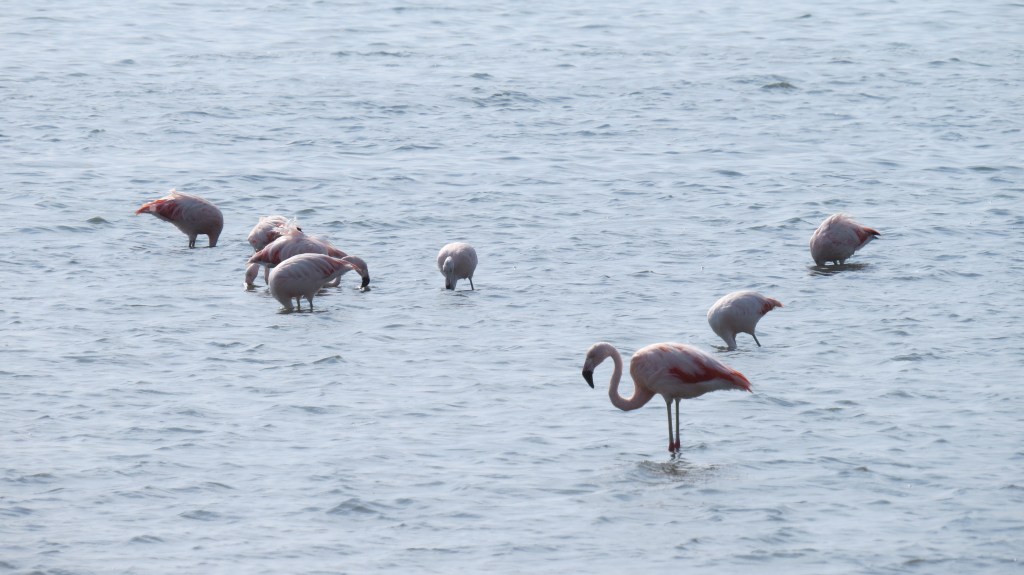
In the afternoon it was time for another ‘PeruHop free activity’. In this instance it was a ride to see the nature reserve that lies very close to the town of Paracas. We really enjoyed this trip. It looks as if the desert comes right to the ocean but the land only actually has a thin layer of sand. If you kick away this layer you come across a hard crust of salt. This area is effectively a salt plain, like the famous one in Bolivia, but the sand makes it look like the desert. What ever it is made from, the contrast of the land and ocean make for some spectacular views. We spent a while there just watching the ocean with only the vultures for company. We then headed a bit further into the reserve to where a red sand beach, caused by volcanic activity in the area, provided further contrast. On the way back we stopped right on the edge of the town when we spotted a flock of flamingoes relaxing in the shallows. We probably enjoyed this trip more than the one in the morning.
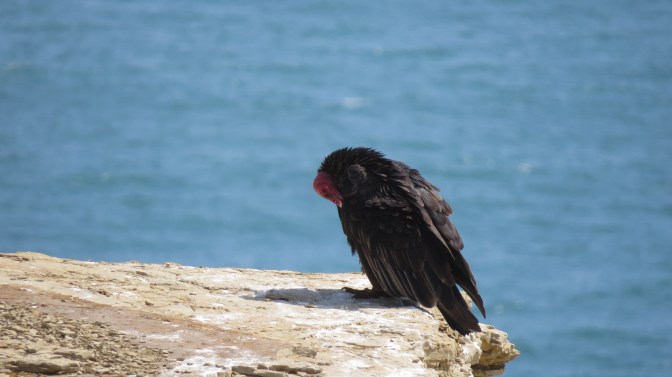
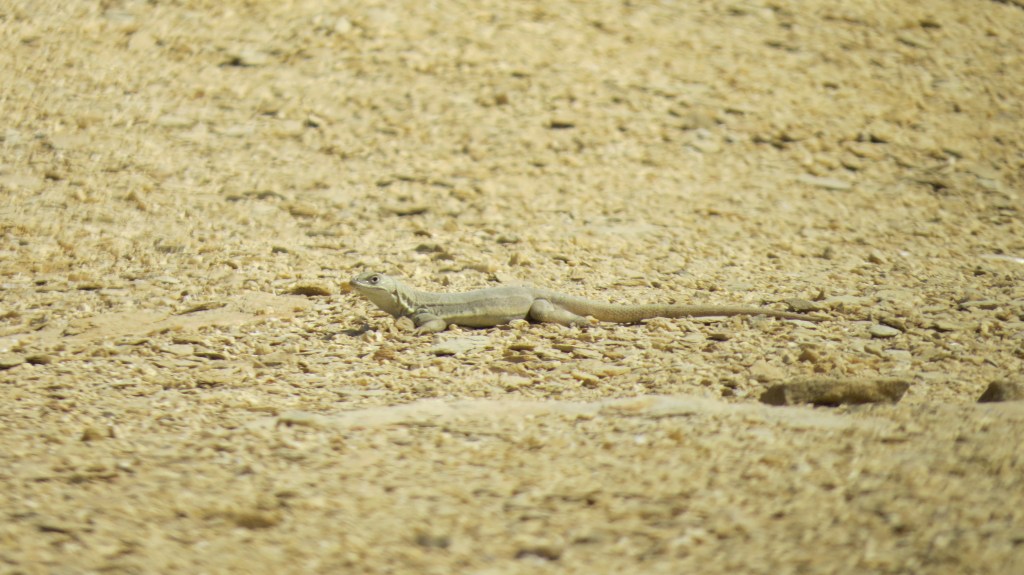
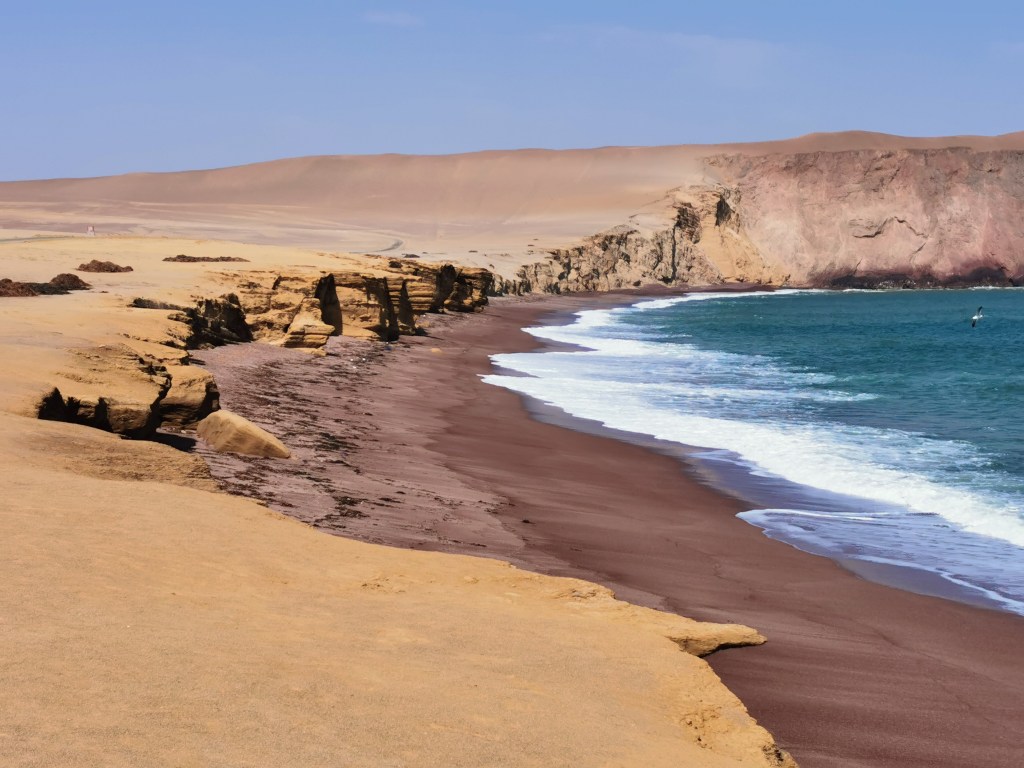
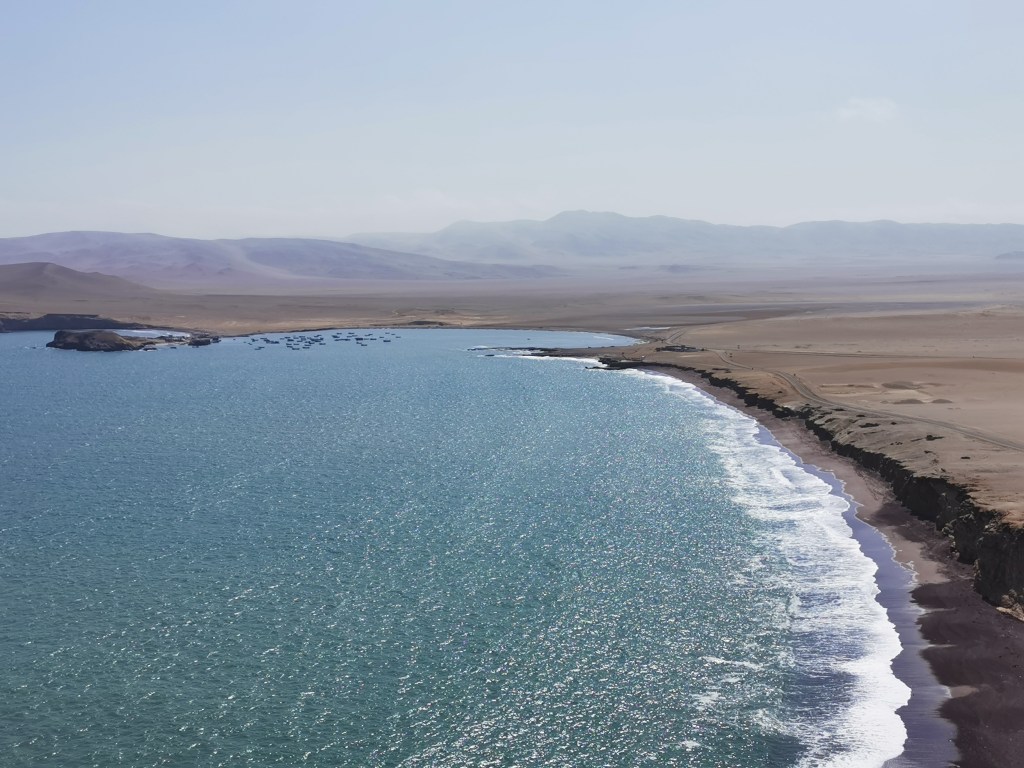
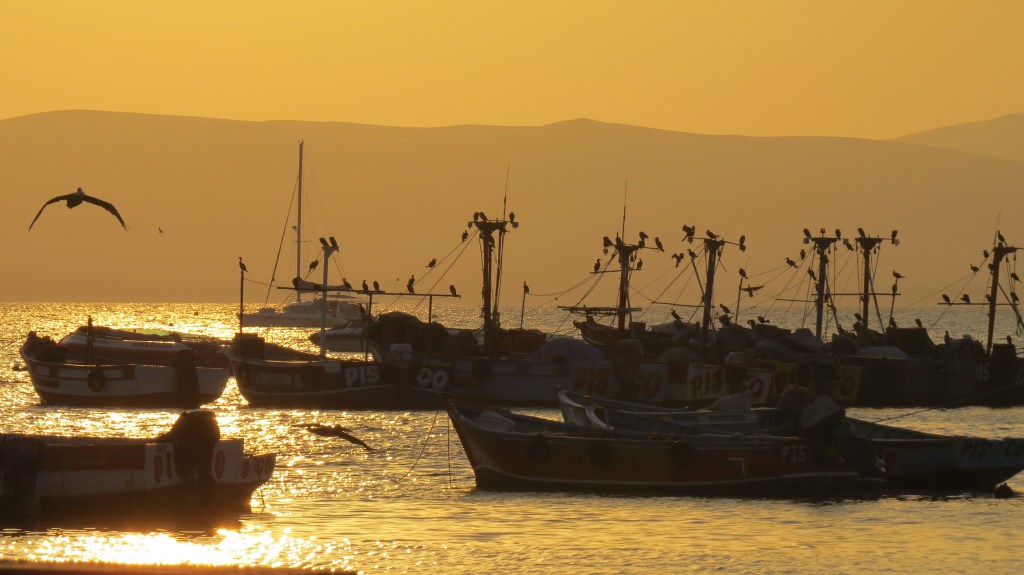
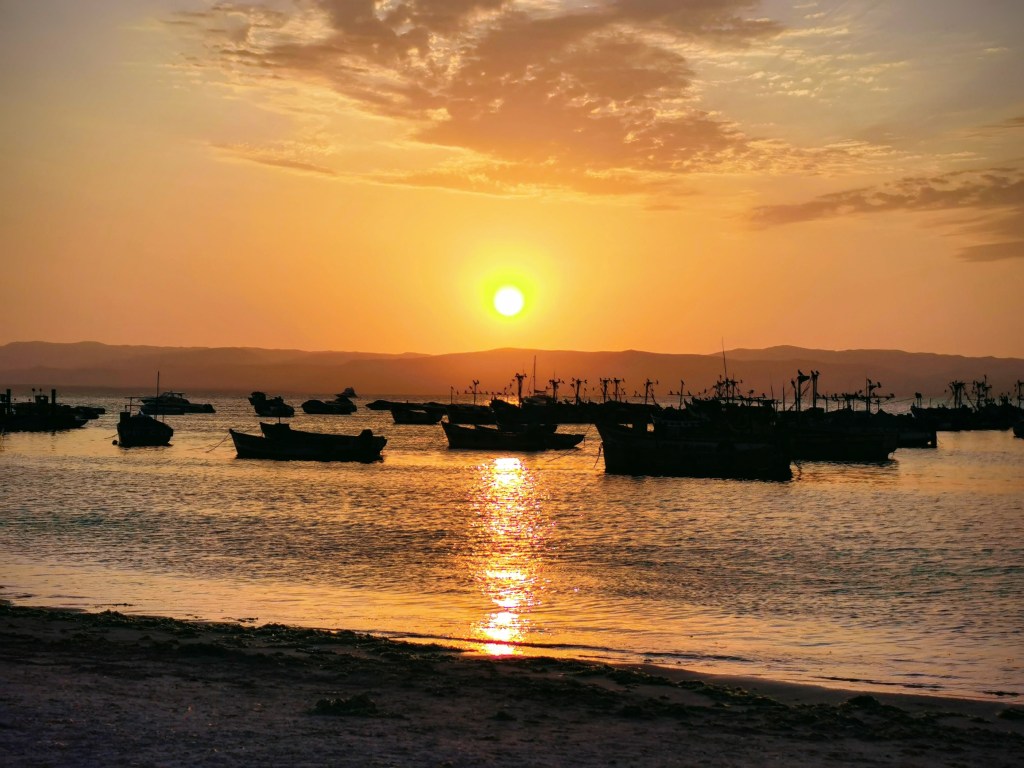
Later in the evening we were heading to Lima but we still had time for a delicious seafood dinner, including the Peruvian national dish, Cerviche. We had been told that we had to have this dish once we got to the coast (as it contains raw fish) and it didn’t disappoint. An added bonus was that we got to watch another beautiful sunset.
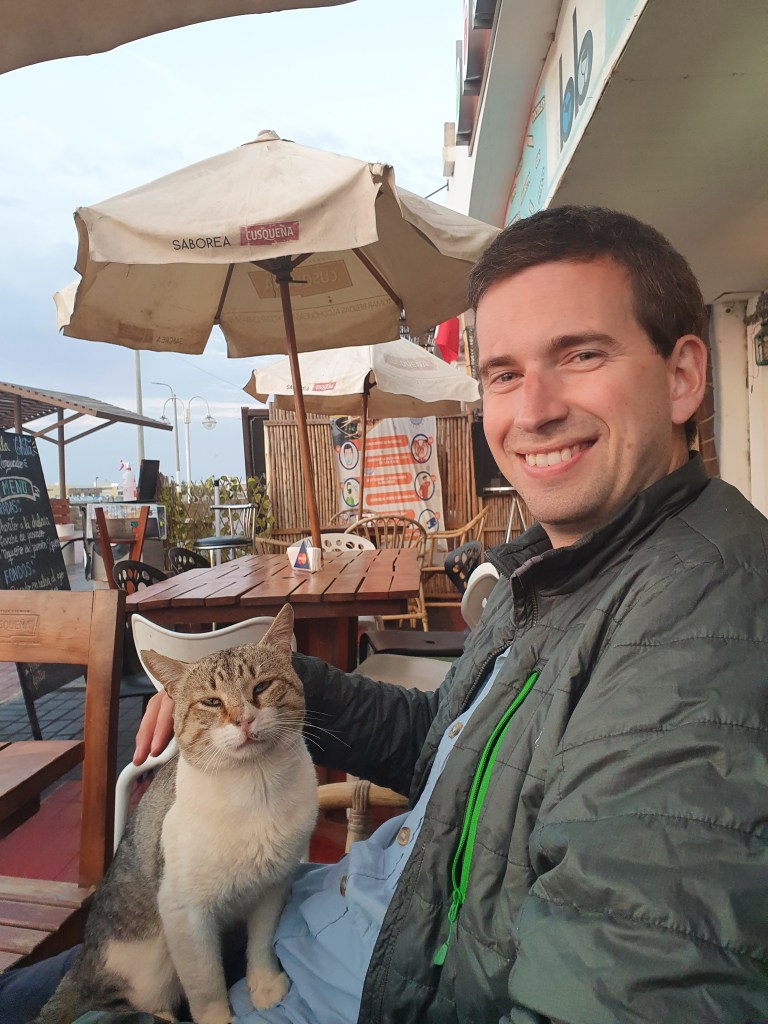
Despite it only being eight full days, we managed to fit an awful lot into our Southern Loop. This was in part due to booking with PeruHop. We had an amazing time. There is just so much variety in this part of Peru, it’s easy to see why it is so popular. It’s certainly an area that we would recommend to anyone.

 Brit and Czech Abroad
Beautiful photography, informative and very interesting text. Brilliant.
LikeLike
Nice! That’s great you made it to Arequipa as well. I know what the answer will be but did you got the vegan sushi restaurant? That’s one of our favourite restaurants in the world. You wouldn’t think you could eat 62 pieces…
Glad you liked Colca Canyon. Those oasis pools look amazing but they are actually FREEZING so you definitely miss out on any relaxing by not going in. Shame there wasn’t time to climb El Misti, Chachani or Pichu Pichu. That would have been your kind of thing. Still, looks like you’re packing in the activities! Hope you’re enjoying Ecuador. Talk soon.
LikeLike
I’m afraid I wasn’t aware of that restaurant, maybe next time…
We did try the pool. And yes, it was freezing. So we lasted about 10 minutes max. Would have been nice to try it during the day!
Ecuador is going well thanks – only four weeks behind on the blog now…
LikeLike
The photo of Radka about to cook seems to say “Get the camera out my face or or you’ll understand what it’s like to stabbed with this pairing knife”.
LikeLiked by 1 person