Before we arrived in Ecuador we were doing some planning regarding the Galapagos Islands and we concluded that there was almost no chance we would do a cruise. We had made a list of places that we would like to see and out of the major ones, there was only an area around the west and north coast of Isabela Island, plus the island of Fernandina, that could only be accessed with a cruise. Whilst it would have been amazing to visit those places, they tended to only be included in longer cruises that were far too expensive for us. The other cruises seemed to mainly include activities that could be accessed on day tours, so they didn’t seem worth the extra expense.
When we arrived in Quito, however, our hostel was advertising that they could help organise last-minute deals on Galapagos cruises, so we thought we may as well check it out. We provided our details and the dates we were in Ecuador and left them to it, not expecting them to find anything suitable. Later that day, an excited Fernanda (the owner of the hostel) caught us returning to our room and we went through the options she had found. One of these options went to the exact areas we wanted to see. Not only that, she had been able to cut off the first few days of the cruise, which went to places we were not so bothered about, and have us meet it at a later port. Because of this and it being a last-minute deal, the price was about a third of what it should have been. Whilst still expensive, it was now something we could stretch to and it was far too good an opportunity to turn down. It just goes to show that if you are a bit flexible with your dates and are prepared to potentially go to the Galapagos without a cruise, there can be good opportunities available. This isn’t to say that we didn’t get exceptionally lucky and it also helped our cause that we went during the current pandemic, when there are less tourists travelling to the islands.
So in this post, I’m going to take you through what we got up to on our six-day cruise aboard the Baluga.
Contents
Volcan Sierra Negra Crater Rim
Giant Tortoise breeding centre and Pozas Salinas reserve
Day 2 – Mangroves, Snorkelling and Lava Fields
Walking the Lava Fields of Punta Moreno
Day 3 – Land Iguanas, Snorkelling and Darwin Lake
Day 4 – Fernandina Island, Vicente Rock and the Equator
Walking and Snorkelling at Fernandina Island
Day 5 – Kayaking, Bartolomé Island and Dolphins
Kayaking and Snorkelling at Buccaneer’s Cove
Day 6 – North Seymour and finishing the cruise
Finishing the cruise at Baltra Island
Day 1 – Puerto Villamil
We had already made our own way to Puerto Villamil, the main town of Isla Isabela, the previous evening and were very excited to meet up at the port first thing in the morning. The boat was anchored out in the bay so we were met and then transported by pangas (small motorboats) to get there. It turned out that we weren’t the only ones joining the cruise at a later point – a further six people had a similar arrangement. After dropping off our stuff in our cabins, we were able to meet everyone else already on board. After breakfast we set off back towards Puerto Villamil for a day of activities.
Tintoreras
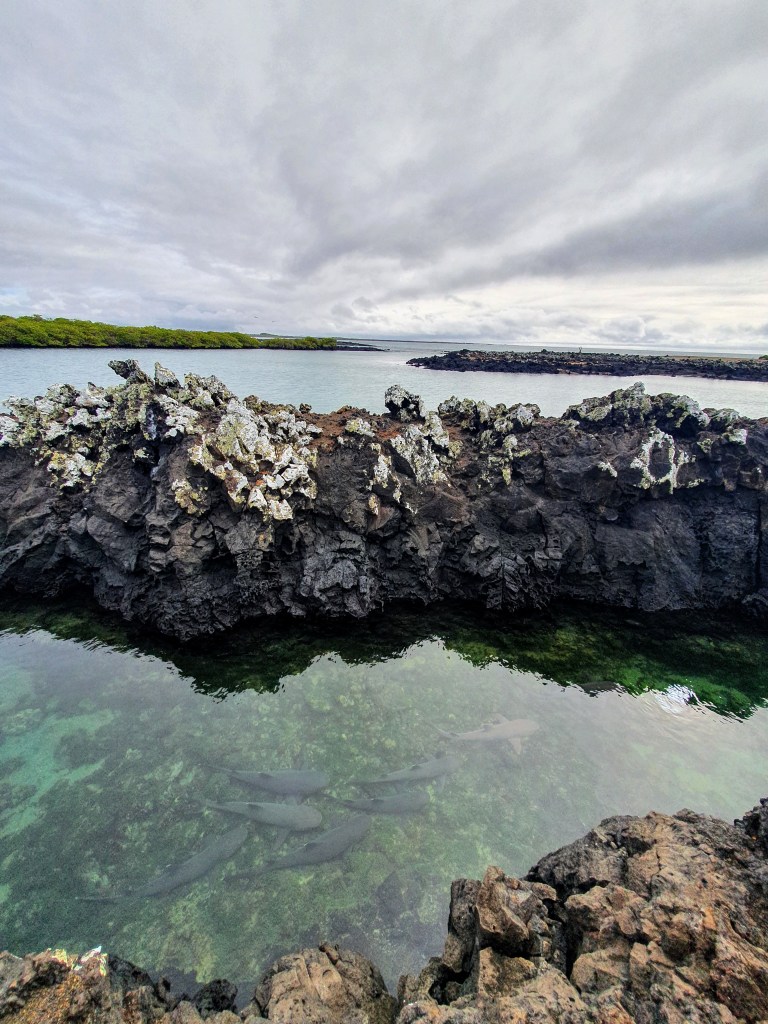
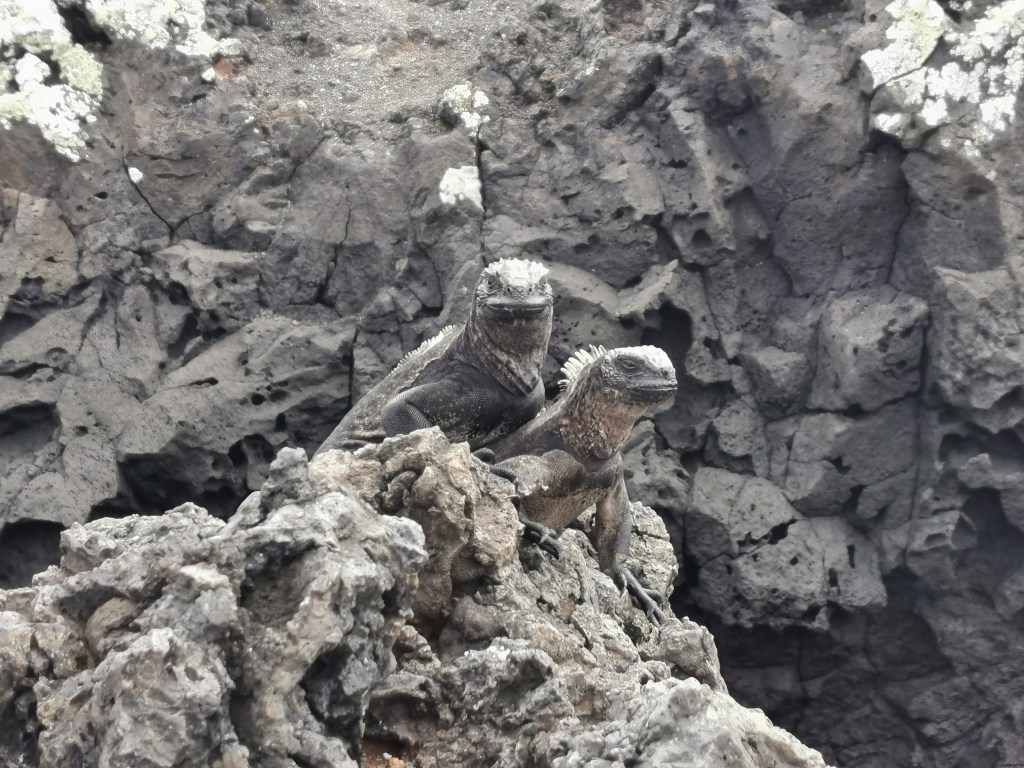
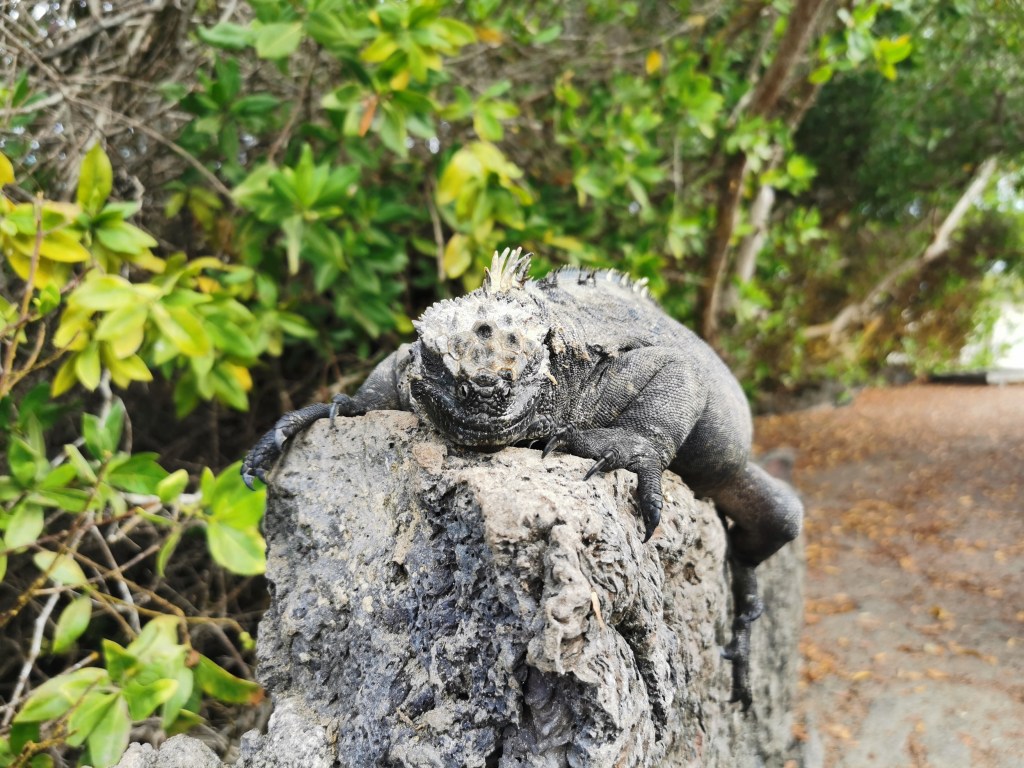
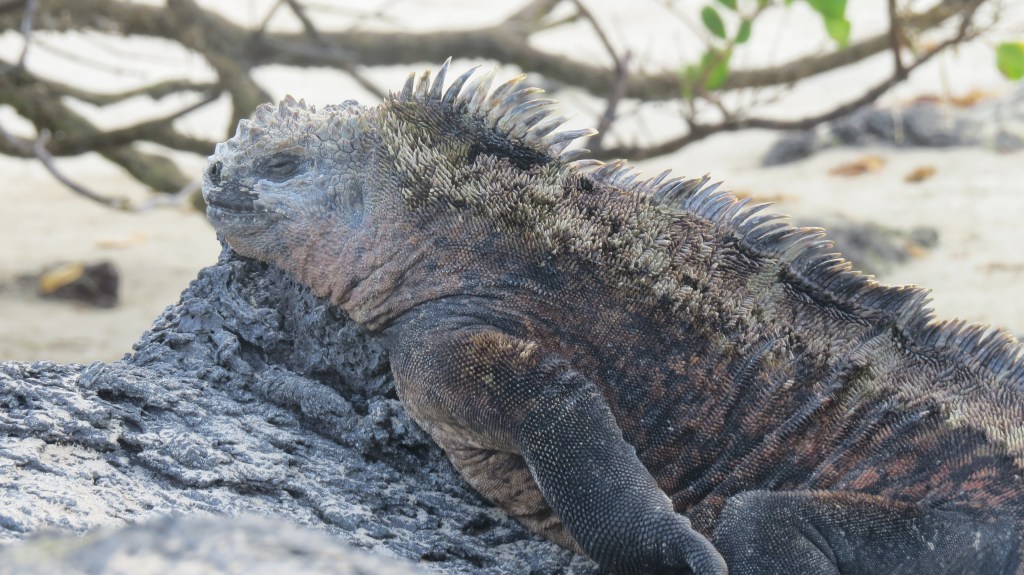
The driver of the panga had made it all the way back to the port before he remembered that we had a stop to make first, so he turned around and headed to the Islotes Las Tintoreras, a tiny group of islands a bit off the coast. We walked through the black volcanic rocks, marvelling at the marine iguanas posing around every corner, until we got to a little bay. This sheltered area was home to at least twenty white tip reef sharks. Apparently, unlike most types of sharks, this species does not need to be moving as they sleep, so they were just lay resting on the bottom of the shallow, protected cove. It was surreal to see sharks so close, despite being told that these sharks are not dangerous to humans. Whilst we were still marvelling at the sight, a sea lion appeared in the little bay and started blowing bubbles and chasing a couple of them around. We were told that this was just for fun – the sharks aren’t a danger to sea lions either. It was a great start to the day.
Volcan Sierra Negra Crater Rim
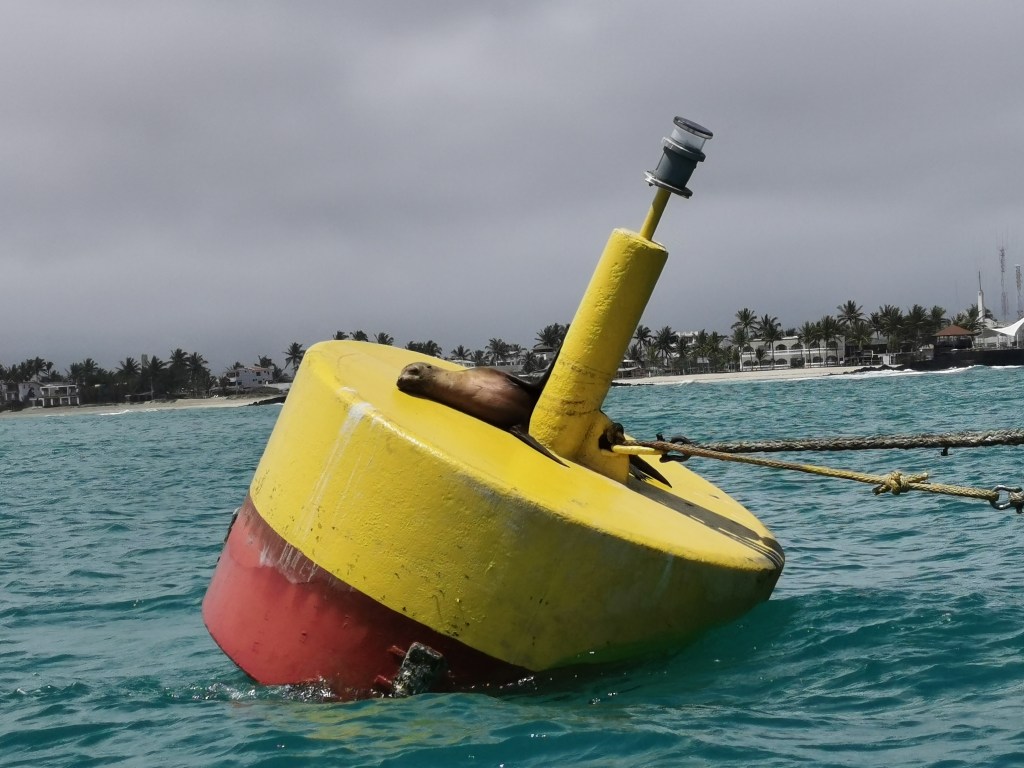
After making our way back to port on the pangas, we hopped on a chiva so that we could head towards the Sierra Negra volcano. A chiva is like an open sided truck that has benches inside, so it acts like a bus in rural areas of South America and also on the Galapagos. I was a little disappointed that the bus took us most of the way up the the side of the volcano but I had forgotten that cruises are mainly planned around activities that most people can access (including older tourists) so it was unreasonable to expect any long or physically demanding hikes.
When we got to the carpark everywhere was shrouded in cloud and mist. So rather despondently, we started to walk the rest of the way to the crater rim. The walk was not difficult but the pace was very slow to allow everyone to stay together. It was interesting that on one side of the path was the wild national park whereas on the other was farmland, with livestock wandering around. About half way through the walk we suddenly came out of the clouds and were treated with a beautiful view of the west coast of Isabella. Apparently this is quite common, the multiple volcanoes hold the clouds in place over certain areas of the island. With our spirits lifted, we walked the remaining distance to the viewpoint over-looking the crater.
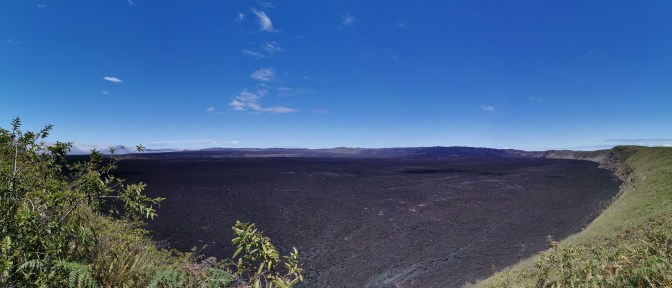
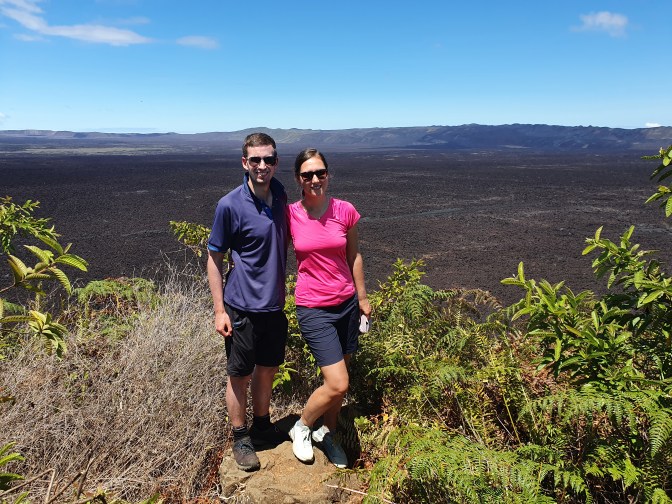
Sierra Negra is an active volcano that last erupted less than twenty years ago. So the centre of the huge crater is completely dark and was a spectacular sight. We spent some time admiring the view and taking photos before the heat of the direct sunlight encouraged us to start heading back. If you are island hopping you can organise a tour that keeps on hiking around the rim. And whilst I would have enjoyed that, in terms of the view it wouldn’t have improved much from that first spot. On the way back we saw a couple of Vermillion Flycatchers flitting past, which can only be found in a couple of small areas on the Galapagos (although they can also be found in mainland South America). We walked back through the clouds to our waiting chiva. At this point there was a single tourist who had hitch-hiked to this point but then was not allowed entrance without a National Park Guide. This was an important reminder for when we were to start island hopping, that most of the islands is part of the protected park and can only be accessed with one of the guides.

Giant Tortoise breeding centre and Pozas Salinas reserve
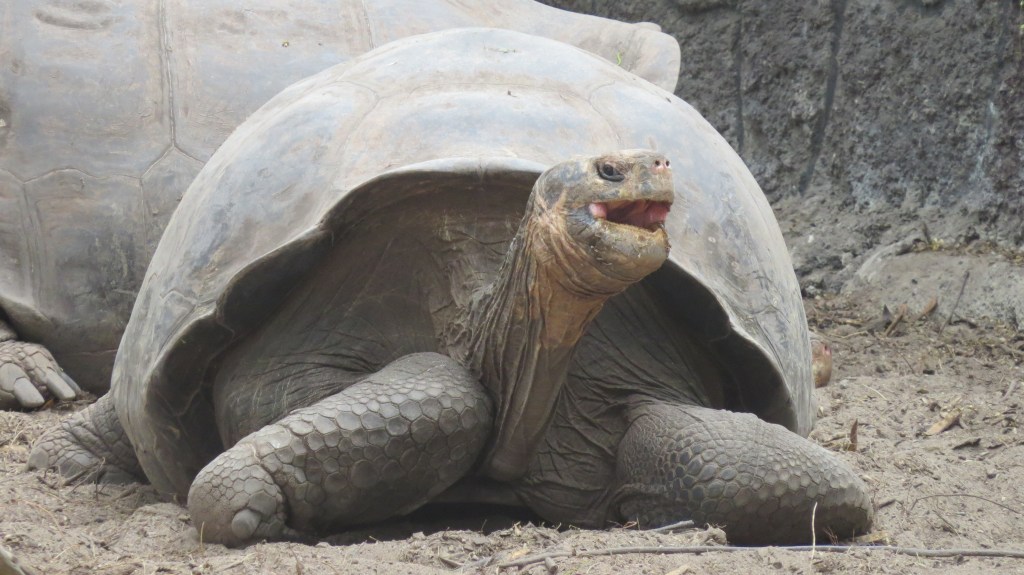
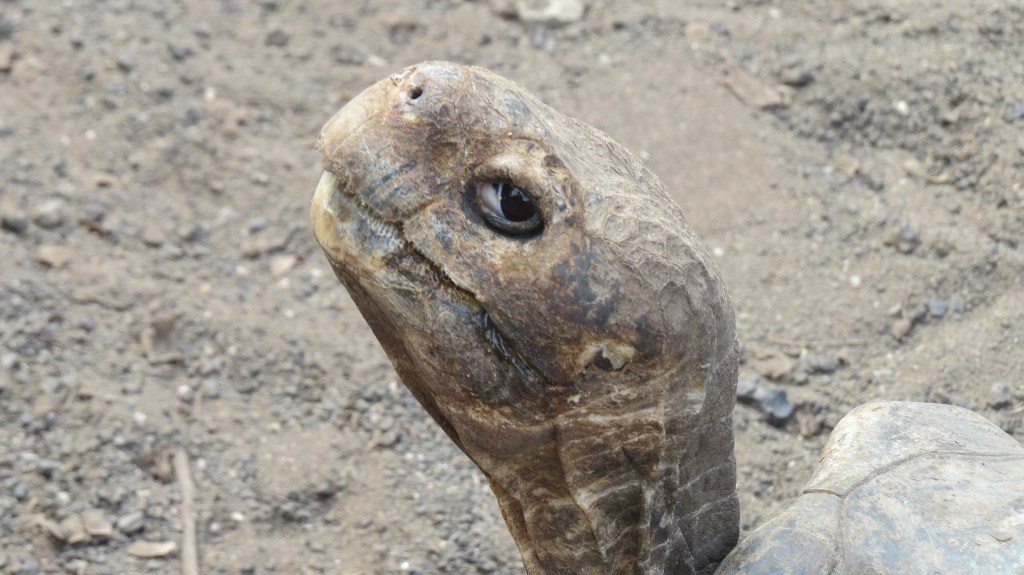
After heading back to the boat for lunch and some relaxation time, our next stop was to the Centro de Crianza Tortugas Gigantes Arnaldo Tupiza Chamaidan – the breeding centre for giant tortoises on Isabela. Each of the main islands have their own breeding centres but interestingly they are for different species of tortoise. The Galapagos Islands had 15 distinct species of giant tortoise dotted around the various islands but due to the effects of humans, only 12 remain and most of those are still classified as endangered. So these breeding centres are very important in trying to increase the numbers in the wild again.
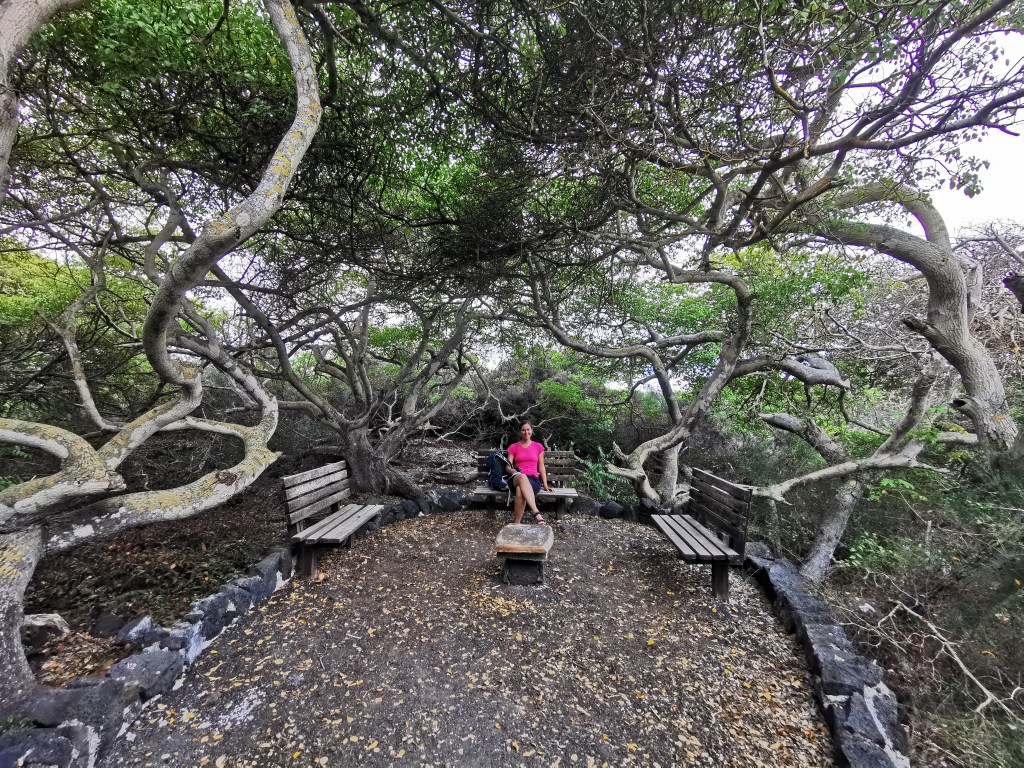
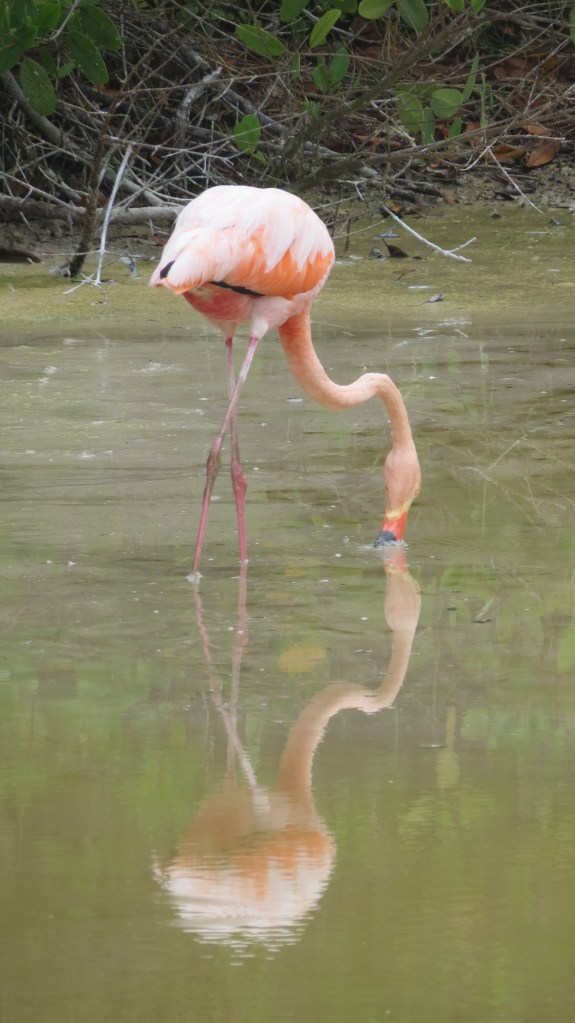
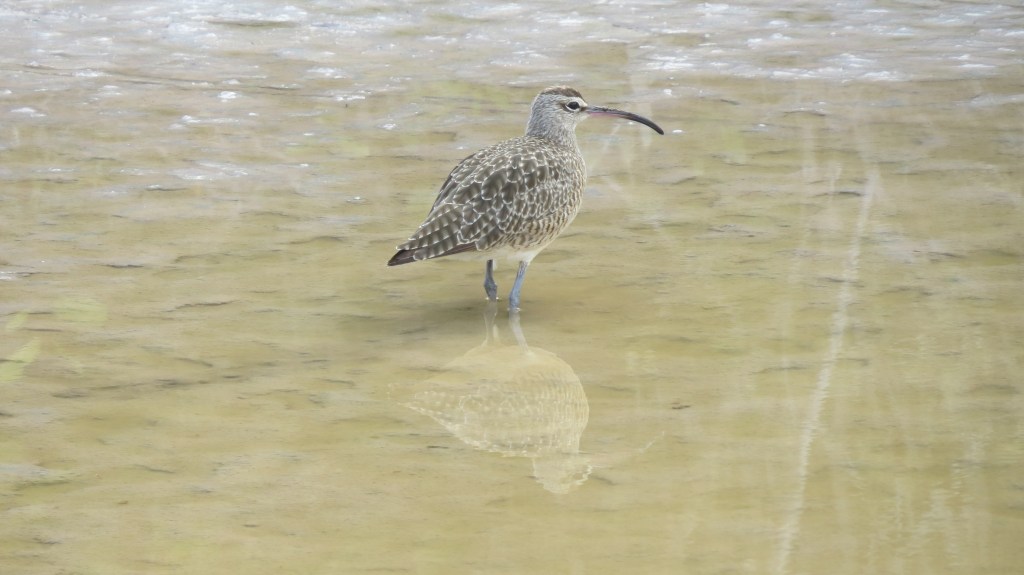
We walked around the different enclosures, enjoying watching the tortoises of varying ages and sizes. It was funny how the young ones still seemed ‘cute’ despite being the same size as a regular tortoise. After finishing wandering around the paddocks and briefly walking through the information centre, we carried on down the road to Pozas Salinas, or ‘The Salt Pools’. This was a little reserve where wooden boardwalks wound their way through the trees and around several pools. We had to be careful with the trees as many were manzanillo – poison apple trees. The fruit is covered in a latex that is poisonous to eat and will cause bad irritation of the skin if touched. But the tortoises have evolved to be able to eat them. We didn’t see any tortoises here but were treated to some flamingoes and other birds feeding in the salt pools.

Praia Puerto Villamil
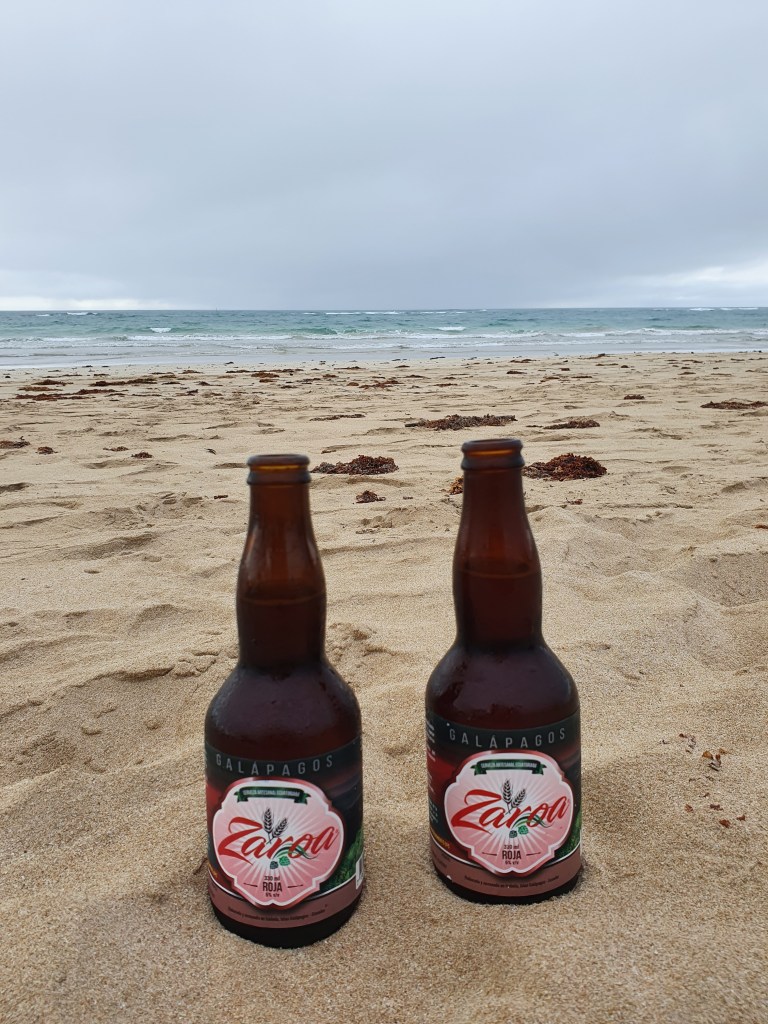
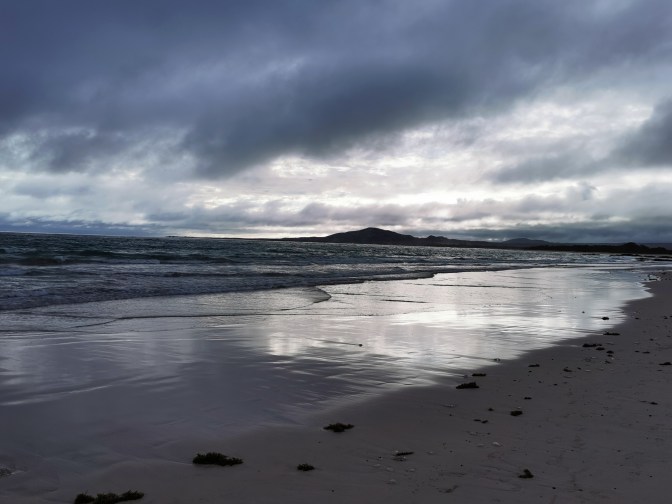
Our last activity of the day was some free time to wander along the beach separating the town from the ocean. It was a lovely place to watch the wildlife, grab a local beer and chill out at the end of the day. Once the clouds starting changing to burnished gold we returned to the Baluga for our first evening on the water. After another lovely meal a few of us played a couple of rounds of Yahtzee before heading to our cabins. This first evening and night were pretty choppy as we sailed for most of the night to get to our next destinations. This meant going around the exposed south-west corner of Isabela before finding shelter on the western shore. Luckily, this was as bad as it got for the whole trip and it still wasn’t too bad.
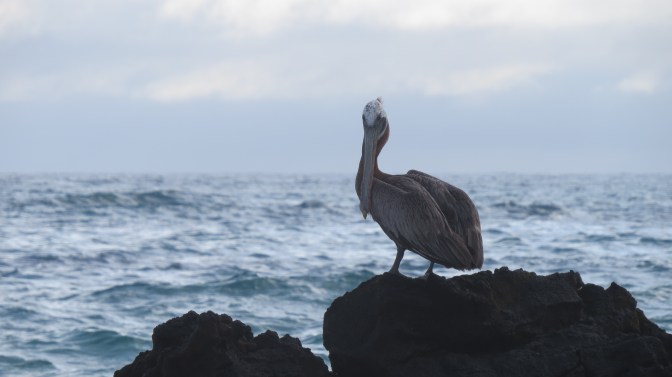
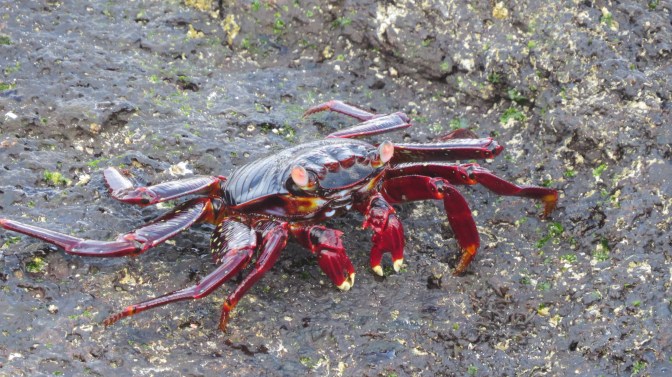
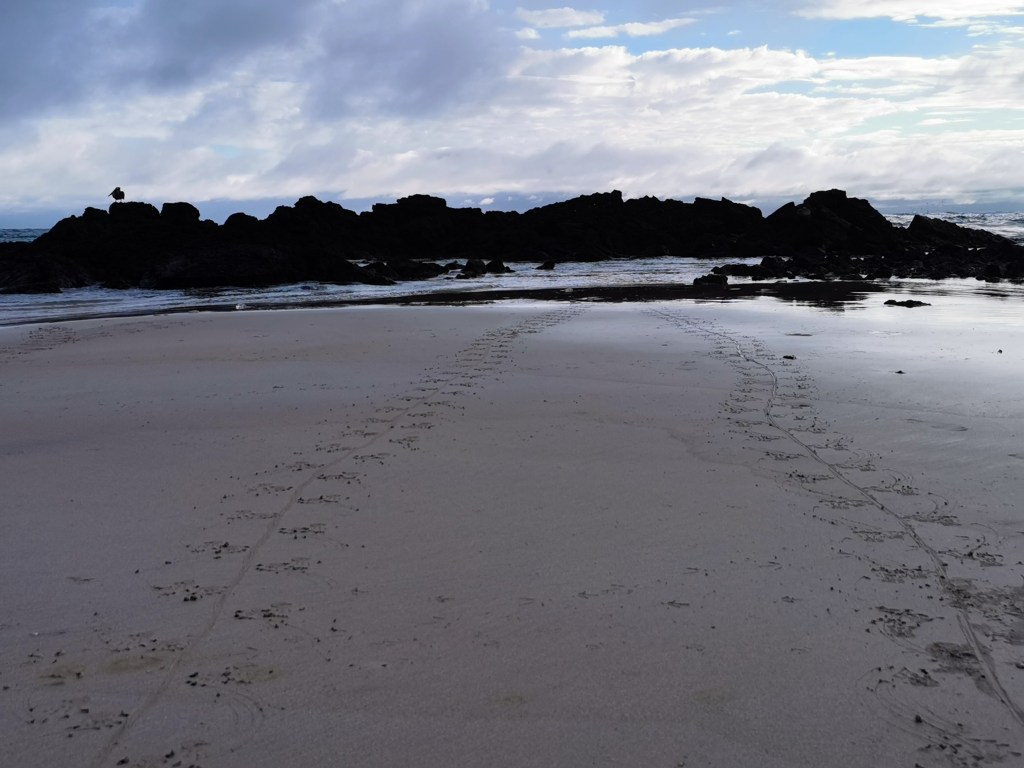
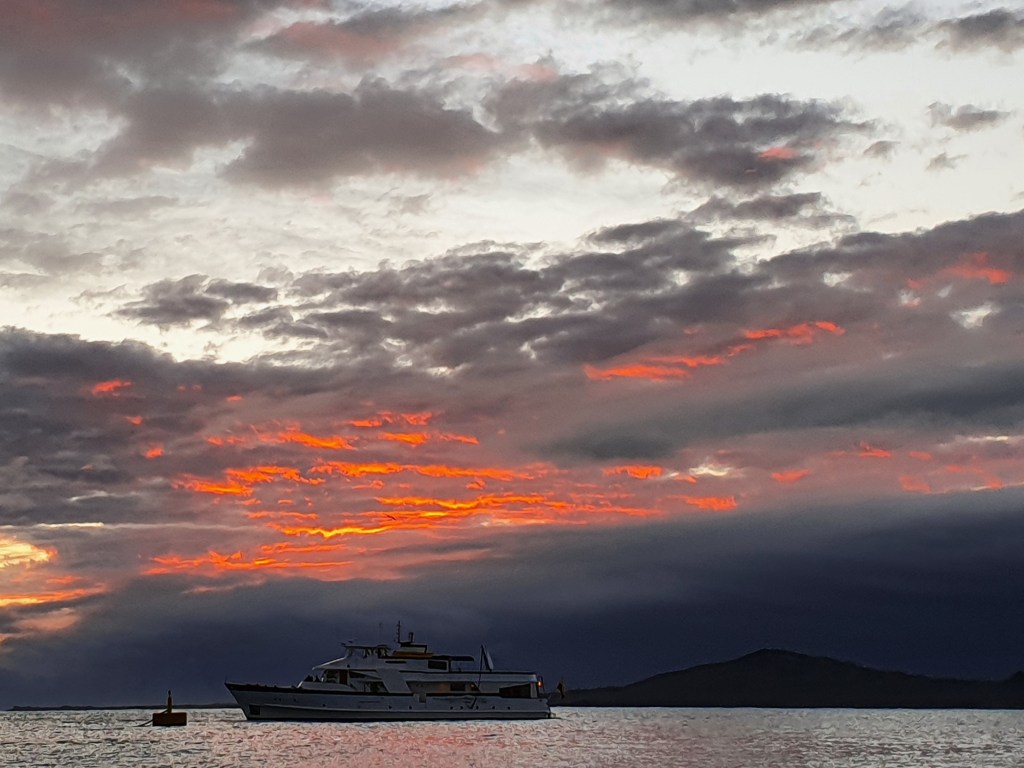
Whilst all of the activities on day one of the cruise could have been done without a cruise, they were very enjoyable and varied. They were also certainly things that we would have wanted to do anyway. So it was a really nice start to our time on the Beluga.
Day 2 – Mangroves, Snorkelling and Lava Fields
By sailing through the night we woke up on the west coast of Isabella, an area that can only be accessed with a cruise. We really felt like the cruise was properly starting here as we peered out of our porthole. After an early breakfast it was time to get going.
Elizabeth Bay
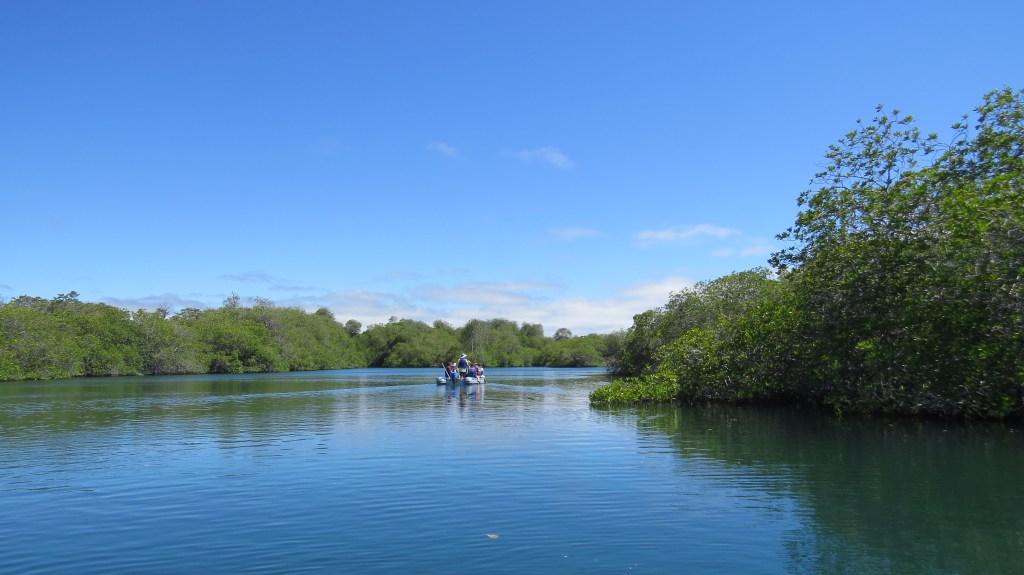
Our first activity of the day was to visit the mangroves at Elizabeth Bay. This amazing place is strictly protected so no one can dock onto the land; swimming / snorkelling is prohibited and the only way to see the area is on small boats, such as our pangas. Even these boats were required to switch off their engines once they got to a certain point.
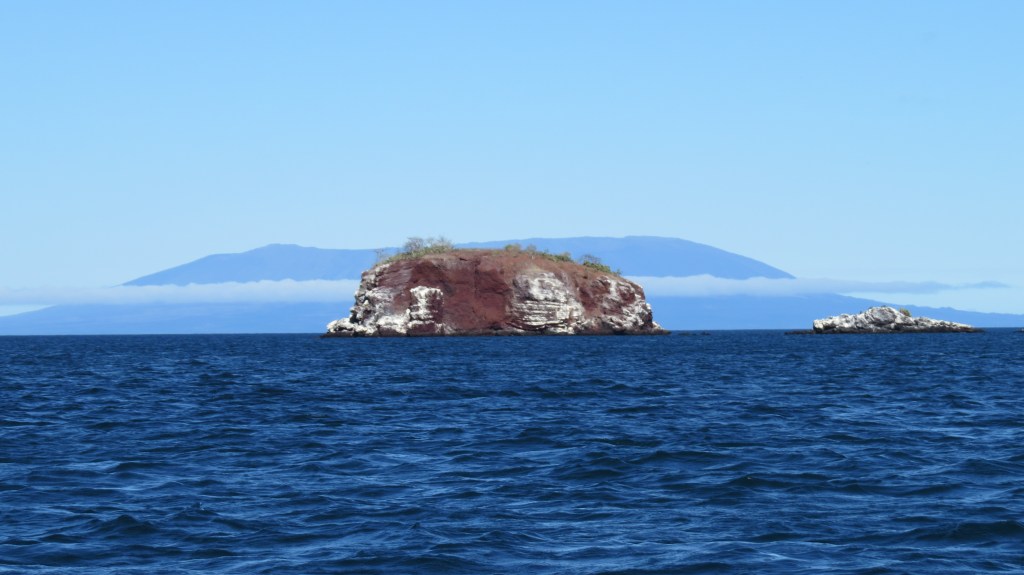
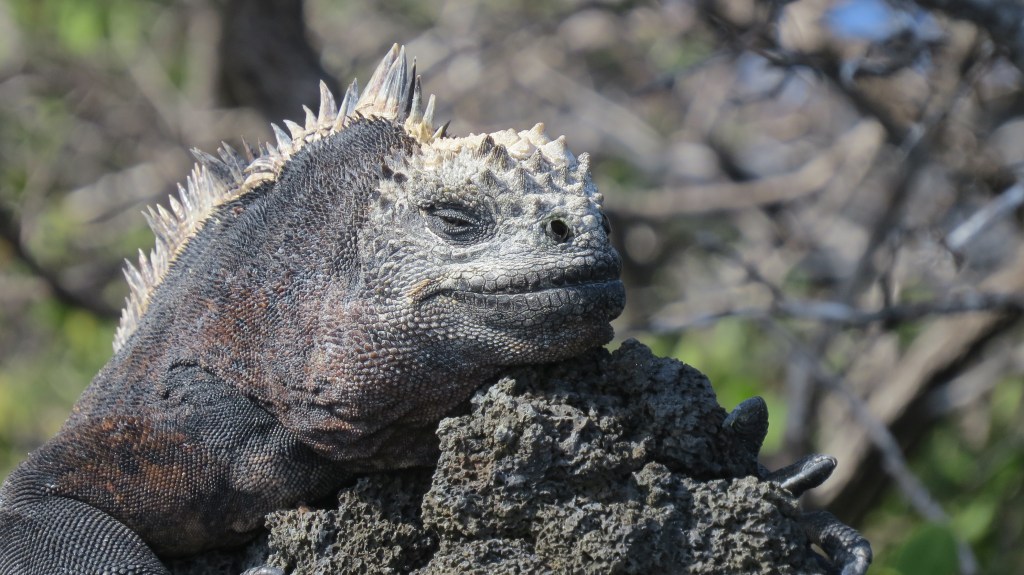
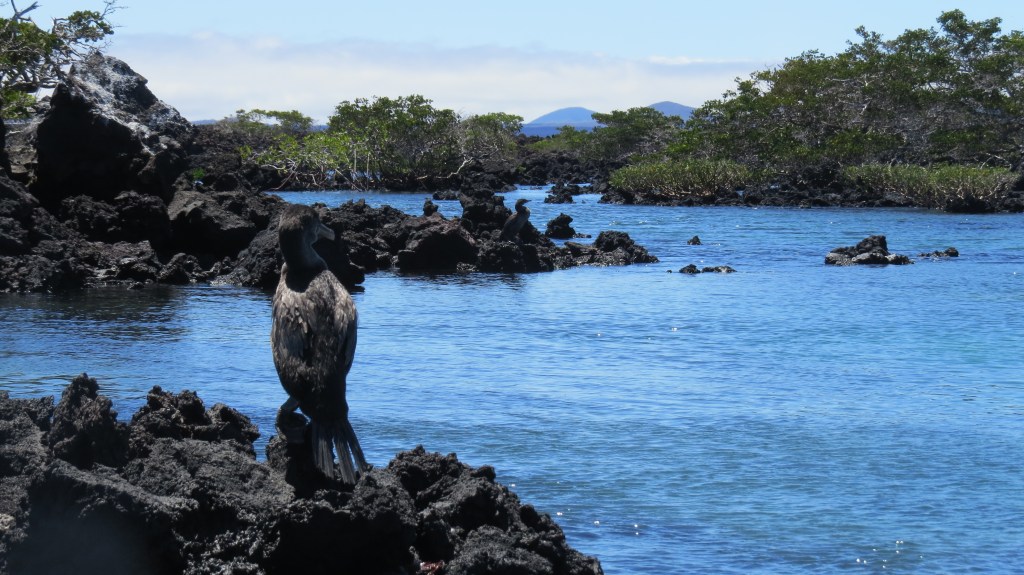
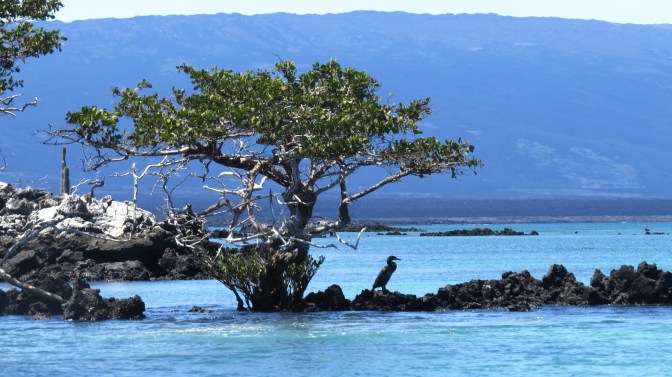
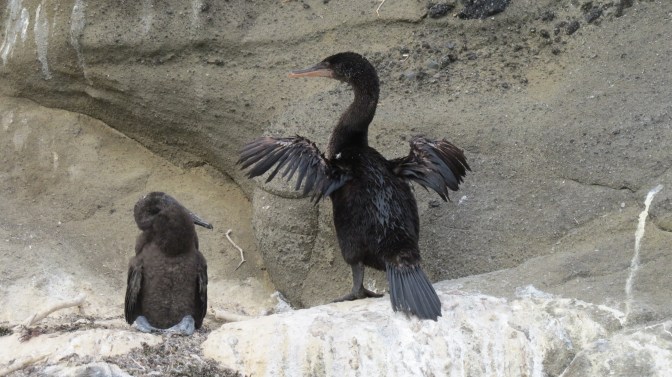
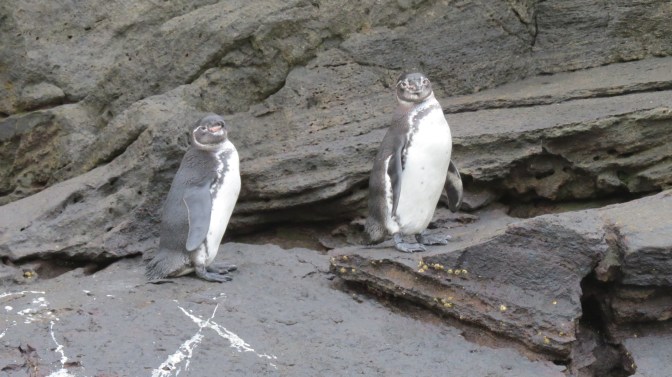
We hadn’t even gotten as far as the mangroves before we were treated to start of the constant stream of wildlife. The rocky outcrops at the edges of the bay were great places to rest for marine iguanas and frigate birds. We also got to see our first flightless cormorants and galapagos penguins, both of which are endemic to the islands. The penguins in particular were amazing. Despite their diminutive size they were fizzing through the water like miniature torpedos.
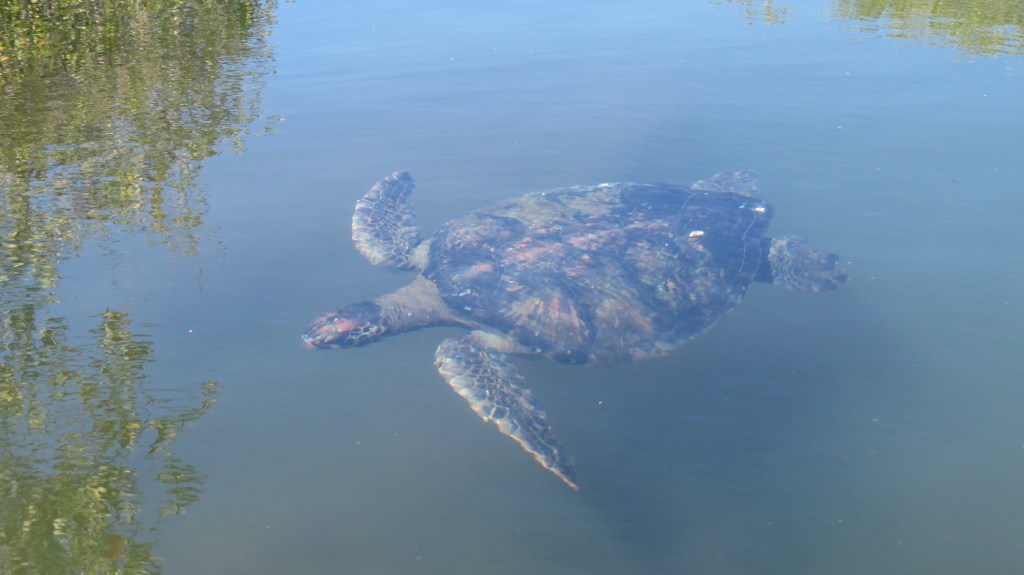
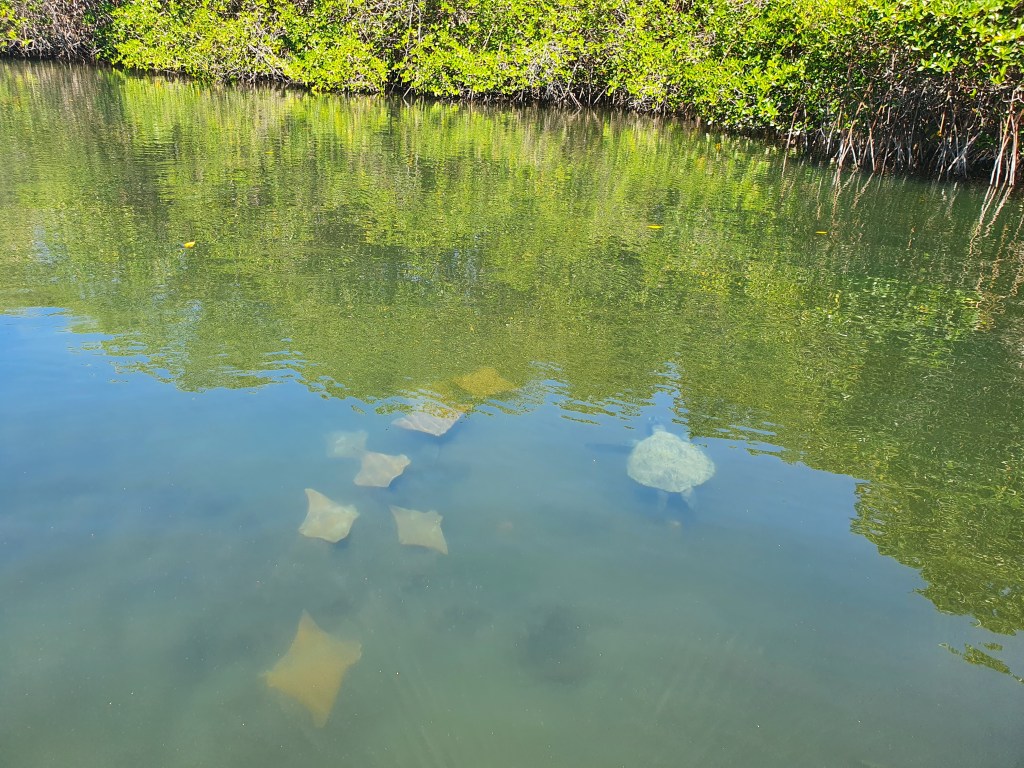
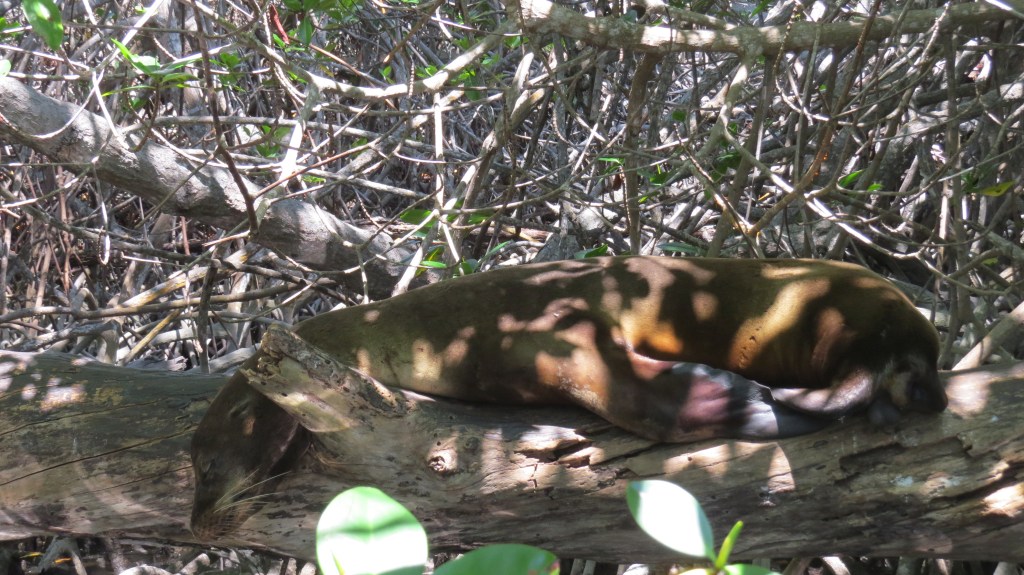
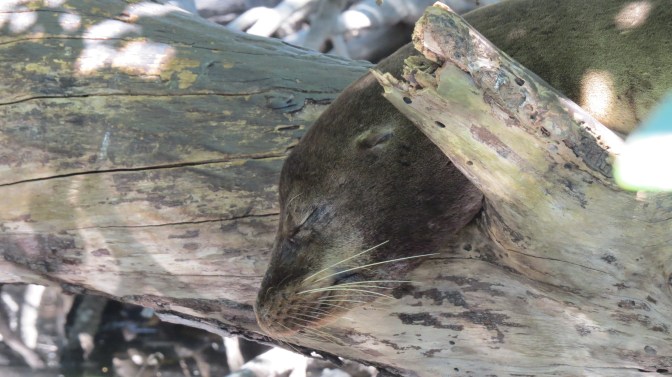
The mangroves, however, were even better. The trees themselves, along with the blue sky and water, provided a beautiful setting. So enraptured were we with the place we almost failed to spot when the first sea turtle glided serenely past our boat. Much like the sharks the day before, it was so surreal to have something like this so close. I thought we must have been lucky but as we progressed through the waterways we started spotting more and more. In all there must have been more than twenty at various points on our journey. The water was so crystal clear and the area was relatively shallow, so you were able to just sit in the boat and watch them going about their business. Another highlight was when a school of golden rays swam underneath our boat. The most surprising sight, however, was when we pulled up to see a sea lion asleep low down in a tree. Yes that’s right, I said in a tree. I had no idea they could even climb.
This place was definitely one of the highlights of the whole cruise.

Snorkelling at Punta Moreno
After lunch back on the boat, we went for our first snorkelling session. The Beluga had moved towards the peninsula of Punta Moreno and we then took the pangas to get closer to the shoreline. The first thing that I should mention is that the water around the Galapagos Islands is cold! Please don’t picture tropical islands where you can lie in the sea all day – even with the wetsuits we were both quite glad to get out when the time came. We still enjoyed it, however, and saw a multitude of fish, sea turtles and sea lions.
Walking the Lava Fields of Punta Moreno
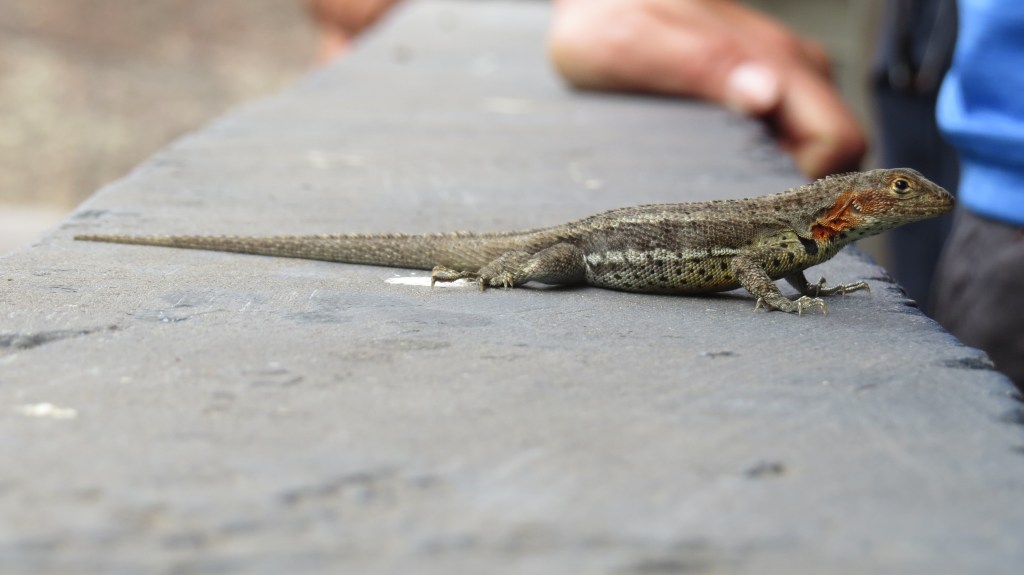
After having a hot shower to warm up (this is one of the best bits about doing a cruise rather than island hopping and doing day trips) we set off in the pangas to get to the lava fields at Punta Moreno. This is an other-worldly environment of black sharp rocks that, at first sight, seems to be devoid of life. But as we made our way along the loop we found that this was not so. Firstly there were cacti dotted around and then further on, little pools had started to form, adding splashes of blue and green to the landscape. Along with little lava lizards that scurried along the ground, there were a couple of flamingoes frequenting the pools. All of this was under the gaze of the massive conical volcano. As we returned towards our waiting pangas, the sun was just setting over the lava fields so that we were greeted with beautiful skies as we returned to the boat.
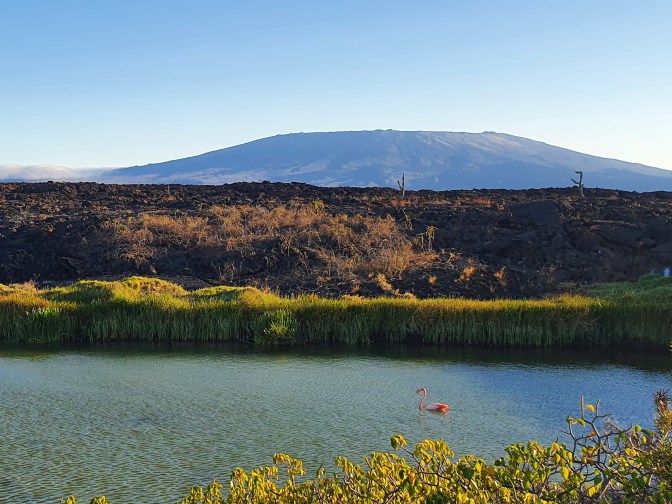
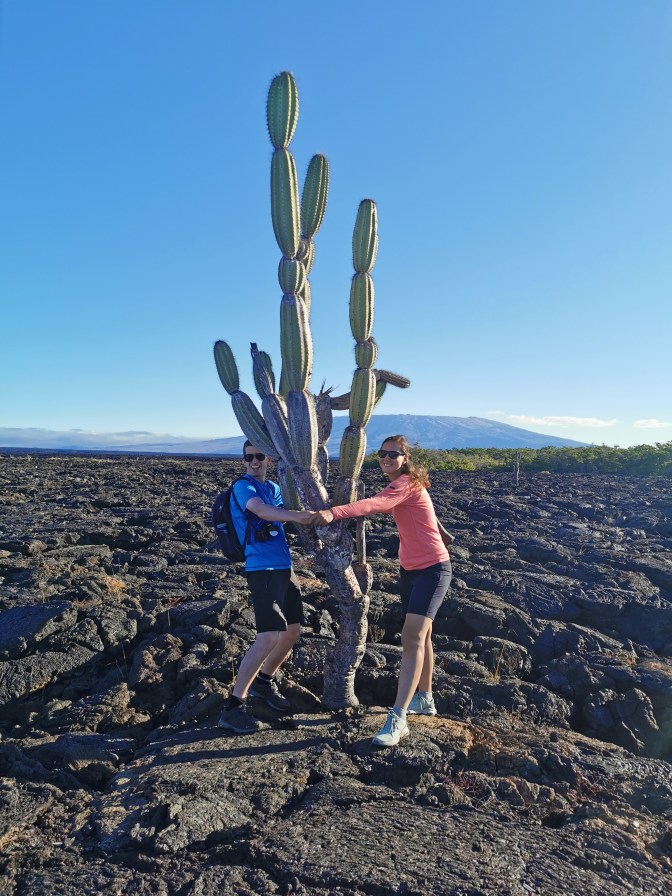
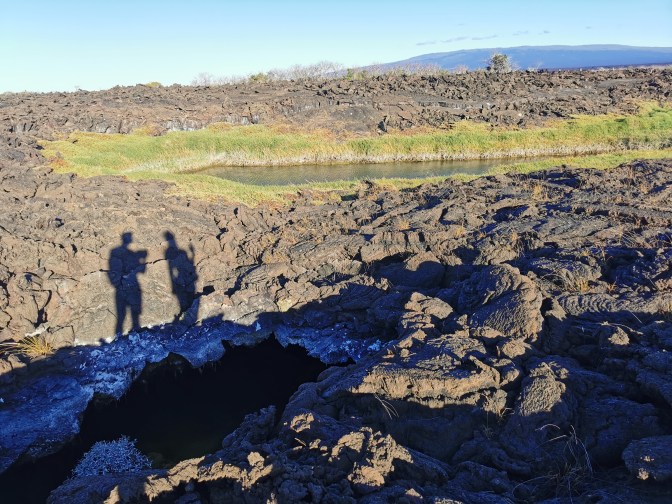
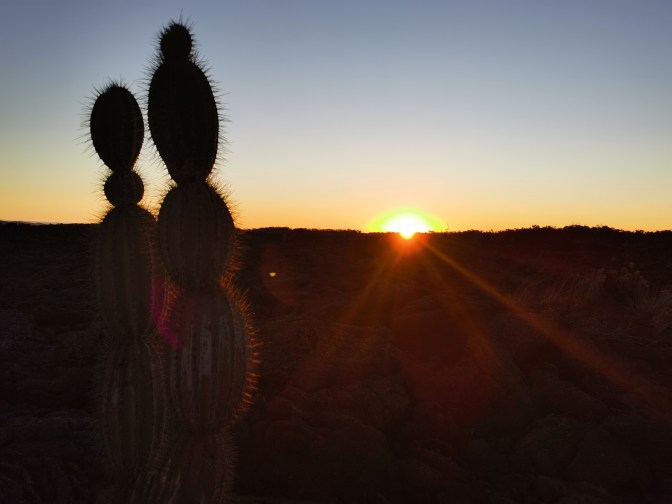
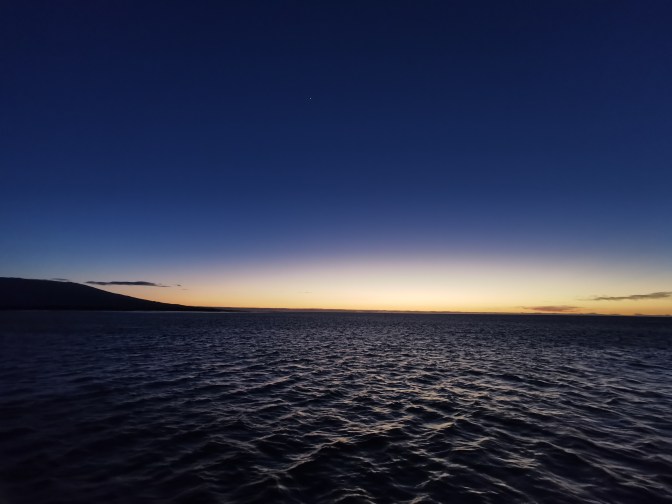
The second day was thoroughly enjoyable and really represented the variety of activities that can be done on the Galapagos. Although, getting to do them all on the same day is one of the arguments for taking a cruise rather than day trips whilst island hopping.
Day 3 – Land Iguanas, Snorkelling and Darwin Lake
Hike from Urbina Bay
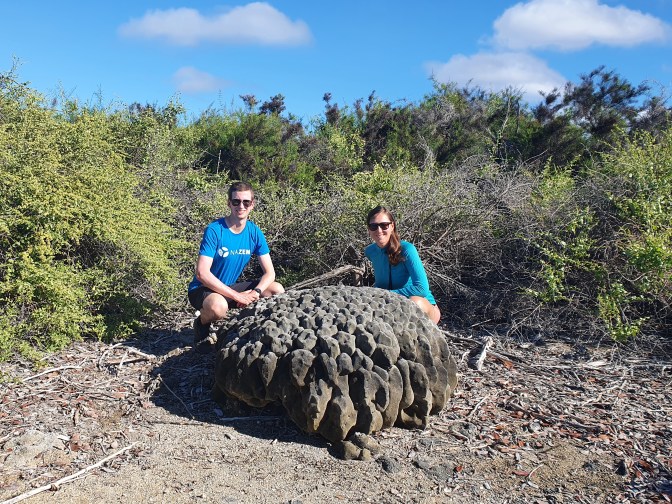
Our early morning activity was a hike after docking the pangas at Urbina Bay. This area was under water as little as 70 years ago before volcanic activity caused an upshift that brought it above the surface. The small trees and shrubbery that made up the route are a sign that the flora is still in the relatively early stages of succession. Massive rocks also dotted the route and some of them had strange patterns on them. That is due to the fact that they were brain coral prior to the upshift.
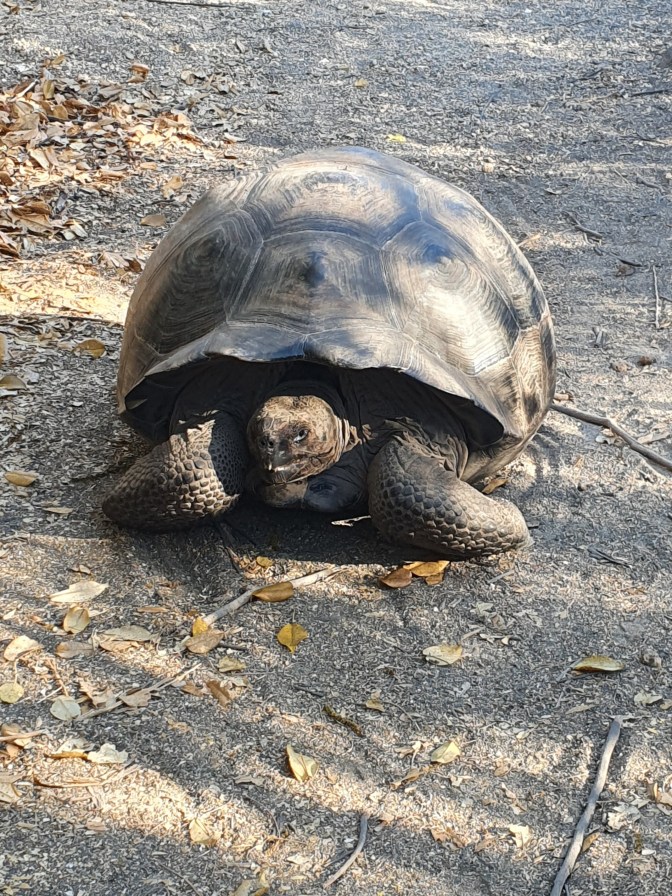
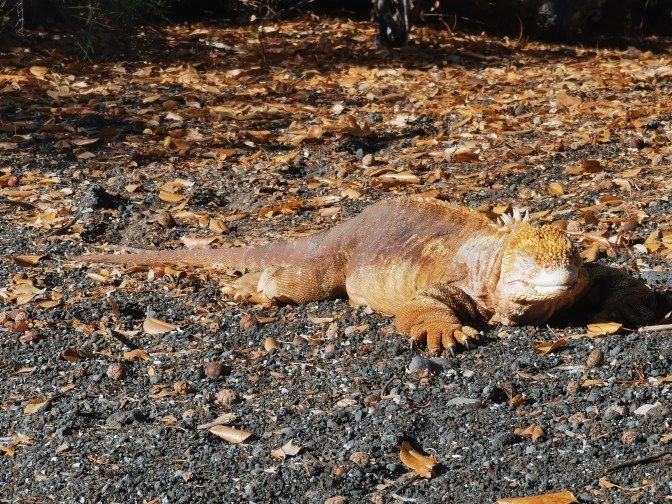
As well as these interesting aspects to the walk, there was some excellent wildlife as well. Not too far along the path we came across a giant tortoise. During our two weeks in the Galapagos, spread across multiple islands, this was the only tortoise we saw that was not either in a designated reserve or a breeding station. We also got to see several land iguanas. These iguanas differ from their marine cousins in terms of size, shape and in their beautiful orange and gold colouring.
After returning to the Beluga, we had a quick swim straight off the boat before starting the three hour journey to our next destination.

Tagus Cove and Darwin Lake
Our first activity at Tagus Cove was to take the pangas out to go snorkelling. This was a really nice area to go because as well as sea lions, turtles and fish we saw flightless cormorants swimming under the water and penguins on top of the rocks.
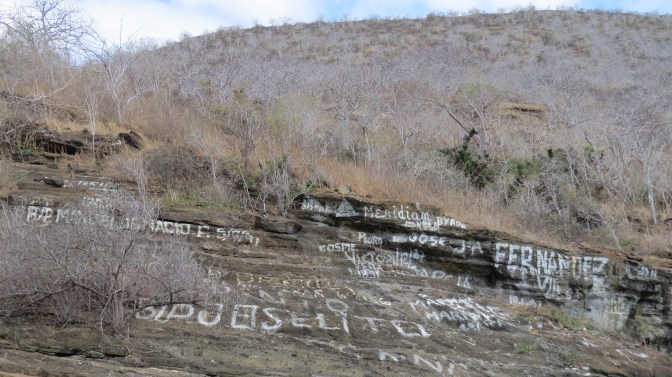
Our next activity was another walk. Where we docked the cliffs were full of scrawled names and dates of different ships that had been to this area, some of which went back decades. From there, we walked up the hill through masses of bare trees. We were worried they might be dead but it turns out that these trees lose their leaves during the dry season. Given the proximity to the equator, the Galapagos do not really have seasons such as summer and winter but they do have wet and dry. These Palo Santo trees were traditionally cut down and shipped to the mainland to burn as incense in churches and even in their unburnt state you could recognise the smell as you walked through. We were also told that the sap was good for your skin and healing wounds, so we each took a bit but what hadn’t been mentioned was that it was exceptionally sticky and wouldn’t come off. We tried soap, water and also alcohol but none of it worked. It was only when we got back to the boat that one of the staff suggested using milk and thankfully this worked a treat.
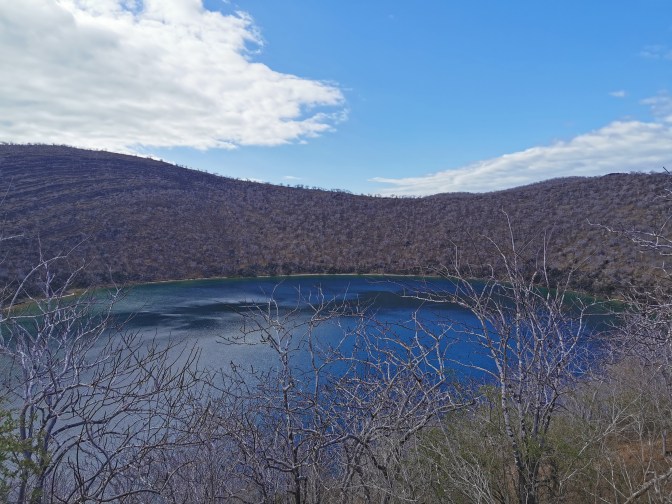
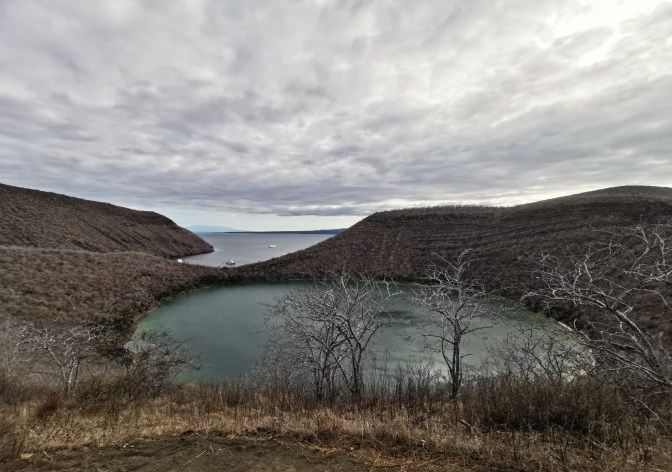
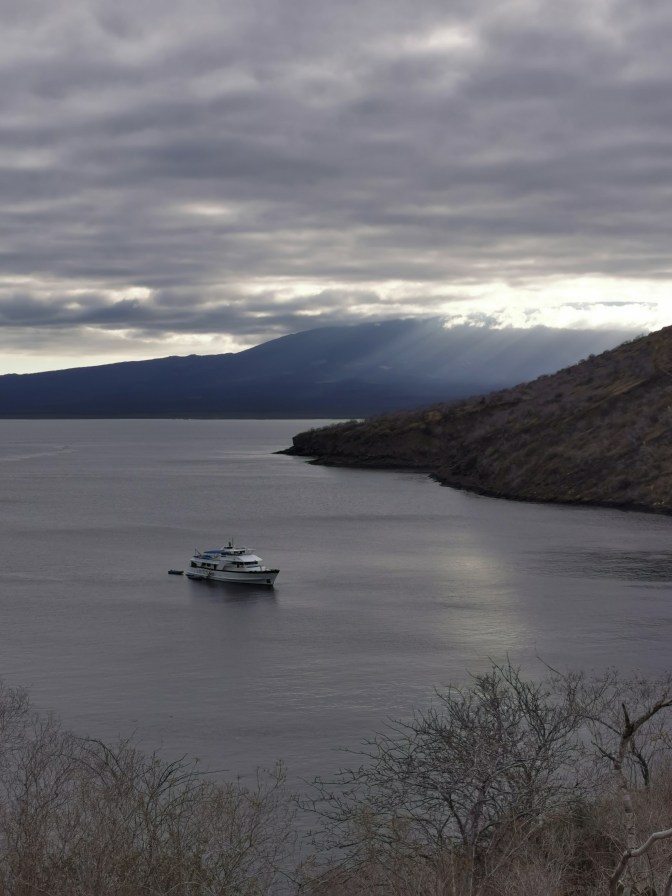
The main reason for walking up the hill was to reach a viewpoint above Darwin Lake. This lake is cut off from the ocean, despite being really close by, but is really salty. As we walked up the blue skies were slowly turning to grey and by the time we approached the main viewpoint looking back towards the ocean the sky was covered in cloud. Whilst the grey skies dulled the colour of the water a bit, the view was still stunning. We then continued walking up the hill to another viewpoint that gave panoramic views over other parts of the island. The distant volcanoes made this an impressive sight. We returned via the same route to get to the pangas, and then on the way back to the boat we took a bit of a detour to have another look along the cliffs in search of penguins. By the time we found them and headed back to the Beluga, the sun was setting and the sky was stunning.

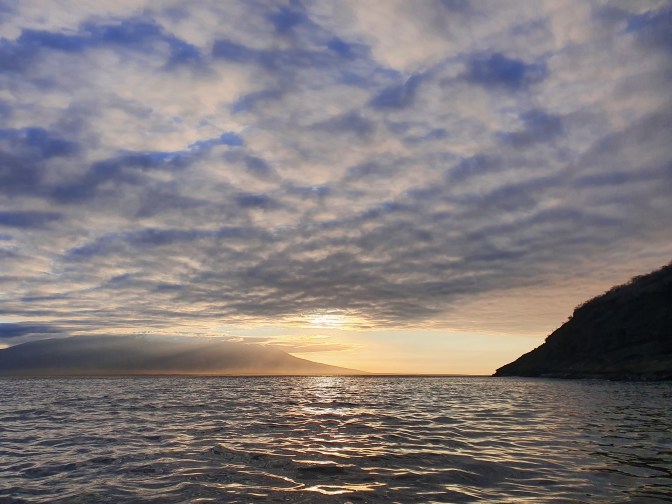
Another amazing day with unique animals and stunning places.
Day 4 – Fernandina Island, Vicente Rock and the Equator
Walking and Snorkelling at Fernandina Island
This was probably the point we were most looking forward to from our Galapagos cruise. Watching Planet Earth 2, as the baby marine iguana ran for it’s life from a host of snakes, sparked our imagination and was one of the main things that inspired us to make sure the Galapagos was part of our itinerary. Fernandina Island is the youngest of the Galapagos and is also one of the hardest to get to. The distance from the nearest town on Isabella means it can only be accessed on a cruise and even then, there are not many permits given out by the Parks Authority for permission to enter. Whilst our experience on Fernandina was not as intense as that of the Planet Earth crew, it was certainly stunning and memorable.
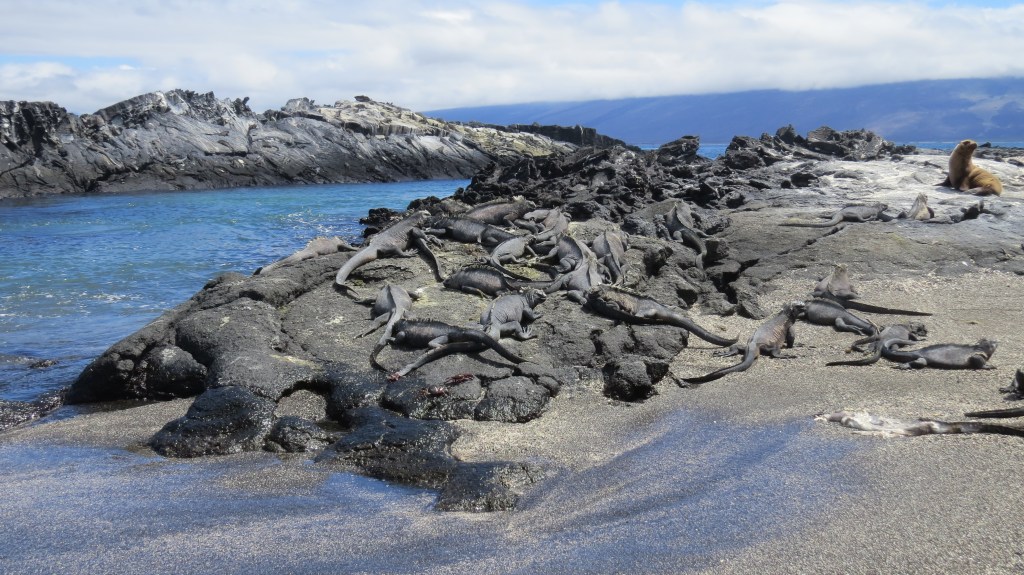
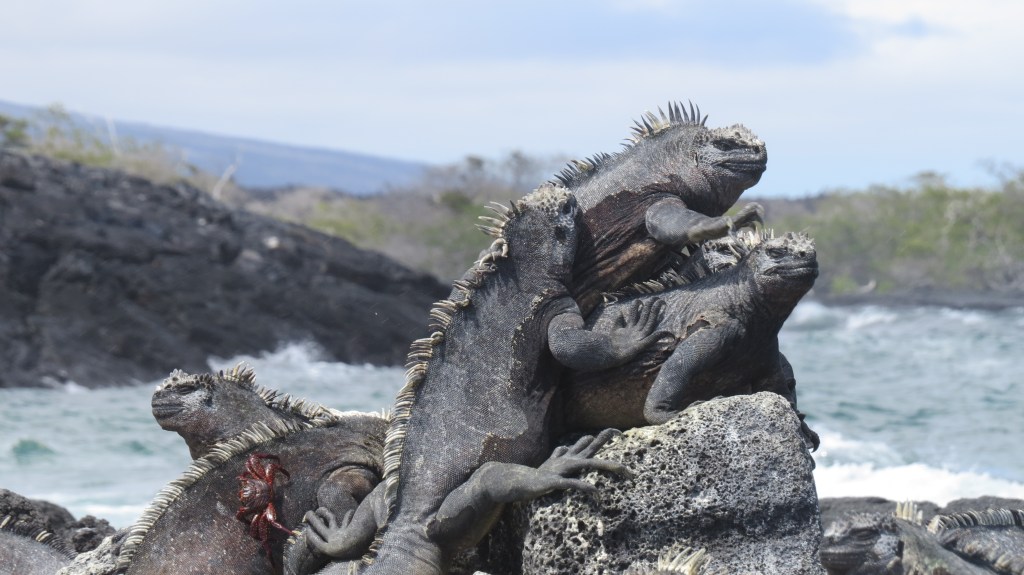
The first thing we did was to take the pangas to the docking point at Punta Espinosa so that we could go for a walk. The setting was beautiful, the flat land going on for ages until suddenly rising up to form the volcano. The peak was unfortunately shrouded in clouds but that did little to detract from the amazing scenery. We made our way over the lava fields and passed funny clumps of lava cacti before getting back towards the shore. At this point the rocks seemed to be shifting but the reality was that they were just covered in dozens upon dozens of marine iguanas. There were just so many of them all lying over each other, congregating in massive groups. We had thought that marine iguanas were everywhere on the islands previously, but this just took it to a whole other level. If they weren’t just lazing in the sunshine they were walking to and from the ocean, where you could see the odd one swimming in its rhythmical, rather-odd fashion. Instead of using just its tale or legs, the iguana moves its whole body to be able to propel itself through the water. Whilst the close proximity was useful for maintaining heat, it led to multiple fights as the iguanas squared up to each other, aggressively shaking their heads and occasionally crashing into the other. Although none of the fights lasted for long – it seemed to take just too much energy!
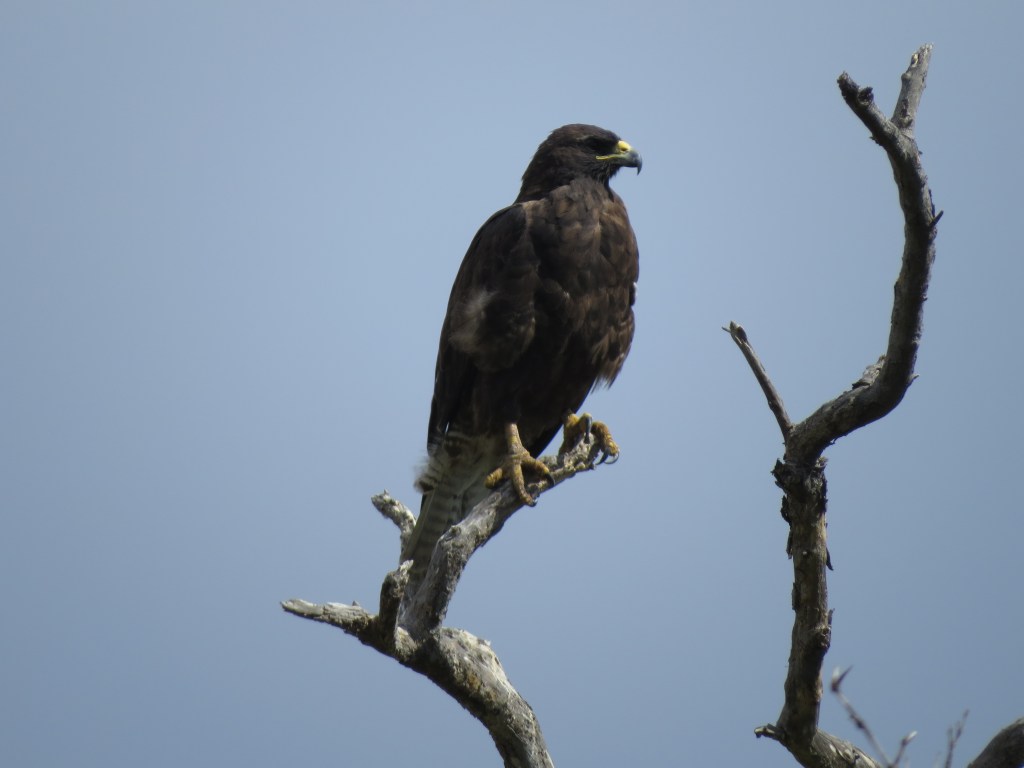
Whilst the iguanas were the main attraction, there was other wildlife to watch as well, although we unfortunately didn’t see any of the famous snakes. A majestic Galapagos Hawk surveyed the scene from its perch on top of a tree whilst lava lizards skittered along the floor away from your footsteps. There were also many sea lions lazing on the beaches.
After finishing the walk it was time to return to the Beluga and get changed to go snorkelling. It was the best one yet because, as well as the multitude of turtles, we got to swim with the marine iguanas. Seeing them swim from the shore was a very cool experience but being in the water with them and seeing them swimming down to the sea floor to feed on seaweed was just amazing.
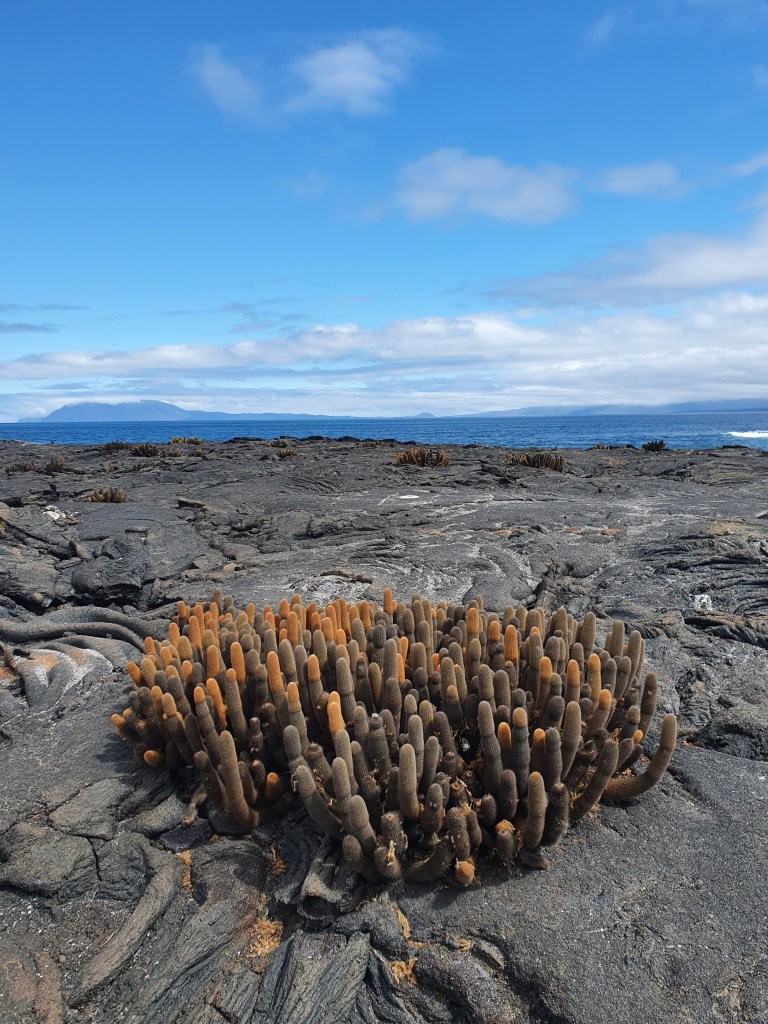
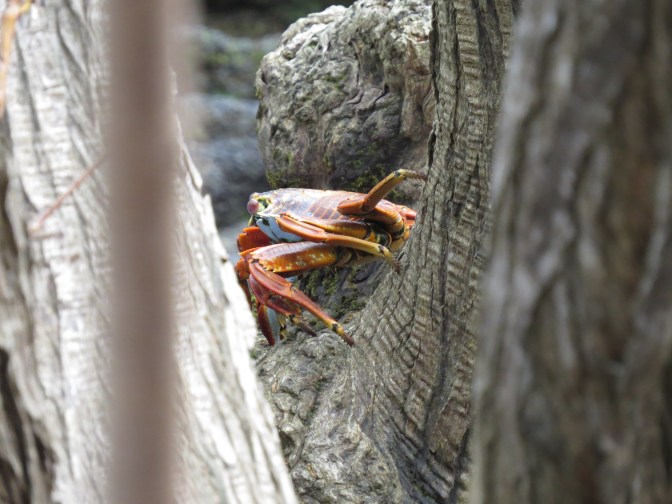
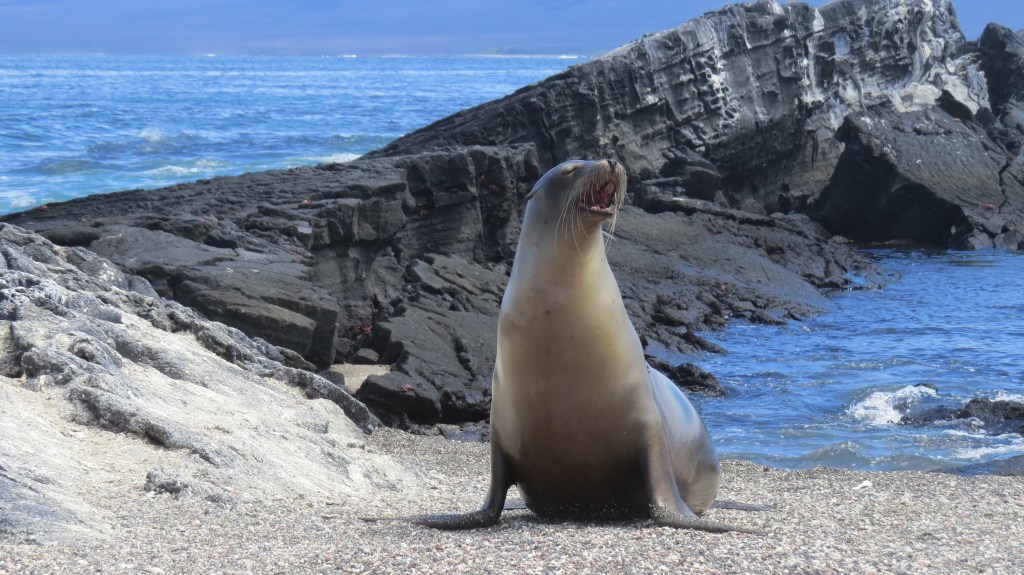
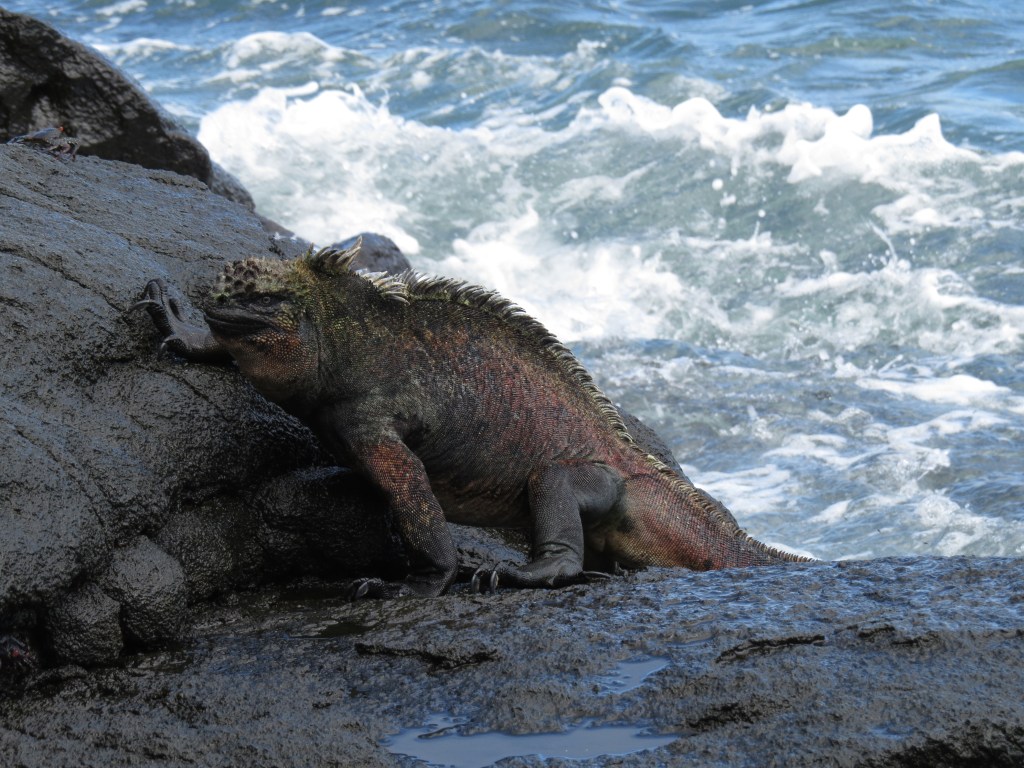
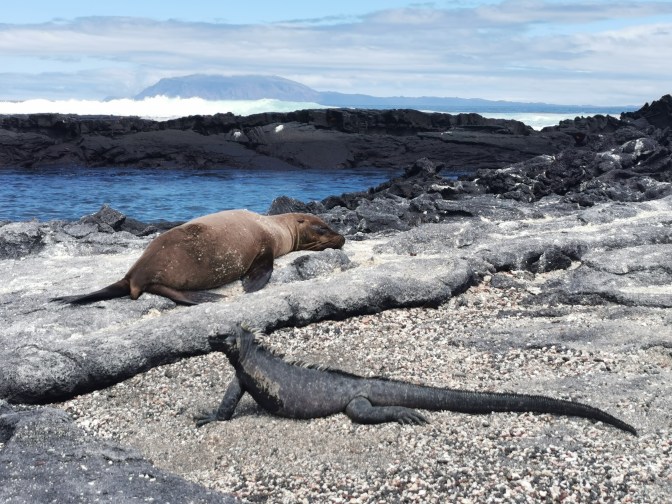
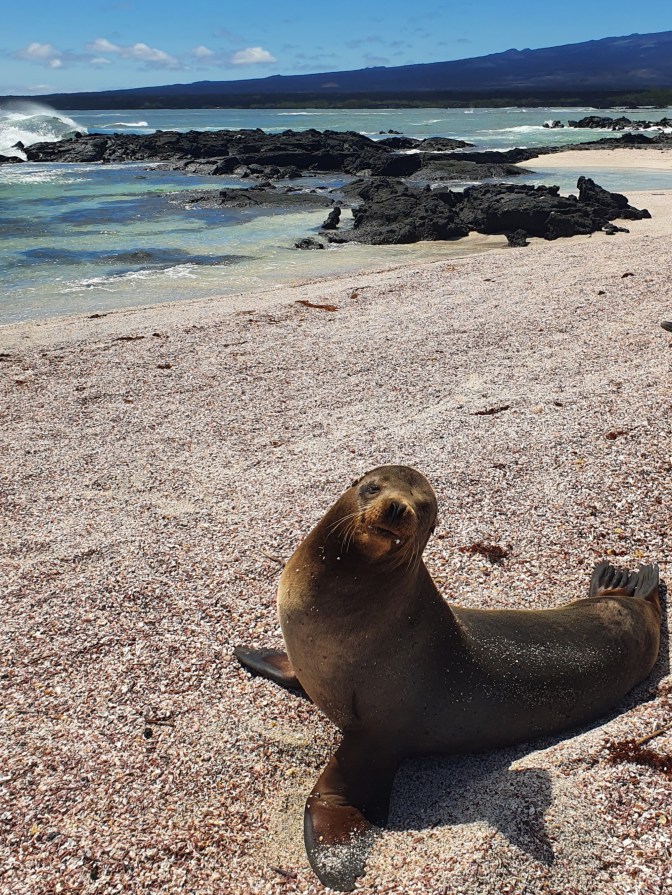
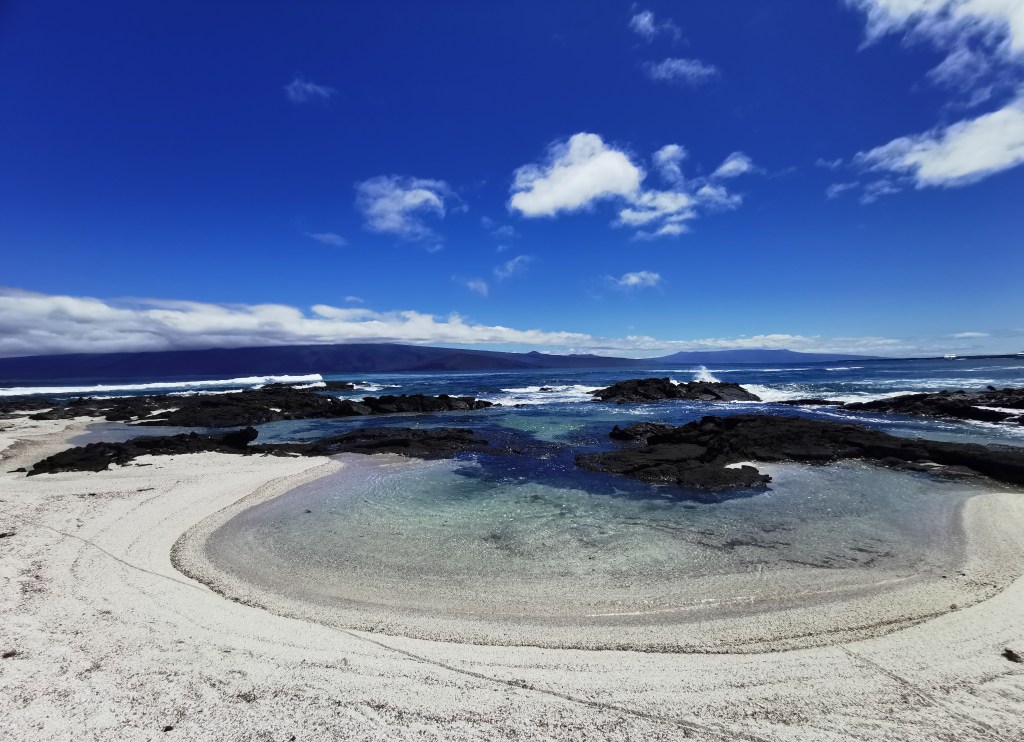
Fernandina met every expectation we had and then some.
Snorkelling at Vicente Rock
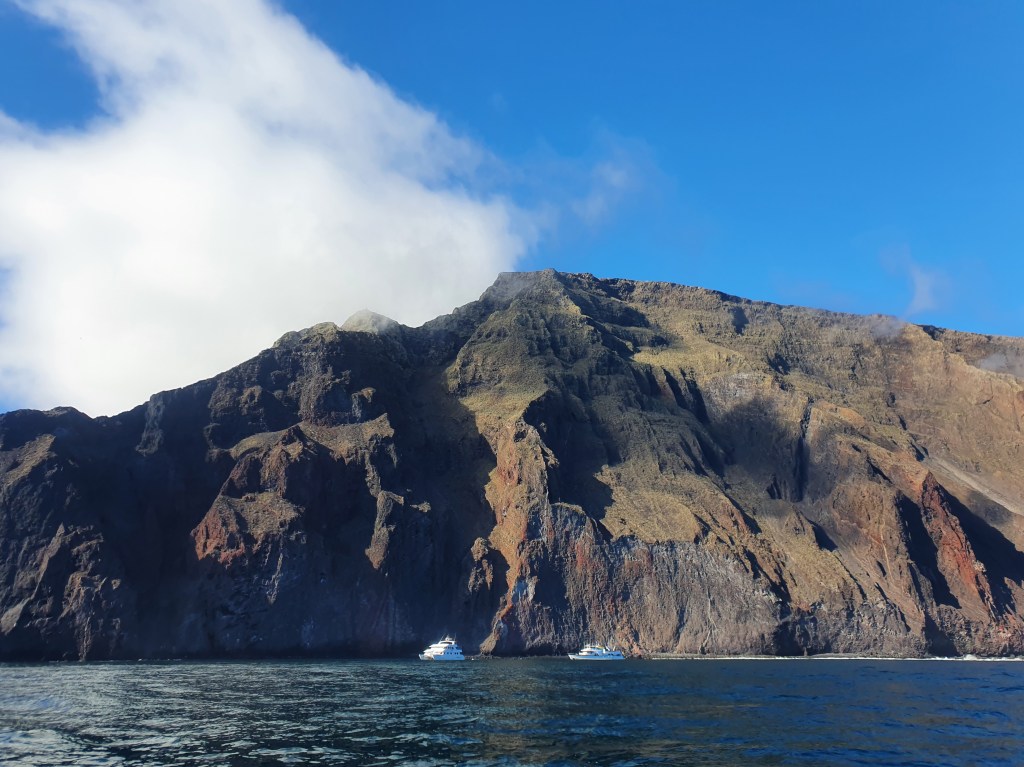
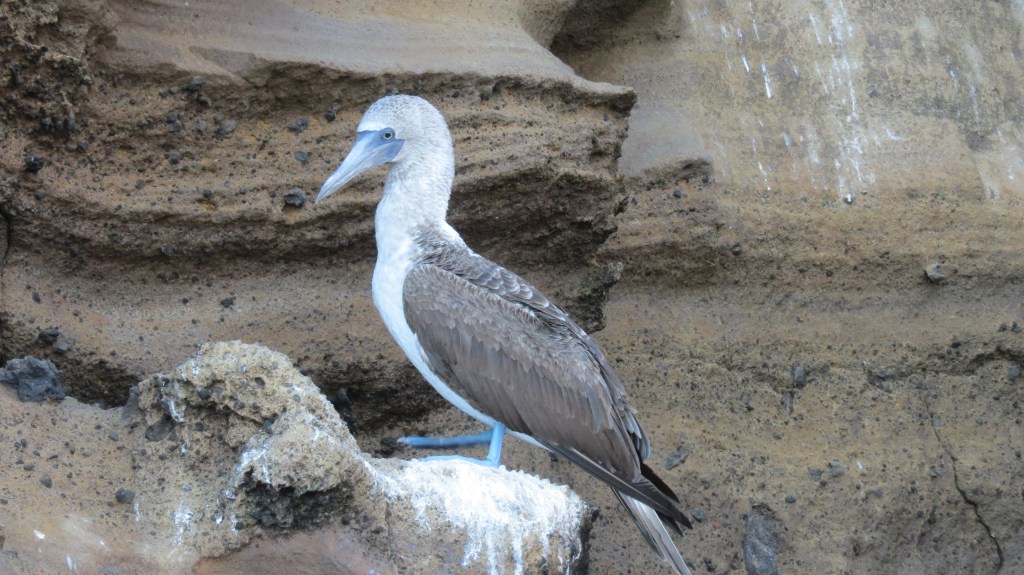
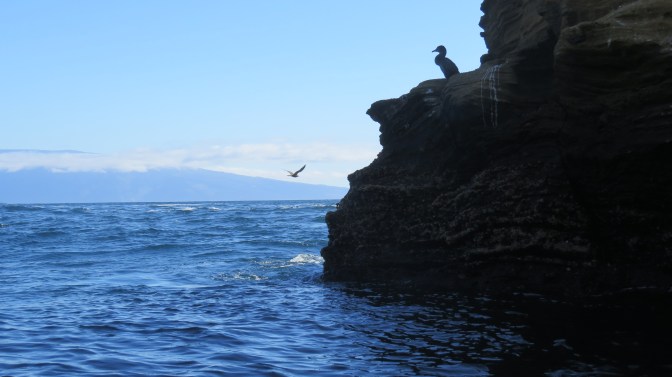
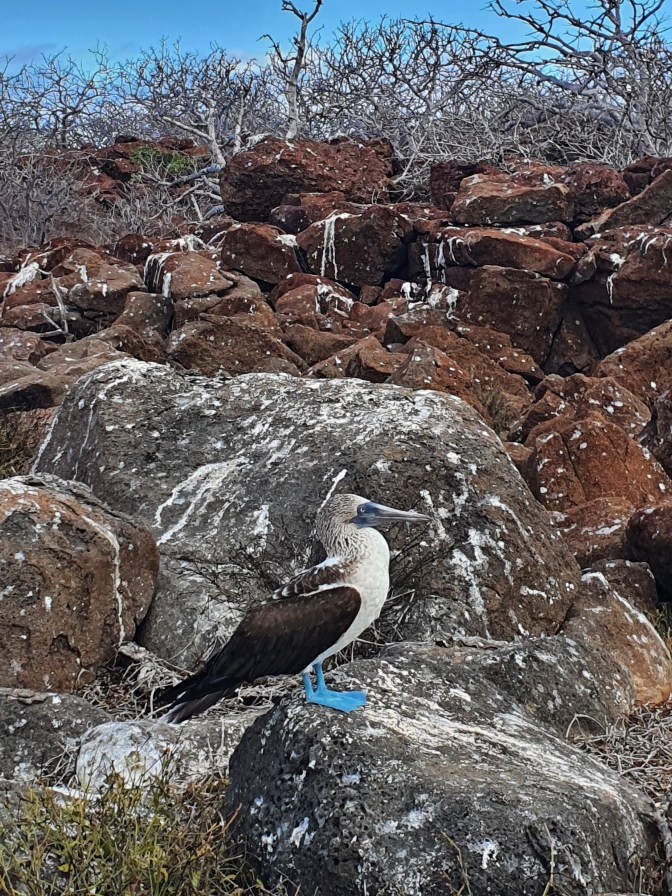
As we had some lunch, the boat carried on north towards Vicente Rock. This is a picturesque stretch of cliffs at the edge of a cove, which we had a closer look at by heading out on the pangas. We got our first proper look at a Blue-footed Booby, one of the iconic species of the Galapagos. With its bright blue feet and beady eyes, it quickly became one of our favourite animals.
As we made our way into the cove to go snorkelling we spotted a pod of dolphins in the distance back the way we had just come, so we sped out to try and meet them but they were heading in the opposite direction at speed so we had no chance. So on the second time of asking we made our way into the cove and went to the water. It was worth the wait. As well as a multitude of fish that seemed to hug the edge of the cliffs, there were a few penguins that were fishing and repeatedly swam past us, only a few metres away. Then, just before we got out, a couple of sea lions came to play, swimming in amongst the different members of the group not unlike puppies come to see what was happening. As amazing as this snorkelling spot had been, it was really cold so I was happy to get back on the boat.
The Equator
As we headed north around the top of Isabella, we were all called to the bridge so that we could ‘celebrate’ crossing the equator. It could have been a bit gimmicky but it was actually quite enjoyable. We were each given a drink and it was fun to watch the dial head towards zero – it was a bit like counting down the clock until New Year. It was also interesting to just be on the bridge with the captain and other crew members that we rarely saw.
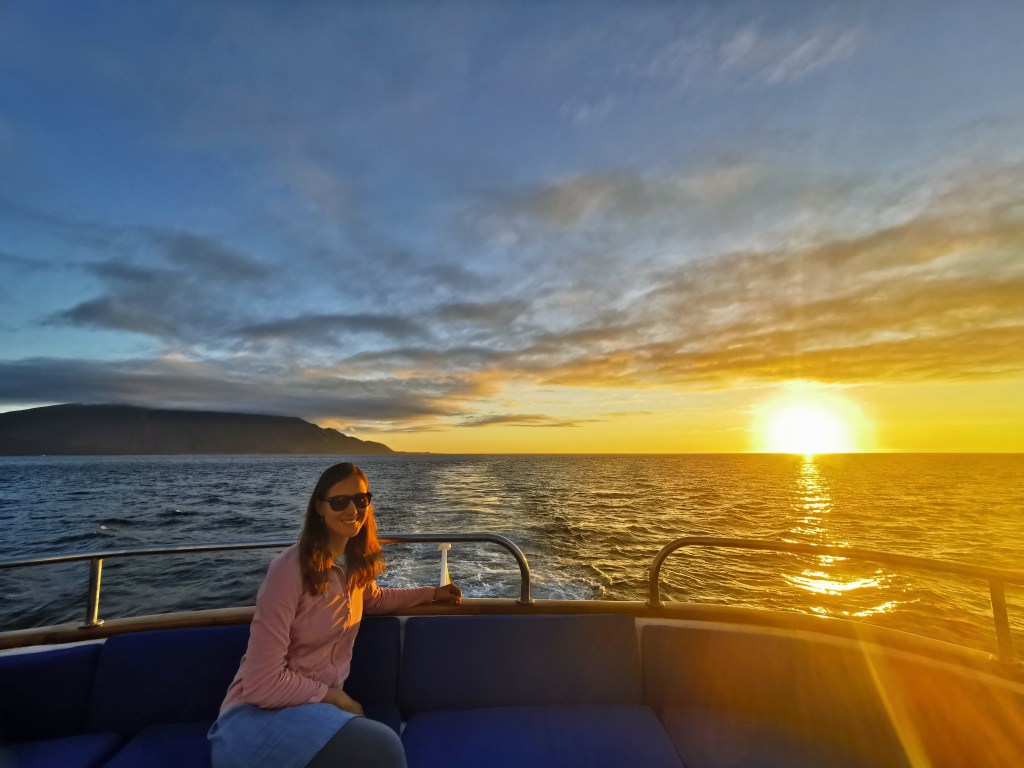
After we had passed, we headed out onto the deck and waited for what would be another beautiful sunset. It was such a nice way to end another amazing day.

Day 5 – Kayaking, Bartolomé Island and Dolphins
Kayaking and Snorkelling at Buccaneer’s Cove
The boat had been sailing a good portion of the night so when we got up we had left Isabella behind and were now at the North-Westerly point of Santiago Island.
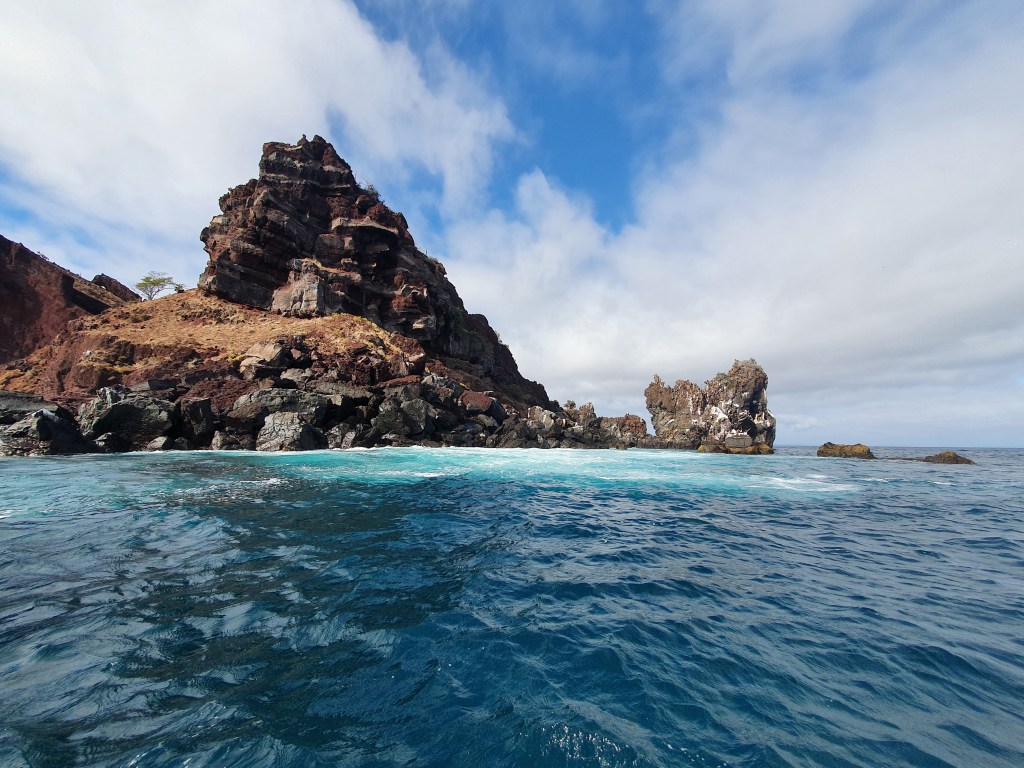
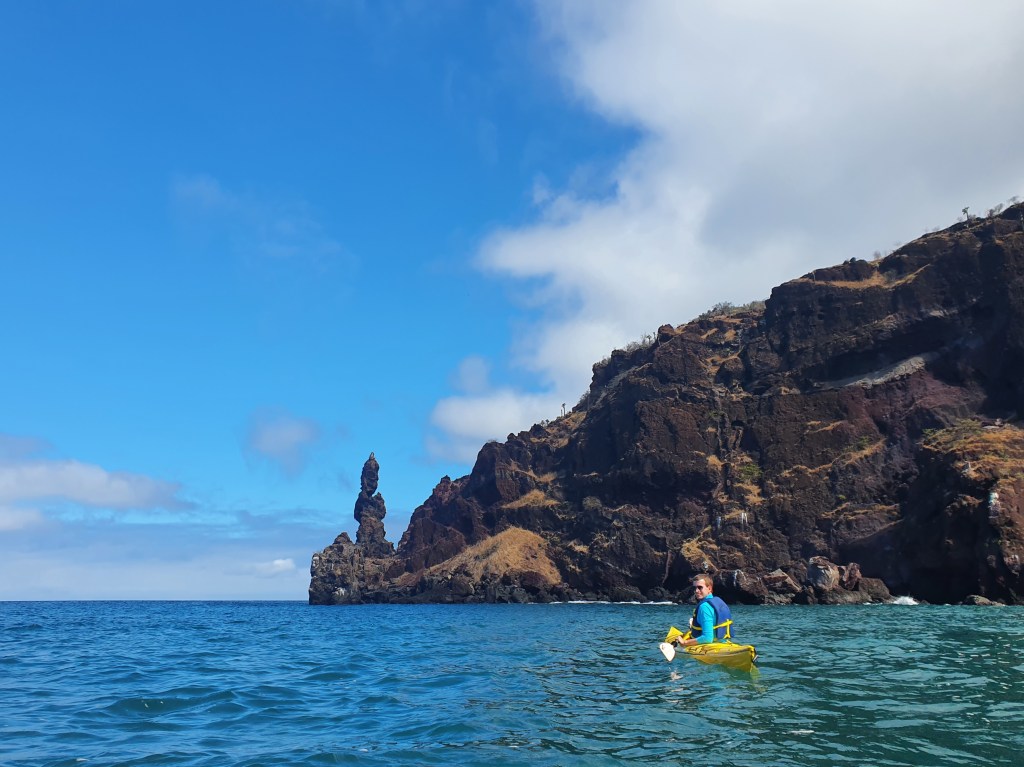
The first activity was to go kayaking along the cliffs at Buccaneers Cove. There were not enough kayaks for everyone at once, so whilst one group made their way in the kayaks to a certain point, the others explored the cliffs in the pangas, before swapping and heading back to the ship. Whilst on the pangas we were lucky enough to spot more Blue-footed Boobies and also a rarer Nazca Booby. The kayaking was a really fun activity and we were able to explore the rocks and a sea cave. One of the things that I had been worried about when deciding to do a cruise or not was whether we’d just spend most of the day sitting on a boat. Well, this could not be further from the truth. Each day was filled with activities and there was a real variety as well.
After returning the kayaks to the Beluga, it was time to snorkel in the same area. The highlight was returning to the cave we had kayaked into earlier. There were so many fish just under the surface that we had been completely unaware of just half an hour previously.
Bartolomé Island
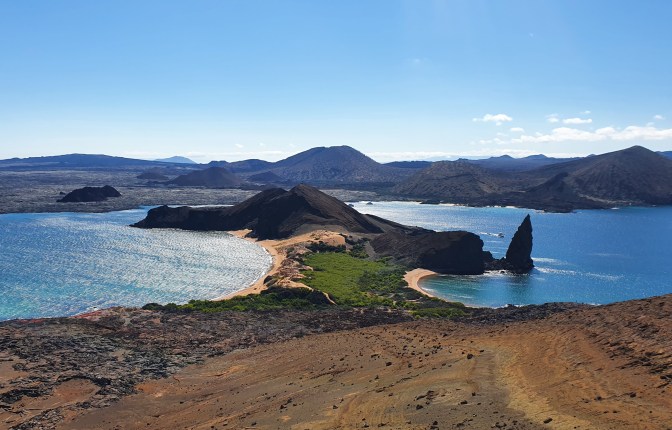
After travelling around the north of Santiago Island, we came to the much smaller Bartolomé Island. The main reason for coming here was to visit the viewpoint that adorns post cards across the Galapagos. After docking you need to follow wooden steps on a short but relatively steep walkway up towards the small lighthouse on top of the hill.
The view from there is pretty special. With the pale beaches each side of the narrow peninsula contrasting with the deep blue of the ocean it was already a beautiful view, even without the interesting shape of Pinnacle Rock. Despite this being the obvious attraction, don’t forget to also turn around and enjoy the view of the lighthouse as well. The guide said that no-one is sure why Pinnacle Rock has such a distinctive shape. One of the theories is that it was used as target practise during the second world war by American fighter planes, who were stationed at the near-by Baltra Island.
After returning to the Beluga, it was time to snorkel in the waters near to the Pinnacle Rock. It was another lovely spot with clear waters and plenty of wildlife beneath the surface.
Sunset and Dolphins
In the evening we were all outside on the deck enjoying our last amazing sunset on board the cruise. It was all very serene and peaceful but just as the sun was disappearing beyond the horizon, someone noticed that a pod of dolphins were swimming at the prow of the ship. They seemed to be racing the boat and when they picked up enough speed they’re jump clean out of the water. We’d been secretly hoping to see some and for it to happen on the last evening was amazing. But the best had yet to come. The dolphins seemed to have left so half of us had already made our way back inside in preparation for dinner. Whilst we were waiting there was a commotion outside so we quickly darted back out. By this point it had gone dark so I had no idea what the others who had stayed outside could be watching. I couldn’t quite believe what I was seeing. The dolphins were back, swimming and jumping alongside the boat but what was unbelievable was that they were glowing. Yes glowing. Not the whole animal but the edges. Breaking the surface, they were disturbing the bioluminescent algae in the water so you could see the outline of the dolphins. Its hard to describe such a magical experience. I didn’t even bother trying to take a photo as I just wanted to enjoy it but I promise you it happened – I don’t think I’d have the imagination to make it up. When they did leave and we went inside to eat we were all in a bit of shock, we couldn’t quite believe it.
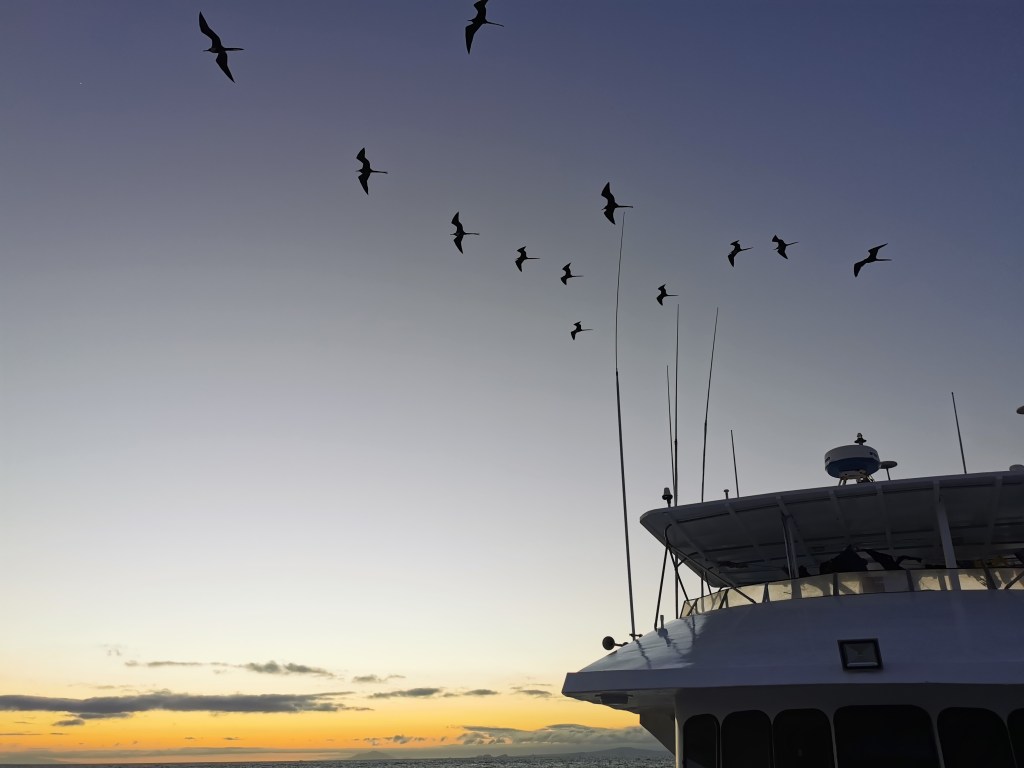
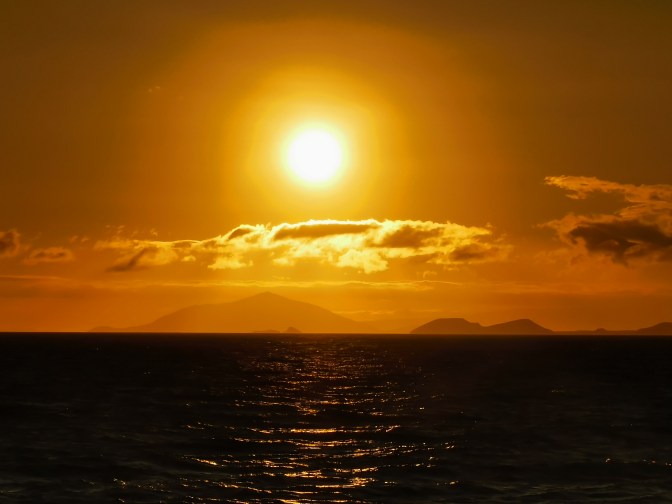
Not a bad last evening onboard…
Day 6 – North Seymour and finishing the cruise
Walking on North Seymour
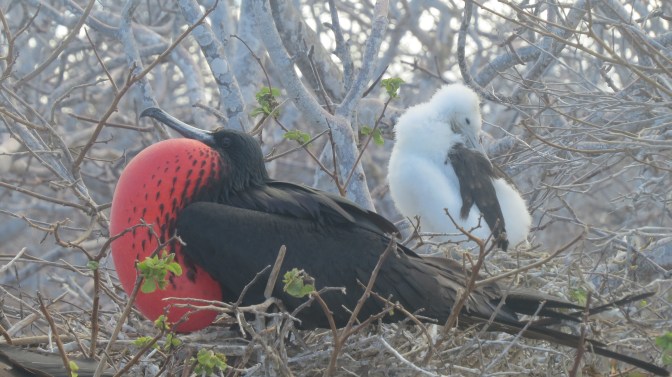
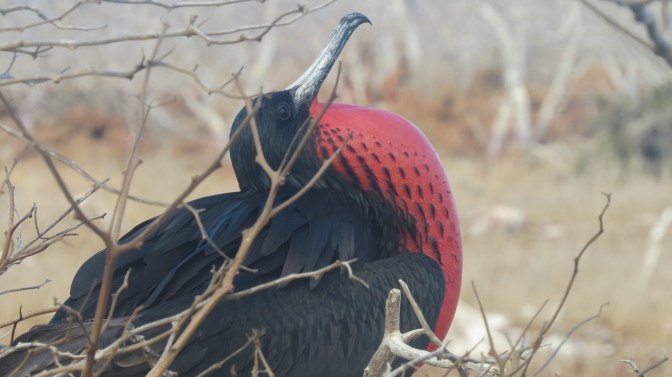
It was quite sad to be waking up on our last day on the cruise but there was still one more exciting activity to come. We had seen Frigate birds throughout the cruise, either on the excursions or flying along with the boat but North Seymour is where they build their nests and raise their young. This is also where you can see the male frigates inflate their throat as part of their unique mating rituals.
After taking the pangas to shore, we made a loop through the small bare trees. Well, bare in terms of leaves but certainly not in terms of birds. There were dozens if not hundreds of them. And it wasn’t long before we saw our first male puff up the bright red sack of it’s throat and start beating its wings. Others simply held out their wings as if to say, ‘look at me, aren’t I magnificent’. There were also plenty of females and the chicks were still quite fluffy despite being pretty big at this stage.
As well as the frigates as the main attraction, there were also some blu-footed boobies and sea lions dotted around. So this was a really nice activity to finish with.

Finishing the cruise at Baltra Island
Sadly, all good things must come to an end and our last action aboard the Beluga was to be dropped off at the airport on Baltra Island. We were part of the fortunate few who were staying longer on the islands, so we said goodbye to our new friends and started the journey back to Puerto Ayora on Santa Cruz Island.
Final Thoughts
This is already a long read so I’m not going to lengthen it much further. Especially when there’s not too much left to say. It was just an absolutely unforgettable experience. The places we got to visit and the interactions with the wildlife are just unique in the world. We were just unbelievably lucky with this trip of a lifetime.

