15th – 19th November 2021
The Amazon is the largest and most diverse rainforest on Earth, covering approximately 6.7 million square kilometres, spread over 8 countries and one overseas territory. Whilst there were plenty of options of where to visit this natural wonder, we decided to make the trip when we were in Ecuador. Even once we had decided on the country, there were more decisions to make in terms of the reserve we wanted to visit, until we ended up booking to travel to Cuyabeno. If you want to read about some of the factors in making our decision, then please click here. This article, however, is all about our actual adventure in the Amazon. So if you’re interested in our experiences there, then please read on…
Contents
Day 3 – Trip to the Indigenous Village
Choosing the actual package
We booked our trip through Carpe DM Adventures in Quito. This was the agency linked to the hostel we stayed at and we ended up going back to the hostel on each of the five separate occasions we ended up in Quito during our time in Ecuador. This was because of the kindness and helpfulness of the staff there (especially Fernanda). Due to this, we mainly went with their recommendations regarding which lodge to choose, despite them openly telling us that they were investors in Tucan Lodge.
Having completed the trip, we were glad to have stayed at the Tucan Lodge. One of our reservations about this choice was that it was far from the main lagoon, where some of the more established lodges are situated. This, however, turned out not to be an issue and was maybe even an advantage. The lagoon is beautiful, but we went there every evening for sunset and it meant that you spent more time on the rivers going back and forth – this was the best place to spot wildlife and was a very pleasant way to spend the time.
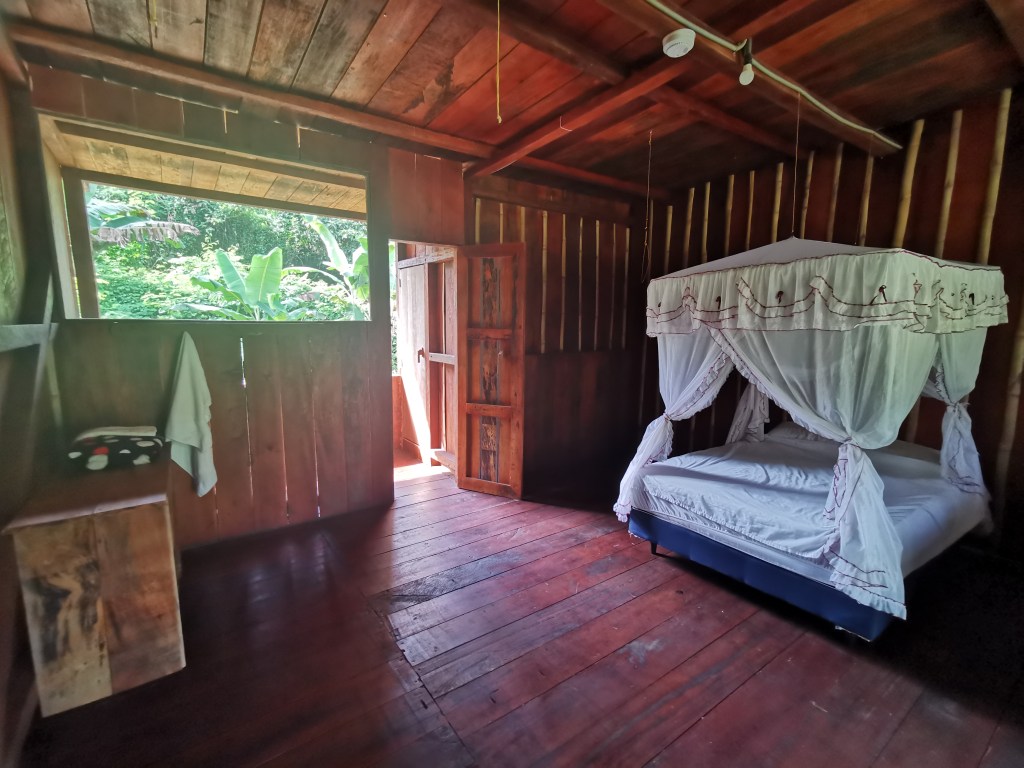
Given that Tucan Lodge is one of the newer lodges (they were still planning on adding more cabins and changing the layouts of the existing ones) we got a pretty good deal for staying there. It also meant that the cabins were newly built and, whilst obviously still fairly basic, they were spacious, light, had good mosquito nets and, rather surprisingly, had nice private bathrooms per cabin.
Having chosen the lodge, we just had to decide on the length of visit. We went with the longer ‘5 days 4 nights’ option and are very glad we did. If your budget and schedule allow for it, we’d definitely recommend staying for the extra day – we would happily have stayed longer if we’d been able!
Day 1 – Travelling from Quito
There are three potential ways of getting from Quito to the entrance to the reserve. The first is to take public buses. This is the cheapest option, but takes the longest time and is quite a lot of hassle to organise. The second option is to fly most of the way. This is the quickest route, but is also the most expensive option. You also still need to get to the entrance itself and you are reliant on their timetable, which restricts the dates you can book. We very briefly looked at this second option, but as we were travelling during the COVID pandemic, they had cancelled all of those flights due to the reduced numbers of tourists. I do not know whether they have started up again since. The third option was to take a private bus that was organised by a group of hostels. This option was more expensive than a public bus, but eliminated a lot of hassle in getting to the entrance and also did not stop as often – meaning you get there faster and at least have a better chance to get some sleep on the long journey. For the reduced amount of hassle, we went with the third option.
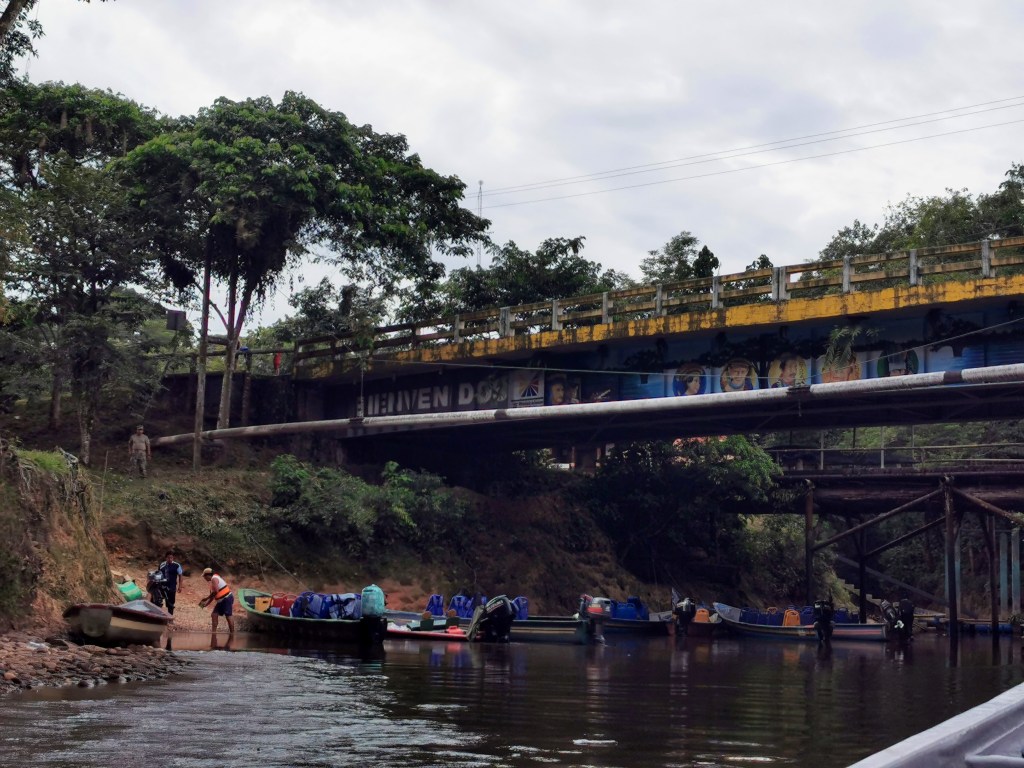
We were picked up from our hostel a bit before midnight and proceeded to stop off at a couple of other hostels in Quito before starting the journey. The bus was not full, which meant we could spread out and have a bit more space to get some sleep. The journey went smoothly and we arrived at our destination in the morning, well in advance of the projected meeting time. The destination was the bridge at the entrance to the Cuyabeno Wildlife Reserve, and it is where you meet the motorised canoe that will take you to your lodge.
This time period was a bit confusing in that there was no one around to really explain what was going on. Each lodge is responsible for their own canoe, and you didn’t know exactly when it would turn up. We were also the only people on the coach that were heading to the Tucan Lodge, so we couldn’t group together. So we just hung around, hoping that it would become obvious when we needed to go. There was a stall where you could get some breakfast and a little shop where you could stock up on supplies if necessary, there was also quite a bit of birdlife flying about the trees, so we were kept busy. A flock of macaws also flew overhead and settled in a tree not too far away – so it wasn’t a bad introduction to the jungle!
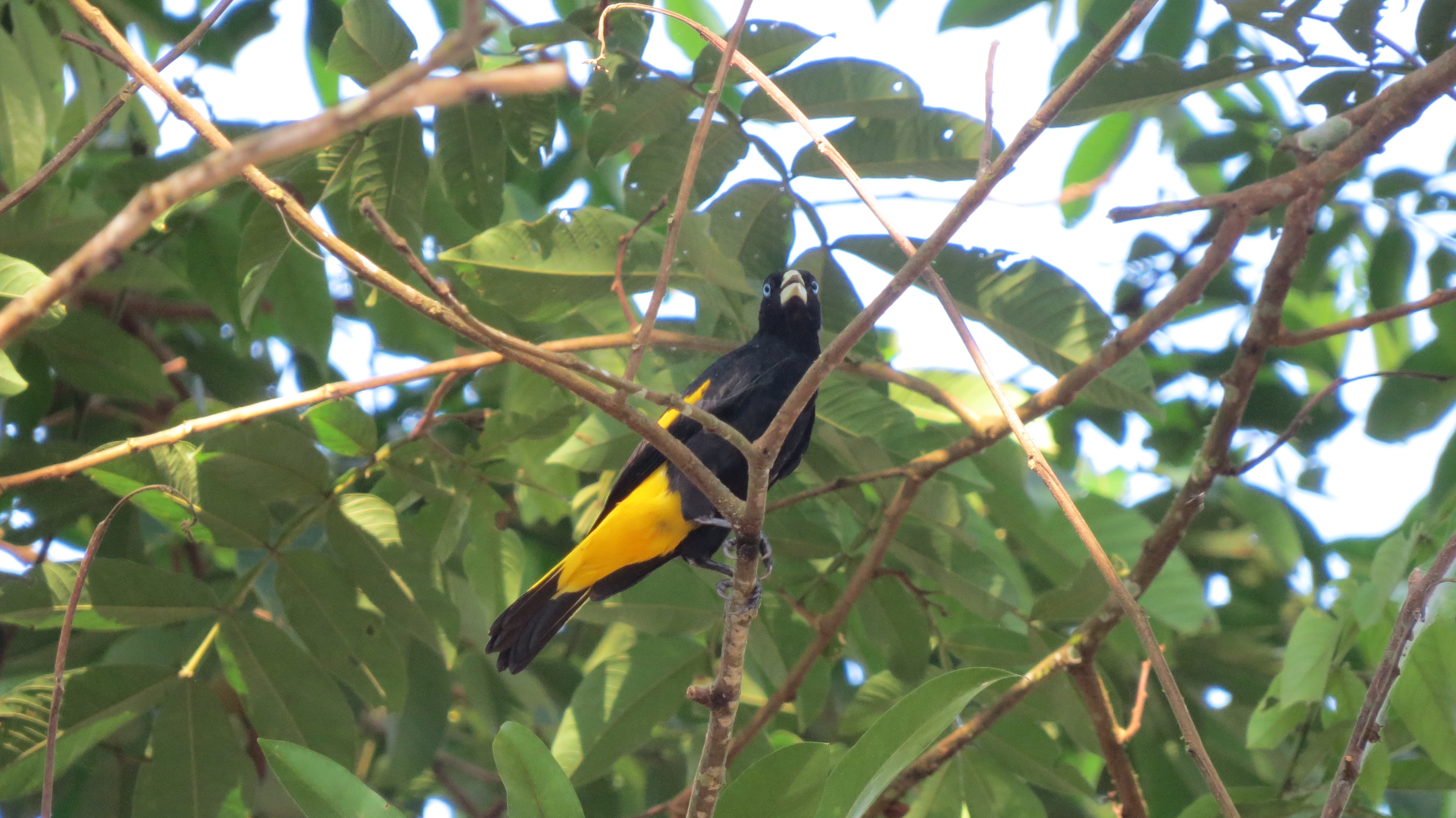

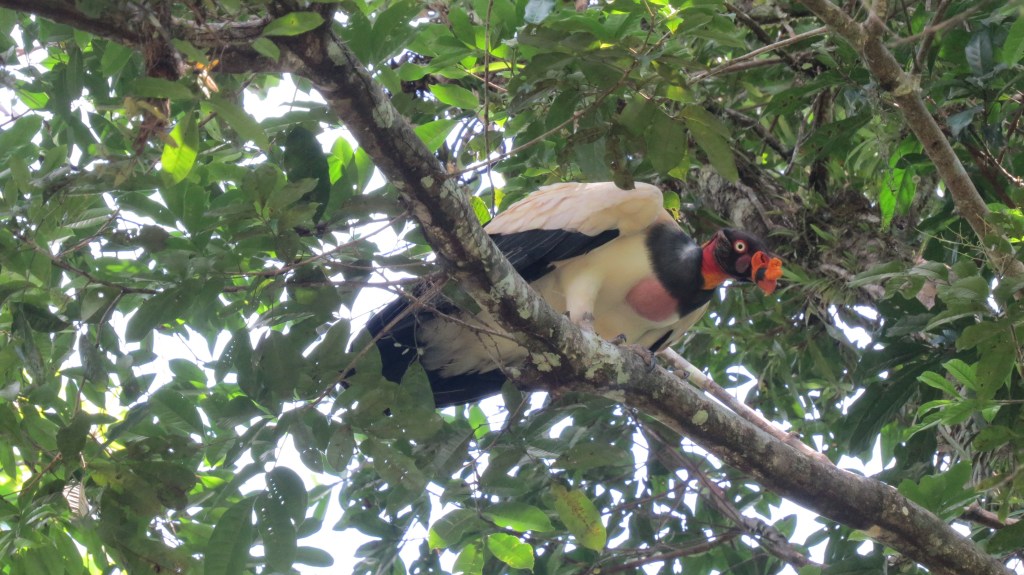
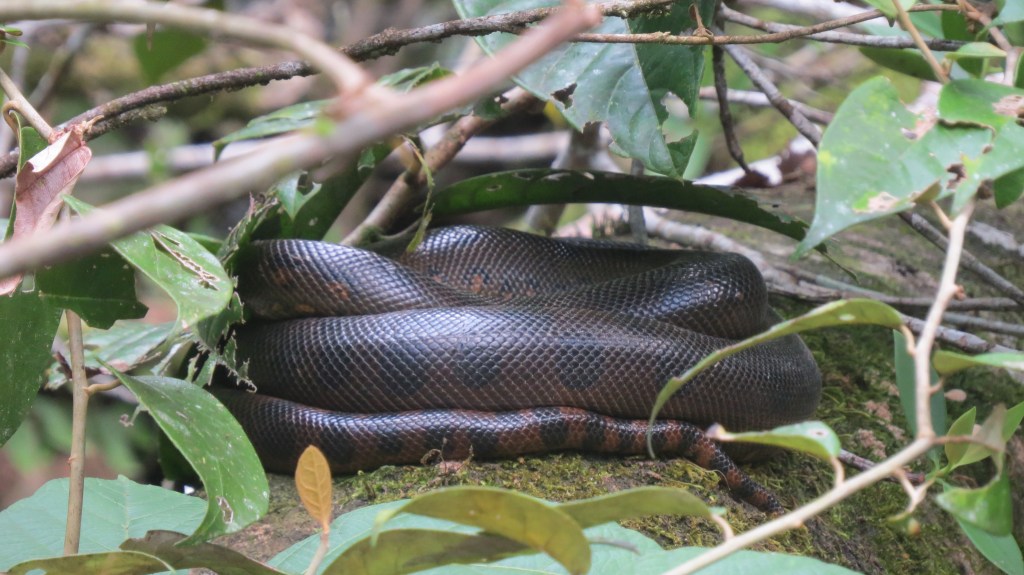
We were waiting for quite a while but in the end it wasn’t a problem linking up with the correct canoe and it felt like our Amazon adventure was starting properly. The journey was really cool, it was nice just heading down the river, but the guide would point out different animals and we stopped a few times to be able to get a better look. So by the time we got to the lodge we’d already ticked off a couple of species of monkey, some interesting birds and an anaconda. We thought the anaconda was pretty big but we hadn’t seen anything yet…
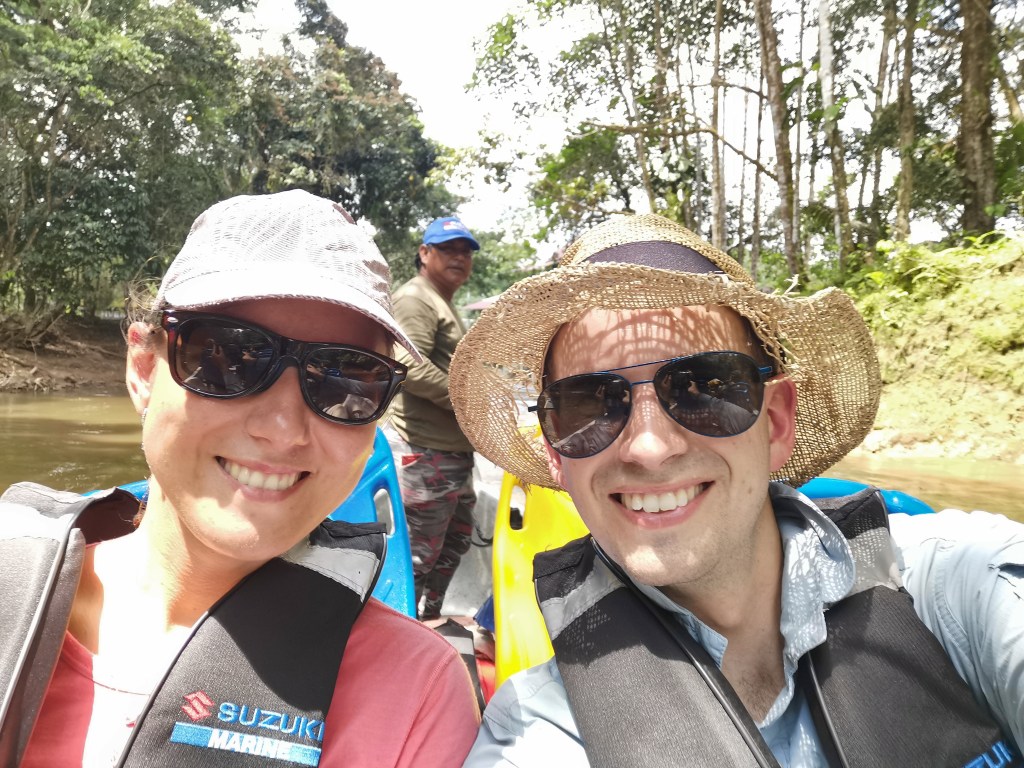
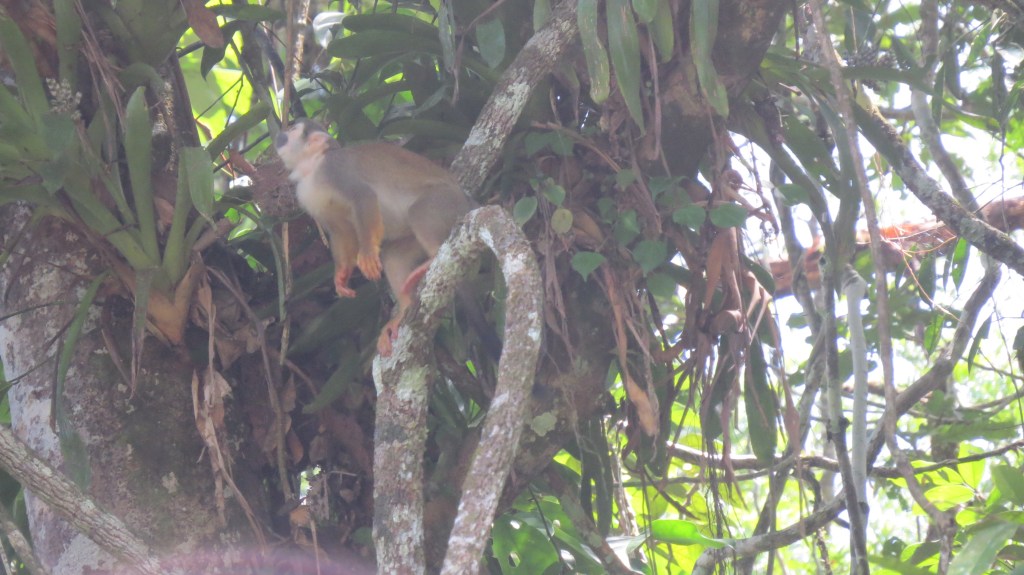
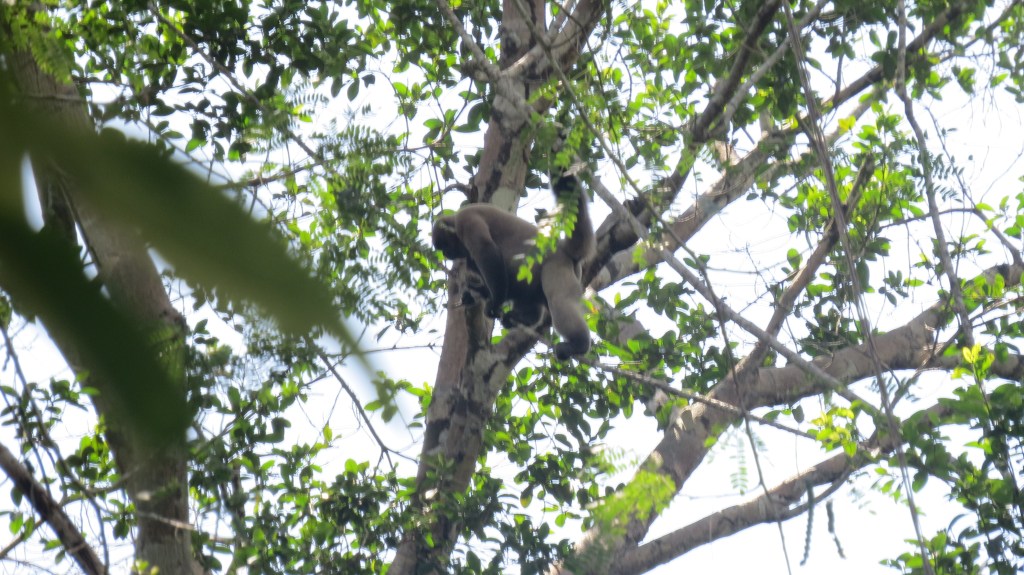
We arrived at the lodge in the early afternoon and were provided with lunch. The main guide and the other residents were off on a trip, so after eating we had time to just relax in our cabin for a couple hours. We didn’t know what to expect from the cabins, but as I mentioned earlier, we were pretty impressed with how spacious they are and the fact that they had a private bathroom.
Given it’s proximity to the equator, sunset was just after 6pm. So an hour or so beforehand, we met up with the others who were staying at the lodge and whom had arrived the day before, along with the main guide, and headed back out on the motorised canoe. The destination was the major lagoon, where several of the other lodges were situated. Heading there for sunset was an amazing daily ritual, with the journey back and forth being part of the fun. It took about half an hour to forty minutes to get to the lagoon and we managed to spot several interesting birds, including our first toucan of the trip. The lagoon itself can be a good place to spot the famous pink river dolphins, but we were not lucky enough on this visit. However, there were plenty of herons in the trees around the edges and our driver took us to a specific place to see something else…
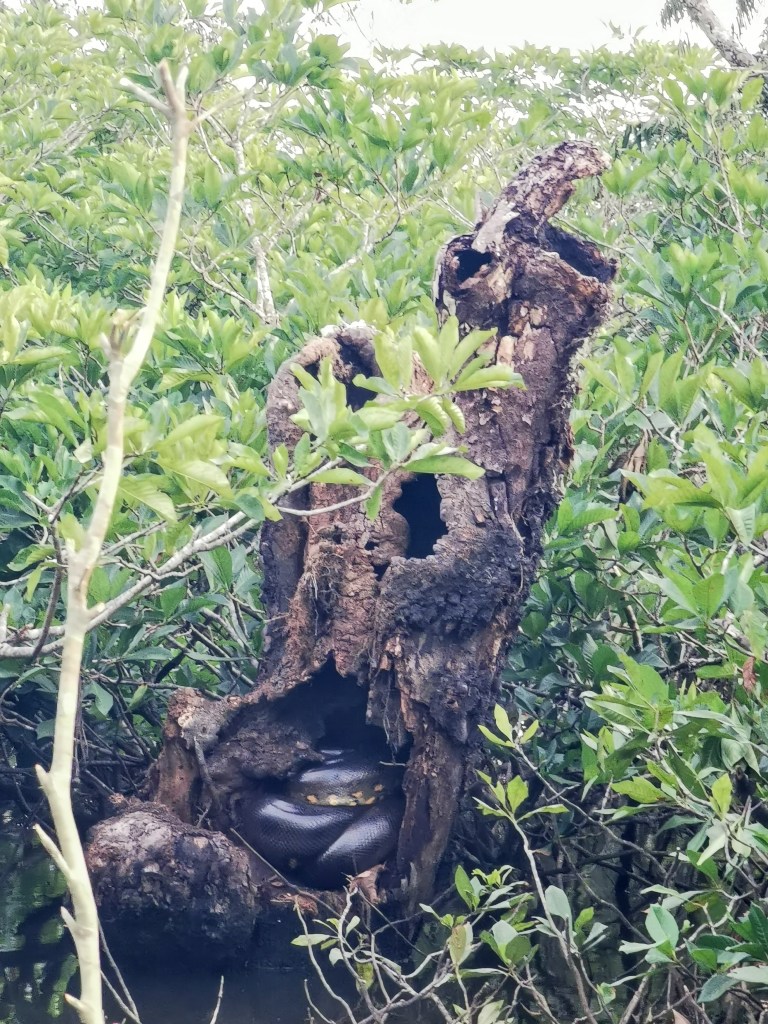
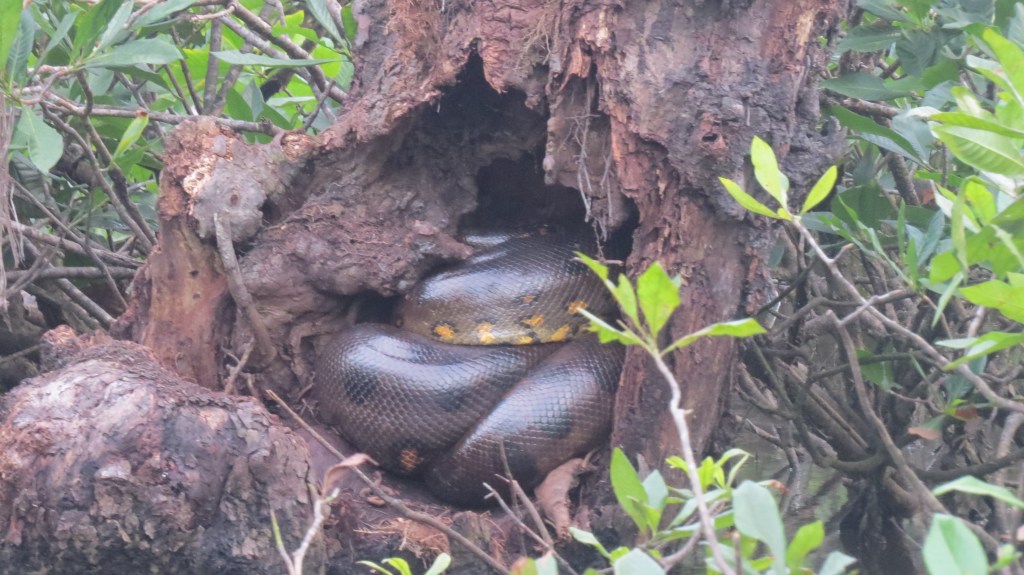
Yes, that is a 12m long Anaconda… And the pictures do not do it justice, it was just so surreal to be in a boat a few metres from such an impressive creature.
After this surprise, we headed out to the middle of the lagoon to enjoy the sunset. It was a really beautiful place to be. Afterwards we were told it was time for a swim. I thought they were joking given that it was the same stretch of water as the massive snake we had just seen, but no they weren’t. Apparently the anacondas, piranhas and caimans do not go to the deeper water in the middle of the lagoon, so after the initial trepidation, we went for a very refreshing dip.
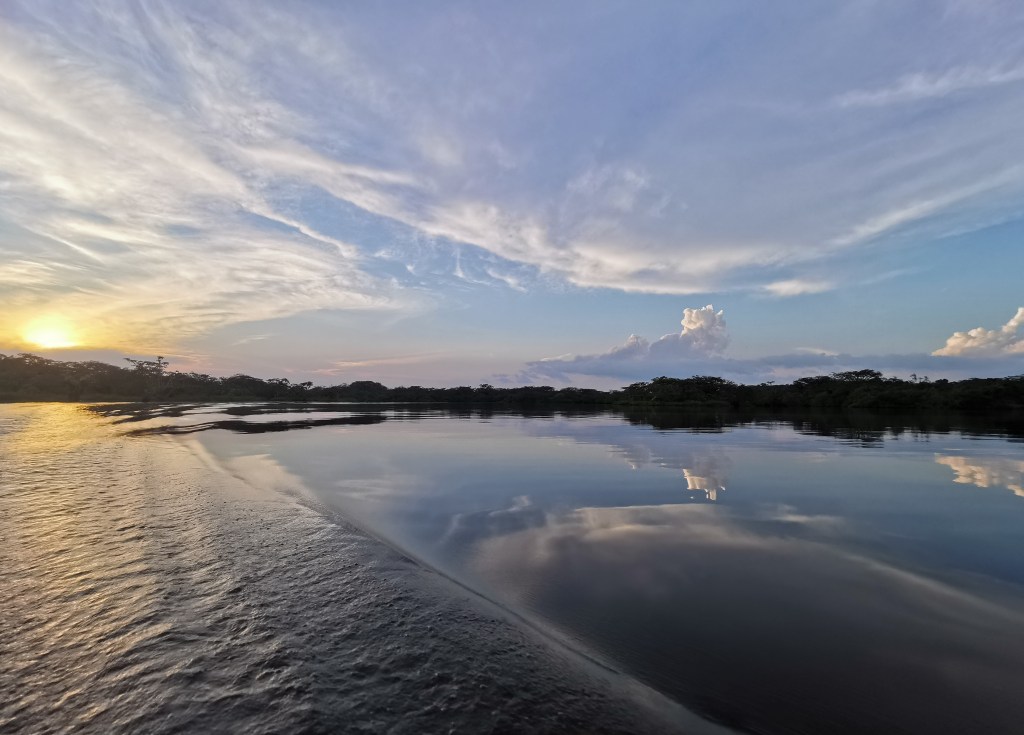

After we’d all dried off, it was time to head back to the lodge. But this just meant more wildlife spotting, although we were much more reliant on the guide – I have no idea how he spotted the things he did, even with his strong head torch. The finds included snakes and caiman, with the latter being found by their eyes reflecting back the light from the torch, much like a cats eye. For the snakes, the canoe often got really close into the foliage on the edges, meaning dodging of branches added to the fun.
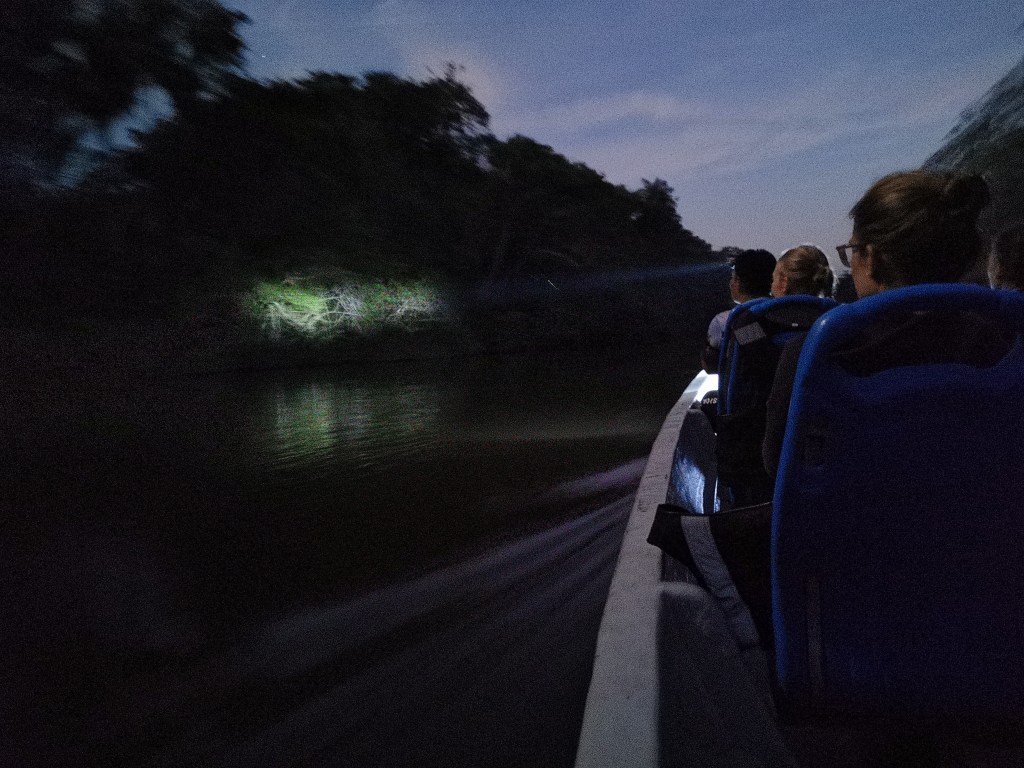
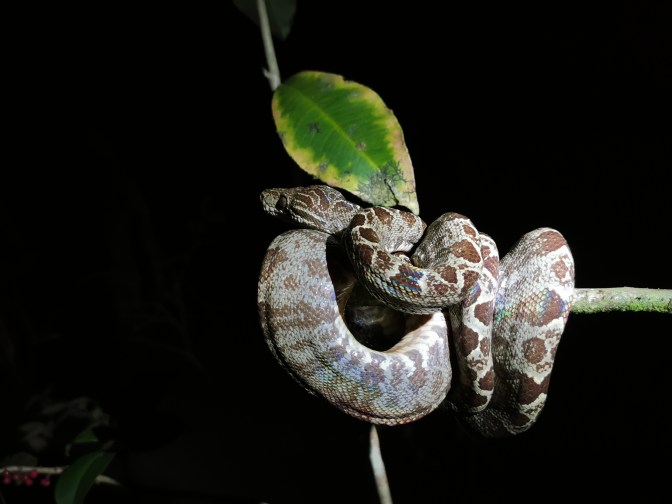
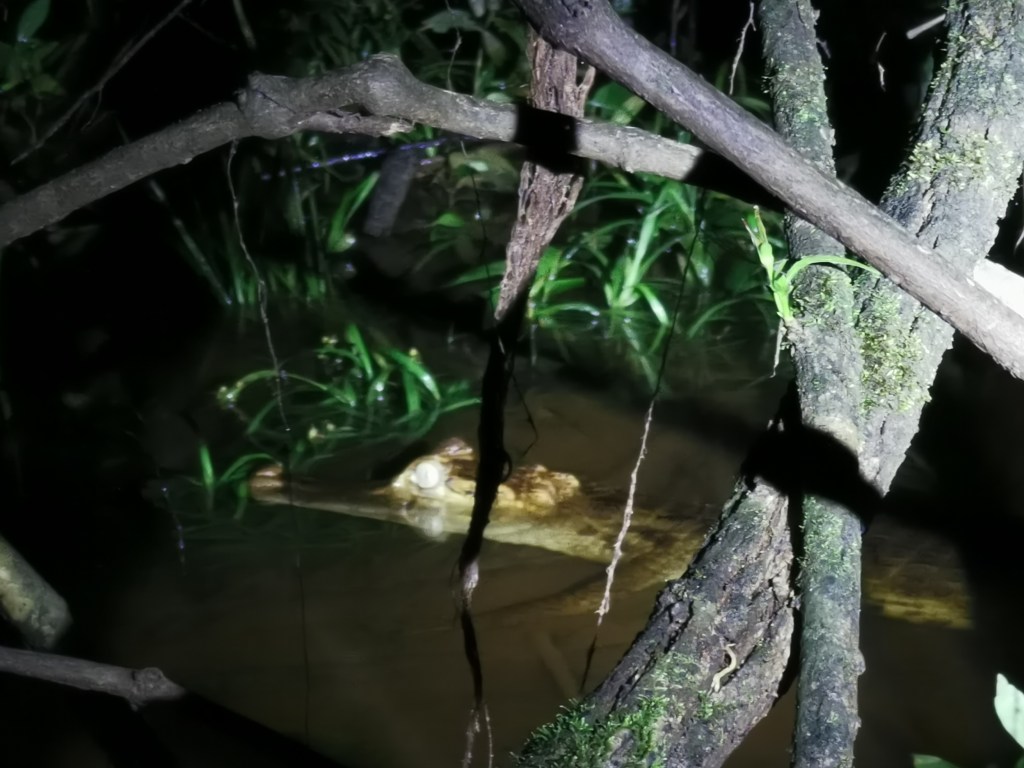
After getting back it wasn’t long before the evening meal was ready and then after a long chat it was time to go and sleep after a tiring but amazing first day!
Day 2 – Walking in the Jungle
The activities for the second day were focused on walking in the rainforest. After a very nice breakfast (the meals here were all lovely) we all headed out into the jungle, directly from the lodge itself. Before actually leaving however, we had to find a pair of rubber wellington boots. The lodge had a reasonable amount of boots, but not so many options at the larger or smaller ends of the spectrum. So be prepared to get a bigger size and wear a couple of pairs of socks! But try and get as close as possible to what you need, as there is a fair amount of walking and rubber boots are not the most comfortable of things in the first place.
Our guide and the owner of the lodge, was from an indigenous village in the Cuyabeno Reserve. At the time he mentioned that he was the only indigenous owner of any of the lodges in the reserve, but I haven’t tried to corroborate that fact. But he was an expert in finding certain plants and insects. It also meant that he was able to embellish the information with stories from growing up in the area.
So for the next two to three hours, we picked our way through the trees on a scarcely noticeable pathway through the jungle. Whilst we could hear lots of wildlife, we were mainly observing insects, frogs and different flora. Carlos (our guide) identified plants that could be used for medicine or eating or for building. There was even one tree where the roots were used for grating food due to the hard bumps on them.
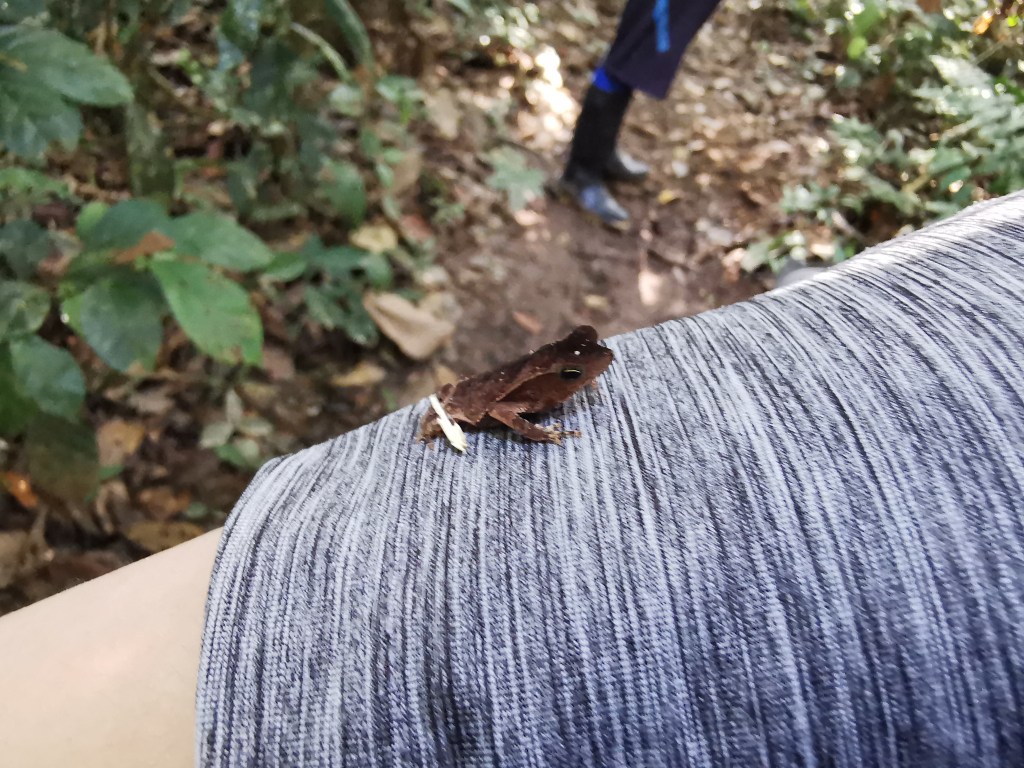

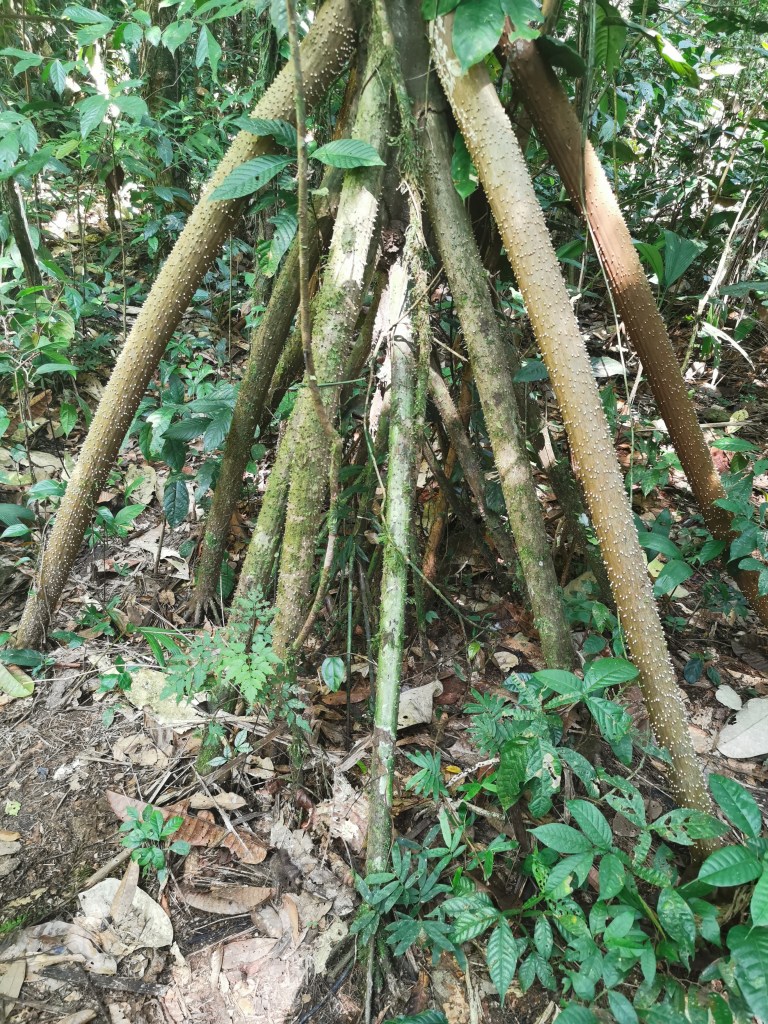
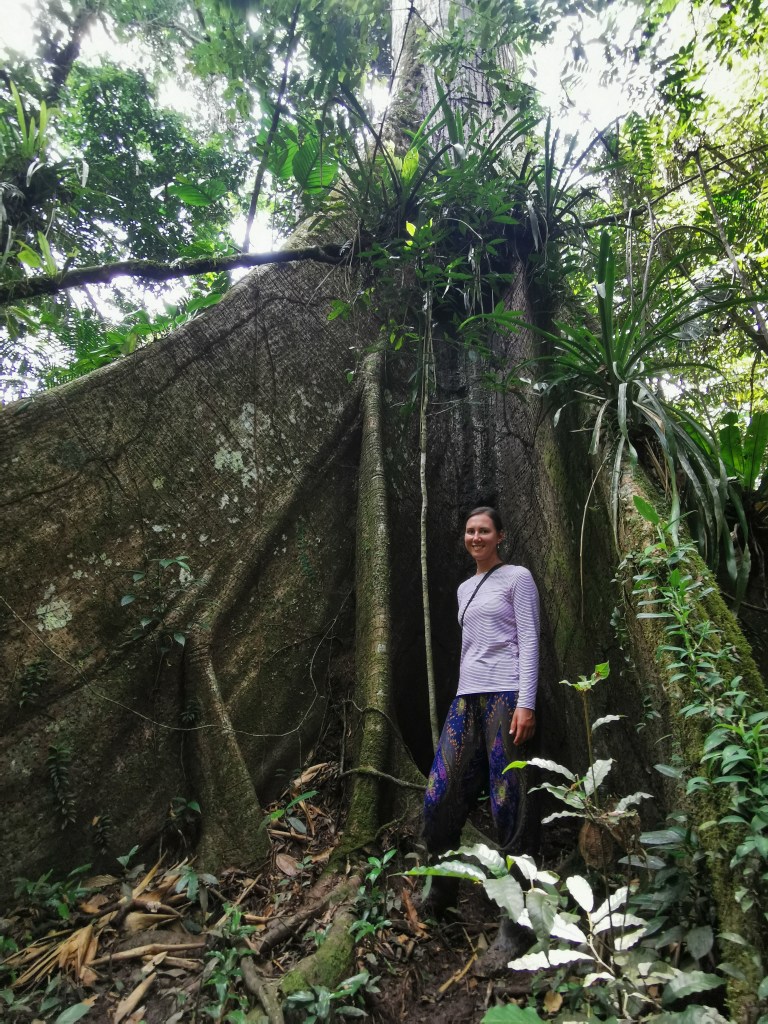
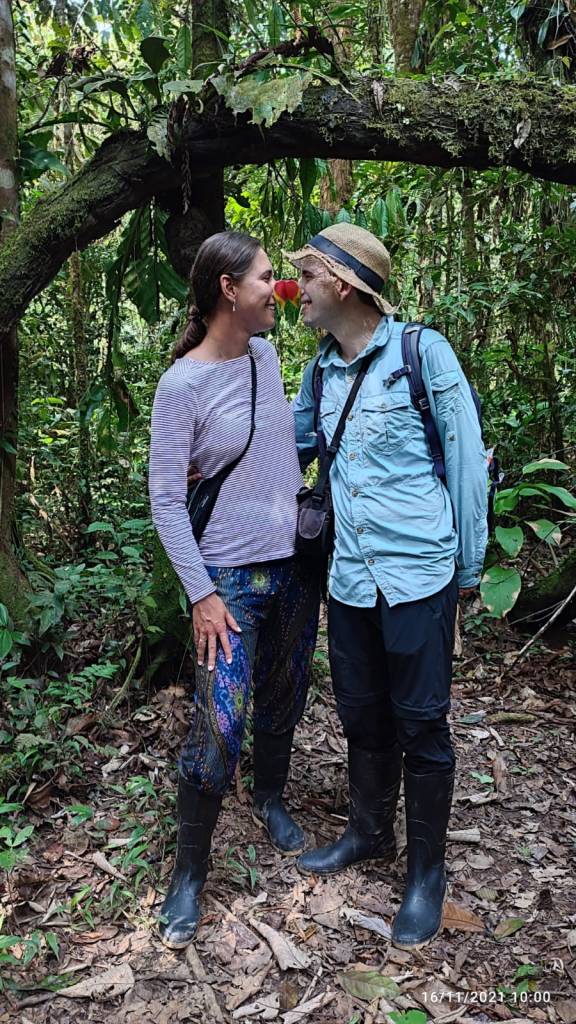
We very much enjoyed the walk through the rainforest and the only real issue was the mud. In parts of the walk it was very deep and extensive, which made it hot, sticky and pretty tough going. Tree roots under the surface also made it a bit treacherous, and a couple of people fell over or got cuts and scrapes on their hands as they’d slipped and grabbed onto something for balance. But it just made it into more of an adventure.

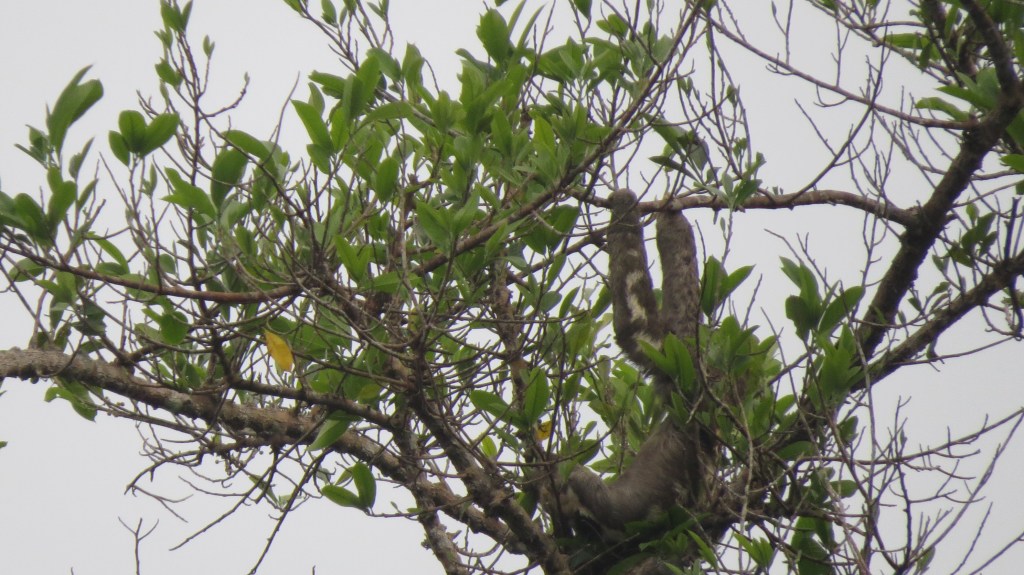
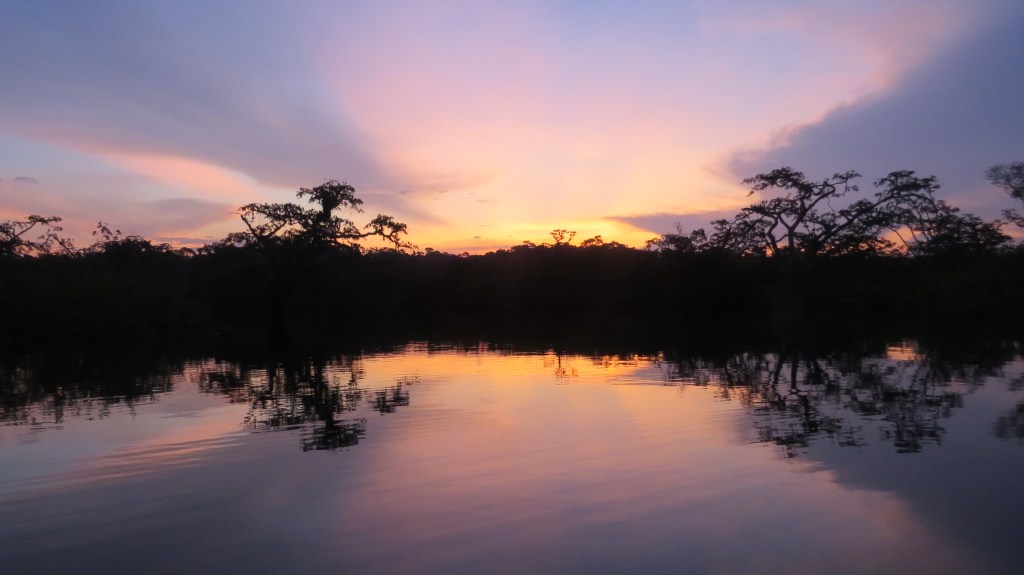
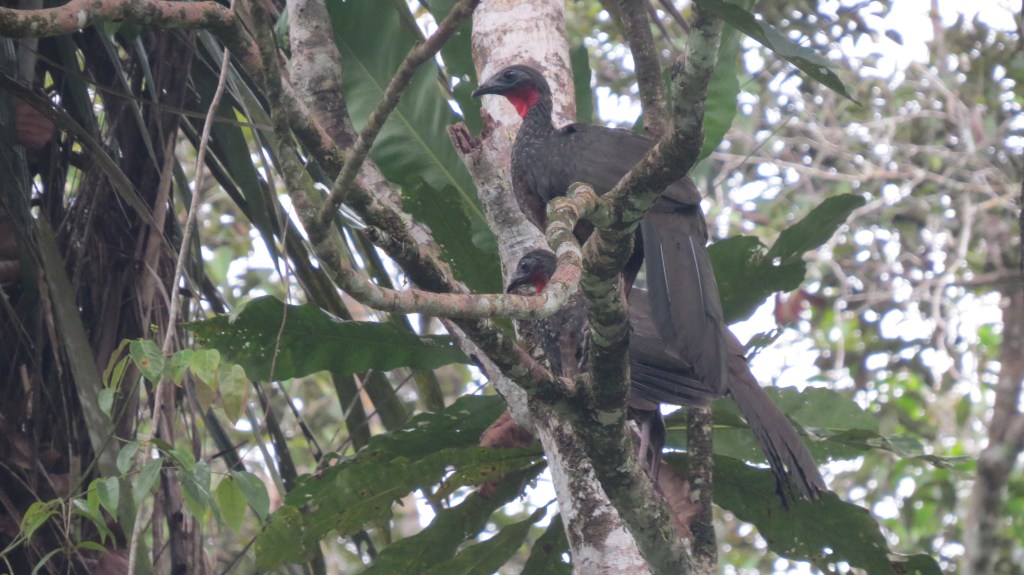
Once back, we had lunch and relaxed for a couple of hours before heading to the lagoon for sunset. Again, the journey to the lagoon was an activity in itself, and we were treated to seeing toucans, pavas and even a sloth high up in the trees. At this point I really must emphasise the advantage of having either a camera with excellent zoom capabilities or a decent pair of travel binoculars. Without these, you will be missing out on part of the experience. Because, even though the guides can accurately tell you what the animal is from massive distances, you won’t really feel like you’ve seen it unless you can get a bit of a closer look, even if it is through the lens of a camera or binoculars. Upon arriving at the lagoon, we sat peacefully waiting for sunset, and the colours afterwards were even better than the previous day.
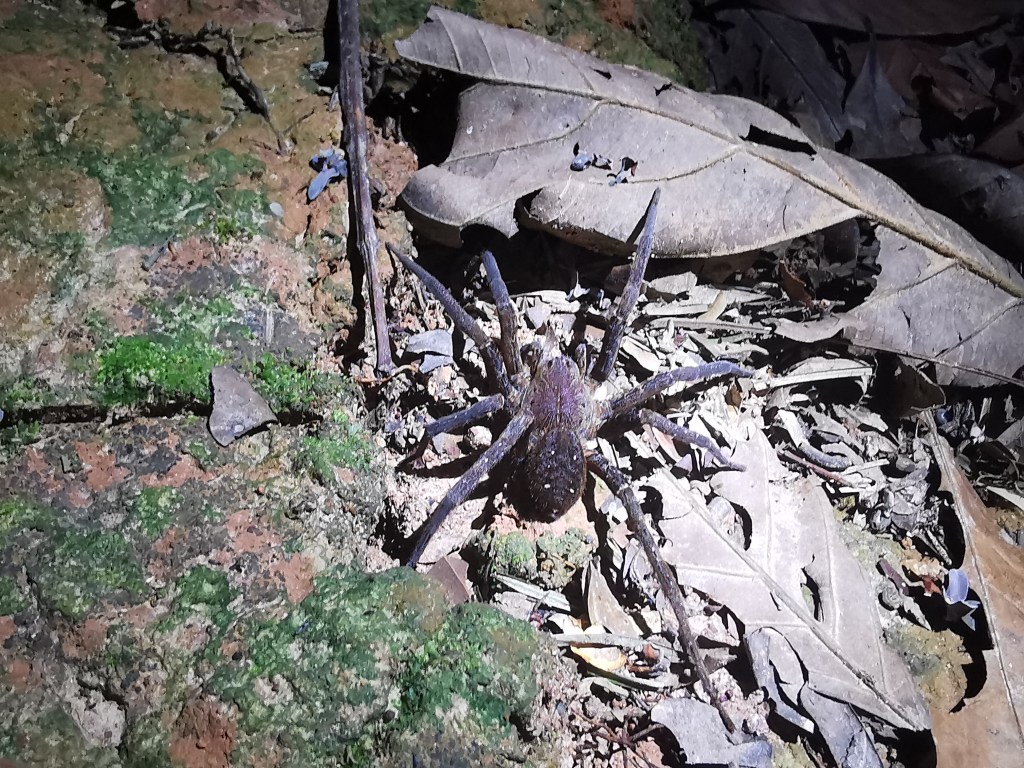
Afterwards, however, we didn’t head straight back like the previous evening. We made our way to the far side of the lagoon and docked, so that we could go on a ‘night walk’ through the jungle. Not far from where we got out there was a stone marker indicating the the equator ran through that point. We’d see a few of these in Ecuador, but for some reason having it there in the middle of the rainforest made it even cooler. The walk itself wasn’t far but was enough to see a range of insects and spiders. I don’t think this was everyone’s favourite part of the trip but it was another part of the experience and gave a different perspective of what was around you.

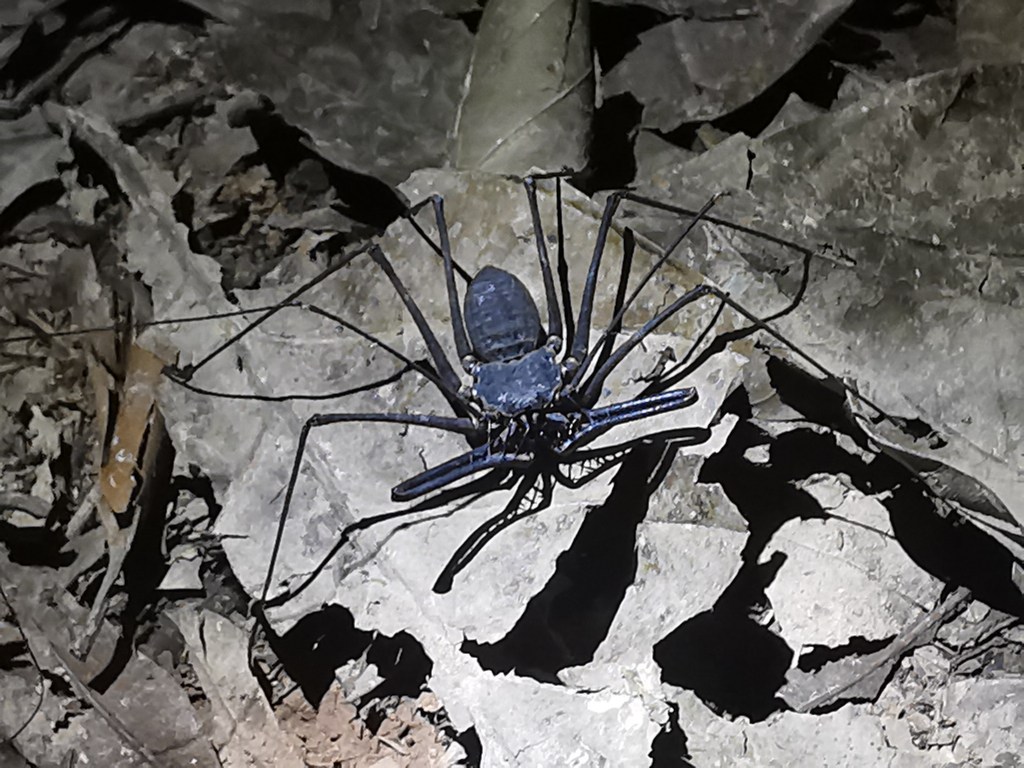
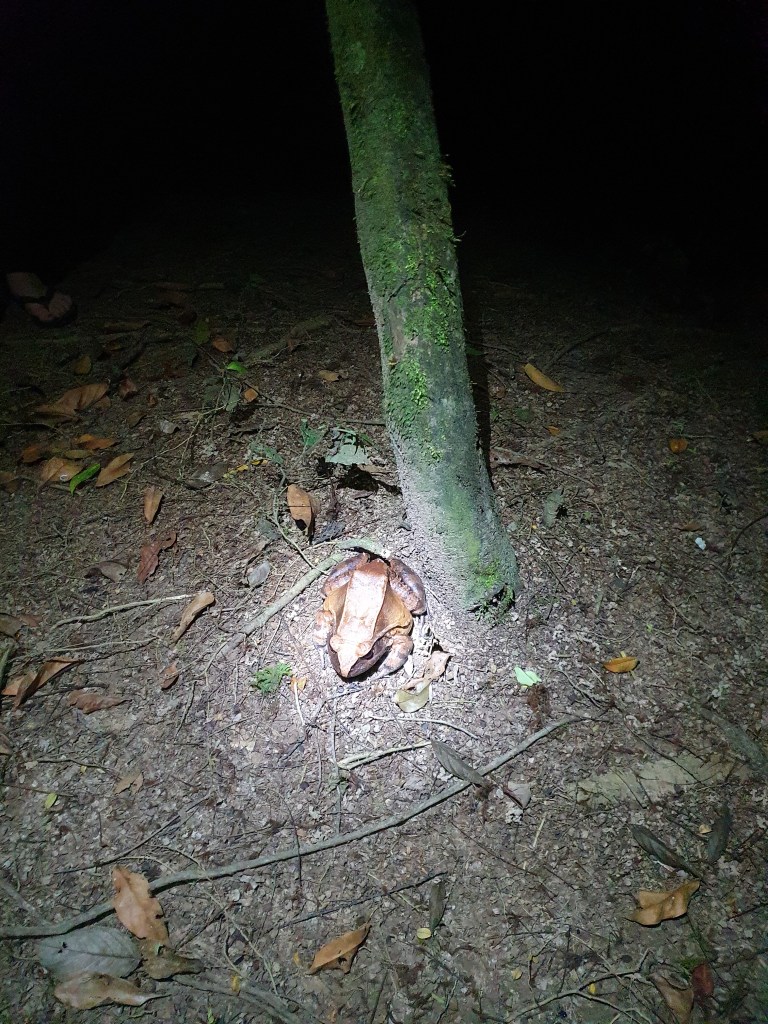
The way back followed the same pattern as the previous evening, with everyone keenly following the beam from the headlamps to see if they could spot a snake or the reflected light indicating a caiman. Or if you had had enough of searching, you could sit back and enjoy the moonlight that was starting to poke its way through the trees and try and take in that you were actually in the Amazon. Once back at the lodge, there was one more surprise in store, as we were drawn to the loud croaks of a massive Smoky Jungle Frog , also known as a South American Bull Frog. The photo really doesn’t do it justice, as it is hard to see the scale. But it was mightily impressive. A fun way to end another enjoyable day.
Day 3 – Trip to the Indigenous Village
After breakfast, our first activity of the day was at the lodge itself. It was to go through the process of preparing the cacao beans that were used to make the hot chocolate that came with breakfast. We watched and listened as they roasted the beans in a large, outside trough. We then all had a go at grinding the beans, which was pretty hard work. So whilst it was an interesting activity for us, I bet they were more than happy to have some extra help with this step… The cocoa powder would then be used to make up the basis for the hot chocolate, which we would have during the next couple of mornings. It was a nice activity and it was fun to do something a bit different.
The main focus of the day was the trip to the local Siona village. There are several different communities, but Carlos was Siona and he was from this village. It also helped that it was walking distance from the lodge – another advantage of being at a lodge further away from the main hub. After donning our rubber boots, we first headed off on a small trail through the trees. But it didn’t take too long before we met up with a main pathway that connected different villages in the rainforest. We were on the small pathways long enough, however, for Carlos to find an addition for our breakfast…
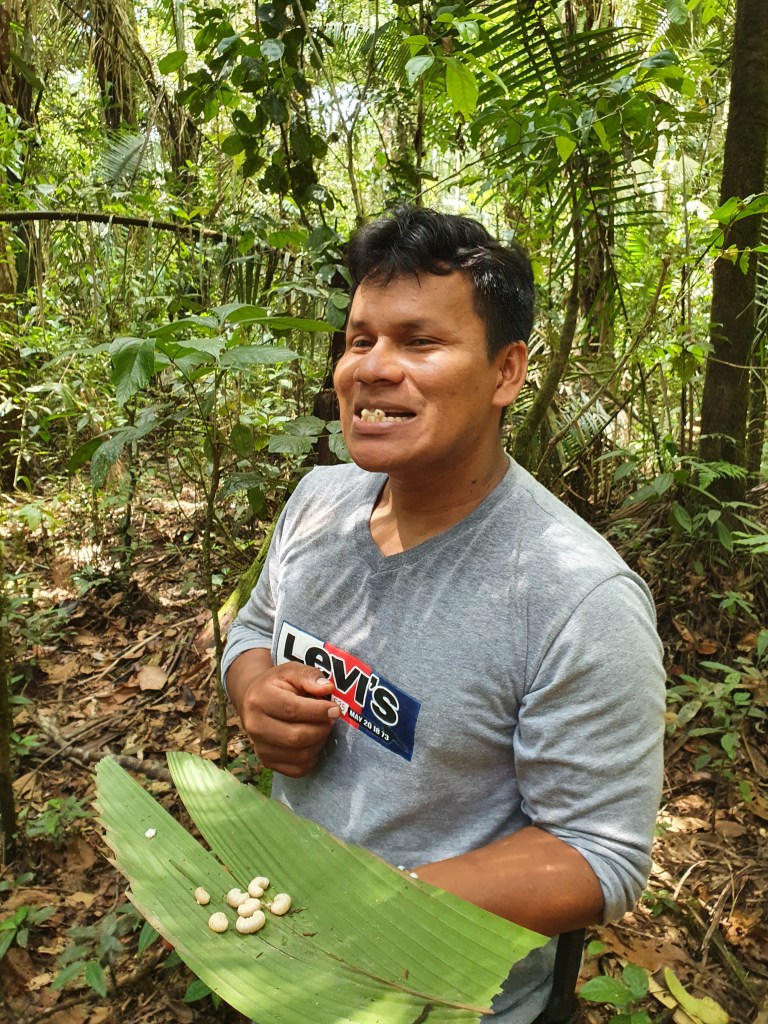
I did try one and they were’t too bad; they didn’t really taste of anything initially, but they did have a bit of a weird after-taste. He also found a tree containing bullet ants. He then used a stick to put one onto his forearm so that it would bite him. Apparently he’ll do this every few weeks – it is supposed to improve blood flow and help toughen you up for living in the jungle. He offered it round for us but having heard stories about bullet ants we chickened out and declined.
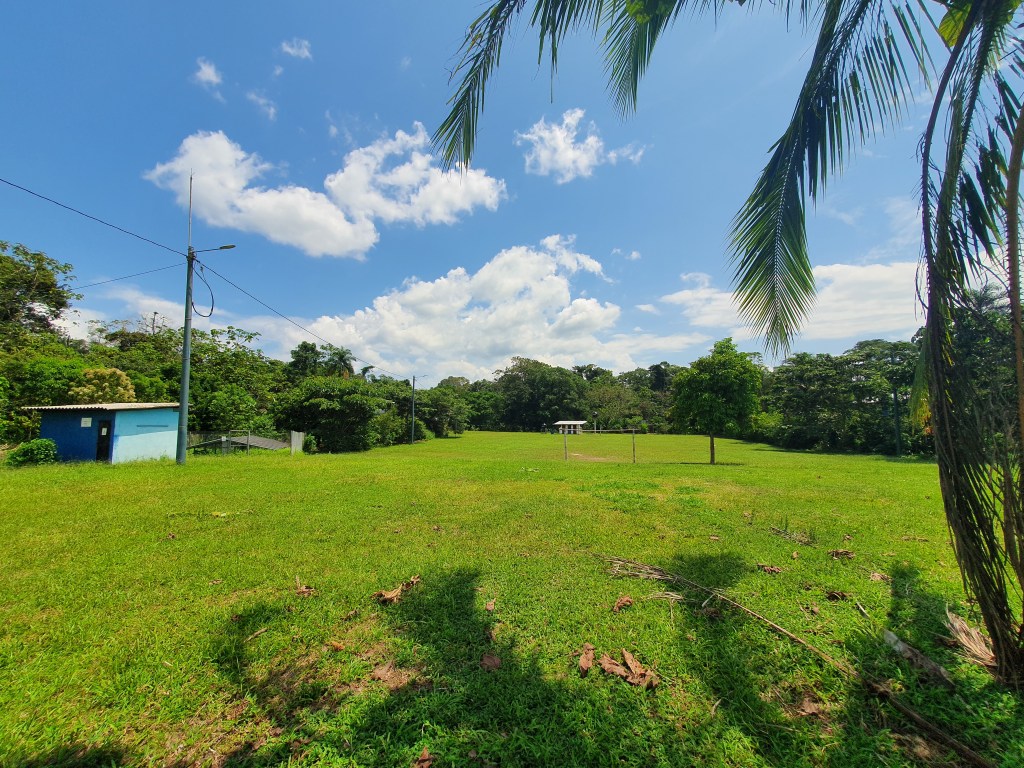
The main pathway was wider and you could tell it was more frequently used. So it was easy going as we made our way to the village. As we stepped out of the tree-line we were met with a view that we were not expecting. We’d seen films and documentaries of tribes from the amazon but what greeted us was disappointingly normal. There was a football field and houses made of modern materials. There was a couple of solar panels and electricity cables. The small school had even just had the internet connected. But our reactions were born from our own ignorance and too much imagination. There had been communication with the ‘outside world’ for well over half a century and as Carlos said, why wouldn’t they want some of the conveniences of modern life. If you are wanting a more traditional experience then you would have to go much deeper into the rainforest and away from the popular tourist destinations.
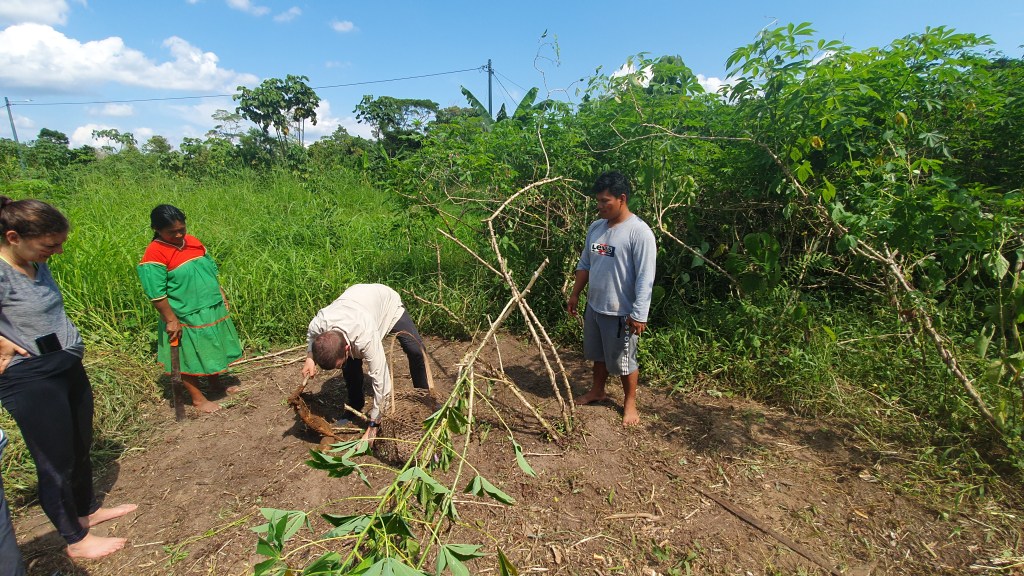
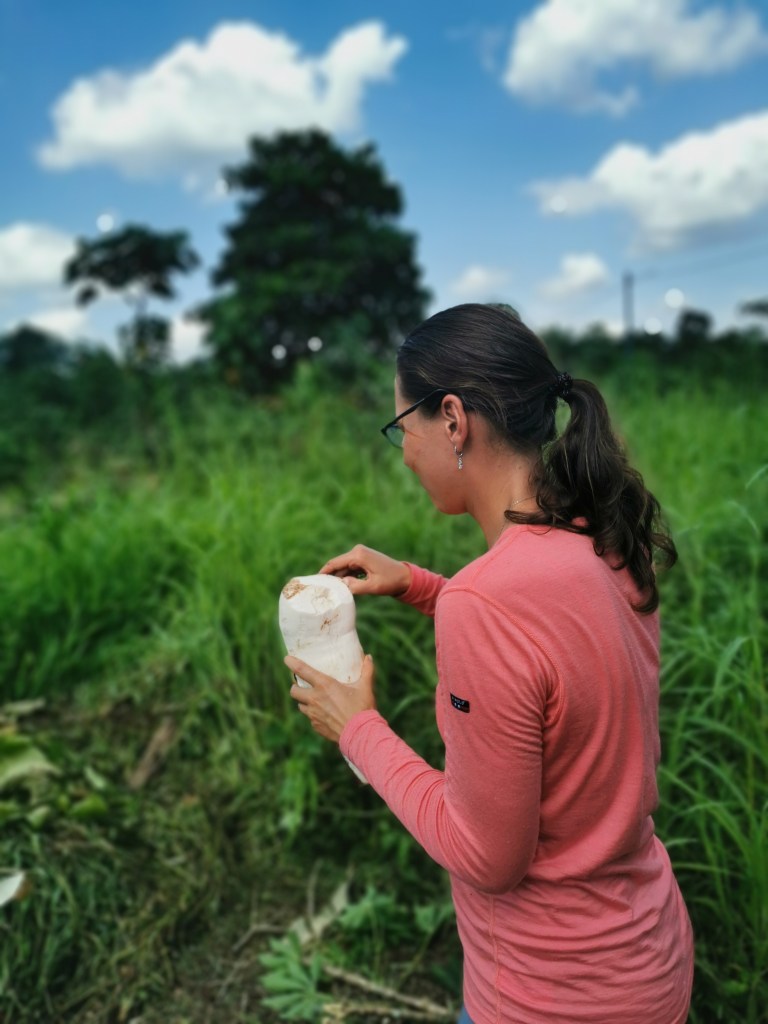
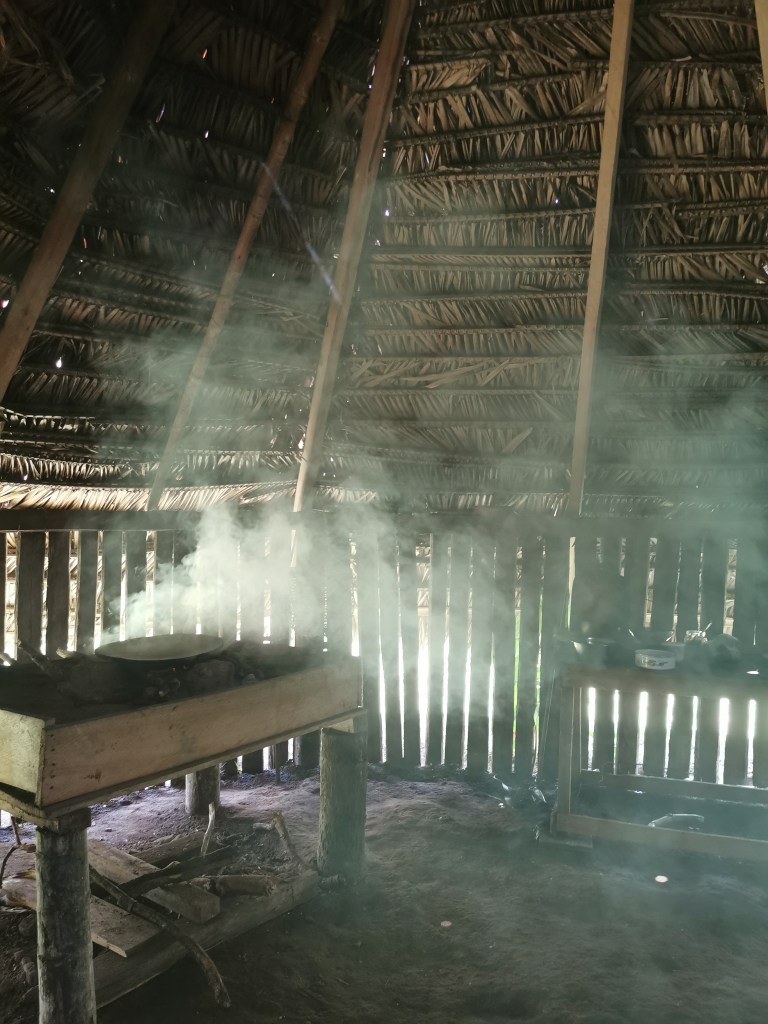
That’s not to say that all traditional aspects of life here had been replaced, far from it. We were taken to a large wooden structure, which was pleasantly cool inside in comparison to the midday Sun beating down on the open village. Here we met one of the female elders, who turned out to be Carlos’ mother. We then went through the process of making the traditional Casabe (Yuca) bread, which still needs to be done every day. We first needed to pick the cassava roots from a garden outside. After chopping off the stem, you need to drag the large roots from the ground. The roots then need to be peeled and rinsed before taking them back inside. Once there, the roots needed to be grated and then squeezed, to remove as much water as possible. This was done using traditional machinery. We then needed to put the remaining powder through a sieve and that was the last bit of the process that we took part in, the actual baking was left to the expert on a large open fire. This bread then formed part of a lovely lunch that we shared in the building. Afterwards, Carlos’ mother seemed to amuse herself by drawing traditional symbols on our faces using some sort of paste made from flowers.
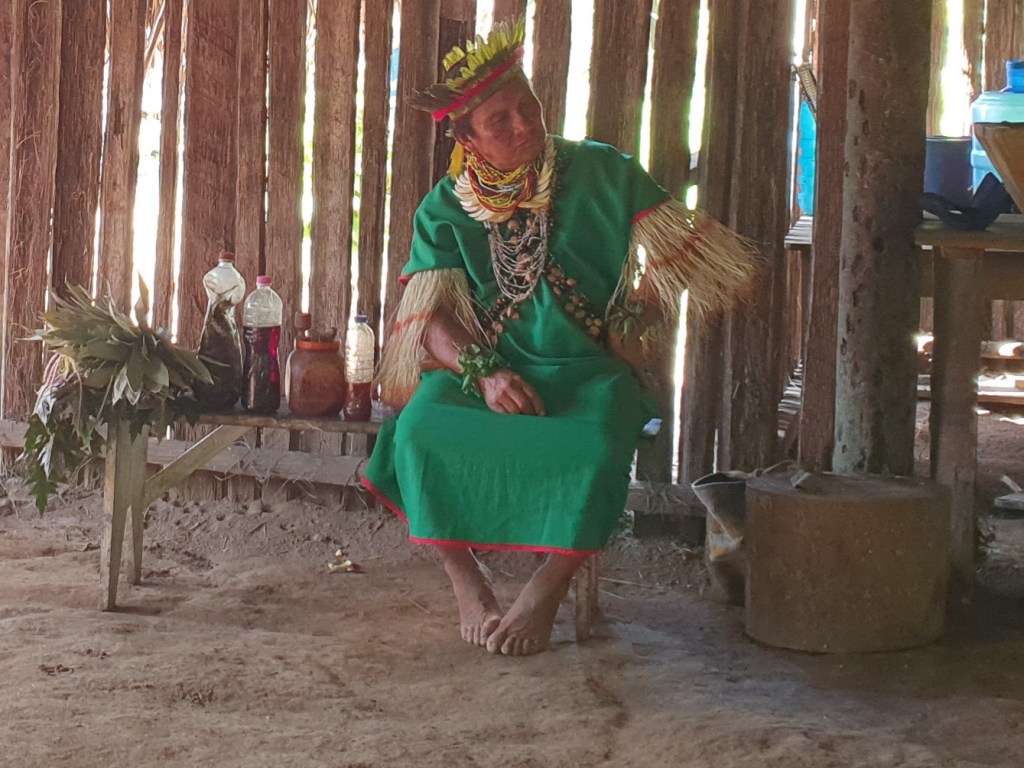
Afterwards, we made our way to another traditional building, this time to hear from the Shaman. Now I’m using that term because it was used in the explanations, but as he explained through a translator, this term is actually our word for it and is derived from tribes in Africa. He just sees himself as an elder who looks after the spiritual and physical wellbeing of the village. He spent time explaining the process of becoming a shaman and what are some of his responsibilities in the village. He then asked for volunteers, first to check their auora (Radka was the volunteer) before wishing to know if anyone had any chronic injuries that he could help with. A guy from another group, who had joined us for this part of the activity, volunteered as he’d had problems with his knee. The shaman then proceeded to treat his knee, mainly by hitting it with nettles. This apparently increases the blood flow to the affected area, but given that he also went around and wrapped everyone on the knuckles with the leaves, I did not envy the guy! We also had a try of a herbal drink that they used for fighting against illness, and which they credited for having had hardly any cases of COVID in the village. I certainly hope it was true given that we were all drinking from the same cup…
One other topic that he discussed was the cultural significance of Ayahuasca, or Yagé as it is known locally. This psychedelic drug has gained a certain notoriety amongst travellers to South America and is becoming the main reason for some visits, with an increase in popularity of ‘Ayahuasca Retreats’. It was very interesting to hear about its importance from a cultural perspective. The Shaman himself uses the drug on a regular basis. It is used to connect with the energy of the surroundings and can help with making decisions about what is best for his village and individuals within it. The part that lost me a bit (and it could also have been the translation) was that he could use the connection to the environment to find certain plants that could be used for medicine – almost like the plant itself is giving instructions. Members of the village will also use Ayahuasca, but on a much more infrequent basis. It was mentioned that they will use it when they first come of age and then only when they are sick or are facing a certain crossroads in their lives. And yet, it would only be for local sicknesses; he talked about how diseases such as cancer are not from his world and thus if tourists come hoping for help with this condition, he would send them to the hospital. It was emphasised that Ayahuasca should not just be used for fun; it should only be done in certain, peaceful places (certainly not in cities); and you must have someone who is experienced and who you trust to take you through the process.
The whole session was very interesting and informative and it turns out that the shaman was actually Carlos’ dad.
Having completed our trip to the village there were motorised canoes to take us back up the river. We headed straight for the lagoon, but because we’d spent so long in the village we didn’t quite make it for sunset, so instead had to enjoy it from the river as the sun sank into the trees. On the way back though, we managed to spot a Potoo due to its distinctive call. The local legend is that there was once a young man who fell in love with a girl from a different group. This was against tradition, and when the shaman found out he got angry and turned the man into a Potoo and the girl into the moon. So whenever the moon is full you can hear the Potoo calling for his girlfriend. The myth did little to dispel the ghostly sight of the bird up in the trees.
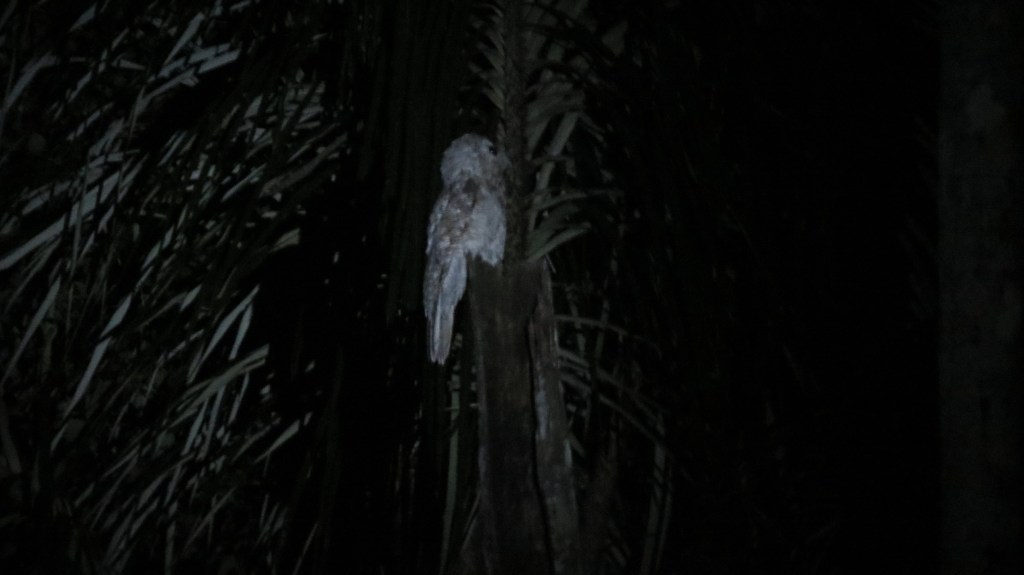
This was a great way to finish another full and fantastic day.
Day 4 – Canoeing
Unfortunately, on this day we needed to say goodbye to the rest of our group. They had arrived a day before us and thus, their time at the lodge was up. We were still able to go for an early morning motorised canoe trip for wildlife spotting before breakfast and then it was time for them to finish packing and head off. It had been a very nice group to be a part of, and we would meet up with one of them later on in Colombia – but that’s a story for another day…
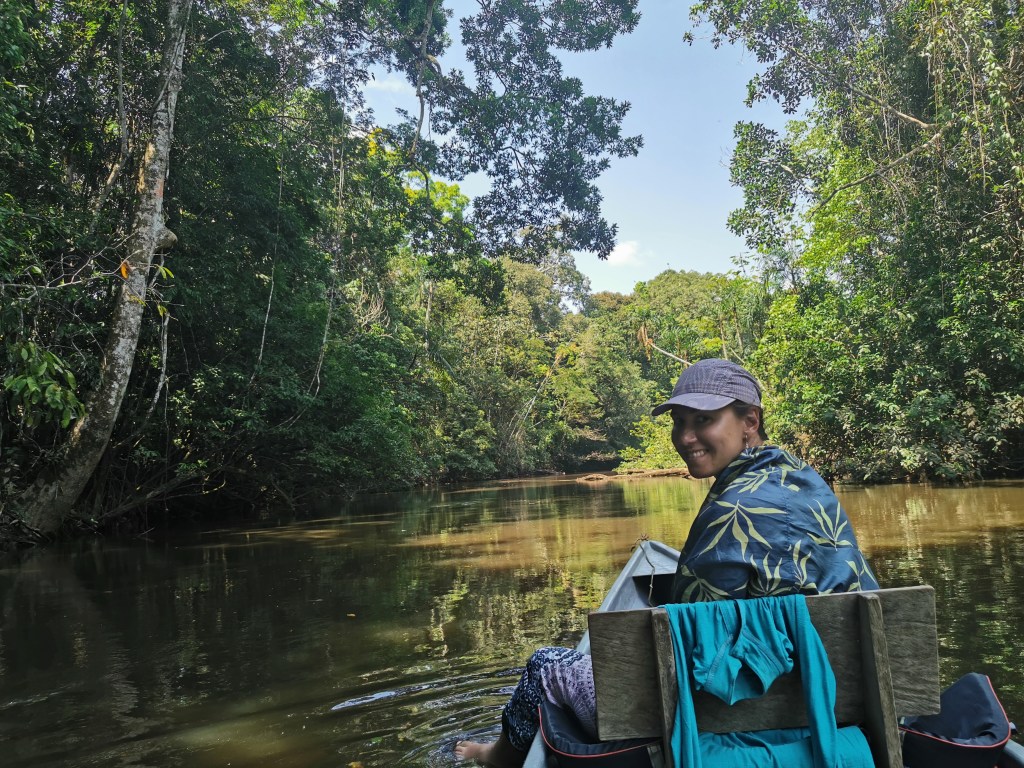
So far, we’d only been travelling in the motorised canoe, but now it was time to head out on a normal one. Given that the others had left, it was just us and Carlos. Obviously you cannot travel as far when you’re just paddling, but it does have the advantage of being much quieter. It is a smaller vessel, so you can also get closer to the sides of the river and into spots that the motorised canoe could not. Whilst Carlos did most of the work, especially in terms if steering, we were more than happy to help when ever it was needed – it was fun to imagine yourself exploring the Amazon in a canoe. Although Carlos seemed pleasantly surprised at out eagerness to get involved; apparently he’s already had quite a few tourists who just expect him to do all of it, which is quite frankly embarrassing.
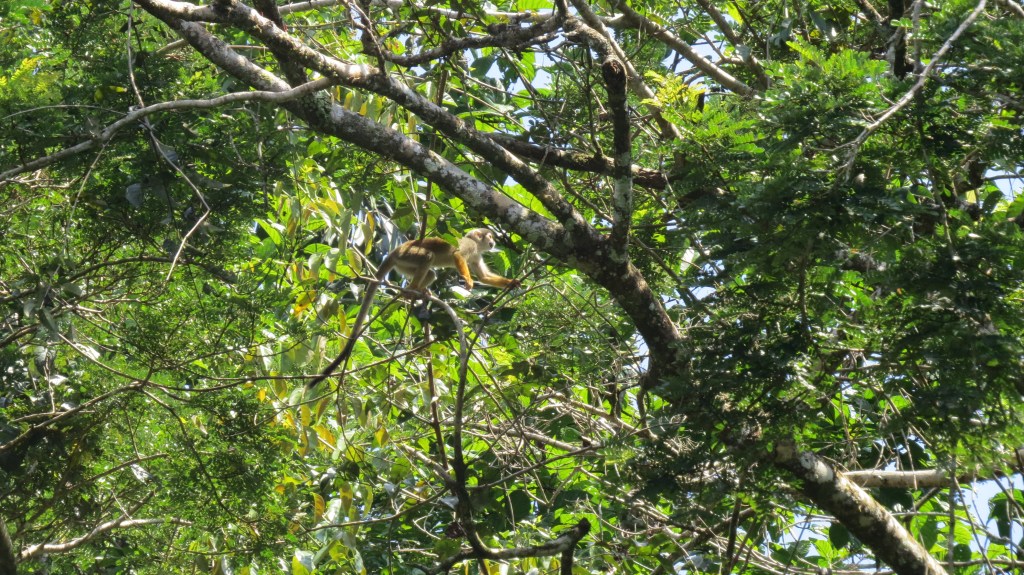
We passed through little streams that we had not yet visited and were rewarded for our efforts with plenty of wildlife sightings. These included a troop of cute Spider Monkeys that were jumping through the trees, and a host of different birds. It was also really nice to float along some of the smaller streams and listen to the sounds of the rainforest. We even stopped in some small shallow creeks, where, if you’re lucky, you can spot piranha.
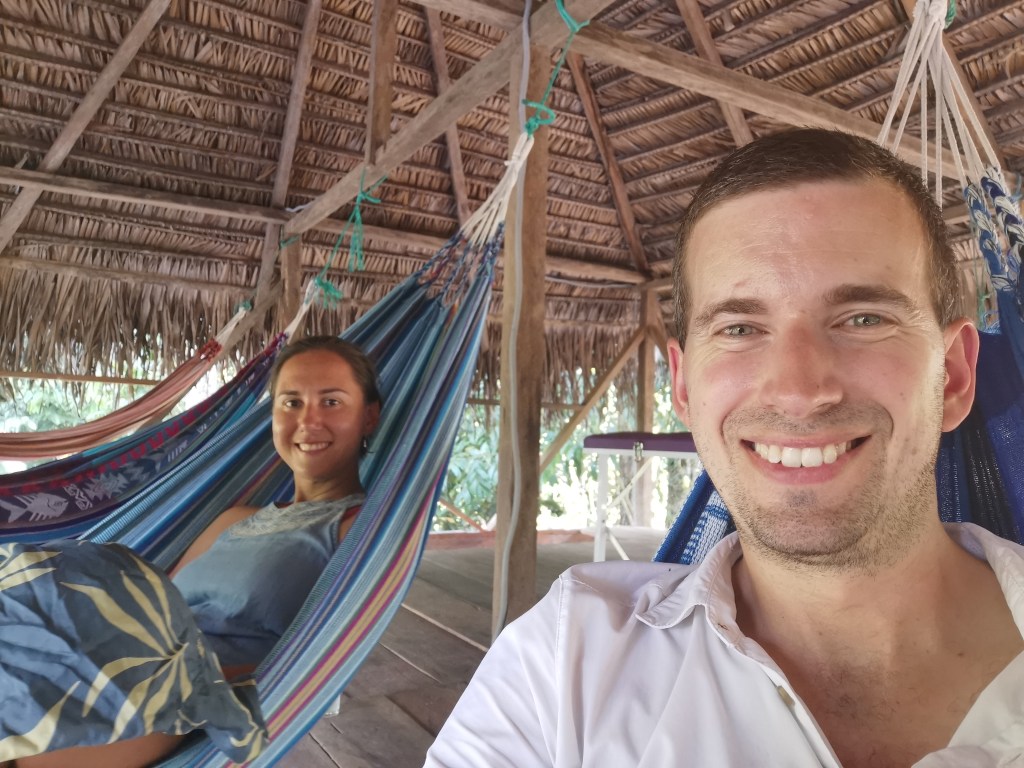
Despite it again being wildlife watching, on the river, in a canoe; it actually felt like a completely different activity. That was one of the things that we really appreciated about the trip – there was so much variety and every day was different. Having paddled back to the lodge, it was time for a late lunch and then we had some time to relax before the sunset boat ride. We took advantage of there being no one else around to laze in the empty hammocks and netting that overlooks the river. Even just being able to read a book with the sounds of the forest all around you was just amazing.
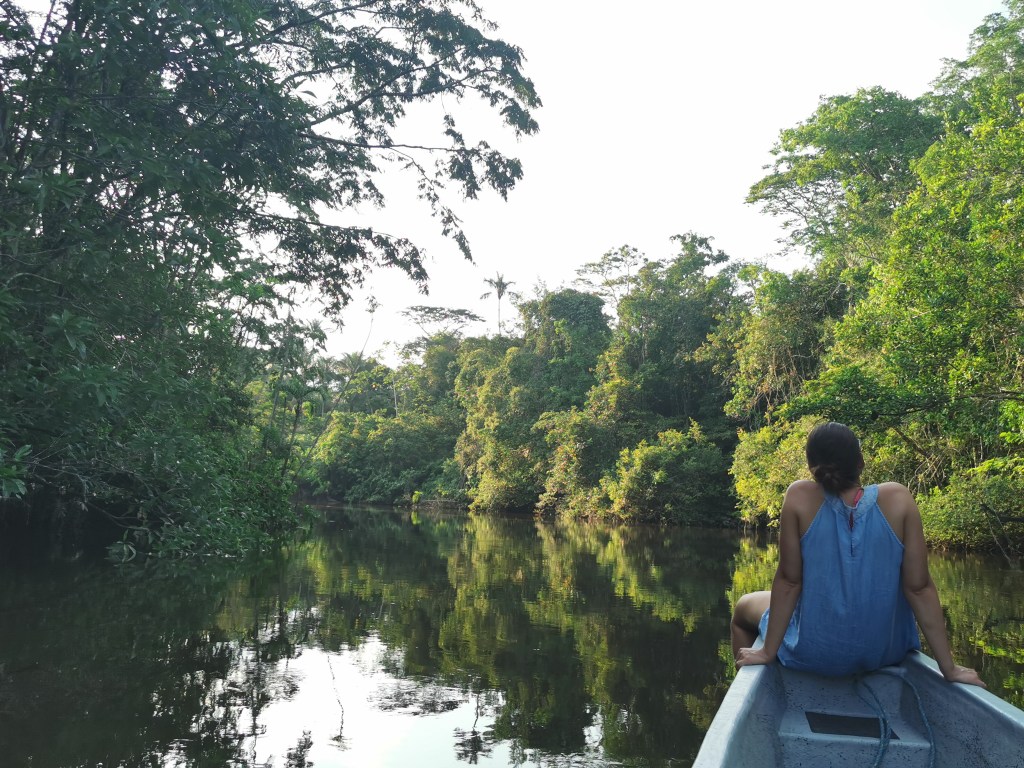
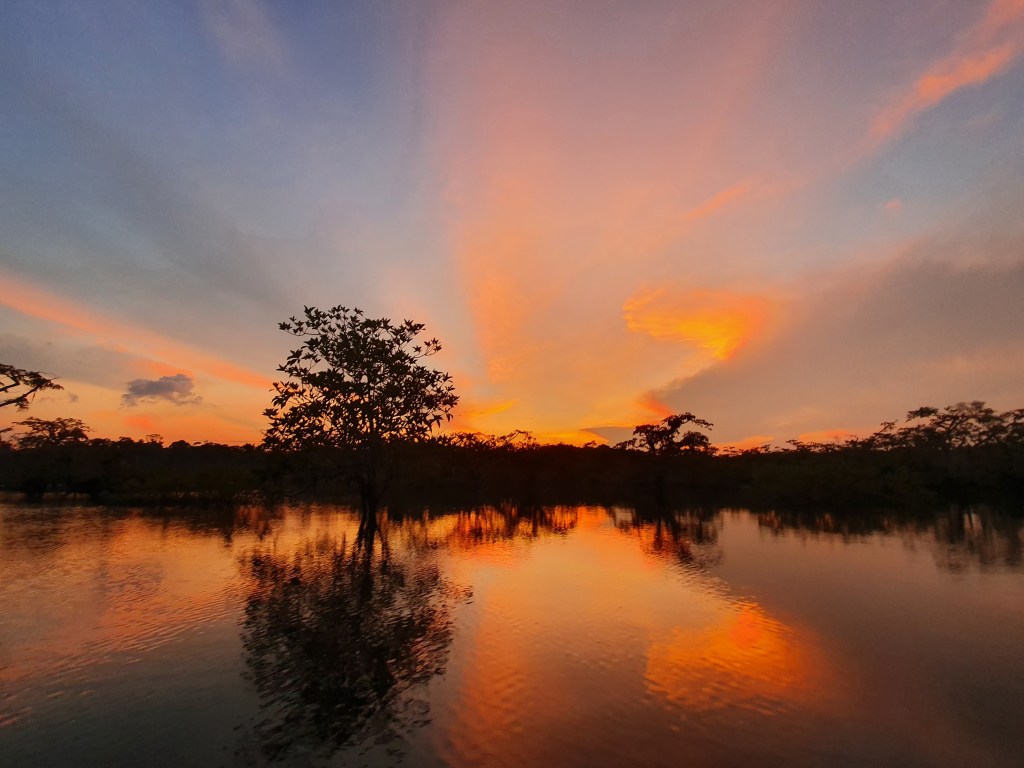
A new couple arrived during the afternoon, so the four of us headed off with the guides for our last trip to the lagoon. The lighting and reflections seemed particularly nice this evening – or maybe we were just appreciating it more!
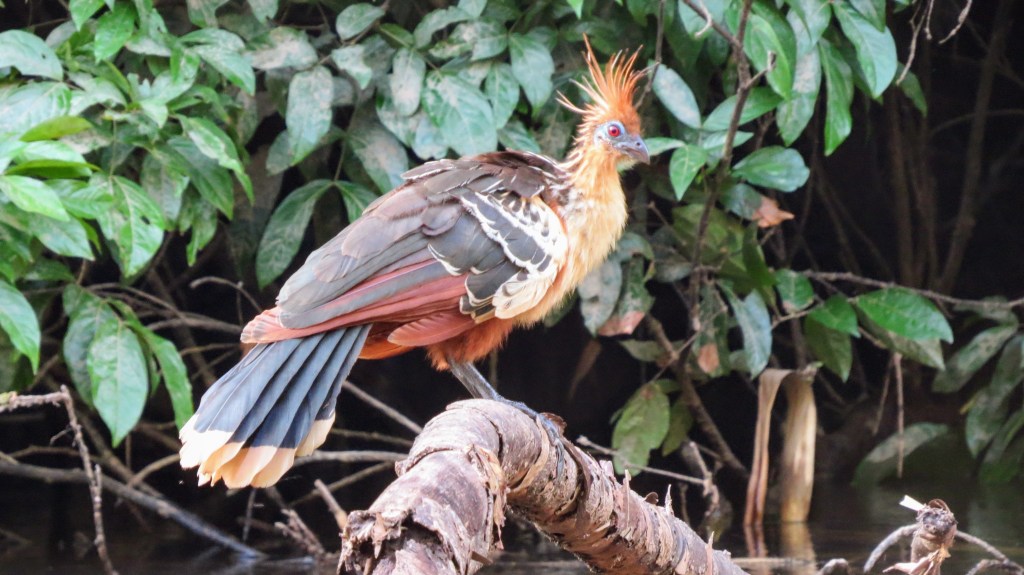
And we were also treated to some more wildlife, including a flock of Hoatzin, or ‘Stinky Turkeys’ as they are known locally. These birds are actually very interesting. They have claws on their wings from birth, which helps them to climb on the trees to avoid predators. They also have a digestive system similar to a cow. This produces chemicals that smell a bit like manure – hence the rather harsh common name. Although this has turned out to actually be an advantage – the indigenous people tended not to hunt the bird unless they were desperate. These characteristics make this species distinct from other birds and a DNA study has shown that they have an interesting lineage.

These birds were not our only wildlife sighting on our journey there. As the river widened out as it approached the entrance to the lagoon, we finally spotted the elusive Pink River Dolphins. There was at least a couple of them and every now and then they would just pop their heads out the water before quickly descending again. They completely avoided my attempts to get a good photo but that didn’t matter – it was just so amazing to be there with these creatures, especially when we were so far away from the ocean. One thing we did notice was that they did not look pink, but more a greyish colour. This may have been due to the fading light but also the pink colour only tends to be noticeable amongst more active, mature males.
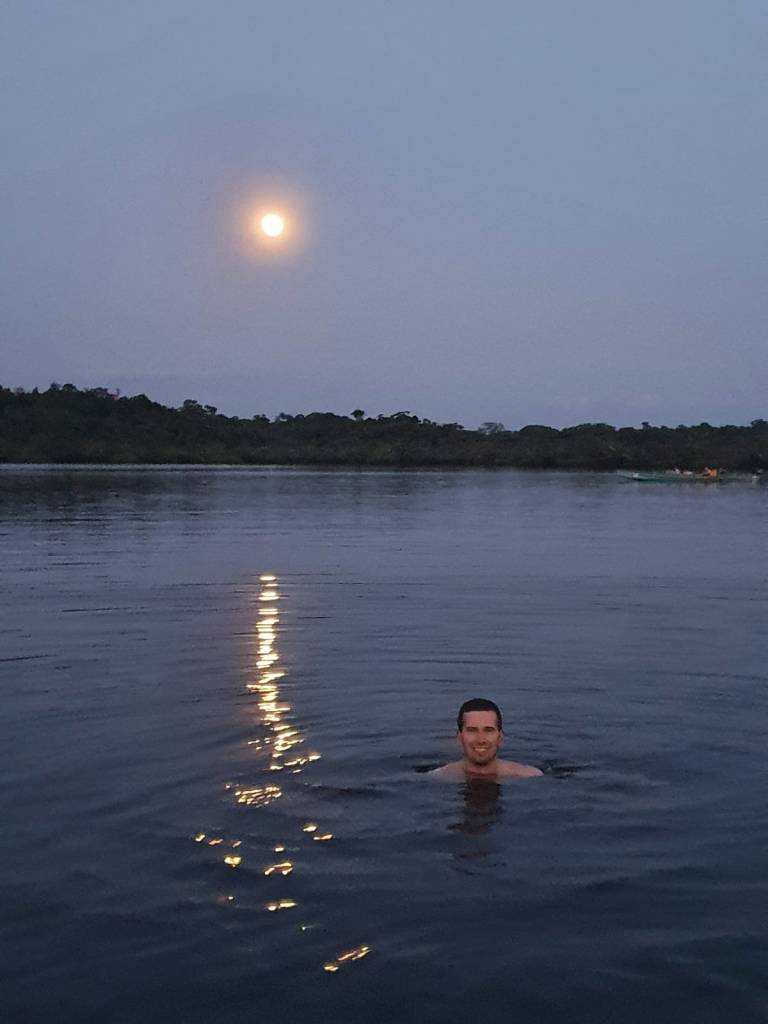
After this excitement we made our way to the lagoon and watched the sunset. It was then time for a final dip.
The journey back involved finding more snakes but the most exciting discovery was when we got back to the lodge. There was some noise high in the trees above the kitchens and when Carlos sent his light up there, we could just about make out a Kinkajou. Despite looking a bit like a monkey, these animals are more closely related to racoons. This sighting was just the cherry on top of the cake of another fantastic day.
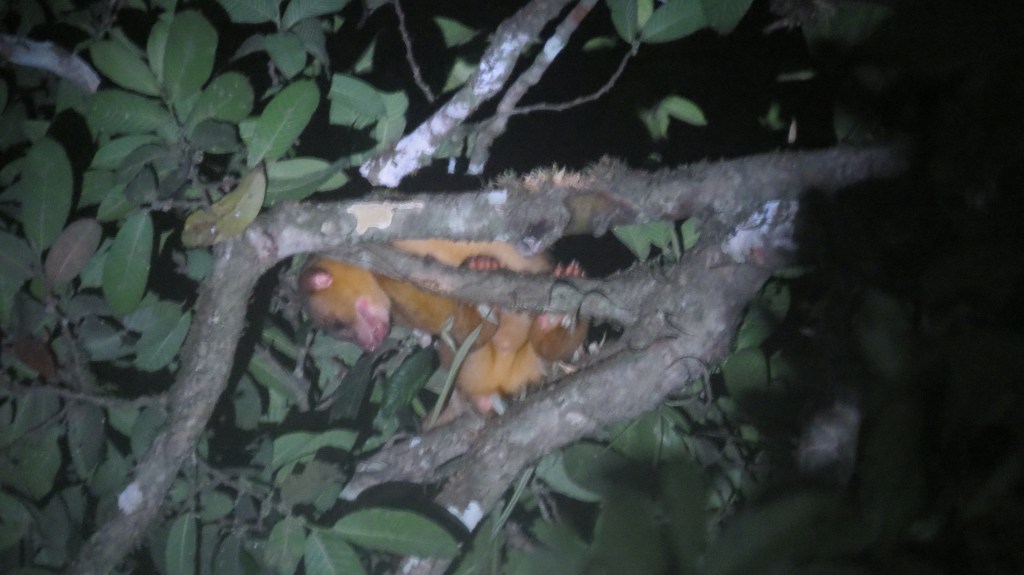
We decided to wait up lie in the netting next to the river in the hopes of seeing the group of Mono Nocturno who supposedly regularly pass through the trees above the camp late in the evening. We did hear rustling in the trees a bit before 11pm, but our head-torches were not good enough to really penetrate the higher branches so we were not able to see what it was causing the noise. But, regardless, it was a relaxing way to spend our last night in the jungle.
Day 5 – Heading back to Quito
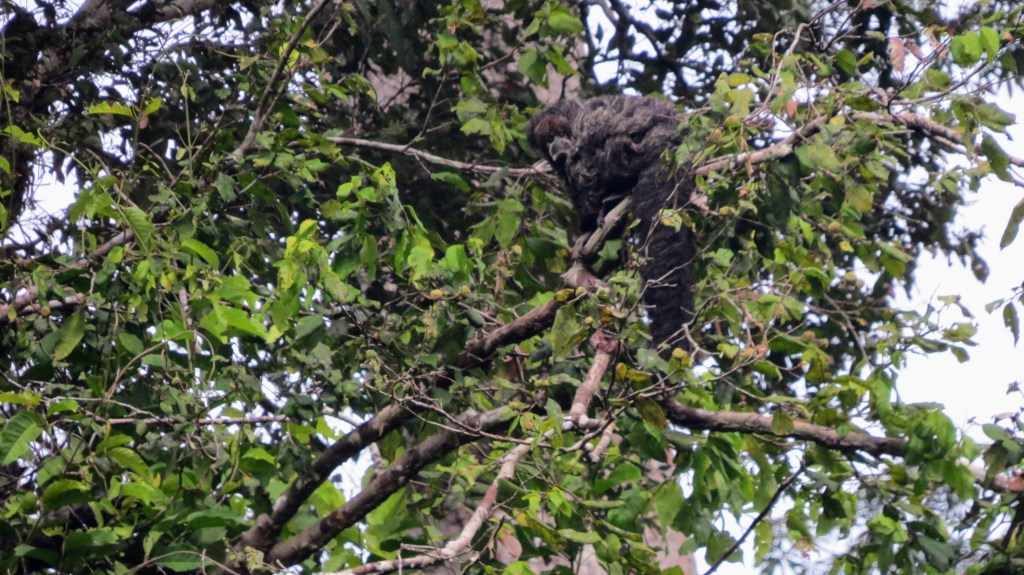
Sadly, we had reached the last day of our trip. I joined one last early morning wildlife spotting trip whilst Radka spent the time finishing to pack and rest up ahead of the long journey back to Quito. It was worth the early rise, however, as we managed to find a couple of Monk Saki Monkeys clambering through the branches.
After breakfast it was time to say goodbye to Carlos and the lodge. We certainly had had an amazing time there. And despite our initial uncertainties about staying there, we’d now definitely recommend it.
The journey didn’t take as long heading back, as they were no longer stopping to get a better look at the wildlife, but it was still pleasant to sit back in the boat and watch the trees rush by. It was still a couple of hours or so, but it felt like no time at all before we were back at the bridge. Despite it only having been four days since we were last there it felt like another lifetime.
We again faced an uncertain wait, but this time there were others getting the bus back at the same time, so we didn’t have to worry too much about paying close attention. In the end it was pretty obvious when we needed to go, so we didn’t have any problems. The journey back was pretty straightforward, and it was probably more pleasant doing it during the day with the nice views than trying to steal a few hours of sleep when travelling overnight. And we’re also glad we paid a bit more to get the organised coach rather than the public buses. We were finally dropped off at our hostel in Quito, entering the city for the fifth and final time during our travels, and our Amazon adventure was over.
Final thoughts
As I’m sure you can tell from this article, we had a brilliant time in the Amazon. For anyone who is unsure about whether or not to go, we would 100% recommend it. In terms of which lodge to stay at, we had a great time at Tucan. The cabins and food were both nice, the guide was excellent, and the distance from the lagoon actually turned into an advantage, as we enjoyed the journeys back and forth on the waterways. But I have no doubt you’d have a great time at the other lodges as well.
In terms of what to take, I’d emphasise the need to have a camera with a very good zoom (phones just won’t hack it) or a decent pair of travel binoculars. It is actually quite hard to see the wildlife a lot of the time, as they are high up in the trees, so we would have missed out without them. If you don’t have either of these things then you could always head down to Cuenca afterwards. There is an excellent conservation centre that I’ll be mentioning in my next post…
Another tip for those of you who really need your electronics (it would otherwise be a good time to disconnect given that there is no coverage anyway), would be to bring a power bank. You can only charge stuff at one point next to the kitchen, and then only at certain times, so it was handy to just be able to leave it there when necessary.
Lastly, bring clothes to protect you from the Sun and insects. Neither were actually as bad as I was expecting, but when you’re out in a boat for hours a hat was useful, and during the walks in the trees or early morning / evening around the camp, having some light, longer layers were handy for avoiding annoying insect bites. Oh and don’t forget swimwear for the lagoon!
I hope this will have inspired you to take a trip to the Amazon if you’re ever in South America.
 Brit and Czech Abroad