Cotopaxi is the second highest peak in Ecuador and one of the highest active volcanoes in the world. Whilst it can be visited as a day trip from Quito, we decided it would be cheaper and more convenient to do the trip independently once we moved onto the city of Latacunga.
Contents
Getting to Cotopaxi from Latacunga
Hiking up Cotopaxi (well part of it)
Limpiopungo Lake and the Museum
Getting to Cotopaxi from Latacunga
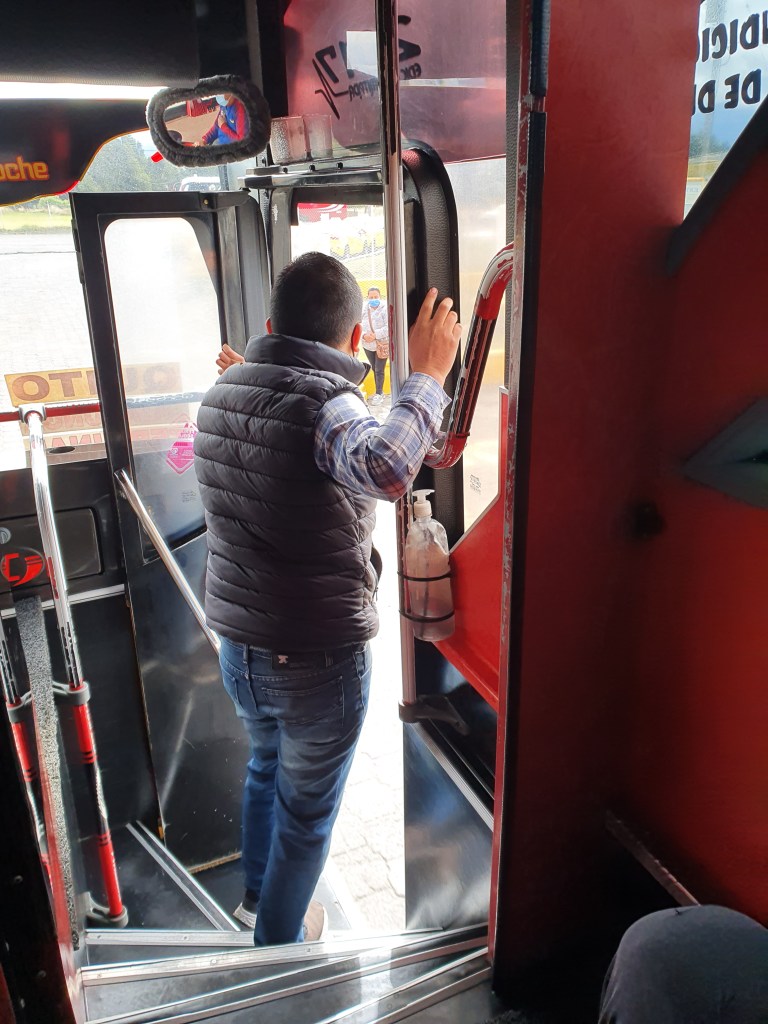
Getting to the entrance of the national park in which the volcano resides was a lot less hassle than we were expecting. Part of our worry was based on the fact that we had forgotten to check the most up-to-date times for the buses when we had arrived to the Terminal Tereste the evening before, and were relying on information from pre-COVID blog posts. We had been pretty tired after our trip from Quito, so weren’t aiming for the earliest bus, but were mindful of the fact that the weather was almost always better in the morning than the afternoon in that area. Thus, it was still pretty early when we got to the station, having grabbed a couple of pastries for breakfast on the way. We were lucky that the streamlined current service still had a bus heading out soon after we arrived. The bus continues all of the way to Quito, so if you are attempting this journey make sure you let the driver know that you wish to be let out at the entrance to the national park, as it’s nothing like an official bus stop. We bought the ticket on the bus itself (it was $1.50 each one-way) and the assistant who collected the money spent the first ten minutes or so shouting at passers-by from the open doorway or jumping to and from the bus, running along to try and hunt out other people for the journey. I’m guessing they get commission based on the numbers of passengers they have. This has seemed more common as we have continued our travels through South America, but at the time it was crazy to watch!
Arriving at the National Park
As I’ve just said, there is no bus stop at the entrance to the national park, so after forty minutes or so, we were just dropped on a grassy verge on the side of the dual carriageway. But at the top of the slope we could see a line of small pick-up trucks. These are operated by the official rangers / guides of the park and we made our way up to them. Now we’re not 100% sure of the rules regarding entrance to the park. What is certain is that you need access to a vehicle. Given that we had arrived on a public bus, we had no choice but to hire the services of one of the guides. Another couple we met later on, however, had rented a car from the owner of the Airbnb they were staying at, and they had been allowed to enter in that. Another story we heard second hand was that people had paid for a taxi to take them there for the day from Quito but that when it arrived at the entrance, the taxi was not allowed to take them into the park itself and they had to pay again to go in with an official guide. So we don’t know how it works with day tours from Quito, if they are allowed in or whether the passengers need to transfer to the pick ups.
We walked up to the pick up at the front of the queue and despite the guide speaking no English, it was obvious what we were there for. We paid the standard $50 and were soon on our way. Not long after, we stopped at the official entrance. Here we had to sign in, pay the $1 entrance fee and show our COVID vaccination certificates and passports. We hadn’t realised we’d need our passport to get in but luckily they accepted photos we’d taken on our phones – it’s always useful to have a photocopy or a photo of your passport to hand where ever you go just in case. After all the admin was complete, we were finally off.
Hiking up Cotopaxi (well part of it)
There are three main parts included in your trip around the Cotopaxi National Park. There is a small museum and gift shop near the entrance that you can look around; there is the Limpiopungo lake; and there is the walk up the side of the volcano to the Jose Ribas Refugio (mountain hut). Our guide was mindful of the weather so decided to start with the hike first. As we drove through the national park the unpaved track had been cut into the hillside at various points and it was interesting to see the different strata from the various volcanic eruptions over the years.
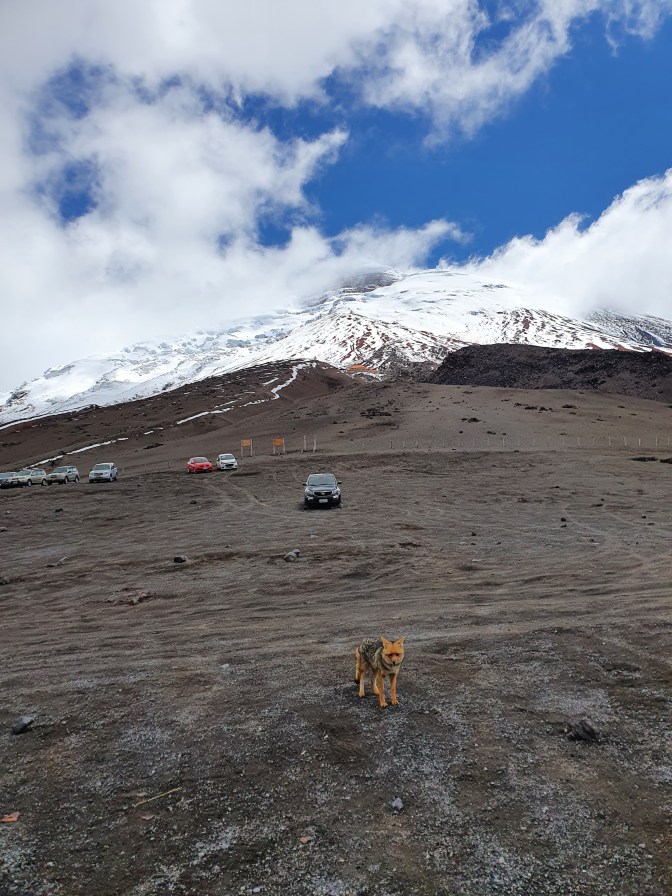
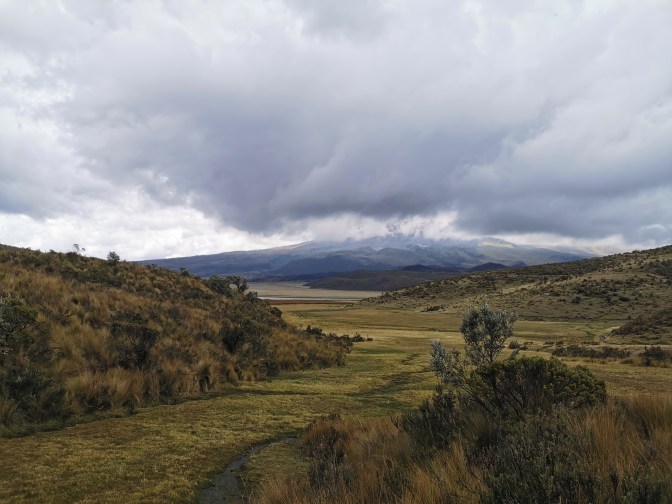
We weren’t too hopeful of getting to see the volcano in all of its glory given that there was a lot of low lying cloud but as we made our way there the clouds shifted briefly and we stopped to enjoy our quick view of the summit.
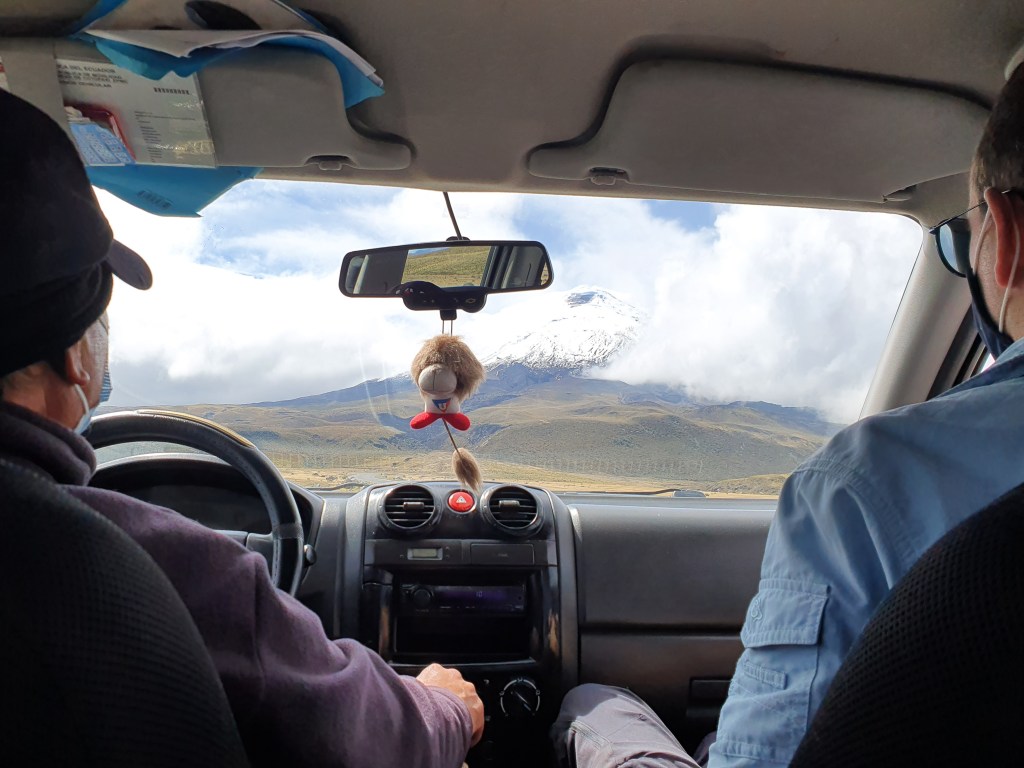
After our small stop, we carried on to the car park, which is a fair way up the slope of the volcano. We stepped out of the car and were immediately battered by the cold winds. Whilst these winds weren’t particularly pleasant, they did act to move the clouds around. Whilst it never actually cleared whilst we were there, the wind meant that there were occasionally gaps in the oppressive coverage of the top of the volcano allowing brief views of the spectacular landscape ahead of us.
From the car park there are two ways up to the refugio, one of which is directly up in a straight line in a kind of small valley on the side of the volcano, whilst the other is a zig-zag of a path on the left hand side of the ‘valley’. Whilst we were tempted to walk straight up, as it offered greater protection from the wind, we had been advised by our guide to walk up the longer winding option. We are so glad that we listened to him and I’ll explain why later in the post.
Even with the zig-zag nature of the path, it was still pretty steep and with the continuous force of the wind it wasn’t an easy hike up. Despite this we were still enjoying it and there were beautiful views of the park below.
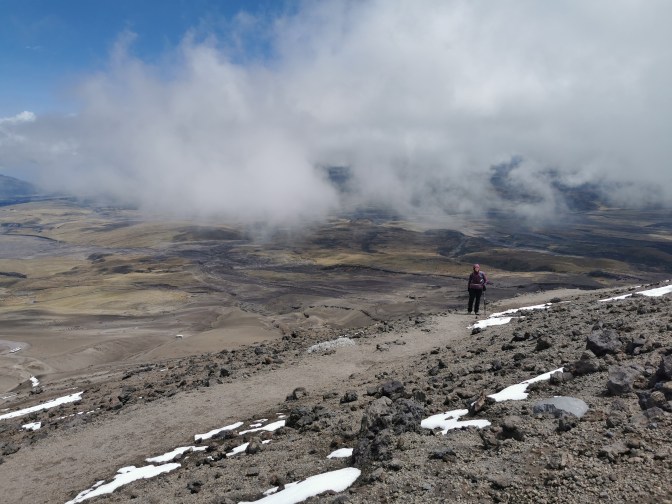

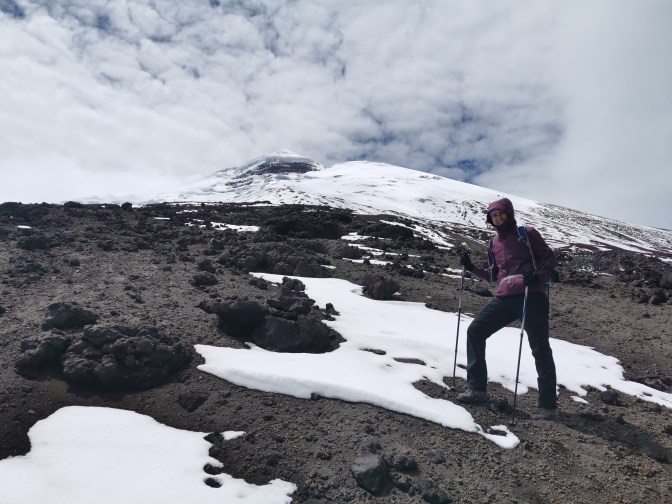
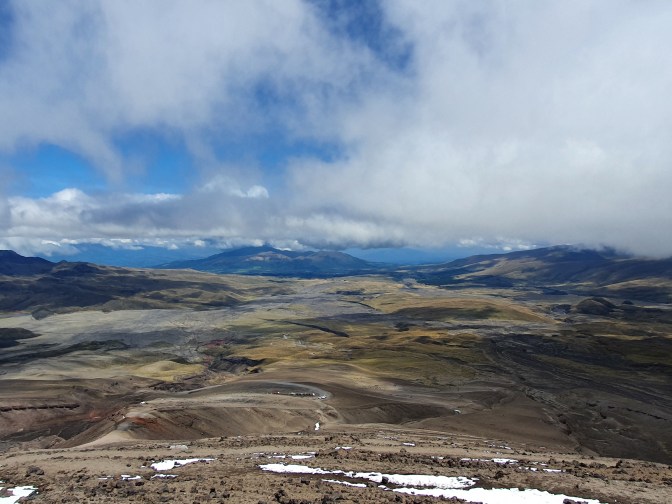
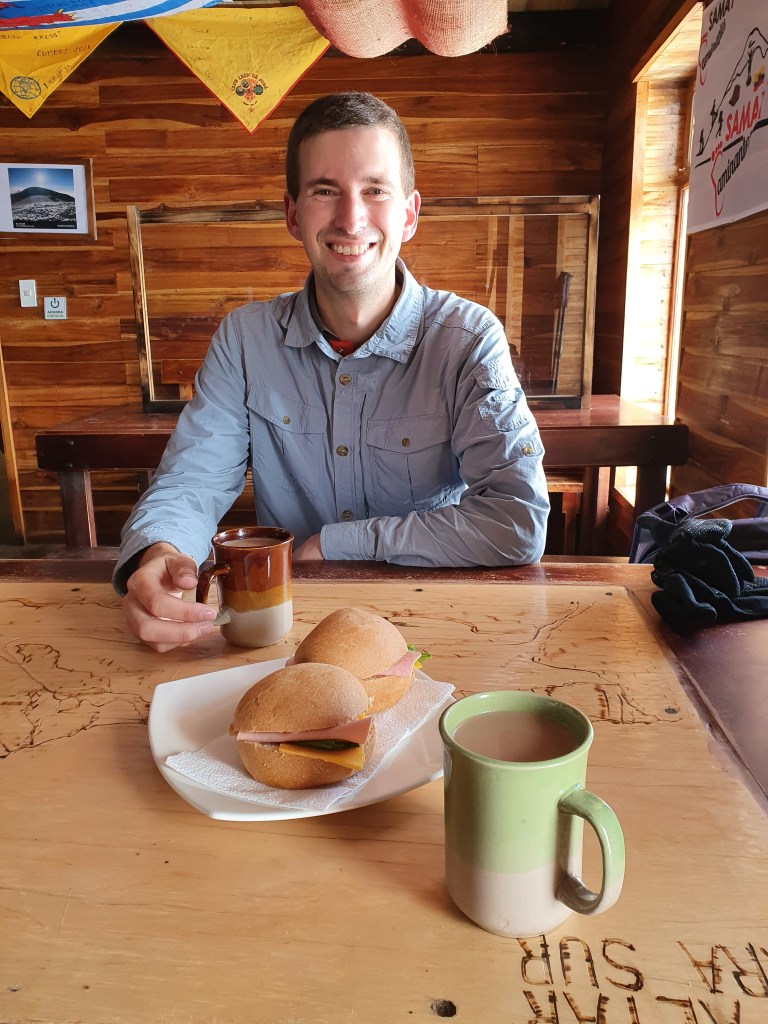
Over an hour later, we made it to the refugio. This mountain hut is used as a base for those who aim to summit the volcano. To do this you need proper equipment (crampons etc.) and a guide. However, we were happy to use it as a break from the wind and for its simple sandwiches and tasty hot chocolate.
After we had finished we had a choice of either returning to the car park or trying to get a bit higher and see a rare example of a glacier in the equatorial zone. Despite the weather we obviously opted for the second option. The route is not signposted and is definitely not easy to follow so we were pretty reliant on Maps.me for navigation. The path led us over an area where the white snow contrasted magnificently with the deep red volcanic rock and made for some stunning photos. After a while, however, the snow started getting thicker and the clouds were becoming more and more dense the higher we got. Despite wearing hiking boots, we were beginning to slip and slide so made the decision to just head back. We didn’t quite make it to the glacier but wouldn’t have been able to see anything anyway!
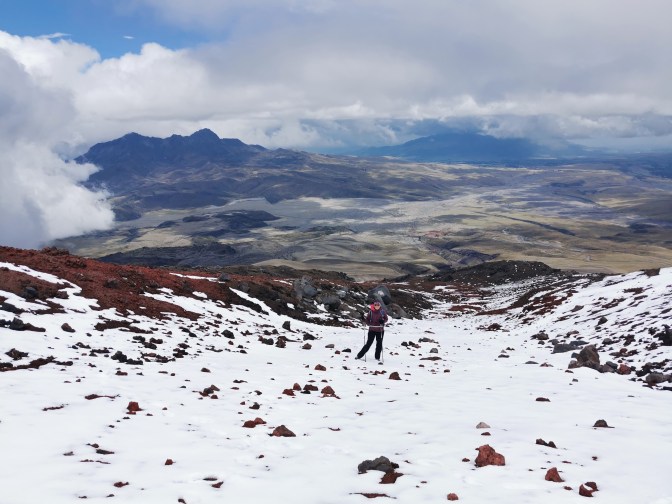
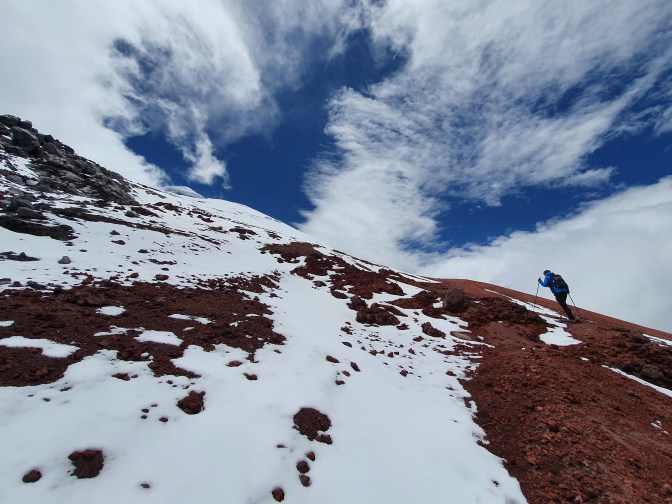
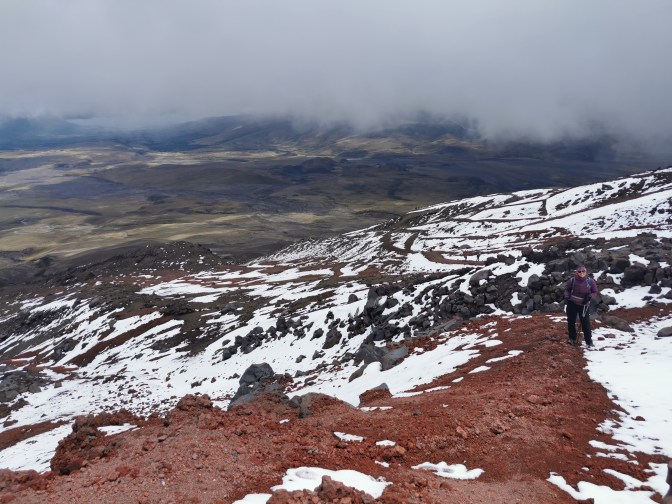
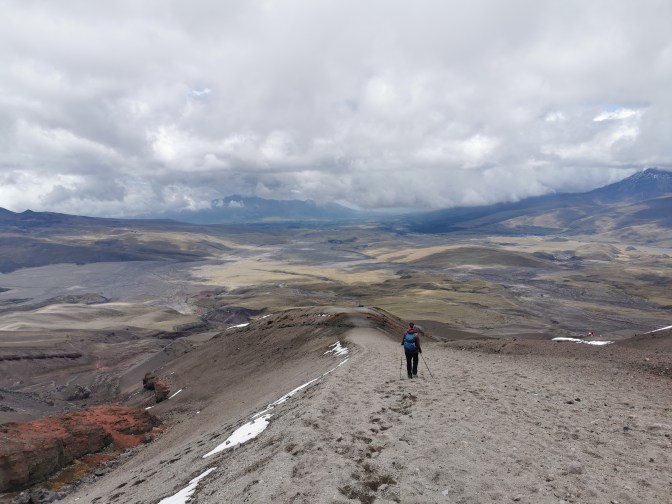
On the way down, instead of taking the winding route that we ascended by, we took the steeper, more direct route. It turned out that the ‘little valley’ was filled with fine volcanic ash / rock that was more like sand. This made sliding down really fun but for the people heading in the opposite direction, the lack of purchase must have made the hiking seriously hard work. So if you are thinking about doing this day trip I’d definitely recommend going up by the longer winding route and descending by the more direct pathway.
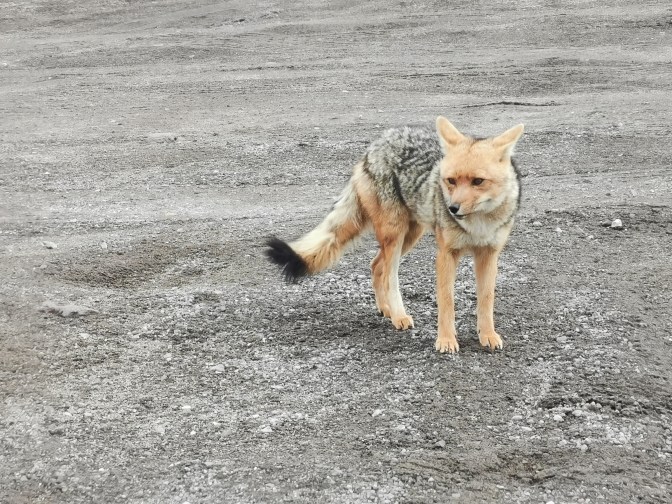
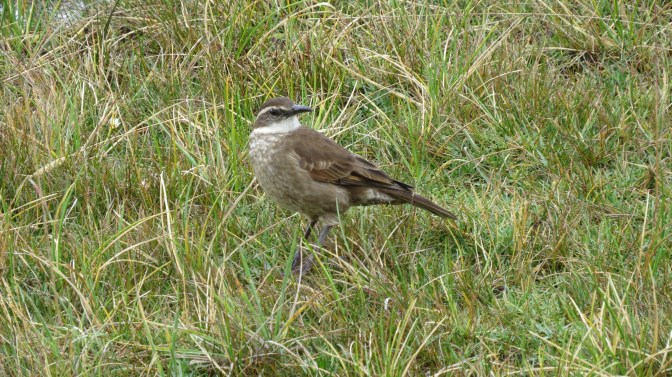
We made it back to the car park where our guide was waiting for us. And as we had a quick look around to get better views of the valleys below, we had a run-in with an inquisitive local who wanted to see if we had any spare food…
Limpiopungo Lake and the Museum
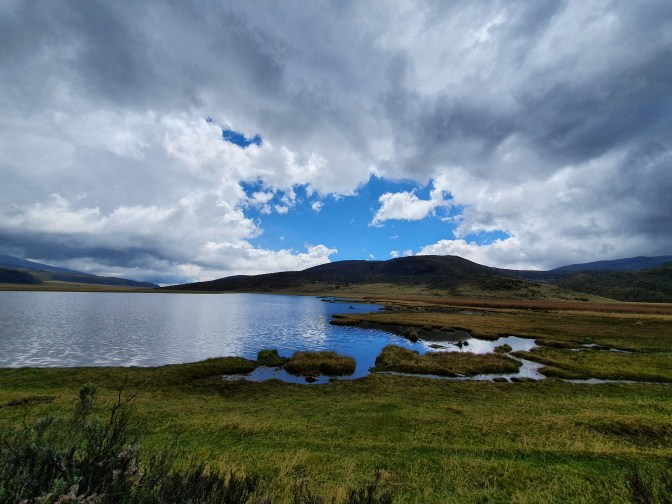
The second part of the trip was a visit to Laguna de Limpiopungo. You are again dropped off at the car park and directed to a walkway that runs around the lake in a 2-3 km loop. The walk was pleasant and made interesting by the presence of multiple species of bird that were flitting around, having made a home on the lake or in the reeds that lined the edges. What should have made it spectacular, however, was that you should have an amazing view of Cotopaxi reflected in the water. Due to the weather, that was not to be for us but it was still a nice walk. Just make sure you bring some insect repellent as for the beginning of the walk you’re accompanied by clouds of little flies.
The final part of the tour is a visit to the small museum. The museum is focussed on the different local habitats and the animals that live in them. Its nice enough but doesn’t take more than 10-15 minutes to walk through and read all of the English parts. You end up at the gift shop, which has a good selection of post cards.
Getting back to Latacunga
After the trip is complete, the guide takes you back to the main road, dropping you off on the side on which you wish to catch the bus. This is where we made a silly mistake. The first bus that arrived wouldn’t stop as it was full so we were very keen to get on the next one that came. So keen in fact, that we didn’t check it carefully enough. Not all buses to Latacunga go to the main terminal. Some stay on the major road as it bypasses the city on its way to the south of the country. So instead of arriving within walking distance of our accommodation, we got dropped off at a roundabout and had to flag down a taxi to get into the city. It was quite fortunate that there was one in the vicinity, as Uber doesn’t work in Latacunga and we didn’t have the number of any taxi companies. But all’s well that ends well.
Final thoughts
Overall, we had a really nice day visiting Cotopaxi and would definitely recommend it. And apart from the mishap at the end, it was pretty straight forward to get there using public transport. It might even have been do-able from Quito, although it would require quite a bit longer in buses. However, we’re glad we did it from Latacunga instead. What would have made the day even better was if the weather had been kinder. We were a bit disappointed to never see the iconic views of the symmetrical conical peak that dominates the skyline but hopefully if we ever return to Ecuador, we’ll have more luck.
 Brit and Czech Abroad