Huaraz is the main town in the mountainous area of central Peru and there are two main types of activity that you go to Huaraz to do. The first is one of the famous multi-day hikes in the iconic surrounding mountain ranges, such as the Santa Cruz Trek or the Huayhuash Circuit. The second is a range of day trips to beautiful locations in the area.
Due to perceived time restraints (we were originally only going to stay for five days) and the weather forecast, we decided to go for the second option and see the sights through several of the day trips. We ended up staying for eleven full days, from the 28th of September to the 9th of October, due to the fact that I got ill, and in that time we did six activities. The aim of this page is to give you a run through of the things that we did manage to do.
So, in chronological order, here they are:
Contents
1. Laguna Wilcacocha
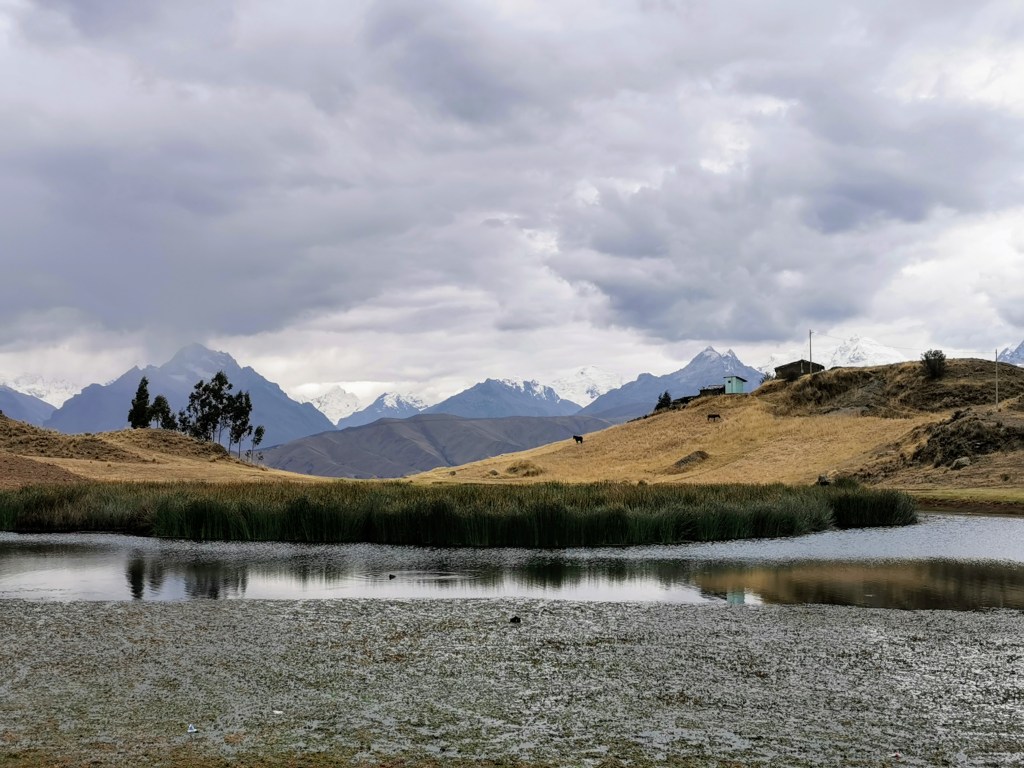
Despite the fact that most of our time in Peru had been spent above 2,500 metres above sea level (the altitude at which it is generally accepted that people can start suffering from altitude sickness), we felt that we needed to acclimatise again, having come from several days at sea level. So on the first day we just relaxed and on the second we decided to do a small hike in the afternoon to help with the process.
The hike up to Laguna Wilcacocha can easily be done independently, there is absolutely no need to go as part of a tour. You first need to get a collectivo to the trailhead. A collectivo is a great way of getting round for short to medium length journeys. It’s like a cross between a taxi and a bus in that it has a set route but not a set timetable. It generally goes when it is full, so there is a certain uncertainty involved in travelling by collectivos but they are very good value for money and allow you access to a wide range of destinations.
The trailhead starts at the Santa Cruz bridge. If you are still on the collectivo when you reach San Pedro then you have gone too far! The trail is pretty steep and we were quickly out of breath. The trail seems pretty straight forward on Maps.me and yet we actually went the wrong way. We should have taken a trail off to our right but we totally missed it. But it turned out to be a lucky mistake. We took the ‘proper’ route on the way back and it wasn’t as nice a path to walk on.
The path takes you past farmland and little hamlets as you meander up towards the viewpoint. This hike is famous for its glorious views over the Cordillera Blanca mountain range but for quite a while we couldn’t see any of it. There were thick clouds on top of the nearby hills and we were worried that these clouds would totally obscure the views but it turned out to be more about the angle. As we got higher, some snow-topped peaks started to show over the hills. Whilst the clouds didn’t allow us the full vista, it was still really nice.
Given that we had frequent breaks to catch our breath, we ended up constantly swapping places on the trail with a local older man who was carrying a sack of vegetables up the hill. What was interesting was that he was wearing traditional clothes. We had seen plenty of people in Cusco wearing these clothes, but we weren’t sure whether it was just for the tourists and to help them sell their goods. In the hills in this more remote part of Peru there were very few tourists and thus it must just have been normal to wear these clothes. This really lent an air of authenticity to the area, which was really pleasing to see.
After a while, we made it to the laguna. Compared to other lakes in the area this one is not particularly special in itself, the main attraction is the views over the adjacent mountain range. Despite the thick clouds having not budged, we were still presented with a really nice view over some of the impressive peaks that make up the Cordillera Blanca range. We found a sheltered spot, given that the wind was quite cold, and had our lunch with the mountains laid out in front of us.
We took the same route down to start with and had to share the path with a little girl, who can’t have been more than twelve or thirteen, who was herding her small flock of sheep down the hill. Well we didn’t have to share the path for long – she was so fast. We thought we were going at a reasonable pace but within twenty minutes she was just a speck in the distance.
As I mentioned earlier, we followed the route suggested on Maps.me on the way back down. But having gone slightly different ways going up compared to down, I don’t think the suggested route is the primary path. The suggested route followed a dry river bed and was just not as pleasant to walk on. So I’d suggest staying on the path to the left as you go up. It even looks like a major path compared to the other one, which snakes away into the undergrowth.
The walk to Laguna Wilcacocha is certainly not a main attraction in the area but, nevertheless, we enjoyed it. It can be done in an afternoon (or morning), it is easy to access without splashing out on a tour, and it is still challenging enough to help aid your acclimatisation to the altitude. Plus, the views were really nice and would have been even better on a sunny day. So, if you are trying to acclimatise or if you have plenty of time, I’d recommend adding this walk to your Huaraz itinerary.
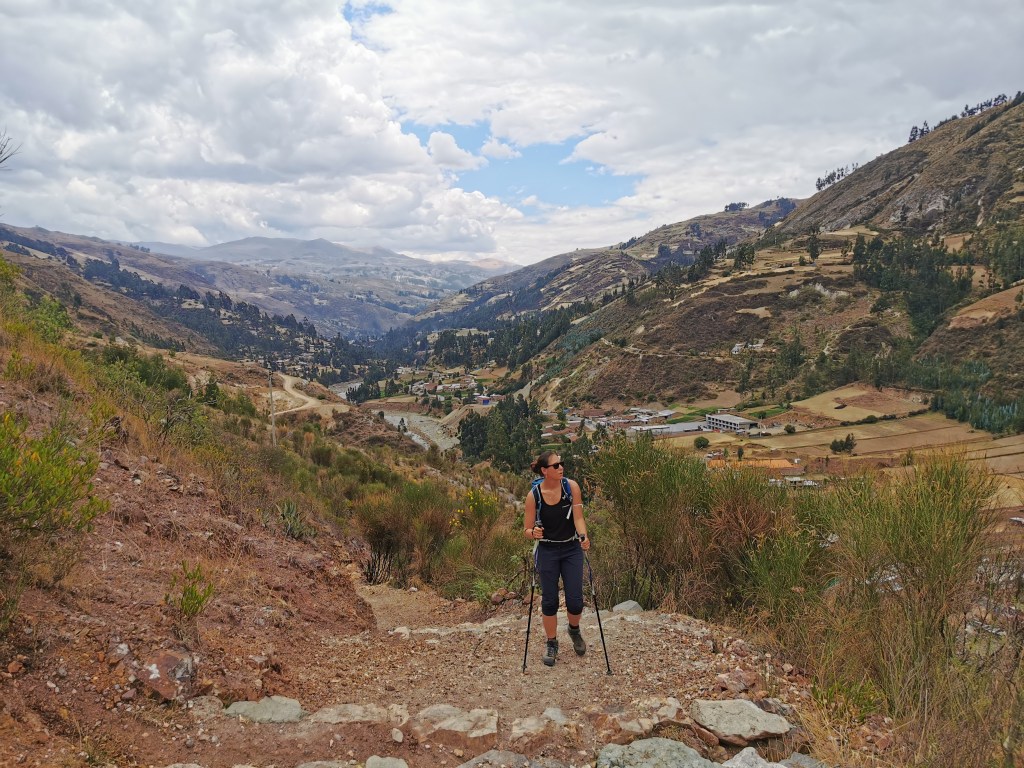
The path at the beginning is quite steep. 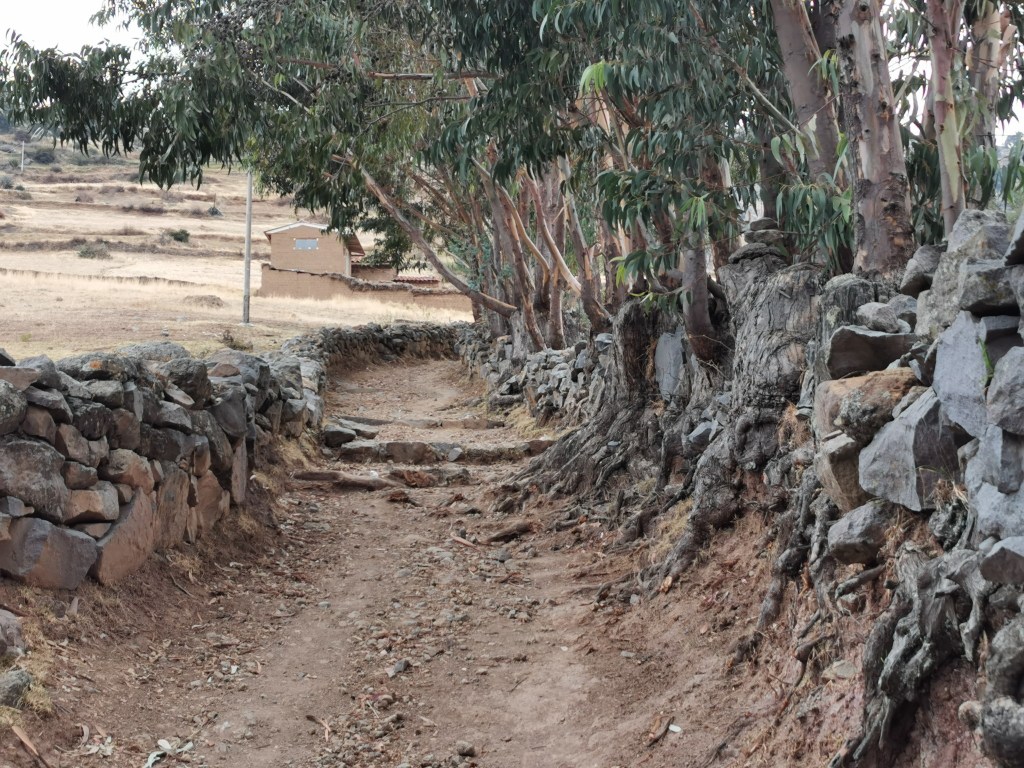
The path passes through farmland and little hamlets. 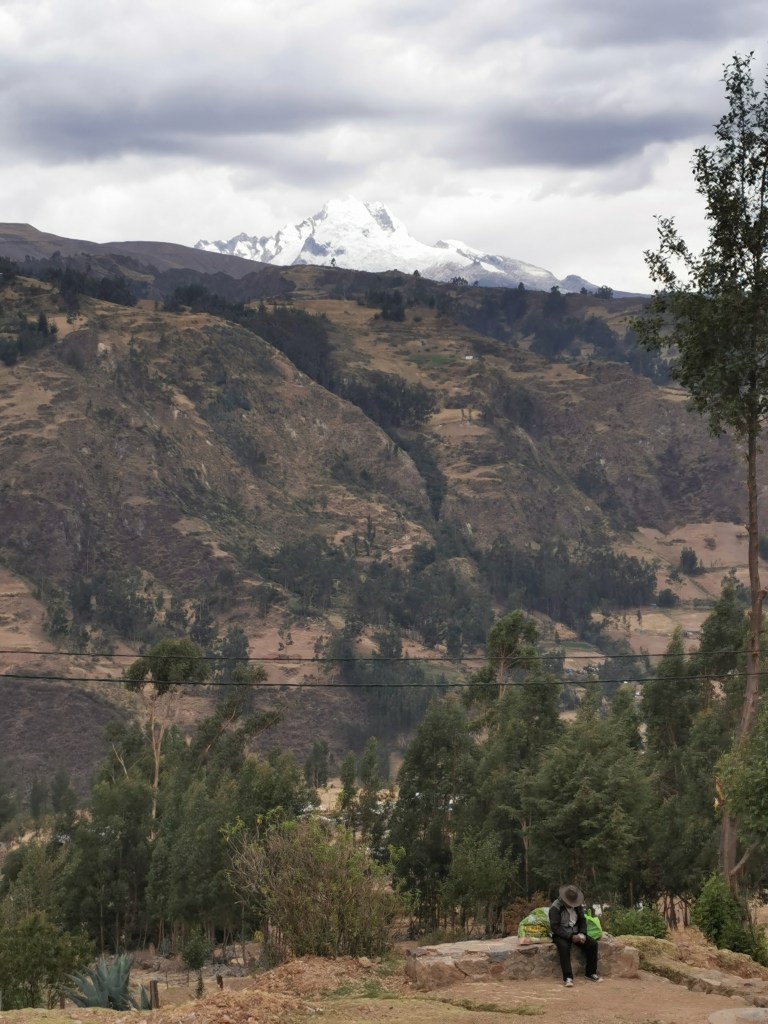
Our first view of the mountains, with the older local carrying his vegetables up the hill. 
The higher we got, the more of the mountain range we could see. 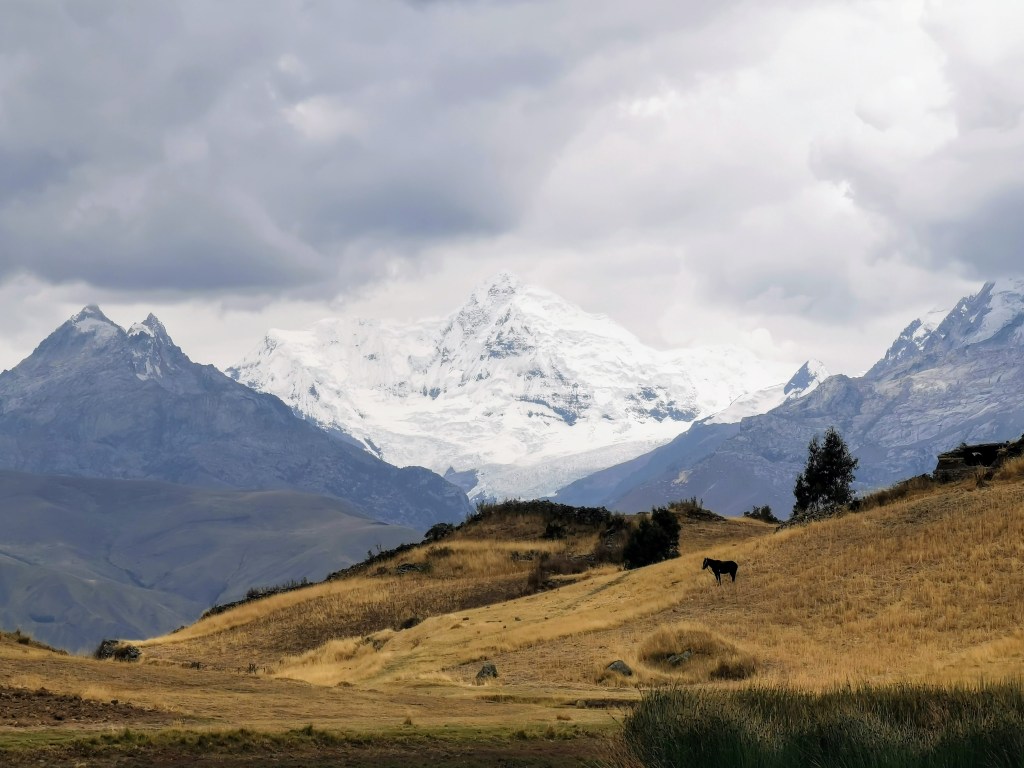
Whilst the weather prevented us having the best views, the ones we had were still really nice. 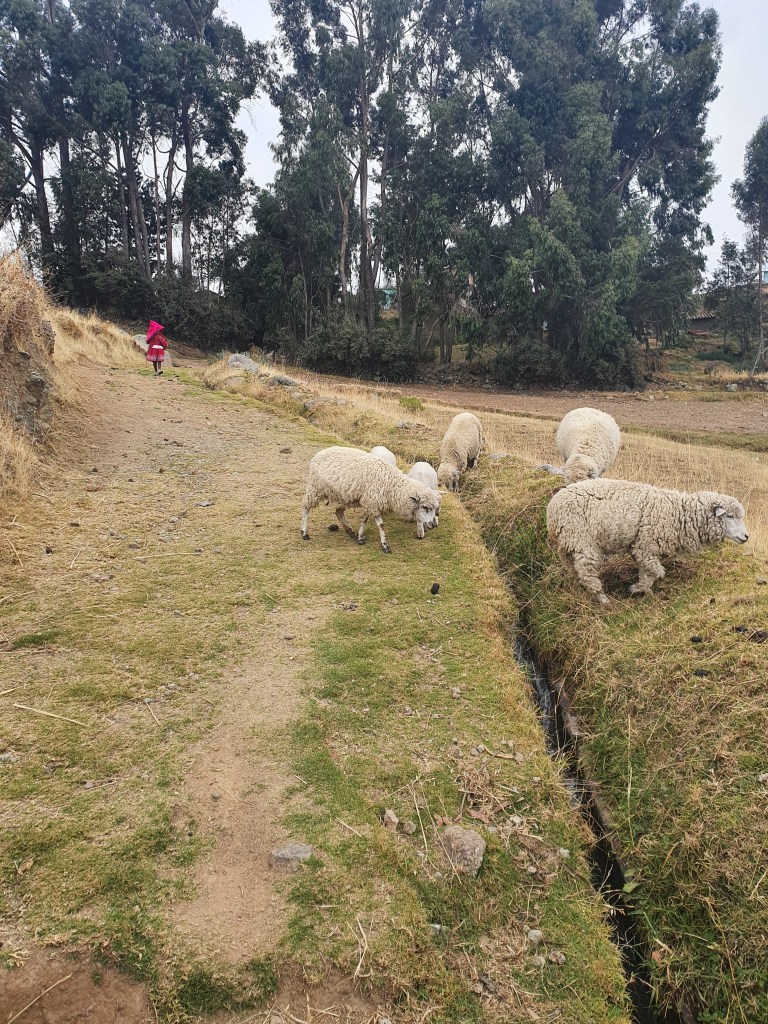
The little girl herding her sheep.
2. Laguna Paron
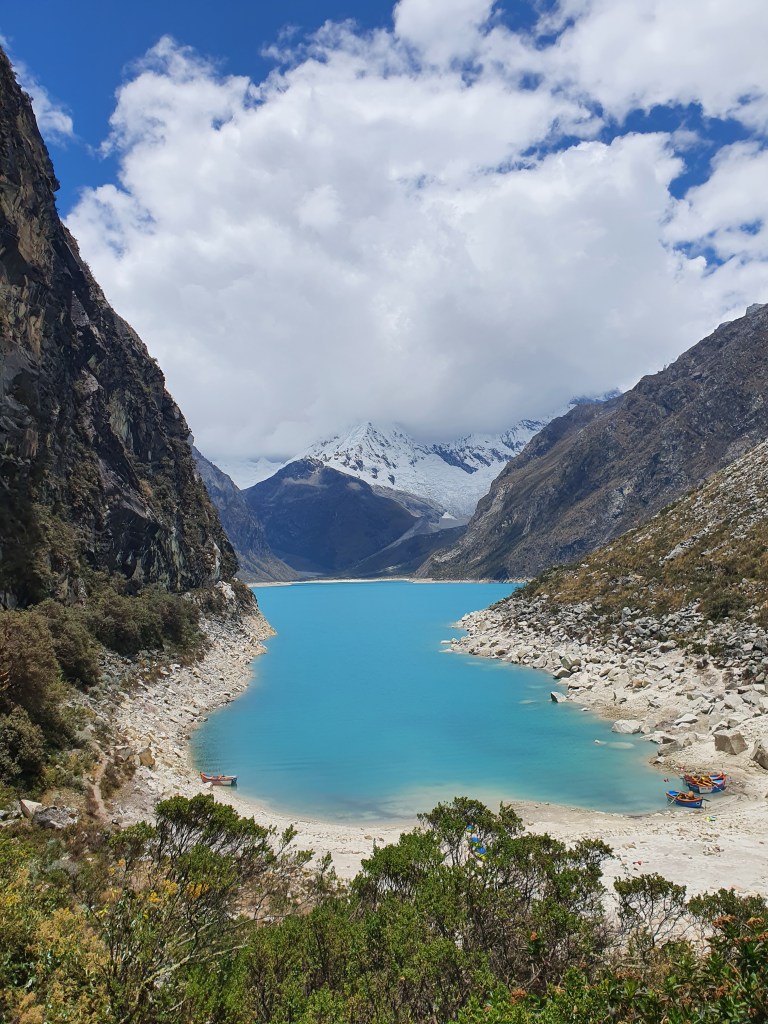
Now don’t get me wrong, Laguna Paron is beautiful, but this was probably the most disappointing of our day trips. There were two main reasons for this:
The first is the style of the tour. When we were researching the trip, a couple of blogs mentioned that you can leave very early in the morning and this allows you the time to do some hiking up to the lake. This would also have allowed us to best use the weather (more on this in a bit). But due to us coming in the off season and during the COVID pandemic, there were no trips leaving at that time due to lack of interest. So we ended up leaving later on, driving all the way to the lake and only having two hours to look around. This might seem like a lot, but compared to the amount of driving involved it isn’t, and we didn’t feel we had the time there to fully enjoy it.
You might be wondering why we didn’t do the tour independently? Well the main reason is that it is a real pain to do so. Whilst potentially possible, it is very hard to get to the lake via public means. And I’m not convinced we would have ended up with that much more time then we got through the tour. If you are interested in visiting Laguna Paron and you wish to do it without a tour, there is some information on how to do so located here:
https://www.alongdustyroads.com/posts/laguna-paron-huaraz
The second reason the trip was a bit of a disappointment was the weather. We did this trip on the first of October, which is technically the very start of the rainy season but can generally still be a nice time to visit the area. Not this year, as the poor weather started weeks earlier. The general pattern during the rainy season in this region, is that the morning can sometimes still be quite nice but the clouds will then normally role in by midday and then the afternoon can be pretty miserable. Due to the late start time and the stops along the way, to stretch our legs and buy food if we wanted, it meant that the beautiful sunshine of the morning had all but gone by the time we reached the lake. There was still a bit for the first twenty minutes but then it was no more. This has a real effect on the colour of the lake and the views of the surrounding mountains that you get. Whilst these views were still impressive, it annoyed us that the experience would have been so much better if we could have just started an hour or two earlier.
When we got to the lake, we also made a couple of mistakes. There are three main things you can do once you reach the lake. One is walk up to the mirador (viewpoint); the second is to stay by the shore of the lake; and the third is to hire a kayak or rowing boat and head out onto the water. Given that the tour guide immediately started off for the viewpoint with the majority of our group, we thought that it might be better to wait for a bit so that we could go when the spot was a bit emptier. This was a mistake because by the time we got up there, the sunshine had gone, meaning the views were not so good. Also, there was a steady stream of tour busses arriving, so the viewpoint was never quiet in the time that we had.
Before we went to the viewpoint we decided to explore the shoreline for a bit. As you looked out at the lake, we headed to the right-hand side. This was our second mistake, as this side does not have a proper path. Thus we wasted some of our precious two hours scrambling over rocks and not really getting anywhere.
With hindsight, we would have gone up to the viewing point straight away then came back down and hired a two-person kayak. It looked like fun but we ran out of time to do it.
So now that I’ve done all of my moaning, let’s look at some of the positives associated with the trip. First of all, when the Sun is shining the lake is a stunning alpine blue. It is also a beautiful setting, with mountains rearing up all around the lake. You also get a really nice view from the mirador. It is quite a steep walk to get up there, but the path isn’t too long.
So, whilst the lake is beautiful, if I had to miss one of the major ‘lake trips’ from Huaraz, it would be this one. Laguna Churup and Laguna 69 were both much better overall experiences.
When we first got there, the lake was a stunning blue. 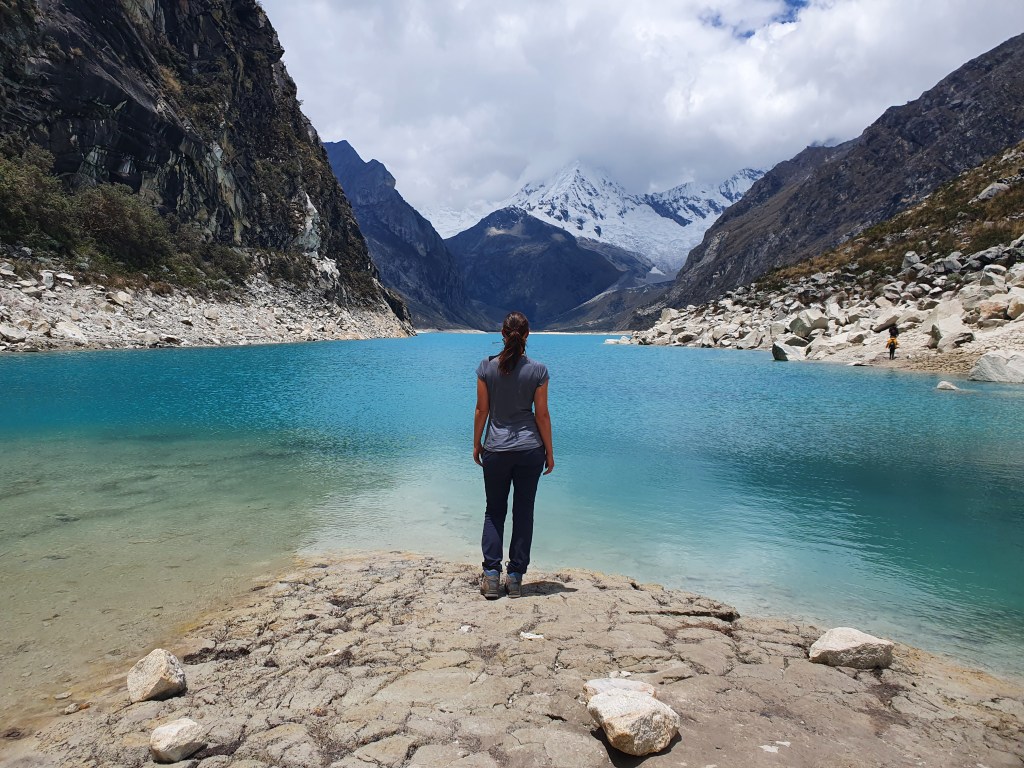
It is a beautiful setting. 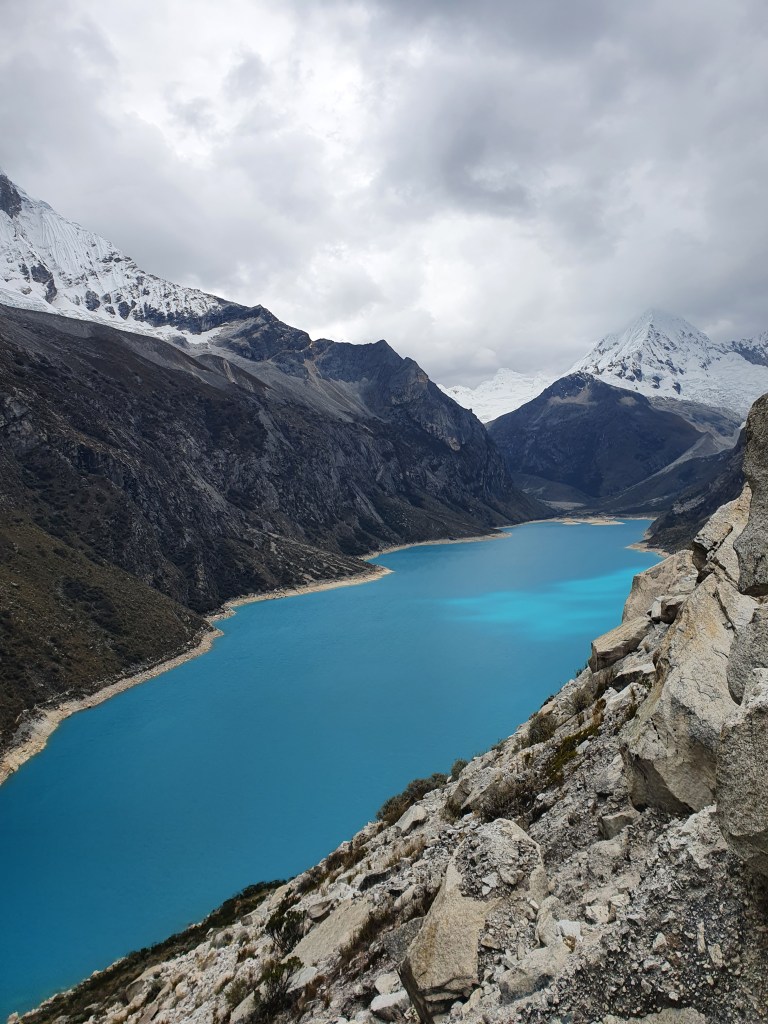
But the clouds rolled in. This photo allows you to see the difference in colour between when the Sun is shining and when it is cloudy. 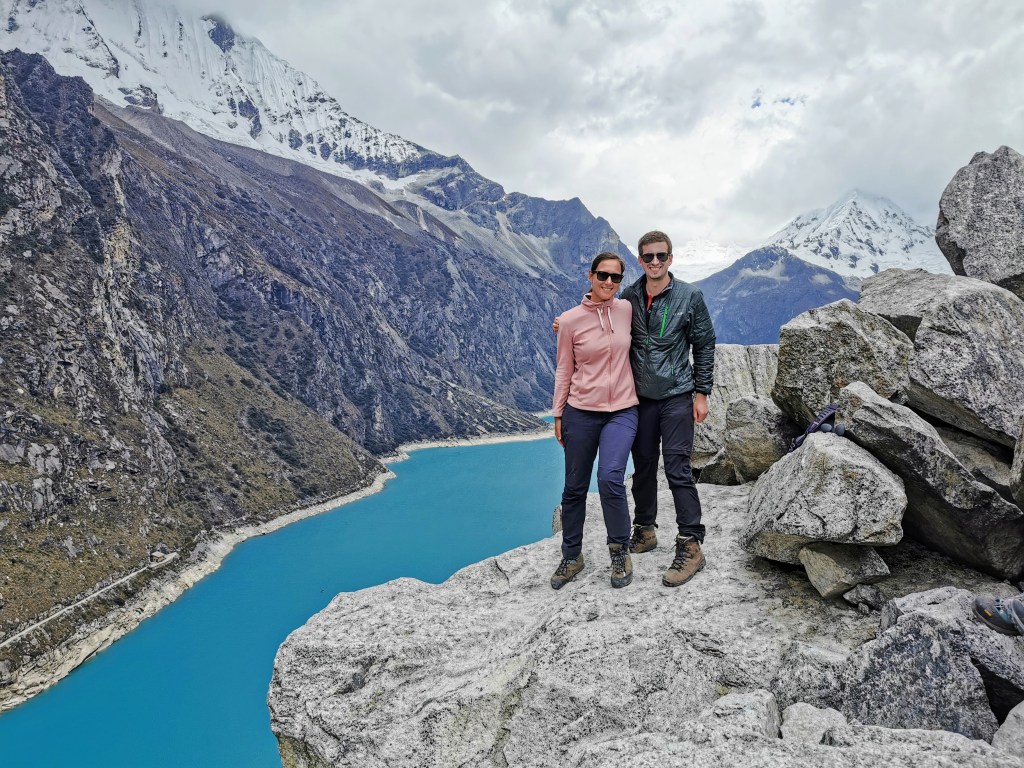
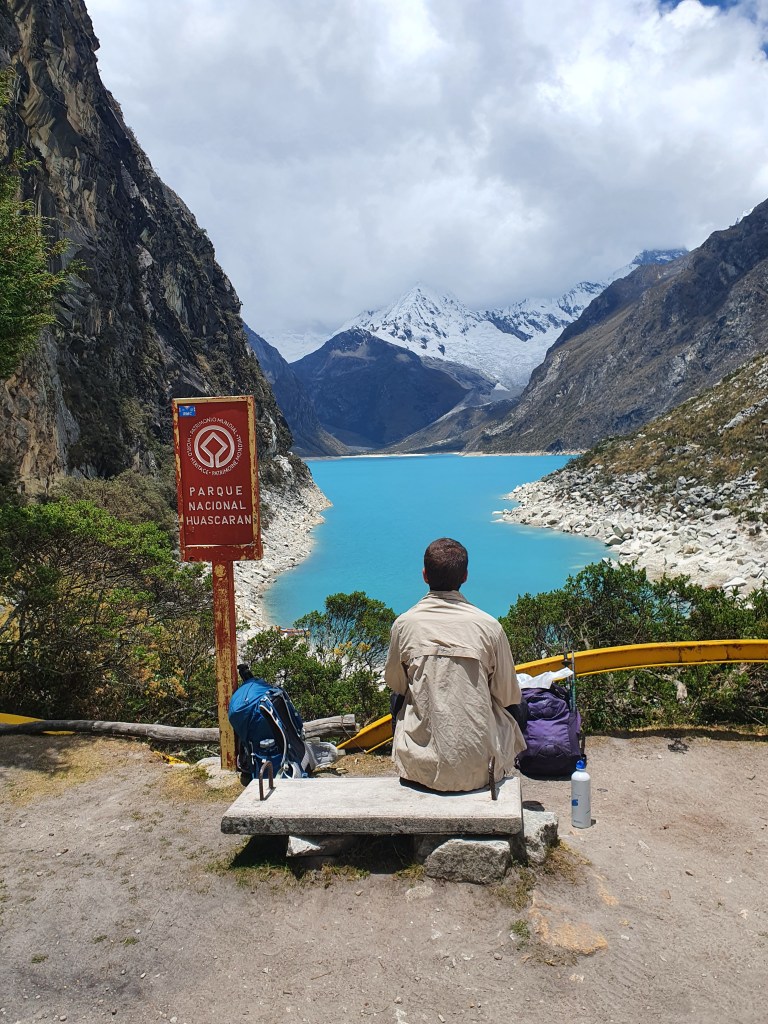
The views from the mirador were great, it was just a shame we didn’t go up straight away.
3. Chavin de Huantar
The day after our trip to Laguna Paron, I came down with a severe stomach sickness. Whilst it was almost inevitable, given that we are travelling around South America, it was very annoying and put me out of action for several days. When I was starting to feel a bit better, we decided to do a trip that didn’t involve any hiking. Whilst the day tour to Chavin de Huantar was not originally on our list of places to visit, it seemed to match what we (I) wanted at this point in time.
The Chavin were a pre-Incan civilisation that lived in this region and the site was a large temple complex that is thought to have been used for religious ceremonies, especially those using hallucinogenic drugs.
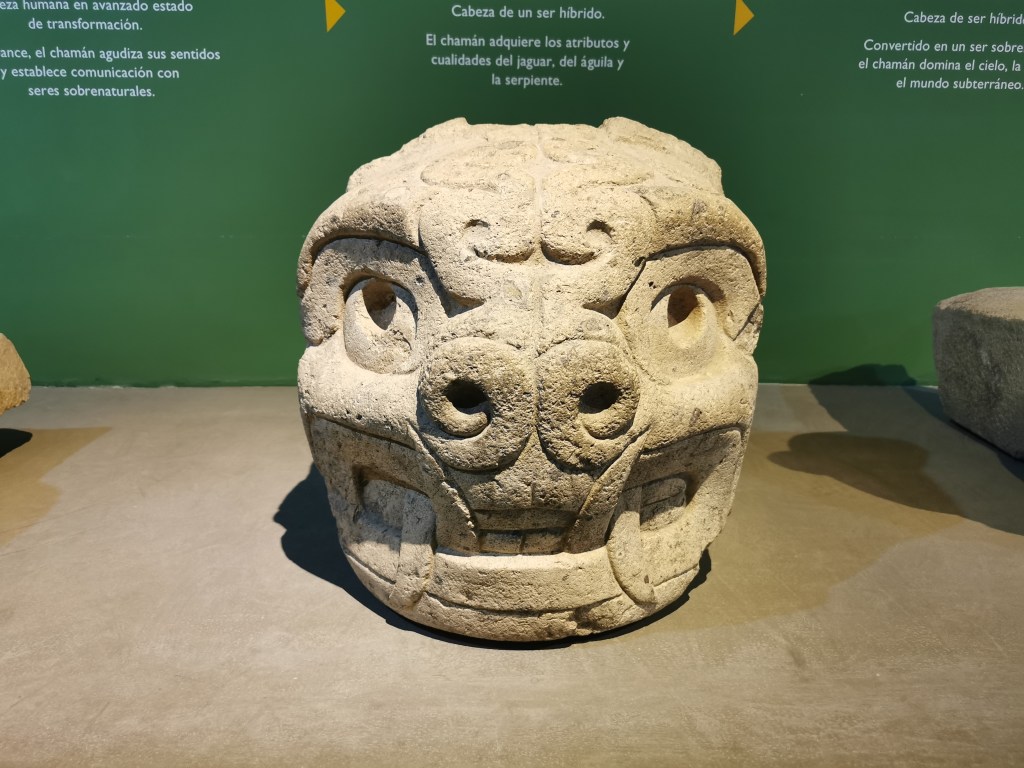
Before we got to the site, however, there was quite a long drive punctuated by a stop at a viewpoint overlooking a lake. It was quite nice here just to get out and stretch your legs. We then went to the Chavin museum, which is located 5-10 minutes drive from the actual site. It is not the best museum in the world and most of the information boards are just in Spanish but it did provide us with a bit of a grounding in the history of the area. Much of the stonework decorations from the site had also been moved to the museum. Whilst it is important to try and preserve them, it is a bit of a shame that they couldn’t have remained in their intended positions, as they are not so impressive when they are seen out of context in a museum. But overall it is worth going to the museum to get some information before going to the site.
So we finally arrived at Chavin de Huantar. Due to COVID restrictions, we had to wait outside until there was enough spaces available for us to enter. From the entrance the site is not at all impressive but as we started on the tour with the guide (which is mandatory) it became clear that the site was a lot bigger than we had realised and we were not at the main part. The tour was just in Spanish but the guide made an obvious effort to speak clearly and fairly slowly to give us a chance to get some of the information. Radka was able to translate most of it but even me, with my very limited Spanish, was able to get the gist a lot of the time.
After walking for a bit we came to the main complex. This consists of a main square with buildings flanking three sides. The square was built into the ground and would have initially been filled with water from channels dug under the buildings connecting to nearby rivers. It is not known for sure what the purpose of the complex was, but it is speculated that the sounds of the water in the channels would help the persons involved in the ayahuasca-style ceremonies to reach an altered state. We had not researched this place, as we had not initially intended to come, so the scale of the complex was surprisingly impressive. After seeing the buildings from the outside we were able to enter a couple of them via their tunnel system. We would have been able to see more before COVID. We then finished by visiting the one statue left in the complex.
After leaving the complex, we stopped for a very nice dinner (which isn’t included in the price of the tour) before starting the long drive back to Huaraz.
Overall, this was a nice day out. It was interesting to learn about a culture that was different to the Incas and the complex itself is quite impressive. It was also good to break up the other day trips, which can be pretty similar.
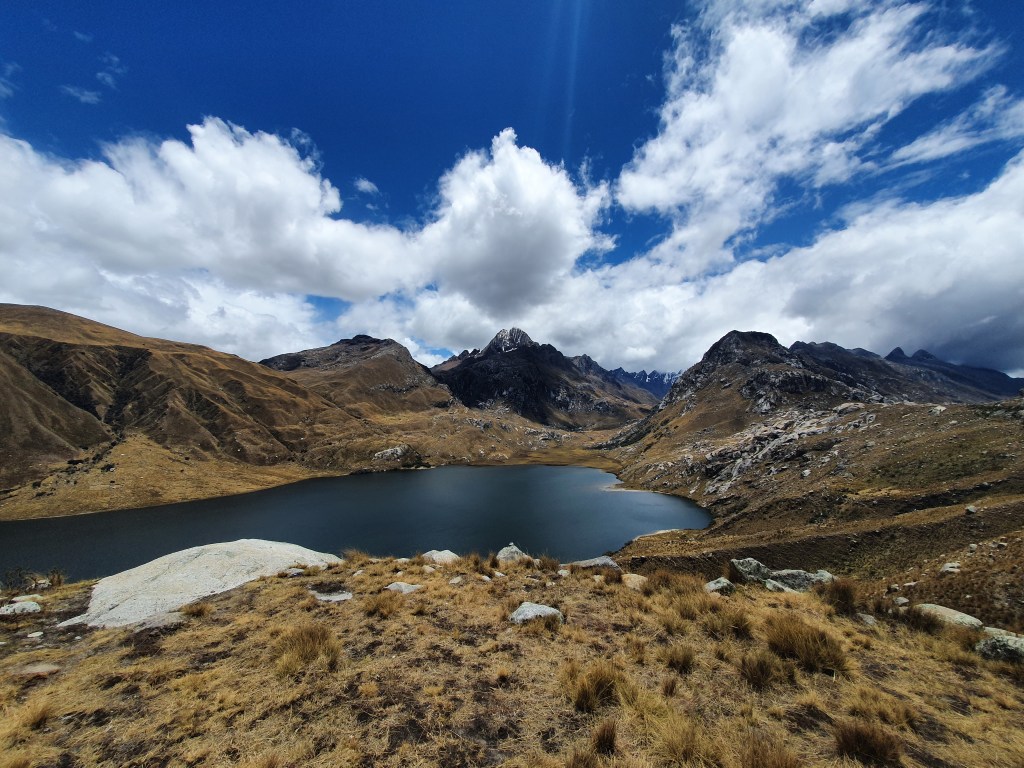
The stop to stretch our legs on the long drive to the site. 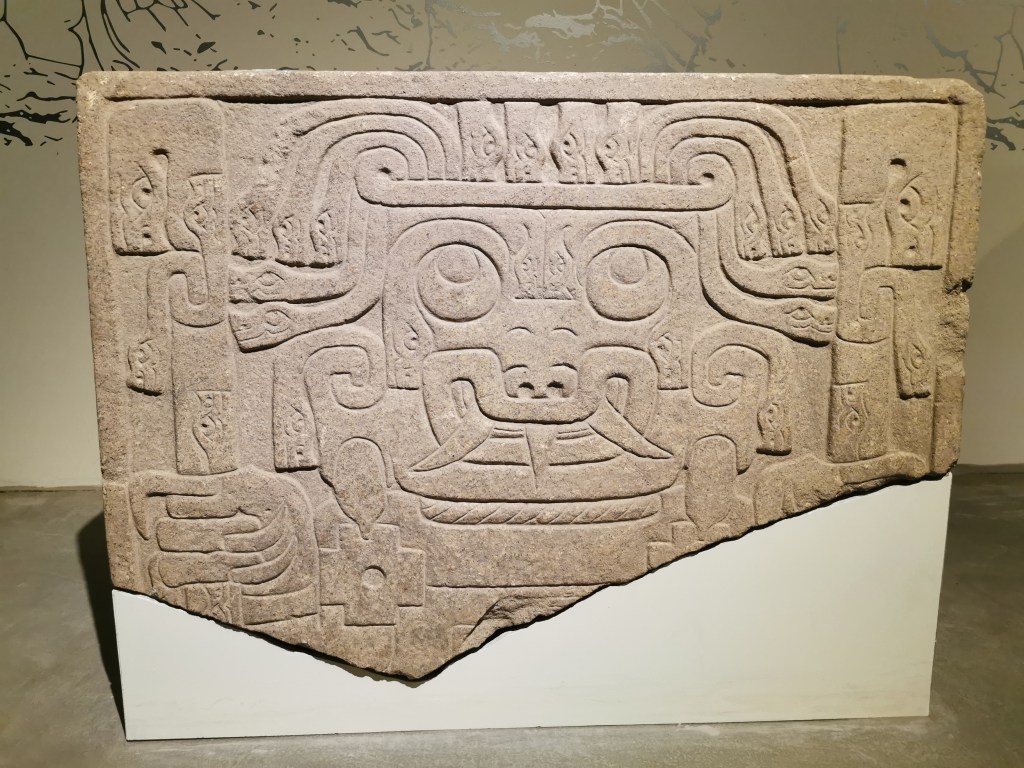
The stonework in the museum was interesting but I’d rather it had remained at the site. 
The main part of the temple complex. 
The surroundings were very nice. 
The one remaining piece of decoration left at the actual site. It is a shame, as the site would have even more impressive if the decorations had remained there.
4. Laguna Churup
I’m going to start by stating just how much I enjoyed this day out. It had a bit of everything; finding collectivos, a bit of hiking, trickier parts to the trek, and a beautiful lake to finish things off.
I’m not going to spend too much time on the logistics of getting to the starting point of the hike, I’ll just say that there isn’t much point in doing this as an actual tour, it’s pretty straightforward to do it independently. If you want more detailed information on why this is the case and how to organise the day independently, then please have a look at the following blog post, as they explain it all very well:
https://www.alongdustyroads.com/posts/laguna-churup-huaraz
So, to get to the trailhead you need to get a collectivo. The pick up point is a bit of a walk from the centre of town and the earlier you get there the better. This is because the collectivo will pick you up again after the hike at a certain time (or just wait around until then – I’m not really sure) so the earlier you start, the longer you get to complete the hike. We were told the first collectivo left at 7am, so we got there five minutes beforehand. Of course, as is the way with collectivos, it wasn’t full so waited around to see if it could get any more paying customers. It was after 7:40 when the driver gave up and started off on the 45 minute ride to the starting point for the hike.
The start of the hike is fairly straightforward. You follow a very well marked trail straight from the carpark up to a hut on the hillside. At this point you have to pay the small entrance fee to enter the reserve – this is different to the ticket you need for entering many of the other tourist destinations in the area. Our ranger, however, presumably couldn’t be bothered to walk up the hill, so was waiting at the carpark at the start of the trail. This part of the hike consists of lots of steps and is quite steep but is in no way technically difficult. You also have nice views of the hills around you and, if you have a nice day, when you get a bit higher up you can catch glimpses of the tops of the peaks that line the lake you are aiming for.
After the hut the trail starts to get a bit trickier and includes a part where a chain is provided to help aid your stability. But it certainly still isn’t that difficult. The path continues for a while, with the surroundings getting progressively more mountainous, until you reach a fork in the path and you have to make a decision. Both paths lead to your final destination and can both be used to make a loop of this last part of the hike. Or, you can go up and down the same pathway. I’d imagine most people, including ourselves, would prefer to make it a circular route as it adds more variety and slightly different scenery. What you need to consider, however, is that the right-hand fork as you look up the mountain, leads to a path that has more chains. And this time you will definitely need to use them to help you climb up the path. This section of the trail is trickier than the previous section with the chain but to anyone with any hiking or climbing experience it is not overly difficult. That being said, if you hate that sort of climb, where you need to use that support, if would be best if you just went up and down the left-hand fork. If you wish to make a loop, I’d advise going up the part with the chains as going down that way, especially when it is wet, would be slippery and challenging.
We decided to make a loop of it and headed up the right-hand fork. The scenery was getting more and more spectacular and, despite it being cloudy, we got views of the towering peaks up ahead. The part with the chains was quite fun and certainly provided some variety to the steep climb up. Once you get past the chains, it is not too much further to the lake.
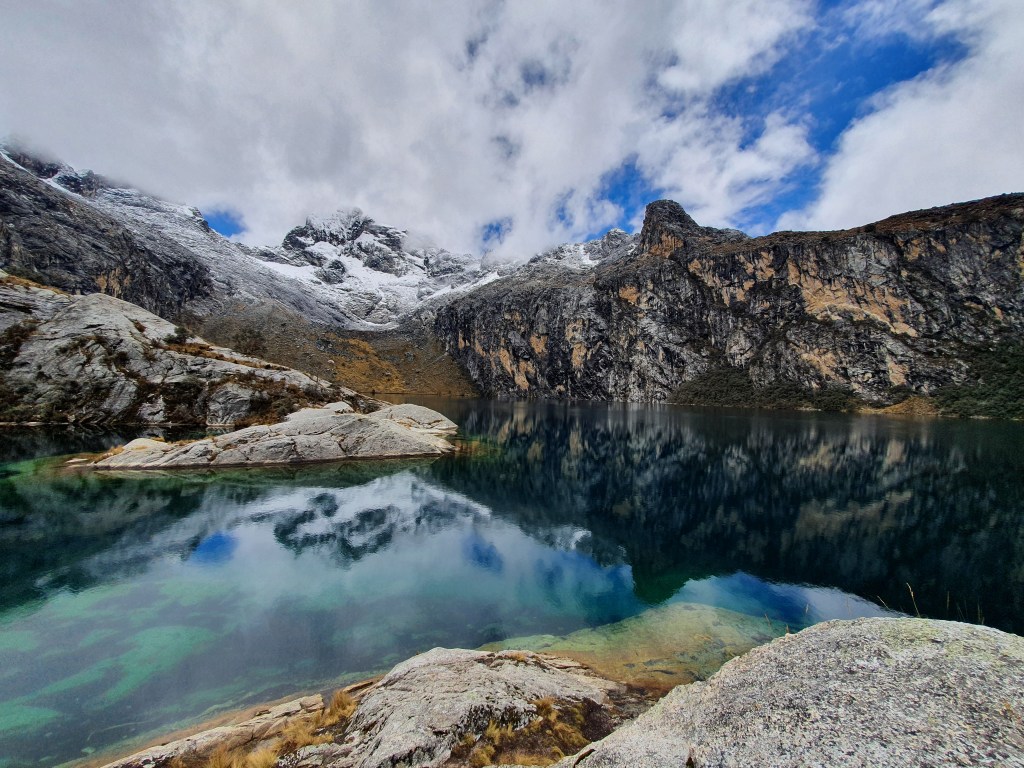
The weather had been quite gloomy the whole way up and yet when we reached Laguna Churup, there were breaks in the clouds and the sunlight coming down revealed a beautiful lake that was mirroring the impressive peaks around it. It was just stunning. We found a nice place to sit by the lake, opened up our packed lunches and basically sat in silence for the next twenty minutes just taking in the views all around us. I could have stayed there for hours but unfortunately, we needed to get back down to meet up with our collectivo back. If we missed it, it would involve adding on an extra hike down the valley to the nearest town and we didn’t particularly want that! To complete the loop, you need to make your way up a hill to another viewpoint. It was nice there but the reflections had been better from the lakeside.
The way back down was fairly steep and I was glad to have my hiking poles. But once we met up with the original path we knew where we were going and it got progressively easier to hike (apart from the part with the first chain) so our speed increased. We made it back down to the bottom in good time to get our collectivo back to Huaraz.
I would certainly say that Laguna Churup is a must-do in terms of day trips from Huaraz. It includes a nice hike that has a well marked path and isn’t too tricky, and yet is challenging enough to not be boring to more experienced hikers. It has a beautiful lake as your goal for getting you up the steep parts of the mountain. Plus, not having to do it as part of a tour is a bonus. We had a really fun day.
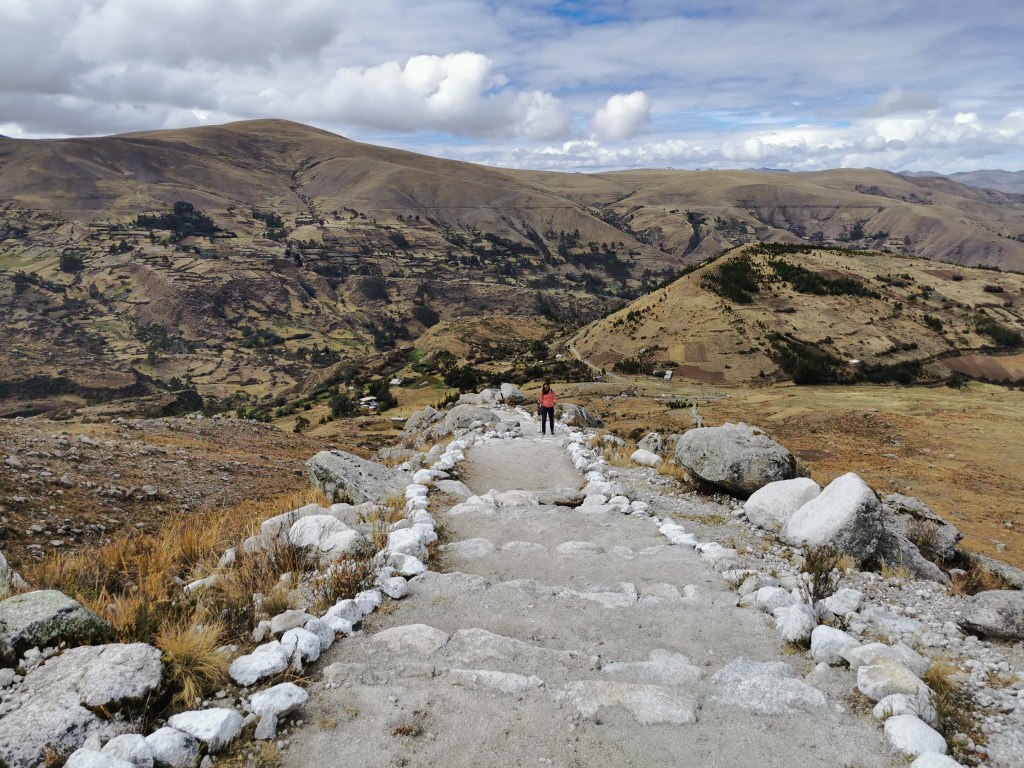
The start of the hike is on a well marked track that has plenty of steps. 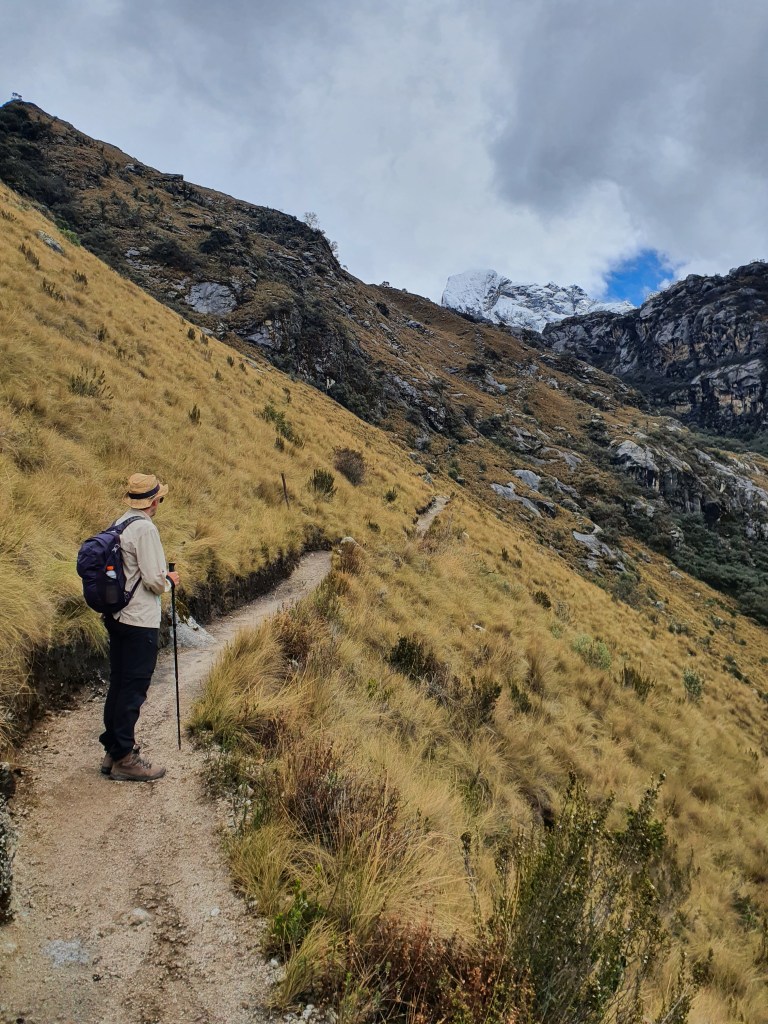
After the hut, the path carries on flat for a bit before starting to get trickier. 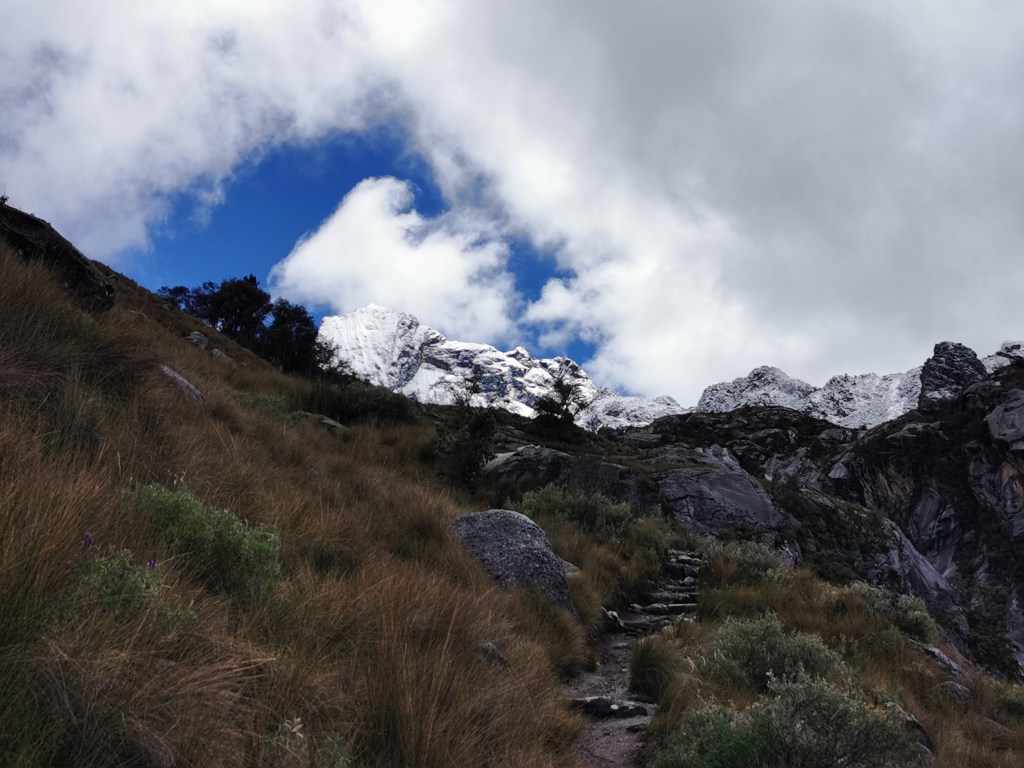
We started getting glimpses of the peaks up ahead. 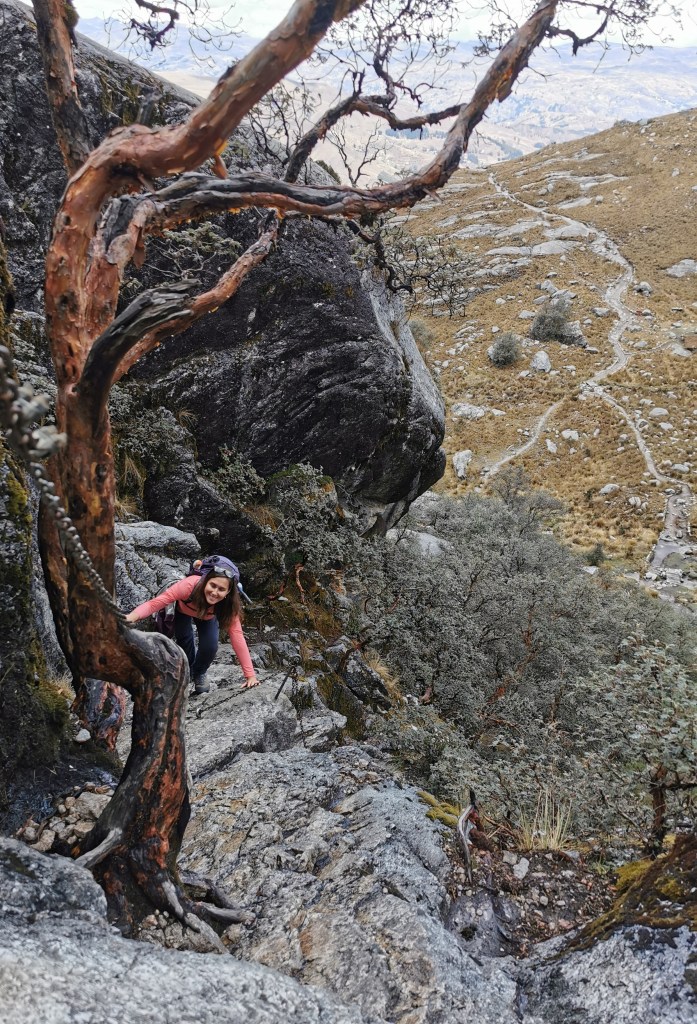
This was the second section of chains. It was tricky but certainly not too difficult or dangerous. 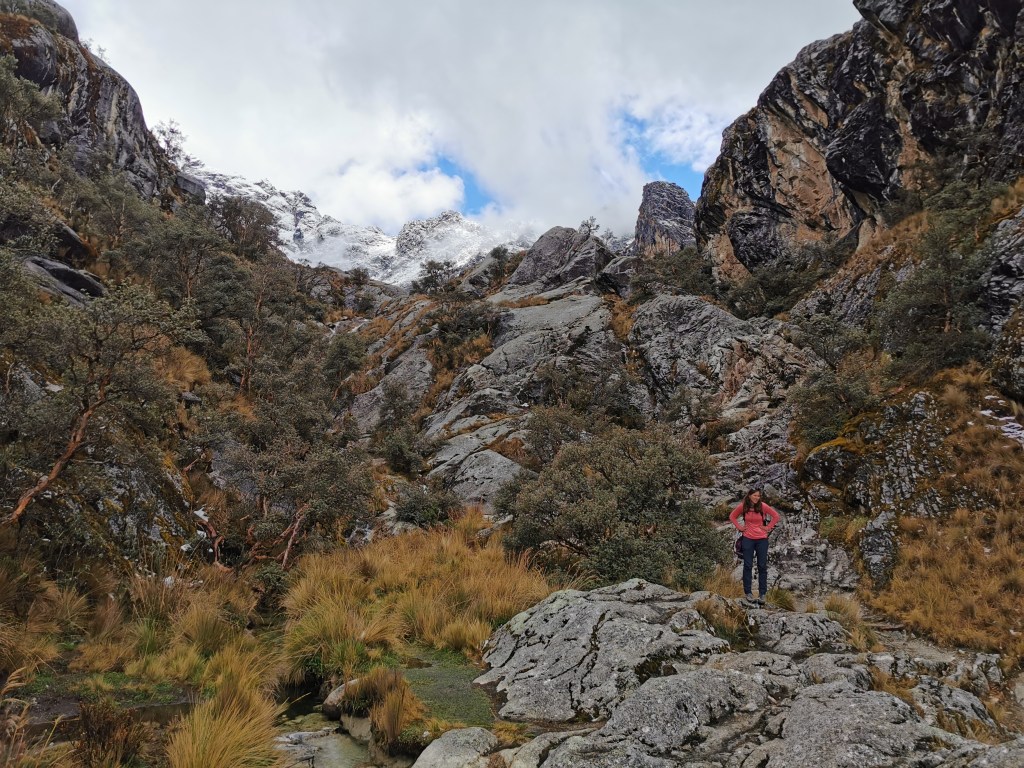
After the chains, it is only another small bit of ascent to the lake. 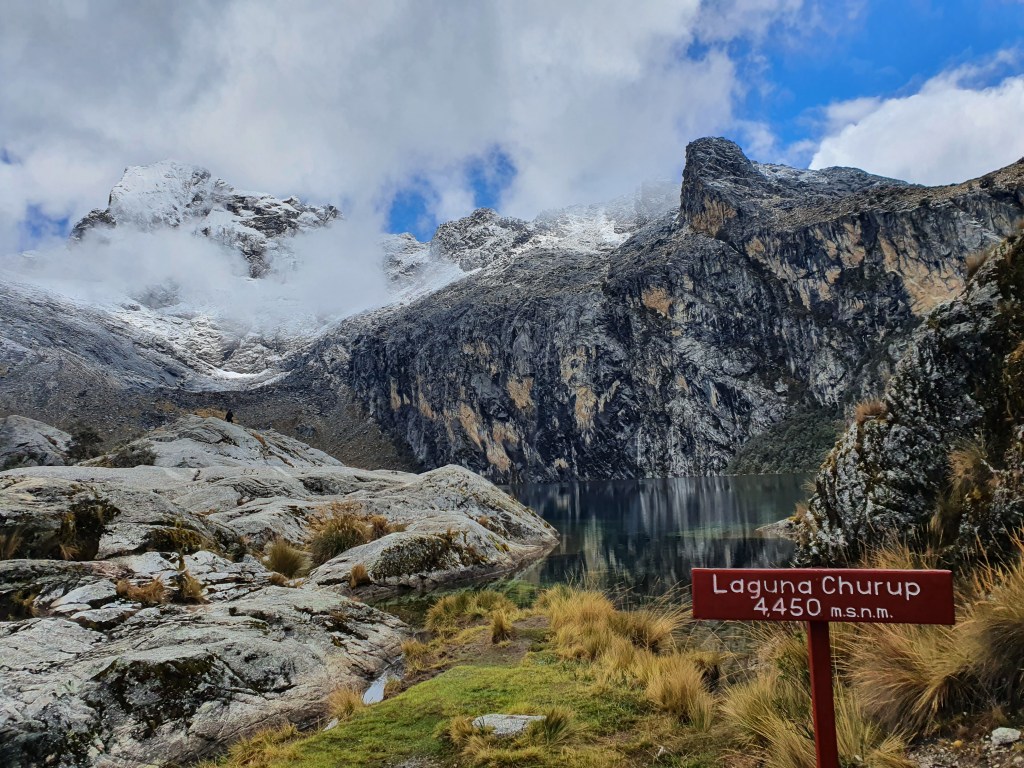
We made it. And as a reward the clouds broke up a bit. 
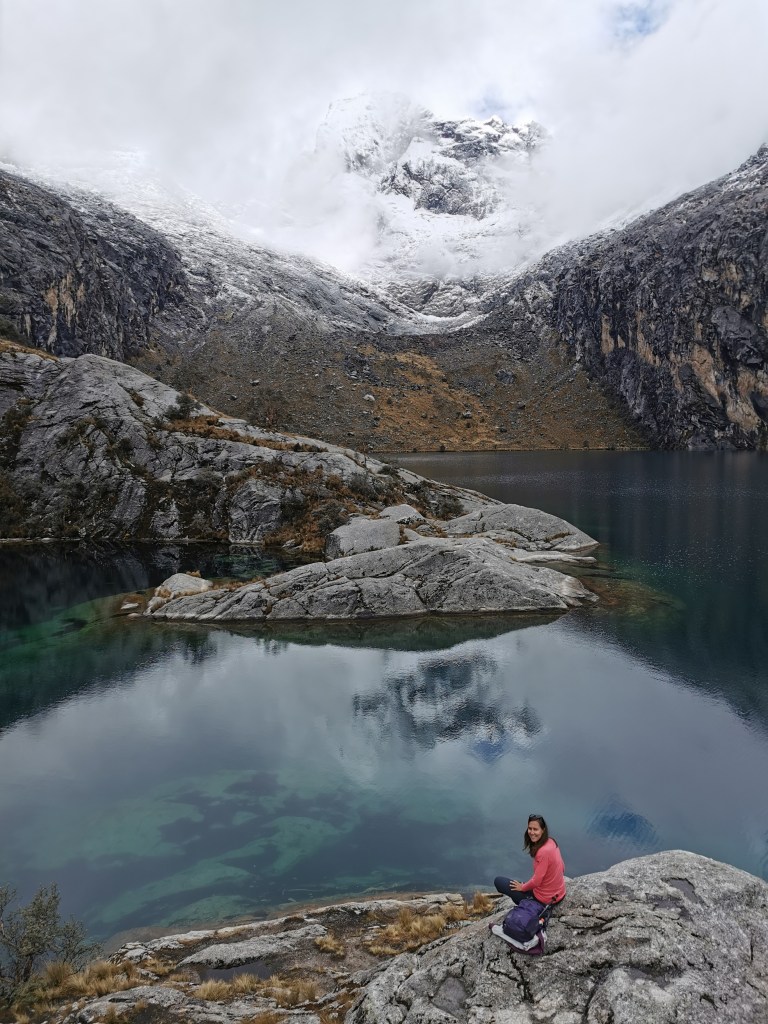
Not a bad spot for lunch. 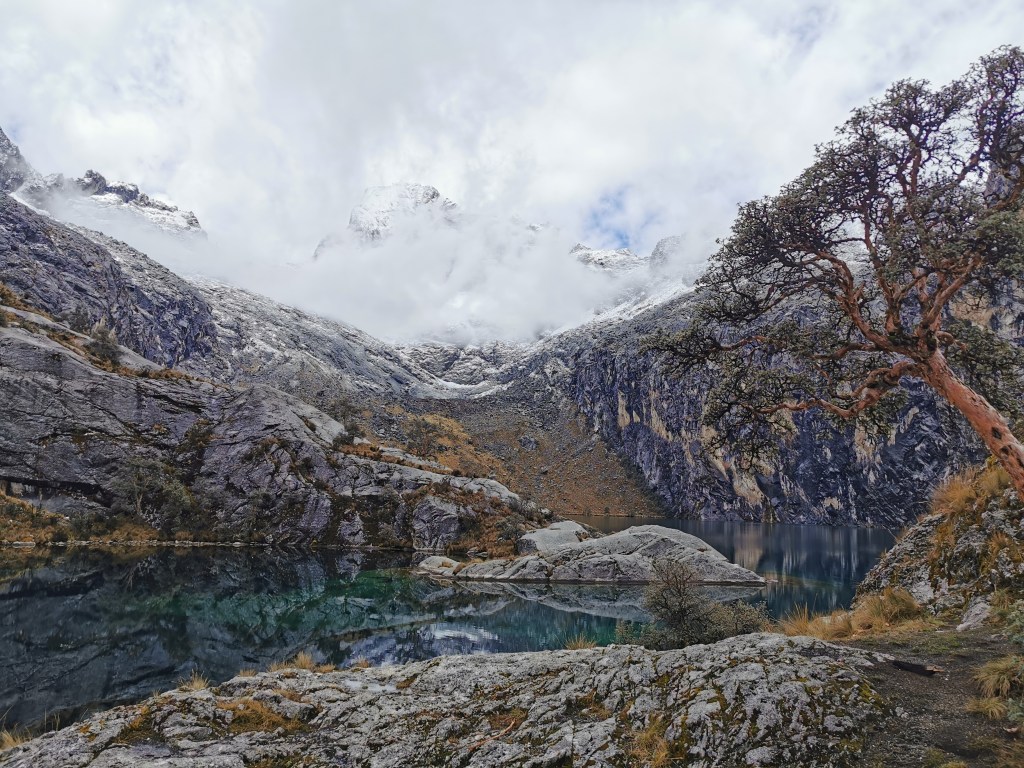
The surroundings were stunning. 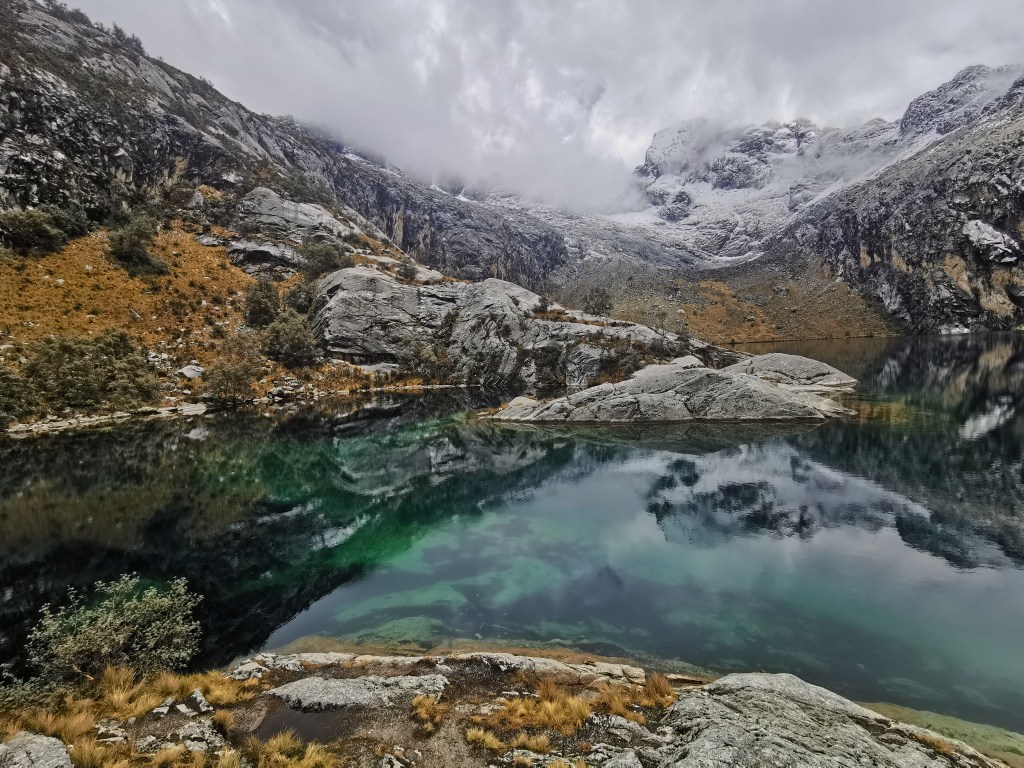
And the water looked amazing. 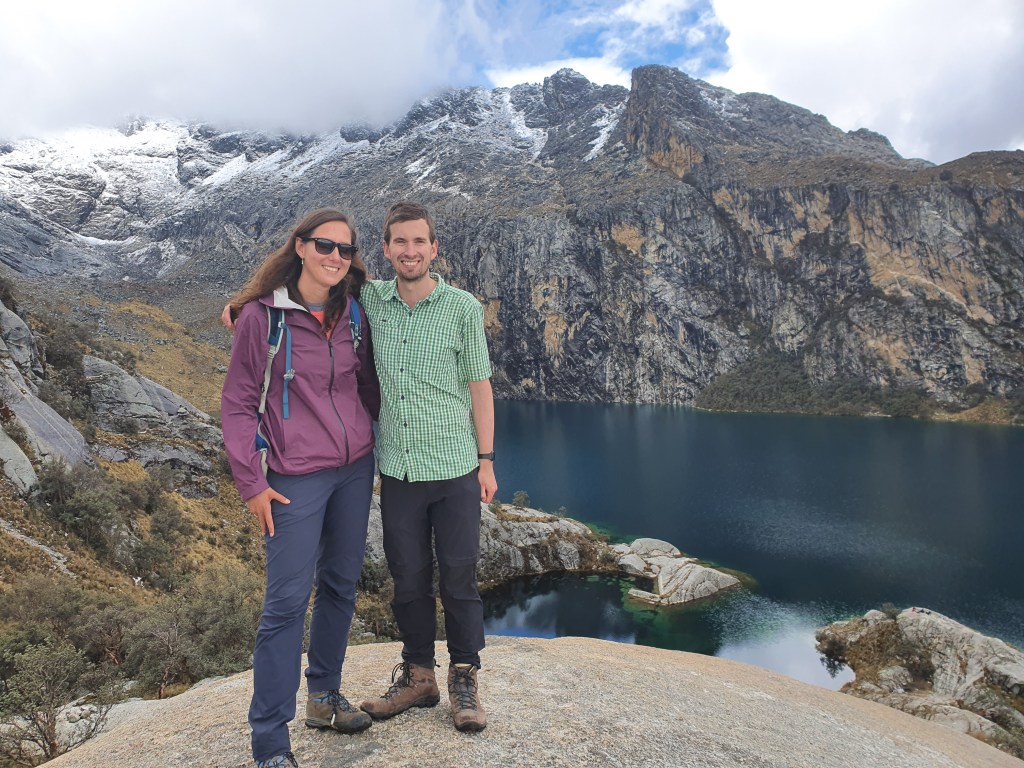
The view from the hill before starting our descent back to the carpark.
5. Laguna 69
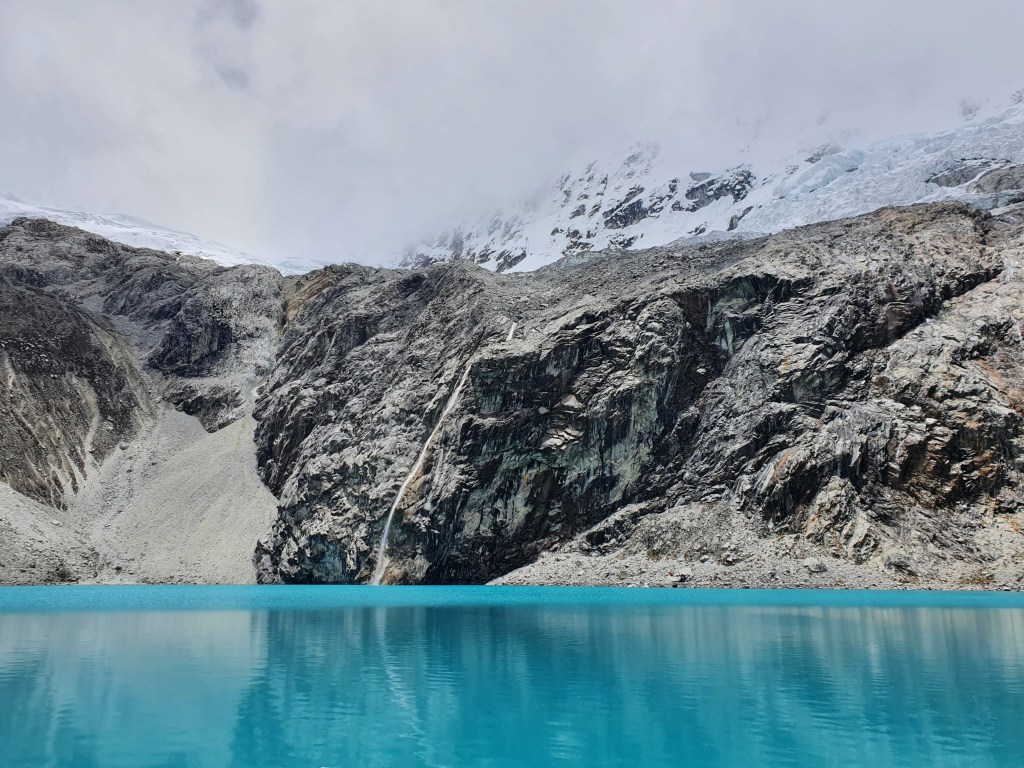
Laguna 69 is the poster child for day trips from Huaraz. But given how much we enjoyed Laguna Churup the day before and the fact that it really needs to be done as part of a tour, we were wondering whether it was worth the trip. We are, however, so glad that we decided to go. There is a reason that it is the most popular day trip amongst tourists from Huaraz.
The main reason that this trip needs to be done as part of a tour is the distance from Huaraz to the lake. Whilst potentially possible to do independently, it would actually be more expensive and an awful lot more hassle. It really isn’t worth it. Another reason to take the tour is that, unlike the Laguna Paron trip, there is still a significant hike involved to get to the lake. The hike is about a 14km roundtrip, and combined with the time spent driving, it is definitely the better option to go as part of the tour.
Due to the amount of driving involved and the time needed to complete the hike, there is a very early start from Huaraz. There are a couple of stops on the way, to get some food and to visit another lake that is by the road, but both of these stops are quite brief and didn’t feel as annoying as they had done on some of the other trips. So it was still reasonably early when we arrived at the start of the valley where the hike begins.
Like most of our time in this region, however, the weather was still pretty miserable and we had intermittent light rain as we made our way up the valley. This only slightly detracted from the nice walk in lovely scenery, with the flatish nature of the start of the hike allowing you to warm up for what was to come.
After a while the gradient of the path starts going up, gradually at first but getting more and more pronounced. The scenery starts getting better, however, with several waterfalls lining the slopes on either side. You then get to the first of two steep climbs on the route. Whilst neither of these parts are as technical as what we experienced on the Laguna Churup hike, they are steep and at this altitude it takes some effort to get up them! The first steep section leads to a kind of plateau up in the mountains where a small lake and a flat walk allow some respite for your tired legs. You should also be able to see the snow-covered peaks that you are aiming for but for us they were still covered in cloud.
After walking across the plateau you reach the second steep ascent. As you head up this section the vegetation becomes more sparse and the trail more rocky. And after a while the route flattens out and you get your first glimpse of a speck of stunning alpine blue providing a contrast against the grey of the surrounding rocks. After walking a bit further the lake opens up before you. Despite the sky still being completely covered in clouds in all directions, the colour of the lake was pretty unbelievable. I’m not sure how it can be quite that blue with no sunshine to reflect? But we didn’t spend much time wondering how, we just found a nice spot to rest and to take it all in. Along with the beautiful colour of the water the atmosphere is enhanced by a waterfall thundering down on the opposite side of the lake and a glacier poking out of the clouds. I can’t even imagine what an amazing place this would be if you had a blue sky providing a backdrop to the snow-capped peaks that ringed the lake, given that it was still breath taking with clouds sitting on the tops of the mountains and obscuring the sky.
We had a bit more than an hour to sit and enjoy the surroundings before needing to head back towards the bus. It is exactly the same way back but it was quite nice having the view in the opposite direction, especially as you reached the top of the valley. The only slightly annoying point was when we reached the small lake on the plateau, we looked back and the clouds had started to shift a bit. We could see some of the peaks that surrounded the lake so it was a bit frustrating that it couldn’t have done this an hour earlier. But never mind, we were still completely entranced by the views that we did have.
The journey back included a stop for some dinner (not included in the price) and by the time we got back to Huaraz I think most people on the bus had been asleep. So whilst we hadn’t been sure whether to believe the hype about Laguna 69, it is now firmly in the ‘must-do’ category in terms of day trips from Huaraz.
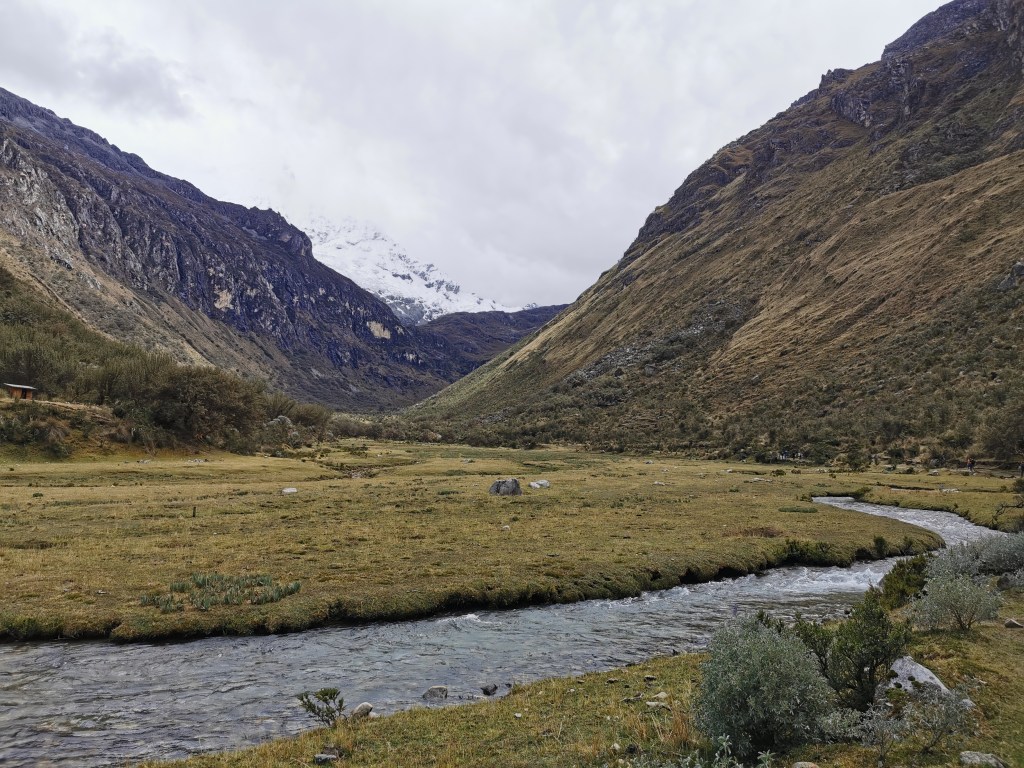
The start of the hike follows the river through a nice valley. 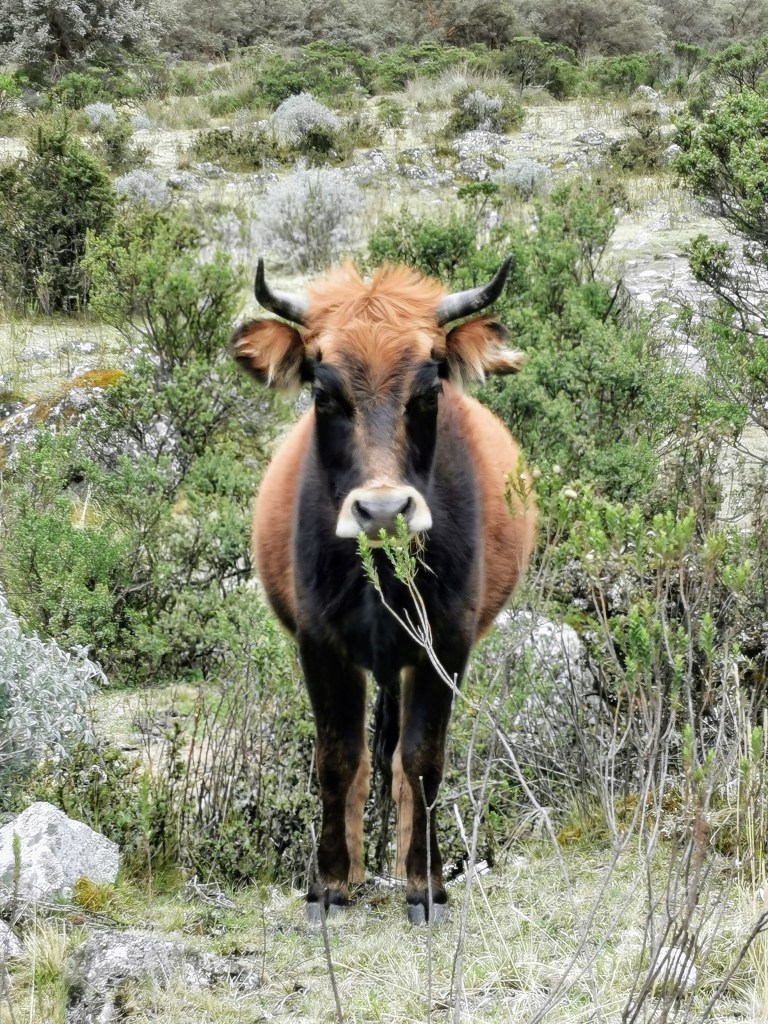
Nice hair cut. 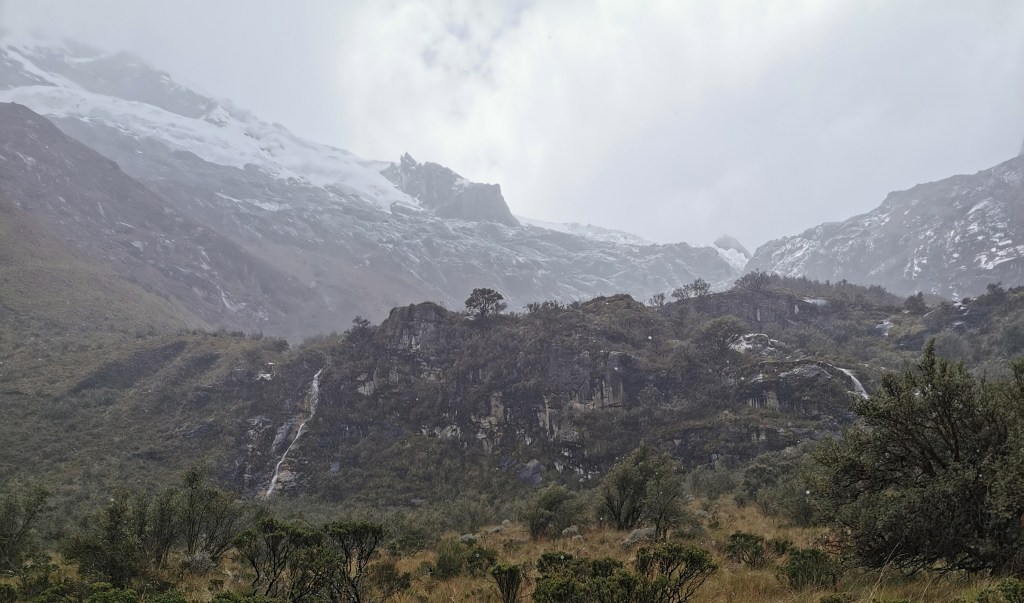
As the path started to slope upwards, the scenery got even better. 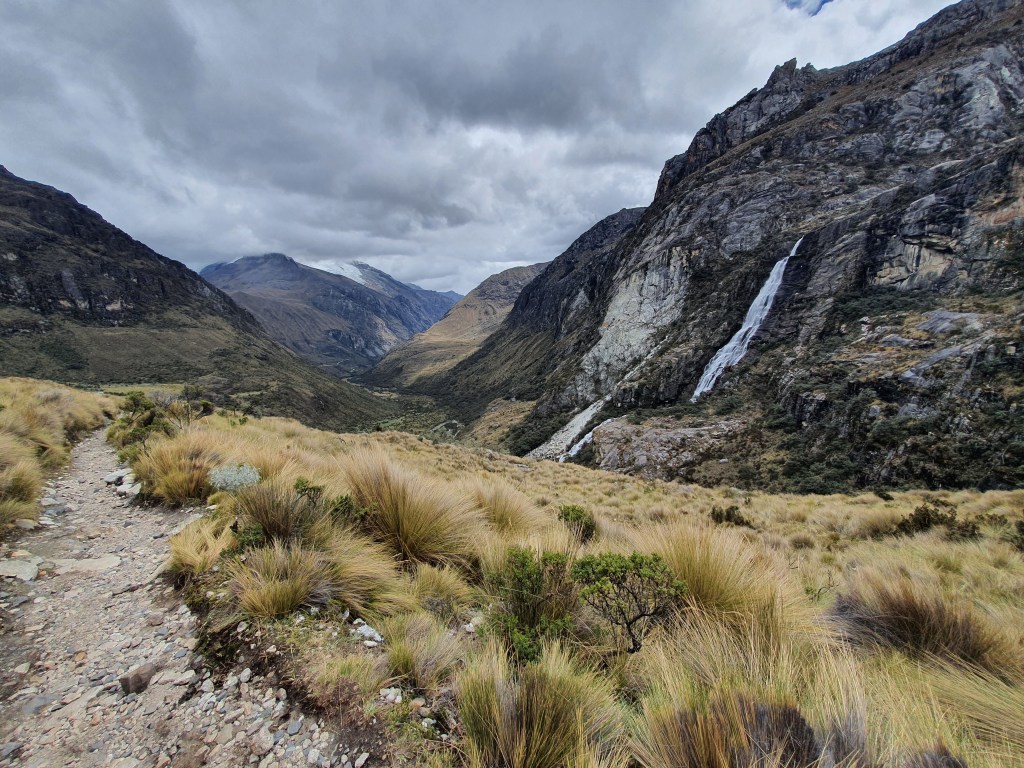
It was almost worth doing the hikes just for the waterfalls. 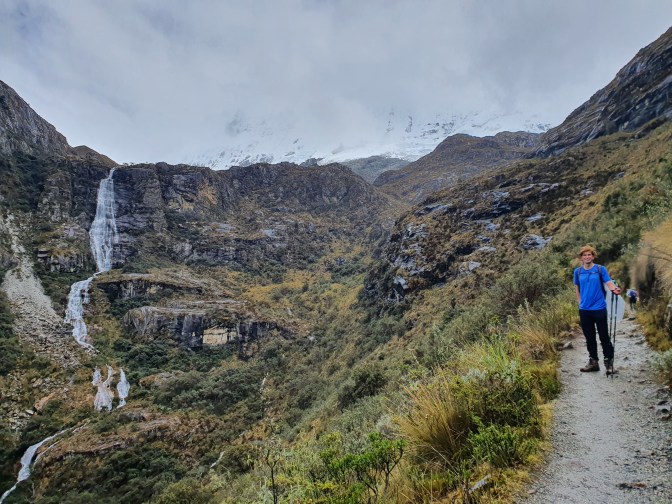
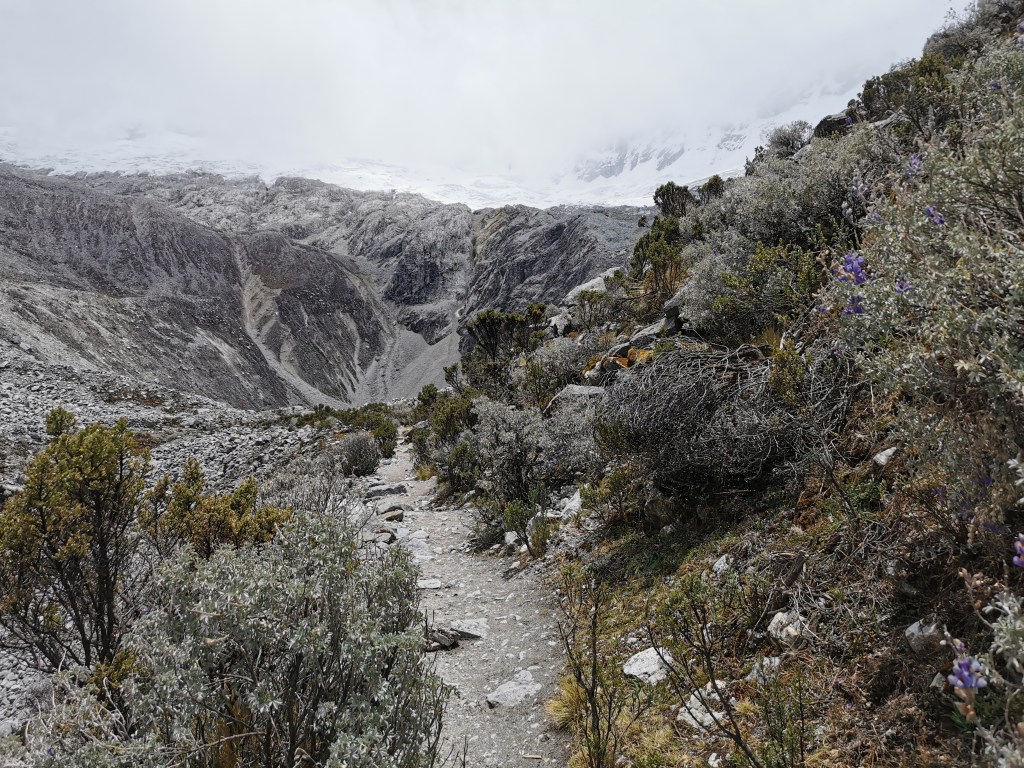
After the second steep ascent, the vegetation became more sparse. 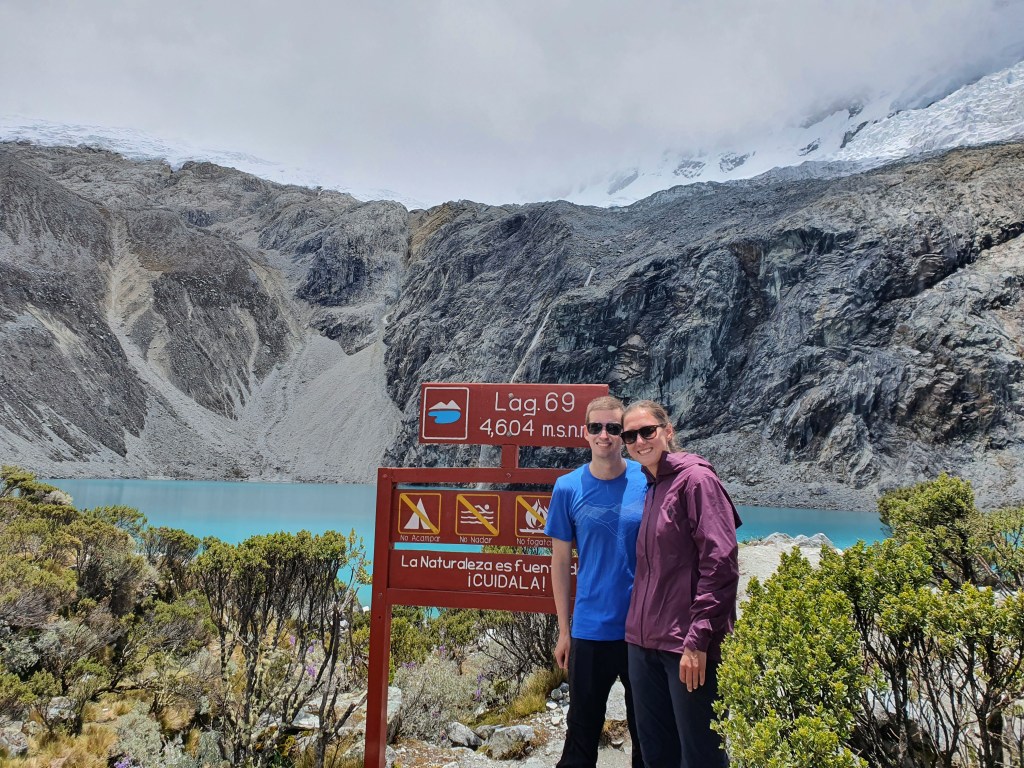
Made it. 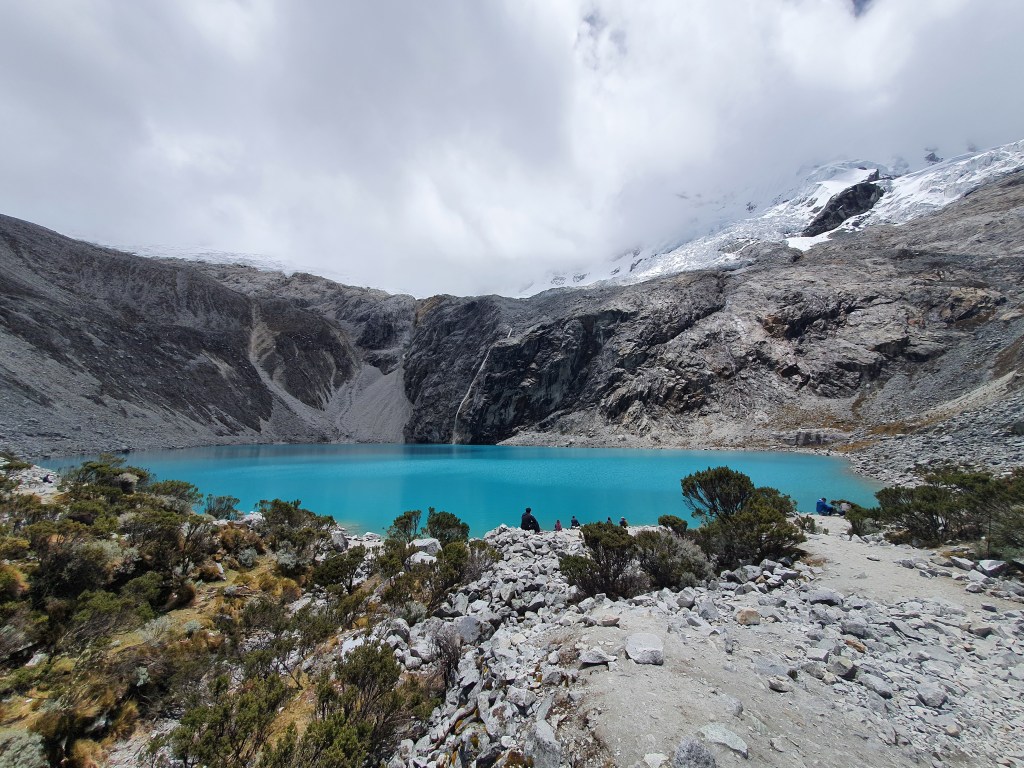
The colour of the lake was unbelievable. 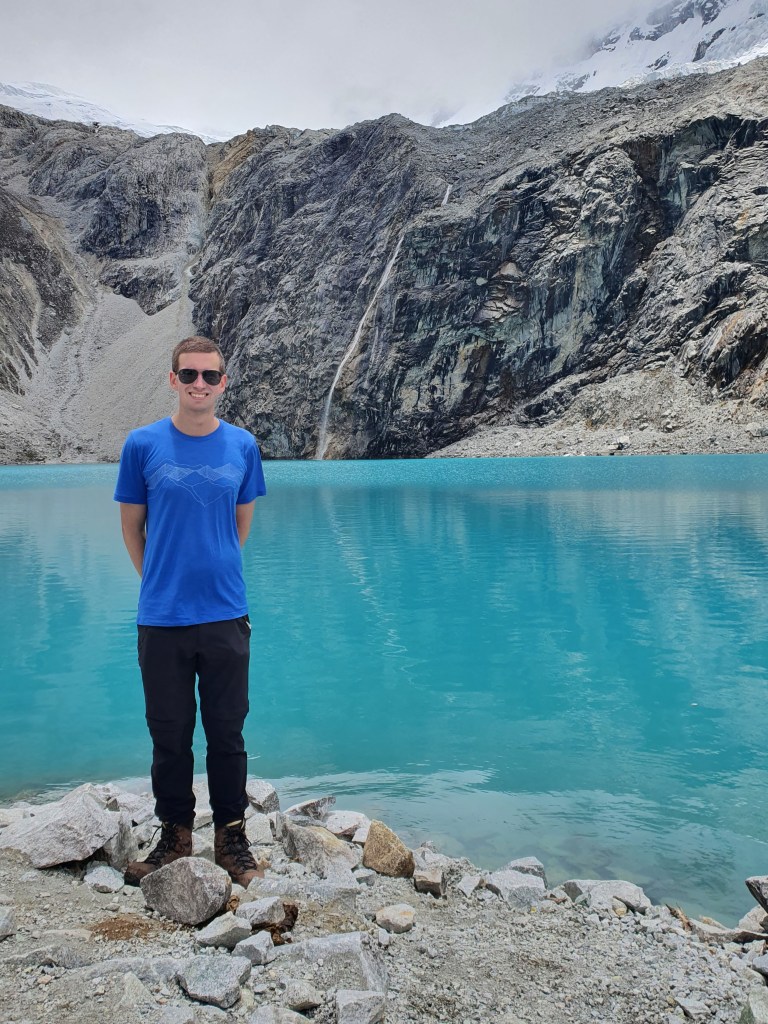
Despite the clouds the views were still amazing. 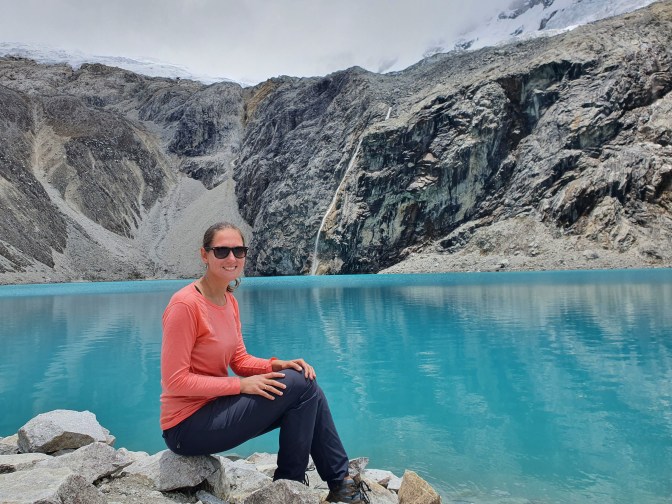
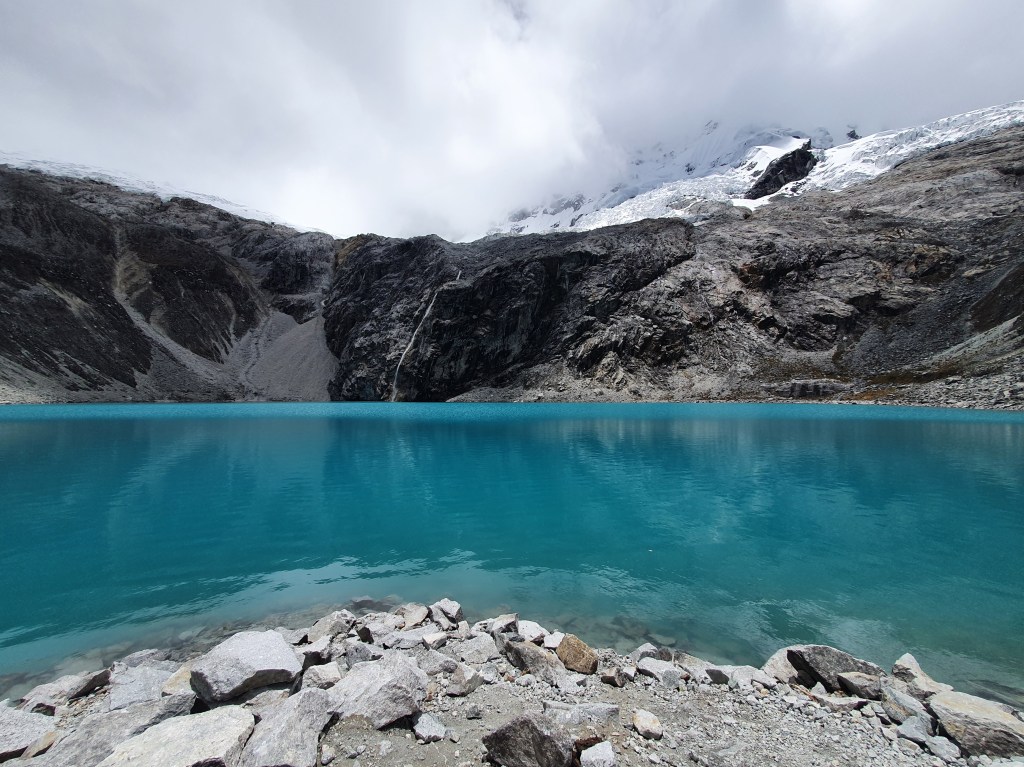
Just stunning. 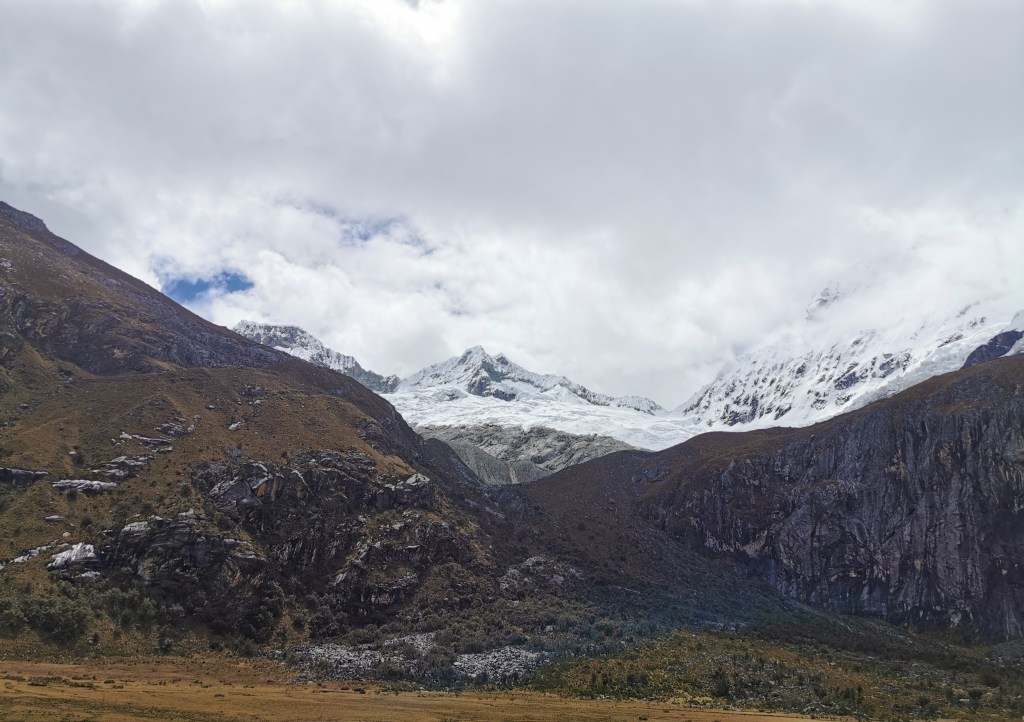
On the way back down the clouds started to break and we got to see a bit more of the mountains. 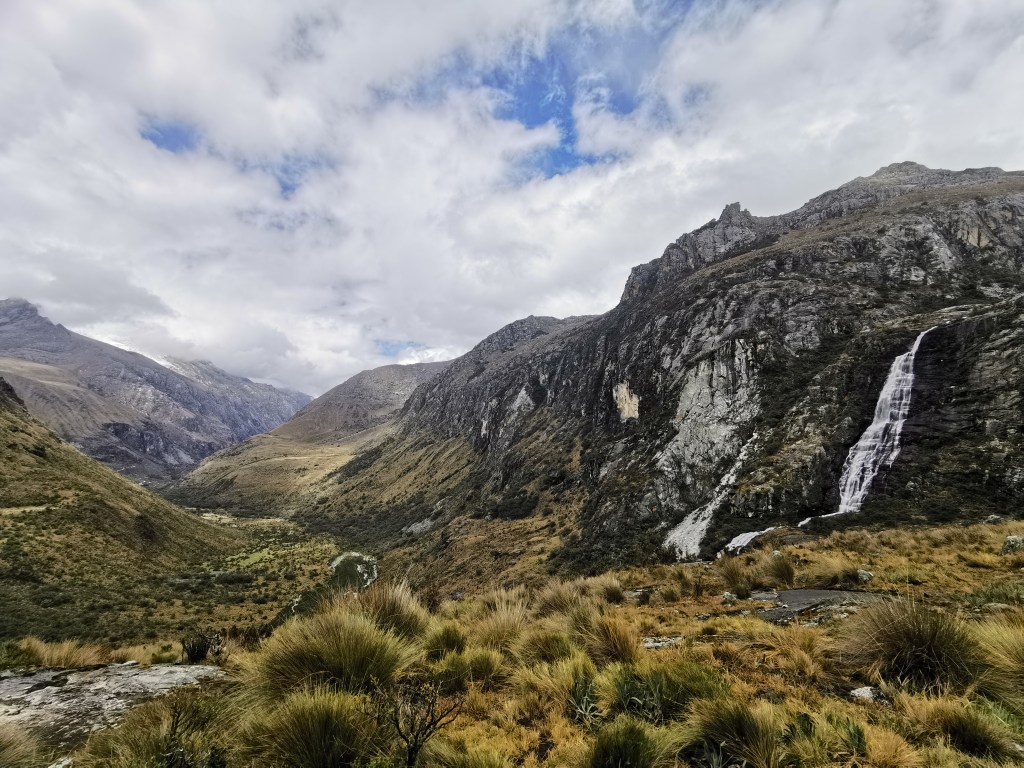
The view back down the valley made the walk back enjoyable as well.
6. Pastoruri Glacier
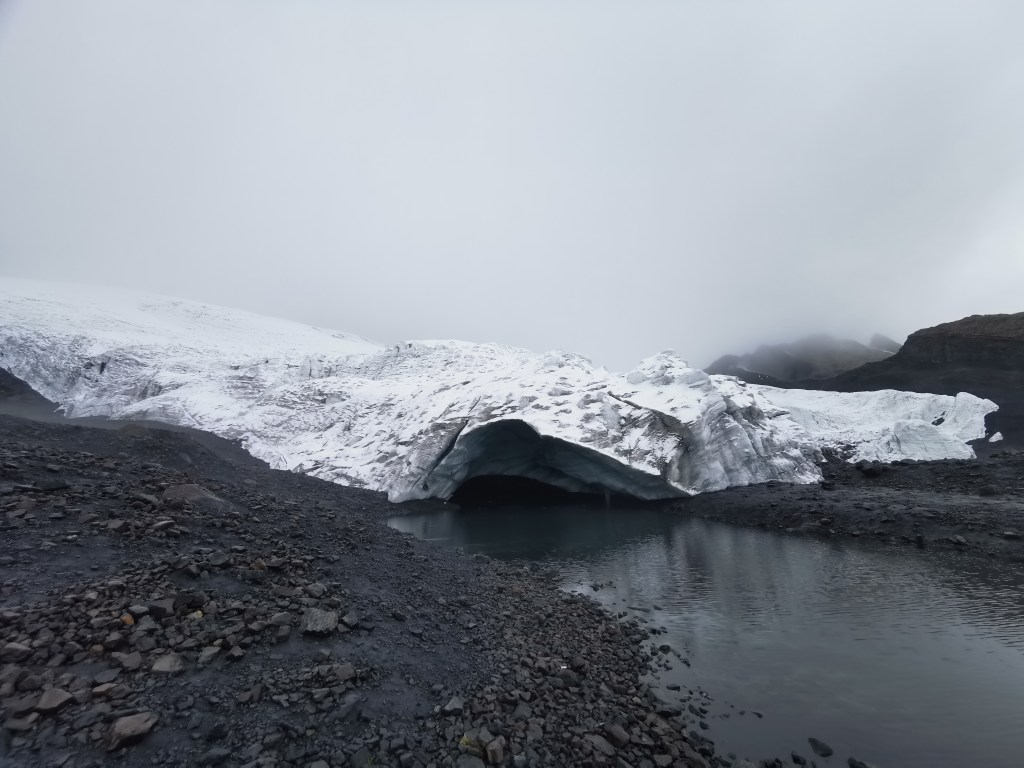
On our last day in Huaraz, before getting the night bus to Lima, we decided to visit Pastoruri Glacier. This glacier sits at an altitude of over 5000m above sea level and thus we wanted to leave it towards the end of our time here, so that we were as acclimatised as possible. Originally it was not on our list of places to see, but with the extra time afforded by not being able to visit the north of Peru, we thought we may as well have a look, as it is a bit different to the other day trips we did. Another reason for deciding to go was that we found out that in 15 years, the glacier will probably be completely gone. It used to be huge but has been reducing in size at an alarming rate. It no longer adds mass during the winter, so it is just sadly wasting away to nothing. So if we hadn’t visited during this trip it might not be there if we ever return to this region.
We again went as part of a tour for this trip but in this instance, there wasn’t a choice – there didn’t seem to be any option for visiting independently with public transport. To be honest, however, there’s no point in going independently, even if there is an option. The time we had to visit the glacier was more than enough and we also made a nice small stop on the way.
This stop occurred in the Huascaran National Park in a large plain called Pumapampa. At this point the weather was still reasonable, so we could enjoy the views as the plain spread to high mountain peaks all around. There were also two interesting aspects to the exact place we stoped. The first was Pumashimin lake, also known as the Lake of Seven Colours. In reality it is not as grand as its name makes out; it is just a small pond. But it did look beautiful when then sun shone on it, revealing varying colours in the water. Just up the slope from the lake was the second feature. It was multiple large plants called Puya Raimindii. These plants are very rare, only existing in the wild in small areas of upland Peru and Bolivia. After they reach 50-60 years old, they start sprouting something called an inflorescence (according to Wikipedia). This can make the plant up to 15m tall. Although we didn’t see any that size, they were still pretty huge. Once the plant finishes growing upwards, it flowers once and then dies. Growing so tall is the last effort to be able to spread its genes far and wide.
We spent about twenty minutes at this stop before heading to the start of the walk to the glacier. This walk took about 30-40 minutes along a well defined pathway. It wouldn’t have been difficult if it hadn’t been at such a high altitude and if the weather hadn’t have gotten worse. As we trudged along it varied between rain, sleet and snow, meaning it wasn’t the most pleasant of walks. Thankfully we had waterproof jackets and gloves and were wearing our hiking boots. Others on the path, that seemed to be mainly Peruvians on holiday from the cities, were not appropriately dressed and looked absolutely frozen!
At the end of the path you reach what is left of the glacier. Along the way there are a few boards showing how far the glacier stretched just a few decades ago, and it’s a sad sight. But what is left is still pretty impressive and we spent about 20 minutes viewing it from different angles. We could probably have stayed for longer but even with our layers we were starting to feel the chill so headed back the same way. At the start of the path there are several huts where locals sell snacks and meals, so we were able to get a small bite as we waited for the rest of our group before heading back.
The trip to Pastoruri Glacier is a pleasant day out. I wouldn’t class it as a must-do day trip from Huaraz but if you have time then it is certainly worth a look. Just remember to dress appropriately and to have acclimatised appropriately beforehand!
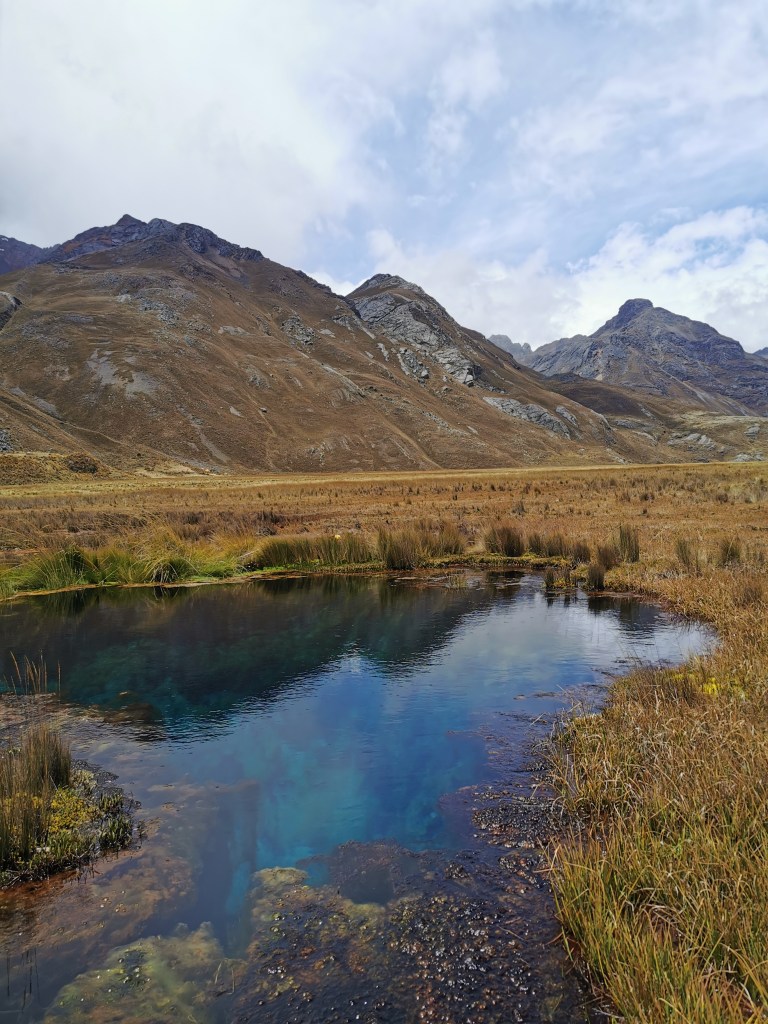
The ‘Lake of Seven Colours’. 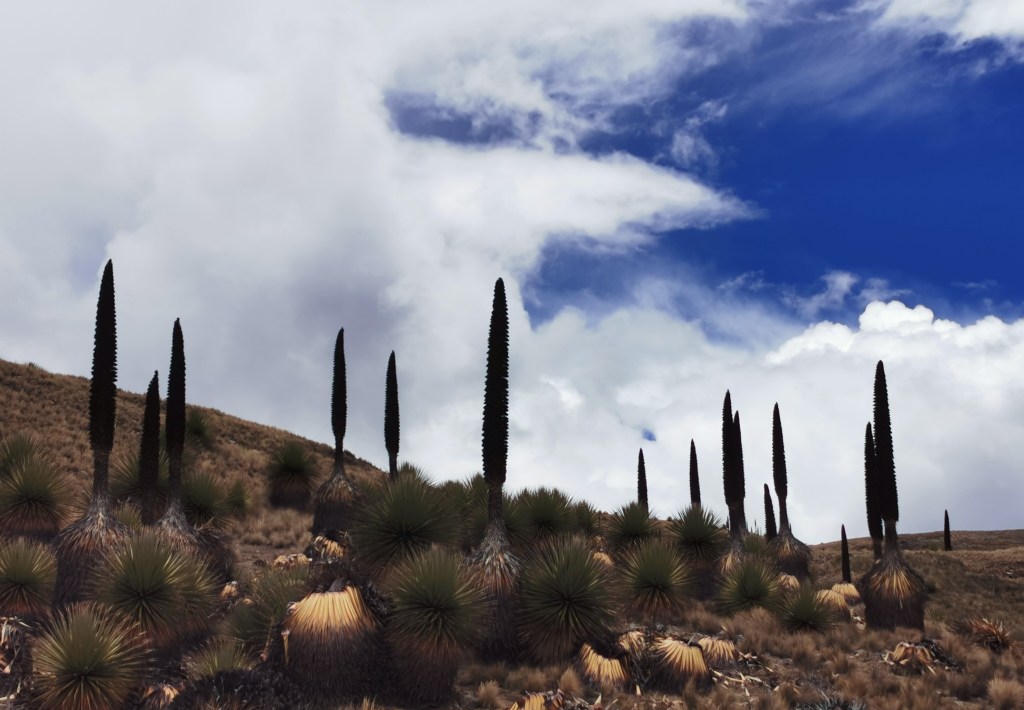
These rare plants only grow in the wild in certain areas of the highlands of Peru and Bolivia. 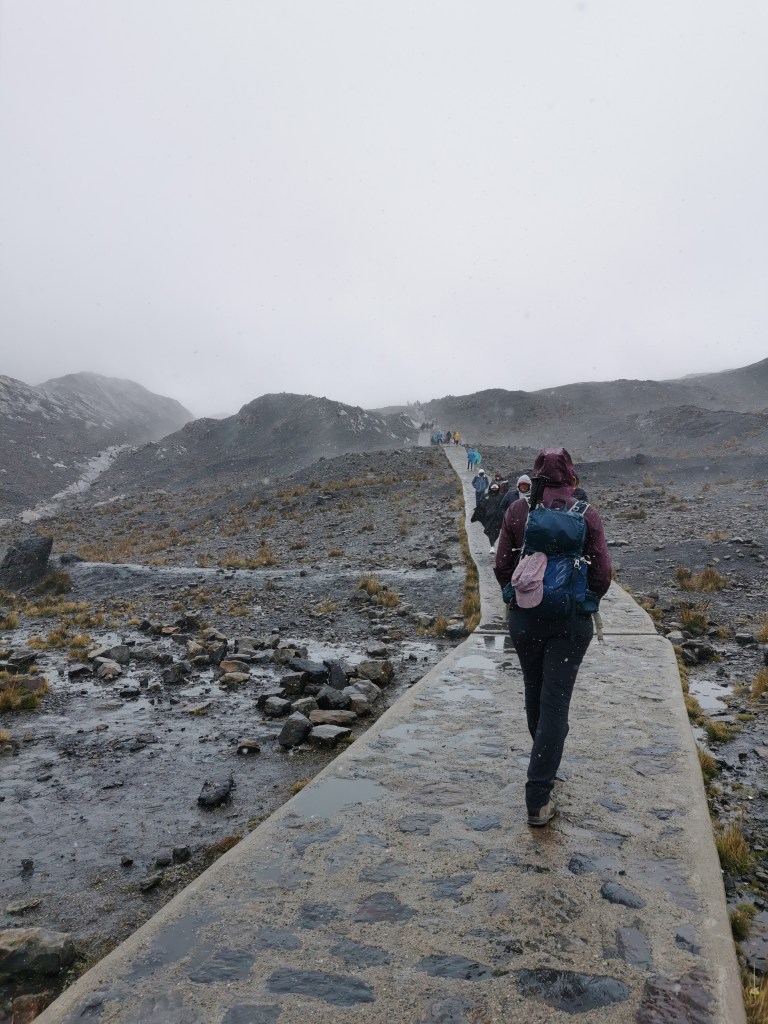
The weather was not the best as we made our way to the glacier. 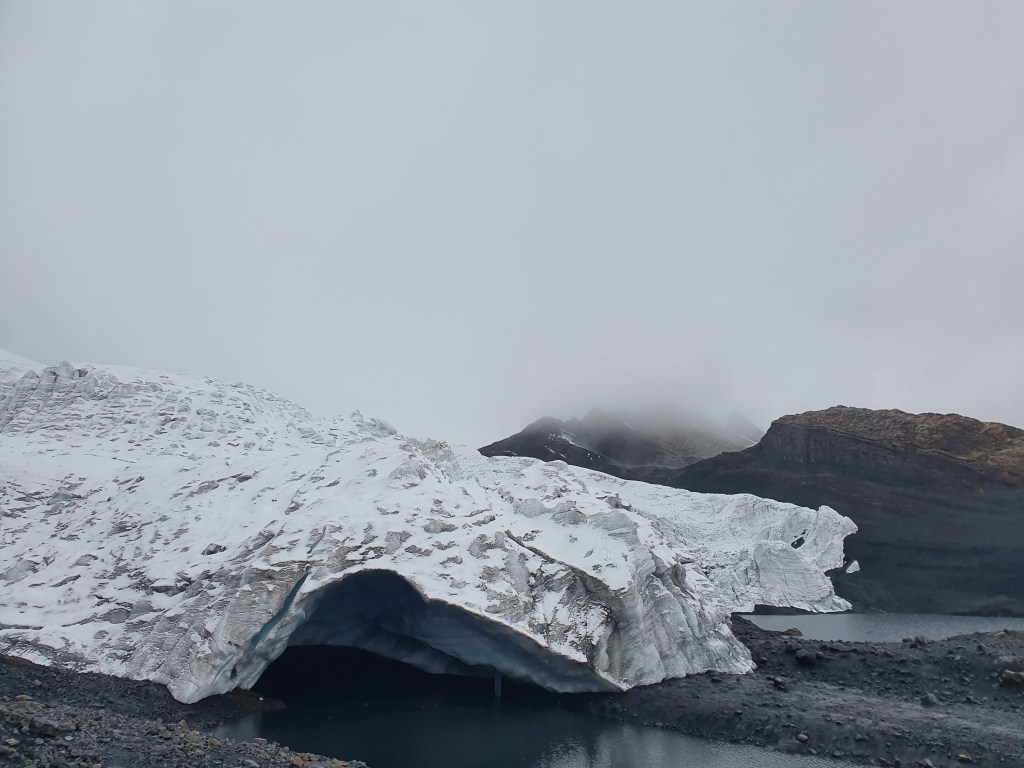
What is left of the glacier is still an impressive sight. 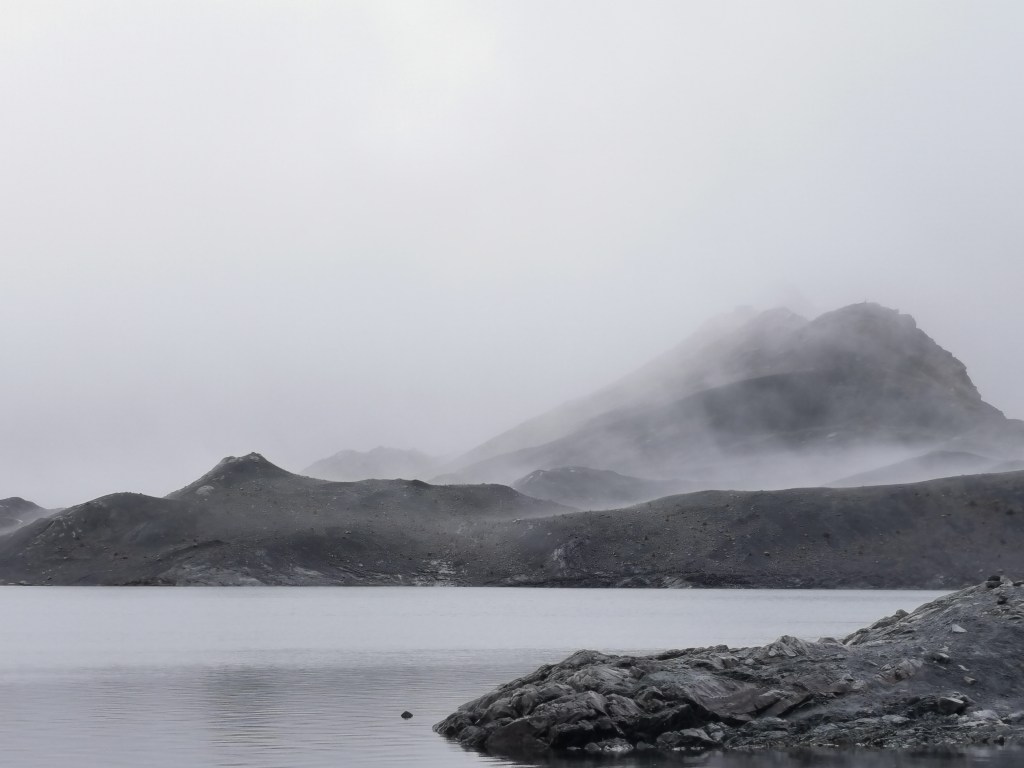
There is a nice lake that has formed from the melting ice.
Summary of Huaraz
We ended up staying in Huaraz for eleven days and yet we left feeling that we had not seen the best of it. A combination of illness and predominantly poor weather meant that, overall, we left slightly disappointed, despite there being some amazing highlights. This area is undoubtedly beautiful and a must visit for those who love the outdoors. If we come back at some point we would like to do one of the longer hikes, probably the Santa Cruz Trek. And whilst you can be unlucky with the weather at any point during the year, we would try and work the odds a bit better and come during the peak hiking season, which is during the European summer. If you are looking to come and do some day trips, however, Laguna Churup and Laguna 69 were definitely our favourites and we’d highly recommend them.
 Brit and Czech Abroad