13th – 18th July 2024
Kruger National Park certainly doesn’t need me to introduce it to you. It is one of the most famous nature reserves, not only in South Africa but across the whole continent. And for good reason, it covers nearly 20,000 km2, has a range of environments with extensive and varied wildlife, and has an established infrastructure that allows for self-drive safaris. So, it is probably no surprise that we incorporated Kruger into our South African adventure. But the reason for going there actually went back years. In 2020, we had a trip to South Africa booked to see our friends getting married. After the wedding we had a few days where we were going to head to Kruger before flying back. But then COVID hit a month before we were supposed to go. Obviously the holiday got cancelled and for our Kruger reservations we were given a choice – 50% of the price returned, or they would honour our reservation at some point in the future. Given that the tourist industry was taking a huge hit and the fact that we would want to go there at some point, we decided to risk it and leave our booking with them. Fast forward four years and we had no idea if it would still be valid (we hadn’t been given a voucher or anything like that), but after finding the old emails and getting in touch, they did indeed allow us to still use the previous reservation. This was the major reason that we decided to go to South Africa for this trip, so that we could make use of the booking and finally see Kruger National Park! (If anyone’s wondering the friends still got married and had an amazing time – just with a lot fewer people present).
Contents
Where to stay in Kruger National Park
Day 1 – Relaxing at the Riverview Inn
Day 2 – First taste of Kruger National Park
Day 3 – Walking Safari and a ‘Paws for Thought’
Day 5 – More Luck than Judgement
When to go
There are many more extensive blogs that go into the pros and cons of visiting Kruger at different times of the year. For us, we are restricted to the UK school holidays and wanted to spend more than two weeks in South Africa. This left us with the European summer holiday. When we looked into it, we found that this might not be a good time weather wise for our road trip from Gqeberha to Cape Town, but that it could be a very nice time to visit Kruger. This is because at this time of the year, the temperatures are a bit lower and the vegetation is more reduced, making it easier for wildlife spotting. All of these predictions turned out to be true. We had issues on our road trip, especially around Cape Town, but our time in Kruger was amazing. In fact with hindsight, even though we still had a lovely time on the Garden Route, we would probably have tried to spend more time in the vicinity of Kruger and then combine it with visiting Victoria Falls, as there were cheap flights from Johannesburg; and then focused on the Garden Route and Cape Town at another time of the year.
How to get there
During our original planning, we had considered renting a car in Johannesburg and doing a round trip from there. It would take about five hours or so driving each way to the entry gates of Kruger National Park. This was due to our flight home going from Johannesburg and also the fact that we had wanted to visit the nearby Cradle of Humankind. However, given that we were coming up from Cape Town before heading to Kruger, we found that there was a direct flight from Cape Town to Kruger Mpumalanga International Airport, which was only a 1hr 30min drive to the same gate. We then found that we could hire a car at the Kruger airport but return it at Johannesburg airport. This worked out great for our plan at the time. However, it turned out that the Cradle of Humankind was closed for renovations when we were going to be there. So, in hindsight, we should have picked up and returned the car at the Kruger airport and flew to Johannesburg (it would have been cheaper and less hassle), but never mind.
Where to stay in Kruger National Park
This is not something I can really discuss given that this was my first visit to Kruger and I wasn’t even close to visiting all of the different parts of the park. But I guess the first question you should ask is whether you want to stay inside or outside of the park. You can find cheaper accommodation outside, but it is more hassle entering and exiting the gates and obviously more driving. You also can’t take advantage of some of the sunrise and sunset safaris that take place within the park. There is also the option of staying at some of the smaller, private game reserves that line parts of the border of the main National Park and just coming into Kruger for the odd day, but I didn’t look into that so can’t say whether it’s a good idea or not.
Personally, we were really happy with staying inside the park. Kruger has a whole host of different camps and options for accommodation that can be explored on the South African National Parks (SANParks) website. Most of the camps and infrastructure seems to be in the southern part of the park, and when we were researching where to go, this seemed to be the best place for first-timers. So we spent the first three nights at Lower Sabie Rest Camp and then ended up spending an extra night at Skukuza Rest Camp.
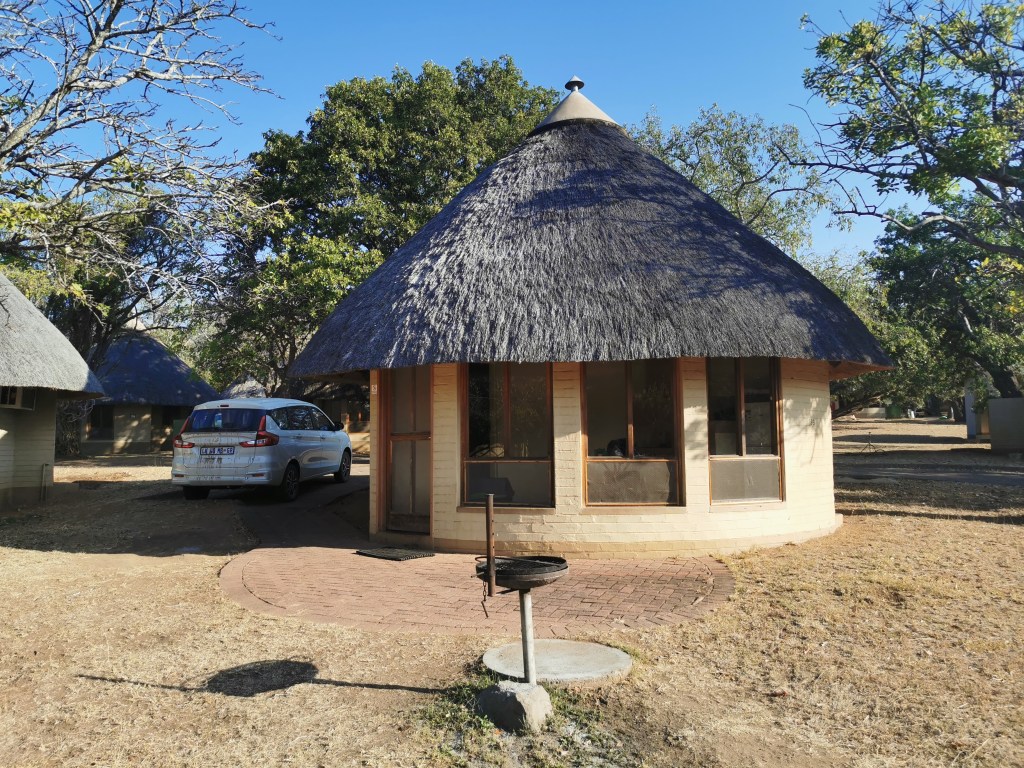
Lower Sabie Rest Camp had been our original intended accommodation when we first booked to visit South Africa, and we saw no reason to change our plans. We stayed in one of the cheaper Huts, and it was pretty basic, but clean and fine given that we didn’t spend much time inside! The site itself was nice, with the Mugg & Bean restaurant providing pleasant views over the Sabie River.
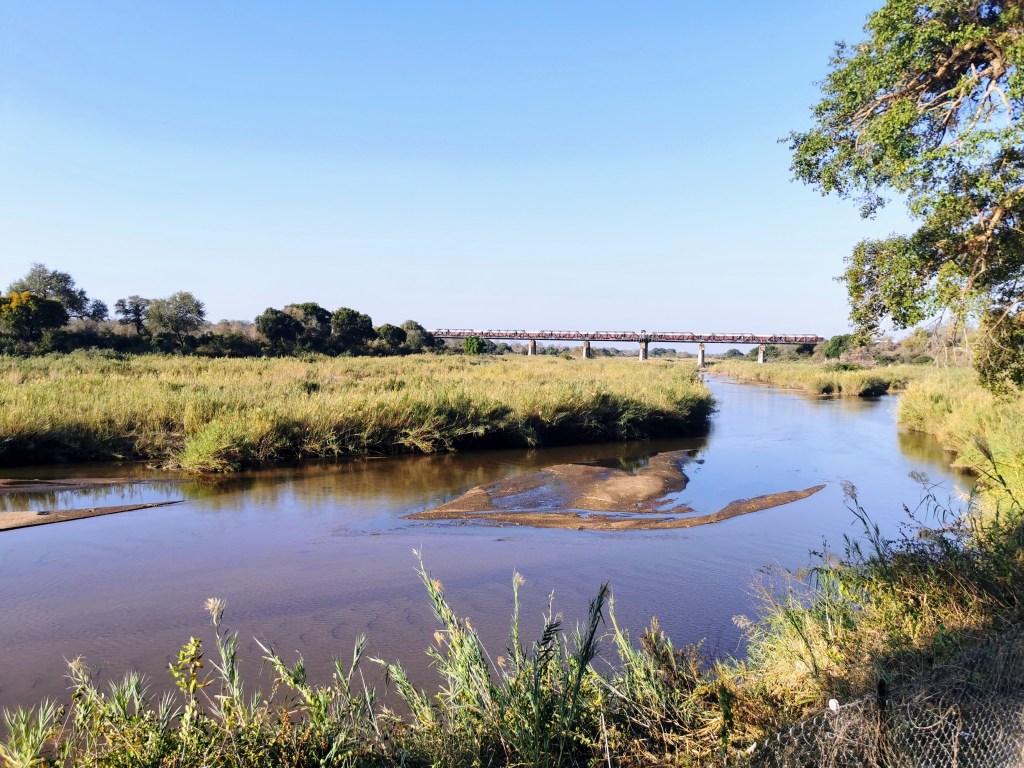
Skukuza Rest Camp was more of a ‘spur of the moment’ booking, as we’ll discuss later on, but, as such, we didn’t have as many options given that it was booked at the last minute. We thus ended up getting one of the Bungalows, and whilst it was more expensive, it was nice having a private bathroom and kitchen. This site was also very nice, once again with views over the river but with the iconic bridge and ‘train accommodation’, which was lit up at night.
Day 1 – Relaxing at the Riverview Inn
Those of you who have read my page on our road trip from Gqeberha to Cape Town, will know that we had some issues with the weather in Cape Town. This was still the case as we flew away in torrential rain…
Landing in Kruger was like entering another world. We descended from a postcard-perfect blue sky and as soon as we stepped out of the airplane, you could feel the warmth. The airport itself is small but has a really nice building, with high wooden ceilings that didn’t seem to fit with the standard conveyor belts re-uniting us with our luggage.

We quickly got our car and, after a brief delay when we tried (and failed) to download offline maps, we were on our way. Please learn from our mistake and download offline maps before you arrive at the airport, as there was no stable wifi when we were there.
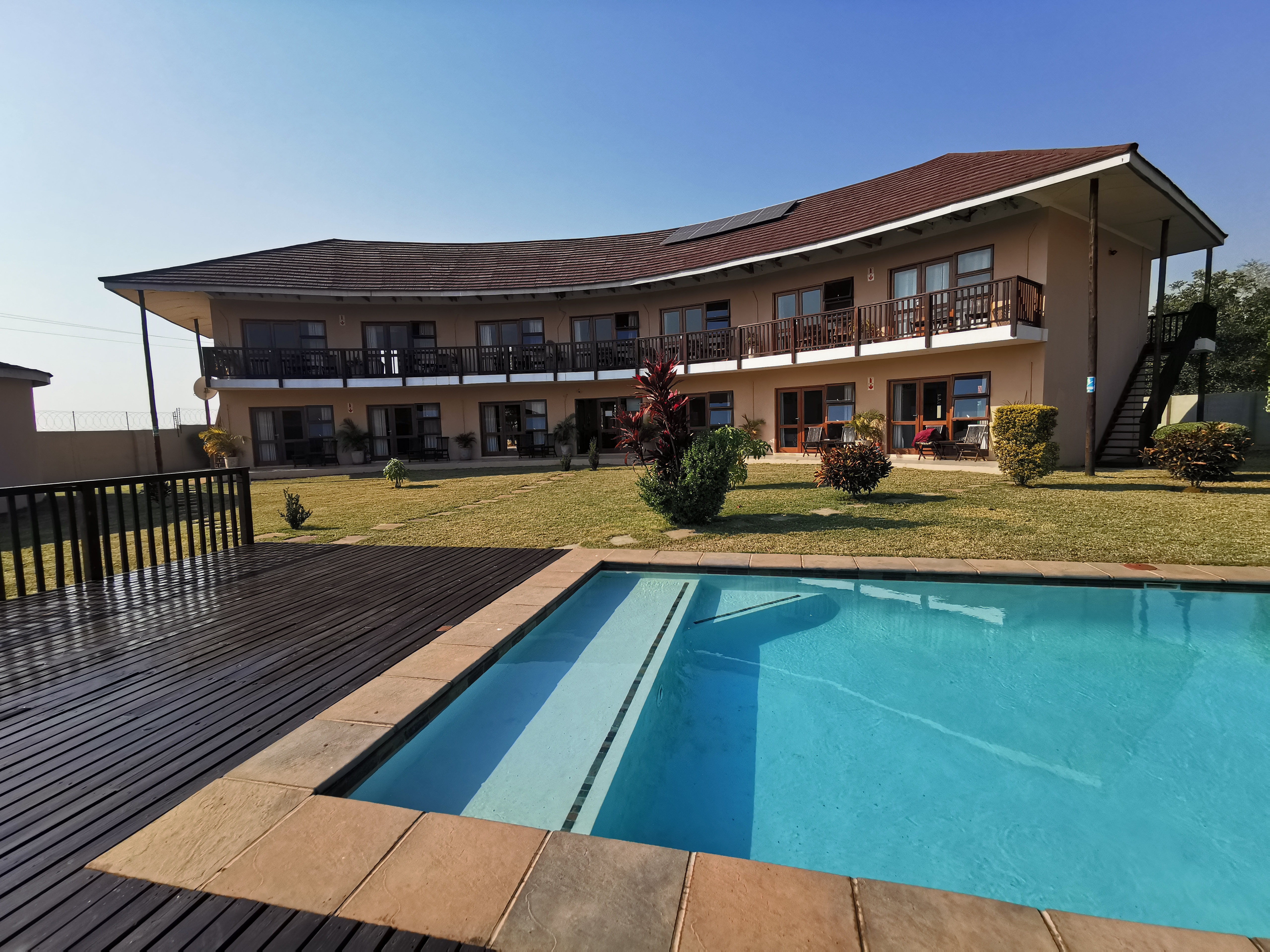
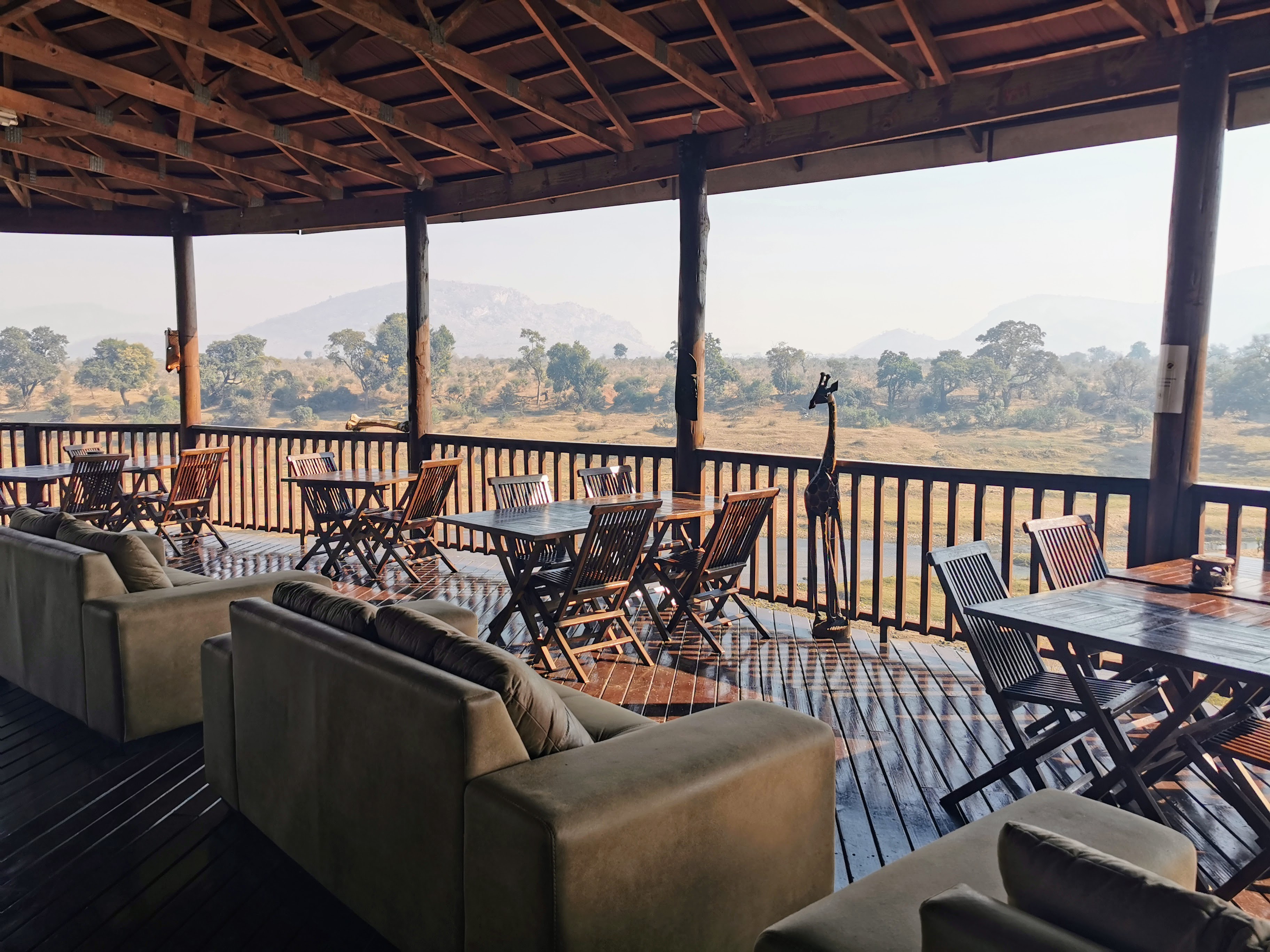
We hadn’t even left the property when we drove past some vervet monkeys and little antelopes. The drive was uneventful but we did pass through a nice valley with interesting rocks, which contrasted with the vast Savannahs we had envisioned – we certainly hadn’t expected the area to be so hilly. We had decided to spend a night in one of the accommodations just outside of the park rather than having to rush and drive straight to the rest camps, which still lay a reasonable distance into the park and had cut-off times for when they would close their gates in the evening. And we were really glad we made this decision. I don’t normally discuss accommodations we stay at but I’d definitely recommend the Riverview Inn. It is situated just off the N4, which is the major road heading towards the southern entrances to Kruger. The site is also very close to the Malelane Gate, meaning we could easily make an early start in the morning. Apart from the appealing location, the accommodation has amazing views over the Crocodile River, which forms the southern boundary of the park, and thus we could start our wildlife watching while sat on their deck in the evening with a cold drink in hand. The food was also really good, although they don’t have many / any real options if you’re a vegetarian.
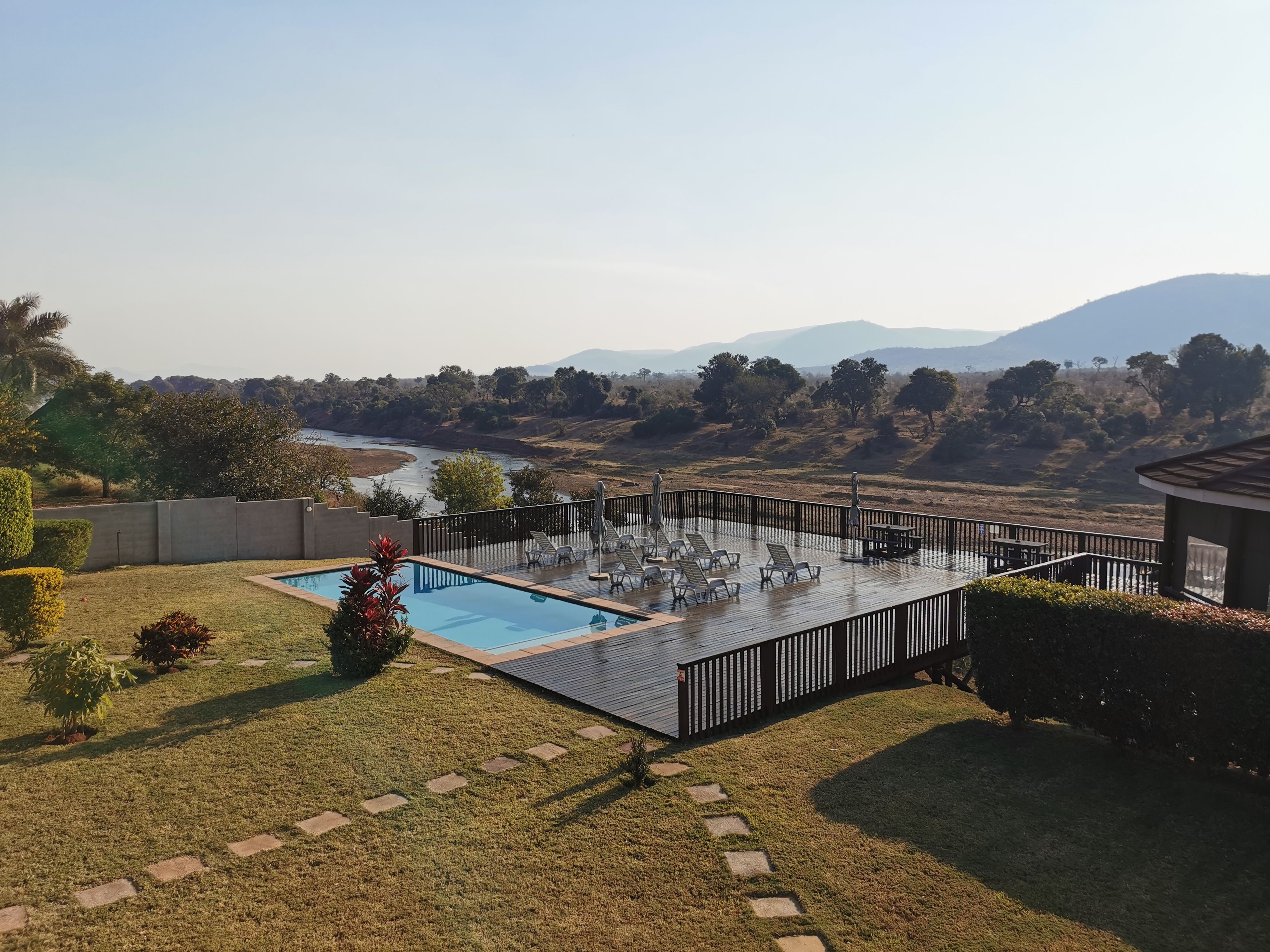
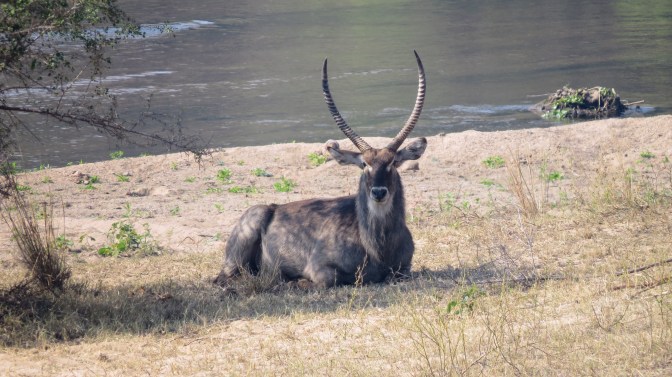
As soon as we got to the viewing area behind the rooms we saw a huge hippo sleeping on the opposite shore. There were also waterbuck, two crocodiles and a couple of impala that lazed around most of the afternoon. In addition, there were also a couple of warthogs that came down briefly, plus another hippo further down the stream. Not bad considering we hadn’t yet even entered the park!
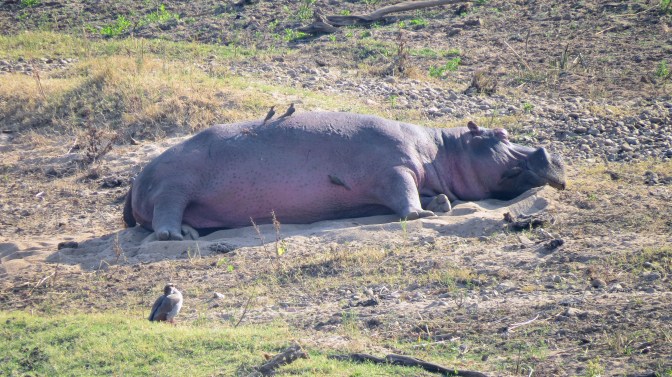
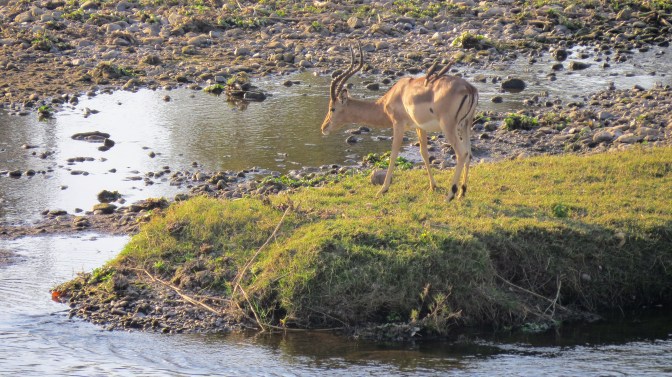
We thoroughly enjoyed the rest of the afternoon, relaxing on the deck with a cold drink watching the wildlife. At one point the first hippo got up and swam across the river, startling the waterbucks that were close by. It was really nice to be able to observe the animals for prolonged periods and see their interactions, as normally it is just fleeting moments during the safari. The sun went down directly opposite us and created some beautiful colours above the park. We then got to watch the bats flitting around in the last of the light. We ate at the accommodation, and had some lovely steaks (Radka was also brave and tried some traditional sidedish) followed by milktarte desert, and we were joined by an older South African couple, who gave us some advice about our route back to the airport once we’d finished at the park. It had been less than a day since leaving Cape Town, and yet it felt like a completely different world.

Day 2 – First taste of Kruger National Park
After a pretty sunrise and a tasty breakfast, we were heading to the Malelane Gate for an early entry into the park. Given that we had a Wildcard (please see our post on Gqeberha to Cape Town Road Trip for more details), we did not have to worry about the park fees that give entry for 24 hours, and thus we could just enter when we wanted between the opening times and not have to work out the best deal for entering and leaving.
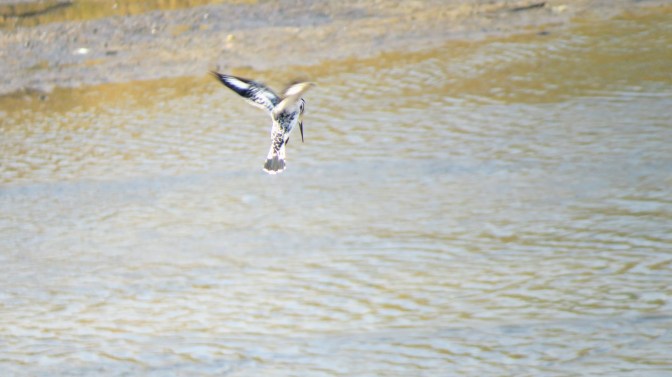
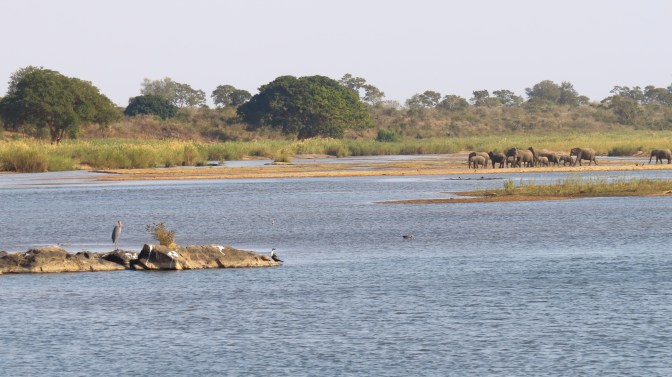
The bridge was positioned before the official entry gate, so we parked just before the gate and had a walk to look out over the river. Already at this point there was a swathe of wildlife. On one side were elephants crossing the river, on the other a large herd of hippos were feeding and enjoying the water, whilst right below us were at least a dozen large crocodiles. This is in addition to the waterbucks that were lazing under the trees to the side and the birds that were on the look out for fish. The herons and egrets seemed to have no fear of the crocodiles as they casually sauntered past, whilst we enjoyed watching a kingfisher hovering above the river before suddenly swooping down to grab its prey.
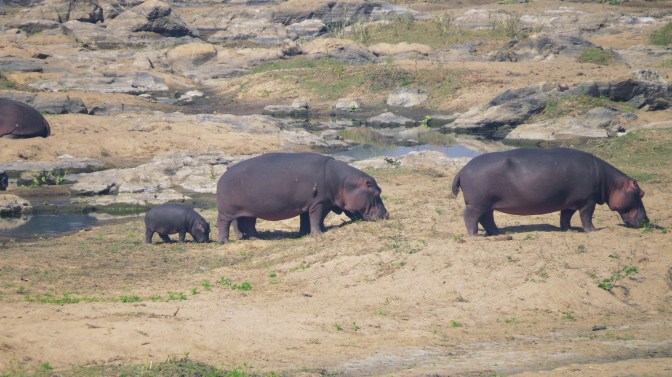
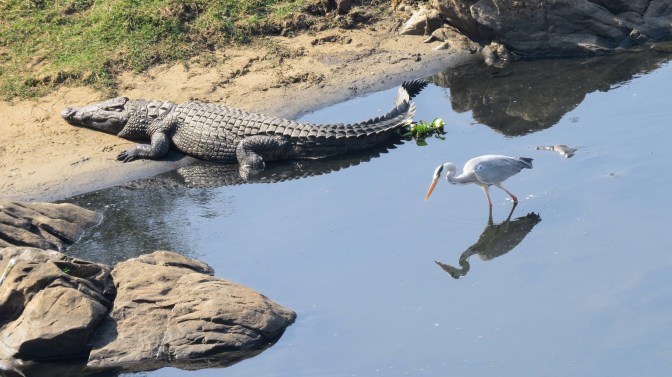
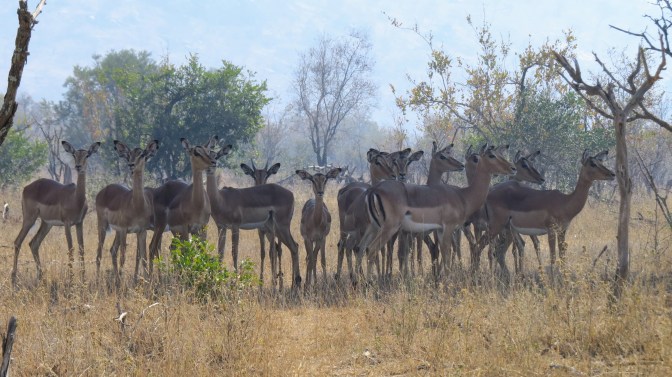
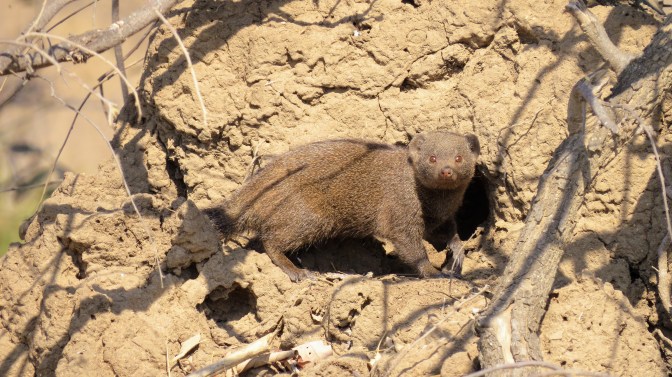
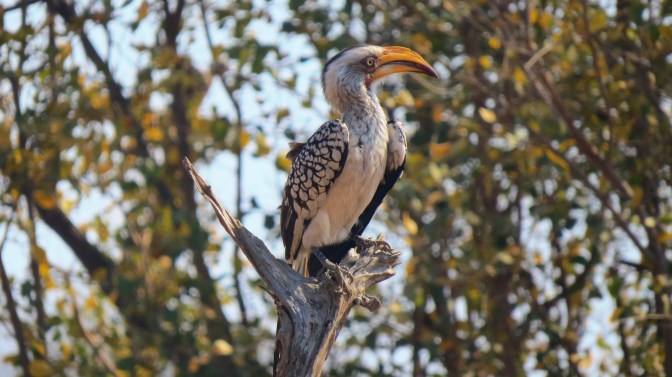
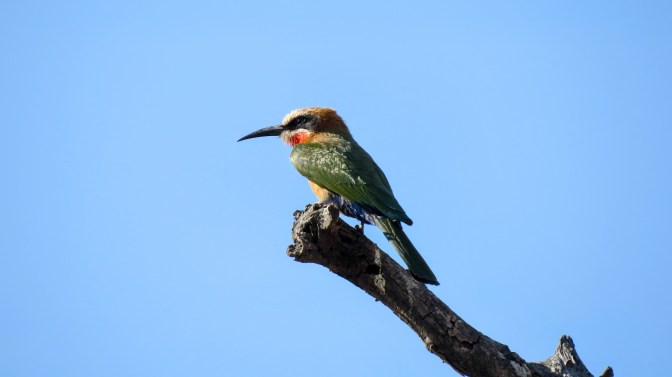
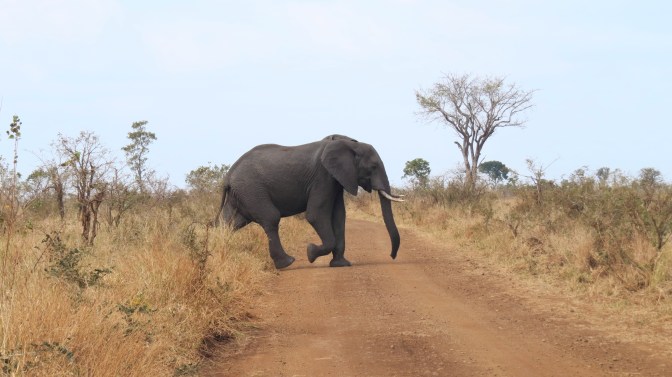
After getting into the park, we made a slow loop around some of the southern trails before heading east towards Crocodile Bridge. This drive was particularly slow as, even though we’d previously visited Addo Elephant Park, we were still looking around every bush and were worried that we would miss something important. The truth is that we probably missed loads of important stuff as we were in a normal car and have little to no experience with this sort of activity. We ended up concluding that luck played much more of a part in any successful sightings we had then any amount of concentration or skill on our part! Also, keeping an eye out for where other cars or official vehicles had stopped was another good way of potentially seeing the more exotic wildlife. Having said that, we were still successful with the more common sightings. Impala were everywhere and our first drive also included elephants, zebras, giraffes, warthogs, a dwarf mongoose and a host of birdlife.
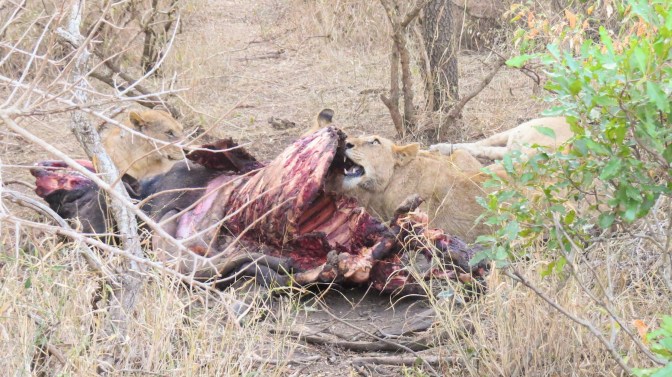
After passing the Crocodile Bridge entrance we headed north towards our first accommodation in the park, the Lower Sabie Rest Camp. It was on this road that we had our first amazing sighting. A group of cars congregating ahead indicated there must be something worth seeing, so we joined the ‘queue’ and edged our way forward when possible. The wait was worth it, as a pride of lions was lazing around and taking turns to gnaw at a large carcass. Despite the slightly grizzly situation, it was really cool to see our first big cats of the trip.
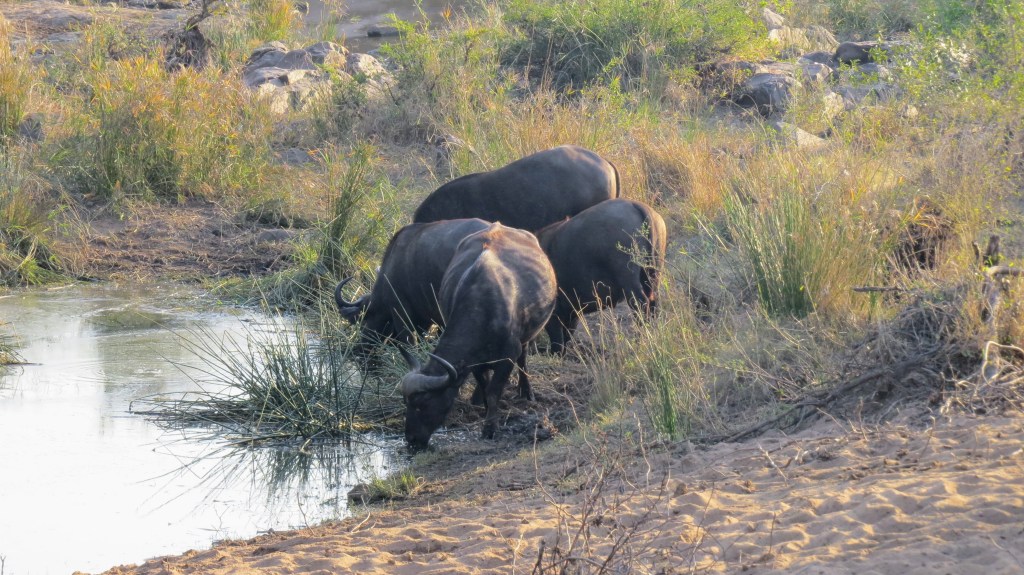
The rest of the drive that day was rather over-shadowed by what we’d just seen, but it was still nice to see the buffalo congregating by the watering hole, watch a hyena scuttling past amongst the long grass and get our first glimpses of the beautiful lilac-breasted rollers amongst the trees. Despite not travelling that far in total during the day, we only just made it to the rest camp before closing time. So please make sure that you always have more time than you think you’ll need as you never know what will happen and what you might see that will hold you up. More on that later…
We had a couple of hours before our night drive, so we had dinner at the Mugg & Bean (they seemed to be everywhere in South Africa!), which was in a nice setting overlooking the river; and picked up a copy of the ‘Kruger Park Map and Guide’ from the gift shop. Despite not being cheap, this purchase was definitely worth it. As well as maps and tips on visiting different parts of the park, it had illustrated checklists of the different animals you can find in the park, and we had a lot of fun in the evenings going through our photos and working out what we’d seen.
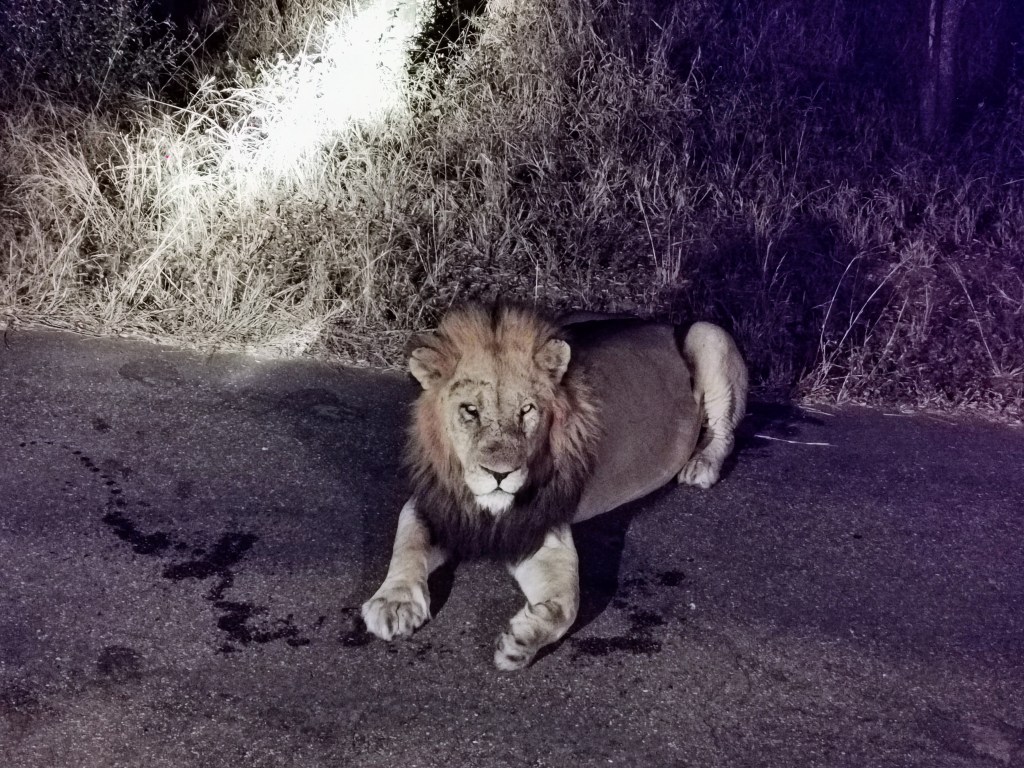
The night drive was only okay. As discussed in our previous post, we weren’t particularly impressed with the safaris that occurred in low-light conditions. Yes, there was a much better chance to see some different animals, but it was rare to actually get a good look at any of them. This applied to this particular night ride. We think we managed to see a civet and a gannet but only very briefly at a distance; and also a bushbaby but only fleeting glimpses as it jumped through the branches at the edge of the spotlight. So whilst these were different animals to what we had seen previously, we didn’t feel that we had really seen then as we couldn’t observe them properly. The only real plus of the trip was that we returned back down the road to where we had seen the lions earlier and they were still there. In addition to this, a couple of the large males were lying on the road itself, benefitting from the accumulated heat in the tarmac. So we actually got a better view of them in the dark than we had through the foliage during the day.
It had been a fantastic first day in Kruger National Park, but it was going to get better…
Day 3 – Walking Safari and a ‘Paws for Thought’
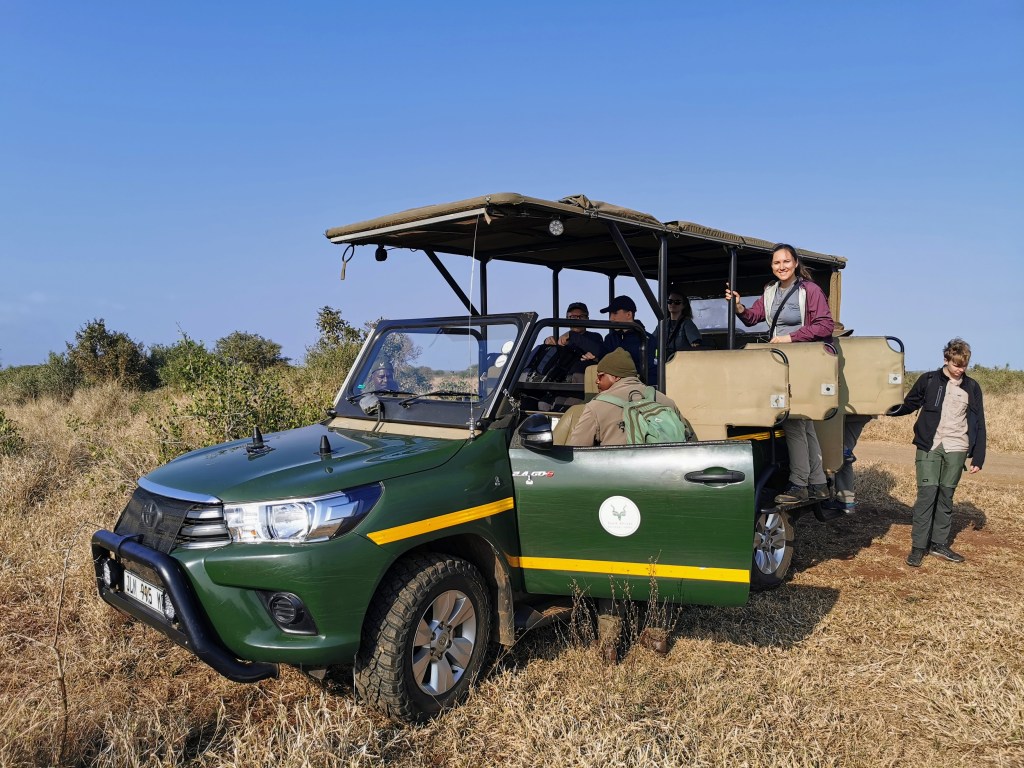
We got up before sunrise to go for a ‘Morning Walk’, which is a drive then a walking safari with some armed guides. Nothing of note happened as we drove to our destination, but we were excited to try something different and go walking amongst the nature. As much as we loved being on safari, it does mean you spend a lot of time sitting down in a car, so it was nice to stretch our legs whilst still having the chance to spot some wildlife. Of course, not having the protective shell of the car did add something extra to what would normally just be an easy stroll!
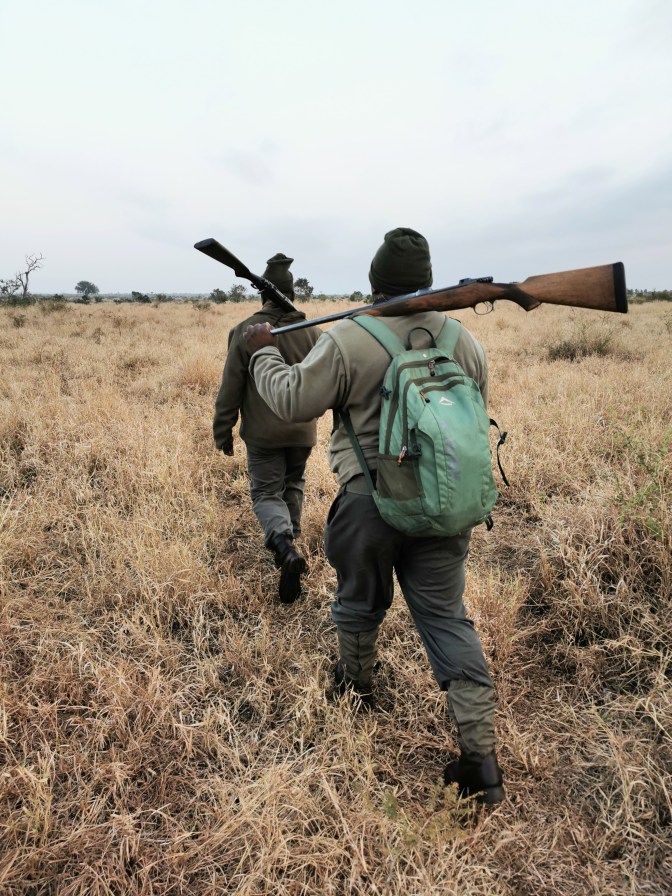
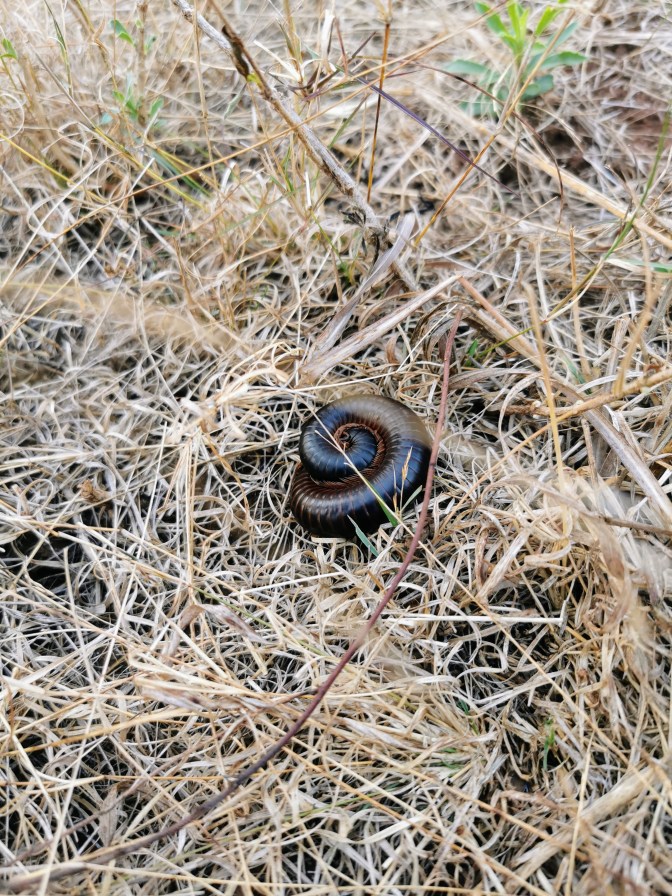
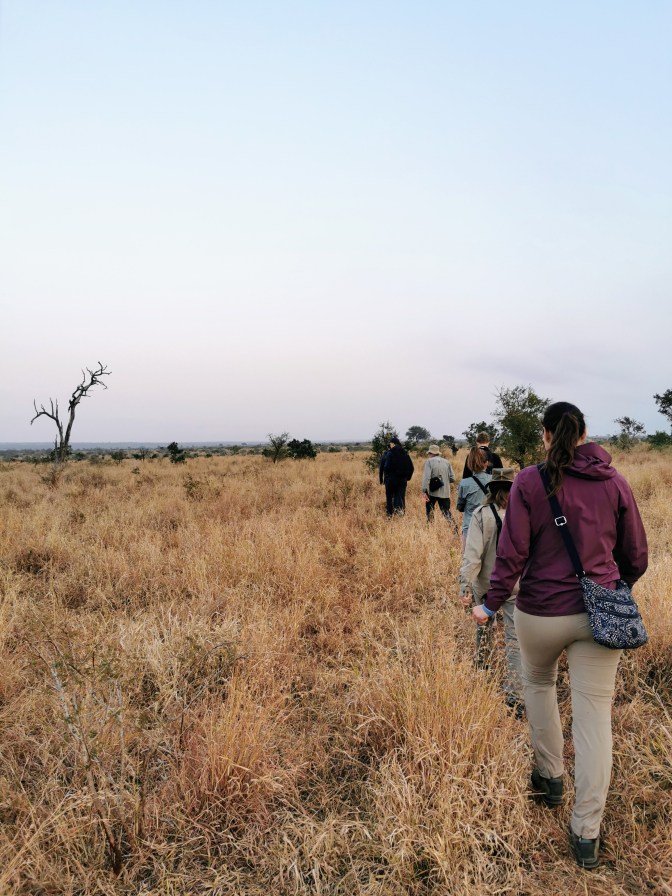
After reaching our destination, we had a safety briefing and then we were on our way. We walked in single file with the guides leading the way with their rifles slug over their shoulders. Every now and then they’d signal and the first person in the line would move to the side, let everyone past, and then join again at the back, so there was a repeated changing of position. The first part of the walk was reasonably quiet in terms of sightings but we’d make stops so that they could talk about something to do with tracking or the environment we were walking through. These stops included talking about different plants, checking out a large millipede that was curled up next to the path, and identifying tracks and droppings left in the soil. The droppings were probably from a hyena and we discussed how animals that eat grass have darker droppings, whilst those of animals that eat leaves are lighter due to the tannins. The paw prints turned out to be a leopard, with cats having three bumps at the back and wild dogs having two. It was both cool and a bit disconcerting that there had been a leopard on that path fairly recently. Whether or not it was still in the area, we did not see it during our walk. But we liked to think that it was there somewhere watching us…
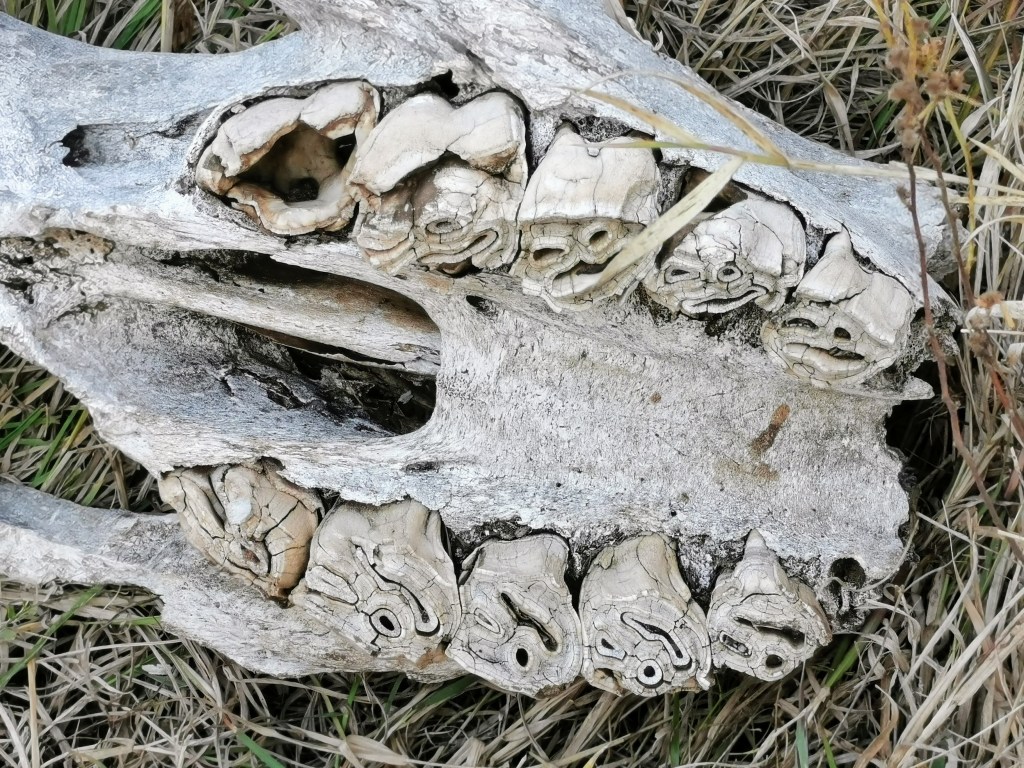
We also came across the skull of a rhino. I’m a bit sceptical about whether we ‘found it’ just then or whether it was planted as part of the walks, but it was still interesting to see. Sadly, that particular rhino had been poached, with the missing horn and visible hole on the top of the skull being obvious indicators. The part that I found the most interesting was the structure of the teeth:
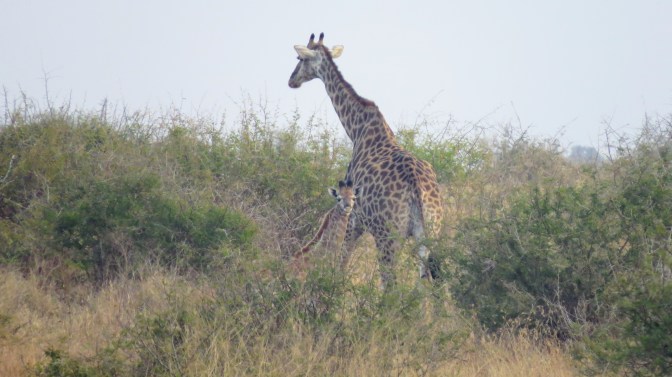
Not too far after the skull, we had our first major sightings with a few giraffes milling about the trees, including a young one. Despite the distance, it was still quite exhilarating to be walking through the scrub and seeing giraffes in front of you.

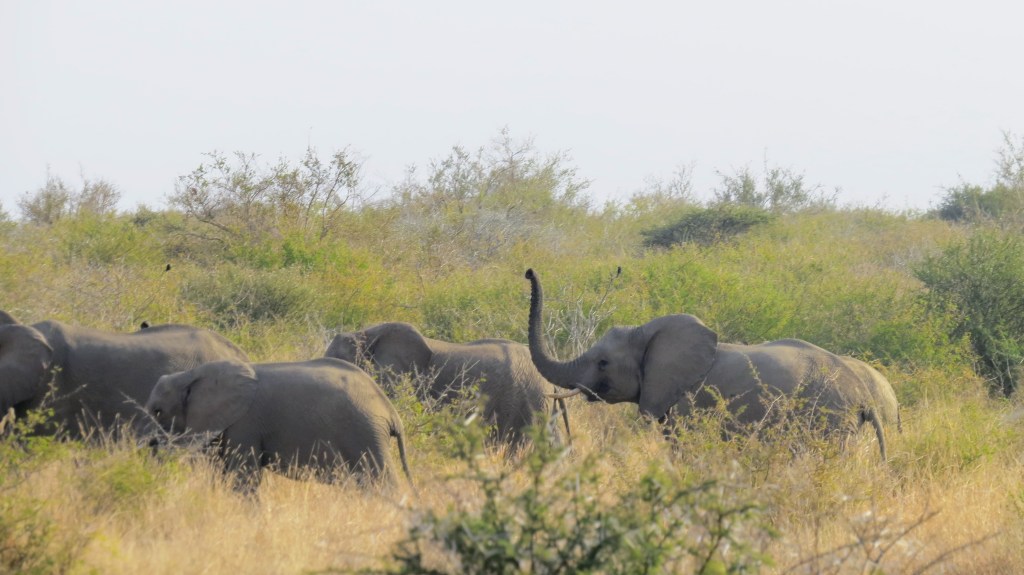
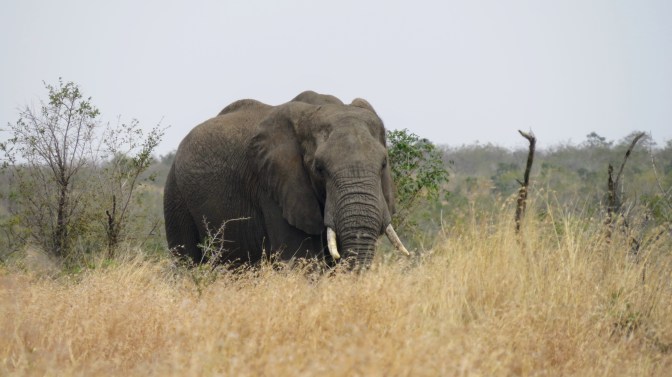
We stopped under an isolated tree for a break and a snack but after a bit the guides became very worried and started quickly getting everything packed, as they had seen a herd of elephants heading in our direction. Luckily the herd changed their path slightly, whether or not that was because they had detected us, we don’t know. But given that a few members of the herd raised their trunks into the air, it suggested that they had. This is apparently what they do to get a better smell of what is around them. I’d never seen this before and it looked very funny, like they were submarines raising their periscopes.
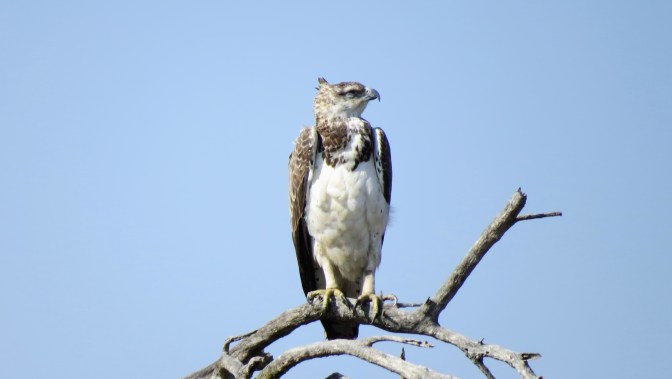
As we headed back to the vehicle, we saw a couple of warthogs and then two types of eagle. So we were more than pleased with our mornings activity and would definitely recommend it, as even if you don’t see much, it is still a very interesting experience.
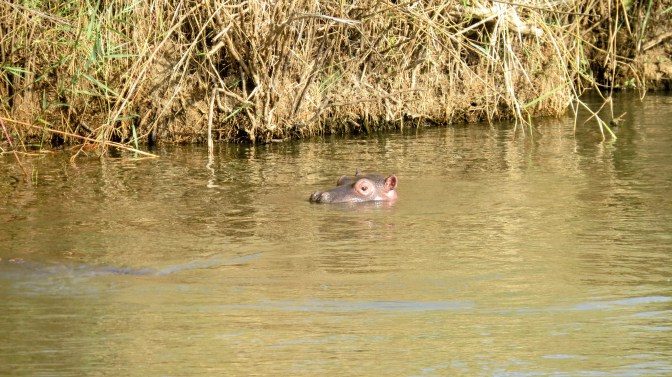
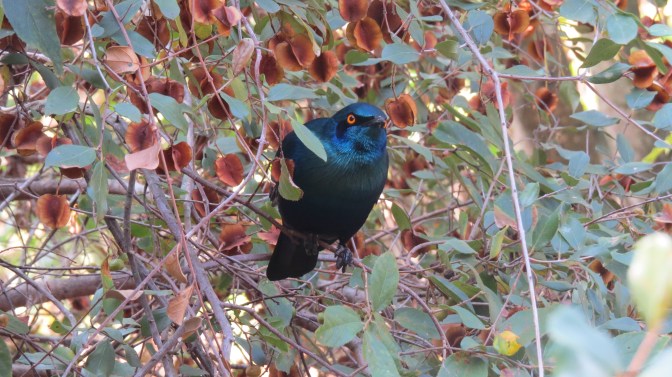
On the drive back we paused at the bridge next to the rest camp and were treated to sightings of crocodiles, hippos swimming around and more elephants. And then back at the rest camp, we got to enjoy the antics of the cape glossy starlings on our way to another Mugg & Bean breakfast.
Our afternoon self-drive safari took us north from the rest camp, back across the bridge and up towards the Mlondozi Picnic Site. After taking a short break there, we headed further north before looping round at the Muntshe Watering Hole. We headed a bit west before heading back towards the road leading to Lower Sabie. Just like the day before, even though it doesn’t look that far on the map, it took us ages, and this time there were consequences…
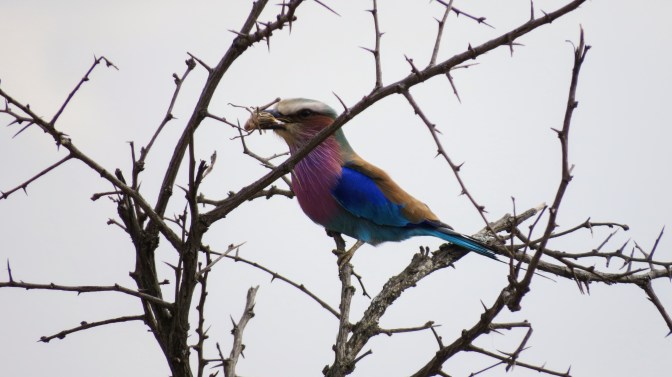
The route started pleasantly and the picnic site was a nice place to stretch our legs and nip to the toilet. It has a great view over a lake, but it was unfortunately empty of wildlife when we were there. As we carried on we saw more elephants and at one point a lilac-breasted roller dove right in front of the car to snare a grasshopper before flitting off to a tree. This was our first ‘successful hunt’ that we saw but not the last…
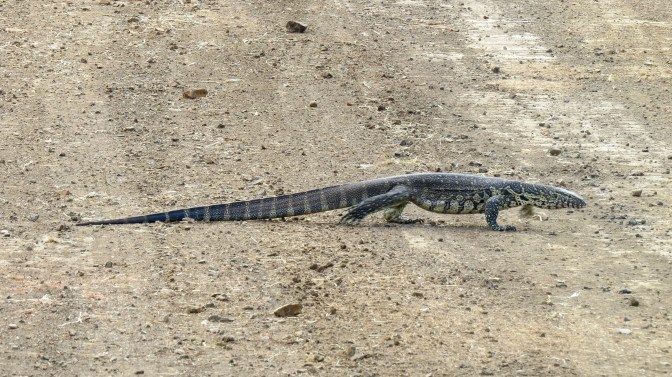
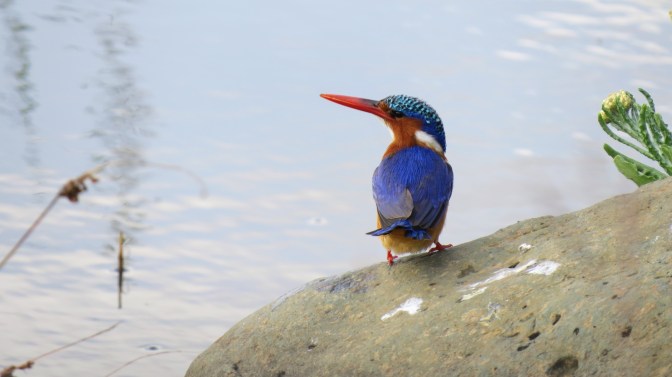
Then, as we were approaching a small bridge that crossed over one of the Sabie River tributaries, a large monitor lizard walked out in front of us. And as we watched it lumber across the road, a streak of colour caught our eyes and suddenly there was a beautiful malachite kingfisher perched on the edge of the river, scanning the water for fish. If we hadn’t stopped for the lizard then it is very doubtful that we would have even noticed the kingfisher. It just builds upon our belief that sightings are more luck than skill.
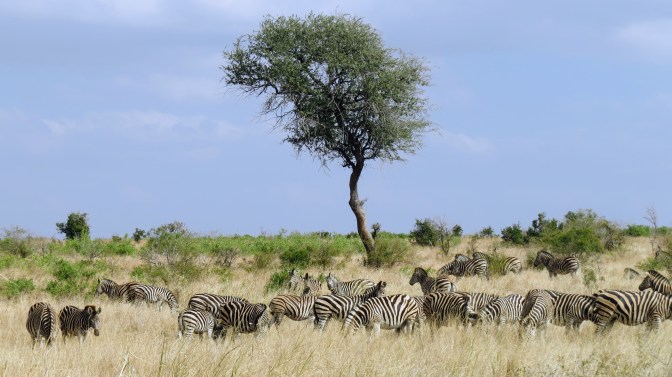
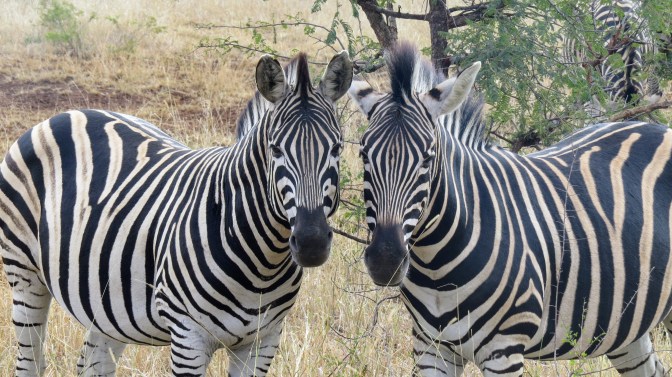
A bit further on we came across a large herd of zebra. We’d already seen quite a few during our trip, but never in such a big group. We spent quite a while just watching them and appreciating their interactions. With their unique patterns and subtle colouring, they really are beautiful animals.
We then moved into an area with a denser covering of trees and stopped to watch a lone giraffe wandering through the trunks. Just down the road from this there was a cluster of cars so we stopped by them. We couldn’t see anything so asked one of the other motorists and they said there was a lion lying down next to the large rock we could see amongst the trees. Try as we might we couldn’t see it. But after a little bit, the giraffe came wandering in that direction, completely oblivious to what lay in wait. But it seems that the lion was also completely oblivious to what was coming as suddenly it seemed to jump straight up in the air in fright before running away. It was such a surreal and yet hilarious moment, as the apex predator was shocked in such a way. I just wish I’d been able to catch the moment on film!
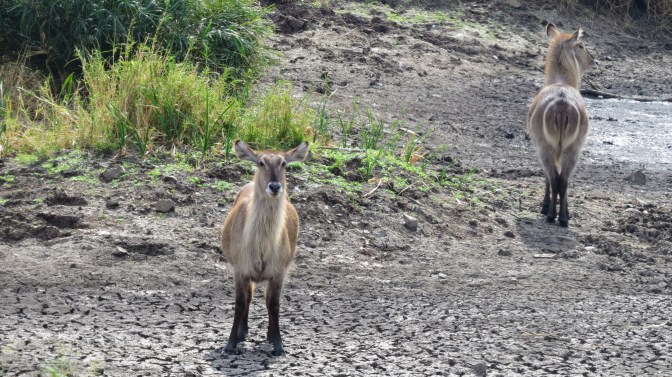
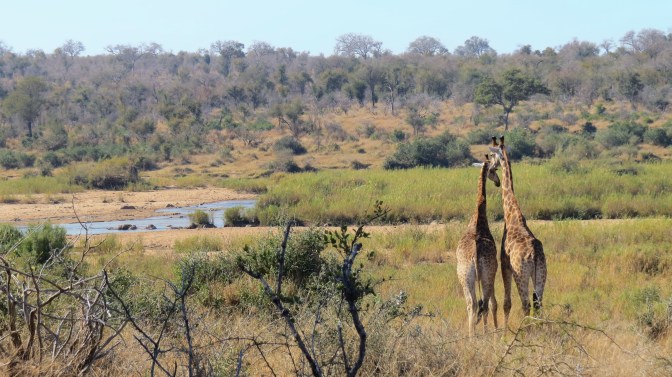
By this point we had already turned back in the direction of the Lower Sabie Restcamp and were on our way, but were still managing to spot plenty of animals. These included waterbuck, vervet monkeys, a plethora of different birds and a couple of giraffes standing next to the road, which, as we could get a close look, had little birds in their tails, presumably eating insects.


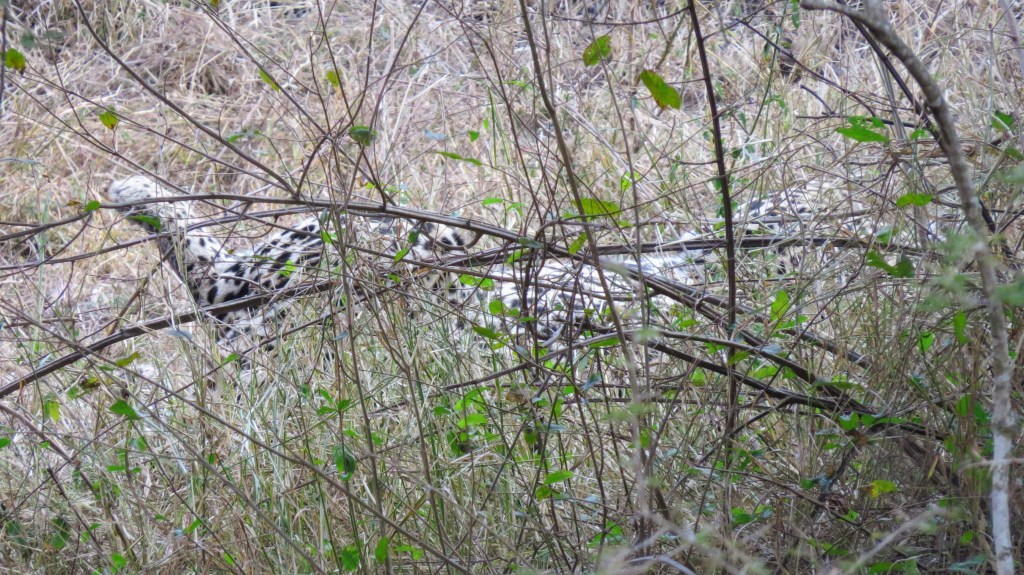
We had booked a Sunset Safari for the evening, leaving from Lower Sabie, so we were on our way back when we came across a huge amount of cars parked up by the side of the road. We soon found out that it was because there was a leopard lying in the bushes not far from the road. Of the ‘main animals’ in the park, the leopard is the most elusive and hardest to spot. People go on multiple safaris without ever seeing one. Despite being a bit pushed for time, we figured that we still had enough for the distance we had left and that this could be our best chance of seeing one of Kruger’s most impressive animals. So, we joined the queue of cars and inched towards the main viewing spot. When we eventually got there, all we could see was a paw sticking up into the air. The leopard was lying on its back having a rest and that was the only part visible. We waited for as long as we could with no change, so we reluctantly turned to go back. Annoyingly, cars had by this point also blocked the other side of the road in the hopes of spotting the leopard over the tops of the cars in the queue, rather than just joining the queue. This meant that we were stuck for ages getting more and more angry. When we eventually got through we figured that we might still have enough time if we went a bit quicker than we should and if nothing else went wrong. Of course there were two closed trails where we had to make detours and then the killer blow was having a couple of large elephants standing on the road refusing to move. It was at this point that we knew we’d miss our trip (that we’d also already paid for) and that there was nothing we could do, we just had to let nature take its course. We eventually got past and as we got near to the restcamp we passed a safari truck heading in the opposite direction and when we asked at reception upon our return, it turned out that that had been our truck. It had waited as long as it could for us before heading out. In hind-sight we should tried to flag it down and organised somewhere to meet where we could leave our car, but that thought didn’t cross our minds in the moment. So, as I’ve already mentioned before in this post, the routes you are planning within the park always take longer than you think they will and you never know what will happen. So give yourselves more time than you think you’ll need.
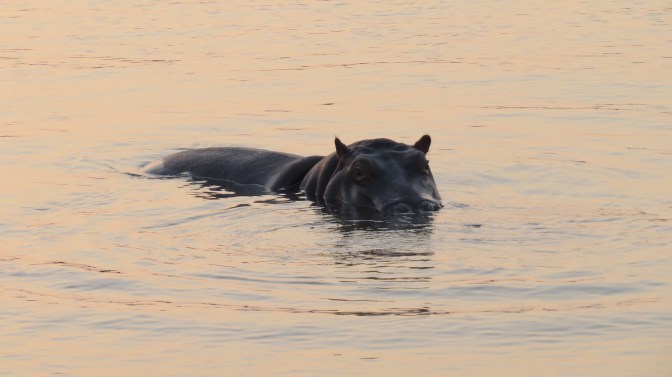
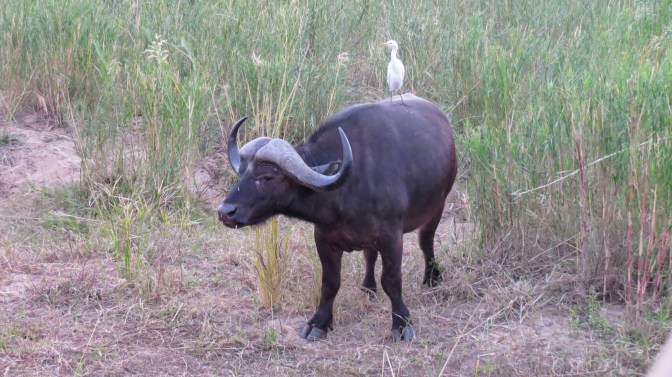
Despite our disappointment, we decided to head out for sunset before the gates shut for the night. There are couple of really nice spots near by, and after having a quick look at the ‘Sunset Dam’, we headed back to the bridge that we’d crossed twice earlier that morning. Whilst there was still decent light we had fun watching the buffaloes with egrets perched on their backs at the side of the river and then drove to the centre to get a good spot for the actual sunset. It was an amazing place for it, as the sun descended right into the river, creating beautiful colours and making silhouettes of the hippos swimming below. It was not what we’d hoped for from our evening, but it was a pretty decent replacement.

There was another advantage to missing our sunset drive. We were so disappointed that we had a think about our schedule. By this point, we’d worked out that the Cradle of Human Kind would be closed when we had planned on visiting it (it was being refurbished and was closed for ages) and thus we had an unplanned day. So, after talking to the helpful staff at the office to discuss our options, they told us that there was free space at the Skukuza Rest Camp. We hadn’t yet booked accommodation for the drive back to Johannesburg, so we took the opportunity to have an extra day in the park. And whilst we’ll never know how good that sunset tour would have been, I doubt it could have topped what was to come…
Day 4 – Family values
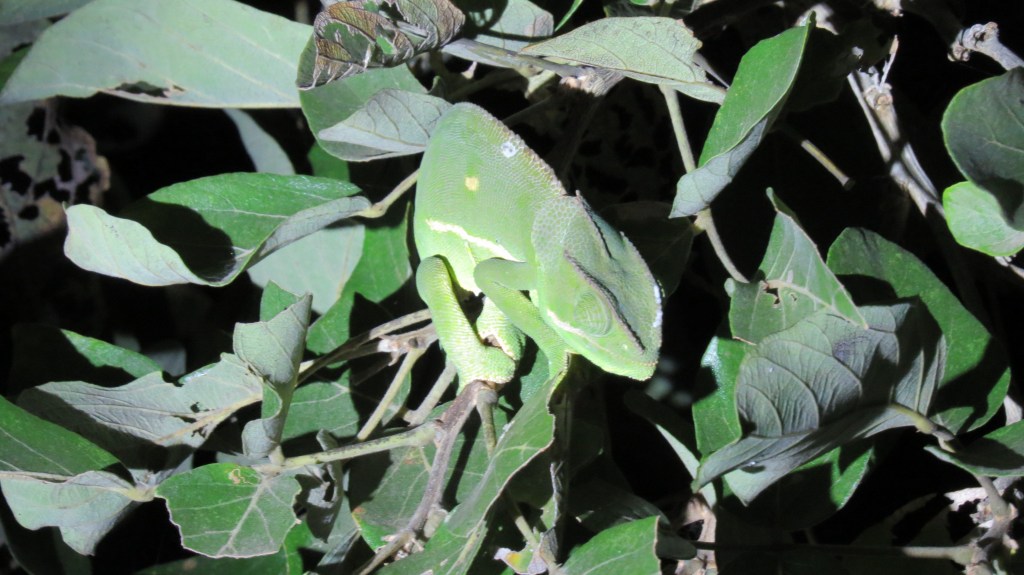
We had already booked a Sunrise Drive for our ‘last morning on safari’, so even though it was no longer our last morning, we were scrambling about in an early morning stupor to get ready for another adventure. As I’ve already mentioned a couple of times, we weren’t overly impressed with the safari rides in the dark. Yes, they do give you an opportunity to see animals you’d not likely see during the day, but they tended to be mere glimpses and most of the better viewing was when there was already more light. This again proved to be the case, as we spent over an hour driving around with next to no sightings, and nothing to really write home about, but there was one exception. Less than 100m outside the gate we stopped and our gazes were directed to the bush by the side of the road. Everyone was looking intently at something and yet I had no idea what! Even when someone gave me exact details of where to look I couldn’t make anything out. It was only when I zoomed into that spot with my camera that my eyes were able to adjust and see the chameleon not five metres in front of me. I couldn’t believe it! And after I knew what I was looking for I could see it pretty easily – it’s both weird and amazing how our brains work and how we can miss things, even when we’re staring right at them.
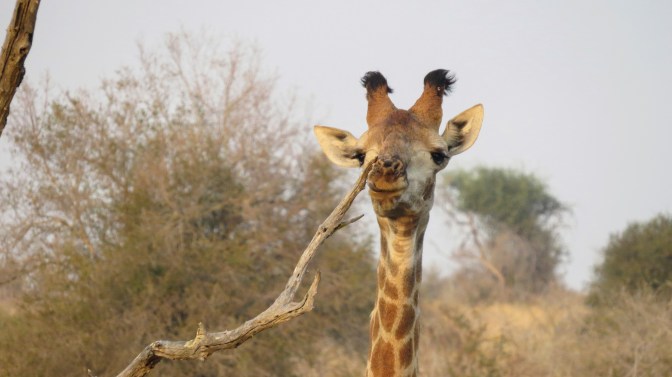
Once the sun rose and it was easier to see, we got some really nice sightings, including kudus, an african green pigeon, hornbills, young elephants, and some giraffes having breakfast by the side of the road.
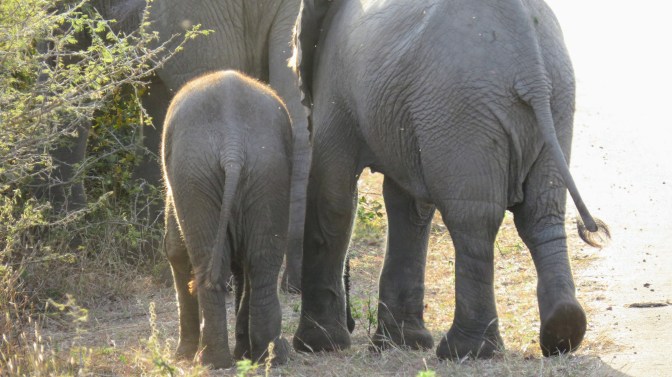
After loading up our car and checking out, we spent the rest of the morning doing a loop south-east of the rest camp, seeing warthogs, elephants and some beautiful birdlife flitting about the trees.
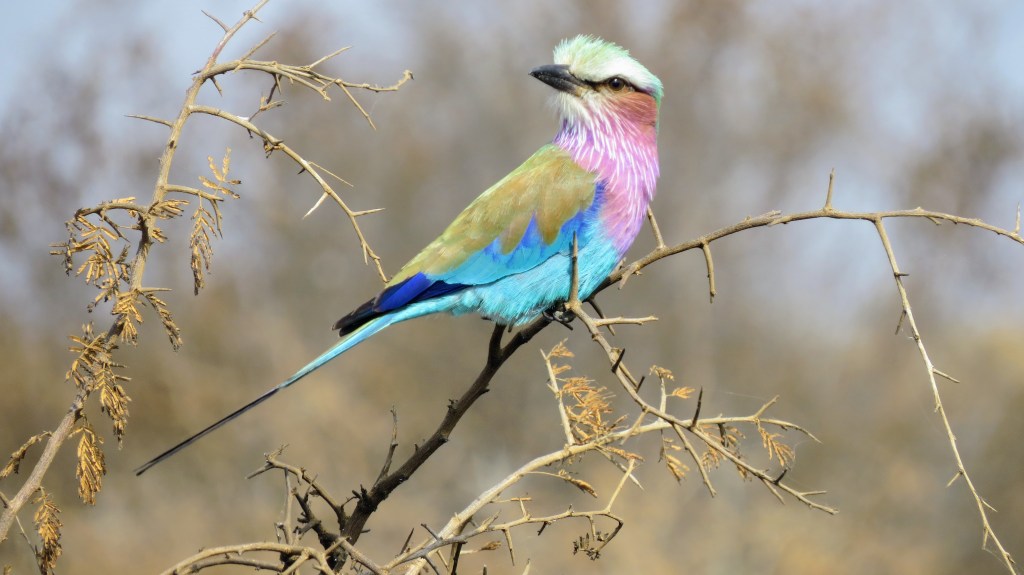
After returning to Lower Sabie for lunch, we headed north west on the road to Skukuza Rest Camp. The journey started quite quietly, although still with sightings of antelope and eagles, but after an hour we came up to a few cars on the side of the road. There turned out to be a lion with her cubs sunning themselves on an outcrop of rock. From our position we just had an angle to see them and they were on the outer reaches of our binocular and camera ranges. It was times like these that showed just how important having a good pair of binoculars or a camera with an excellent zoom really was. As the time we spent watching the interaction of the family was easily one of the highlights of the whole trip. The mother was snuggled up with a couple of the cubs whilst another practised hunting by jumping and biting at their mother’s wagging tail. It was just a real privilege to be able to watch it happening.
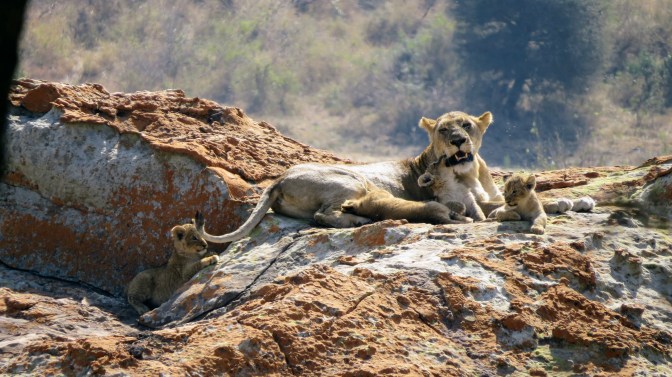
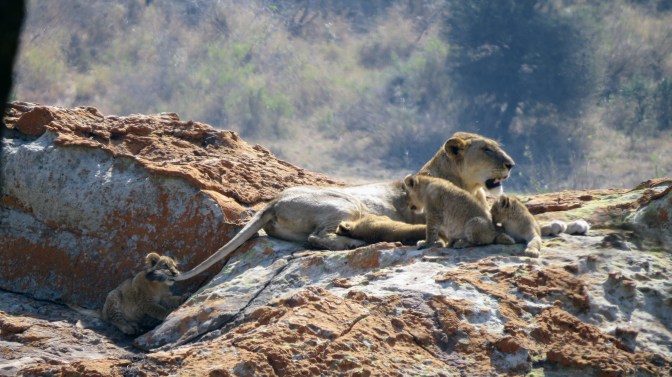
Whilst still on a high from seeing the lions we carried on, passing by a troop of baboons before getting stopped by giraffes and then a herd of elephants crossing the road to head down to the river. We stopped to try and see the giraffes drinking in the river, as a young couple we’d bumped into at the rest camp had shared their obsession with getting a photo of the awkward position giraffes had to get into to drink. We’d never even considered it, so it had piqued our interest. But unfortunately it was too far and there was too much foliage in the way.
After arriving at Skukuza Rest Camp, we got settled before having a look around. This included having a walk overlooking the river and viewing the iconic bridge with the train-carriage accommodation. This wasn’t something we were even aware of before coming so there was no chance of staying there, but I’d imagine it would be a very cool experience.
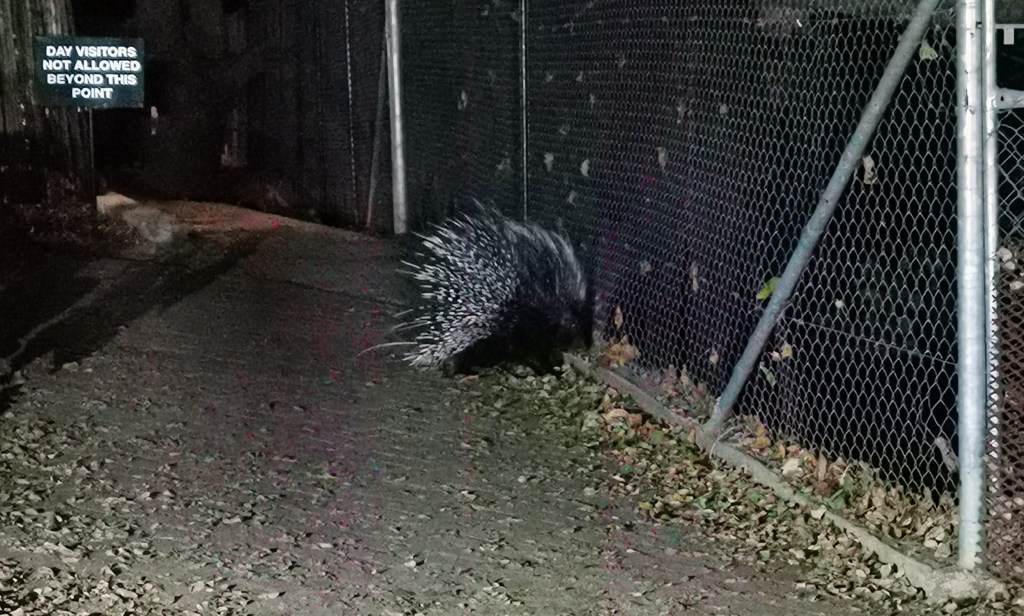
We had booked a sunset safari to replace the one we missed the night before, but it turned out to be pretty anti-climatic. The sunset itself was nice and there were some interesting birds spotted but not much else. But given the amazing sightings we’d already had that day we certainly didn’t mind. On returning to the rest camp we went in search of food. The restaurant was closed by this time but there was still a stall open where we could get pancakes and a drink to celebrate our last night in the park. There was only us and three other people sat in the chairs outside, quietly enjoying our evening when there was a rustling and sudden movement out of the corner of our eyes. And out of no-where there was a porcupine marching across the restaurant area. We couldn’t quite believe it, it seemed so surreal. We got up and followed it at a distance – not wanting to scare it or get too close to those spines! Again it just shows that a lot of wildlife sightings for amateurs such as us was down to luck and being in the right place at the right time.
Day 5 – More Luck than Judgement
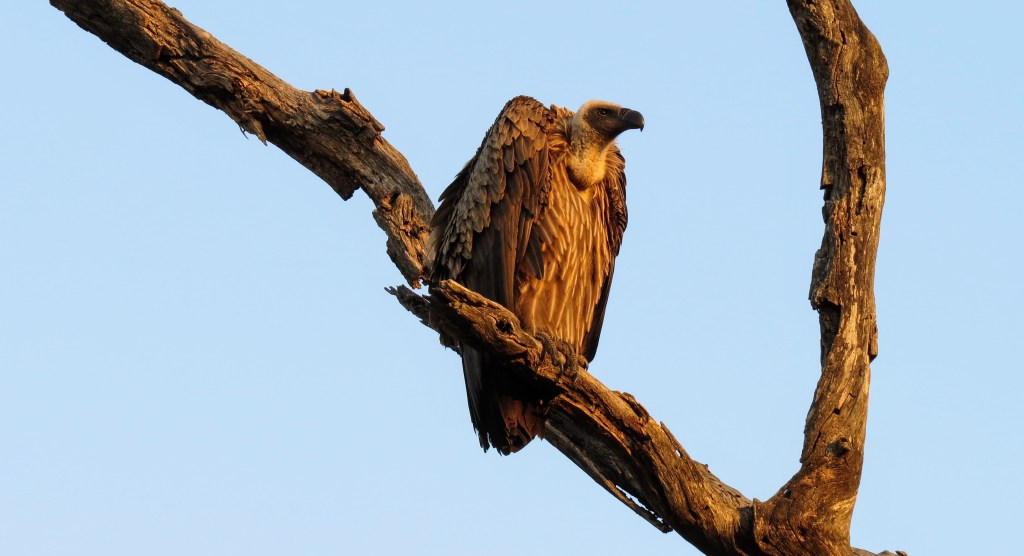
Whilst we hadn’t bothered booking a sunrise drive, we still got up early and left when the gates opened to do our own version. This meant we skipped the bit in the dark, but were still out on the road for the actual sunrise, and for the soft light that follows. We did a little loop going south and then east and took a trail parallel to one of the better roads in the hope of seeing something different. We weren’t particularly successful, but there was some birdlife and we came across a tree with multiple vultures taking in the early morning rays, which given that we’d only seen them circling high in the sky previously, we took as a win.
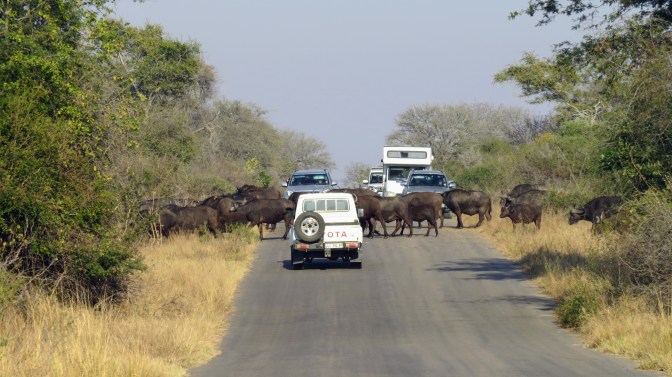
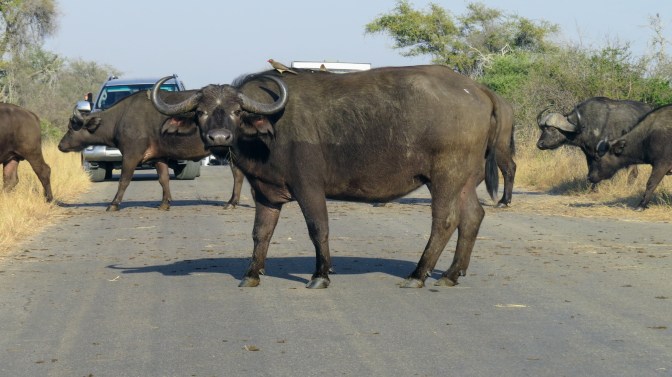
We continued around and back onto the main road, seeing some antelope and waterbucks before getting stopped by a whole herd of buffalo crossing the road. We were sat there for at least 20 minutes as one after the other kept appearing to cross over. We ended up at the front of the queue and it was really cool to see them up close, as there were quite a few young ones but also others that had evidently been fighting or had been the unsuccessful target for a predator. A lot of them were also giving lifts to little birds that were helping to keep down the number of insects on their hides.

After arriving back to the rest camp, we got packed up, checked out and were on our way pretty quickly. The plan was to see a few sites just outside the park but then to continue all the way to the outskirts of Johannesburg, so we had a long way to go and needed to leave early. We could have left via the Paul Kruger gate, which is close to Skukuza Rest Camp, to get straight onto the normal, main road but we figured we’d left early enough to take the parallel trail west through the park and to leave via the Phabeni Gate (we had been told to not even consider the Numbi Gate, as it wasn’t safe). We didn’t have time to dawdle, however, so we were driving at the park speed limits, rather than crawling along like we had for the majority of our stay in the park. Consequently, we covered the distance fairly quickly and in about an hour we’d made it to just about 5km from our exit gate and had basically stopped looking out for wildlife sightings. That was when we came across a load of cars stopped by the side of the road. After talking to someone driving the other way, we ascertained that a Cheetah and cub were walking within sight of the road in the direction we were travelling. Excitedly, we joined the group and were rewarded with a glimpse of the sleek body gliding through the long grass. Then the top of a head was just visible bounding along about 20 metres further back.
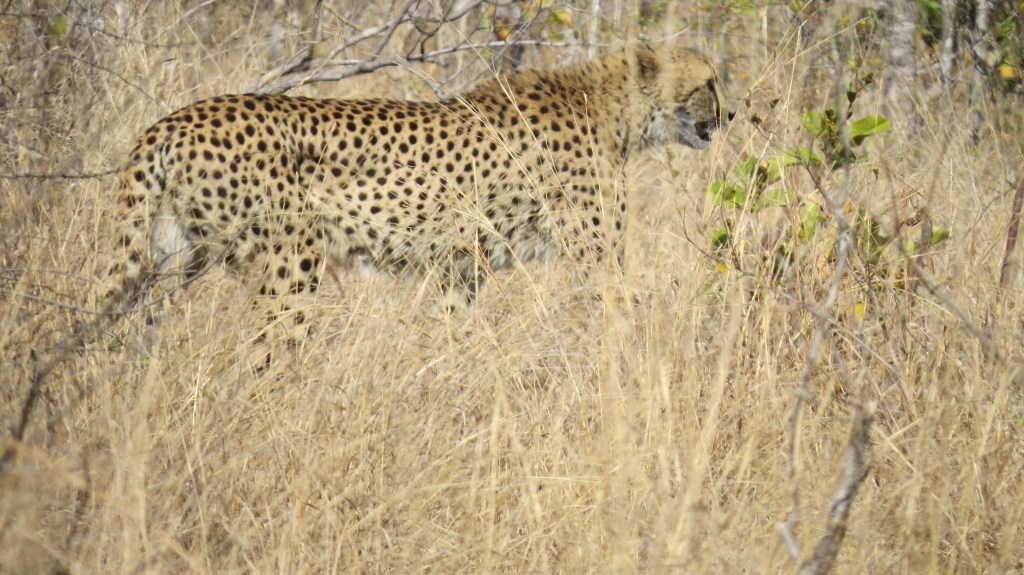
As the cheetahs strode on, the cars would all start driving in a procession and stop a bit further along the road and wait for them again. Due to our place at the back, our positions ended up being relatively poor, with only fleeting glimpses from inopportune angles. So after joining the car procession a couple of times, we decided that we were really happy to have seen a cheetah but that it was worth taking a risk to get a better view. So, we left the group of cars behind and carried on the road looking for an open area where we could stop and wait. After a while we came across a herd of antelope and thought that their movement could indicate that the cheetahs were approaching, So we stopped by the side of the road and waited. We had no idea if the cheetahs were still walking or if they were still heading in this direction. We waited for quite a while with absolutely nothing happening and no other cars catching us up. Only one car came from the opposite direction and asked what we were waiting for. Our attention was actually waning and then suddenly, there was pandemonium everywhere. I first looked in the direction I was expecting the cheetah to come from, saw nothing, and yet there was now a cheetah running directly towards us from another direction, leaping and taking down a large antelope maybe 20 metres away, right in front of us. From everything being still and nothing happening to a cheetah being on the ground with its jaw clamped on the throat of the antelope had taken less than five seconds. The poor beast was dying right in front of us and yet we couldn’t look away. It was thankfully over pretty quickly, the cheetah an expert in efficiency, and yet it stayed there in position for quite a while, just making sure. We could see the hair on the cheetah still standing on end and its chest heaving from the stress of the sudden exertion. I think we were in shock. We couldn’t quite believe what we had witnessed. Other cars started arriving at this point, but even with the choice of where to park, none of them had as good a view as we had. Radka was quite emotional with what she’d witnessed whilst I just couldn’t process it. Had we contributed to the kill by blocking off an escape route? Had the Cheetah actually used us as part of its strategy? However unlikely, these were some of the immediate thoughts that hit us. Our collective trance was broken as the cub came bounding from the bushes, obviously so excited and happy. The stark contrast between the happy cub and the fate of the antelope brought into focus the harsh reality of the natural world. Not long after this moment the adult cheetah dragged its catch underneath a nearby bush, obscuring our view and ending the most intense few minutes that I can remember. It took a while to process but afterwards, it dawned on me that if we hadn’t missed our sunset safari a couple of days beforehand, then we probably wouldn’t have booked an extra night, we might not have seen the lion with her cubs the day before and we most definitely wouldn’t have seen the cheetah kill. Even the events of that morning were surreal. We chose to leave quite early; then we decided to take the trail through the park, even though it would take longer; we then decided to leave the group of cars despite getting some views of the cheetahs and then finally we happened to stop at the exact spot of the event. The odds of all of that happening seemed astronomically small. Which all just seemed to support my view that ‘success’ during a safari is much more luck than judgement.
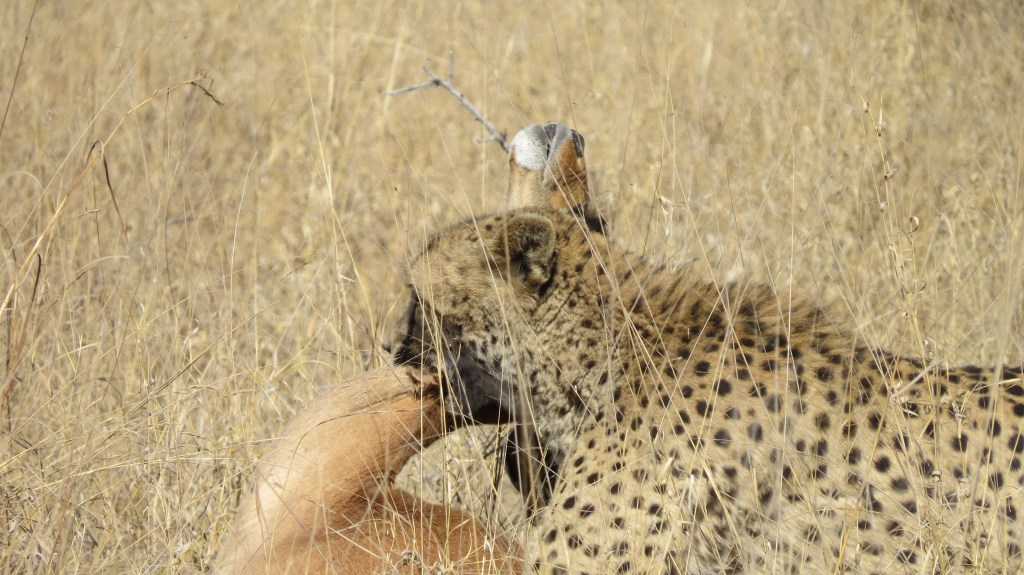
It seems rather pointless carrying on with the blog post after reaching that point, but I guess I should finish the story. Once the cheetah had disappeared under the bush we waited for a while, for the dual purpose of seeing if the cheetahs would move again whilst also giving ourselves the time to compose ourselves to be able to carry on driving. Despite there only being a short distance left to the gate, we still saw some more giraffes and a tawny eagle perched in the branches, before finally exiting the park. It had been such an amazing time. I can’t recommend it highly enough to anyone who is fortunate enough to have the opportunity to go. As someone who loves both wildlife and taking photos, it was an ideal location.
We still had a bit of time before we needed to head off towards Johannesburg, so we went to see a couple of the highlights around Graskop. This area has its own tourist trail, with multiple waterfalls and viewpoints within easy reach of each other. This is what we would have done with our extra day if we hadn’t stayed for the extra night in the park, but as it was, we only had time to visit a couple of them, so we first drove to The Pinnacle Rock. This attraction requires a small payment to enter (better to have cash with you) and a small path leads to a viewpoint. From there you look out into a canyon that a has a large column of rock standing independently in the middle. It’s a nice view, but that’s it and you’ll be done in 5 – 10 minutes. Even though it didn’t cost much, I’m not sure it was worth it!

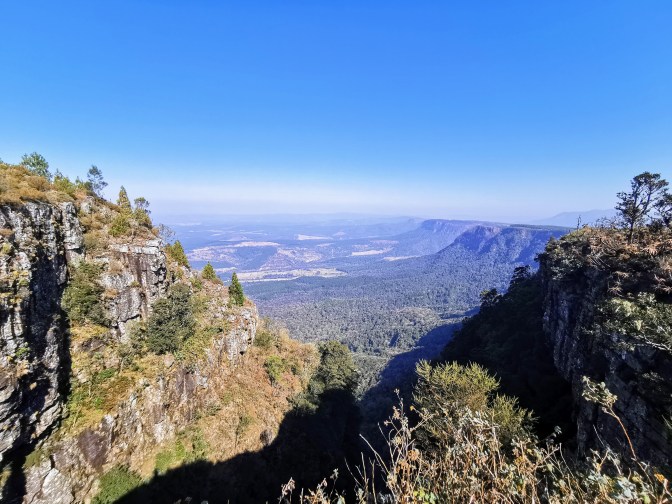
Slightly further up the road was the entrance to God’s Window. This attraction also requires a small payment to enter, and you have to walk past lots of souvenir stalls to get from the carpark to the entrance of the walk. The well-marked path branches to a few different viewpoints that look down into a canyon and across the plains below. For the highest viewpoint, you need to walk through a ‘Rain Forest’, as the sign tells you. Whilst it may not be a rainforest as you would imagine it, there is a strange little microclimate that exists there, as rain is carried across the plains below before getting stopped by the steep hills of this area, that do seem to spring from no-where. So the forest was very pleasant, and did lead to very nice views across the surrounding areas. Whilst you do not need to spend too long at this attraction, it was worth it this time for the nice walk and the stunning views around.

We still had a long drive ahead of us, so we decided to finish up at God’s Window and start heading back, driving south before connecting with the N4 to Johannesburg. We did have one more stop to make, however, and that was to a South African institution, Milly’s Cafe. What started out as a small trout farm and stall has developed into a much-loved attraction in its own right. It is still the restaurant it is best known for, but there is also accommodation available. We tried the famous trout pie, it was delicious and well worth the stop.
Millys was our final point of note, and we started our journey home from Johannesburg airport early the following morning, after having no problems returning our rental car. It had been an unforgettable trip.
Final Thoughts
Our trip to Kruger National Park was easily the highlight of our trip to South Africa. Whilst we had a lot of fun on the Garden Route, it would be really hard to top the experiences on safari. The wildlife was amazing, and any worries we had about mainly doing it as a self-drive safari were misplaced. Even in our average, non-4×4 hire car, we had no problems accessing the trails and were able to spot lots of fantastic wildlife. Even the weather was a pleasant change after the cold, wet and windy time we had in Cape Town. So, if you’re ever fortunate enough to get the opportunity to visit, then I can’t recommend it highly enough.
 Brit and Czech Abroad