After an overnight bus from Cusco, we arrived to Puno, the gateway to Lake Titicaca. This massive lake is the right on the border between Peru and Bolivia and is the highest navigable body of water in the world (I’m not really sure exactly what this means but it seems to be a big selling point on all of the associated websites).
If this wasn’t enough to be worth a visit, the lake is also famous for having communities living on ‘floating islands’ – islands made out of reeds that float on the water. And it was these communities that we wanted to see when we booked a day trip to the lake.
Contents
What does a floating island look like?
When does a lake not seem like a lake?
Why is the lake green?
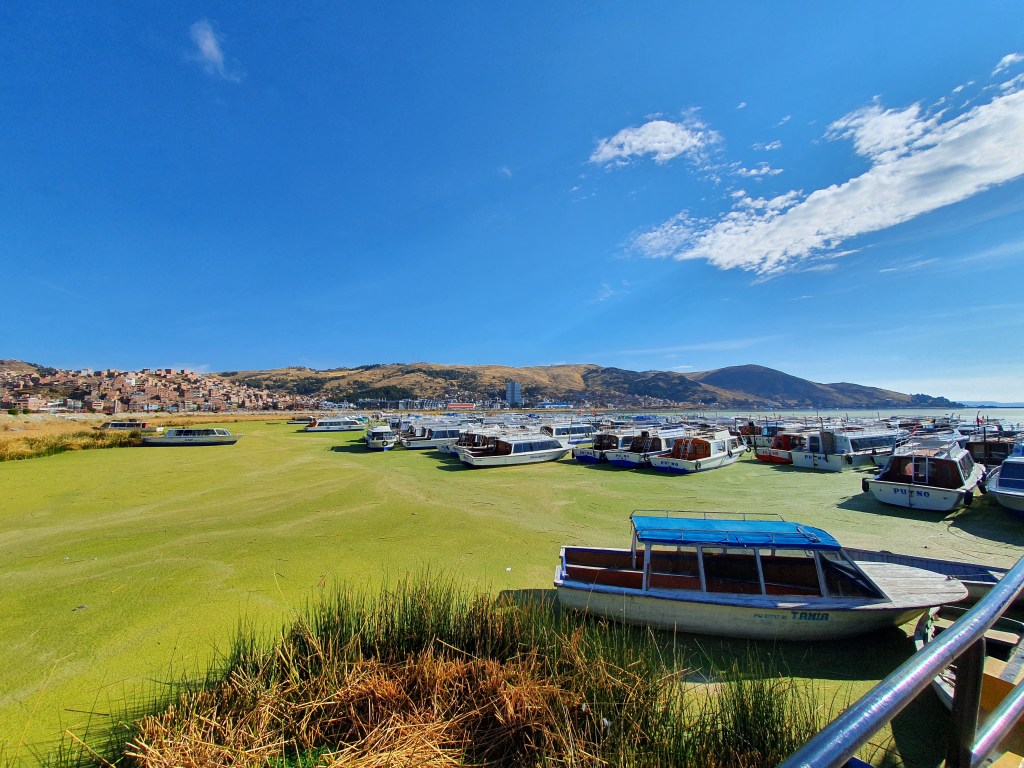
So the thing we noticed when we arrived to the harbour was that the lake was green. Not a beautiful blue-green or turquoise that you might see in an alpine lake, but a bright green caused by the surface being completely covered in algae. It looked like the boats had become grounded in a field.
After the boat was filled and we set off, the guide explained that the colour was only in this cove. An island (a proper non-floating island) that had a hotel built upon it, had constructed a connection to the nearby mainland. Not content with a building a normal bridge, they had completely filled the gap between the island and the mainland. This meant that the water in the bay had lost a large part of its connection to the main part of the lake and thus, there was a reduced flow of oxygen to the bay. A series of biochemical processes caused the algae to grow across the surface. Apparently, before COVID there had been petitions to do something about it but that during the pandemic this movement had lost momentum. Lets hope it get’s going again because lakes aren’t meant to look like that!
What does a floating island look like?
The first stop on our trip was to the famous floating islands. There are many of these and the reputable tourism companies apparently have an agreement to distribute their day trips evenly amongst the different islands, so that the tourist’s soles are spread more evenly.
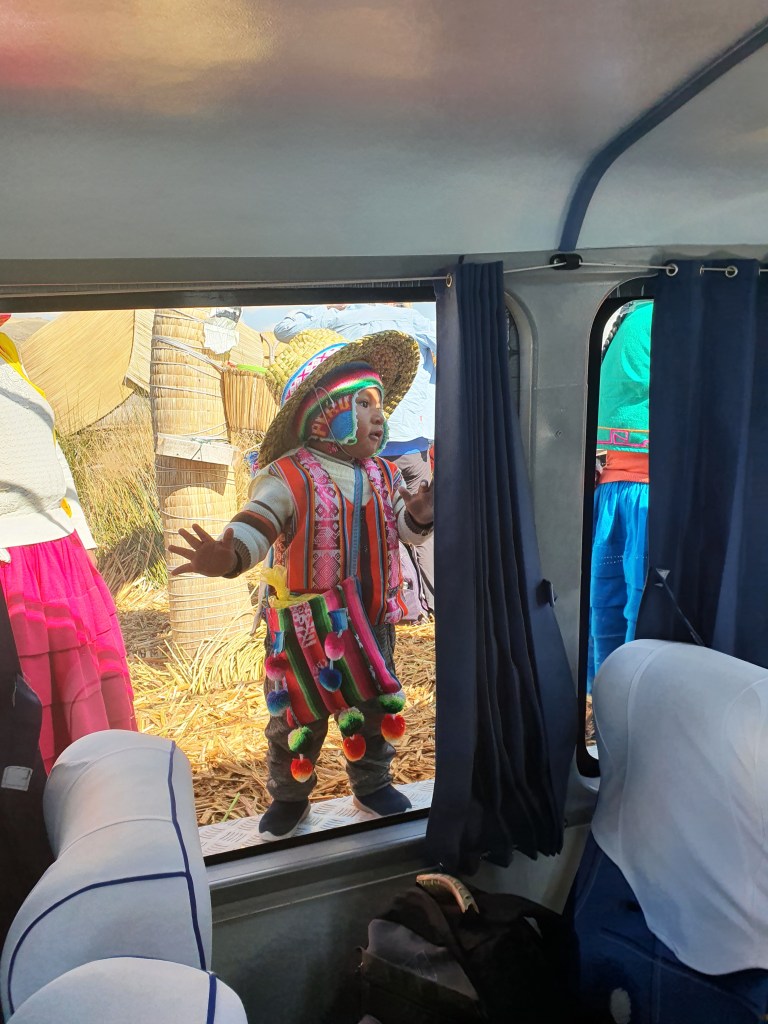
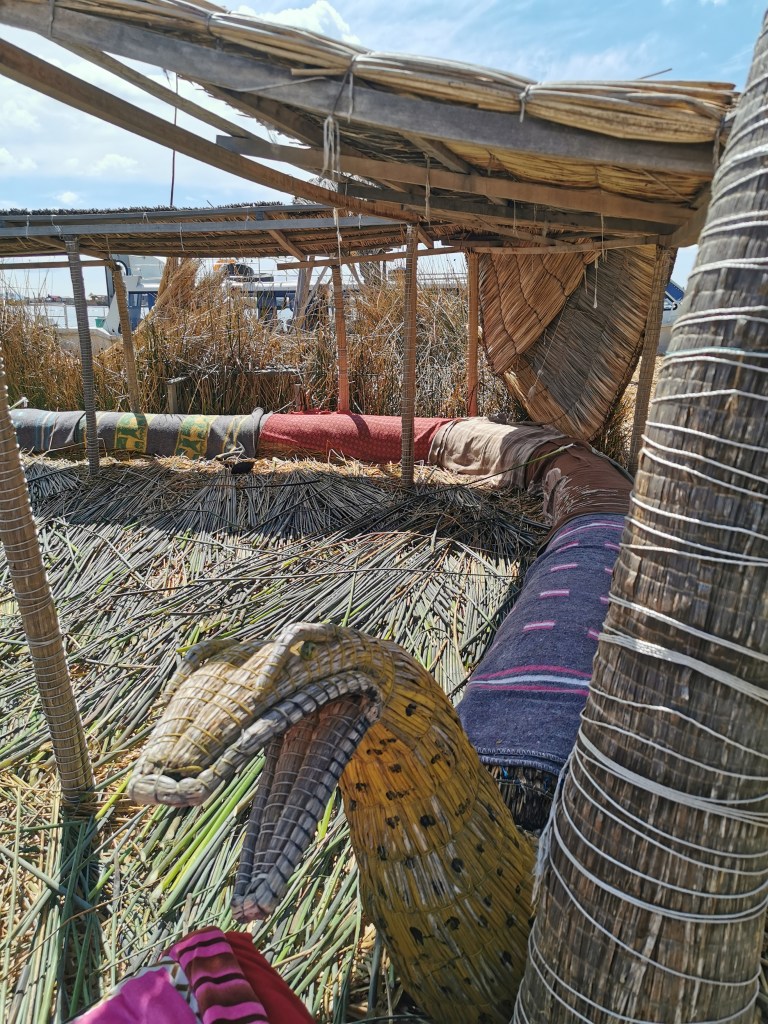
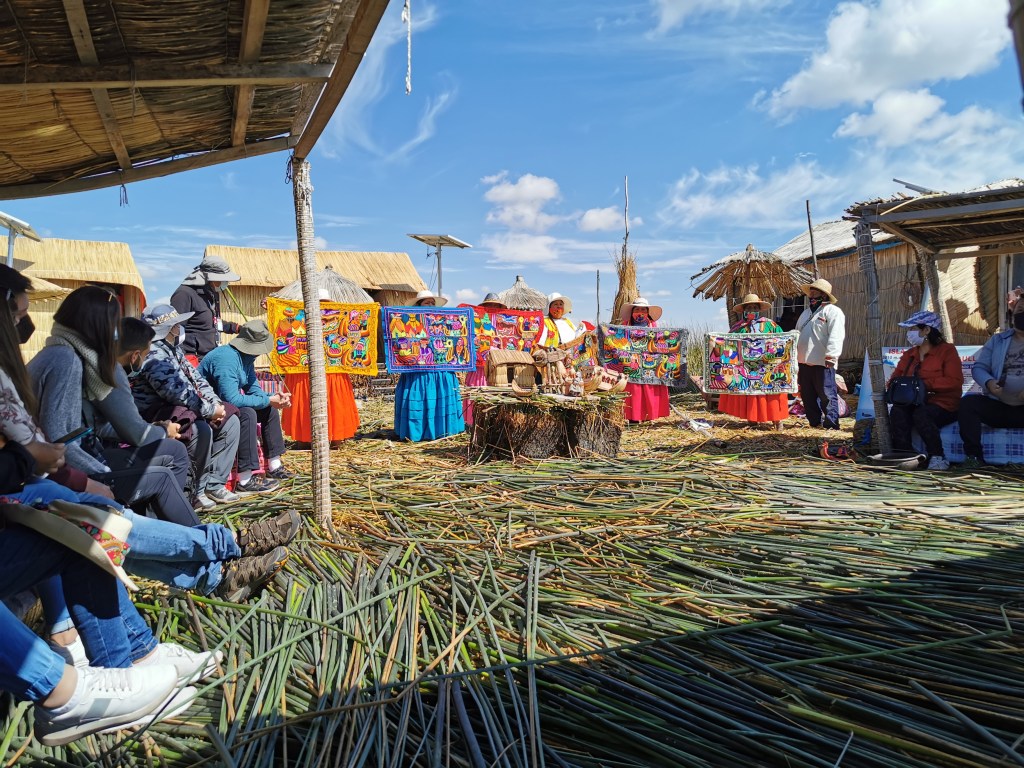
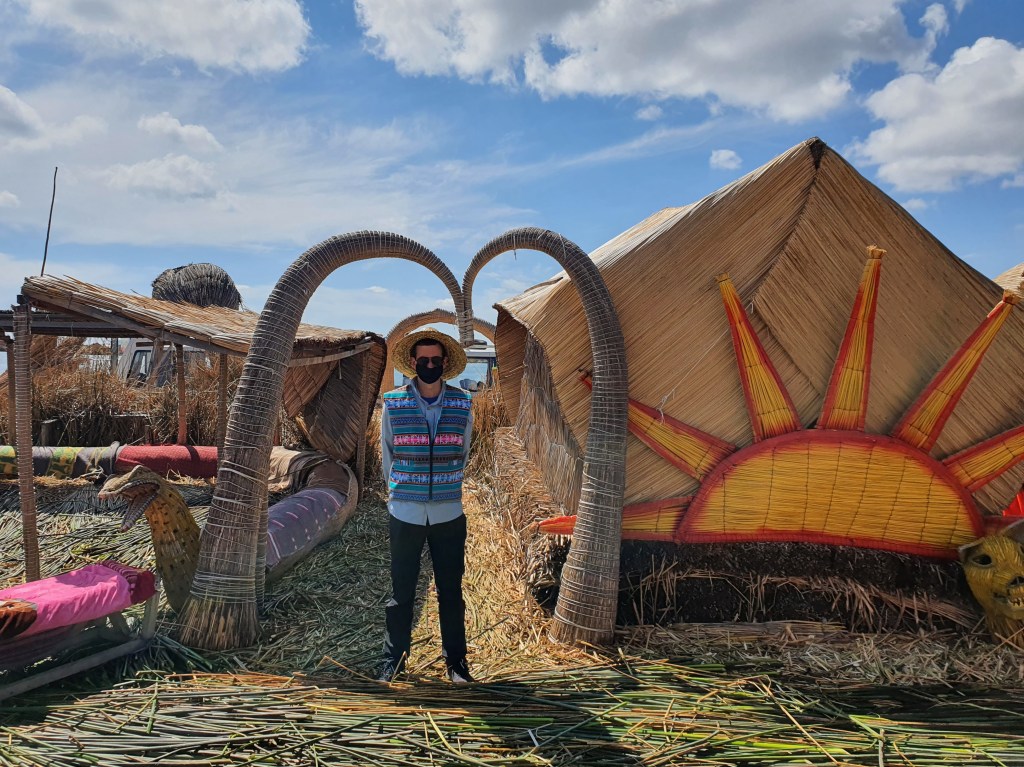
When we approached our designated island there was a welcoming party of the resident women, all dressed in their colourful traditional clothes. Stepping off the boat onto the island was a weird experience. It was completely made of reeds, so was soft and spongy, this made it quite hard to walk on. I’m not sure exactly what I was expecting but I think a part of me thought that the ‘floating islands made of reeds’ was a gimmick, derived from an ancient community and maybe exaggerated to attract tourists. But this certainly wasn’t the case. We all sat down (the long bench was made of reeds) and were treated to an explanation of how the islands were made and maintained, plus the items made by the women of the island, which of course were available to purchase. The explanation was given by the mayor of these islands and then translated by our guide. This was the only male local we met on the floating islands, as the others were off working, either fishing or working on the mainland. It was all very interesting. We then got to see inside the houses (made of reeds) and were invited to try on the traditional clothes. This part did have the intention of trying to get money from the tourists but it is understandable and to be expected.
Next, we were invited to go and ride on one of the traditional reed boats (for a price). This was another unashamedly obvious way of getting more money from the tourists. But we fell into the trap. We thought we may as well have a look at the other islands rather than waiting on the same island. But as soon as we set off, the others from our group that hadn’t gone on the reed boat, got on the normal boat and followed us. So this part of the trip is a bit of a scam but it wasn’t much extra and it was pleasant enough. At least the reed boat was higher up so provided a better view. Plus the islands really were impressive, so I didn’t mind too much leaving more money there for the communities.

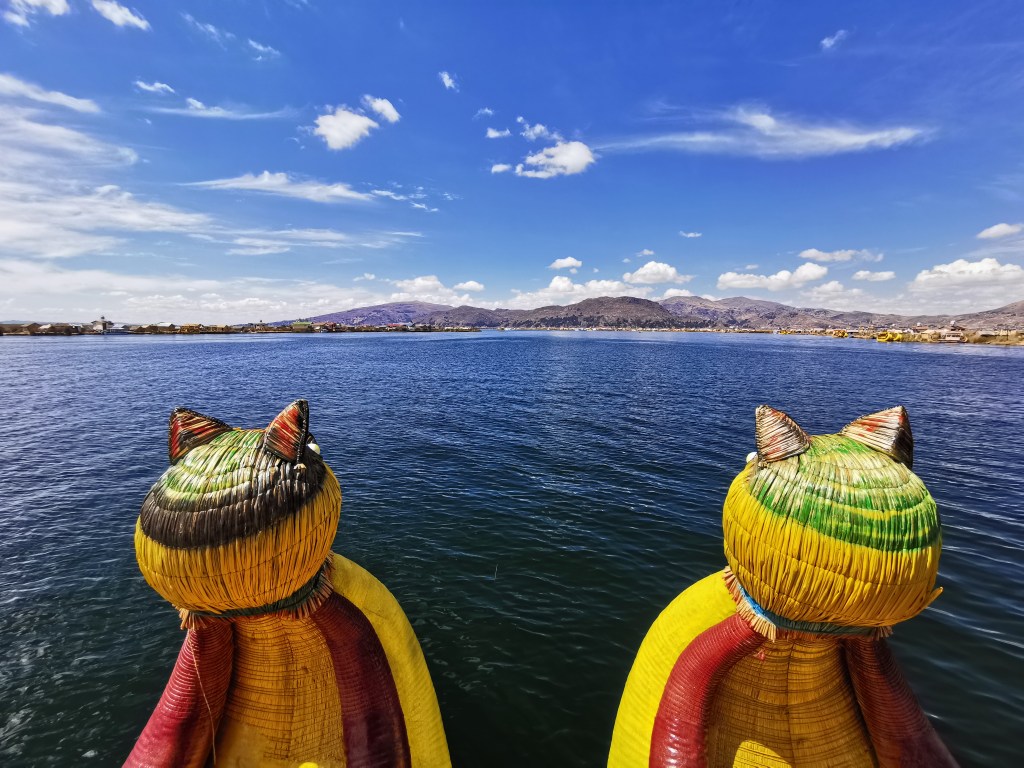
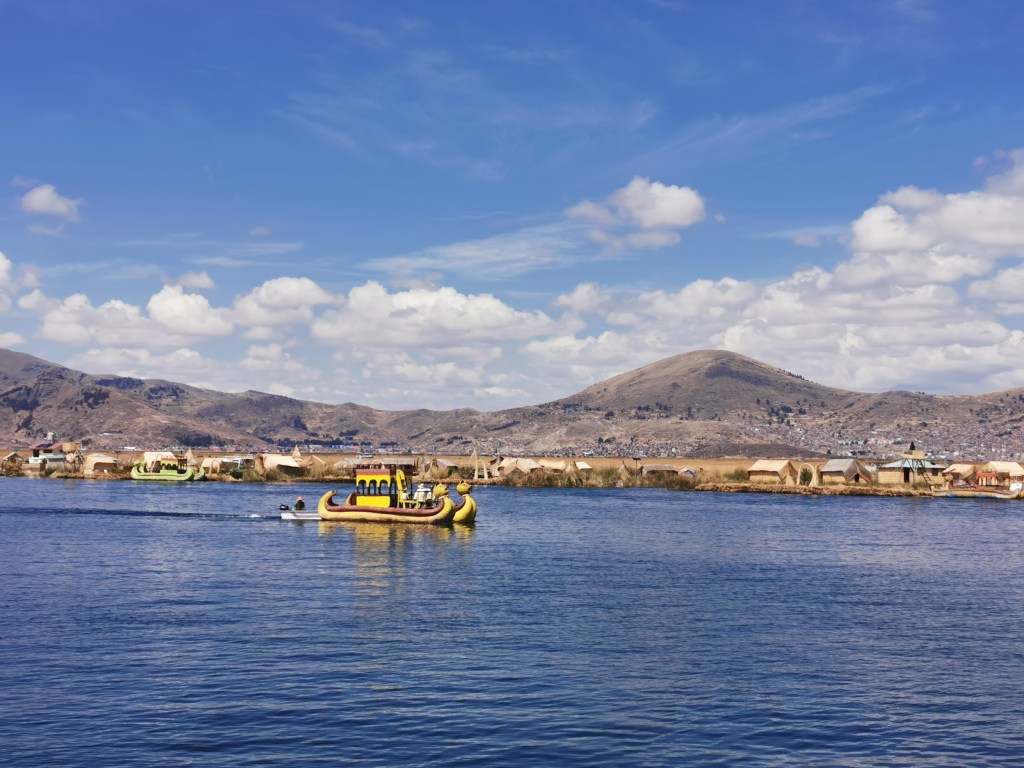
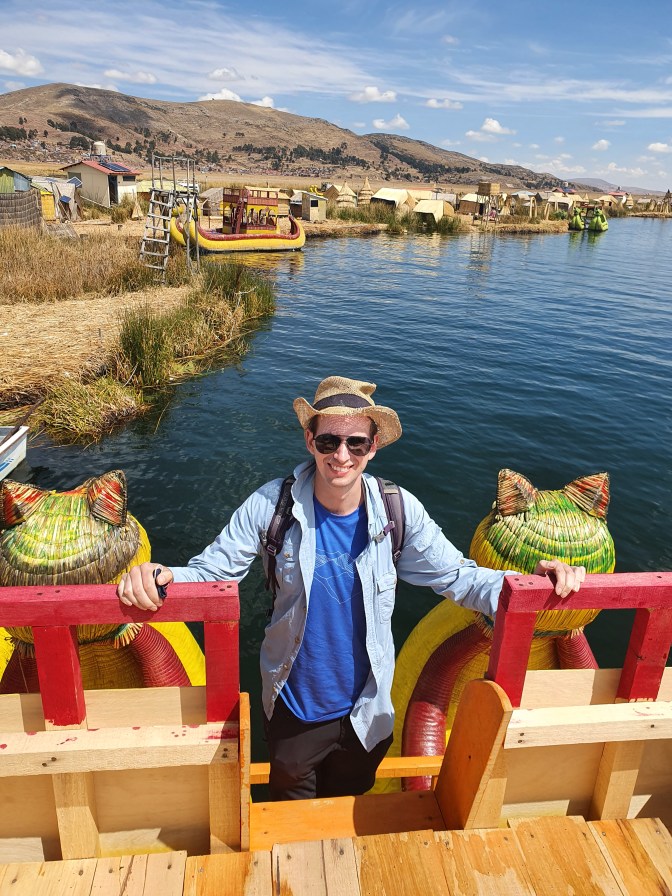
We really enjoyed visiting these islands, they’re really nothing like I’d ever seen before. It is so far removed from our normal life in Europe. It’s certainly an experience I’d recommend.
When does a lake not seem like a lake?
It was time, however, to leave these floating islands and head off on the second part of the trip. This involved going much further into the lake to visit a real island and the community that lives there. It was during this journey that you can really appreciate the vastness and size of the lake. Whilst I knew where Bolivia should be, it couldn’t be seen. It felt more like being at sea than merely on a lake. Some of the lakes in Switzerland seemed huge, but this is on a whole different scale.
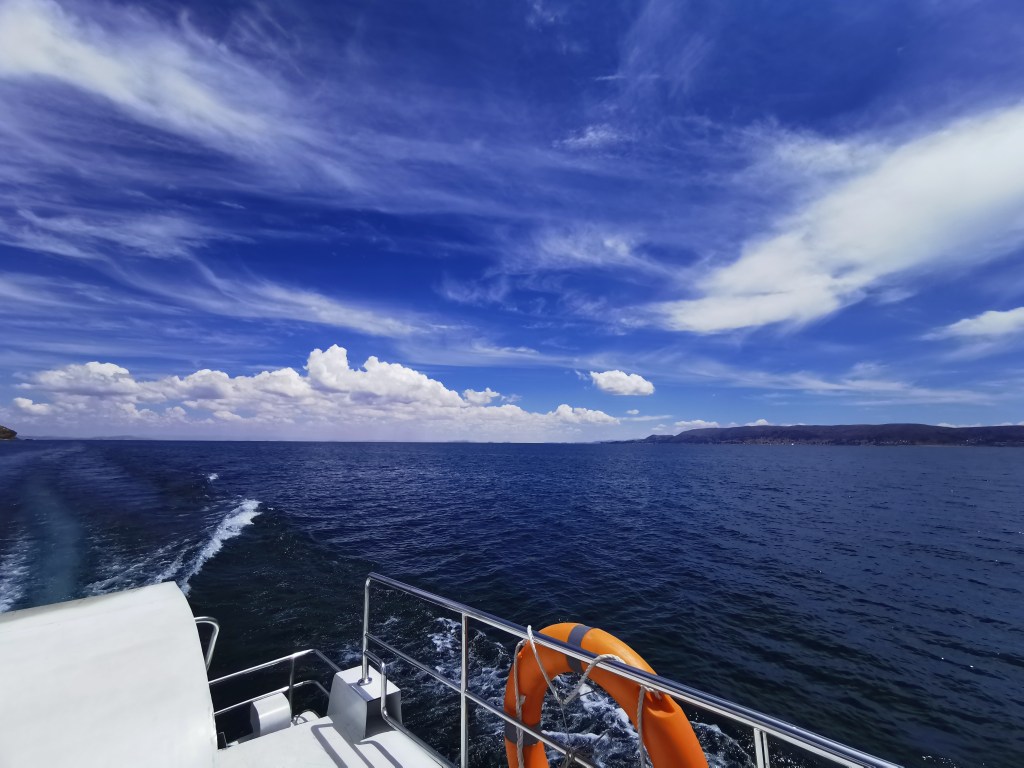
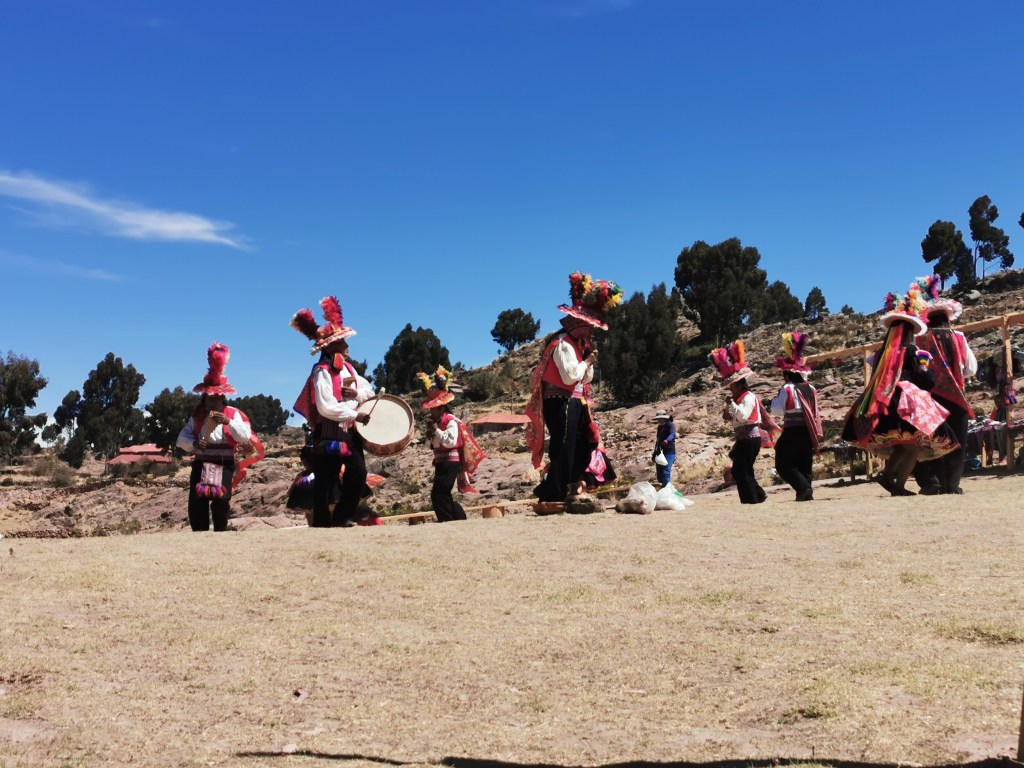
After an hour or so we arrived at our next stop. After walking up from the beach, we had a nice meal at the restaurant, including trout freshly caught in the lake. We were then informed of local customs and were treated to a traditional dance and musical performance. We were then asked to join in, so spent a few minutes making fools of ourselves.
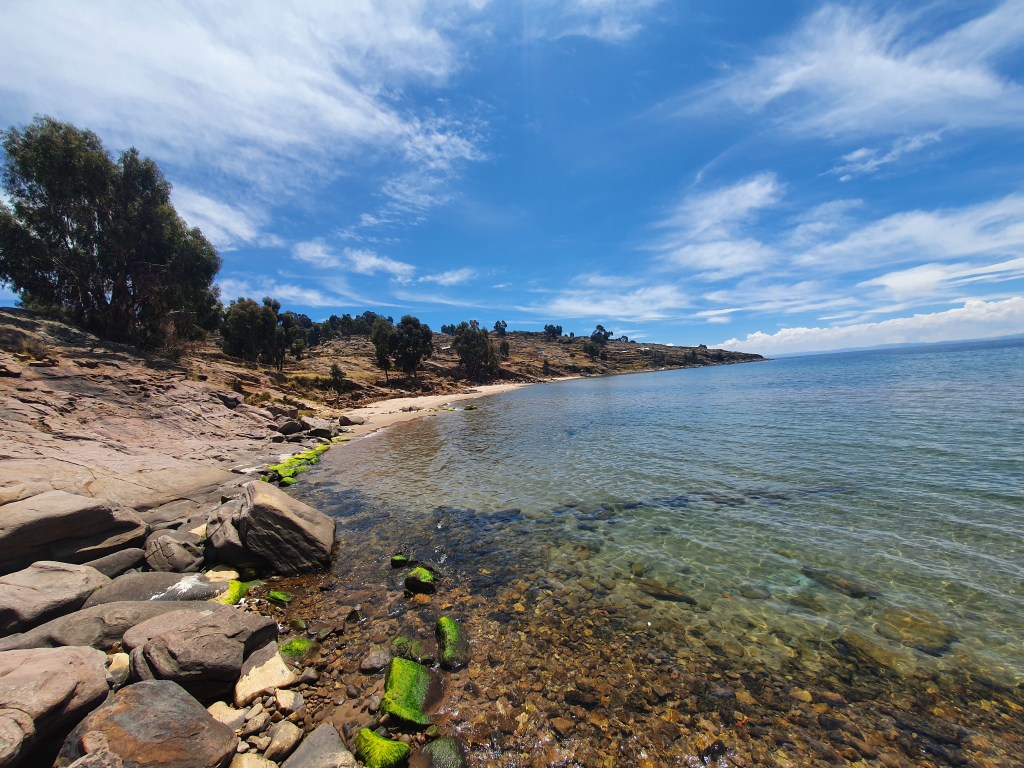
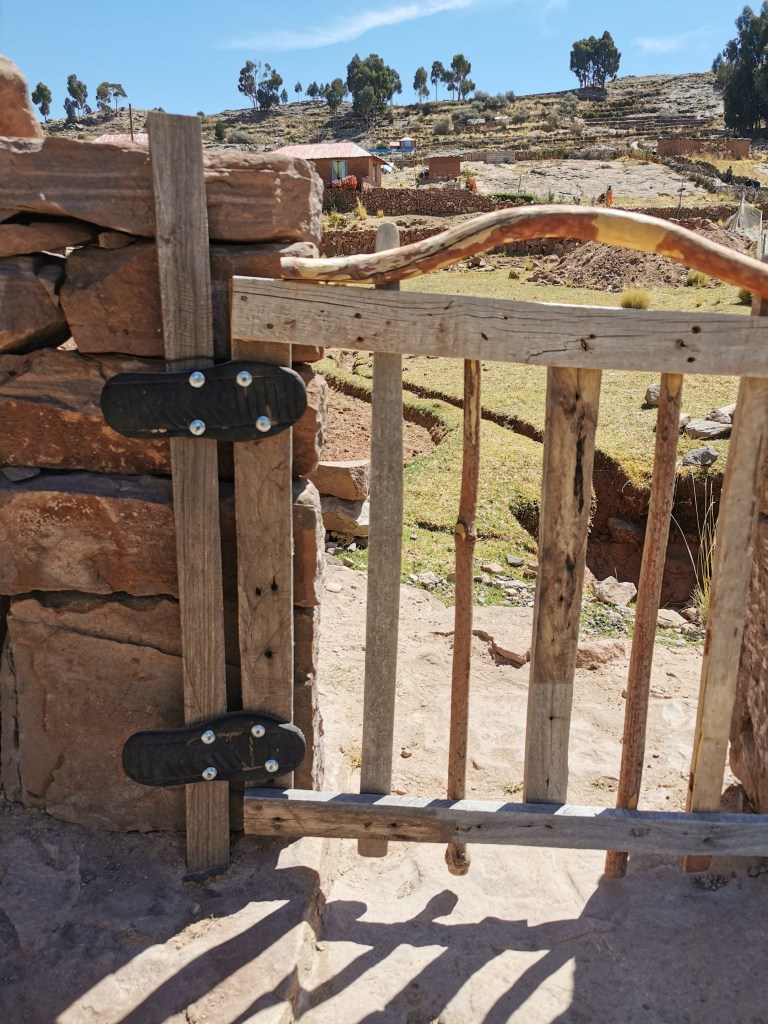
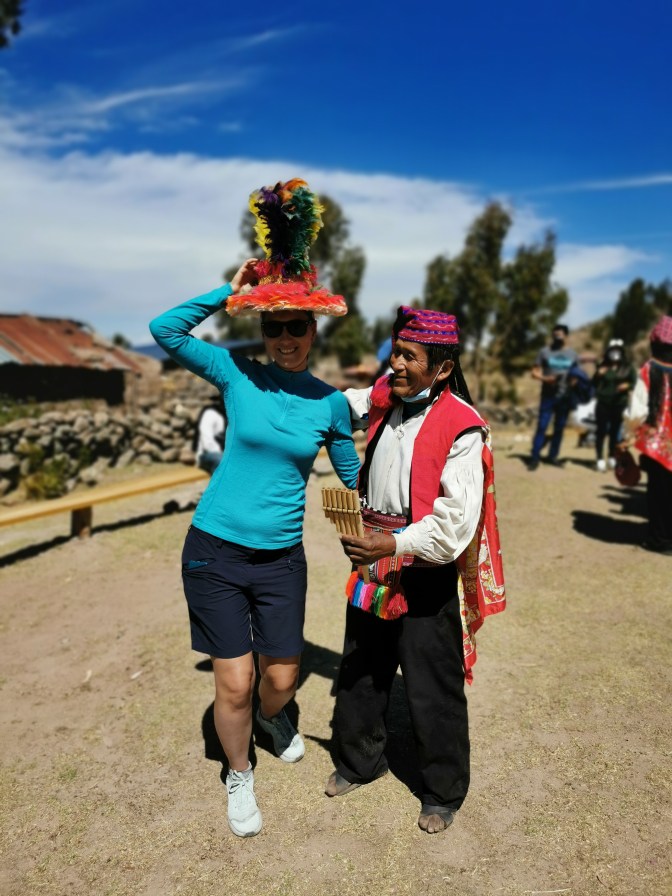
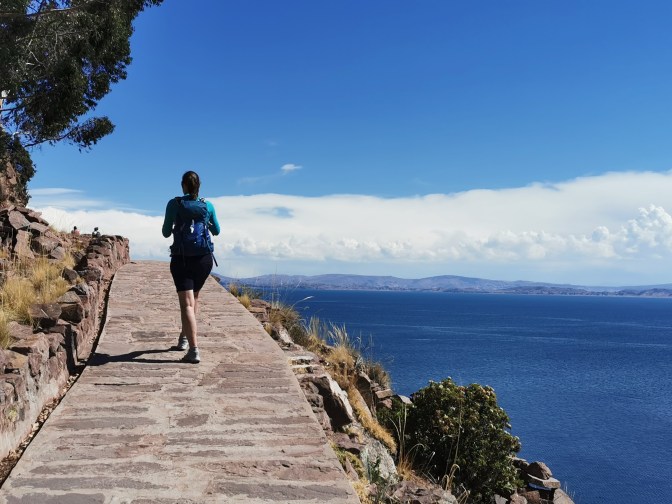
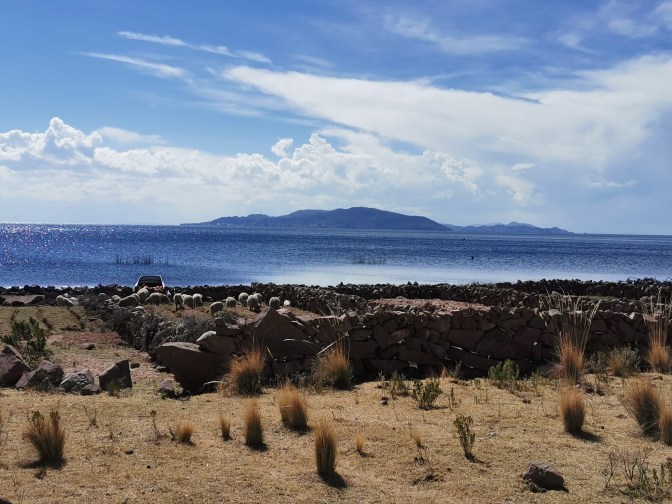
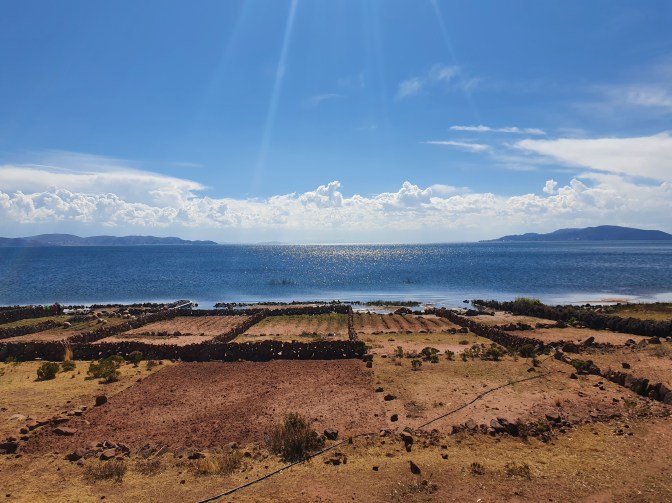
After the performance we had time to look around the local market stalls, before walking over to the other side of the island, where our boat was now docked. It was a really nice walk with amazing views of the lake and the island all around.
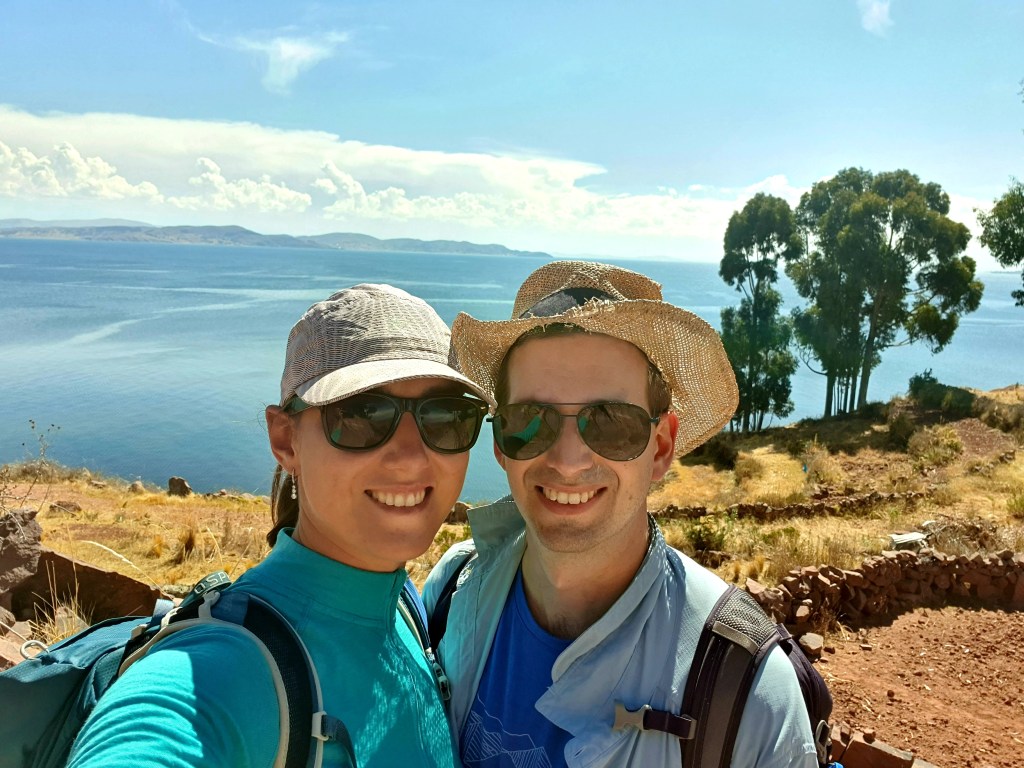
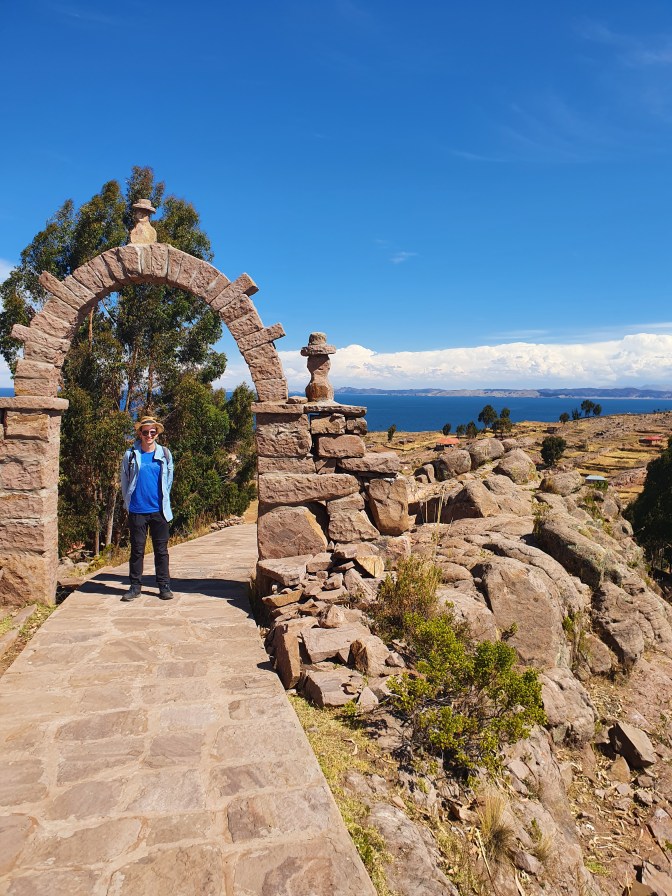
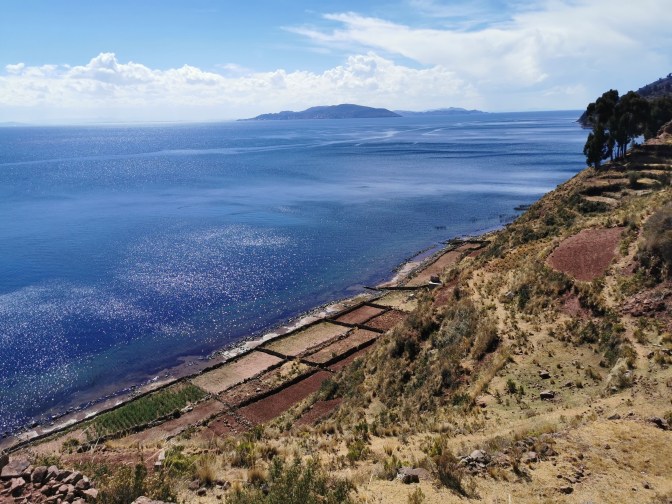
Final thoughts
It was then time to head back to Puno. We had had a really nice day. It was very interesting to see how these two communities still functioned and the lake itself was stunning. We’d highly recommend it for anyone who is in the area. One note, however, when we got back to the hostel, we were speaking to two American ladies who had only done the half-day trip. Whilst they still got to visit they floating islands they had not enjoyed their trip. They felt that it was rushed and they wished they had gone on the same trip that we had done. So whilst I haven’t done the half-day trip, I’d still recommend doing the full-day one. Getting to spend more time on the lake and the visit to the non-floating island really helped with the overall experience and is worth the extra time and money.
 Brit and Czech Abroad