Admittedly, prior to our trip to Cape Verde (or Cabo Verde as it is known locally) neither of us really knew anything about the west-African archipelago. At a time when flights anywhere seem to have become very expensive, we just happened upon a reasonable deal to fly from Luxembourg to Praia, the capital of Cape Verde, via Lisbon. It was only at this point that the research began and we discovered a range of islands with different attractions, that are seemingly becoming more and more popular as a tourist destination. Most of the information we found was centred around the tourist hot-spots of Sal and Boa Vista, with very little in relation to the island of Santiago, where the flight was arriving. But what we did find hinted at a destination that had mountains, beaches and history, so we were intrigued enough to not plan any island-hopping during our short stay and just focus on trying to explore arguably the most varied of Cape Verde’s islands. So if you’d like to find out what we got up to, then please carry on reading…
Our trip did not get off to the best start, as our initial flight was delayed, meaning we missed our connection and were stranded in Lisbon for the night. In their defence, the airline, TAP Air Portugal, had people waiting for us just outside of the gate and very swiftly organised a hotel room, taxi transfers for both journeys to and from the hotel, and provided vouchers for the airport restaurants. So whilst we were well looked after, it did mean that we didn’t arrive to Praia in Cape Verde until the following day in the afternoon. The airport at Praia is small but we were able to pick up a local SIM card after the baggage claim. There is also a currency conversion stand if you are desperate for cash straight away and don’t mind paying their high fees. When looking into the airport we hadn’t found any means of public transport to get us to the city, so we ended up booking transport through our accommodation, although the price seemed to be the same if we would have just gotten a taxi at the entrance – 15 euros. This is definitely overly expensive for the journey, as the city is not that far, but extortionate fees at airports seems to be the norm now.
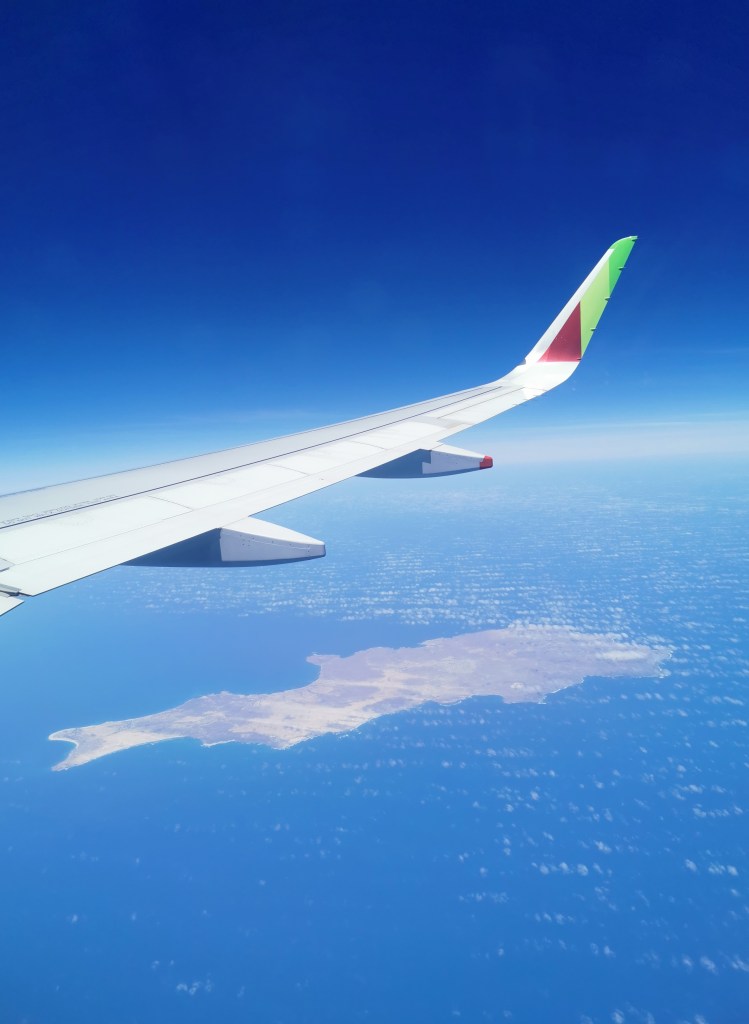
I’d recommend trying to sit on the right hand-side facing forward for the flight to Praia, as you get nice views of the islands of Tenerife and then Sal during the journey.
Day 1 – Views and Jazz in Praia
Given that we’d only planned a day to look around Praia, the large delay to our arrival meant that we ended up having very limited time in the Cape Verdean capital. Our accommodation was situated at one end of the plateau, which is the ‘old town’ of the city and, as the name suggests, is raised up on a small hill compared to some of the surroundings. So, once we were settled and refreshed, we set out to have a walk around this area.
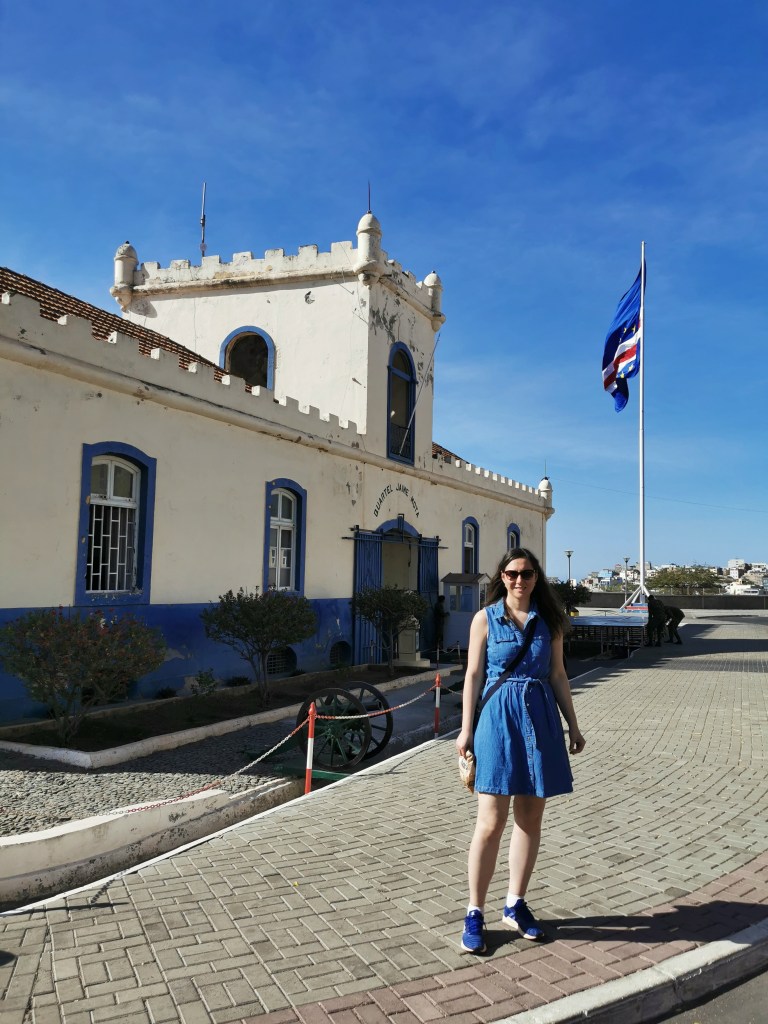
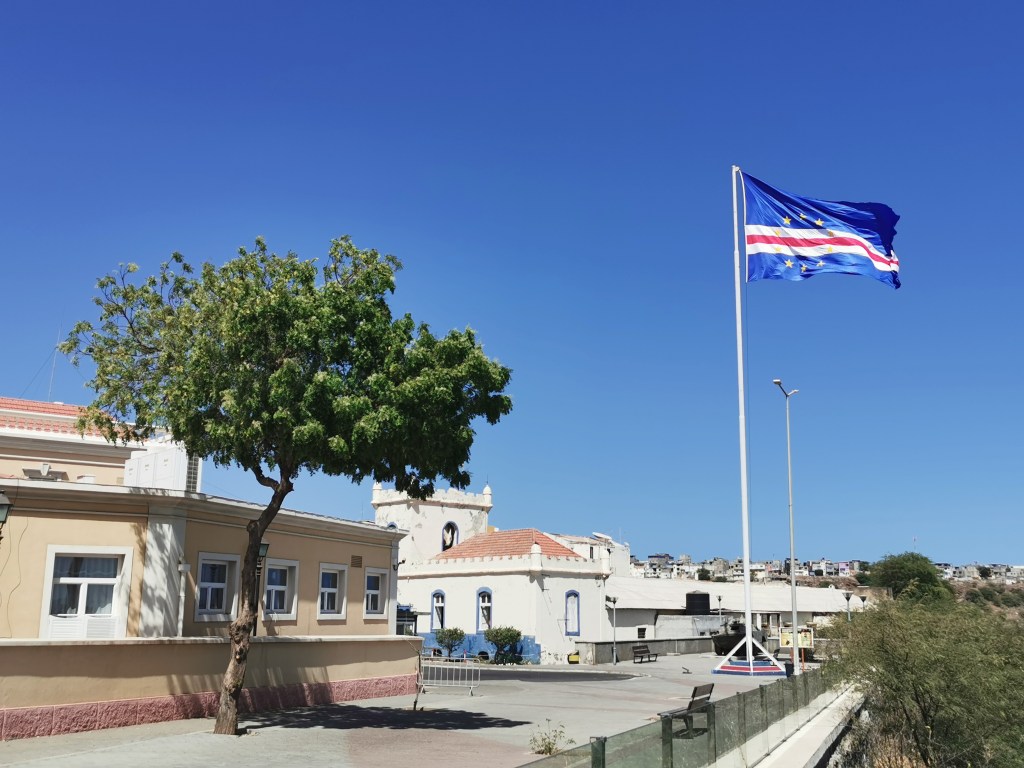
Our accommodation overlooked the harbour down below and not far along the street was a viewpoint looking along the coast in both directions. The viewpoint is next to both the Quartel JaimeMota barracks and the Presidential Palace. Both of these buildings had nice architecture and according to the itineraries of tours we saw, it could be possible to go in and have a look around, but we had neither the time nor the inclination to do so. So instead, we just enjoyed the views before carrying on.
Quartel Jaime Mota barracksPresidential Palace
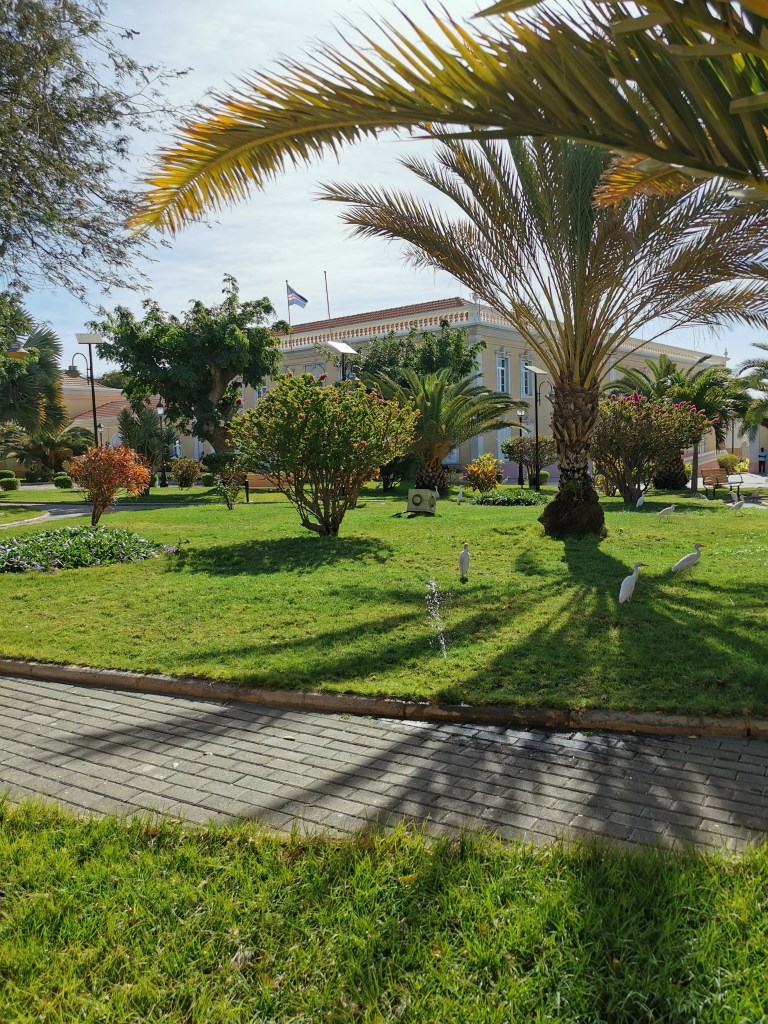
The next stop was Praça Alexandre Albuquerque, the main square in Praia. This small square is surrounded by nice buildings, such as the Igreja Nossa Senhora da Graca and the Câmara Municipal, which were both built in the 19th century. There is also a bank (BCA), from which we were able to withdraw cash. There was a fee, but it was cheaper than using the currency exchange at the airport. The square would probably be a pleasant place to sit and people watch, except the fountain wasn’t running (we had inadvertently arrived during the height of the dry season) and there were multiple stalls linked to the Kriol Jazz Festival, which I’ll mention more a bit further on…
From the square you can cross over the road into the pedestrian zone. This street is lined with shops and small restaurants and felt like it was geared towards locals rather than tourists, which we viewed as a positive. We particularly liked the trees that were placed at various points along the road and which had been grown to merge so that it seemed like you were walking through natural gateways. After wandering up and down the street, we selected one of the restaurants and had our first Cape Verdean meal of grilled fish (freshly caught) with rice and root vegetables. It was very tasty, especially when washed down with a local cold Strela Kriola beer, and it was certainly not the last time we had this particular meal during our week in Santiago.
The pedestrianised zone that runs through the middle of the plateau.
By this point the afternoon was waning, so we headed back to our accommodation and got ready for the evening activities. By pure chance, we had arrived in Praia for their annual Kriol Jazz Festival. Given that it only runs for three days, we had gotten very lucky! Since launching in 2009, this event has brought together Kriol Jazz musicians from all over the world. Personally, I can’t pretend to have ever heard about it prior to arriving in Praia, but we met tourists who had travelled to Cape Verde just for the festival, so it must have some renown within the musical world.
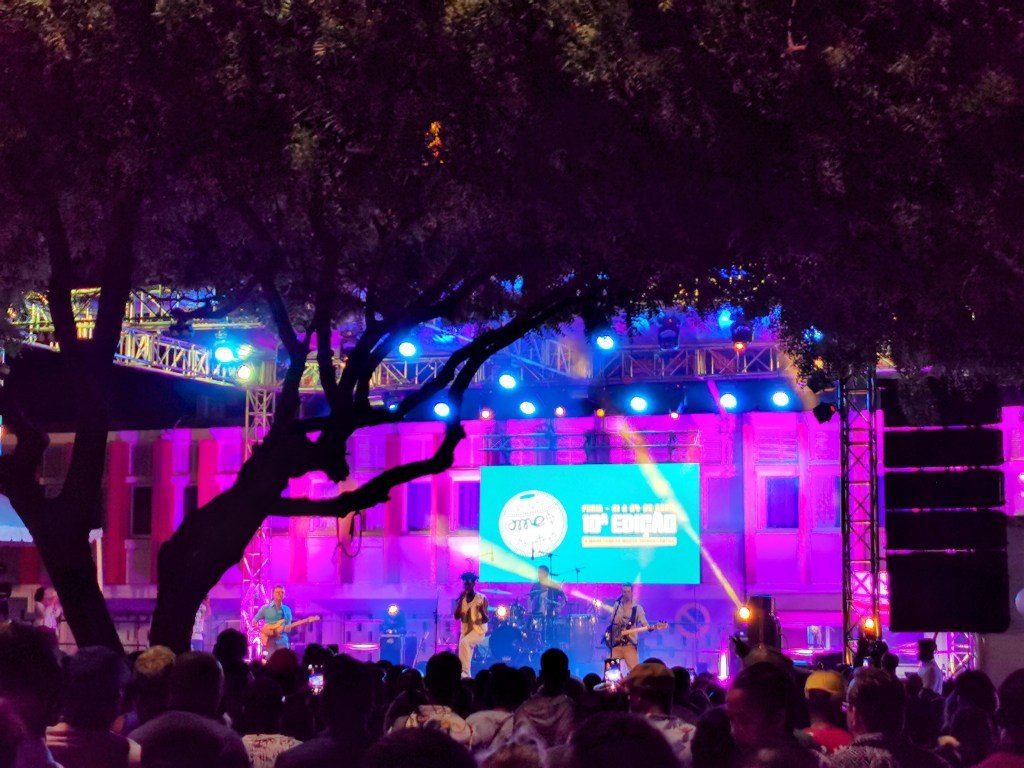
We weren’t sure where to go, so we first wandered back to Praça Alexandre Albuquerque, where the stalls were open for business and a small band was playing next to the dry fountain. The music was fun but wasn’t the style of Jazz we were used to or were expecting. From there we headed on to the pedestrianised area, where a small stage had been erected but nobody was playing. We waited around for a while but nothing happened so we carried on feeling completely underwhelmed. We decided to walk back a different way to our accommodation, and it was very fortunate that we did as we happened upon the actual main stage. Despite it not being far from the pedestrianised zone, the narrow alleys meant we didn’t hear anything until we turned the corner right next to it and were suddenly met with hundreds of people dancing and enjoying the music. This was at Luís de Camões square and was an amazing place for a concert with the large trees in the centre adding to a very unique atmosphere. After grabbing a beer from one of the stalls at the sides, we enjoyed the music with a crowd of all ages. After one of the acts finished we had another wander and discovered that some of the buildings lining the square were open and people were just wandering in and out. One of these turned out to be an art gallery and another act was playing in one of the back rooms, surrounded by sculptures and paintings. Again, it was a very cool location and relaxed atmosphere. After a few hours we were both pretty shattered so reluctantly pulled ourselves away from the ongoing festivities and headed back. It had been a lovely afternoon in Praia.
We had a lot of fun at the Kriol Jazz Festival.
Day 2 – Cachupa and Cidade Velha
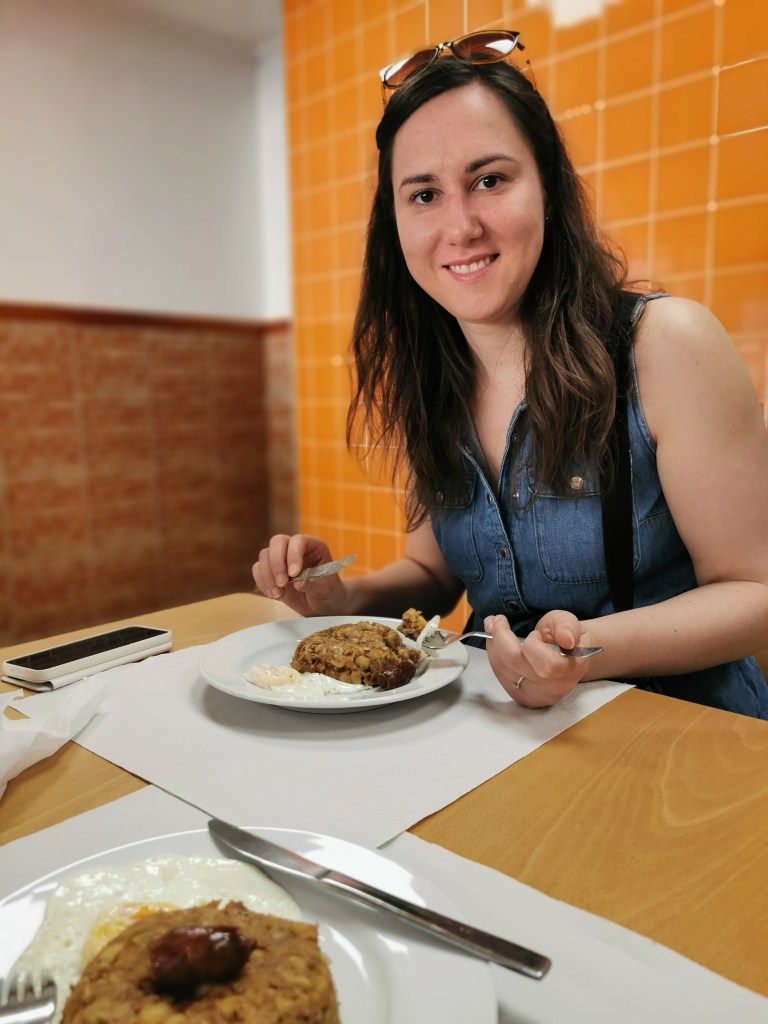
A five minute stroll from our accommodation was the Pão quente bakery, where we went for breakfast. We decided to try Cachupa, which seems to be the most common traditional dish found on the island. It is eaten at any time of the day and has a variety of different forms, although its main components are beans, corn, vegetables and, sometimes, meat or fish. We found it to be tasty and very filling – so much so that on the days where we had it for breakfast we didn’t really need to have any lunch. For a nice blog on typical local foods of Cape Verde, please click here.
Cachupa and fried egg for breakfast was a good way of fuelling for the day ahead.
By the time we walked back to our accommodation, Fernando from Fernando CarRentals was waiting for us with the car we’d rented to explore the island. Whether or not you need a car to explore Santiago is open for debate. The little information we found about Santiago prior to travelling suggested that getting a hire car was definitely the way to go due to poor public transport options. However, we ended up rarely using the car other than to get from one hotel to the next. Whilst at those places, the car generally just sat there. There are some buses that connect the different areas and it is also possible to get taxis to drive you, given that the island is not huge. Whilst the taxis would be expensive, we spent a lot on getting a car for the week, so even if we had got taxis everywhere, it would probably have worked out cheaper. Of course, it is easier to transport luggage in your own hire car than on a bus or on a taxi, but it shouldn’t be necessary to have such big bags for exploring Santiago. Then there is the potential freedom that having a hire car can bring if you suddenly want to change your plans. But with hindsight, I’m not sure we would have bothered with the car. If, however, you have decided to hire one, we’d definitely recommend Fernando. The vehicle was great and the friendly customer service was a bonus. He can be reached through WhatsApp on +238 994 13 93.
After loading our luggage, it was time to head off on the next stage of our adventure. For the following two nights we’d be staying in the Parque Natural de Serra Malagueta, but before driving there, we first wanted to visit the old capital of Cape Verde, Cidade Velha. It took about 25 minutes to drive from our hotel in Cidade Velha, which reflects that it is a common day trip from the new capital to the old. As well as a bus, there are plenty of private or group tours that go there and that again supports the argument for not needing a car. We found parking just across the street from the Pelourinho.
Cidade Velha is a UNESCO Heritage Site and was founded in the mid 1400s. It proved to be an important point in European expansion across to Africa and the Americas and then for maritime trade. It was, however, also a major hub in the slave trade. The UNESCO website also highlights that it was an important point for the development of the Creole culture within the Cape Verde islands.
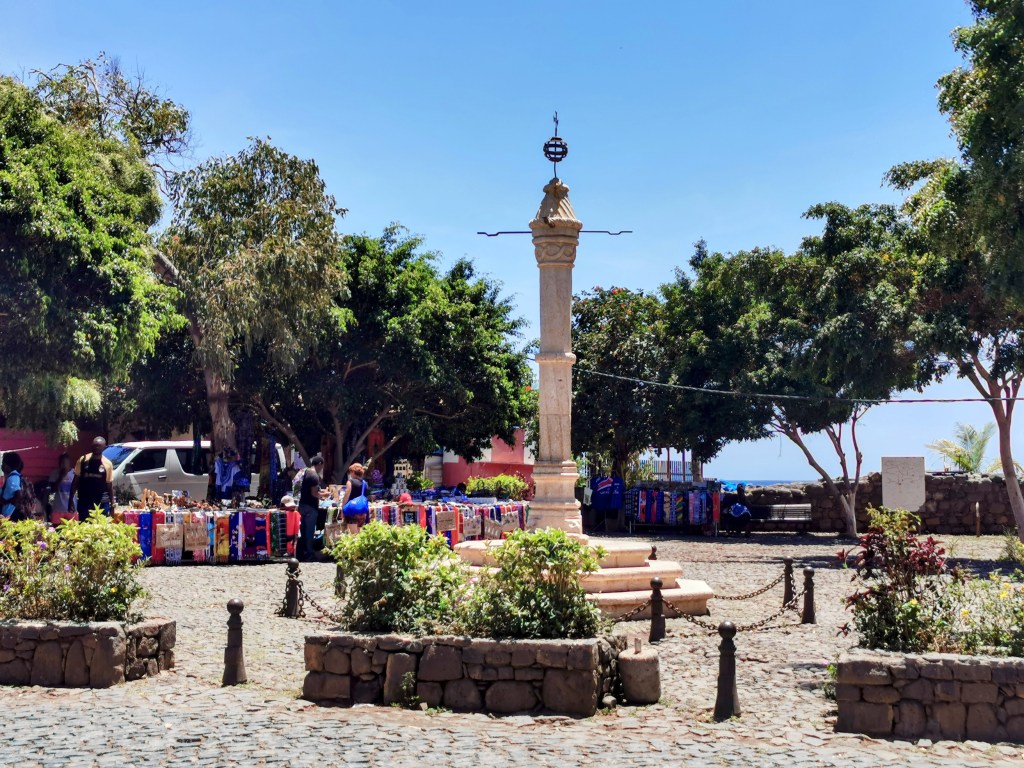
We started our visit by heading over to the Pelourinho, which is the historic square where slave auctions took place in times past. Now, its cobbles play host to a less horrific type of market, which is mainly aimed at tourists. Given that we were there quite early, it wasn’t yet in full swing, so we were able to just have a brief look without feeling too pressured.
The market had picked up a bit by the time we got back
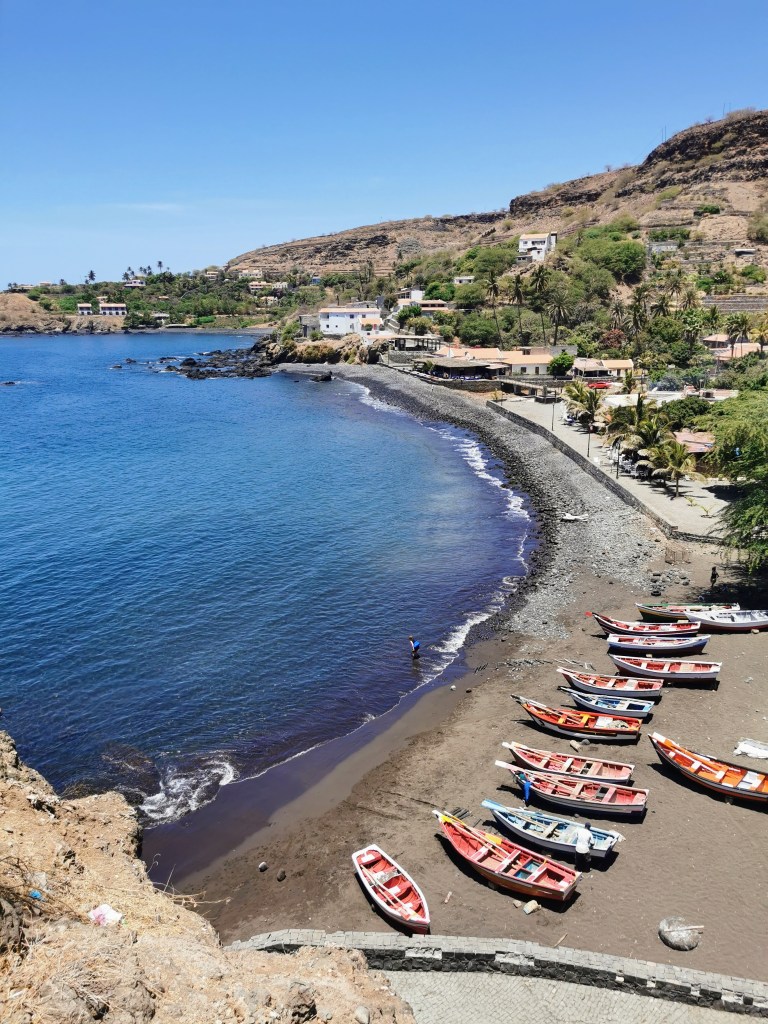
We then decided to walk up to the fortress sat on the hill, the São Filipe Royal Fortress. It was maybe a mistake to walk up the steep path in the heat rather than take the car, but we wanted to stretch our legs. The path took us along the little beach with its colourful fishing boats and up a steep path into the main part of the village.
Looking down at Praia Cidade Velha
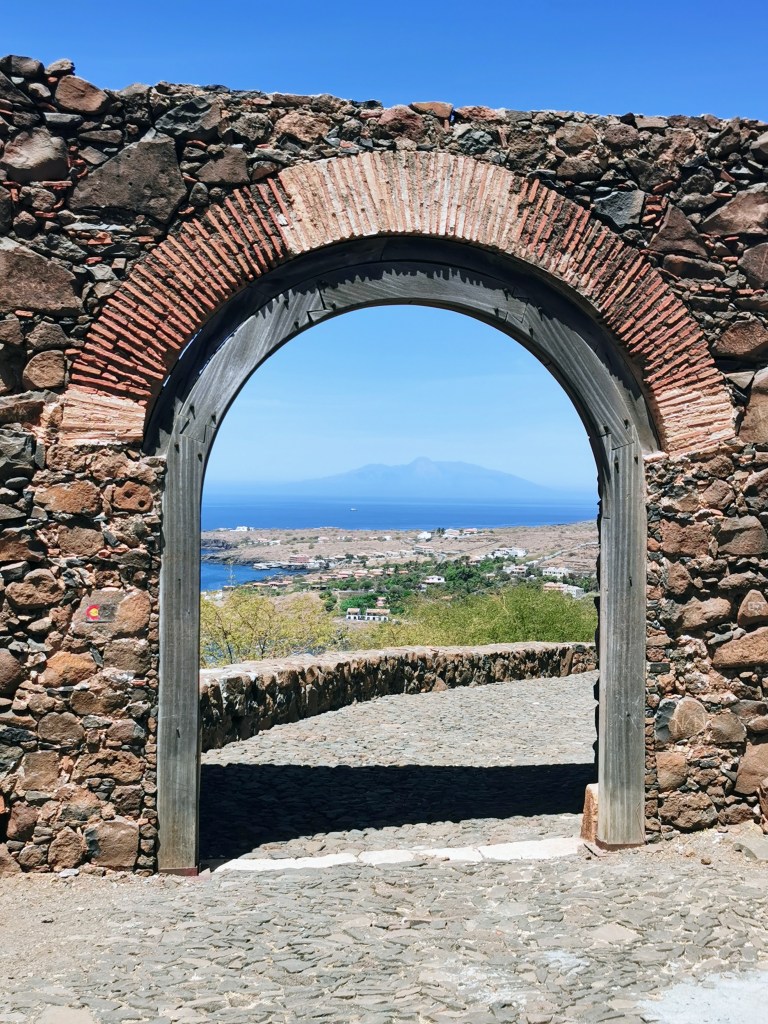
We carried on past some houses and onto the winding track up to the fortress. The Sun was not even at its peak, and yet we still found the going tough in the heat! The views from the top were worth it though, as you could look across the azure ocean and see the volcano on Fogo pointing up towards the sky.
You can see the island of Fogo on the horizon
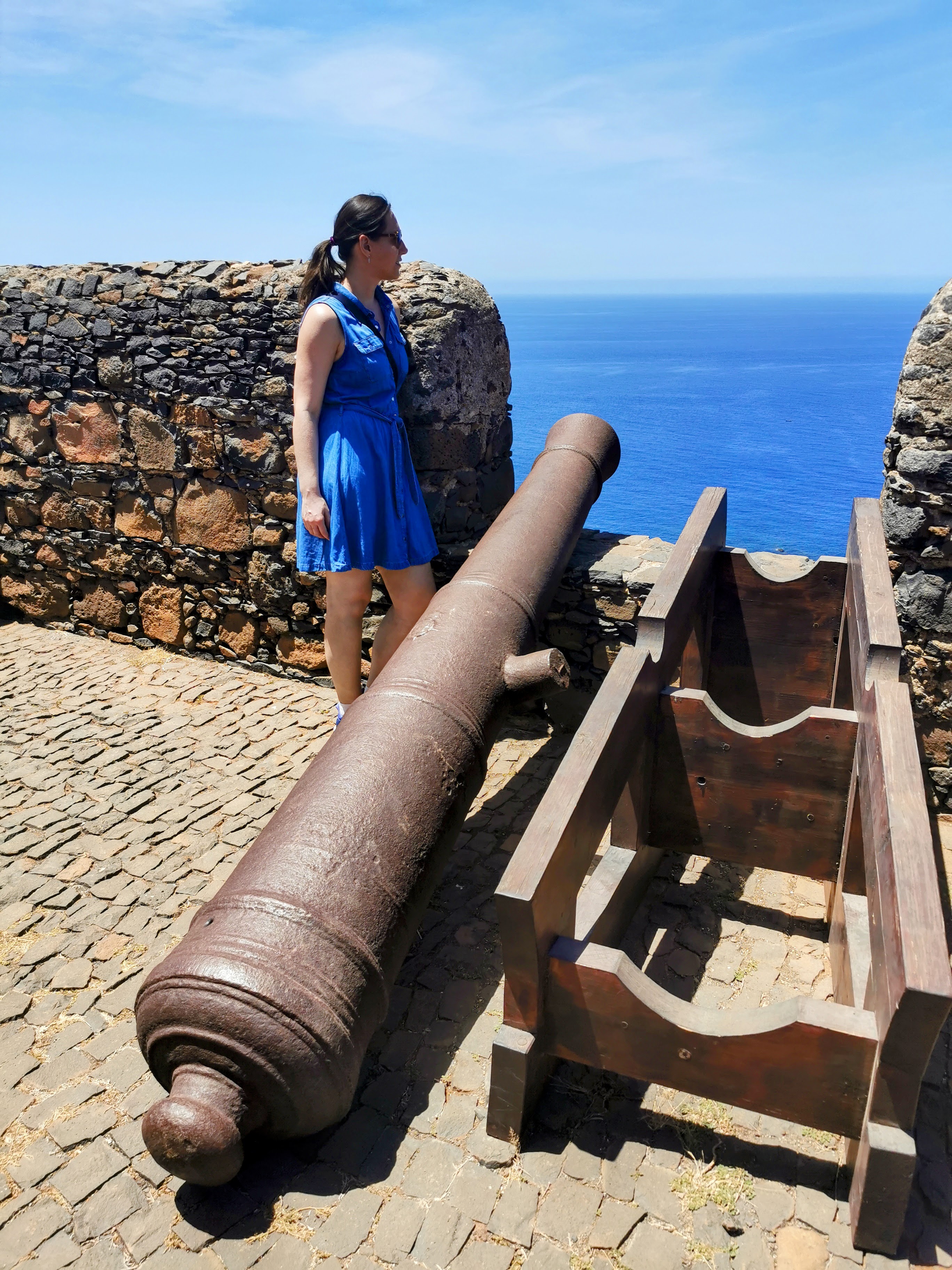
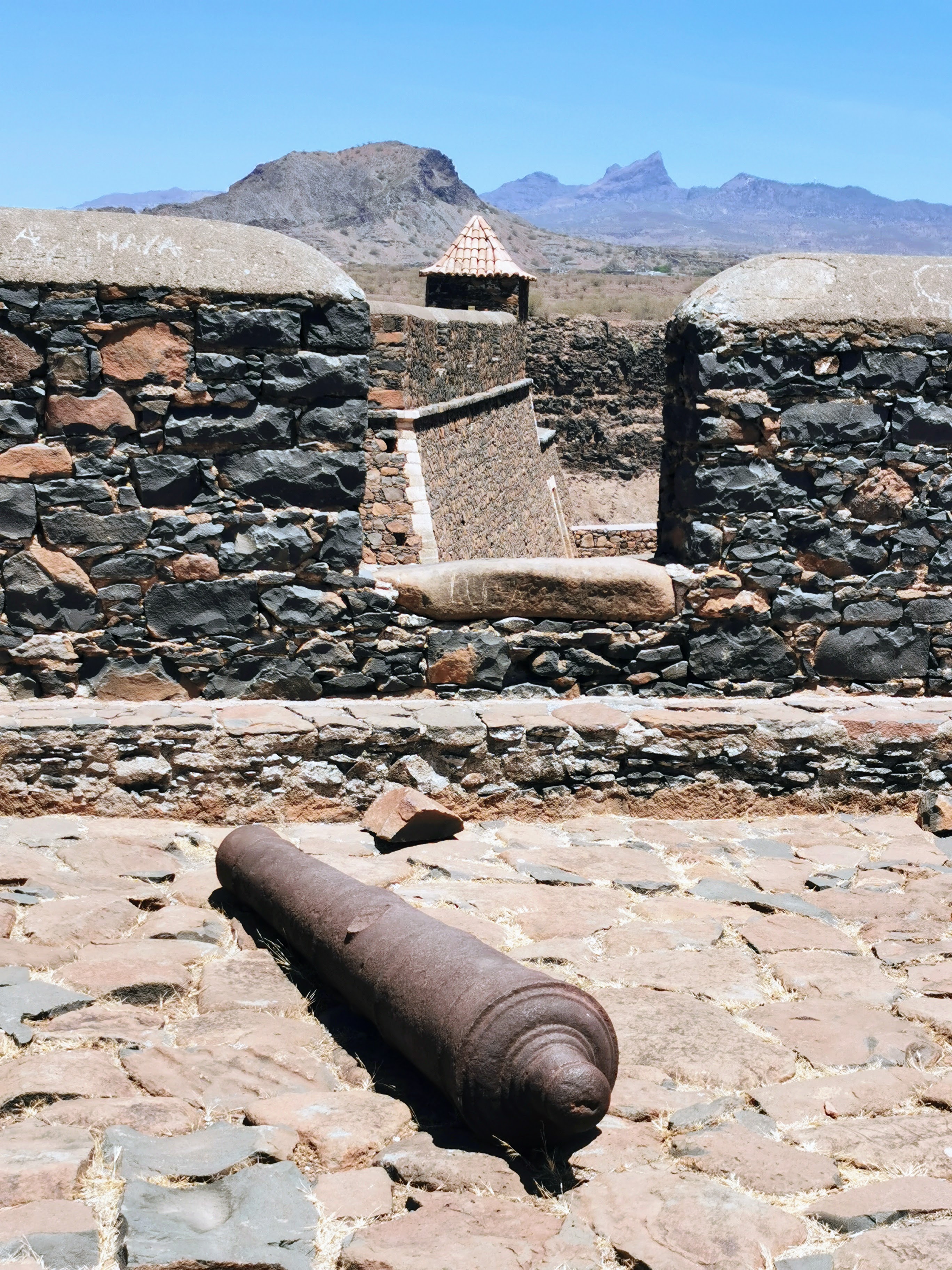
After entering through the outer walls we headed to the main gate and whilst looking at the view further inland, a guide from a private group ‘inquired’ whether we’d bought a ticket. We had completely missed the ticket office, which is situated in an underground bunker with no signs pointing to it. After being directed to it, we went to purchase our ticket. The office also has a small information centre and when we were buying our ticket we were told to wait for a briefing from one of the staff. We had to wait for a while as most of the staff did not speak English (and our Portuguese is non-existent) and even the one who ended up giving us the introduction had very limited English. So, we got a very ‘brief briefing’ and then headed into the major part of the fort. The building itself is nice and interesting enough but the main reason to go is for the panoramic views all around. On one side you have the village and the ocean, and on the other you have the hills heading inland and one valley that was famous for being the site of testing different agriculture techniques.
Keeping an eye out for pirates
The building itself was pretty impressive
After a while we headed back down, stopping off at the ruins of the old Cathedral to have a little snoop around. I’m not sure if you can normally access the ruins or not, but there was a private tour going on inside and the gate was open so we just went in and had a look around. The Cathedral was the first one built in Africa and took over 130 years to actually be completed. It lasted just 12 years before it was sacked and badly damaged by French privateers in 1712. Now, there is not much to see and you can only just imagine the original scale.
Sé Catedral ruins
We then headed back to the Pelourinho, where Radka bought a nice shawl, before finishing off our visit with a bite to eat at the restaurant on the beach. We debated both having a little swim and going to the gardens in the aforementioned agricultural valley, but decided that we’d rather head off and visit the Jardim Botanico on our way to our accommodation. Of course at that point we weren’t to know that we would have issues finding the route and that we’d end up missing the Botanical Gardens anyway…
We contemplated taking a more winding route to take us through little villages and a couple of points marked as viewpoints on google maps but on our way to Cidade Velha, the smaller roads were not always great. So, we played it safe and made our way back towards Praia on the main roads (which were generally good quality) before heading inland. We ended up missing the turning for the Botanical Gardens, and given that we’d read that it wasn’t at its best during the dry season anyway, we decided not to turn around and try and find it. We also contemplated stopping off as we passed through Assomada, which is supposed to have a nice market but as we drove through it was very busy and we struggled to find somewhere obvious to park. I’m sure we would have found something but we decided to just carry on through to our accommodation. So whilst we’d made a bit of a mess of the drive in terms of stops, the roads were good and there was nice, varied scenery. The drive through the island’s centre takes you through the craggy national parks, as you first pass through the Monte Tchota Natural Park, which is home to Santiago’s highest point, Pico D’Antónia, before later on, winding your way up into the Serra Malagueta Natural Park, where we’d be spending the next two nights.
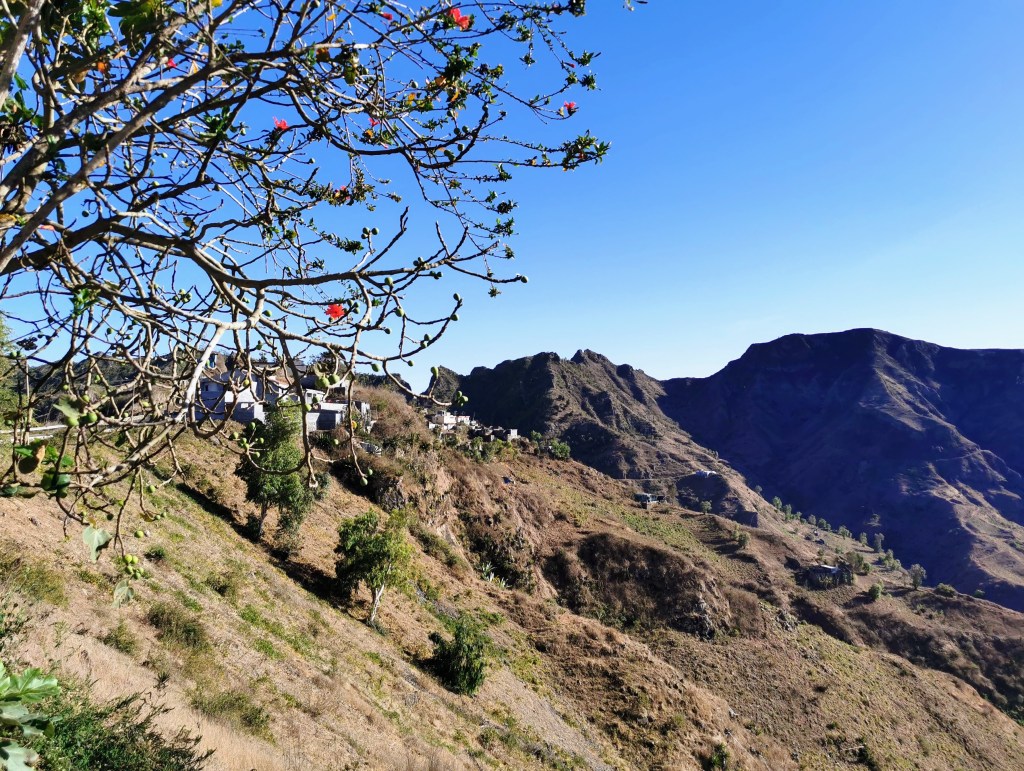
We stayed at the Strela Mountain Lodge, perched just off the main road within the Natural Park. We first parked on the main road, in front of the hotel but didn’t particularly feel comfortable leaving the car there. So, after discussion with the staff we moved it to the carpark next to the church, which is only a few minutes walk away. The location is fantastic, with the accommodation having amazing views into deep valleys and with the ocean in the distance. It is also in an ideal spot to access the hiking trails within the Serra Malagueta Natural Park, which was the main reason we chose the hotel.
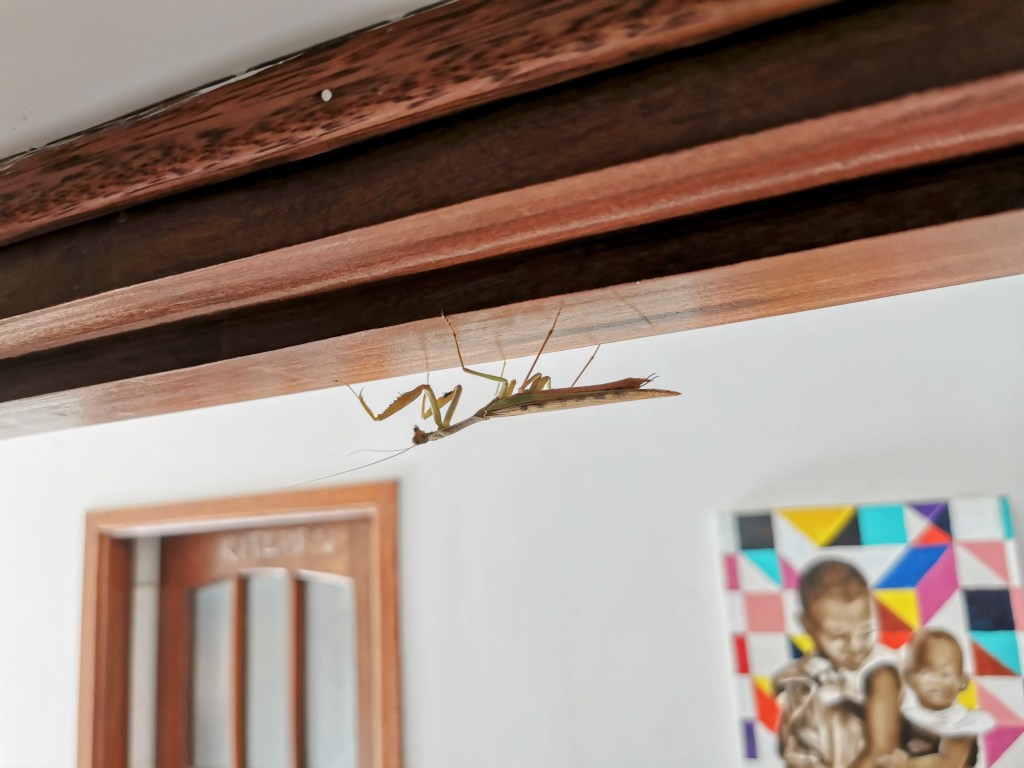
We weren’t the only guest at the hotel!
We spent the rest of the afternoon relaxing on the common outside seating area, enjoying the views and planning our hike for the following day. In the evening we ate at the restaurant in the accommodation (there isn’t another option unless you’re going to drive into the next town) and the food was great. There was a range of locally sourced meals, they just ask you to choose earlier in the day so that they have time to prepare everything, as it is only a small kitchen. This also means that you need to tell them well in advance if you’re planning on eating there (apart from smaller snacks, which are available throughout the day).
The view along the ridge upon which the accommodation is located
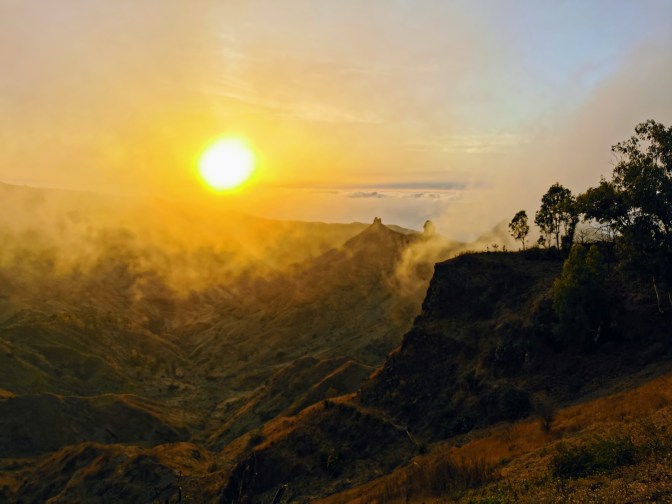
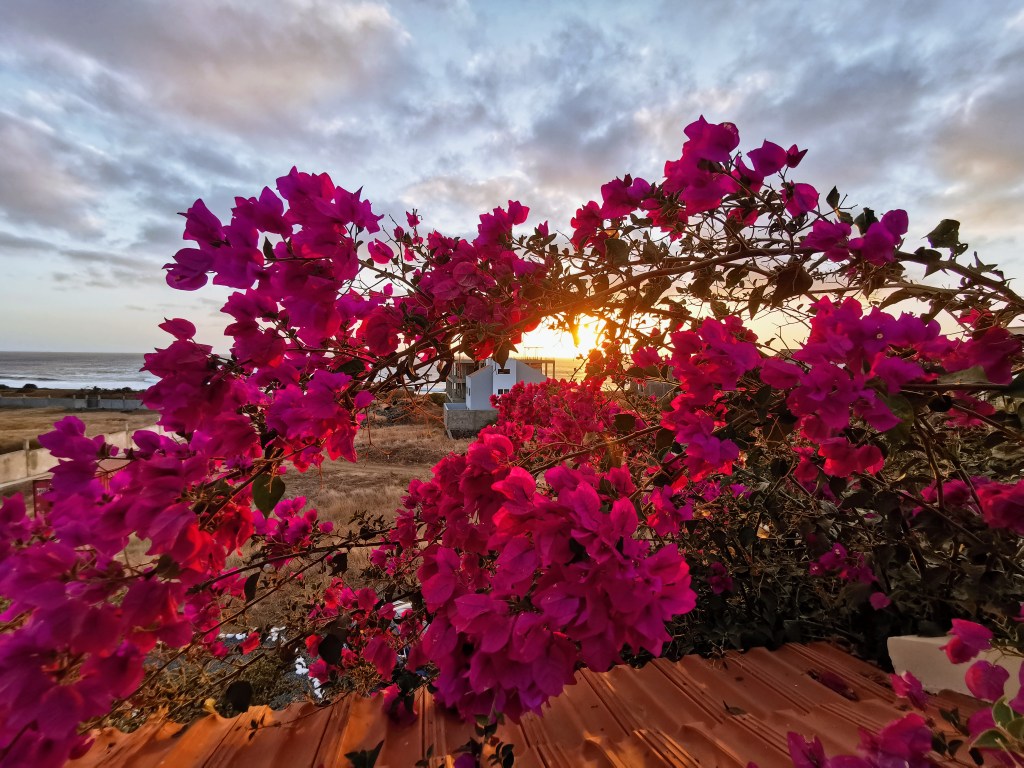
The location is also an amazing spot for sunsets, and if you walk 20 metres down the road your view is no longer partially obscured by trees and becomes even more spectacular.
Not a bad view!
The higher altitude meant the temperatures were cooler and the air was less humid, which we really appreciated after struggling to adapt since landing in Praia. It also wasn’t so cold that we couldn’t sit outside and enjoy the vast sky and beautiful stars, which was a lovely way to end the day.
Day 3 – Hiking in the Serra Malagueta Natural Park
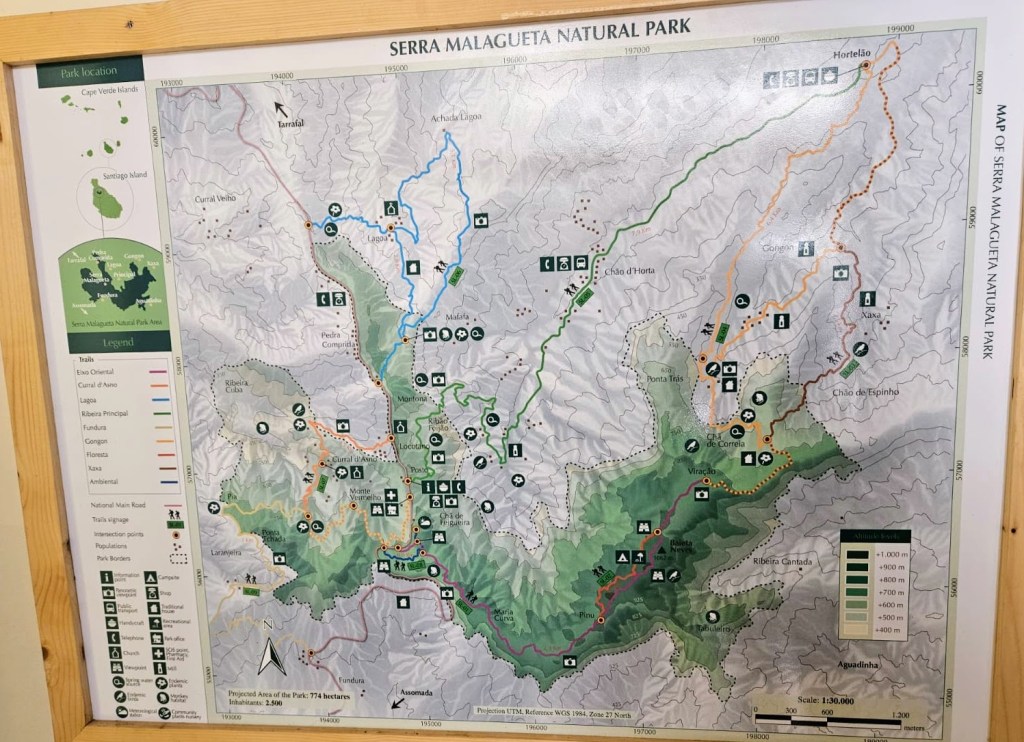
After a very filling breakfast at the hotel, it was time to set off on a hike. We already had an idea of what we wanted to do from the large map at the accommodation, but we first still needed to register at the Natural Park Office. Here we paid the entrance fee, received more information and were able to ask questions about the routes.
The map at the accommodation
To get to the office, you just walk along the main road from the accommodation, back in the direction of Praia. The road is not that busy and there are nice views either side to keep you going. Our first hike was to the viewpoint at the radio tower. This is apparently the most popular hike as it is very accessible and without too much altitude change. It also gives beautiful panoramic views across different parts of the island (it is the purple line at the bottom-middle-right of the map above).
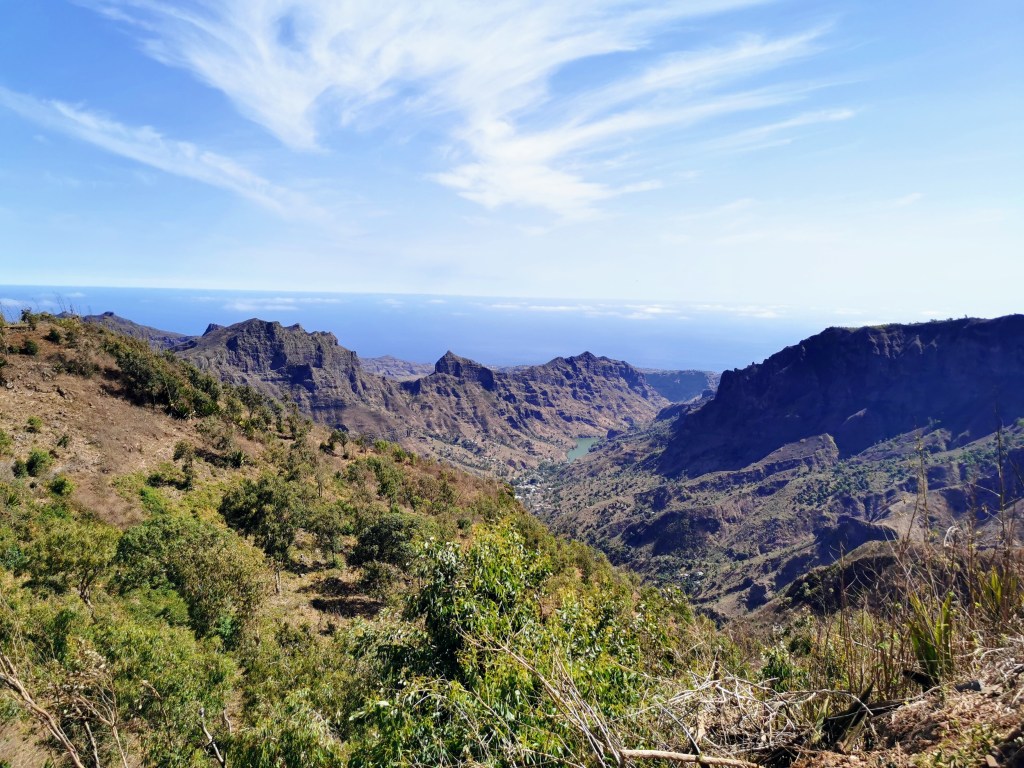
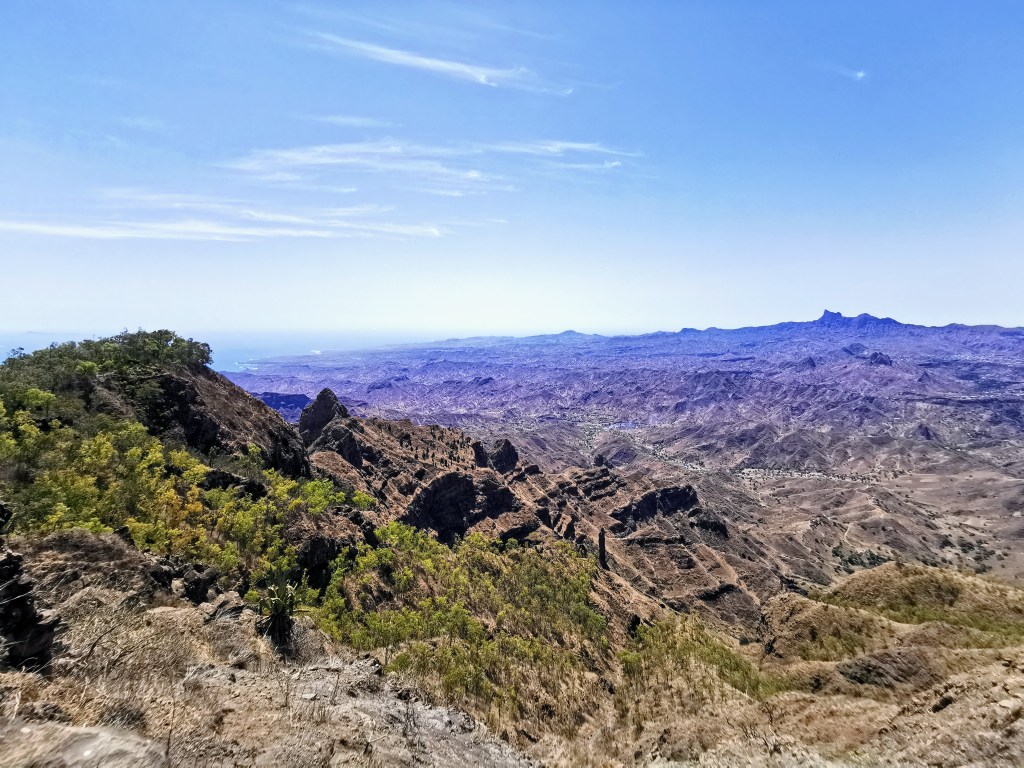
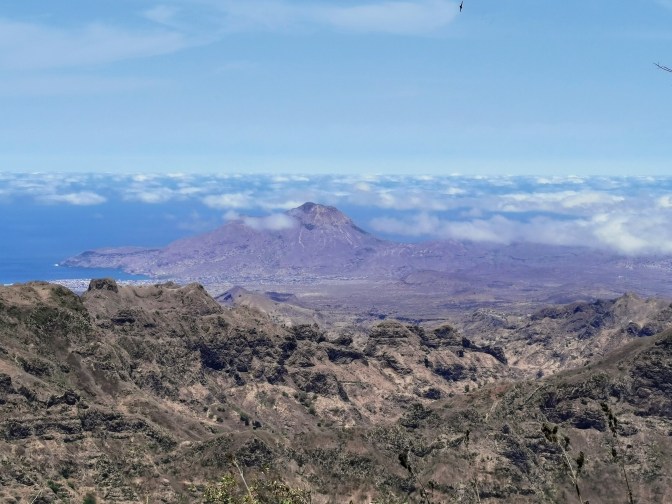
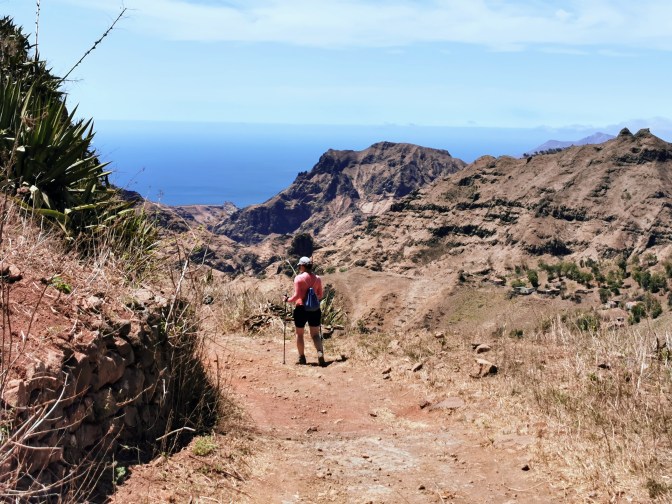
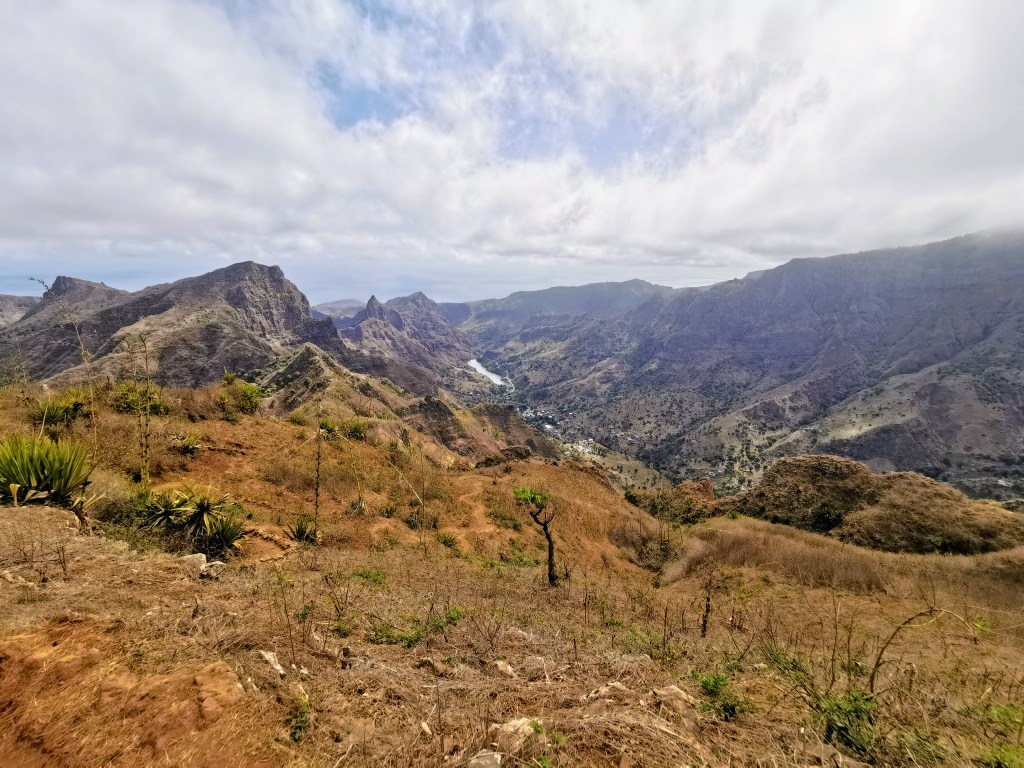
The track was as advertised, with a very straightforward dusty trail heading out into the mountains. The path takes you through wooded areas at one point, and then opens up into sweeping panoramic scenery the next. As you walk you get views across the different compass points, with views towards Pico D’Antónia in the south; Tarrafal and Monte Graciosa in the north; the craggy valleys of the Serra Malagueta to the east; and with Fogo popping up on the horizon to the west.
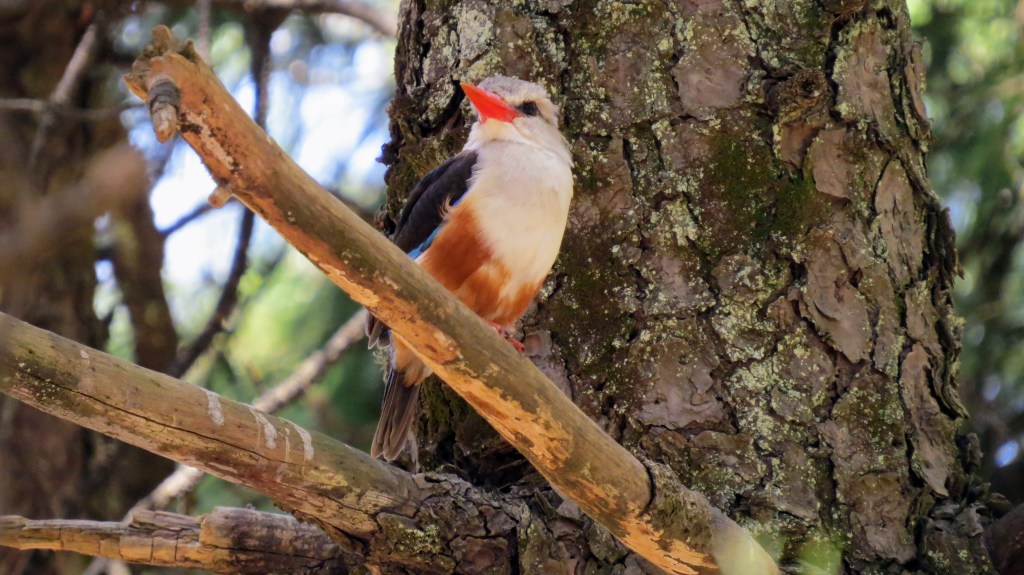
During the first part of the hike, it is also sometimes possible to see Vervet Monkeys playing in the trees, but we were not lucky this time. We did however, repeatedly see beautiful Grey-headed Kingfishers at various points on the trail. I was very excited about this and it was only after spending a week in Cape Verde that I realised that they are actually quite common and can be found throughout the island. I still very much enjoyed watching them though and trying to get a sharp photo in amongst the bobbing and flitting from branch to branch..
A Grey-headed Kingfisher
You keep on walking until you reach a radio tower at a viewpoint looking into the valleys heading east towards the ocean. There is a path that carries on down into the valley, but it connects to one of the longer hikes, which was not our plan for that day (mainly because you have to organise transport to get you back up, as it would be quite a stretch to do it as a there-and-back trek). Throughout the walk to the radio tower, there is the occasional path going off in a different direction, and whilst there are generally signs on this path, it is still better to have a physical map or to offline maps downloaded from an app such as Maps.me or Mapy.
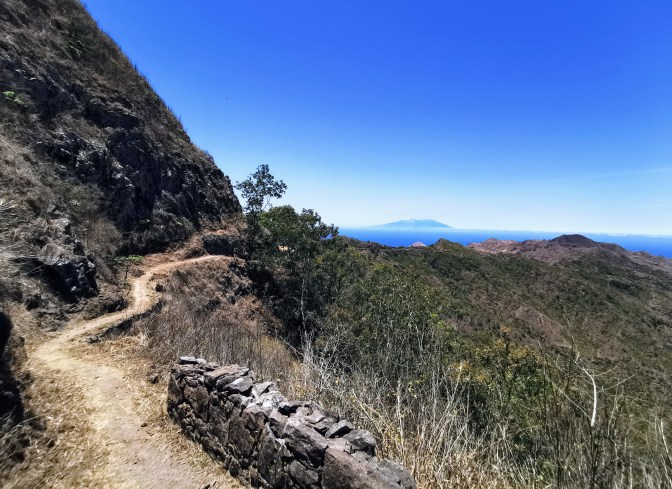
On the way back, we decided to take one of the slight detours, but one which looped round and connected again to the main track further on. This detour was a little bit more involved in terms of the walking, with a narrower route and the terrain being more like a mountain trail, but we enjoyed the variety and it did provide different views to what we had already seen.
Looking north towards Monte Graciosa
The trail became narrower on the detour
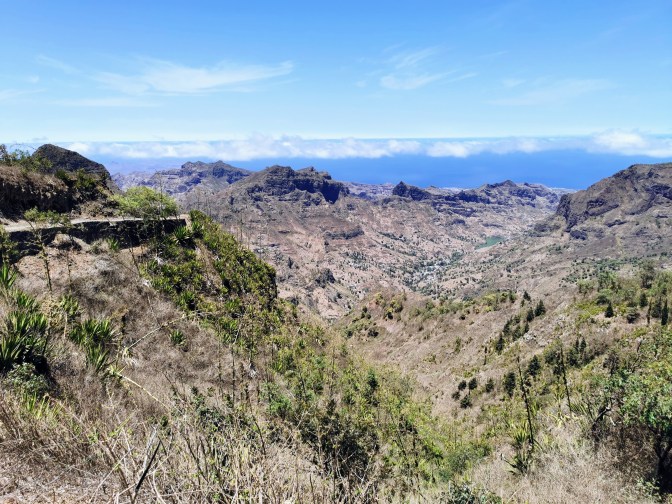
There were fantastic views on this hike
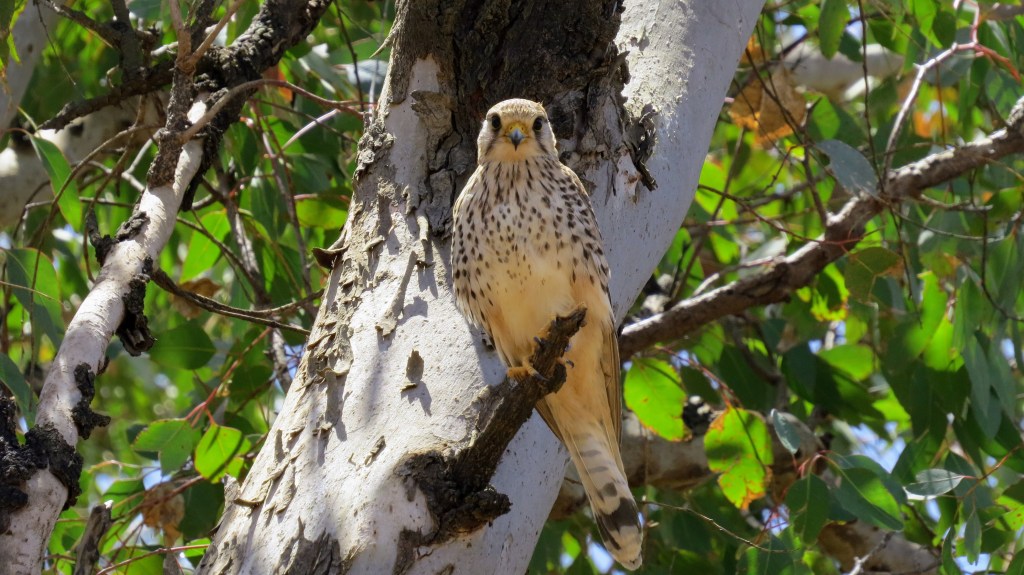
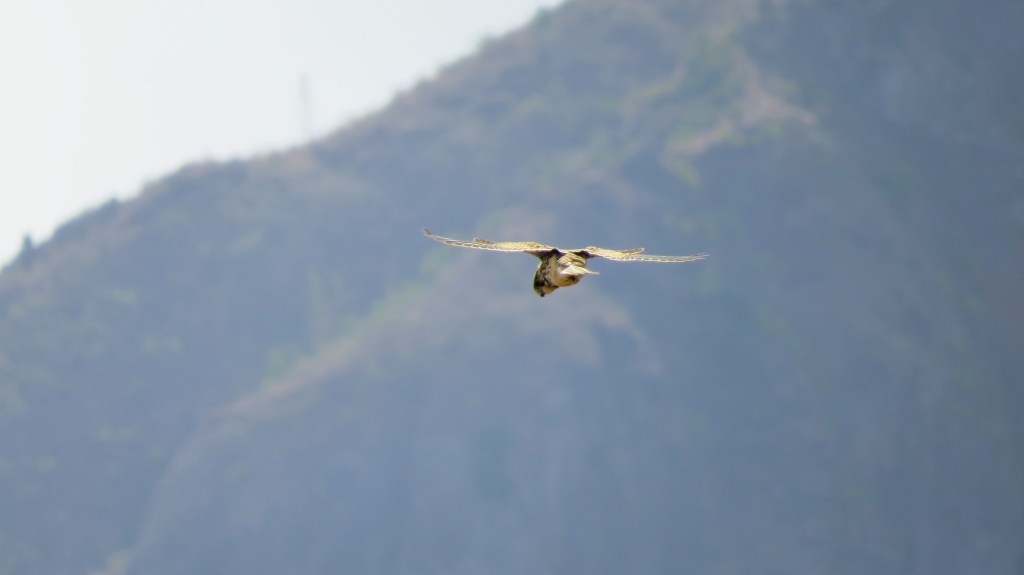
After reconnecting with the main trail, we were lucky enough to see a young Kestrel perched in the tree. We were able to watch it for quite a while as it surveyed the surroundings.
We were being watched…
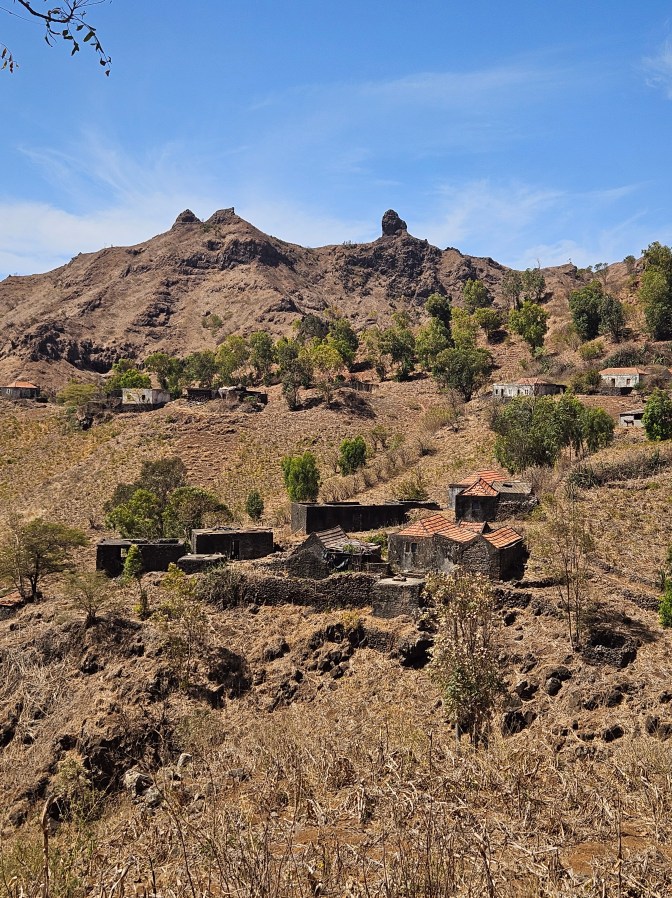
After getting back to the main road and the Natural Park Office, we had a decision to make. It was still reasonably early, so we decided to try out the trail on the other side of the ridge, which went down into the valley and looped round to climb up to the little hamlet next to our accommodation (the orange path to the left on the map above). This may not have been the best idea. The beginning part was pleasant, with a proper path and nice views of the valley. But after needing to leave the proper dusty trail it became a lot more difficult. The path was no longer obvious and there were rarely any sort of signs or indications we were on the right track. At times we were totally dependent on our offline maps and GPS to make sure we were heading in the correct direction. At the bottom of the valley we were also passing by buildings, some of which seemed to be people’s houses, but others were obviously abandoned, so we were never sure if we were trespassing or not. We must have done fairly well at keeping to the supposed path, however, as we eventually made it on the winding trail that led up towards the church, where we had parked our car. And this path was steep! And obviously we were now in the middle of the afternoon, so the Sun and heat did not make it any easier. It did, however, certainly make the cold beer once we got back to the accommodation even more appreciated!
The path was clear at the beginning
There were nice views within the valley
Some of the buildings in the valley
Looking up towards our accommodation from the bottom of the valley…
So, whilst we enjoyed the first part of the trek, and would recommend it, I’m not sure we can say the same for the second part. If you want a better understanding of the route we took, then please watch the following video:
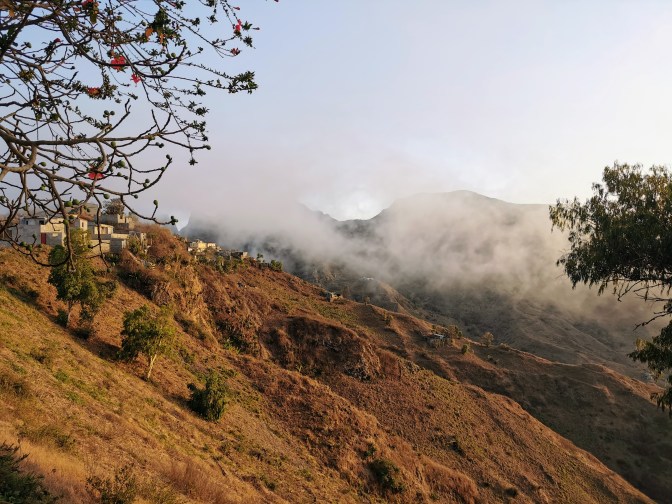
Our evening comprised of having another nice meal at the restaurant and getting ready for the sunset. It ended up being very different to the previous evening, however, as later on fast moving clouds started rolling over the ridge that we were on, coming from the west, going over the ridge and down into the eastern valleys. It was very cool to watch and made for some very atmospheric photos.
The cloud swiftly rolling over the ridge
A different sunset to the night before!
Day 4 – Heading to Tarrafal
I felt quite sad to be leaving this accommodation already, and looking back, it was definitely my favourite from our trip to Santiago. After breakfast we took some time on the shared outdoor seating area to relax and enjoy the view. As we were sat there, another Kestrel (an adult this time) kept darting across our field of view before returning to a tree on the hill. We had a great vantage point from which to watch.
They are beautiful birds
After packing our bags into the car, we went for another walk. We went up the road a bit to access the ‘blue path’ on the map above. At this point we weren’t sure if we’d do the full route, but we at least wanted to get as far as the viewpoint and stretch our legs before driving to Tarrafal. Another reason for heading to that path was that the beginning of the route was another place where you can sometimes see the monkeys, so we kept our eyes open as we started down into the valley. Unfortunately, we again weren’t lucky enough to spot any. The viewpoint is not that far, and gives nice views down into two adjacent valleys. At this point, we could see that the hike would be quite tough going, and as Radka wasn’t feeling one hundred percent, we decided to just turn around and head onto our next destination. It did, however, look like it could be a picturesque hike for anyone who was staying there for longer.
The view down into the valley
The drive down to Tarrafal was pretty straight forward, although finding our accommodation once we were there was a little bit more tricky. We were staying at the Casa Strela Guesthouse, which is part of the same small company that owns the Strela Mountain Lodge. Whilst not quite to the same level as the Mountain Lodge, we still enjoyed staying at this accommodation and eating in its roof-top restaurant during our time in Tarrafal.
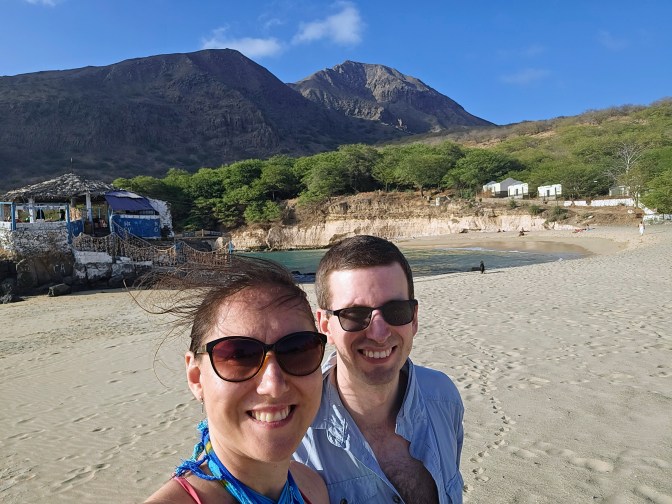
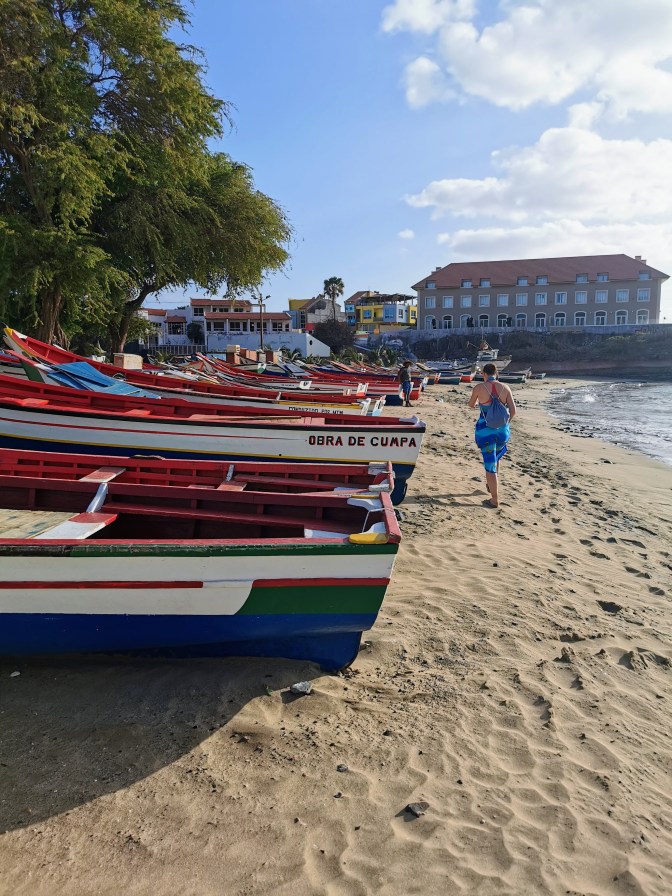
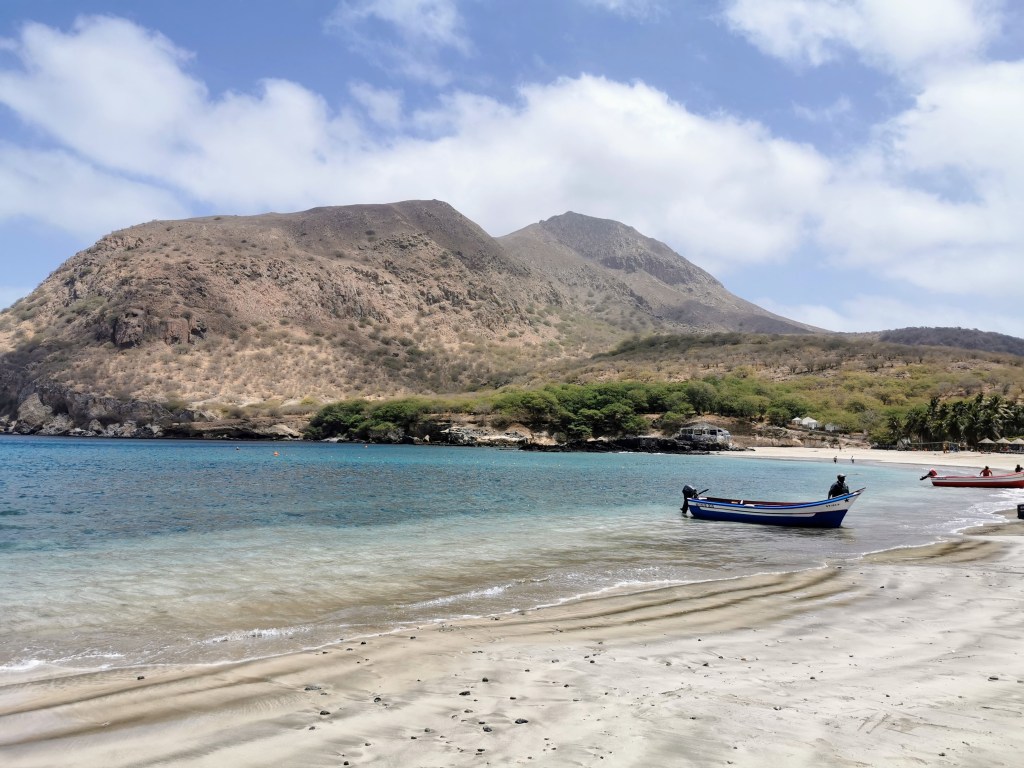
Tarrafal was a small fishing village, which is quite quickly expanding due to its popularity in the new tourism boom. The guesthouse we were staying at was located on the outskirts of the village and you could see the planned expansions starting to be built. Tarrafal is popular because of its picturesque beach, and thus, once we were checked in, we decided to walk there and see what all the fuss was about. The pathway along the coast is pleasant and it doesn’t take long before the crescent bay spreads out in front of you. After making your way through a couple of small streets to actually get to the beach itself, you first walk past the row of colourful fishing boats that are still in active use before getting onto the touristy part of the beach. This part is split further into two sections, with the main sweep of sand being separated from a smaller cover by a rocky outcrop that has a bar perched on top. We had a bit of a wander and picked our way through the locals and tourists that were enjoying the Sun and sand. We were joined on our weaving journey by women who were selling ice creams and cold drinks from the cool boxes that they had impressively balanced on their heads.
The edge of the beach at Tarrafal
After heading back and having a nice meal on the roof-top restaurant of the accommodation whilst watching the sunset, we spent time organising our hike for the following day. The accommodation has links to local tour guides and organises trips and guided hikes, both from Tarrafal and in the Serra Malagueta Natural Park. At that time, there was an option that combined two of the major natural highlights around Tarrafal, namely climbing up Monte Graciosa and visiting the natural pools at the Tarrafal Lighthouse (please note this option no longer seems to be available on their website, nor does walking up Monte Graciosa at all). Given that we had limited time on the north coast, this seemed like a perfect option. We had also read some scattered reports of tourists being targeted and robbed whilst hiking in this area, so we were happy to go on a guided tour with a local. Despite it being a last-minute booking, it was not peak season and thus they were able to organise something for the next day.
There was a beautiful plant next to our table on the roof-top restaurant
Day 5 – Hiking up Monte Graciosa and on the Tarrafal Lighthouse Trail
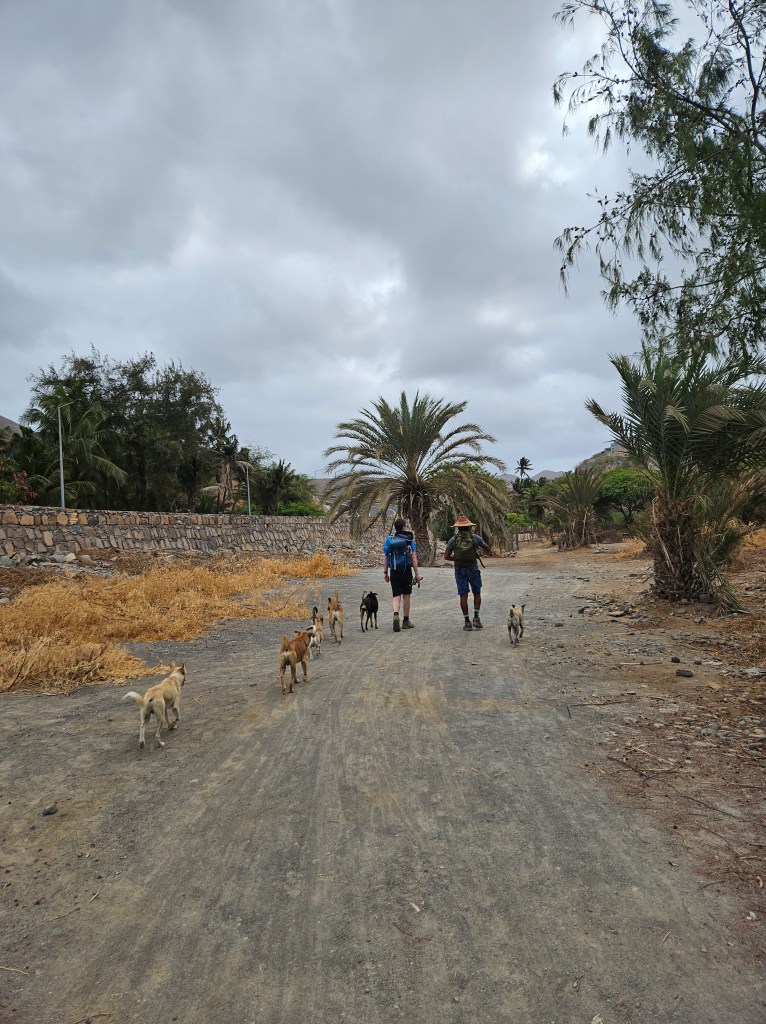
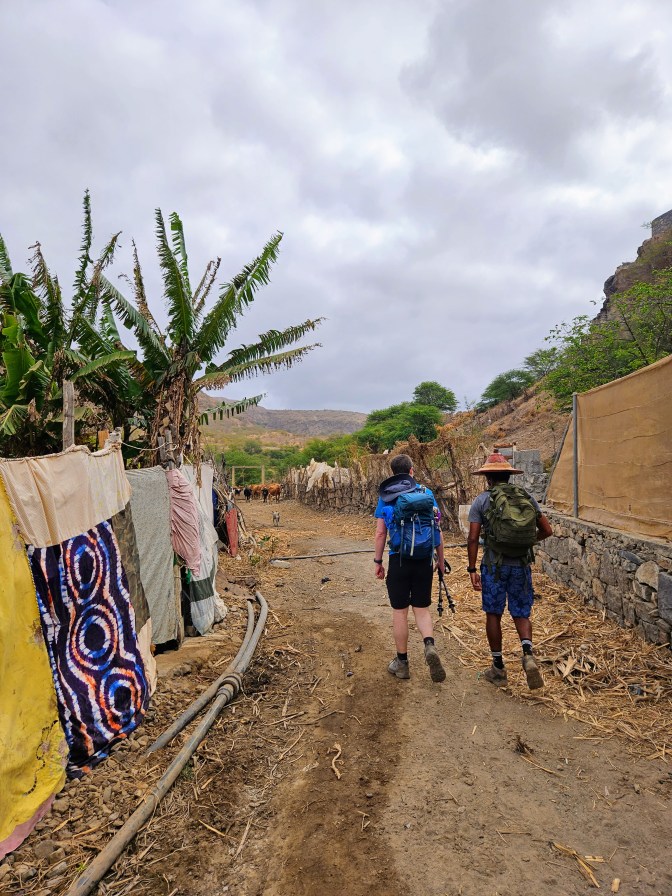
The length of the hike necessitated an early start, so after grabbing breakfast we were met at the accommodation by our guide. He was very friendly and, whilst he was still learning English, he was doing well enough to have some conversations and explain interesting information related to the hike, such as local customs, and the plants and animals that we could find. We first made our way through the town, away from the centre and towards the more rural outskirts. During this walk we kept picking up stray dogs who wanted to join us on our walk.
Collecting our pack
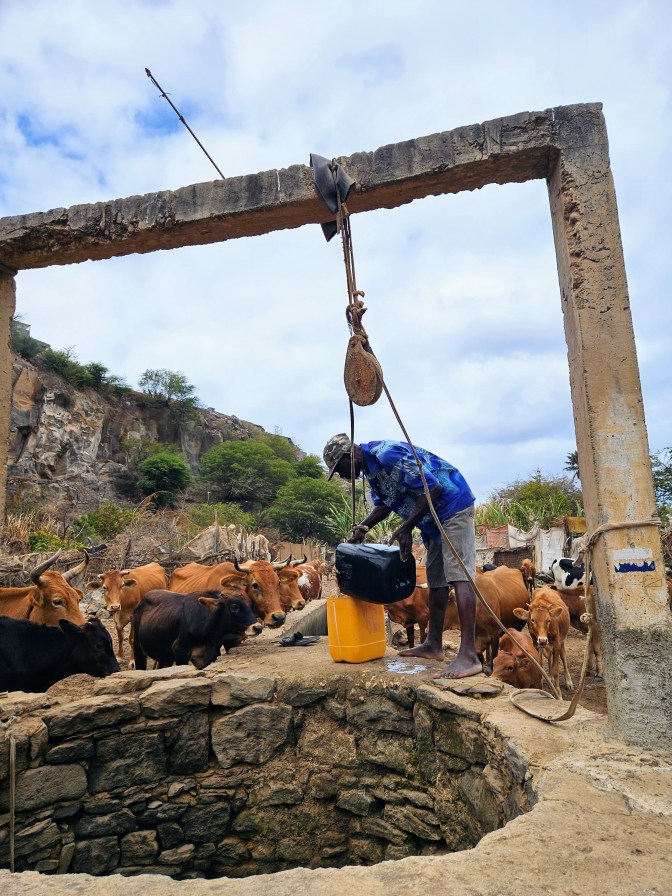
At one point the guide saw an old lady that he knew who allowed us to go through one of the fences and have a look at the fruit trees in the small plot from which she made her living. Slightly further on the guide had to get rid of the dogs, as we were now entering an area where locals kept their livestock and the dogs could have caused problems; although he let one stay with us. At this point we passed a large herd of cows who were stopped as their owner was drawing water from a well by hand. The guide told us that this man would be considered wealthy due to the size of his herd, but it certainly seemed that a lot of the locals still lived very hard lives through fishing or farming.
We passed through a similar fence to see the gardens
The cows are all looking on expectantly
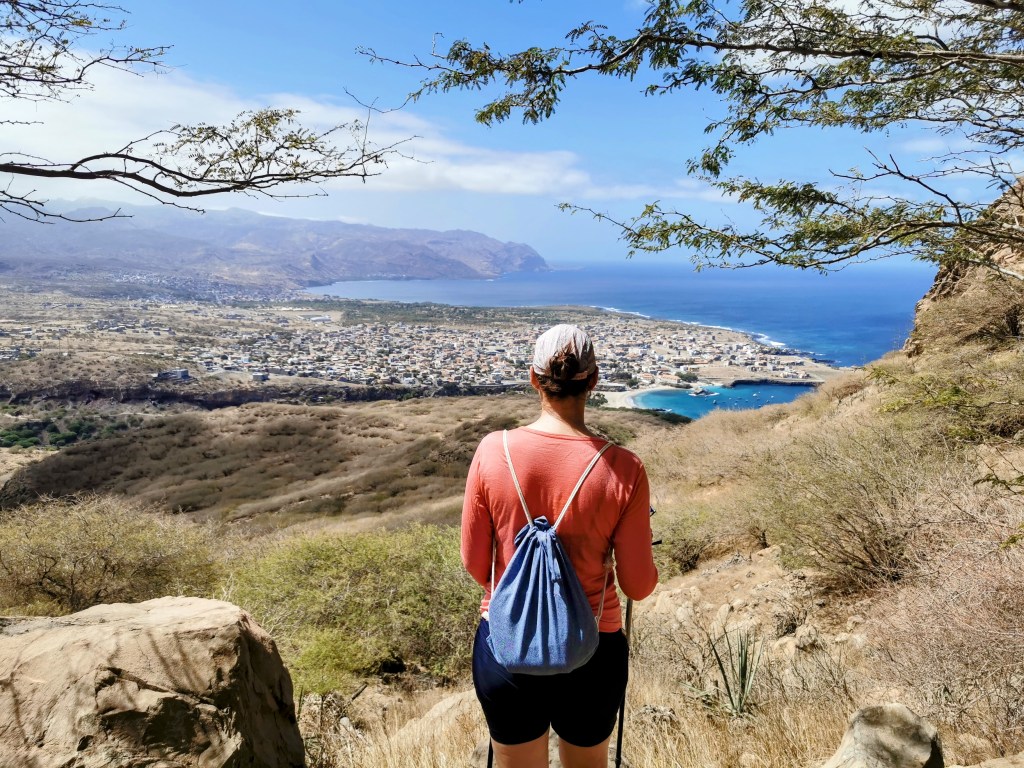
After leaving the last of the village behind, we started walking up into the shrubbery covering the lower parts of Monte Graciosa. Due to it being the dry season, the vegetation was not as green as it would have been at other times of the year and the path was very dusty and rocky. The guide would stop us now and again and provide information about a plant we passed, with some of them being used as either dyes or medicines by the local people. As we got higher, we started getting lovely views over Tarrafal itself. But you had to be careful of your footing while looking at the vistas. Whilst most of the path was narrow but fine, there were points when it was starting to crumble away and we were grateful of the hiking poles we’d brought with us.
Looking down at Tarrafal
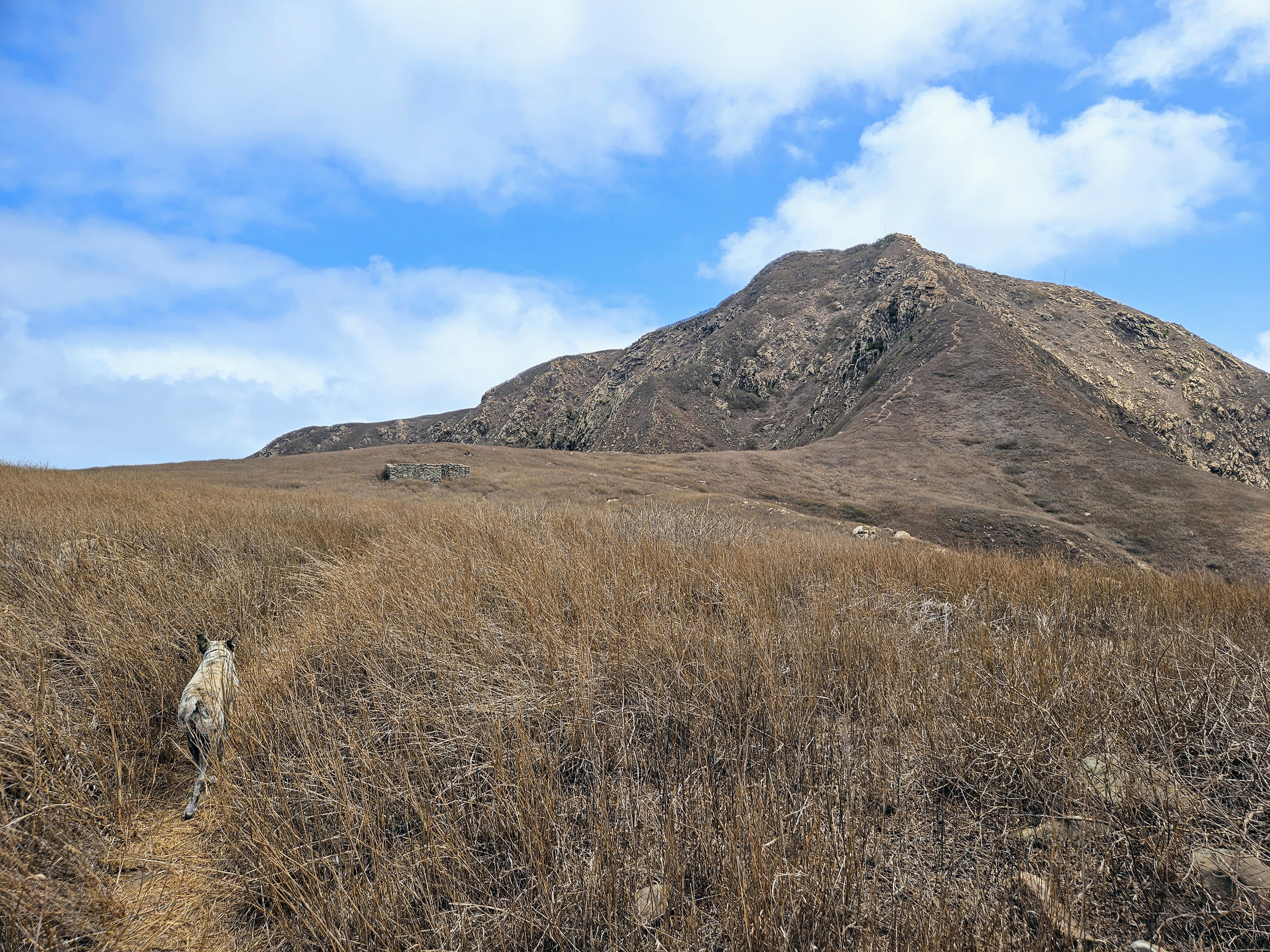
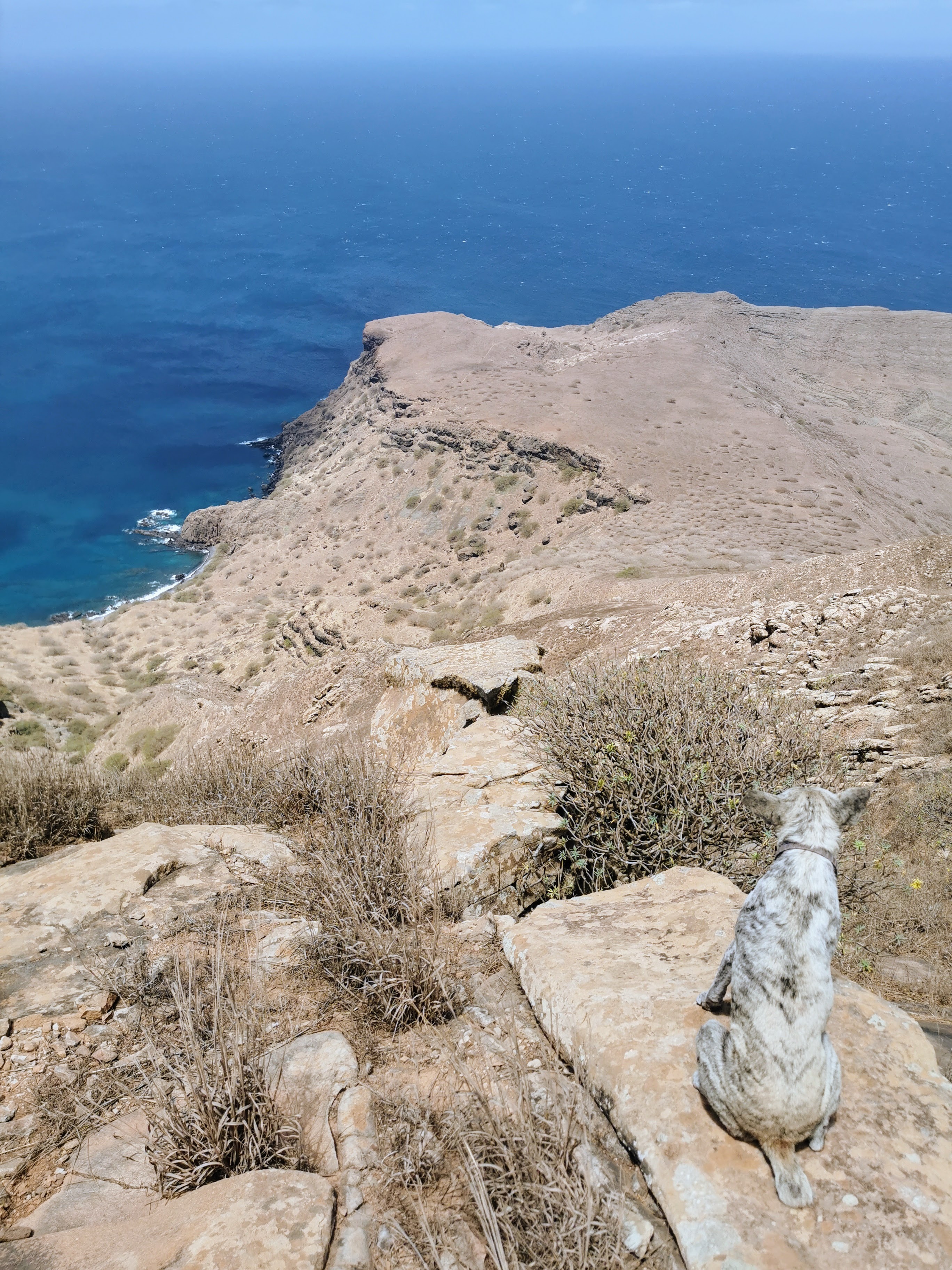
After a while, we made it up onto a flatter area, which was more covered in grass than the straggly trees and shrubs of the slope. From here we could see a further peak, which was the actual top of Monte Graciosa. At this point the guide warned us that the wind would make it tricky to continue the climb and that, we could still try if we wanted to, but that he wouldn’t recommend it. We took his advice and instead spent time enjoying the views from this high vantage point.
It was too windy to walk up to the very top of the mountain
The dog had made it up to enjoy the view as well
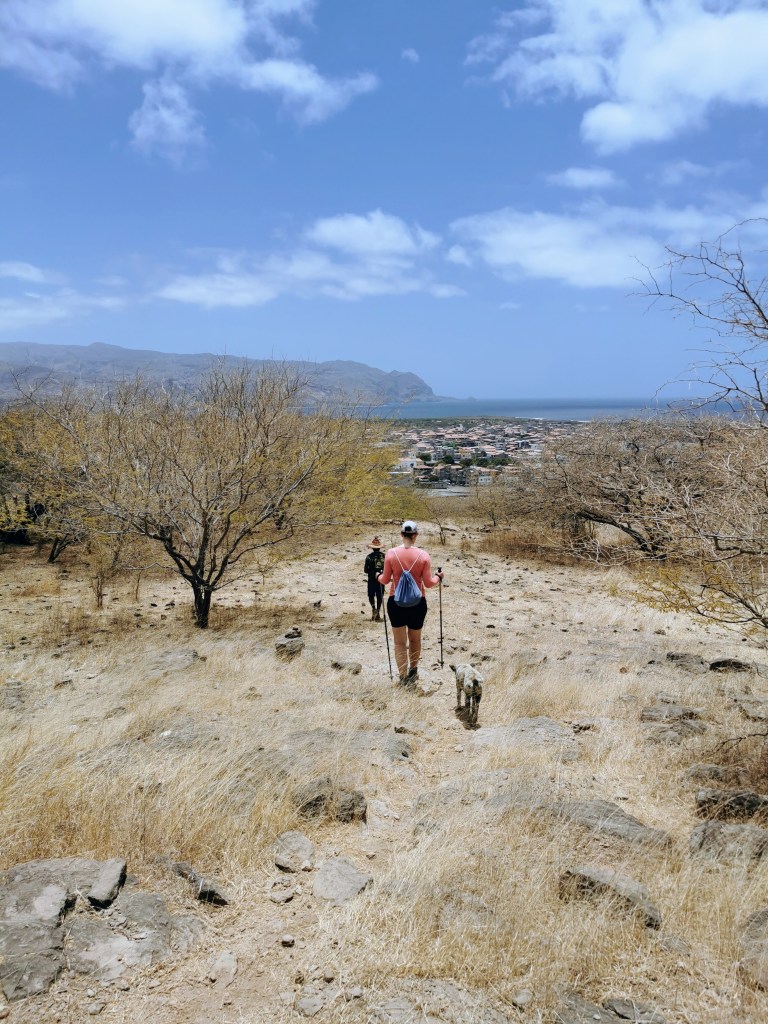
At this point the guide informed us that the steep pathway that would lead directly down towards the lighthouse, which was our next major destination, had recently started to break away at points and was not the safest. As such, we ended up backtracking the way we had come before cutting off the corner and taking a path that would join up with the ‘Tarrafal Lighthouse Trail’. Whilst it was better safe than sorry, we weren’t particularly pleased at adding on a few extra kilometres to our walk when we could have been told before we set off. The timings that we were originally told were already looking extremely optimistic (and we hadn’t been going that slowly) and now we were adding on extra.
Heading back towards Tarrafal, before ‘cutting off the corner’ towards the cliffs
As we reached the Lighthouse Trail, we stopped and had our sandwiches under some trees. As soon as our canine companion got a couple of bits of ham, he was scampering back towards Tarrafal! We then started the walk along the coast towards the lighthouse and the natural pools, where we hoped to have a swim. The trail was quite up and down but fairly easy to follow – there was even the odd sign or two. For this second part of the hike, it isn’t really needed to have a guide in terms of navigation, but we still felt safer having one. So, if you’re only going to walk the Lighthouse Trail, you’ll need to weigh the pros and cons of getting a guide. If you plan on walking up Monte Graciosa, then we’d definitely recommend getting one.
There were some beautiful views along the coast
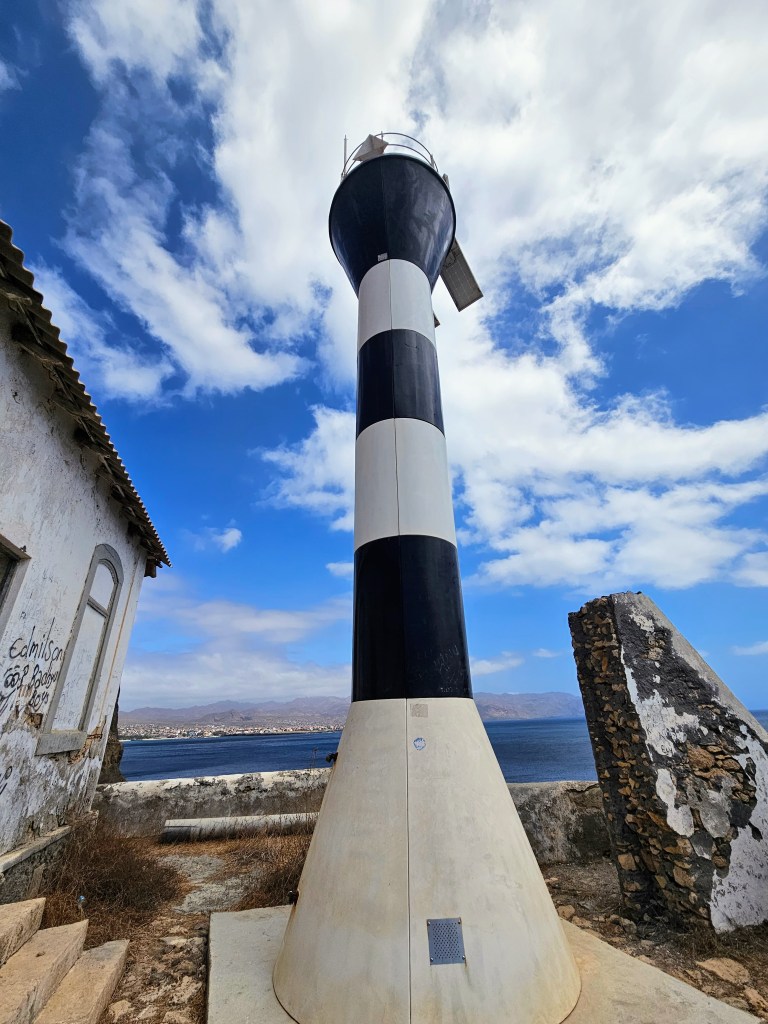
We eventually reached the point where we were looking down at the lighthouse. We headed down and spent a few minutes looking through the old lighthouse keepers lodgings, which are no longer in use. After this we took the trail down to the natural pools.
Tarrafal Lighthouse
The pools looked really beautiful and inviting after the hot hike to get there. We changed and got in and only at that point realised that the pools were covered in sea urchins. Looking back at the point where we’d entered, we’d only just missed some, and now that we were in the water we could see more dotted about throughout the pool. Luckily, we’d brought shoes / sandals to wear anyway but the was more luck than judgement. So, if you want to swim in the pools, please be aware of the urchins and probably wear wetsuit shoes or something similar.
The pools look beautiful – just be careful about what lies beneath…
Scrambling back to the path
The route back just followed the same path we’d taken to get there. When we reached the point where we had originally joined the trail, we just carried on along the trail and it brought us to the end of the beach in Tarrafal. We knew where we were at this point, so we thanked our guide (tipping is appreciated in Cape Verde) and stayed to enjoy a swim and rest our weary muscles. It had been an interesting days hiking. The hike up Monte Graciosa wasn’t great, but there were some lovely views from higher up. The hike on the Lighthouse Trail was probably more enjoyable and was certainly easier, and you also get some lovely coastal views on this hike as well. So, with hindsight, we’d probably only have done the Lighthouse trail but we’re still glad we made it most of the way up Monte Graciosa.
You can see small bar on the rocky outcrop
I really liked the colourful fishing boats!
If you want to see more detail about the route we took, along with some extra photos, then please have a look at the following video:
In the evening, we again ate at the accommodation. It’s better to reserve a place to make sure you get a table as there is limited space and it is also open to the public. There was another lovely sunset to enjoy whilst having our meal.
Not a bad spot to watch the sunset
Day 6 – Snorkelling and Driving the East Coast
We would be leaving Tarrafal later that day but first we would have a go at another activity booked through the accommodation – snorkelling. The trip nearly didn’t happen, as the wind that had caused issues with our hike the day before was obviously also affecting the conditions on the ocean. But it was deemed just acceptable, so we met up with our guide at the dive centre, collected our gear before joining up with our captain, who was a fisherman supplementing his income by also taking tour groups along the coastline.
Our boat was actually behind me, but the view wasn’t the same…
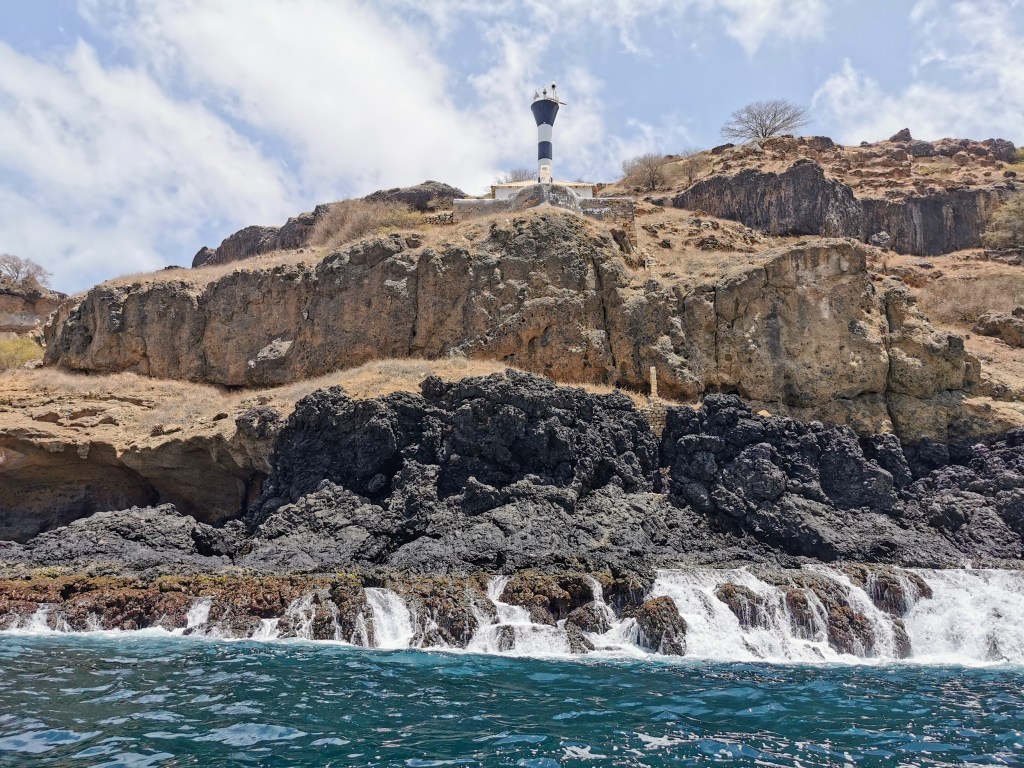
The journey took us back along in the direction we had walked the day before and it was really nice to see the picturesque cliffs from the direction of the water.
Recognise this place?
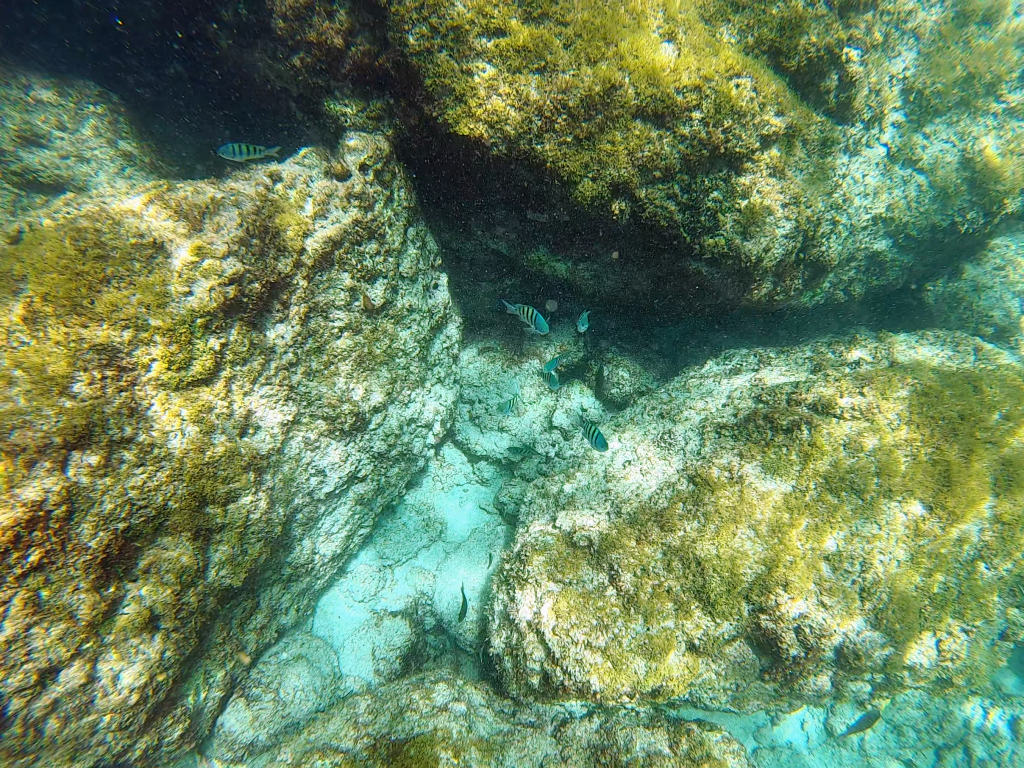
The place they normally go to for the snorkelling wasn’t accessible because of the wind and waves, so we stopped off at another couple of spots that were more sheltered. Unfortunately, it was still quite choppy and the visibility wasn’t as good as it could be. It was still fun, however, and the rocky seabed was very interesting and contained a lot of small fish darting around. So, whilst you wouldn’t visit Tarrafal just for the snorkelling, it was still a nice activity to do once you’re there.
The rocky seabed made for an interesting swim
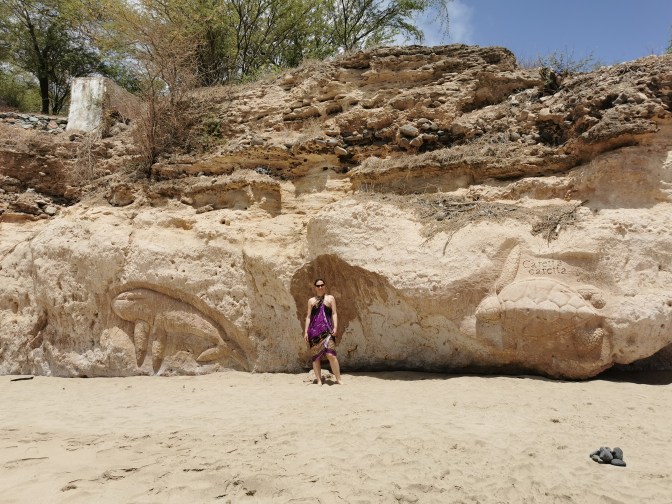
After we got dropped back off at the beach, we had a last stroll along it and had a look at the carvings on its far side. We then picked up some meat skewers from a seller on the street for lunch (they were very good, definitely recommended), before heading back to our car at the accommodation.
The turtle and whale were really nicely done
If you want to see the journey taken by the boat, then please watch the following video:
It had been a very pleasant stay in Tarrafal. It still has its small ‘fishing-village-vibe’ for now, and if you are visiting Santiago and enjoy relaxing by the beach, then this is probably the place to go.
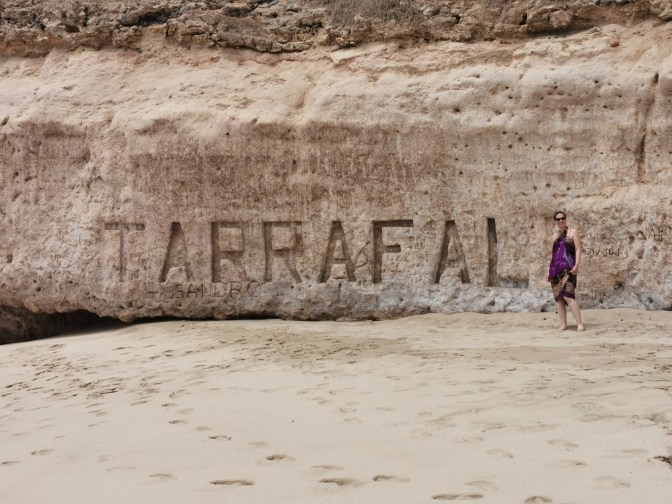
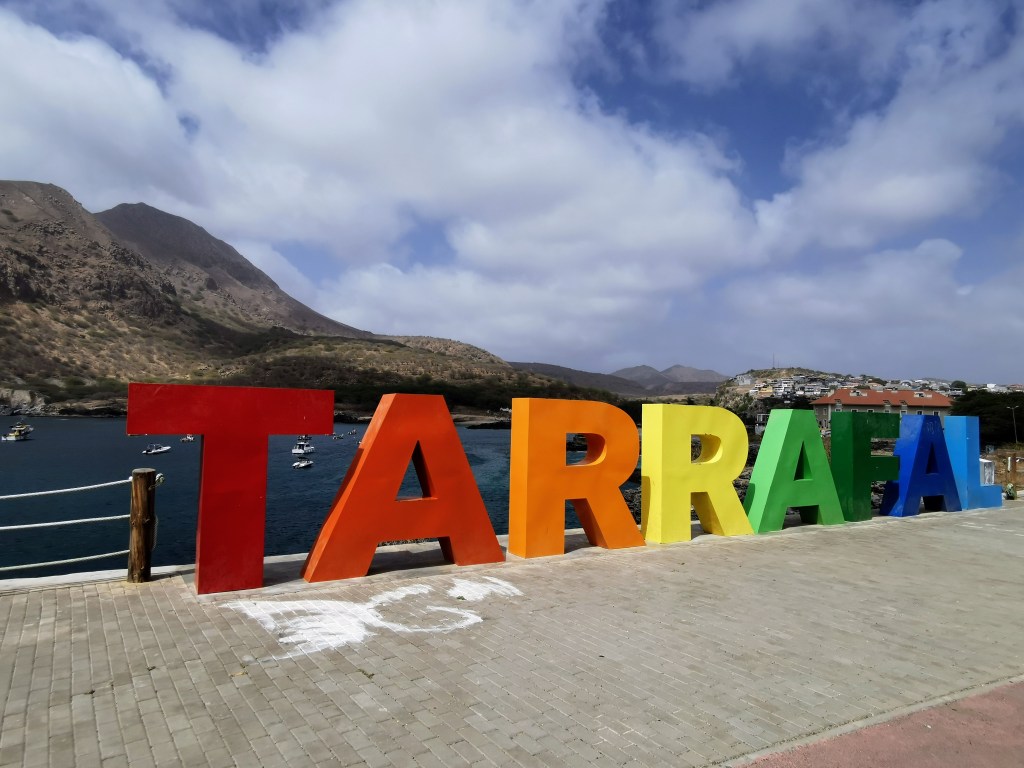
The huge sign did feel a bit out of place!
After picking up our car, we started off towards our final destination, Pedra Badejo. When planning our trip, we had wanted to cover as much of the island as possible, so for our last night (our flight left at midnight the night after) we had picked somewhere on the East Coast. This had the twin purpose of getting us closer to the airport along with allowing us to see the east coast.
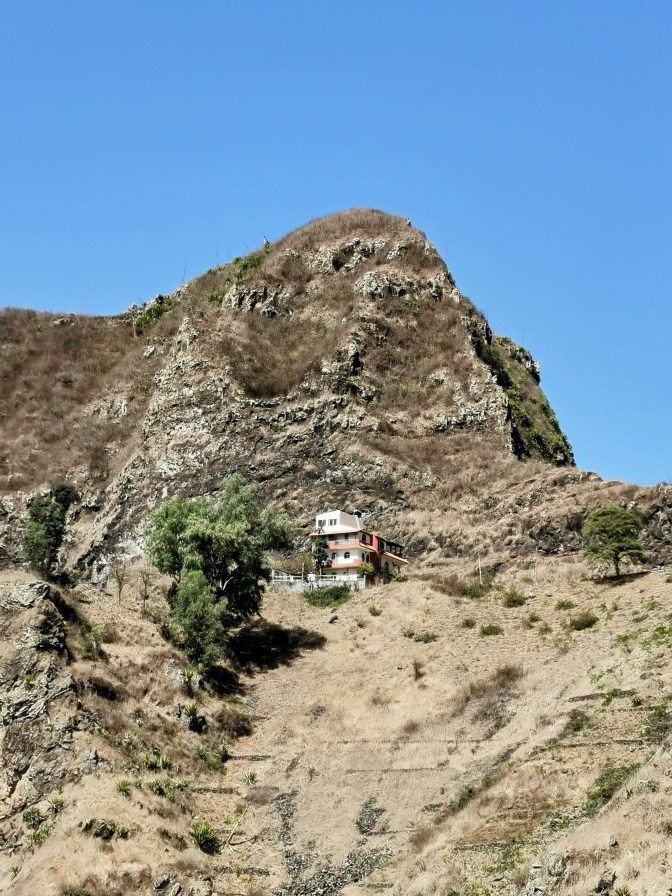
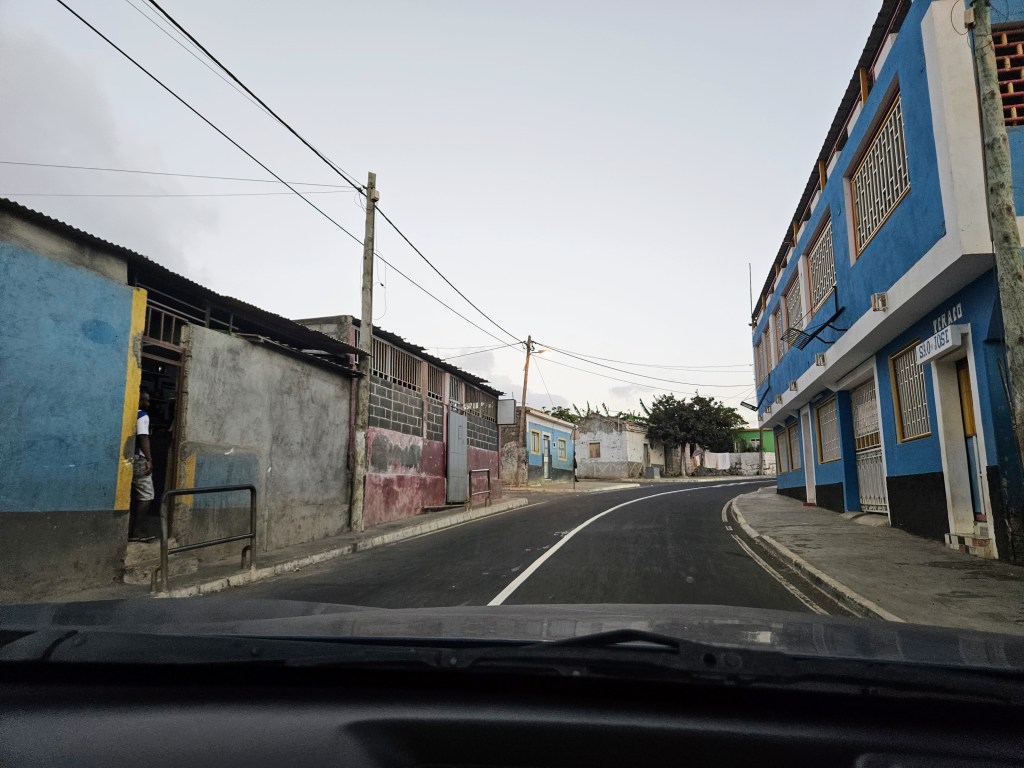
The drive itself was interesting. The road in the north and north-east part of Cape Verde as we cut across from Tarrafal was quite poor, but it improved when it got back to the coastline. We passed by a range of settlements, ranging from tiny rural villages to larger villages and small towns. What really struck us was the discrepency in wealth within these settlements. The houses were either quite big and smart or were much smaller and poorer, and they were often right next to each other on the same street. We found that very unusual.
There was a real difference in size and appearance of the houses we passed
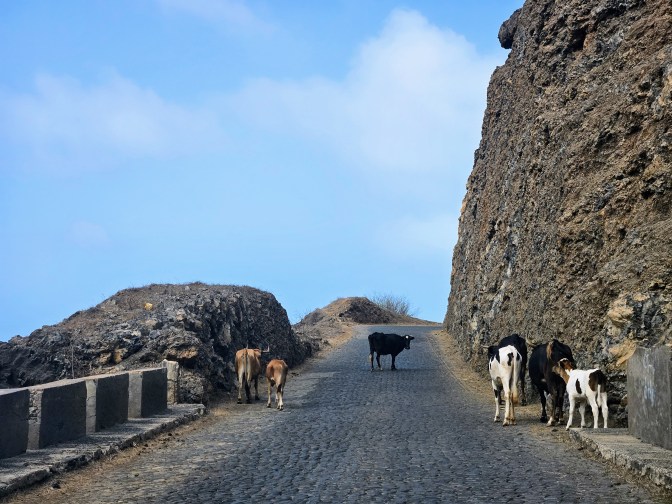
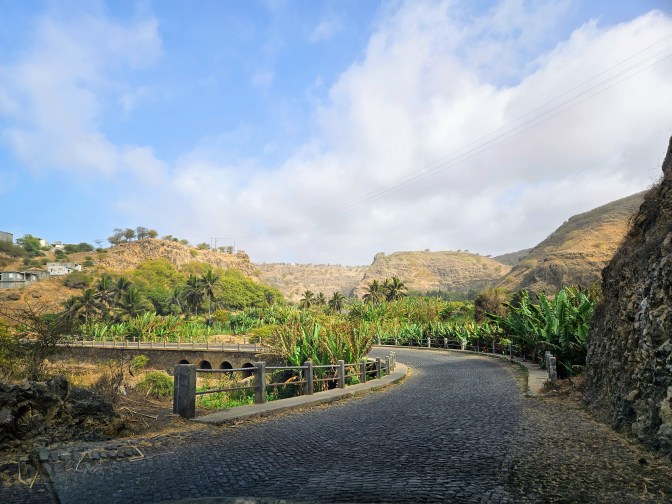
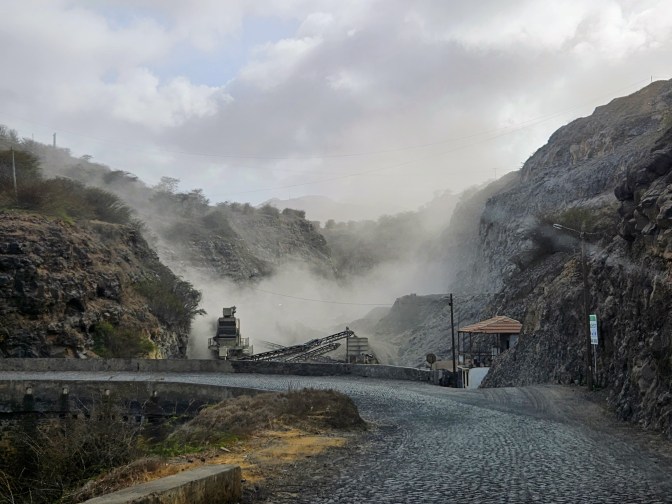
The scenery on the drive was also very varied. There were stretches of nice coastline and as you went around each headland, you didn’t know what you’d see on the other side. Sometimes the land hard and dry, other times you could come across a luscious green valley, and once there was a valley covered in what we thought was mist until we got a bit further and saw the beginnings of a quarry further inland. You had to also be careful to not hit any of the farm animal obstacles that often appeared in the road!
Waiting for it to moooove…
We’re not really sure why this valley was so green!
What we thought was mist was probably from the quarry
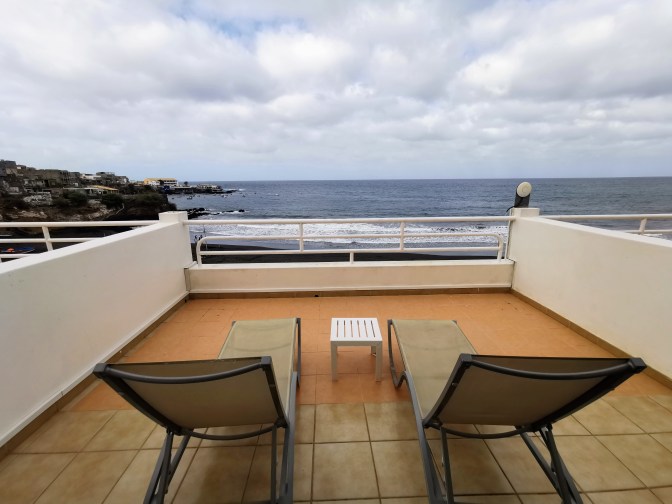
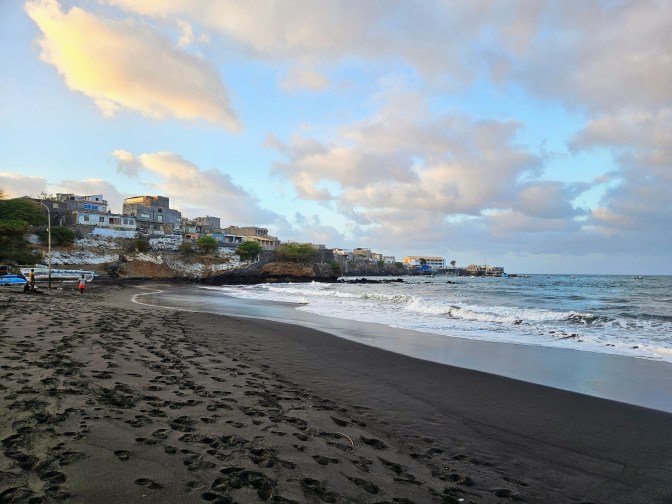
When we arrived to Pedra Badejo we had an issue finding our hotel. Our hotel ‘Hotel Falucho Paradise Beach’ shared a name with a restaurant ‘Restaurant Falucho Paradise Beach’, which was totally separate and further along tiny one-way streets into the town itself. When we did make it to the right place, we found the archetypal example of faded grandeur. The hotel was huge and yet we weren’t sure if anyone else was staying there! We had to wait for quite a while before anyone turned up at the reception, we had issues checking in, and the room was certainly in need of some TLC. It just felt like quite a surreal place to be. On the flip side, the room was very spacious, there was a large balcony with deck chairs and nice views over the black sand beach and the ocean. There was also a hotel restaurant down on the beach itself; and they kindly give us a free late check-out and let us stay in our room until later the following afternoon. So, whilst we probably wouldn’t choose to go back there, it turned out to be a nice place to relax before heading back home.
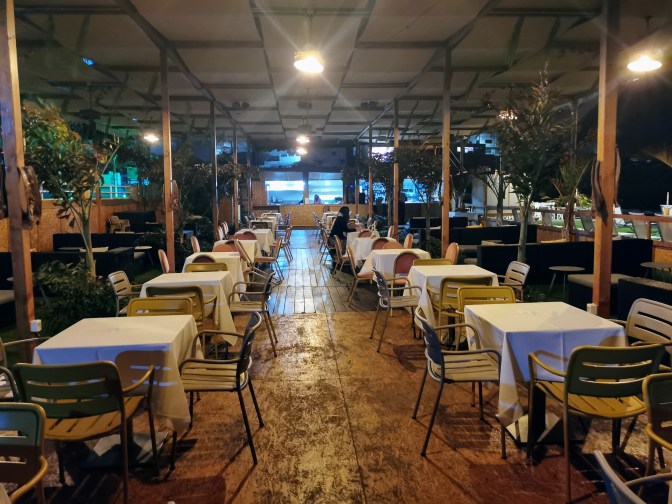
We were the only ones in the restaurant when we first went down…
Not a bad place to read and relax
Day 7 – Relaxing and Heading Home
Given that our flight was ten past midnight in the upcoming evening, we weren’t booked in to stay anywhere the for that night. Our original plan had either been to relax in the common areas of the hotel or the beach in Pedra Badejo, or to do one last day-trip if we found somewhere interesting close-by, before heading straight to the airport in the evening. However, when we made inquires at the reception desk, they kindly allowed us to stay in our room until late afternoon for no extra charge. Given that Radka still wasn’t fully over the illness that had dogged her throughout the trip, this made the decision very easy. So our final day was spent relaxing on the balcony, eating at their restaurant and having a small walk along the beach.
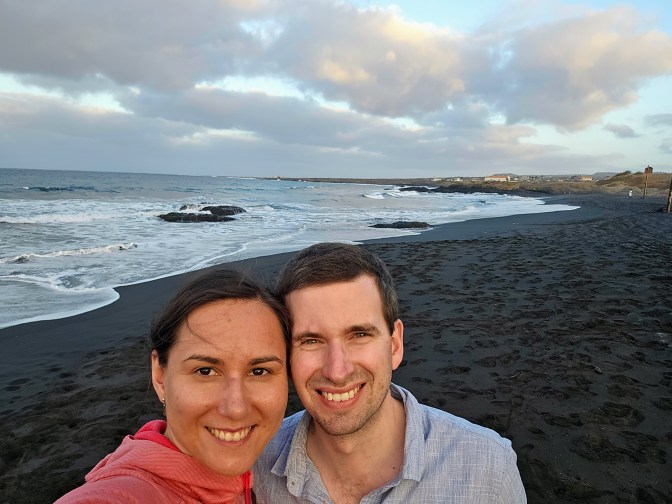
The black sand beach was very cool
Pedra Badejo
In the evening, we drove back through the hills to the airport in Praia where we met Fernando. We had been very surprised that he was willing to meet us so late, but it made things much easier for us so we were very grateful. The check was very brief, and then we just had to wait for our flight to Lisbon and beyond. It was the end of another great trip.
Heading back home
Final thoughts
I’m not sure if I’ve ever gone on a trip knowing as little about the destination as during this adventure. But that is part of the charm of being able to travel. Our week in Cape Verde ended up being very enjoyable and we feel we did a good job at exploring Santiago. It is potentially the most varied of the Cape Verde Islands and we managed to fit in a bit of history and culture, some hiking in the mountains, and some beach time. Whilst none of those specific parts of Santiago really blew me away just on their own, it was nice to have one small destination that still had all of those things that you can easily access. We also appreciated how few tourists we met. It is getting harder to find places that aren’t swarming with holiday-makers during the main school holidays and yet, at least Santiago from the Cape Verde islands seems to still be off the radar. It might not be for long, however. If the ongoing expansion at Tarrafal is anything to go by, it might not just be Sal and Boa Vista that are part of the tourism boom.
So, did we enjoy our time driving around Santiago? Yes. Would be come back? We probably don’t feel the need. But, it did pique our interest in potentially exploring some of the other Cape Verde islands. Maybe hike the volcano on Fogo; try dune-bugging on Sal; or go on a whale-watching trip from Boa Vista? But Santiago has its own charm, it has varied landscapes and activities to try, it was hot and sunny, it was still quite authentic and not so touristy, and it was reasonably cheap to get there and during the stay itself (apart from hiring the car). So, if those characteristics appeal to you, then you should definitely give the largest island in Cape Verde a try.










 Brit and Czech Abroad