2nd – 6th March 2022
During our year off to go travelling, we were lucky to be able to spend about two months exploring the different regions of Chile. This was possibly our favourite country during our trip (well, it was at least Radka’s definite favourite whilst I’m more prone to sit on the fence). We were travelling at a time when there were still quite tight restrictions in Chile due to COVID. Even entering the country proved challenging, so we didn’t end up starting our Chilean adventure until it was their late summer / autumn depending on which of the many latitudes you could be at! We thus needed to start in the south of the country, before it became too snowy and impractical to explore that region, especially regarding hiking the O-Trek in Torres del Paine National Park. However, due to the last-minute nature of our planning, we ran into issues booking the campsites for the hike. This meant that we had more time than expected to get to the south of the country from Santiago, which was our entry point into Chile. This allowed us the option of taking the Navimag Ferry from Puerto Montt to Puerto Natales, and we’re so glad that we did.
Contents
- Why take the Ferry?
- Should you take the Ferry?
- How to book the Ferry
- What to take
- Day 1 – Setting off from Puerto Montt
- Day 2 – Whales and Rainbows
- Day 3 – Waves
- Day 4 – Wrecks and Puerto Eden
- Day 5 – Arriving to Puerto Natales
- Final thoughts
Why take the Ferry?
So, why did we choose to take the ferry as part of our journey south? There were several factors for our trip…
Part of the reason was due to logistics. By far the easiest way to get to the region accessing the Torres del Paine National Park from Santiago is to fly to either Puerto Natales or Punta Arenas. If we had been able to book the campsites for the O-Trek earlier, then this is the way we would have travelled. Given that we ended up having more time than expected to travel south, we had to consider whether flying was still the best option.
Another option would have been to travel by road. There are many excellent long-range bus options in South America, and Chile is no exception. But an issue with this particular route is that for part of the journey, the route through Chilean Patagonia is blocked by the mountains, and thus the road goes back and forth into Argentina. Under normal circumstances, this would have been fine and potentially even exciting, but during COVID it would have meant multiple permits and stops for PCR tests. There were also only some border entrances that were actually still partially open, which would have further complicated the process and meant we would have had to hire a car for part of that journey, All things considered, travelling by road for this particular journey was just a non-starter.
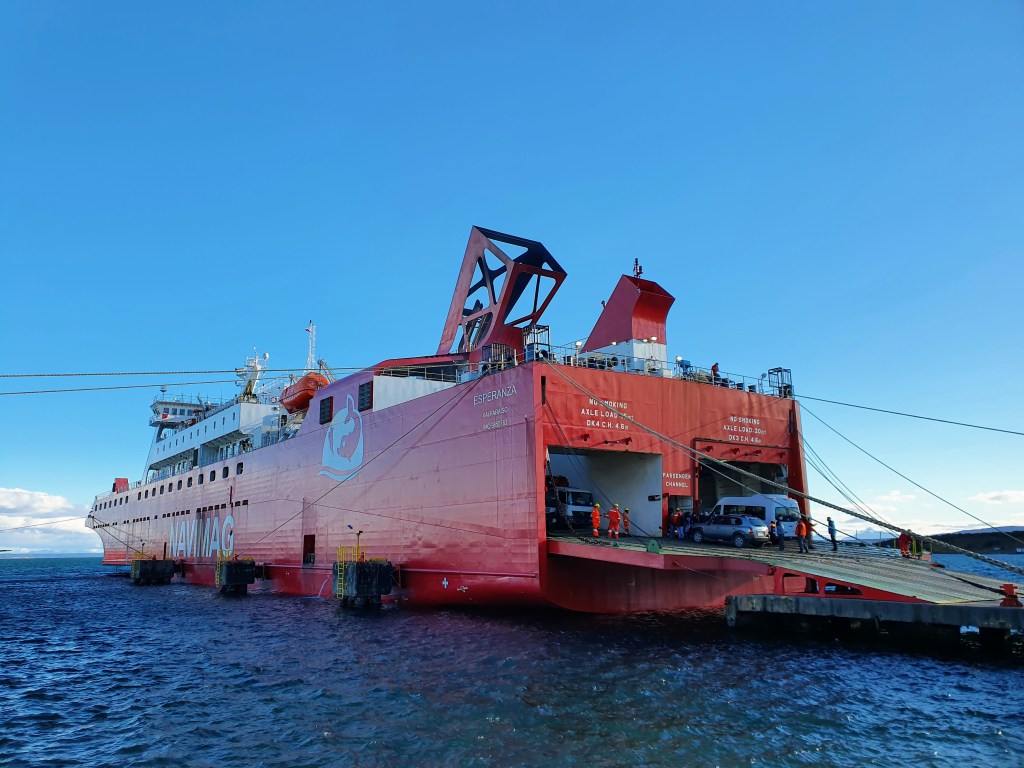
The final option was to get to the port town of Puerto Montt (either flying or, like we did, by taking an overnight bus from Santiago) and take the Navimag Ferry to Puerto Natales. The journey should take four days and three nights to complete, and as well as being a practical travel option it gives you the opportunity to see some of the Chilean Fjord region, which would be inaccessible otherwise. This is not a stereotypical cruise ship as it still serves as a ferry for the indigenous community that lives at Villa Puerto Edén, and acts as their only means of transport to access the ‘outside world’. This ferry does not run all year but only from October to March approximately once per week. There can be cancellations due to the weather, however, especially at the start and end of the season. Thus, if we had flown to the south straight away, during the time when we then would have wanted to travel back north, it may have been that the ferry was no longer running. So, if we wanted to take the ferry, then the way south was our only option.
Given that our options were between flying and taking the ferry, we chose the ferry. It seemed like more of an exciting adventure and had the potential to be a really beautiful journey to an area that we would not be able to see otherwise. Plus, after having had an amazing time being on the boat during our trip around the Galápagos Islands, we thought that this would be something we would really enjoy,
Should you take the Ferry?
The first thing to note when you’re considering getting the ferry is to consider how flexible is your itinerary. We were scheduled to board the ferry on the evening of Monday the 28th of February and then set off first thing the following morning. On the weekend before we received an email saying the ferry had been delayed on its previous voyage and thus our trip was being postponed by 24 hours. Then on the Monday, as we were in a queue to take a required PCR test, we received another email saying that there had been further weather related issues and now the boat would not be leaving before Wednesday evening at the earliest. It wasn’t until the Tuesday that we received confirmation of our departure but it was on Wednesday morning rather than in the evening. Luckily the AirBnB we were staying at was able to prolong our booking (twice) but this could have caused a lot of hassle.
Once onboard there were further delays. The weather that had caused delays in the previous journey was still a factor on our trip. On the Thursday evening we had to drop anchor and wait over night in a channel given that the waves on the open sea were higher than a safe level. On the Friday we ended up going round in circles for an hour or two as we again waited for the waves to settle. These delays meant that instead of arriving at midday on the Saturday the 5th of March, we arrived late afternoon on the Sunday. If you factor in the original departure date, we ended up arriving in Puerto Natales three and a half days later than we were supposed to.
I am not writing this to prejudice you against the ferry, far from it. Rather to make you aware of the very real risk that the ferry will not run to schedule and to therefore plan accordingly.
Another factor to consider is the price. The ferry is not cheap and we spent a lot of time going back and forth over whether we could justify the expense at that stage of our travels. One thing that helped with this was that when we called the company to ask questions, they offered us 10% off compared to the online price. I don’t know whether that offer was because we were travelling during COVID and they were short of numbers, or because it was quite late in their season, or whether it is common practise for them to have cheaper fares over the phone; but it helped us make our decision and it is certainly worth a try if you are wanting to book the ferry. Plus, when you factor in that you are receiving full-board accommodation, transport, and wildlife and site-seeing activities, the price doesn’t look quite so bad.
A further obvious factor that you should think about is how strong are your ‘sea legs’. Whilst the size of the ship means that in general the journey feels quite smooth, when you leave the fjords for a time and enter the open ocean, the swells can increase a lot. In fact, we ended up sheltering in the fjords for longer than we were supposed to because the ocean at the time had too great a swell to be able to safely cross. So, if you easily get seasick then you may want to reconsider this particular journey.
If you have enough flexibility on your itinerary, at least some salt water in your veins and are still interested in finding out more about the journey then please read on…
How to book the Ferry
The easiest way to book the ferry is through the Navimag website. You can also use it to ascertain the exact dates of departure and to check availability on those different dates.
As mentioned above, we ended up booking after calling the office. We were able to talk to someone with good English (not a given at all in South America) and ended up getting 10% taken off the price. It may be worth trying this route, although obviously if you are calling in advance from abroad it might be a bit trickier.
If you are booking last minute and are already in the town, I’d imagine you’d be able to get tickets in person from the office, but that wasn’t something we looked into so I cannot confirm for sure.
What to take
I guess this depends on when during the year you’re travelling and what you want to do with your free-time.
Given that we were travelling in March and wanted to spend as much time as possible out on the deck, either looking for wildlife or enjoying the scenery, then it was very important for us to have plenty of warm layers and our cameras with spare batteries. Good binoculars would also have been useful. We did not have any but luckily we were able to borrow some on board. I don’t know if this was a normal courtesy or whether it was just because there were so few of us onboard during that trip. I certainly wouldn’t rely on always being able to get a pair from them during the voyage. The indoors parts of the ship, however, were warm and therefore the multiple layers are mainly for when you want to be outside.
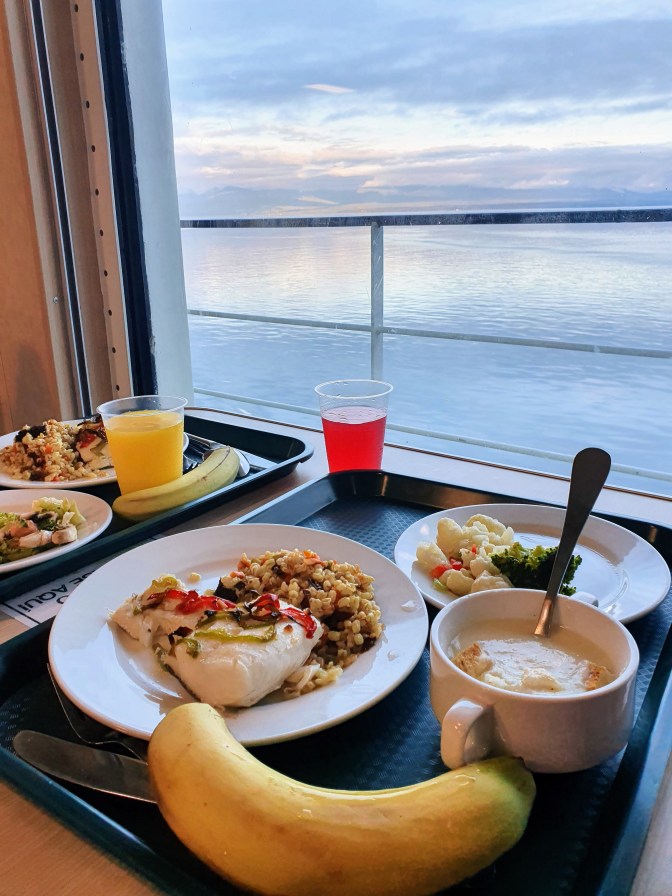
In terms of food, you are provided with large meals in the main canteen area. There is also a basic cafe where you can get hot drinks at certain times of the day. We were so well fed that we certainly didn’t need any more food, but you might still want to bring a few snacks.
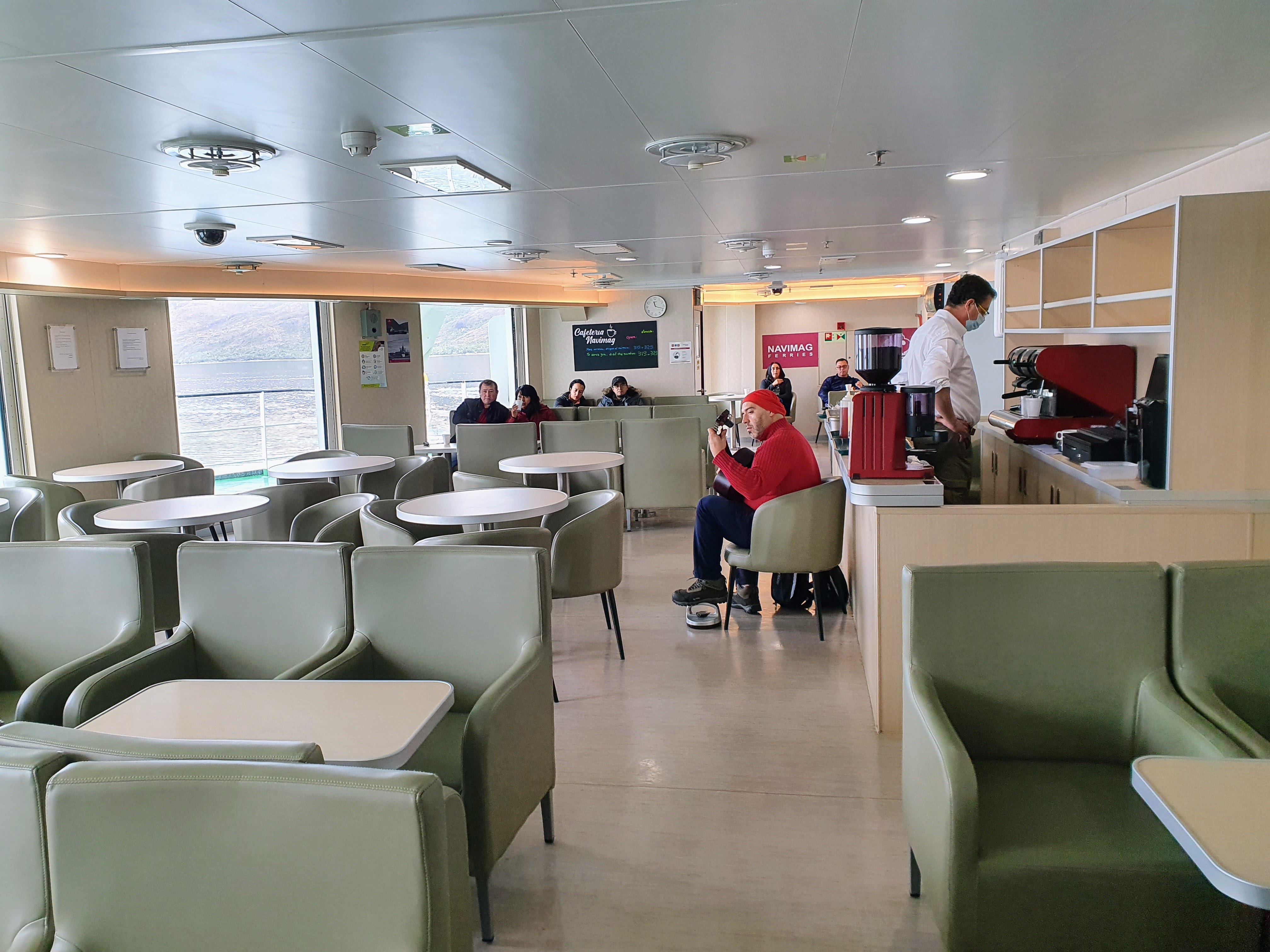
In terms of your free time, I’d like to emphasise again that this is a ferry as opposed to a cruise ship. So please don’t expect gyms, shops or even internet connection! There is a very small exercise area where the guide led a couple of yoga sessions, but I think this is normally just for the crew and off-limits to the passengers. At least when we went, there was no wifi connection on board and you can forget about mobile phone service once you get away from Puerto Montt. We were fully aware of this before we left and actually saw it as a perk of the trip. Whilst our travelling up to that point was amazing, it had been very hectic and we rarely made time to slow down and relax. The disconnection really added to the slow and relaxed feel of travelling by ferry. As such, we made sure we had plenty of books on our kindles before leaving along with a pack of playing cards to keep us entertained. I also had my laptop, so I was able to sort some photos on my hard drive and write the notes that would turn into this post three and a half years later… So most of our days were spent sat in the canteen area (which is available outside of meal times as well); or wandering the decks when possible to enjoy the views or hunt for wildlife. The guides also made an effort to entertain the guests. There were information sessions about the local area and its culture and wildlife, a couple of movies played during the evenings, yoga sessions and several trips to the bridge to see how the boat was sailed (although I don’t know whether or not the last two of these were just because there was so few people on board). The main guide also played his ukulele in the cafe at one point and was pretty talented! So we were never bored and certainly enjoyed our trip despite the weather meaning we ended up staying inside more than we would have wanted to.
Day 1 – Setting off from Puerto Montt
Check-in for the ferry was between 10 and 11 in the morning prior to setting off later in the afternoon. It is important to note that the ferry did not depart from near the office in Puerto Montt, rather it left from a pier 10km along the lake. Our Uber dropped us off at the pier at about 10:45. It was only as the car drove away that we realised that the check-in office was not at the pier but rather a bit further along the road. So we humped our luggage along the main road, up through the large car park and to the marquee that acted as the office. The check-in process was pretty straightforward, you just needed to show your negative PCR or Rapid Antigen test result along with your Chile Mobility Pass (I’m not sure what you would need to check-in now!). They then took you along to the ferry in a van at the appropriate time. We got lucky in that there were hardly any passengers joining but if you are doing the trip now out of COVID and more during peak season, I’d make sure you get there an awful lot earlier than we did.
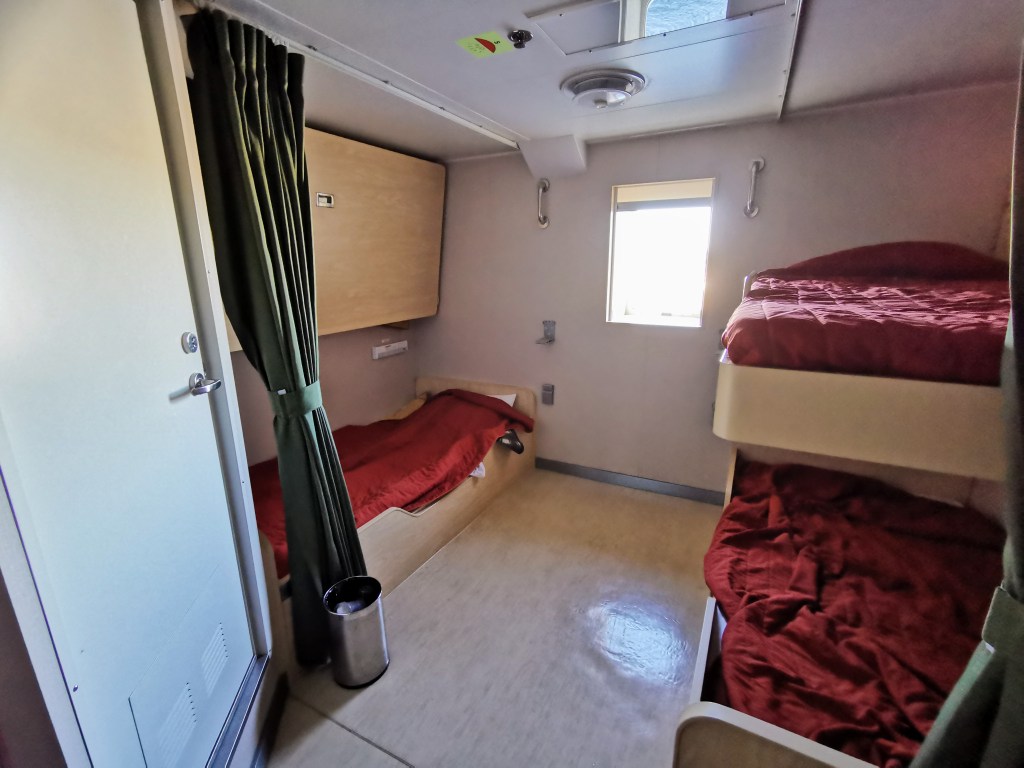
Due to COVID, we couldn’t join others in a cabin so had to pay for our own. But, as already mentioned, because we phoned the office whilst booking they gave us 10% off the price compared to on the website. The cabin we chose was the cheapest option, so it was fairly small and without a porthole, but for two people (rather than four) it was absolutely fine. If you are sharing the cabin with two more people (potentially strangers depending on the option you pick) then it would feel pretty cramped. But, then again, we rarely spent that much time in the cabin other than for sleeping.
After being given our keys and information about our cabin we were able to unpack some of our stuff into the room before returning our suitcase and bigger bag. These would be stored during the journey as there isn’t room in the cabins. So, have a think beforehand about what you might want to have during the journey, as I’m not sure how easy it would be to then access your luggage again during the trip.
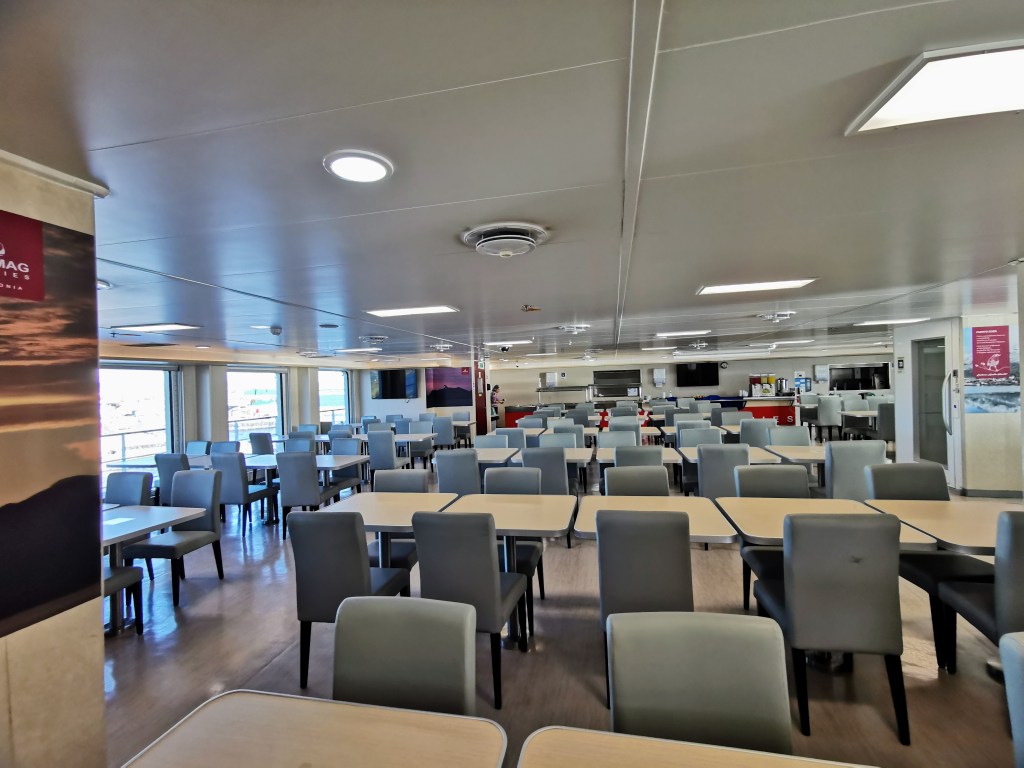
After relaxing for a bit we went to the large dining hall for lunch. We were quite confused at the number of tables compared to the number of people there but it turns out that pre-COVID the ferry would commonly transport between 150 and 200 passengers but for our trip there would be… 16. Whilst not great financially for the company; we certainly enjoyed it being more empty. It meant that we always had access to a window seat during meals or throughout the day and it was easy to walk around on the deck of the ship.
After several gloomy days in Puerto Montt, there was finally a little snippet of sunshine so we spent a while sitting at the front of the ship anticipating setting off. We didn’t have to wait as long as I thought and, taken by surprise, I jumped out of my skin when the horn blared three long bursts to signal the start of our journey. It was slow going at first, as we carefully left the area near the town, but the boat soon got into its stride as it set off for the straight between the mainland and Chiloe Island. After another huge meal, we got a brief glimpse of the Sun descending past the clouds before heading to our cabin for the night.

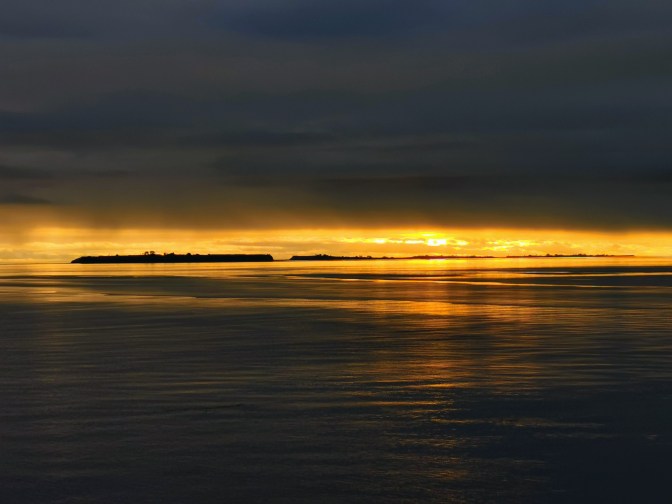
Day 2 – Whales and Rainbows
I excitedly got up twenty minutes before sunrise, partly because it would be nice to see it from the boat but mainly because we were told this was a good time to spot whales due to the angle and softness of the light. After quickly throwing on some clothes, I left the cabin, opened the main hatch at the end of the corridor into… pouring, driving rain. It seemed the weather we’d experienced during the previous five days in Puerto Montt was following us. I still went to one of the covered passages around the edge of the boat but with the gloom and choppy water I was unable to spot anything before heading inside to wait for breakfast.
Not too long after, however, we first saw from the window the faint puff of water rising above the waves. This is the indicator to look out for when trying to spot whales. Over the next few hours we repeatedly saw these signs of the whales swimming below the surface at varying distances from the boat. And sometimes, they were accompanied by the body or a fin of a humpback whale. It was amazing to even get a glimpse of these magnificent creatures. Plus, when there wasn’t a whale there were often sea lions swimming by, sometimes even jumping out of the water. Whilst we knew there was a chance of seeing some wildlife on the trip, neither of us quite expected it to be so common. We had already been told that during this first part of the trip it would be the most likely place to spot whales, and it certainly proved to be true. Apparently, it is also reasonably common to spot blue whales along this straight, due to the high volume of krill, but that was one wish too far.

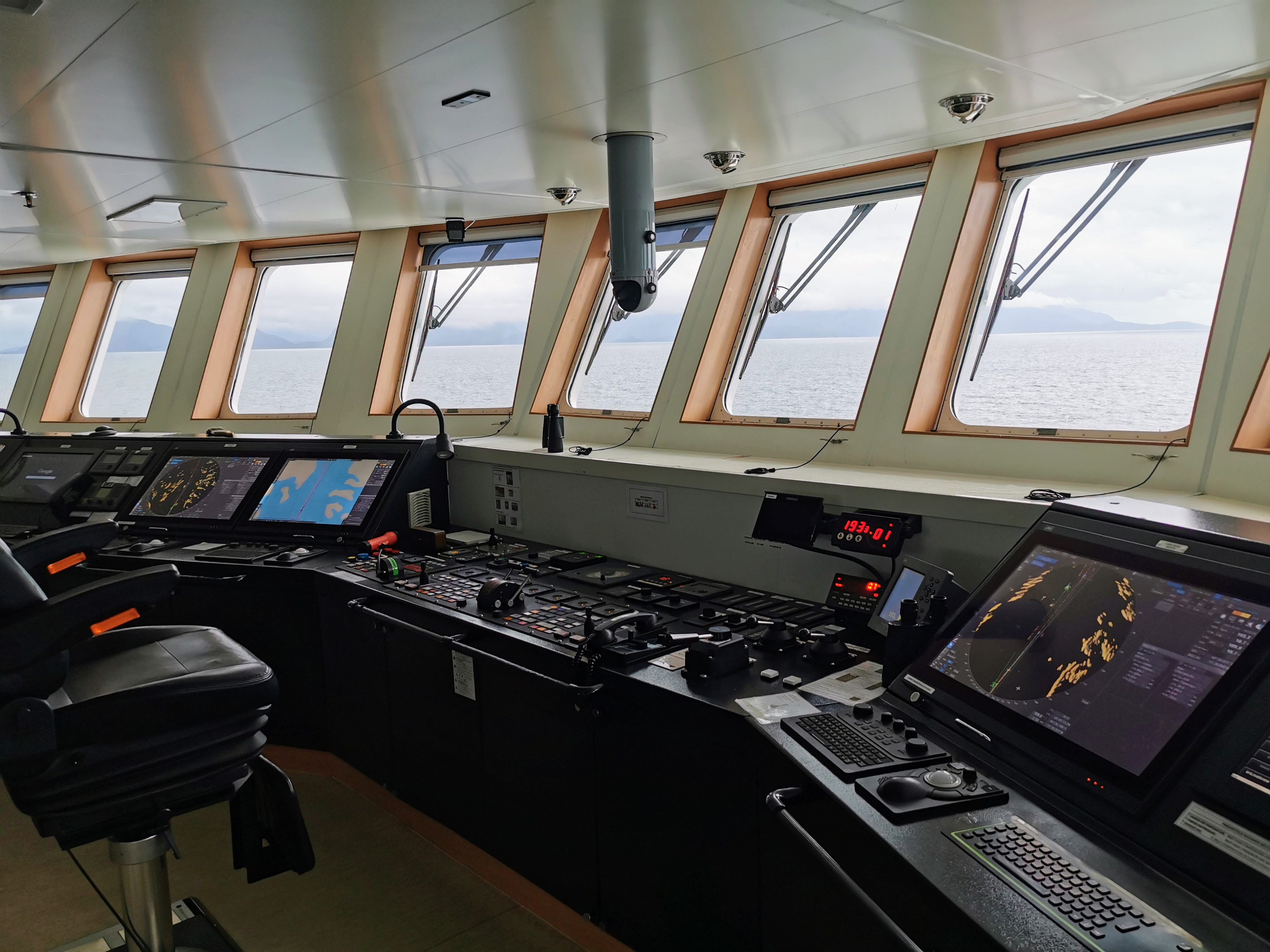
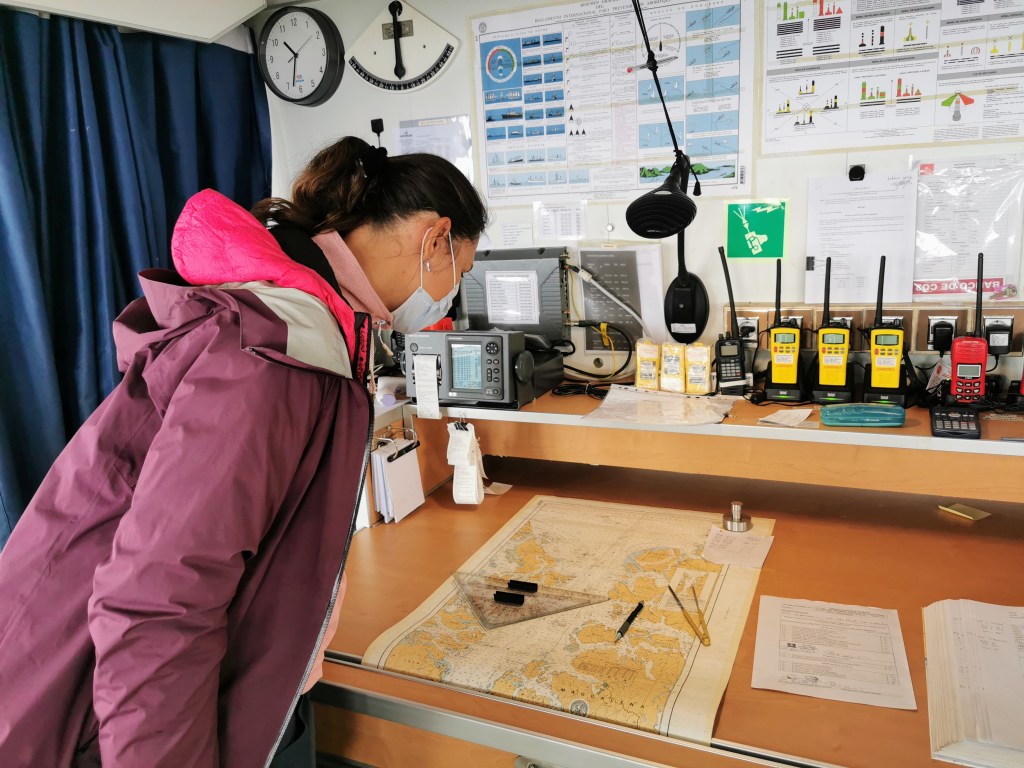
Later in the morning the passengers were invited to the command deck to see how the boat was run. I don’t know if this is common practise or if it was just due to the small numbers of passengers during that specific trip, but it was very cool to chat to the captain and learn a bit about the processes involved in getting a boat of this size to its destination. As well as the high tech equipment, the course was still plotted in pencil on large paper maps of the area, which made the whole experience feel a lot more authentic for some reason.
There was still time to fit in an hour’s yoga session before lunch. Whilst it had been a long time since I’d last had a go at yoga, the combination of lots of sitting around and huge meals meant that some physical activity was definitely in order.
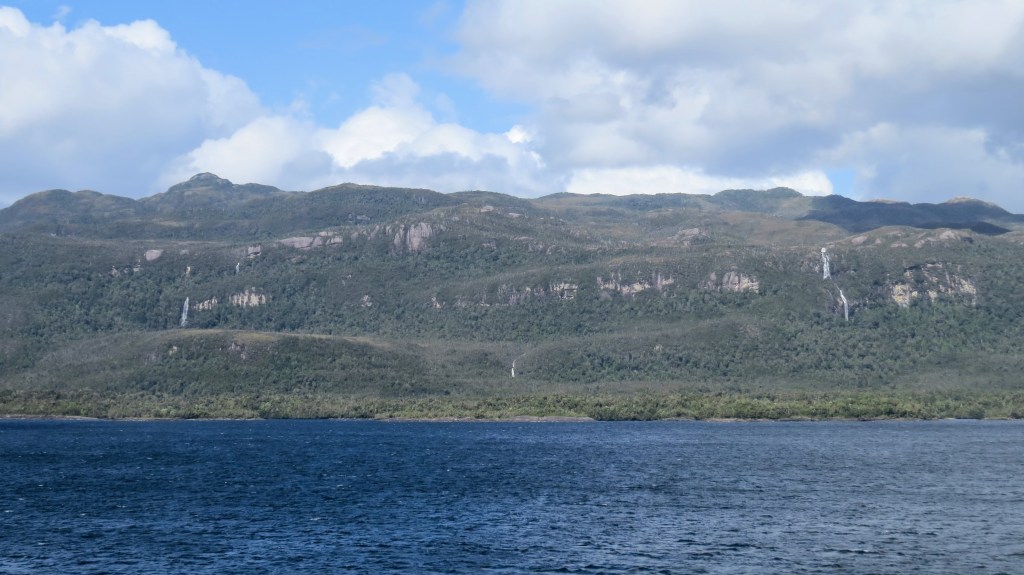
The afternoon was spent eagerly whale watching in the constantly varying weather. Having so much cloud was very disappointing; as it cloaked any of the larger peaks you would normally see on this voyage, including the volcanoes that line the route. One advantage of the constantly interchanging rain and patches of sun, however, was that they formed the most spectacular rainbows I’ve ever seen. The colours were so intense that I know the photos look photoshopped – but I promise you they did look like that!
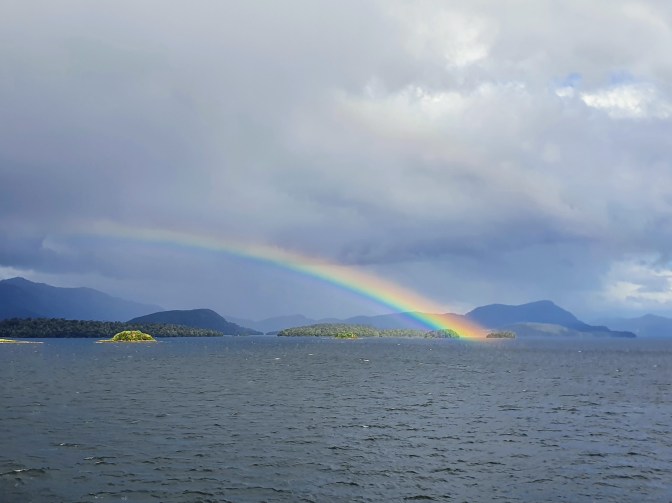
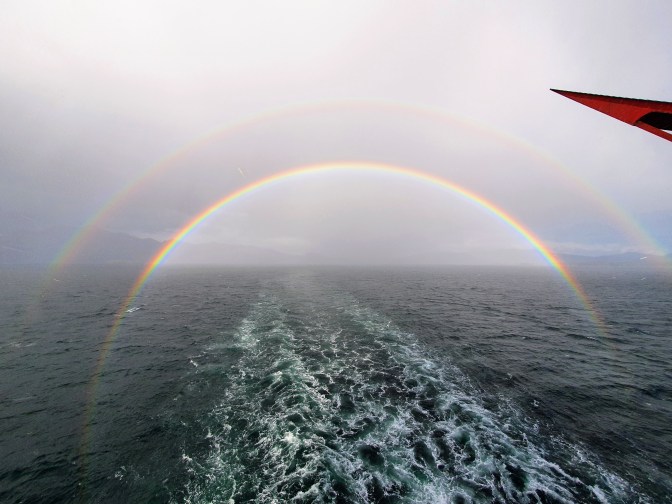
Prior to the evening meal we again went up to the command deck to see the boat directed to the point where we would anchor for the night. Normally the voyage would still continue but beyond the channels we were currently occupying, the open ocean was too rough to continue. We were told that the trip could potentially continue in swells of up to 5m but the current waves in the open ocean were above 8m. Whilst the crew re-evaluated the conditions every three hours during the night, we weren’t able to set off again until the following morning.

The evening was a quiet affair with a movie being put on in the dining area. We also asked if it was possible to change cabin, as ours was the one nearest to the engines and it had been quite noisy the previous night. Not only did they kindly oblige but because there were so many empty cabins they also moved us to a nicer one with a porthole. Just goes to show that it doesn’t hurt to ask.
Day 3 – Waves
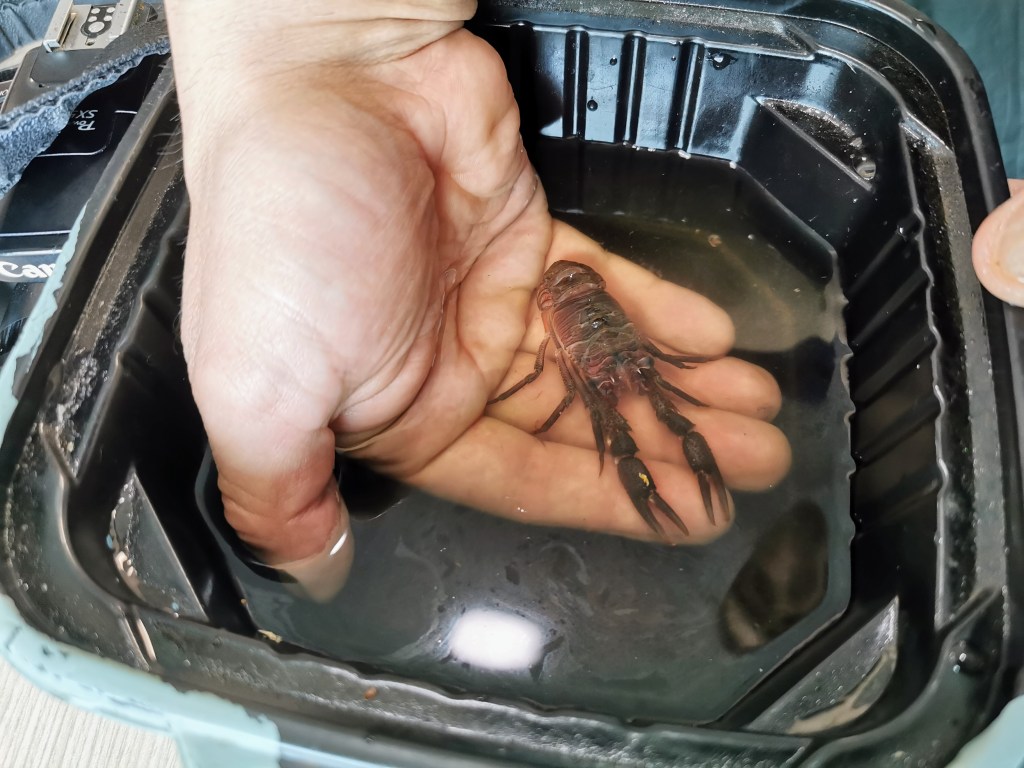
The morning started much the same way as the previous one, except that I could see the cloud and rain from our window rather than having to go outside. By breakfast time the sun had made an appearance but the clouds still lingered for the rest of the day, meaning rain mingled with the mist and occasional patches of blue sky. The morning and beginning of the afternoon was spent working our way through the channels. The views were pretty but would have been better if we could have seen beyond the slopes rising from the water. The low thick cloud still prevented this however. One of the crew rather randomly brought around a couple of trays of water containing krill that had been trapped in the ship and they were much bigger than I’d imagined them to be.
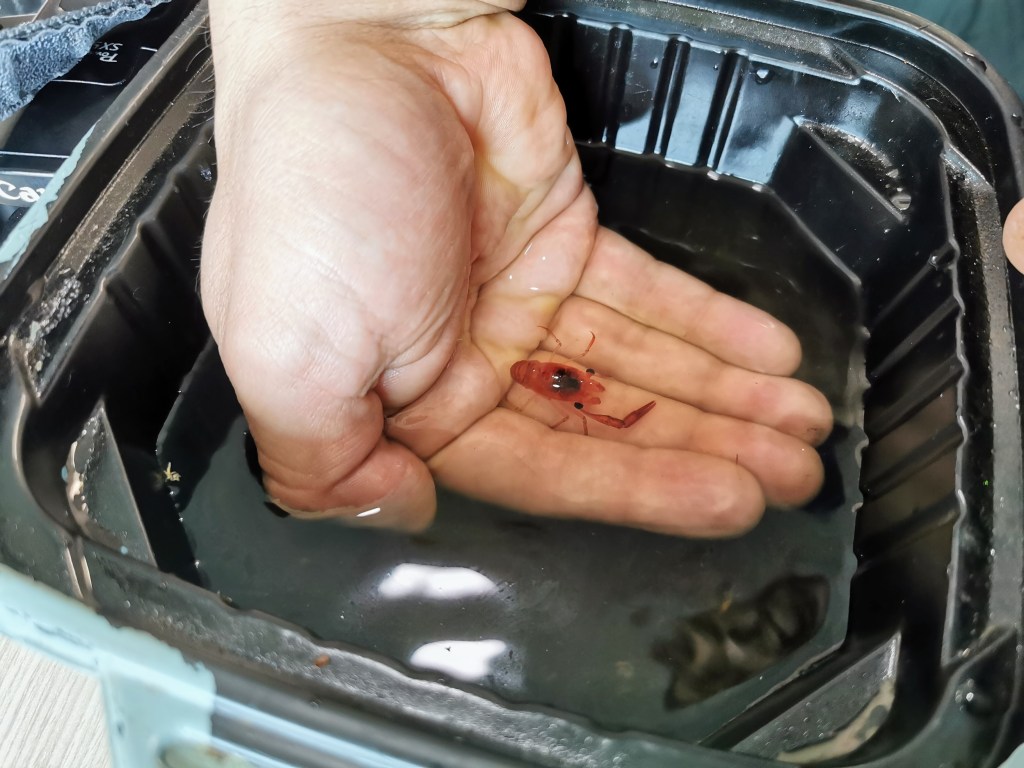
By about 1pm we had reached the end of the channels but ended up going round in circles for an hour or so as we waited for the waves to settle enough to finally head out into the open ocean. The channels we had been travelling through were not as popular with whales but when we entered the open ocean we managed to see a couple of plumes of mist far away signalling we were not alone on the waters. As soon as we left the channel you could feel that waves were larger as the ship bobbed up and down in a repetitive manner. We again went up to the command tower and the height provided an excellent vantage point to see the massive swell of the waves and the movement of the boat. We were treated to one more beautiful rainbow before heading back down to the main decks.
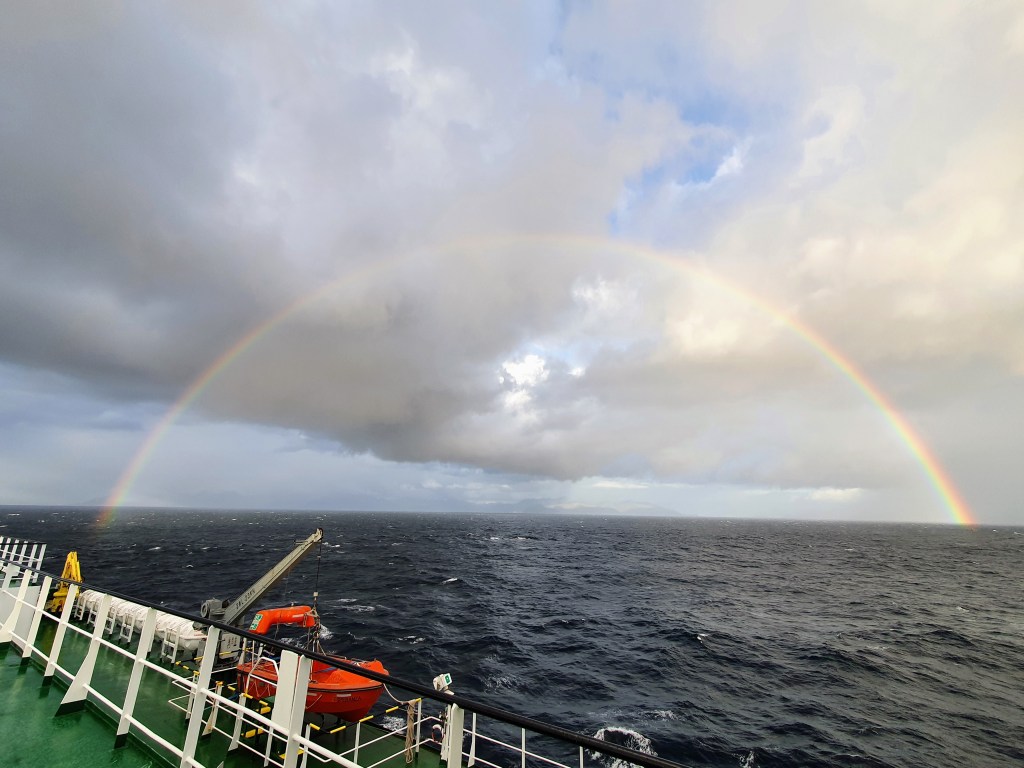
As we got into the evening the waves became worse and this progressed into the night as well, so it wasn’t the most restful of nights. At one point during the night I woke up to find myself sliding a couple of inches back and forth along the mattress in relation to the swaying of the boat.
Day 4 – Wrecks and Puerto Eden
For the third morning in a row, the sunrise was obscured by the cloud and rain. Only this time it didn’t shift at all. Whilst previously the weather had been constantly changing, today the thick cloud covered the sky for the whole day. Luckily, the choppy water had calmed and there were a few things closer to the boat to enjoy, negating the lack of soaring, snow-capped peaks.
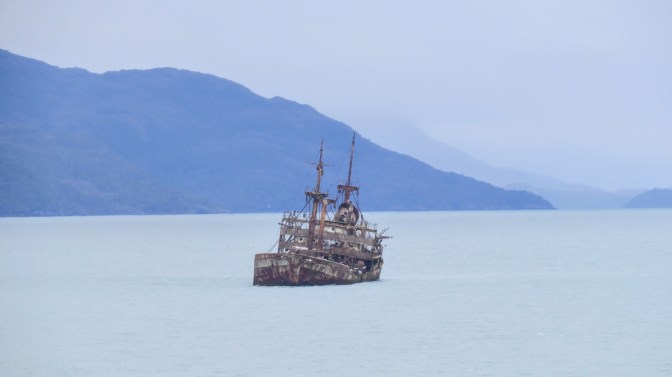
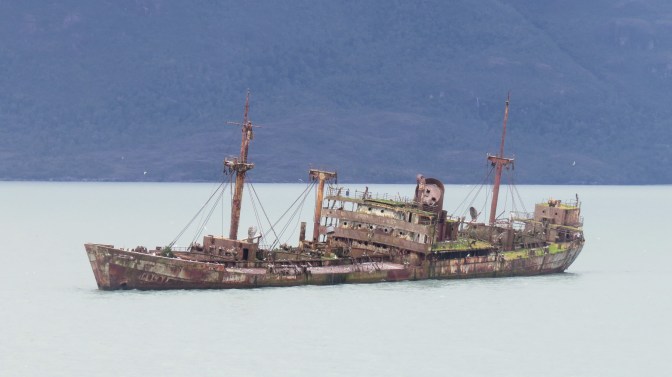
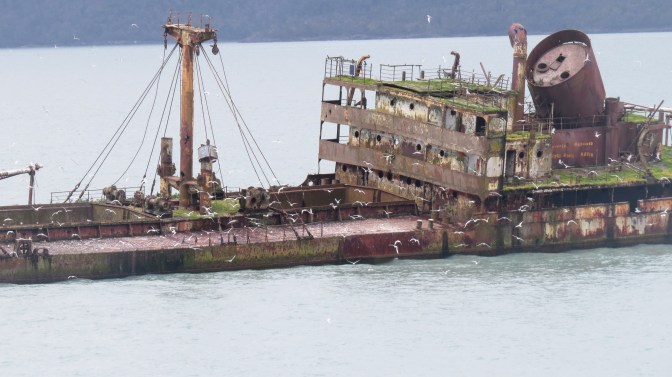
It was early afternoon when we first sighted the rusted wreck of the Capitan Leonidas perched ominously in the middle of the channel. It was quite cool to see the ship as we sailed past, disturbing the flock of birds that were situated around the plant life and trees that had started to claim the space for their own. The story related to the wreck was also quite interesting. The captain of the merchant ship had illegally sold his cargo of sugar and, knowing of the presence of the underwater mountain at this part of the channel, had knowingly sailed his boat into it, in the hope that the ship would sink and no one would be the wiser regarding his crime. What he hadn’t factored in, however, was that another ship had already crashed and sank at that spot and thus when he brought his own ship there it didn’t sink but rather stayed suspended above the water. I have no idea if this story is true or just a myth for tourists, but I enjoyed it none-the-less.
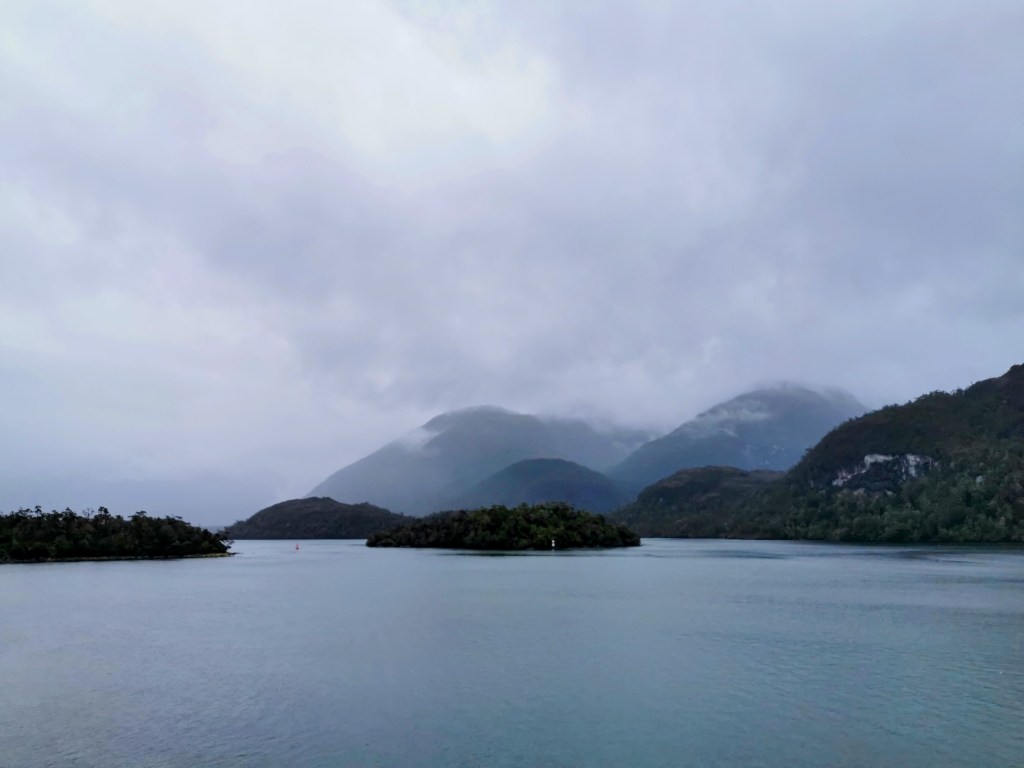
Next was the ‘English Narrows’, which, as the name suggests, is where the channel narrows and passes by several little islands. One of these islands has a statue of the Virgin Mary, which seemed very random in that vast unpopulated place. It was very impressive to see the huge ferry navigate the intricate channel.
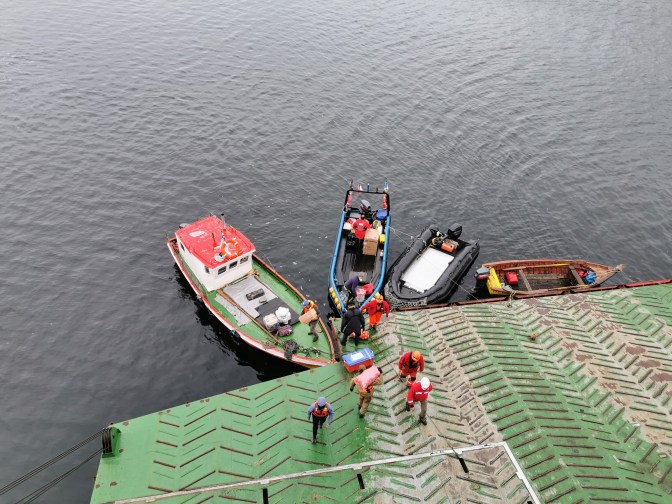
A while later we arrived at the only settlement in the region; Villa Puerto Edén. This small village now houses what is left of the indigenous community that once roamed the islands of this region. The painted houses looked quite pretty despite the dullness of the day. At this point the ferry stopped so that a couple of speed boats could come and greet us. One was collecting supplies from the ferry whilst the other was picking up passengers that had travelled from Puerto Montt. It is amazing that this is the only way for this community to reach the ‘outside world’.

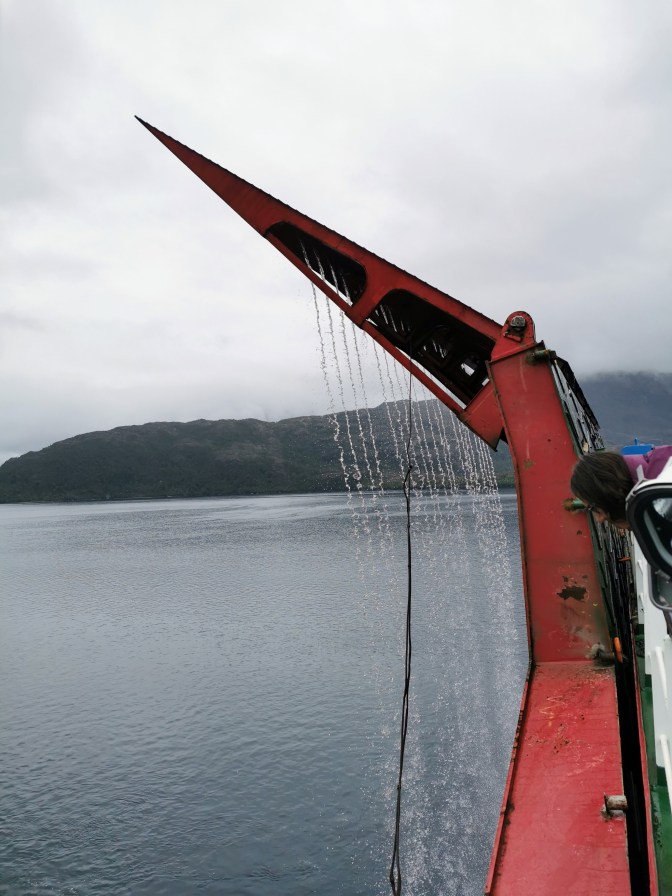
Just before dinner we had our final interesting sights. First a school of dolphins decided to follow the ferry for a little bit. It was really nice watching them effortlessly gliding by and jumping from the water. This was just as we were entering the Paso del Indio. This channel had a number of beautiful waterfalls cascading down its steep slopes.
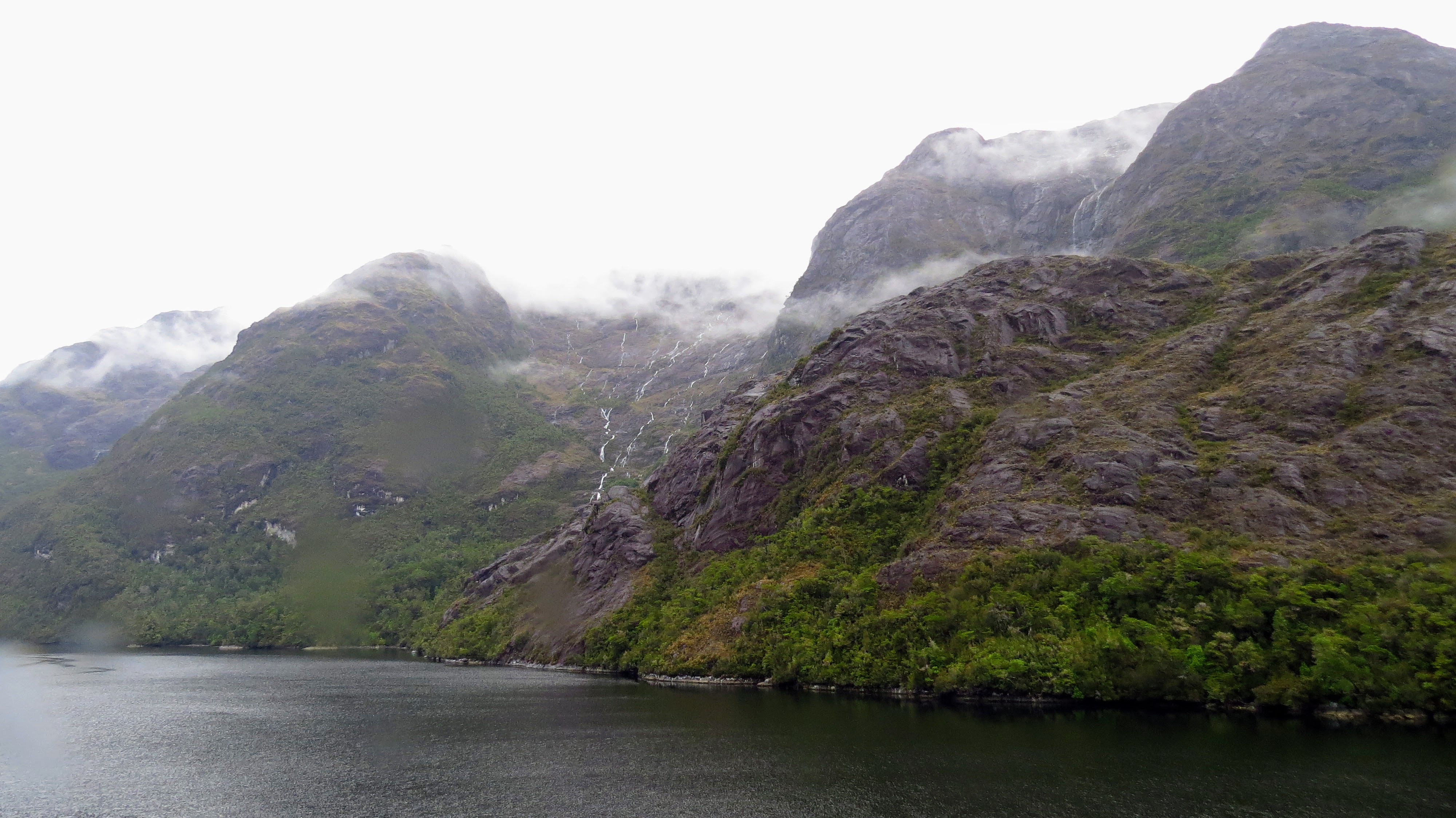
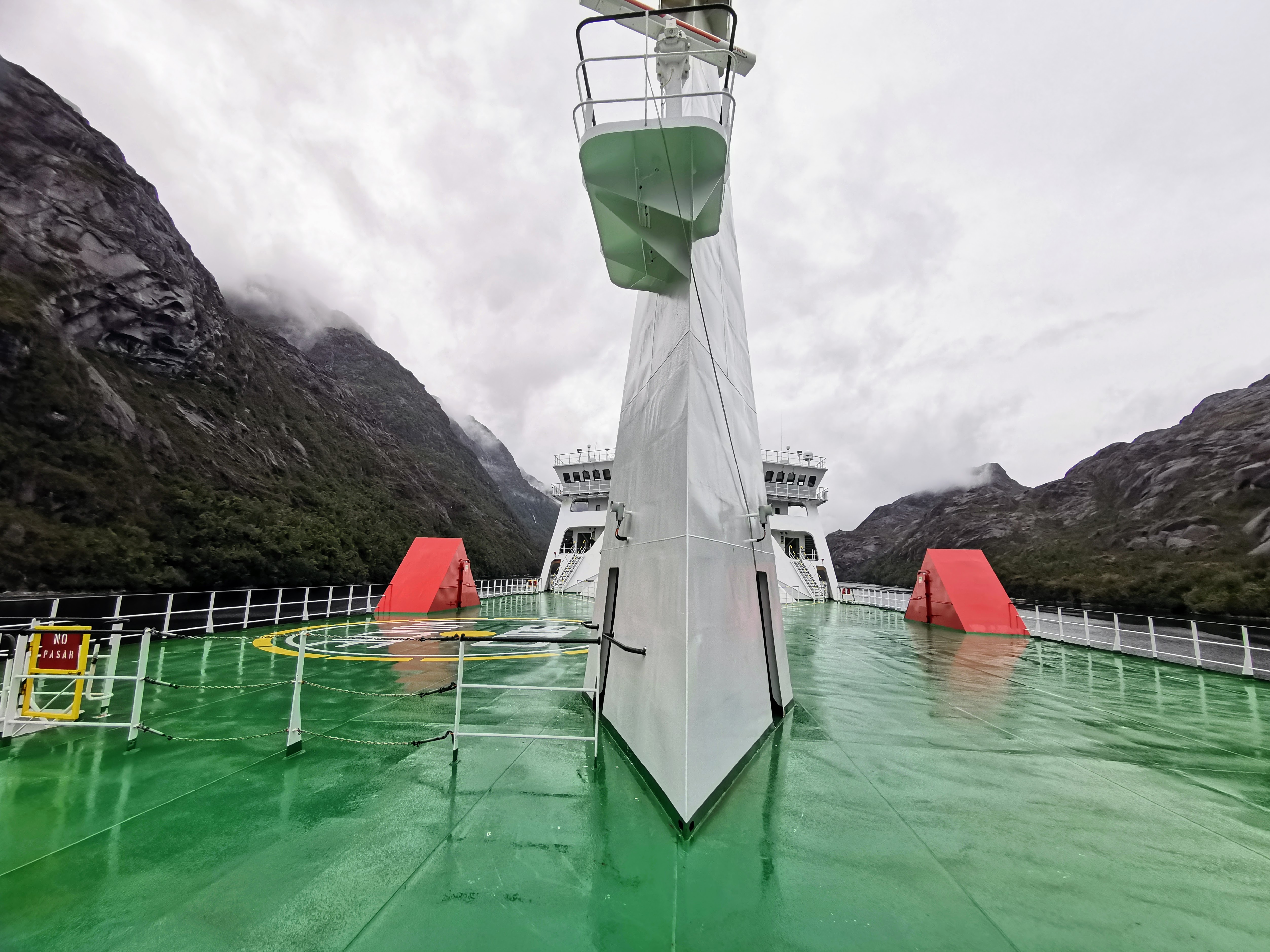
So, despite the depressing weather, it had been a very eventful day.
Day 5 – Arriving to Puerto Natales
Our final day on the ferry started in much the same way as the others. Getting up early for sunrise only to be met with a blanket of clouds. Whilst disappointing, at least it only hung around for the morning this time.
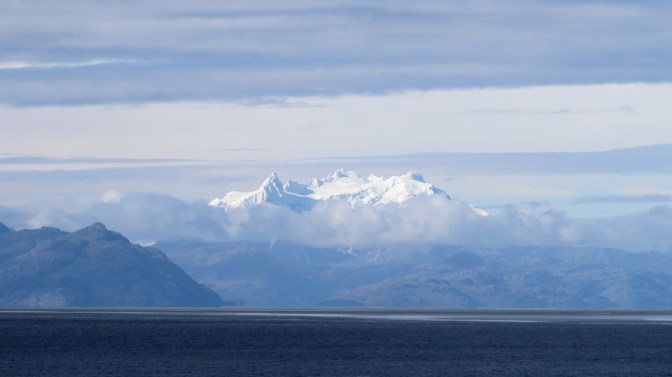
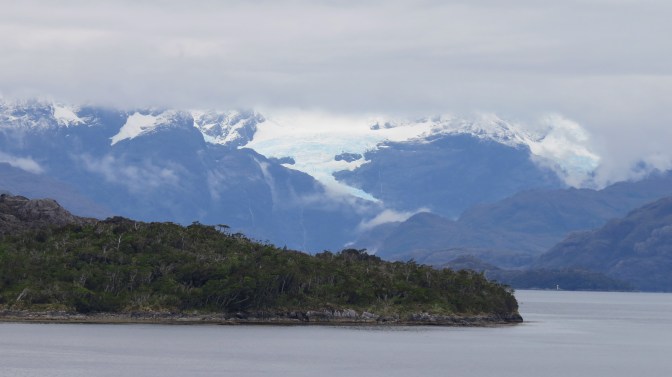
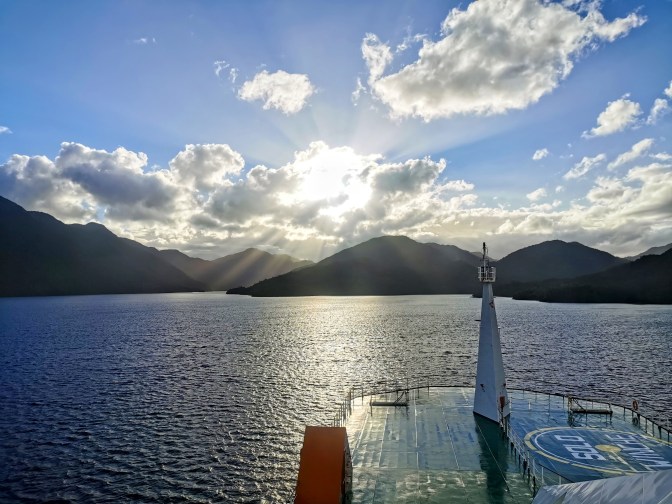
By midday the clouds had largely broken up, and the blue sky made such a difference to the surrounding landscape. We were able to see some of the snow-capped peaks and enjoy the glimmering reflections in the water.
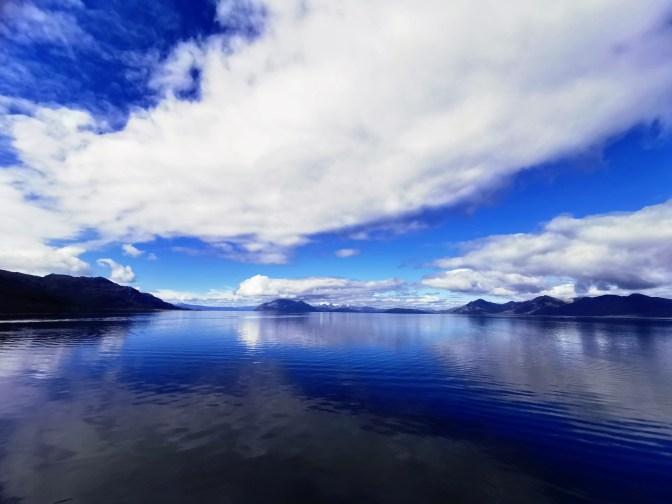
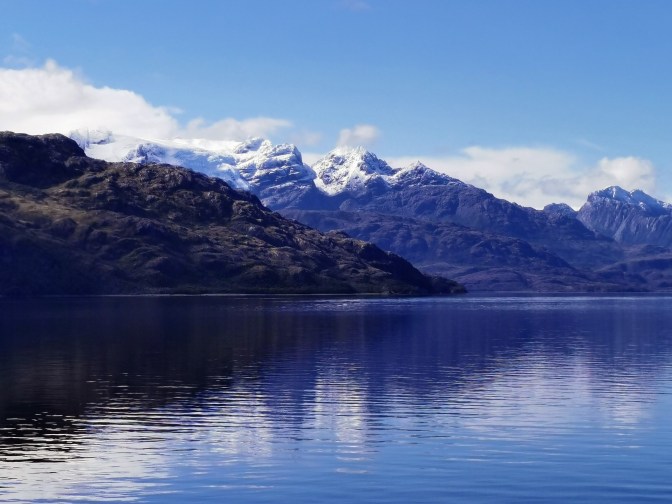
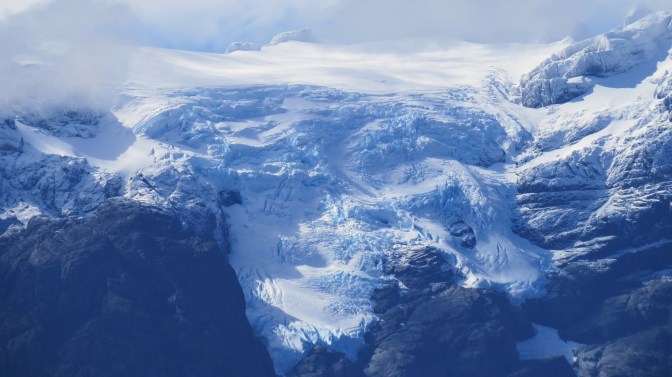
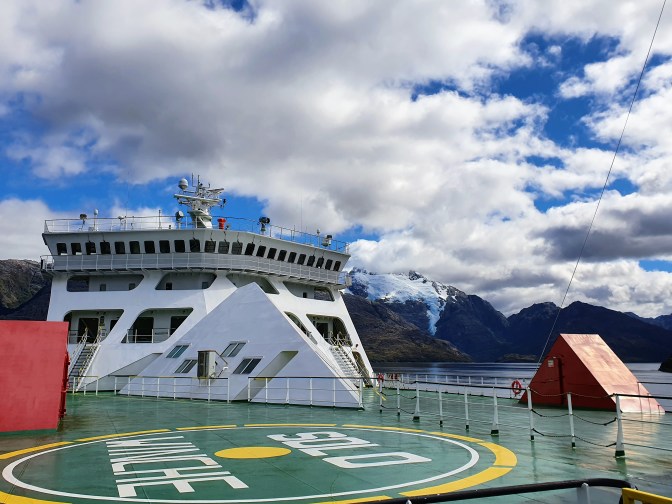
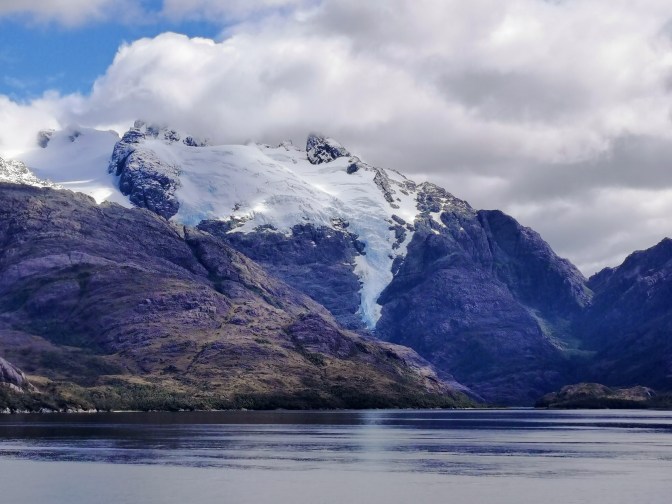
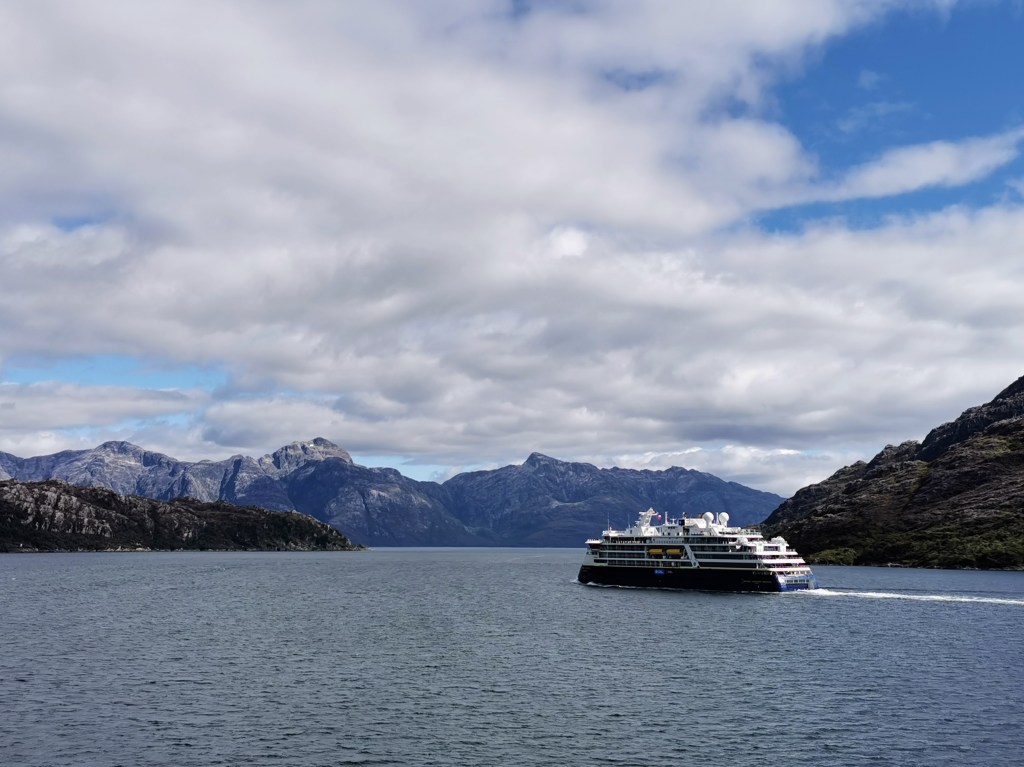
Later in the afternoon we reached Canal Kirke. This is the narrowest part of the whole trip and can only be attempted at certain points during the day, when the tide is at its peak and thus is not flowing too much in either direction. Again, it was amazing to see the ferry be able to manoeuvre in such a precise manner.
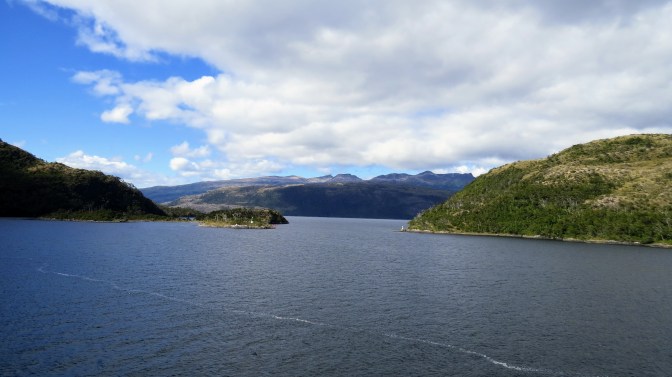

After this point, we were in the final stretch before arriving in Puerto Natales and it was glorious to just sit in the sunshine and admire the views.
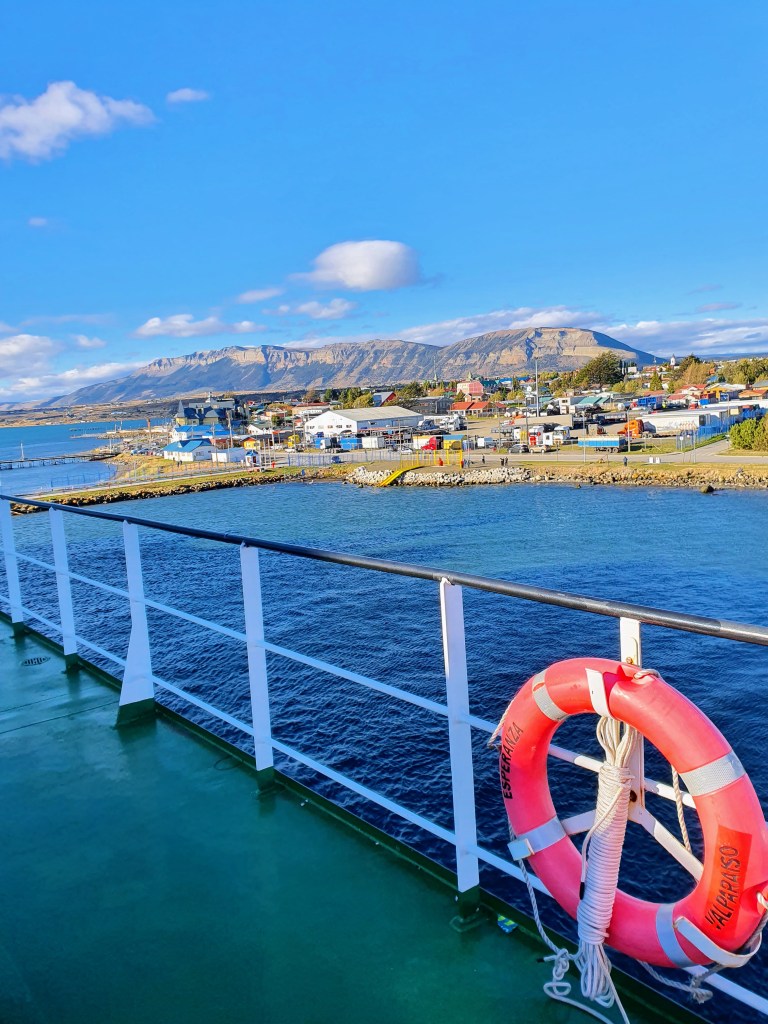
After the seemingly slow and serene progress over the course of the journey, it felt a rather abrupt way to end the voyage. Our stored luggage was brought to the entrance and we were quickly helped off the ferry straight into a coach and driven to our next point, in our case the bus station. It felt a bit surreal to be back on dry land and we were quite sad to leave the boat, even though it had actually only been a few days onboard.
Final thoughts
Prior to the trip I was a little reticent to spend so much money on a few days transport. But afterwards we were both so happy that we went. Despite the gloomy weather it was a really amazing experience. The crew were all very friendly and professional; the meals were always tasty and with huge portions; and the cabins were comfortable (although I’m not sure how it would have been with four people rather than just two). On top of that, seeing humpback whales amongst the other wildlife was a magical experience. The views were not as amazing as they could have been and yet were still thoroughly impressive. Plus, if you factor in all of the meals, the accommodation, the transport and the activities (sightseeing and wildlife watching); the overall price did not come to too much more than we would have paid otherwise, so it was definitely worth it for the fantastic time we had. So, if you’re unsure about whether to get the ferry or not, we’d definitely recommend that you go for it! Thanks for reading.
 Brit and Czech Abroad