So we deliberated for a long time about whether to do the Salkantay Trek or the Inca Trail. The Salkantay Trek was advertised as being more to do with nature and with less people on the trail. The Inca Trail is the more famous and popular option whilst also offering a more historical and cultural perspective by going through multiple Incan sites on the way to Machu Picchu.
I had done the Inca Trail seven years ago and thus we were more leaning towards the Salkantay Trek. But when we got to Cusco, we were able to access Inca Trail permits with just two days notice. Given that before COVID times you would normally have to book these permits six months in advance, it seemed an unbelievable opportunity to experience the Inca Trail with less people. And I didn’t want Radka to miss out on the iconic walk.
So in the end, with the help of Salkantay Trekking, we managed to combine the 5-day Salkantay Trek with the 4-day Inca Trail, cutting out the extra day in Machu Picchu and eliminating the pointless travelling back and forth to Cusco half way through.
So here is a write-up of the first part of our adventure – the Salkantay Trek…
Contents
Day 1- Humantay Lake and the Sky Camp
Day 1- Humantay Lake and the Sky Camp
An early start saw us picked up from our accommodation at about 4am and we were quickly joined by the other four members of our group, plus the two guides and the main chef. It was already light when we stopped off at Mollepata for an ‘optional breakfast’. It didn’t particularly seem optional and it wasn’t very good, especially for the price, but at least we left some money in the small community. The breakfast was also nearly left in the area given that we started driving on the smaller, winding roads towards our start point…
The view as we got higher became more and more impressive and we got our first look at the Salkantay Glacier in the distance, which we would walk towards during our first day and a half. Unfortunately, by the time we got to the point where we would start walking, the clouds had rolled in and you could barely see it. This was disappointing but the feeling was replaced with excitement as we started the steep walk up.
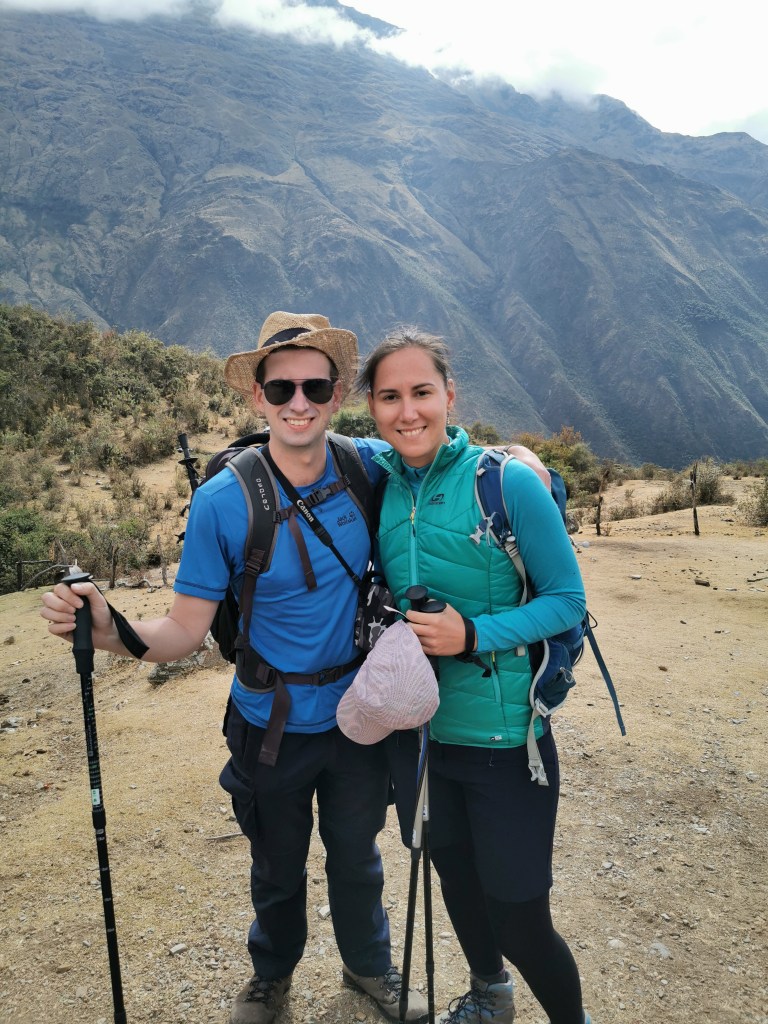
The start was taken at a slow pace with stops every 5 – 10 minutes to catch our breath and chew coca leaves. This tactic has been used for hundreds, if not thousands, of years in these parts and is supposed to aid oxygen flow throughout the body and thus help combat altitude sickness. I’m not a huge fan of the taste but it did seem to help with the walking.
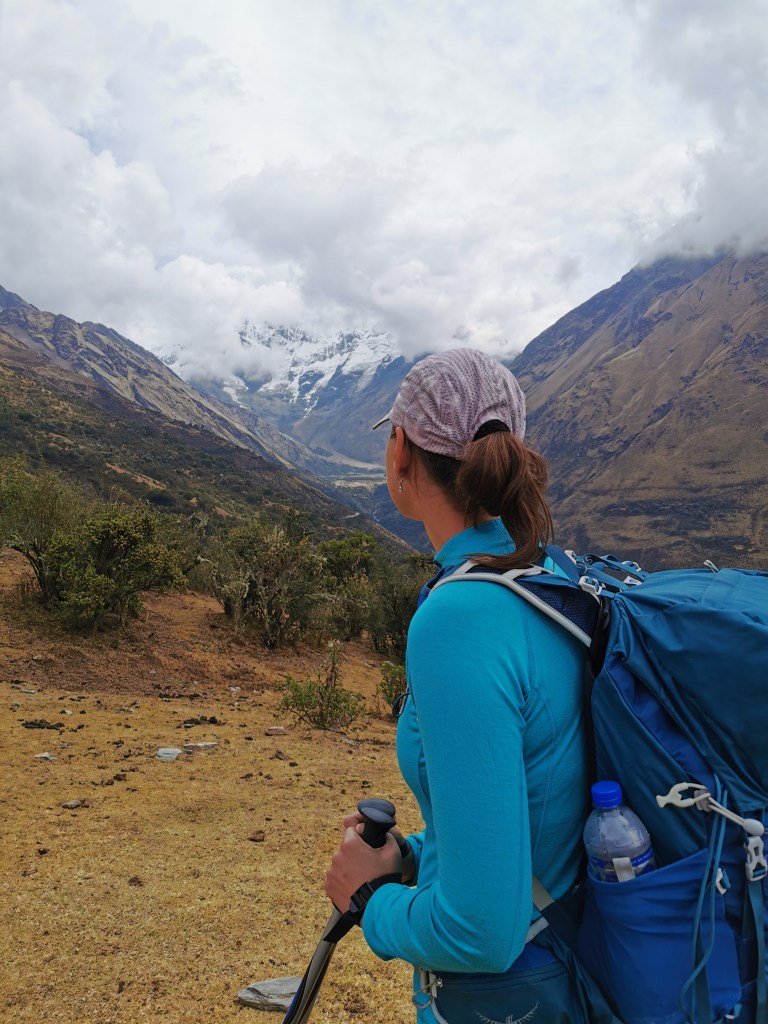
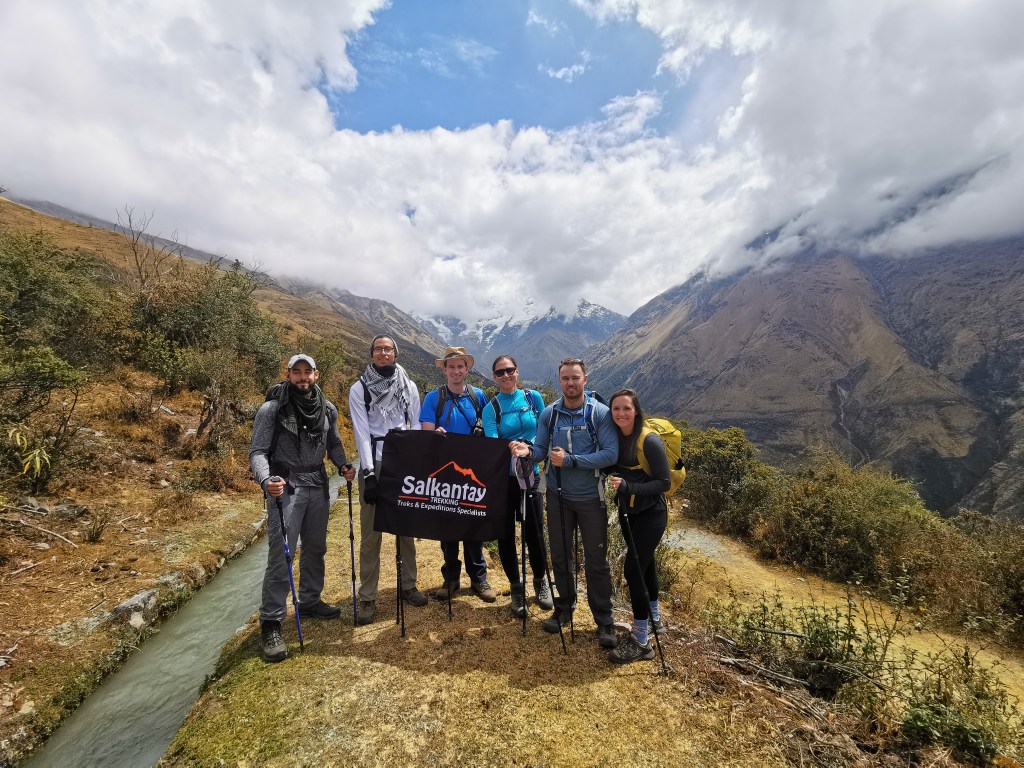
The path then became ‘Inca Flat’ – a term that was used multiple times during our treks and normally meant up and down (in other words, not at all flat) but in this case it wasn’t particularly strenuous. The path followed an old Incan waterway that has been updated to help with irrigation in the area. The walk was fine but you had to concentrate on the narrow route so that you didn’t either end up in the water or topple over the steep side. It also didn’t feel particularly ‘in nature’ given that you would catch glimpses of the road in the valley below.
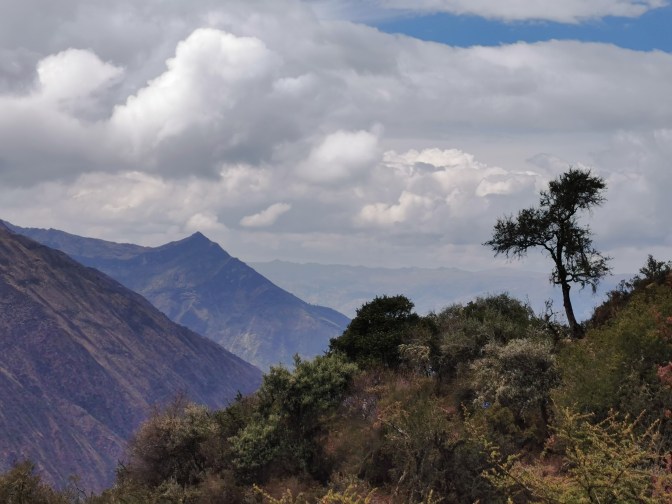
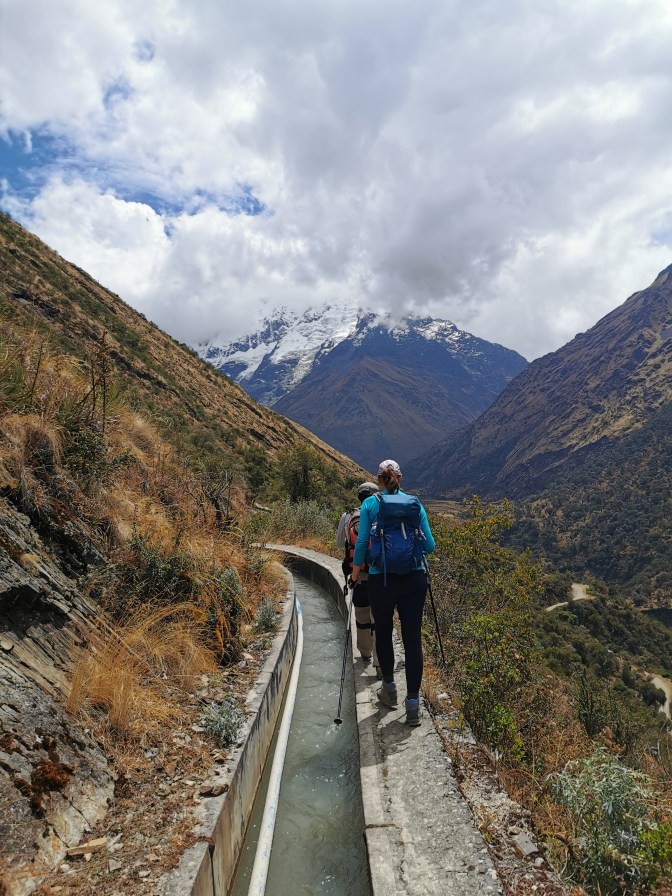
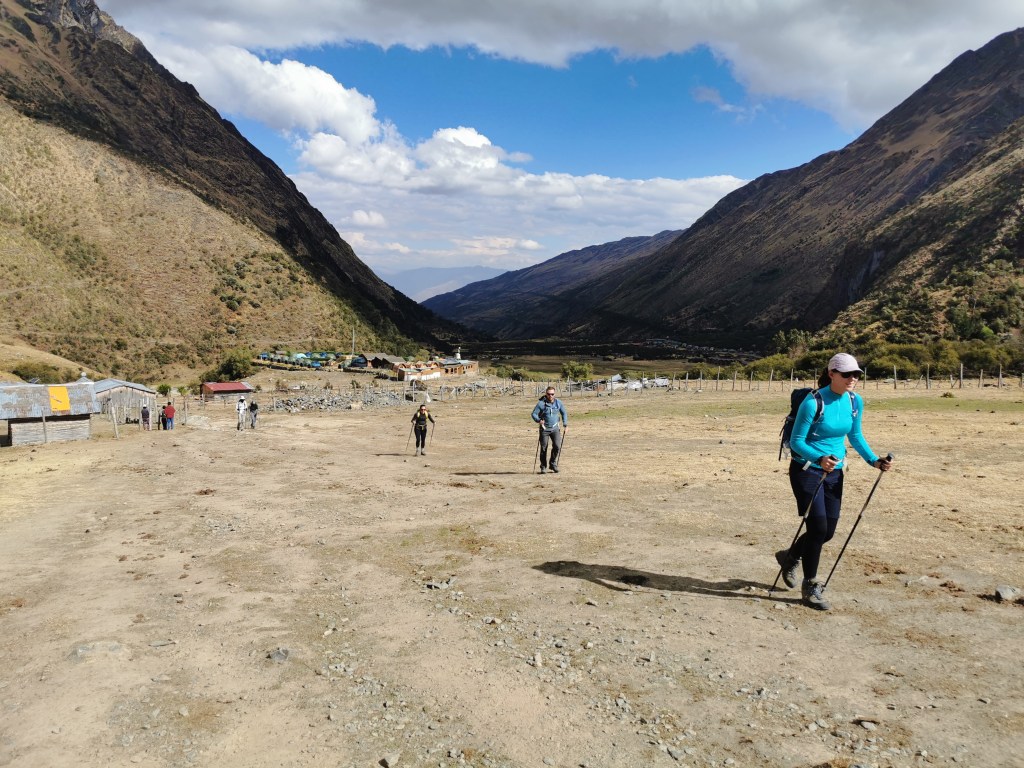
We carried along this path for a couple of hours and started noticing more and more buildings and campsites. We then got our first glimpse of our ‘sky camp’. This was one of the big selling points of the company. The huts for our first night were glass domes that allowed you to fall asleep whilst looking at the stars. The photos of them on the website looked amazing but what we saw from up on the hill were green plastic huts. Slightly perplexed, we headed down to drop off our stuff and investigate further. Turns out looks can be deceiving. Due to their proximity to the glacier, they are covered during the day to minimise reflecting sunlight and damaging the glacier, which I think is very clever. After dropping off our bags in the sky domes we sat down to our first meal made by our chef. It was amazing and a sign of things to come! The weather also improved as we sat there and the two glaciers you can see from the site started to become more visible.
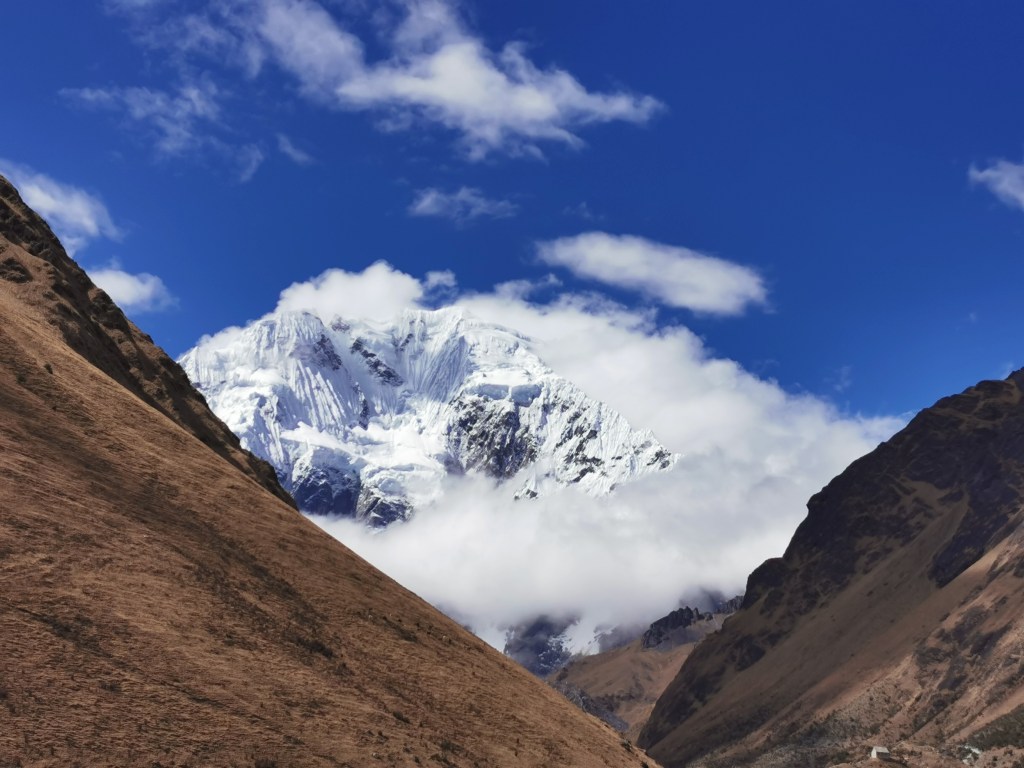
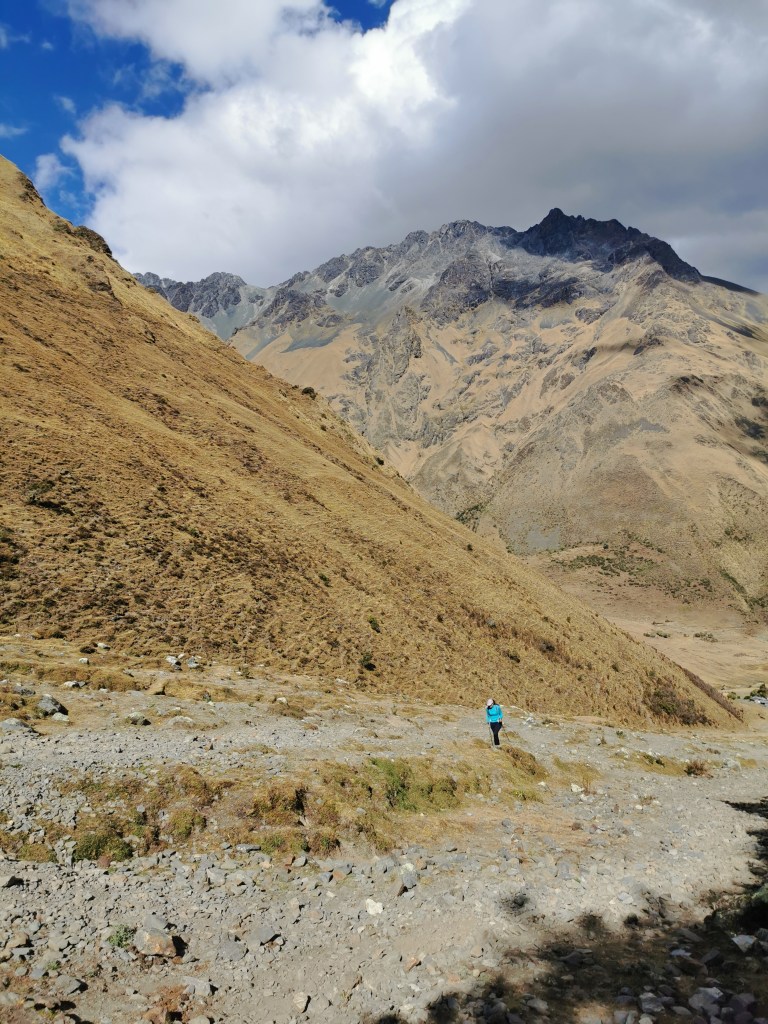
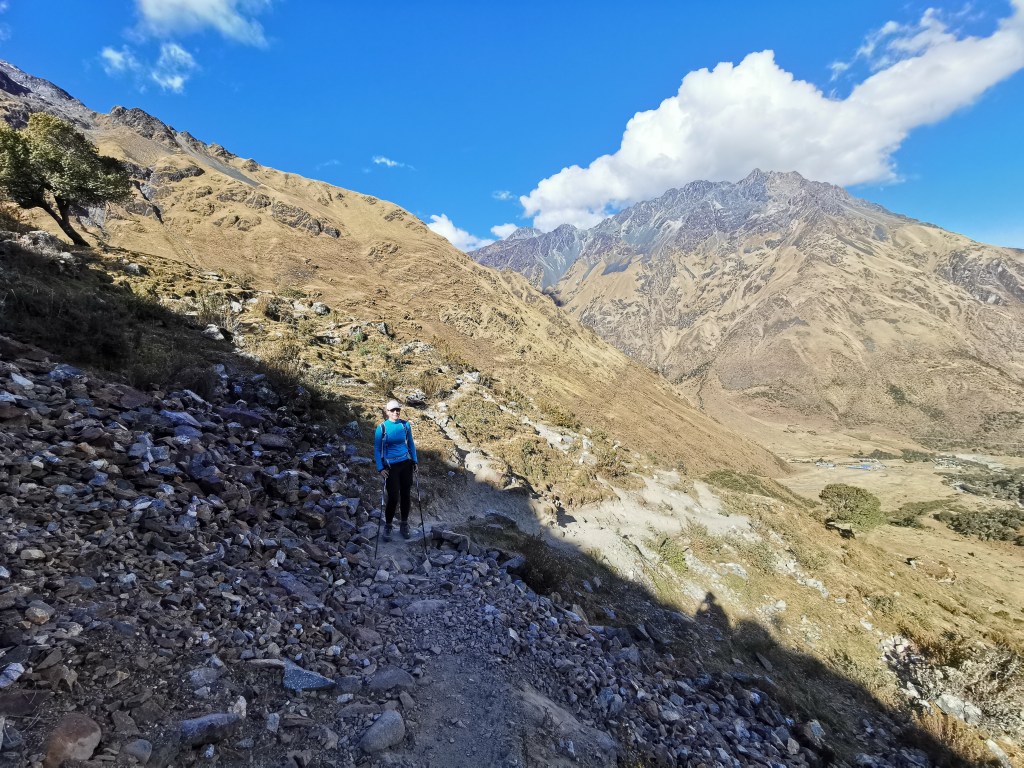
The afternoon was spent visiting Humantay Lake. It was a fairly steep climb up from our campsite . The lake sits at about 4200m above sea level and we were quickly short of breath and having to force ourselves up the slope. Another factor was that there were still some clouds sitting quite low and as the afternoon progressed we were worried that the sun would sink below them before we were able to see the effect of the rays on the water. So we hurried up as fast as we could in the circumstances.
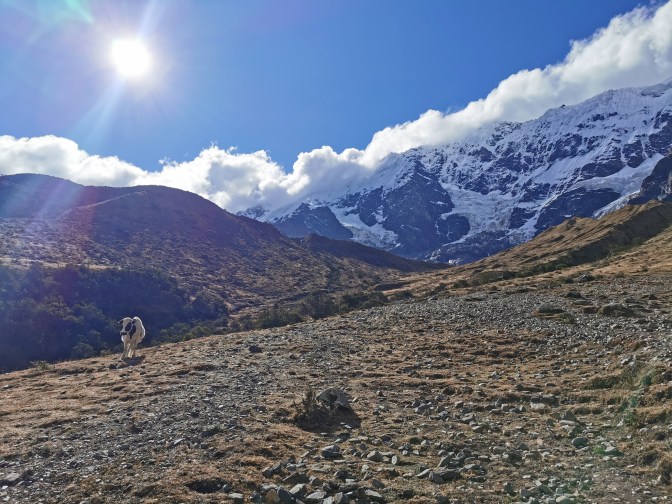
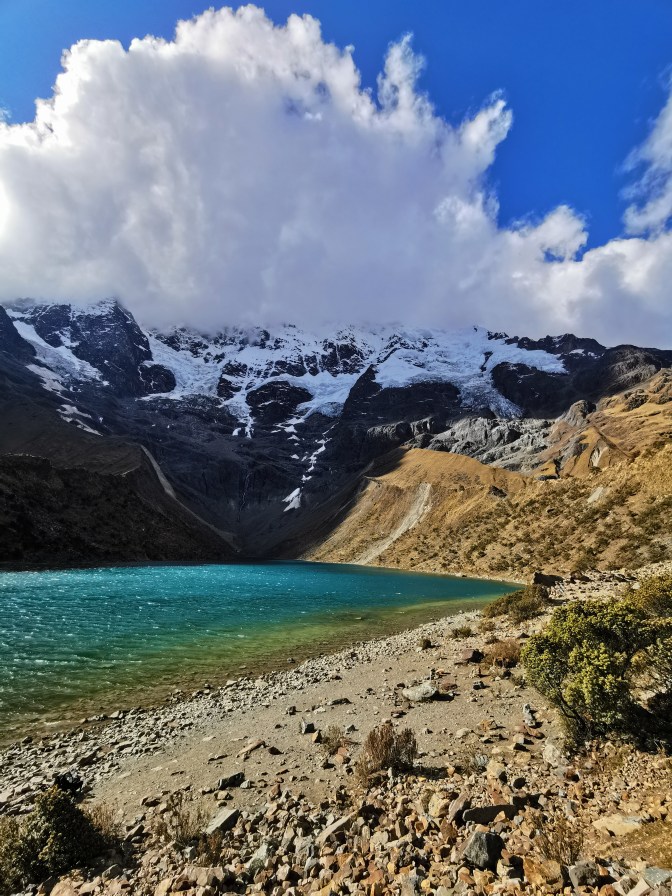
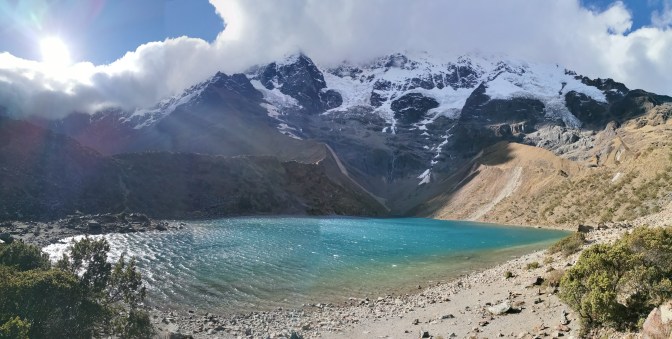
It was certainly worth it! The lake was in a beautiful setting in the mountains and the sunlight made the water turn different hues of blue and green. We were also right to hurry; we had about 20 minutes before the sun was hidden by the clouds and the magical effect was lost to an extent. It also went seriously cold as soon as the sun was no longer shining.

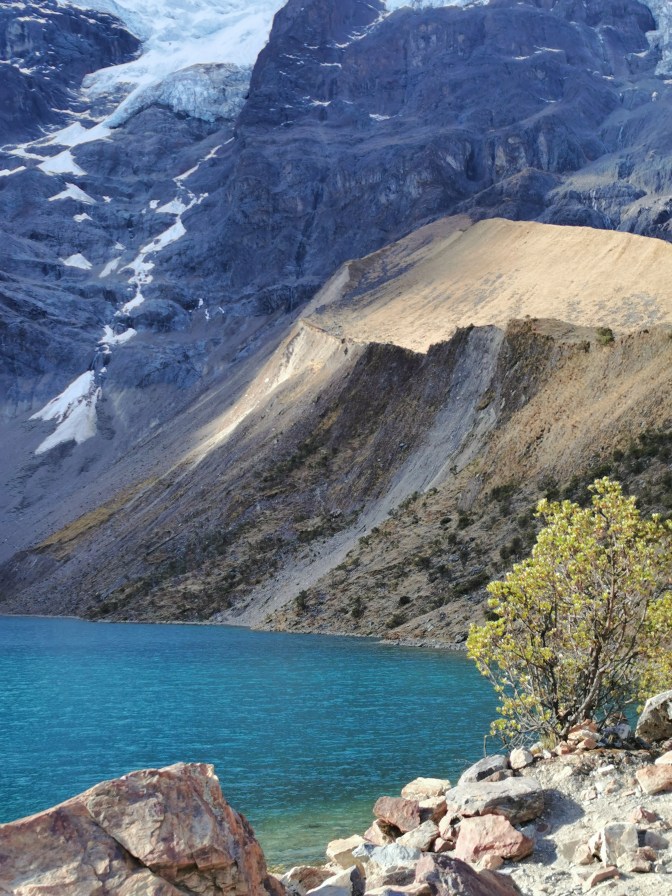
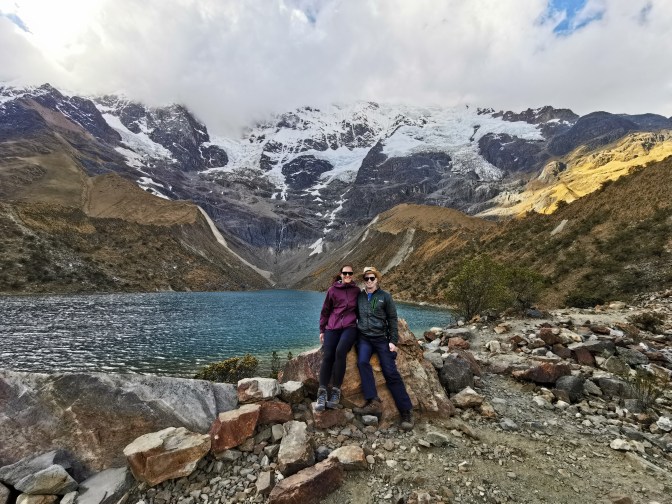
We then went down the same way and returned to find the plastic covers removed from the domes. The views around were amazing as we lost the light. We had another fantastic meal before retreating to our domes. Before going we were warned that it would get really cold, so that if we needed to get up to use the toilet during the night we needed to do it in slow stages – unzip the sleeping bag then wait, get half out then wait etc. or otherwise the sudden dramatic change in temperature could cause extreme altitude sickness such as splitting headaches, vomiting and possible hospitalisation! That dire warning did not spoil the experience, however, as we wrapped up warm in our multiple liners, sleeping bags and blankets and lay watching the millions of stars that appeared as soon as all of the lights went out at 8 o’clock.
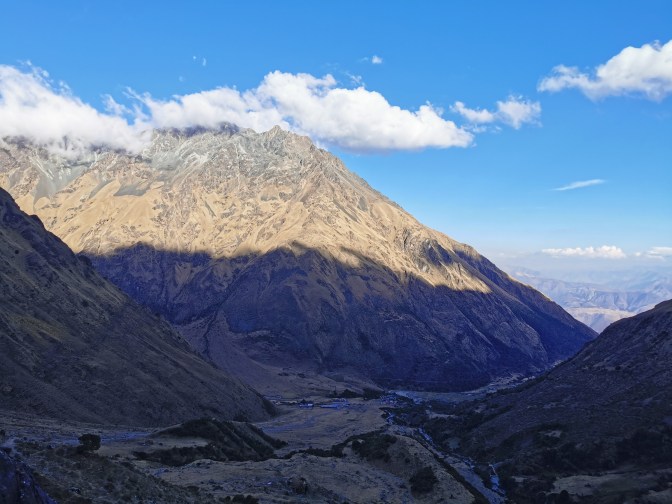
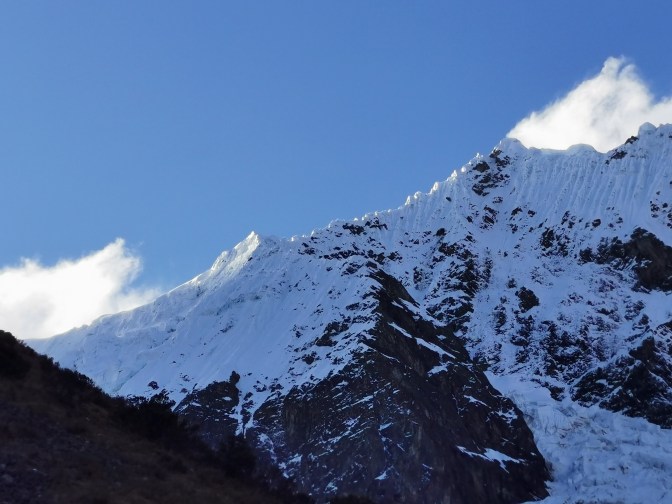
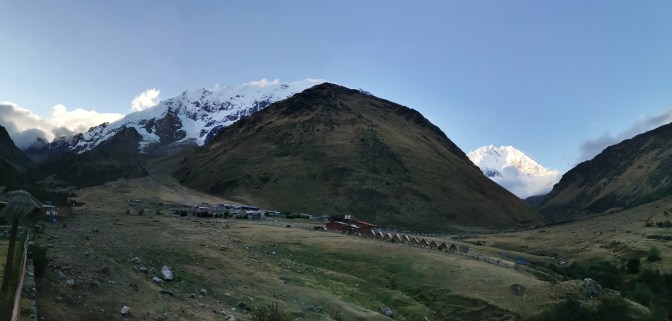
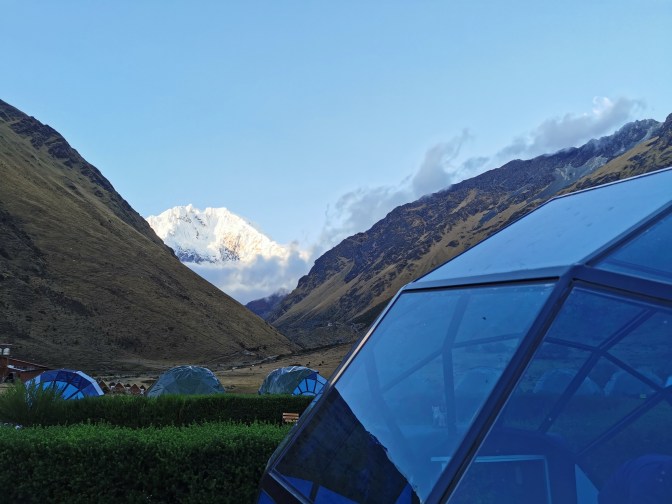

So whilst the first day didn’t start so well, it just got better and better. Humanatay lake and the Sky Domes were both spectacular.
Day 2 – The Salkantay Pass
An early wake up and breakfast had us ready to go and tackle the climb to the Salkantay Pass, the highest point of the trek at over 4,600m above sea level – the highest I’d ever been on foot!
The group dynamics got off to a slightly shaky start though… Whilst us pasty Europeans and the northern Americans were slavering on sunscreen the guide asked us what our team name should be. Looking around one of the team (who shall remain nameless) piped up “what about the White Faces” in relation to the layers of white plastered over some of our faces. The two Peruvian guides and one of the guys from Nicaragua exchanged glances and it took a full five seconds for the connotations of the name to dawn for everyone else. Luckily it was laughed off and we ended up going with ‘Ghost Team’, in relation to the sunscreen and the ponchos we ended up wearing. More on that in a bit.
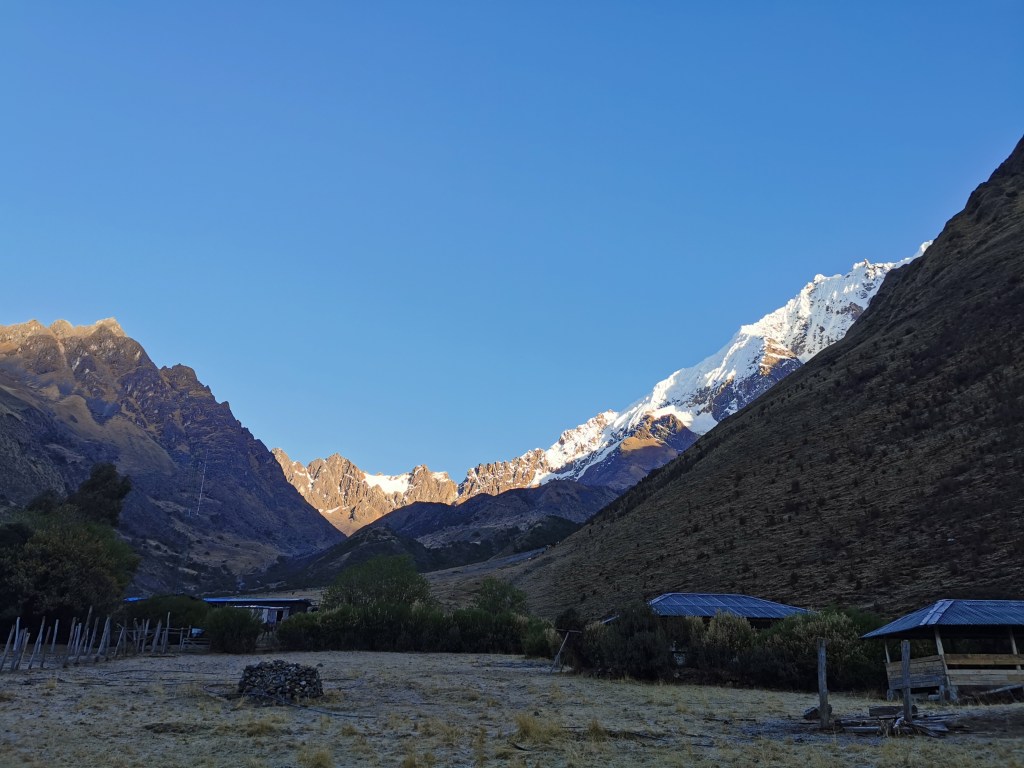
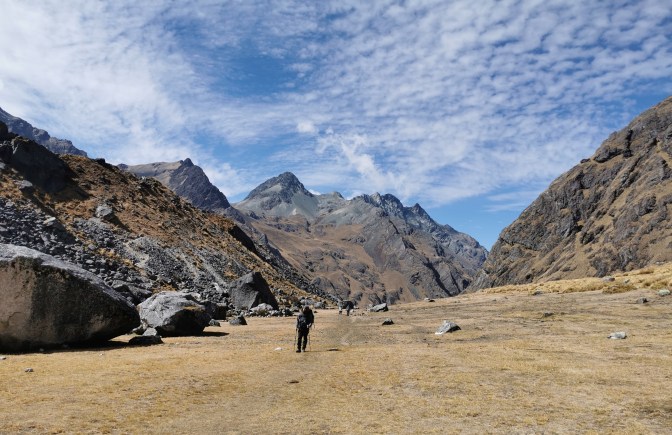
Then started the best bit of the whole trek, the hike up to the pass. The weather was amazing so we had a clear view of the glacier as a target for where we were heading. A rocky trail took us up to a plateau below the ‘trail of the seven snakes’, named due to the winding nature of the steep path. Here we had our first proper break and regrouped before the more strenuous hike up.
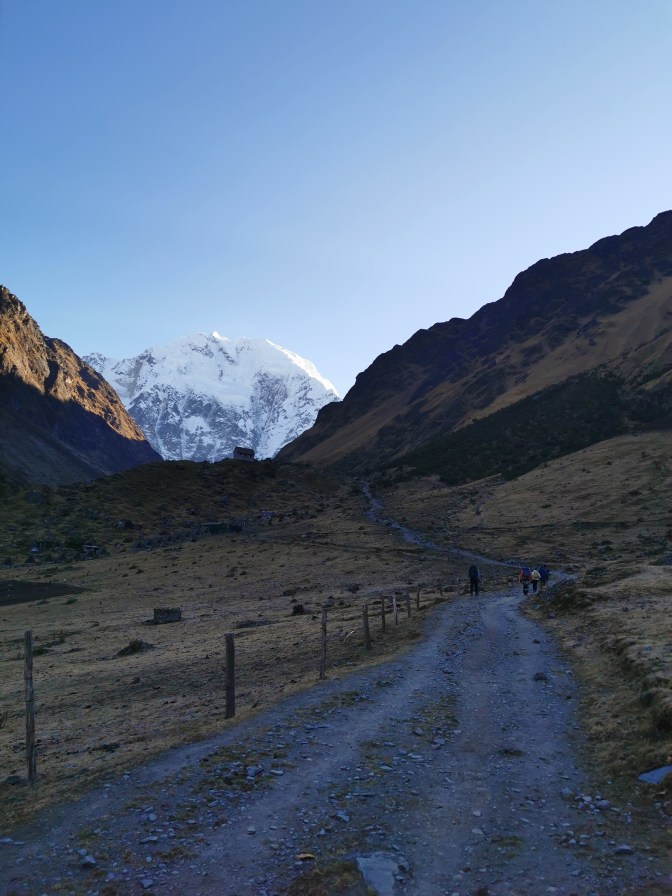
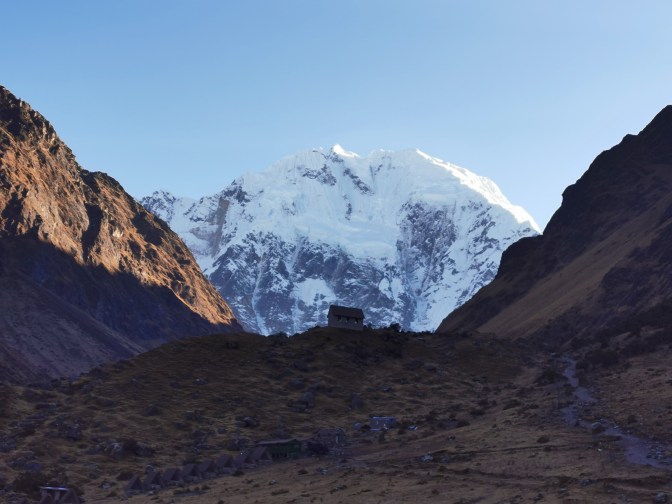
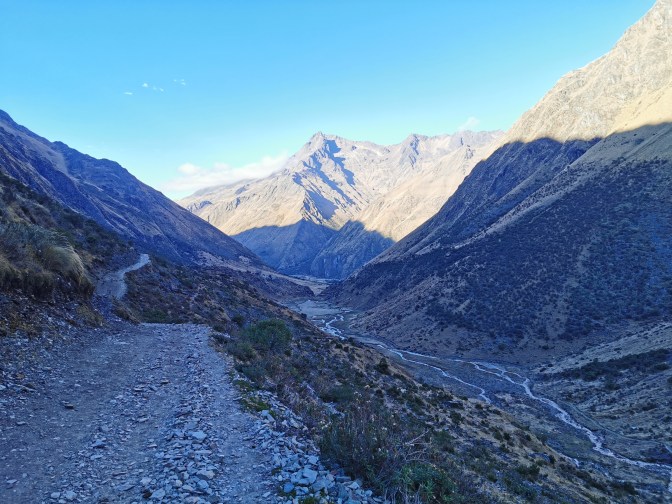
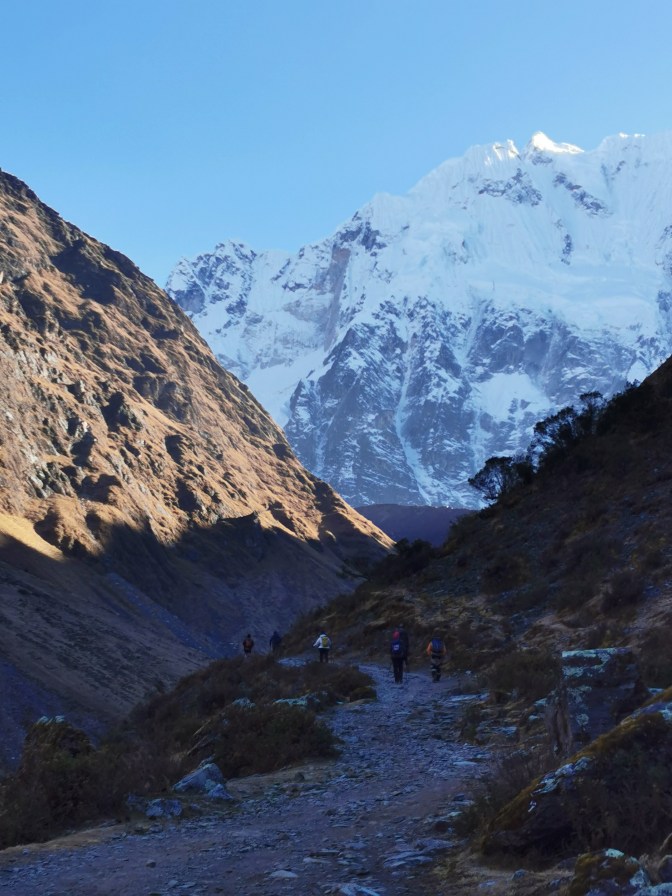
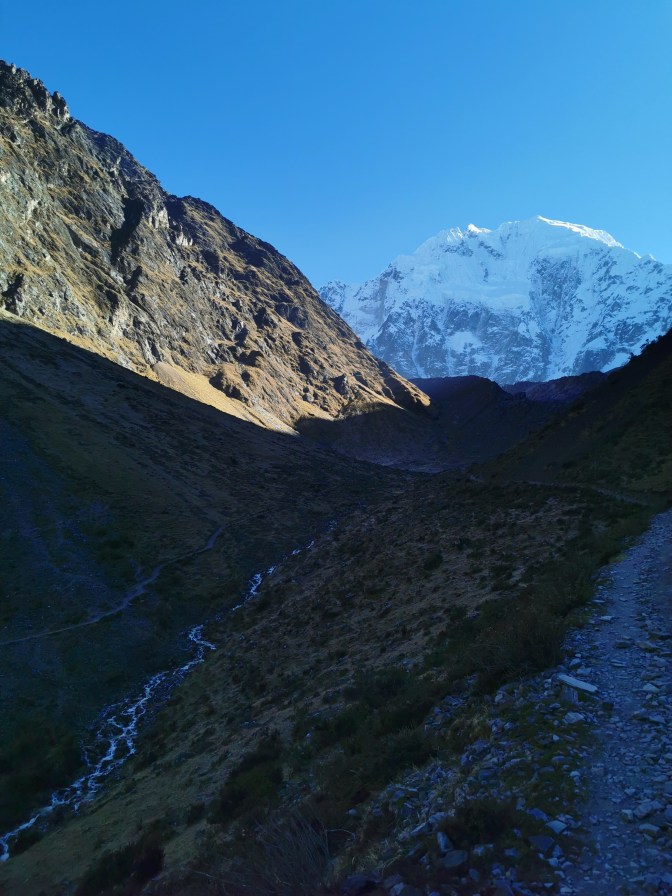
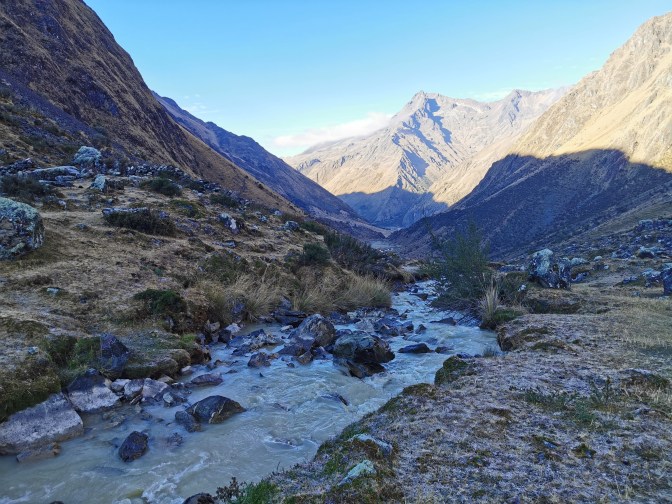

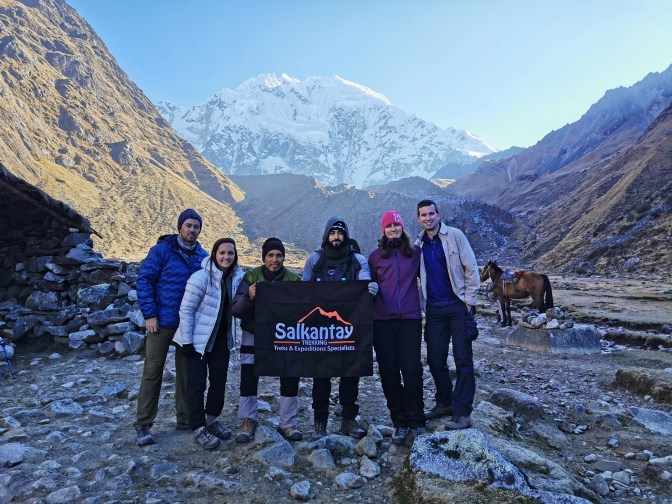
The seven snakes were tough but provided amazing views both behind and in front. The trail led to another plateau, which contained lots of boulders strewn about and a lovely little lake at the base of the final ascent.
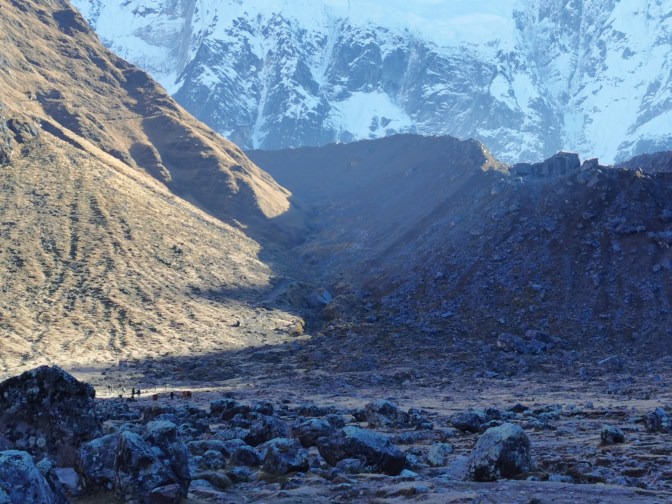
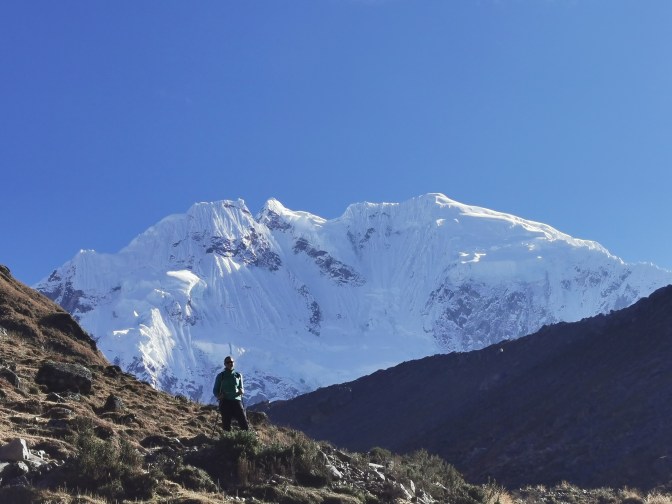
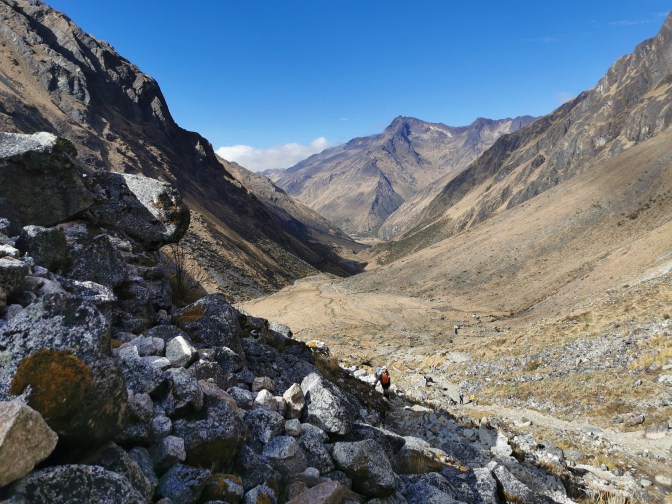
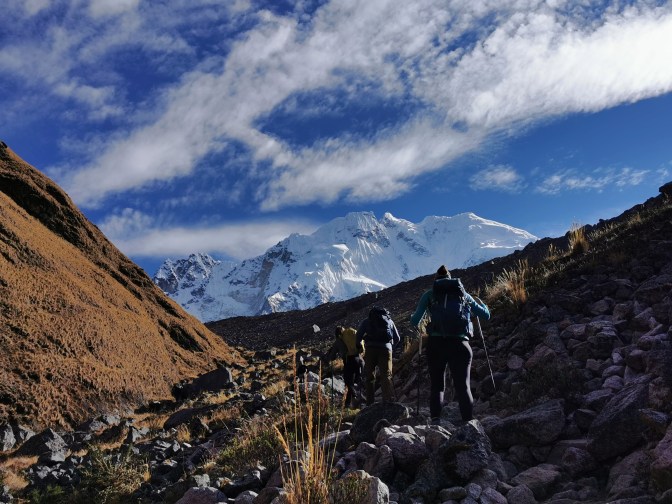
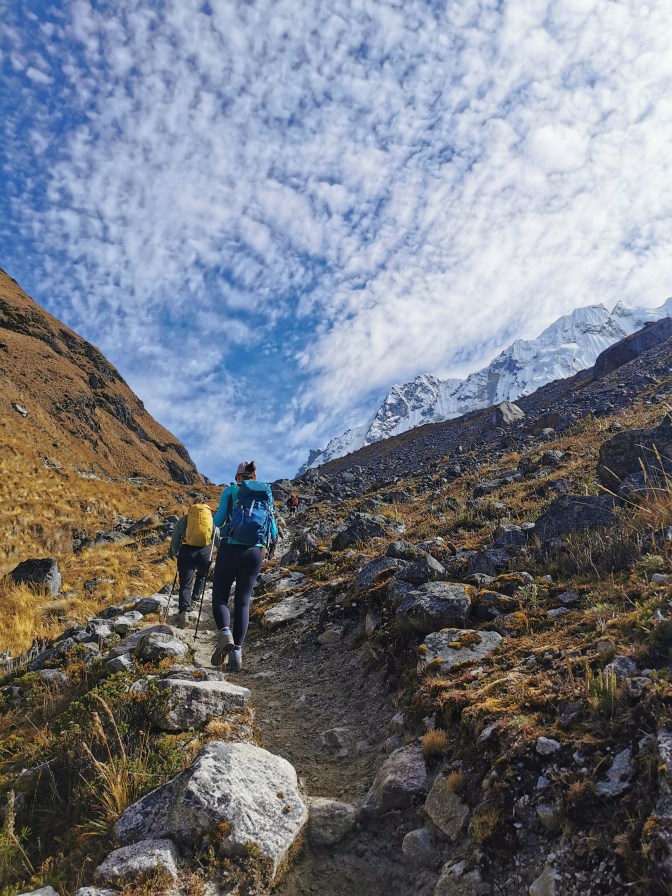
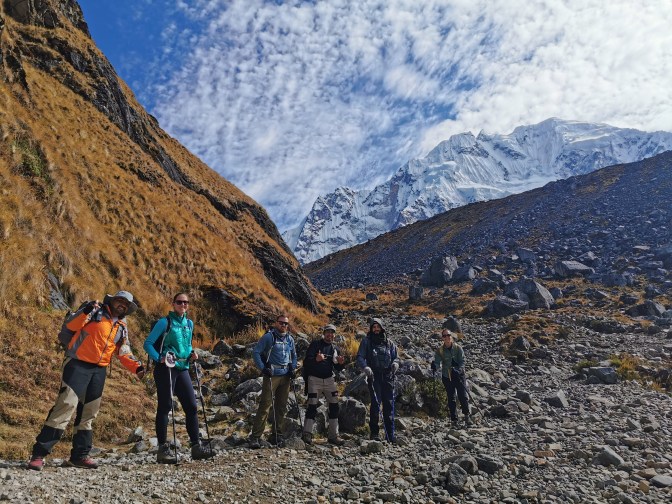
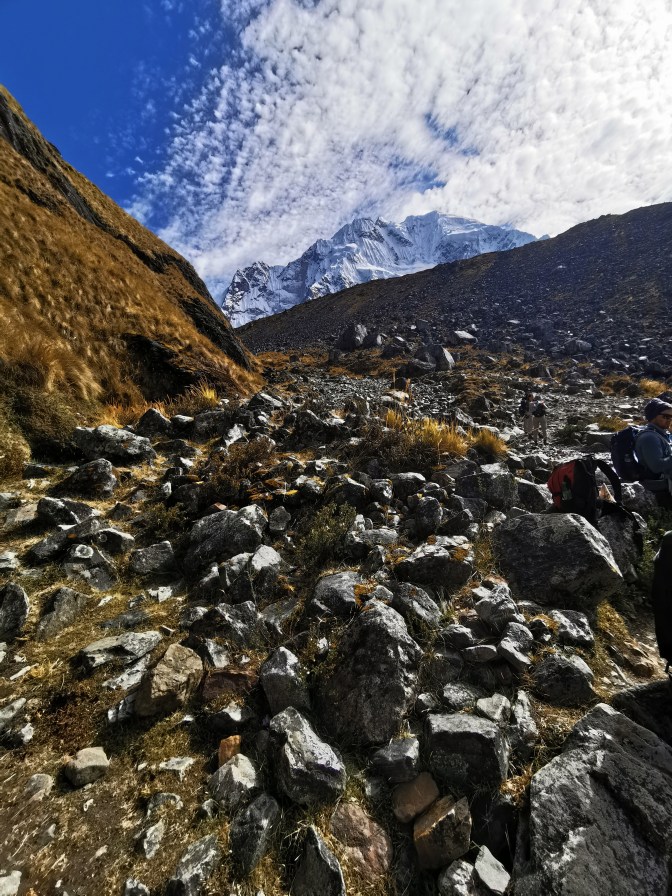
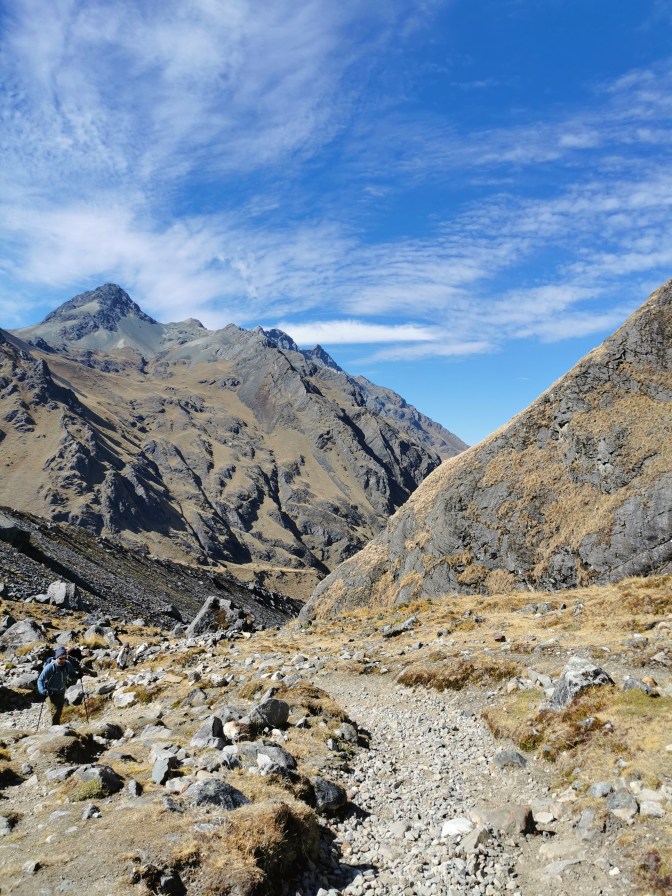
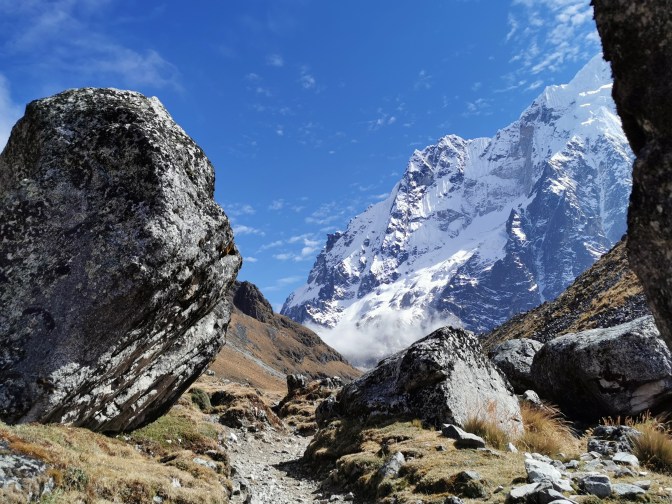
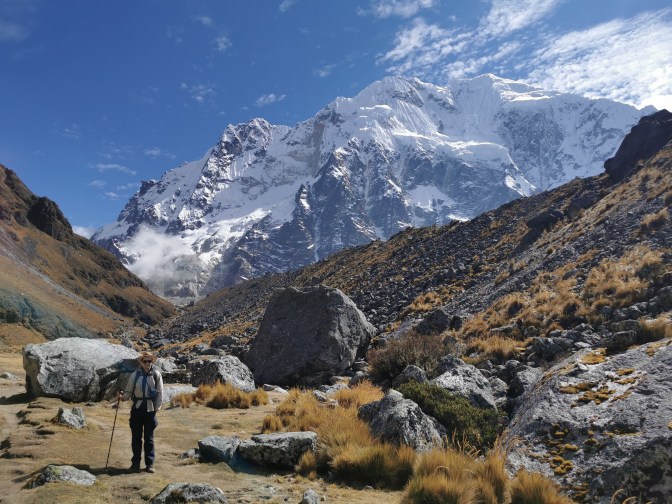
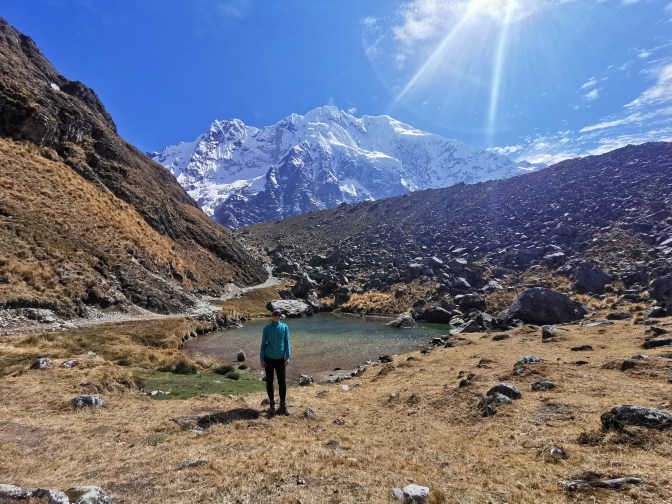

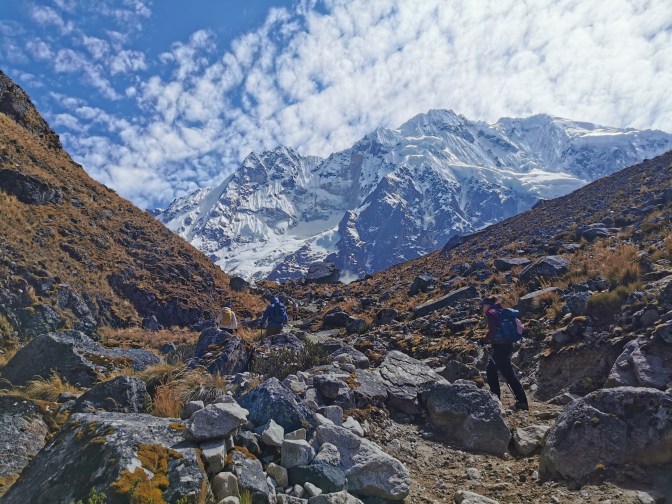
The last section was another steep climb but this time was rewarded with reaching the pass. This was the first time I was really affected by the altitude. It was harder to catch your breath and I got a slight headache as we neared the top. But it was nothing compared to the poor guy in another group who needed oxygen at the top!
But it was certainly worth the slight hardship. The views at the top were amazing. The glacier taking prominence but also the mountains that were ringed around us. This was definitely the highlight of the whole Salkantay Trek.
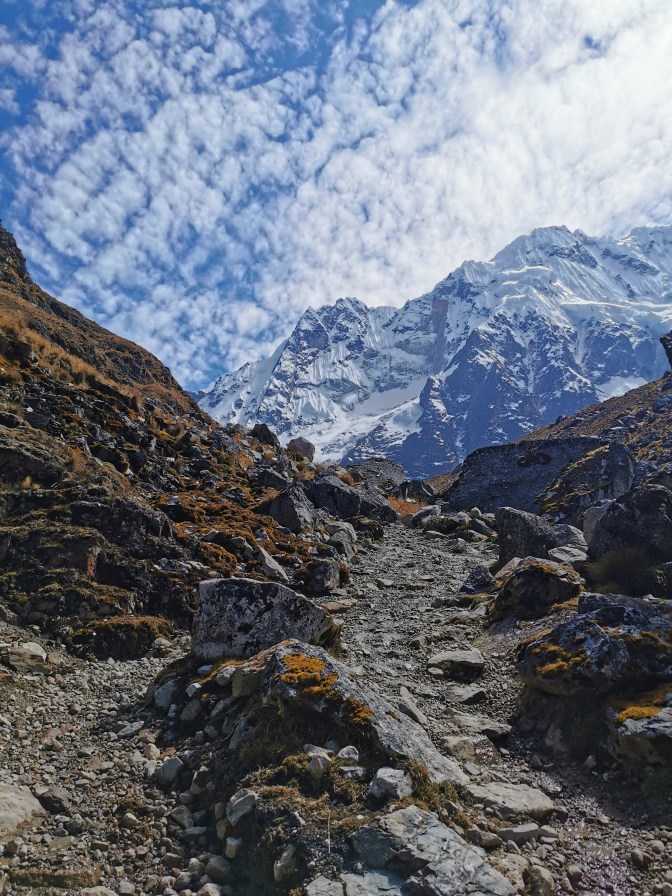


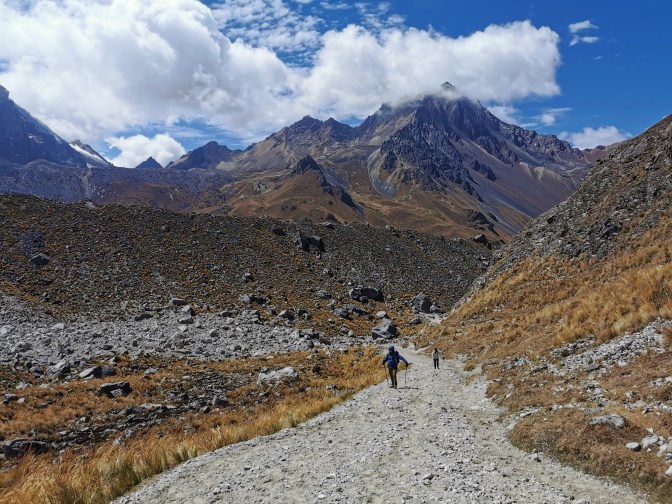


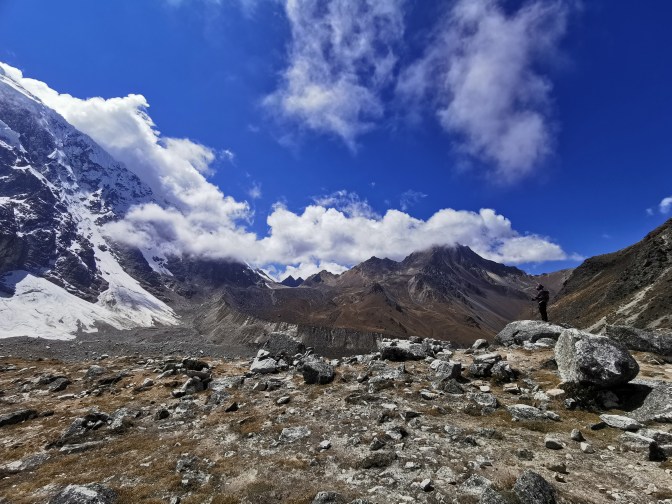
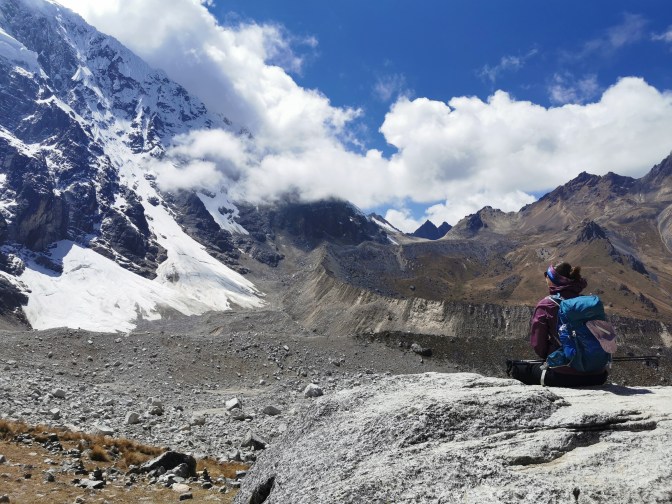
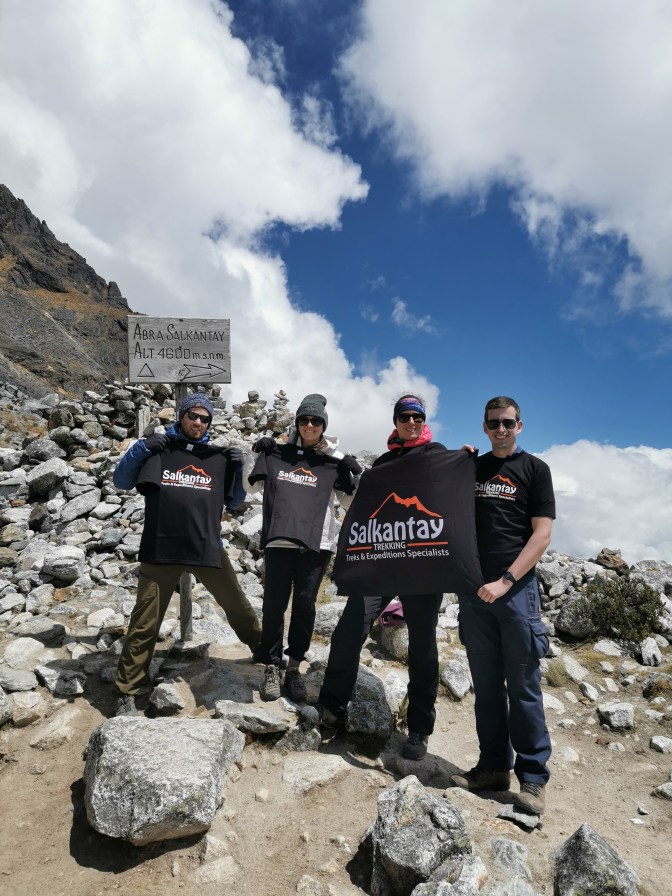
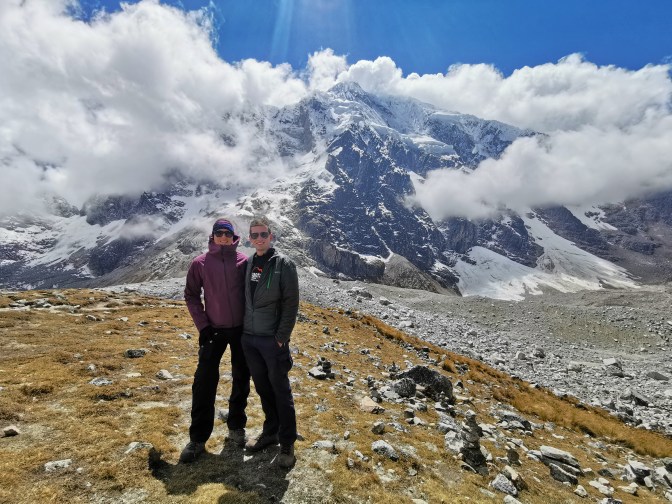
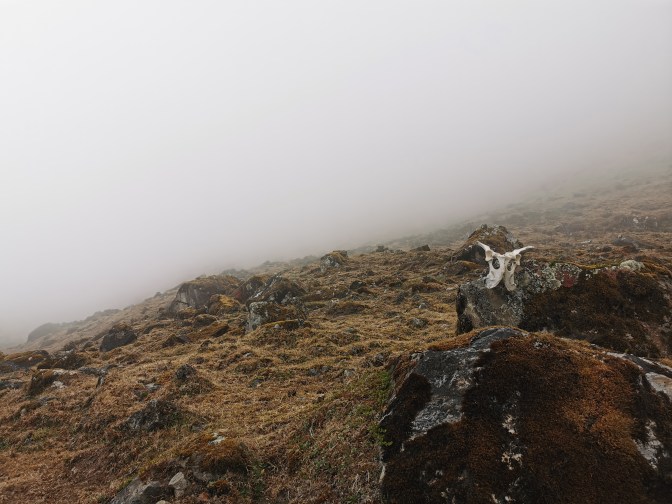
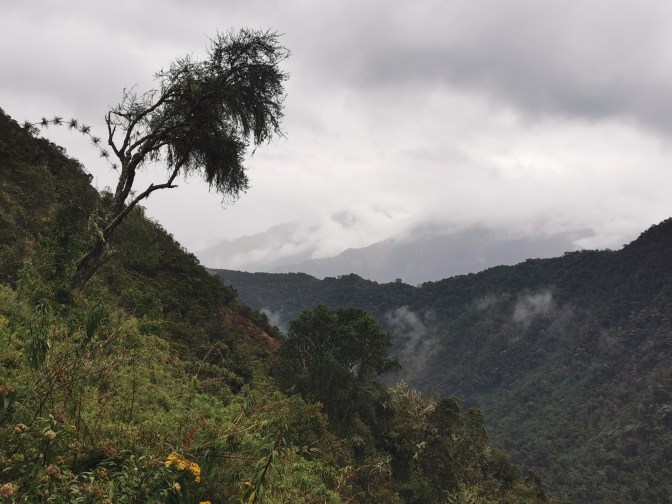
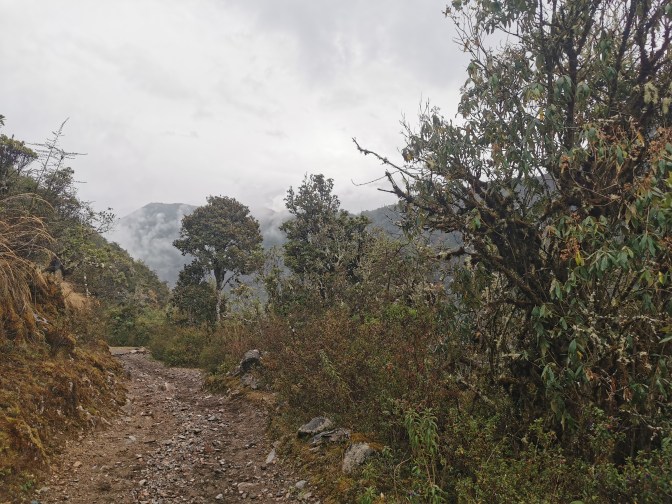
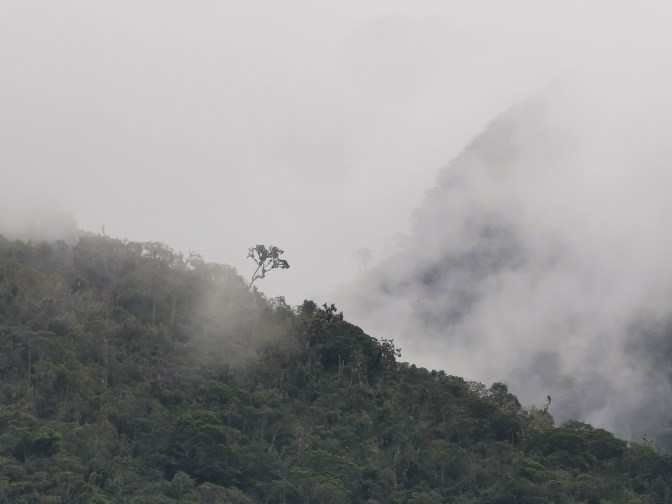
After our guide gave us some history of the area and of the Incan rituals that accompanied a trip to this sacred place, it was time to head down the other side of the pass and down into the cloud forest. Unfortunately, this is where the day started going wrong. Almost as soon as we started descending, thick banks of cloud started rolling up the valley towards us. They brought rain and were also low enough that they obscured the views of the valley around us. This necessitated the use of the ponchos but we all still got pretty wet! After a few hours, when we got lower into the forest it did lighten up a bit and created some atmospheric scenery. At this point we could see enough to know that this part of the walk would also have been stunning if the weather had been a bit better!

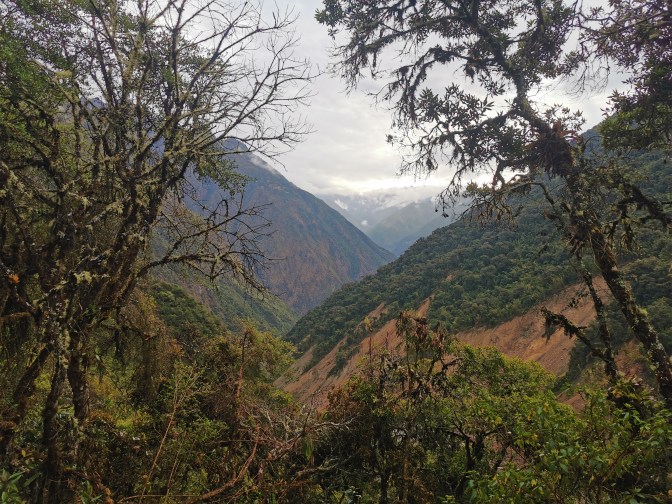

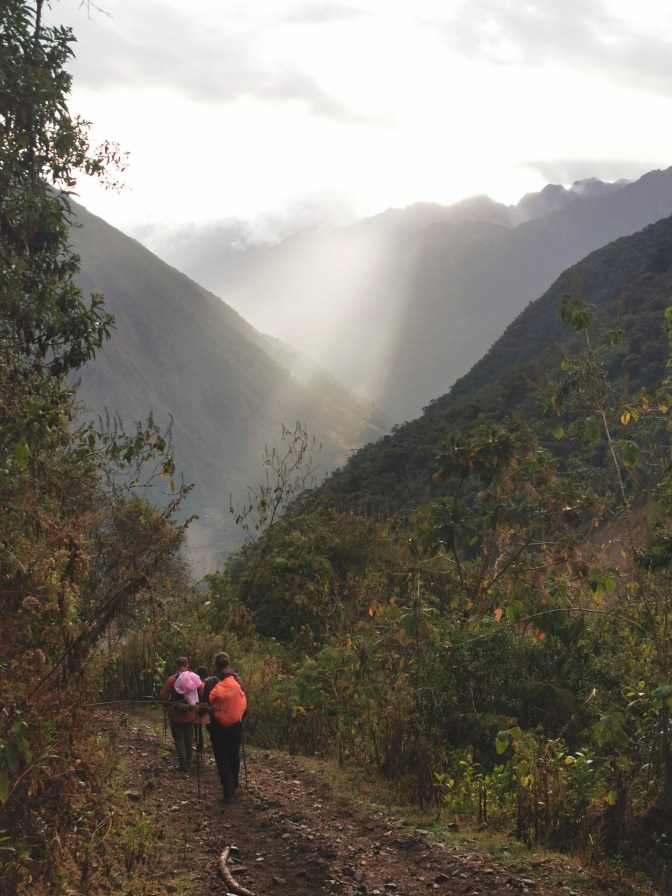
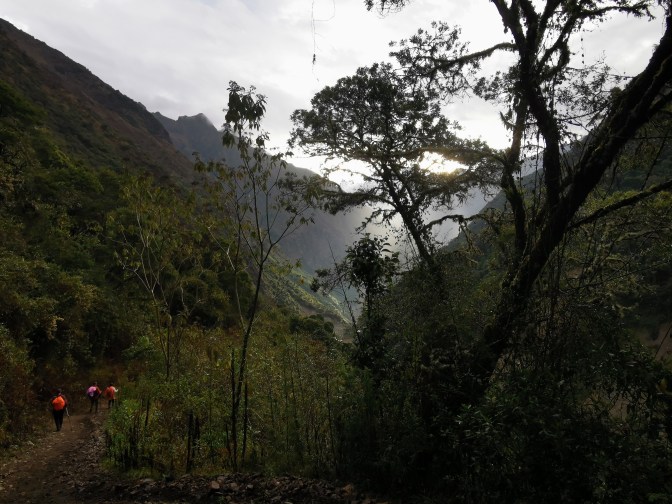
By the time we got to our accommodation the rain had stopped completely and we were able to rest in our ‘Andean Huts’ and try to dry our clothes. The accommodation also had showers available (for an extra cost) so we were able to warm up. Or at least I was. The two showers each had a circular tap that you twisted to turn them on. So far so good. But to access the hot water you just had to turn it until the random point where the water went warm. Now in the shower I got there was a little arrow on the wall where I should turn the tap to and it worked well. Radka’s had no such arrow and in the end she just gave up trying to find the hot water. It was not a cheery reunion afterwards…
The meal was once again excellent and the beds in the huts allowed a good nights sleep. Well at least until the roosters started crowing at 2am. Someone really needs to train them better…
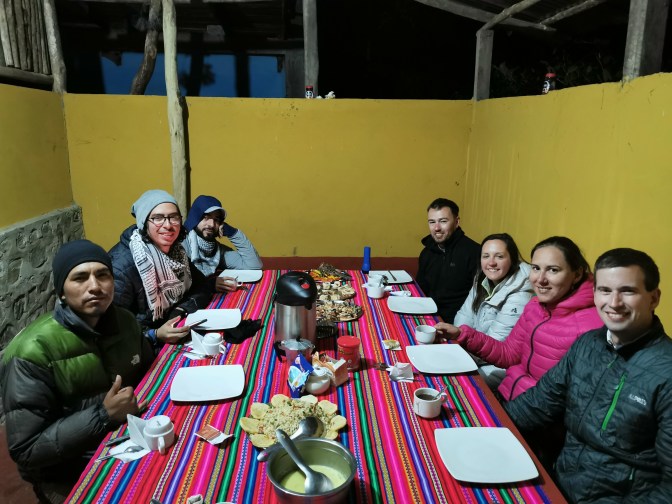


Day 3 – Insect Bites
Okay, I’m not going to pull any punches, day three was a bit of a disaster.
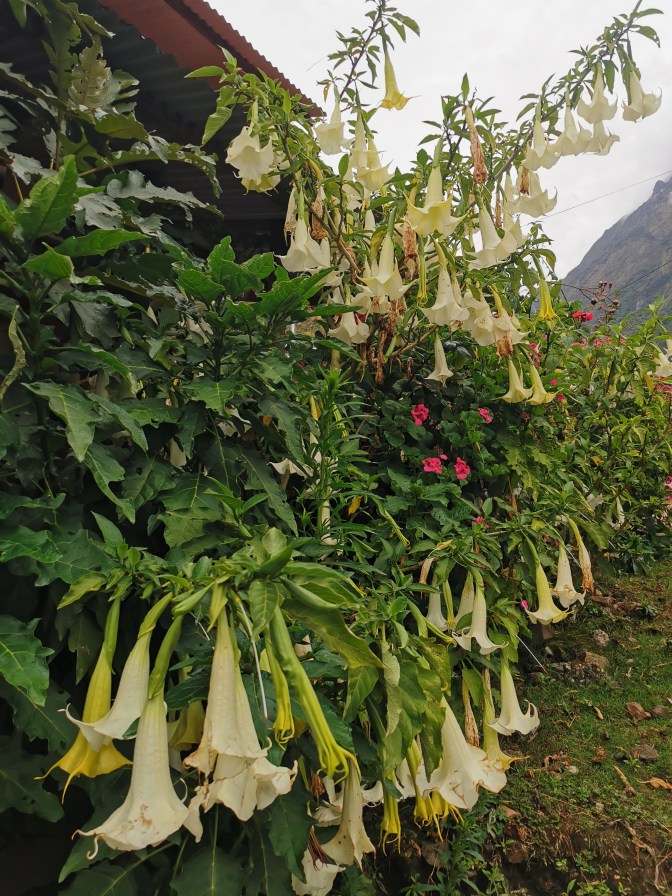
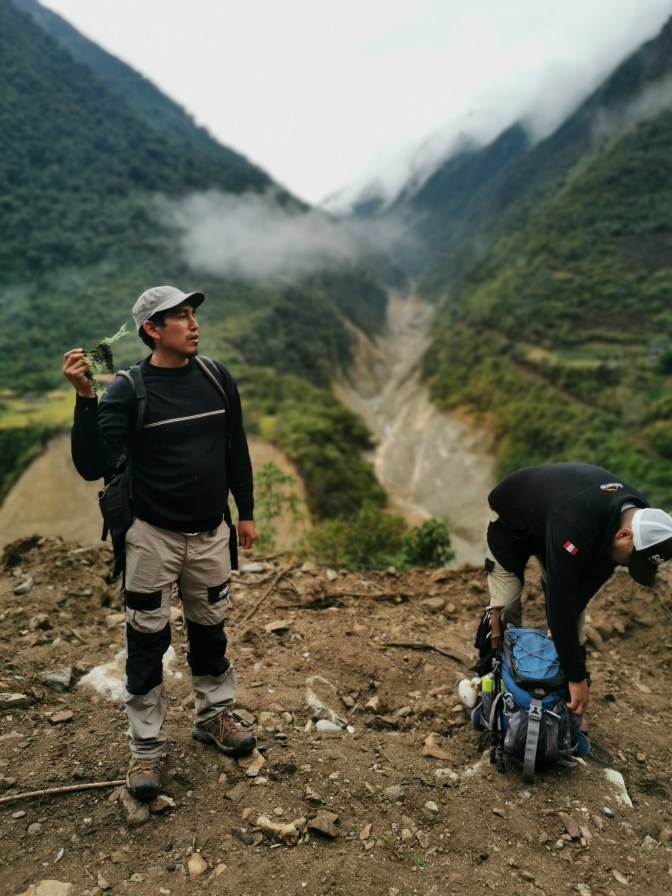
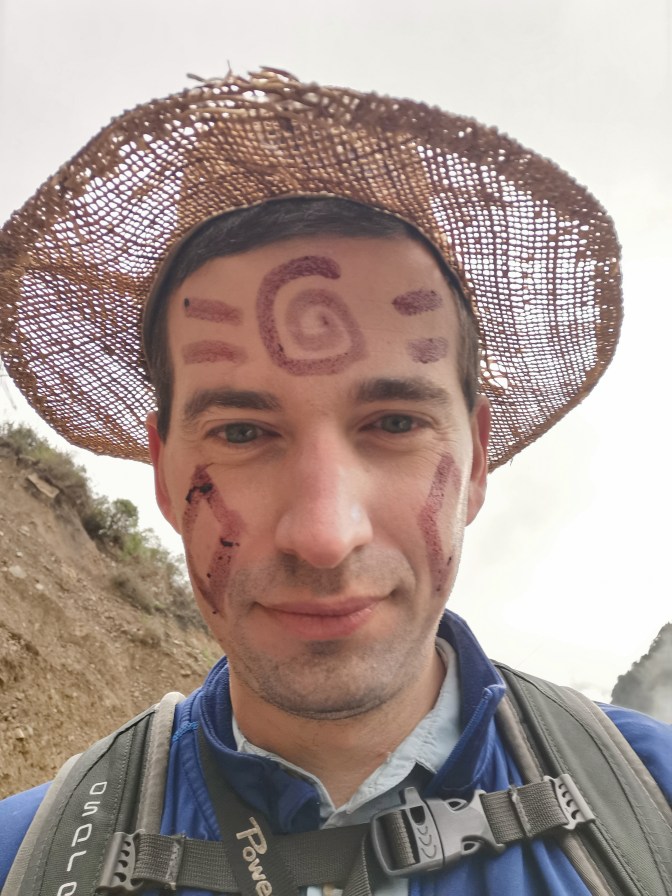
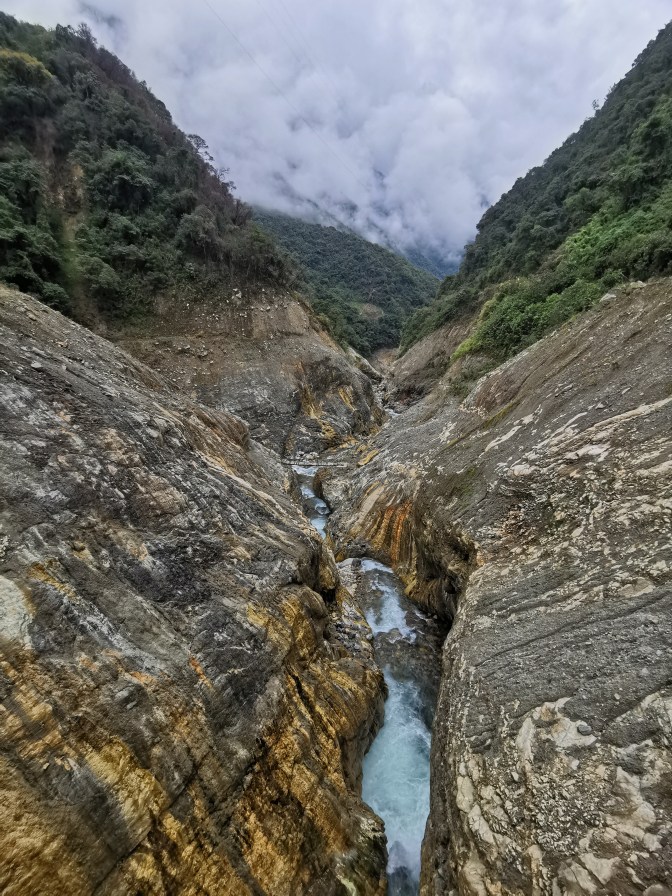
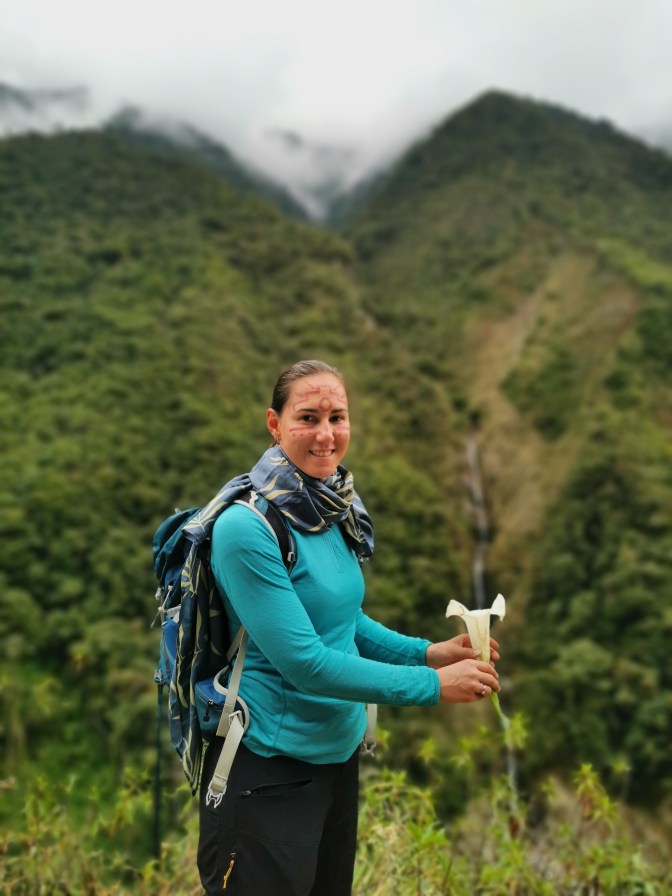
It started well enough with another nice breakfast including a cake the chef had baked! But then it just went downhill (literally and figuratively). It was drizzling again as we made our way to a road / track in the valley. At the beginning our guide described some of the plants and used one of them to paint war symbols on our faces as the Incas would have done and then we walked along the road for a couple of hours. The path we should have taken had been destroyed the year previously in a mud slide so we just walked along the road. The grey weather and the repetitive nature of the walking meant it wasn’t a particularly enjoyable experience. After a while we got to a point where we were picked up by a minibus and taken to our lunch spot. This was the end of the hiking for the day.

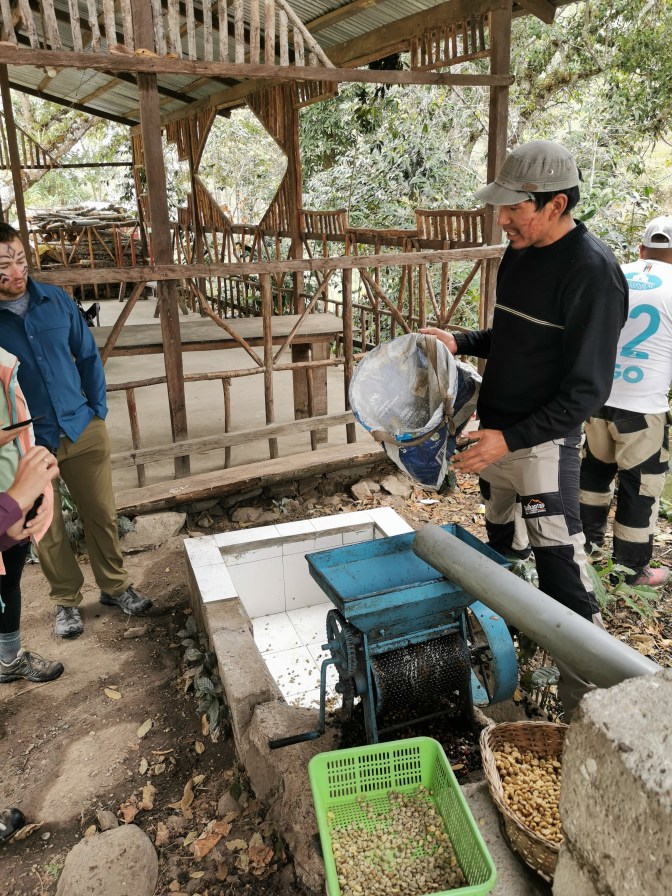
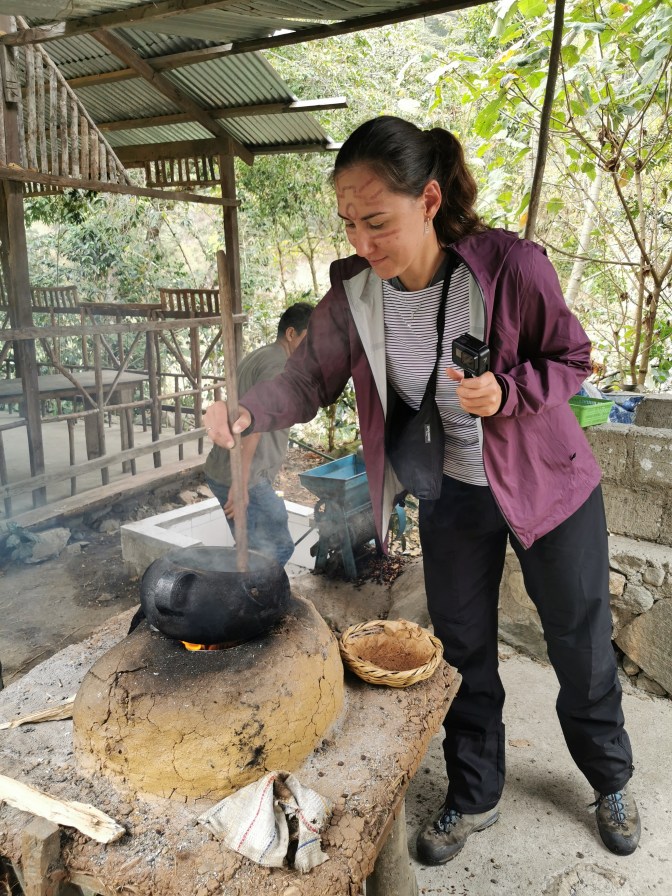
Next to the campsite was a coffee plantation so we spent half an hour doing a ‘coffee experience’. This was pretty interesting, just not really what I was expecting from a supposedly disconnected hike in the nature! The guide took us through the process of making coffee, from picking the beans to roasting and crushing them.

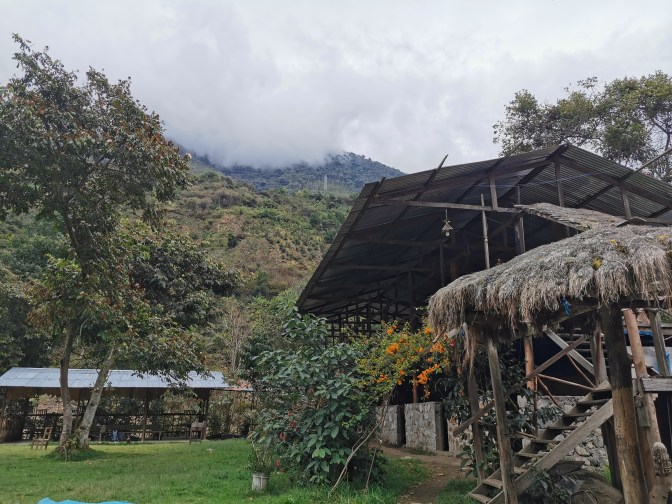
After our last lunch together, it was time for our group to split. Radka and I were the only ones doing the classic 5-day trek whilst the other four were doing the 4-day trek and hence got the minibus to a later point in the route. Our options for the afternoon were to relax in our hut or to go to some ‘nearby’ hot springs. It was only early in the afternoon so we thought we’d head to the hot springs and then still have some time to relax later in the afternoon. We were wrong. The taxi that was booked for 1pm didn’t turn up until 2. The journey turned out to take the best part of an hour and a half one way. Due to COVID you had to enter the hot springs for a certain time period. So we had to wait in the sun for another 45 minutes. At this point we were covered in a swarm of little flies that just seemed annoying but at this point we didn’t realise quite how annoying… When we got to the pools we were only allowed to enter one of them. Whilst it was nice enough we were just sat in the water for an hour and a half because if we got out the flies descended. By the time we got back to our campsite it was quite late, so we ate and then went to bed. So overall a very disappointing day.
Day 4 – Llactapata
Our last day on the Salkantay trail started by waking up to dozens of bites. The insects that we thought were merely annoying had apparently taken quite the liking to us. We were both covered in bites, mainly on the ankles and legs but also some on our backs and arms – the last couple of places could only have been during the couple of minutes when we were going to and from the changing rooms as we were covered otherwise! At this point they weren’t so itchy but that came later…
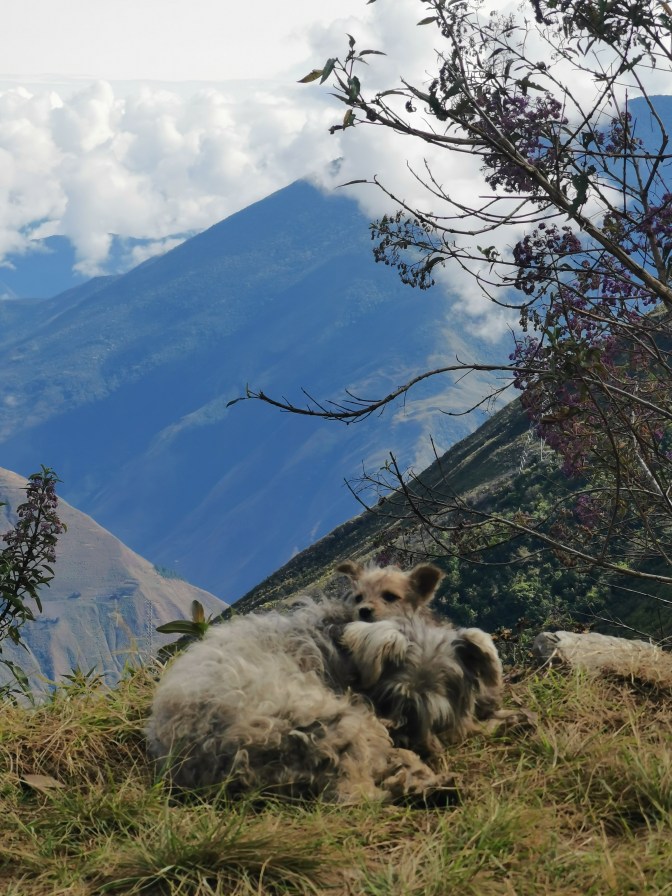
We had to start early because instead of the 18km that was advertised, we would have to walk 27km on this final day. The first part was pleasant enough. The weather was good and after 30 minutes going along the road we turned off and started heading up the mountain. It was still quite cool as we were in the shade and we had nice views of the valley. About two thirds of the way up, there was another campsite where we had a break and a go on their swing.
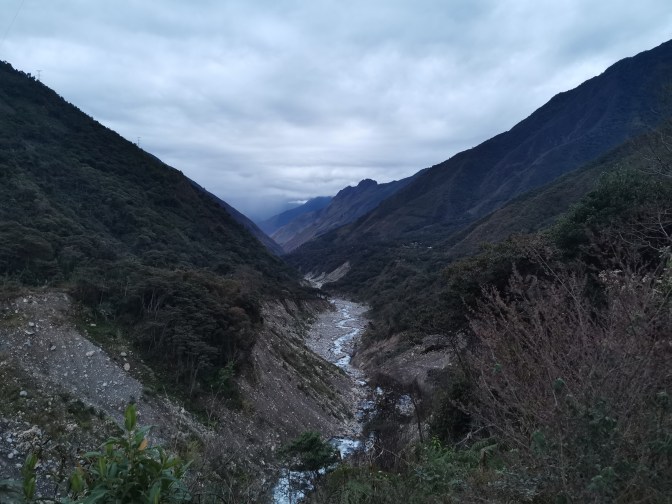
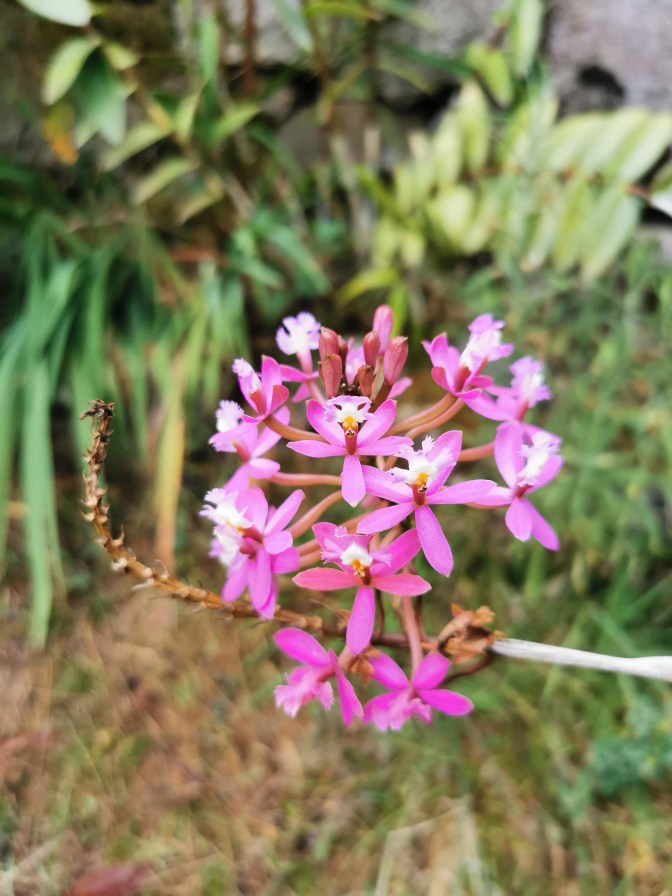

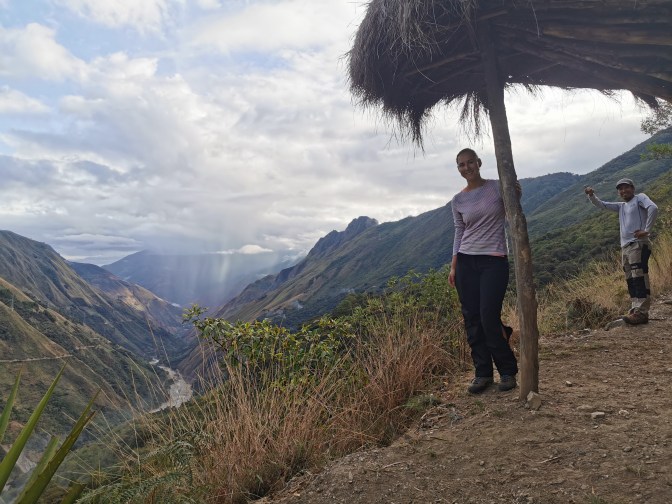


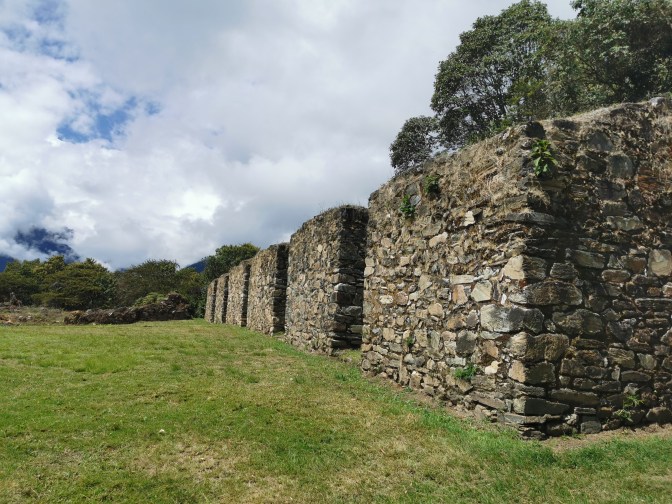
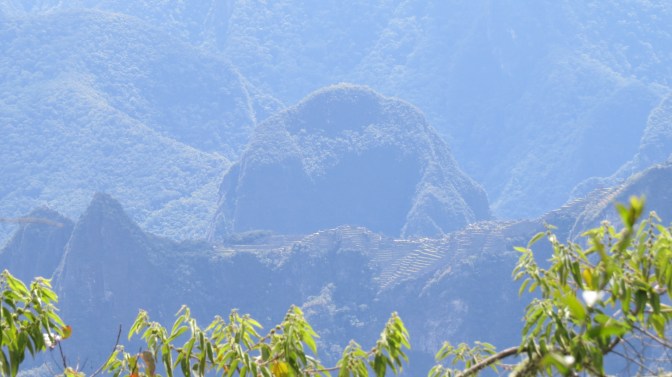
After we left the campsite I made a major mistake. Due to the number of insect bites I’d received the day before and because they were getting increasingly itchy, I was wearing long sleeves and long trousers so as to not get anymore. But as the sun got higher and the route got steeper I got to the point where I was massively overheating. Thus when we got to the viewpoint of Llactapata, I just wasn’t able to appreciate it. Llactapata is an Incan temple that shares a direct line of sight to the Temple of the Three Windows in Machu Pichu. It was an amazing position, with Machu Pichu visible across the valley. Unfortunately clouds obscured the mountains behind Machu Pichu but it was still stunning. Or at least I discovered it was by looking at the pictures afterwards!
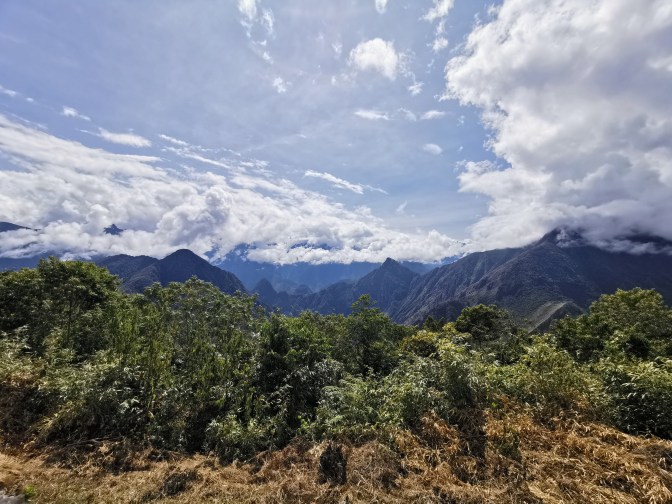
The next few hours were spent getting down from Llactapata to Hidroelectrica. This was punctuated by lunch, where I couldn’t eat nearly anything (due to feeling rubbish) but greedily gulped down the juice on offer. Once we reached hidroelectrica, it was another 10km along the railway track to our end point in Agues Calientes. Luckily it was mainly in the shade and some of the scenery would have been really nice but we were both too hot and shattered to fully appreciate it.

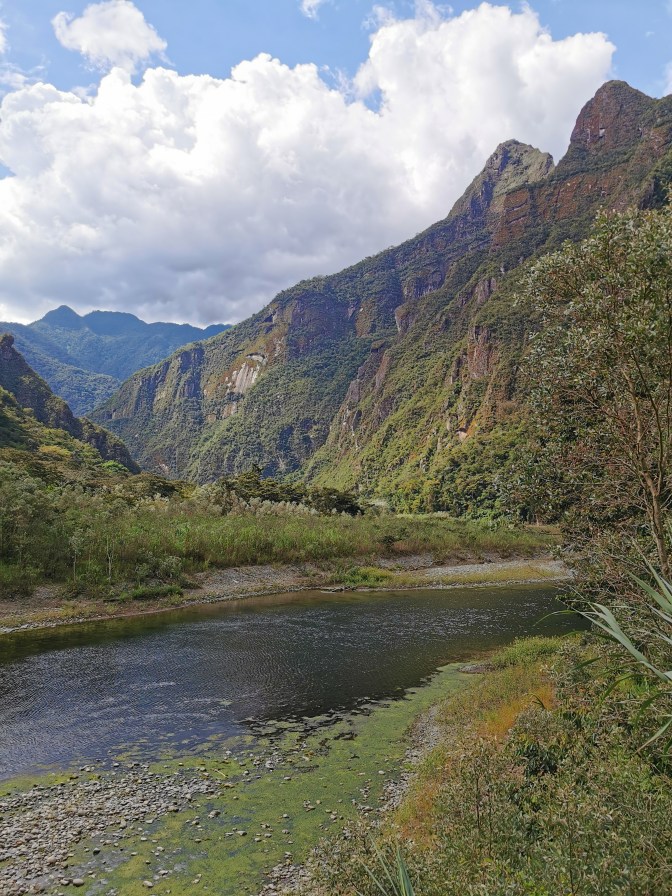
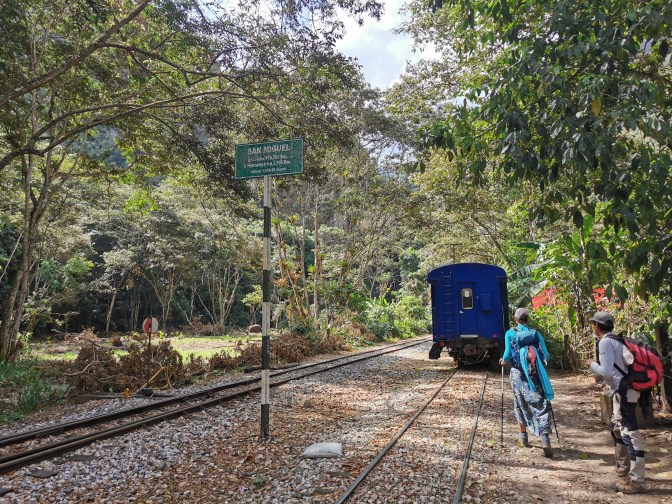
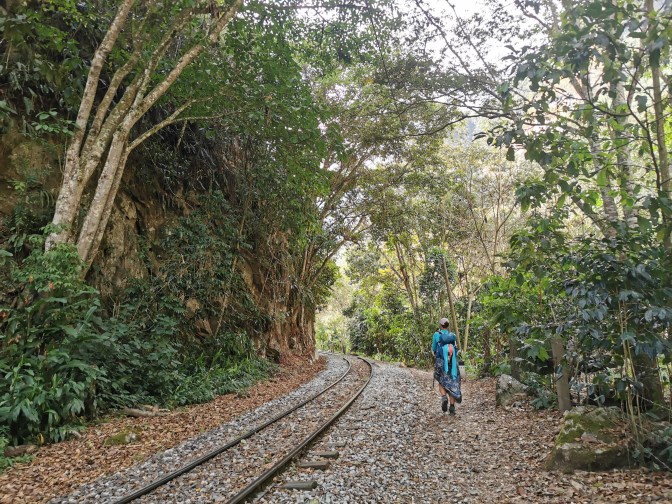

During a normal 5-day Salkantay Trek, Aguas Calientes would have been the location of the final night before heading to Machu Pichu the following day. In our case, we still had to catch a train to Ollantaytambo so that we could start the Inca Trail the day after. This journey showed just how tired we were. On the train you were required to wear two masks and a face shield. Salkantay Trekking had provided us with face shields but we were annoyed at how bad quality they were – you could barely see through them as they were so cloudy. Given that it was dark outside anyway, we just tried to sleep. By chatting to our Inca Trail guide a couple of days later, we learned that the masks have protective coatings on them that you should peel off before wearing. So there you go, our trek finished not with a roar but with a whimper.
Final thoughts
Overall, we were very happy that we did the trek. Humanity Lake, Salkantay Pass and the varied nature throughout the trek were stunning. But if we were to start again we might have done the 4-day rather than the 5-day or just not gone to the hot springs!
If you have read all the way to this point then very well done! This piece is a bit of a beast but there was a lot to include over the four days. I hope it at least gave you some sense of the Salkantay Trek.
 Brit and Czech Abroad