Our first stop when arriving in Ecuador was the country’s capital, Quito. But we did not end up here only once, as our convoluted itinerary meant that we needed to spend time in Quito on five separate occasions, as we did our best to fit in as many places as possible that we wanted to see in our six weeks in Ecuador.
Despite having actually spent a fair bit of time in Quito, we actually feel like we have not seen the best of it. There were two main reasons for this, the weather and safety concerns.
Almost every day we spent in Quito included heavy thunderstorms at some point in the afternoon. The weather forecasts were also useless and made planning anything very tricky. This was especially true for visiting the surrounding mountains.
The latter of these two issues is a tricky one. Apart from knowing areas in Lima that we shouldn’t go, we had had no problems at all in Peru and had not felt unsafe in any of the places we had visited. I tend to believe that if you’re sensible, respect the places you visit and if you have a bit of luck added to this, that you should be okay when travelling. And yet, pretty much as soon as we arrived in Ecuador we were told about the dangers of Quito. It started with the taxi driver from the airport and continued with the owner of the hostel we were staying at. We then got the same message from guides and other locals we met – basically, don’t walk about after dark and that even during the day, it was best to get taxis when moving about Quito.
A big part of me felt this was an exaggeration and was just well-meaning locals trying to protect tourists from a city that they believed to be in decline. And yet, the constant warning made us feel uncomfortable and we were not willing to take many risks, especially when we had just arrived in the country. As such, we have not explored this interesting city as much as we would have liked.
Despite this, we did manage to see and experience some parts of Quito and the surrounding areas, and this post is a summary of what we got up to. So, in no particular order:
Contents
Climb the towers of the Basilica del Voto Nacional
Have a look around some of the churches
Take the TeleferiQo into the mountains
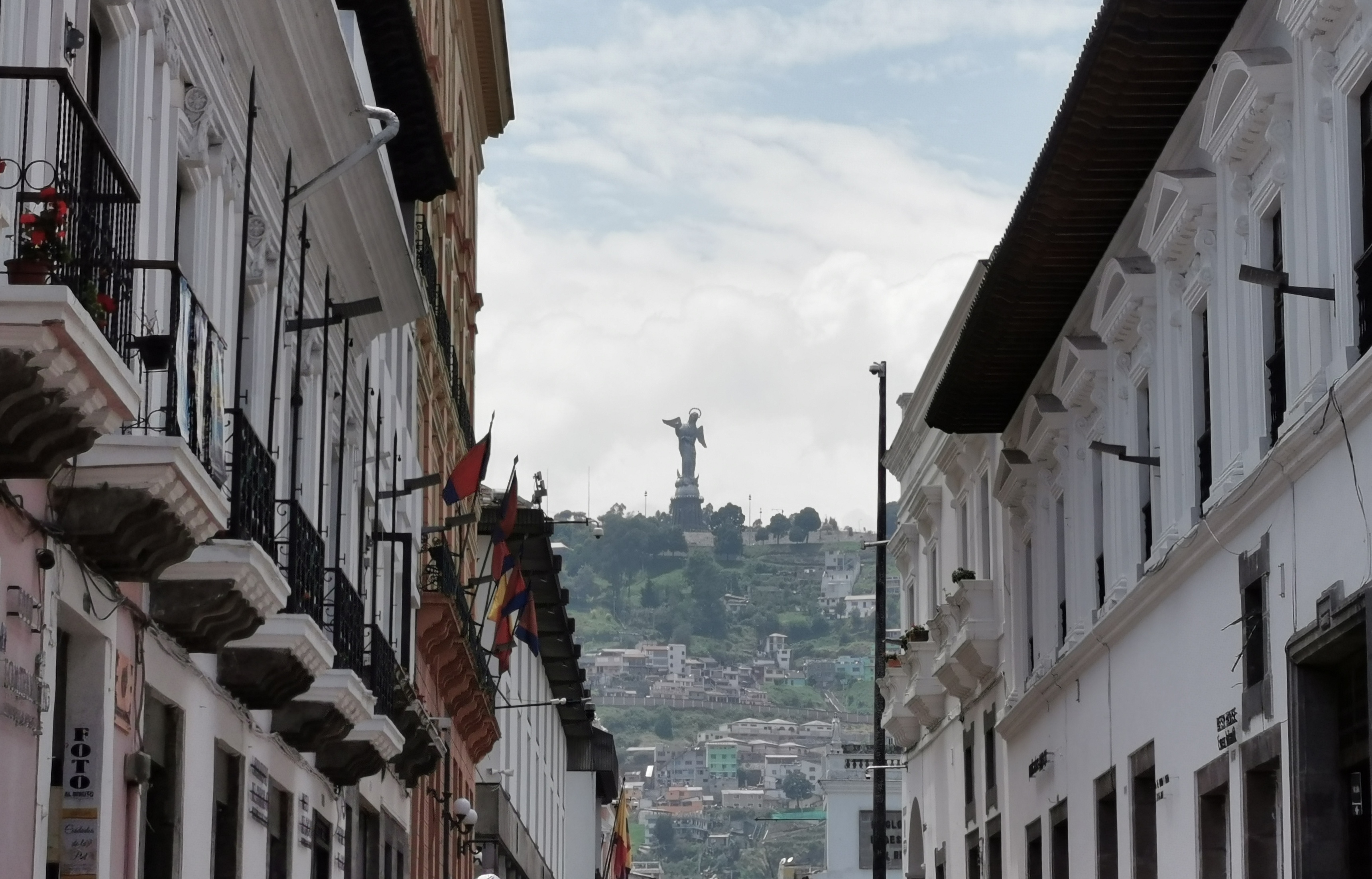
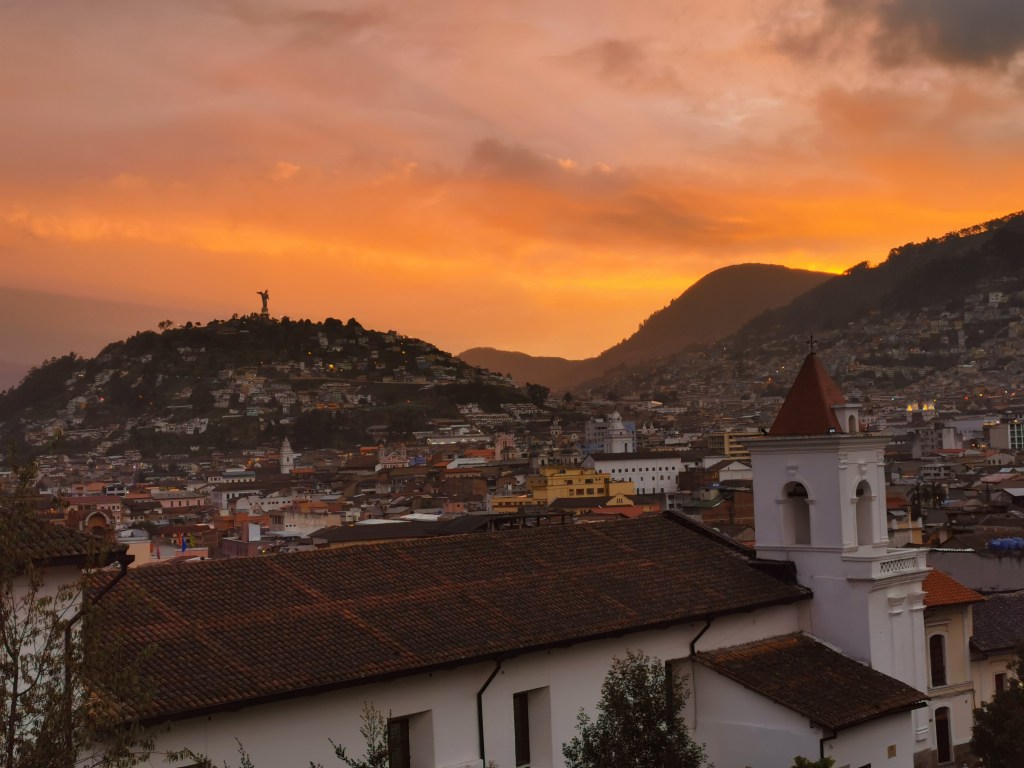
Visit the Virgen del Panecillo
‘Middle of the World’ Day Trip
Take a Free Walking Tour
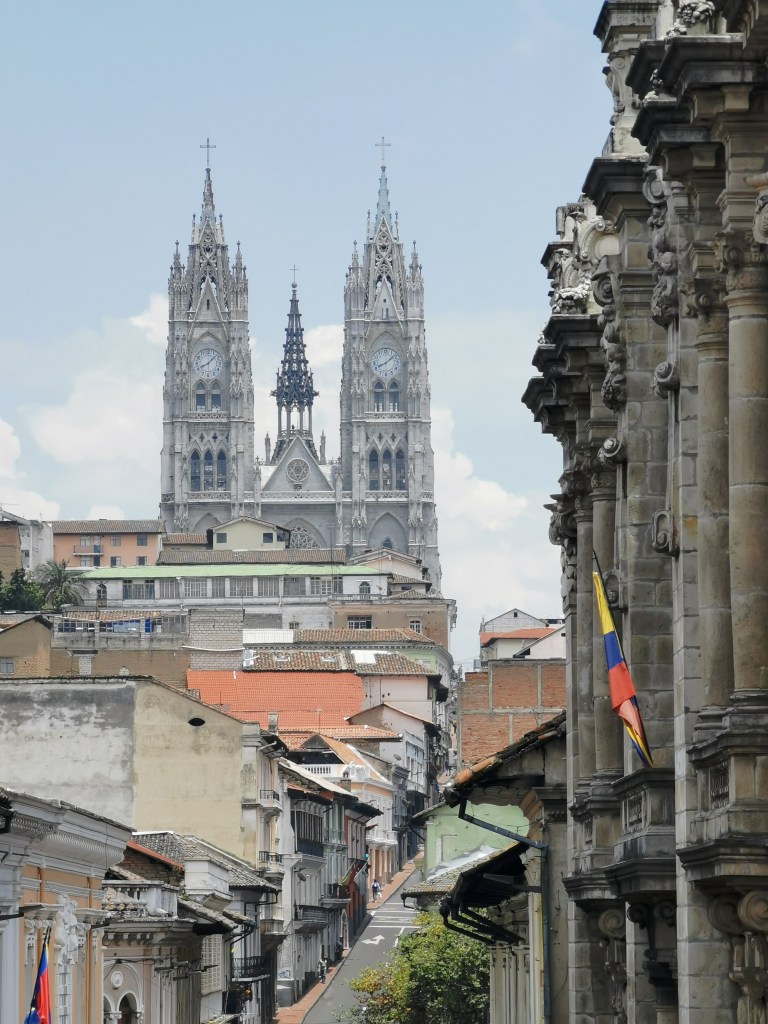
Those of you who have read some of my other posts will know that I’m a big fan of free walking tours. The premise is that a guide will take you around parts of the place you are visiting, pointing out attractions of note and giving you information about the history and culture. At the end of the tour the guide will receive tips from the participants for what they think the tour was worth. I find that this arrangement means that you generally get guides who are enthusiastic and are genuinely interested in their city and want you to share in that passion. Hence, a free walking tour is normally one of the first things that we’ll do when visiting a new city, and Quito was no exception.
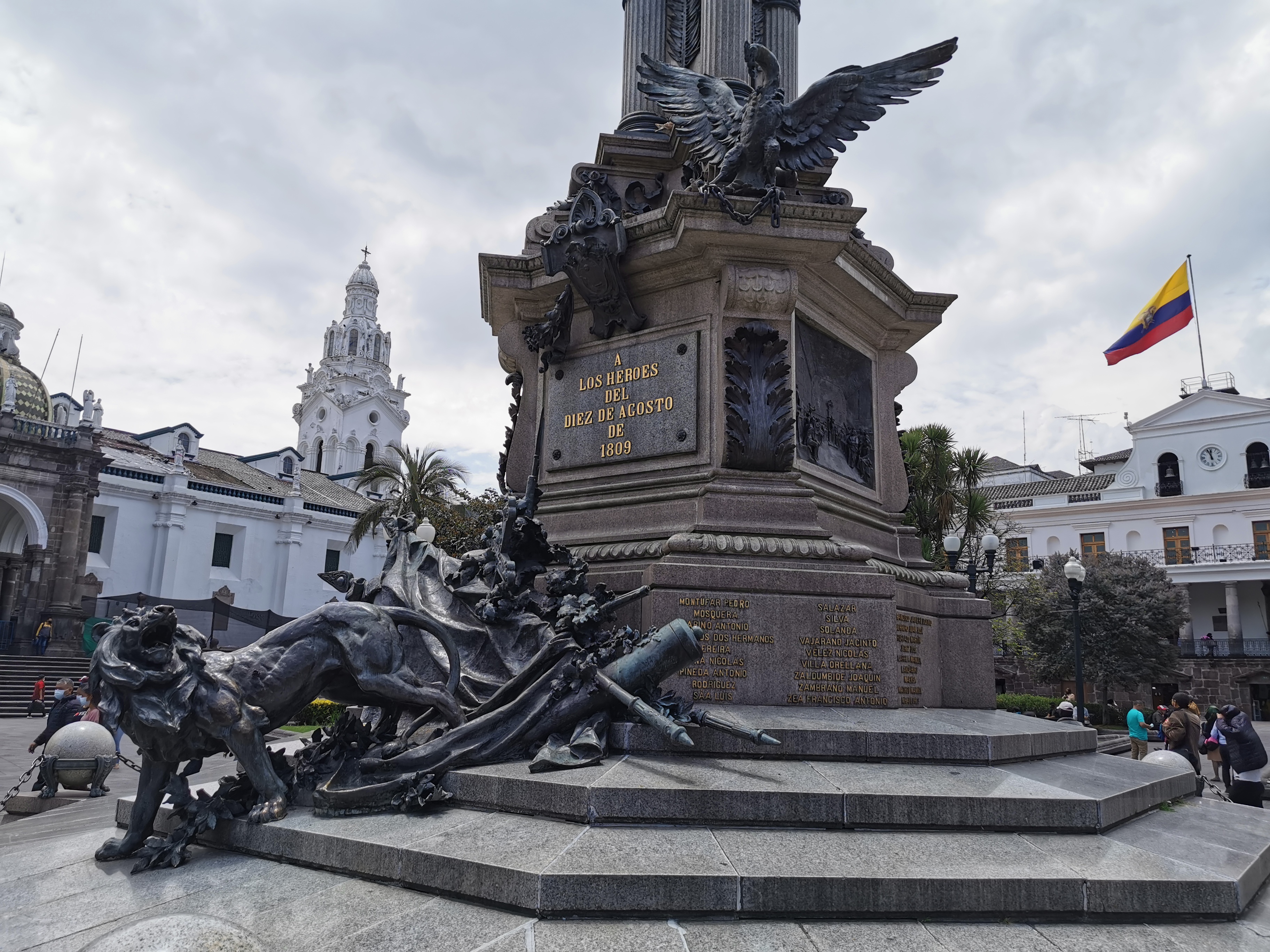
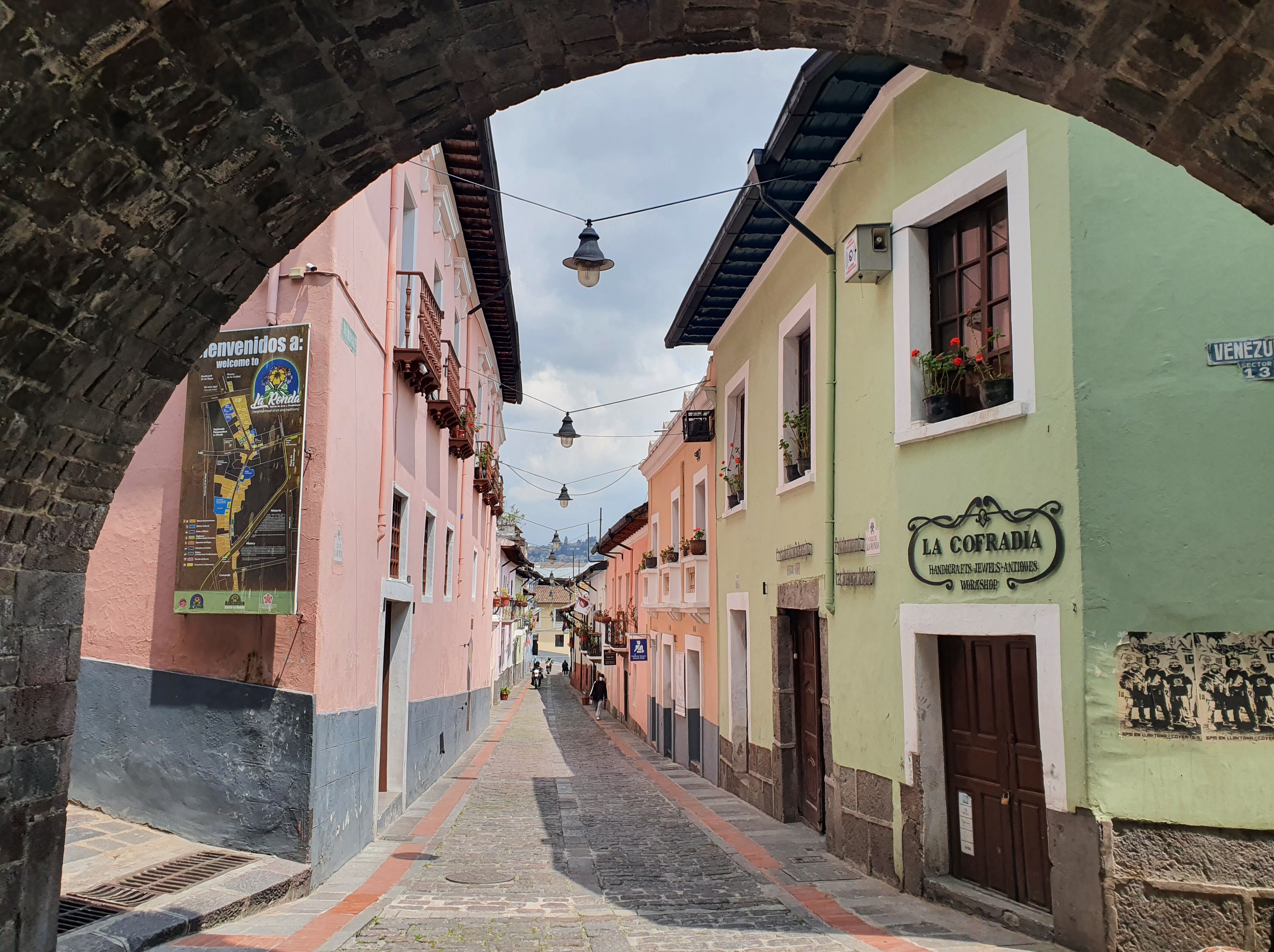
Free walking tours are normally easy to find online but in this instance we did the one organised through our hostel. It was focused around the historical centre of Quito and lasted between 2.5 and 3 hours. We walked through pretty streets adorned with nice decorations and interesting architecture; we passed by a myriad of different churches, basilicas and cathedrals; stopped and rested in multiple plazas of varying importance and popularity; discovered hidden courtyards that we would never have found by ourselves; and ended the tour by walking through the colourful La Ronda district.
Despite the fact that I was feeling a bit under the weather, a result of not fully recovering from the sickness I picked up in Peru, the tour was very well organised and informative and was a great introduction to the city and local Ecuadorian culture. I’d certainly recommend finding a tour that suites your interests when you first get to Quito.
The group then went to a local market to get some food but I headed back to the hostel. Not ten minutes after I got back the heavens opened. It was such a sudden and crazy change in the weather – it had been pretty nice during the tour and yet for the next couple of hours the sound of rain bouncing off the roofs and pavements was only interspersed by the cracking thunder. The weather in Quito can be mad!
Climb the towers of the Basilica del Voto Nacional
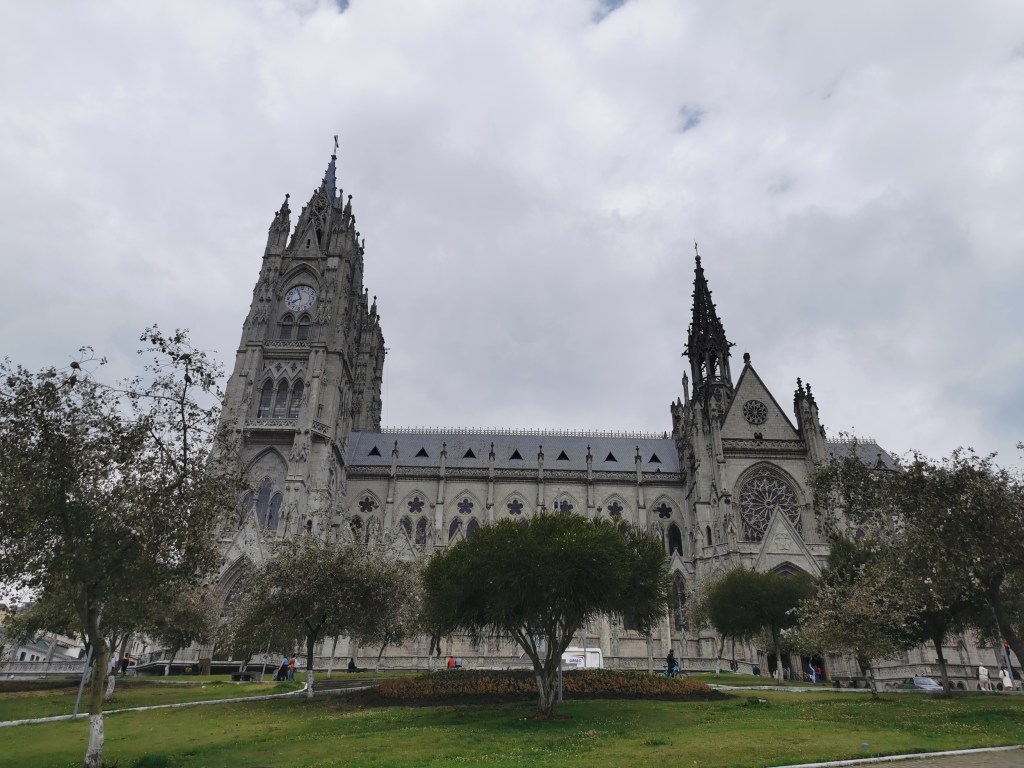
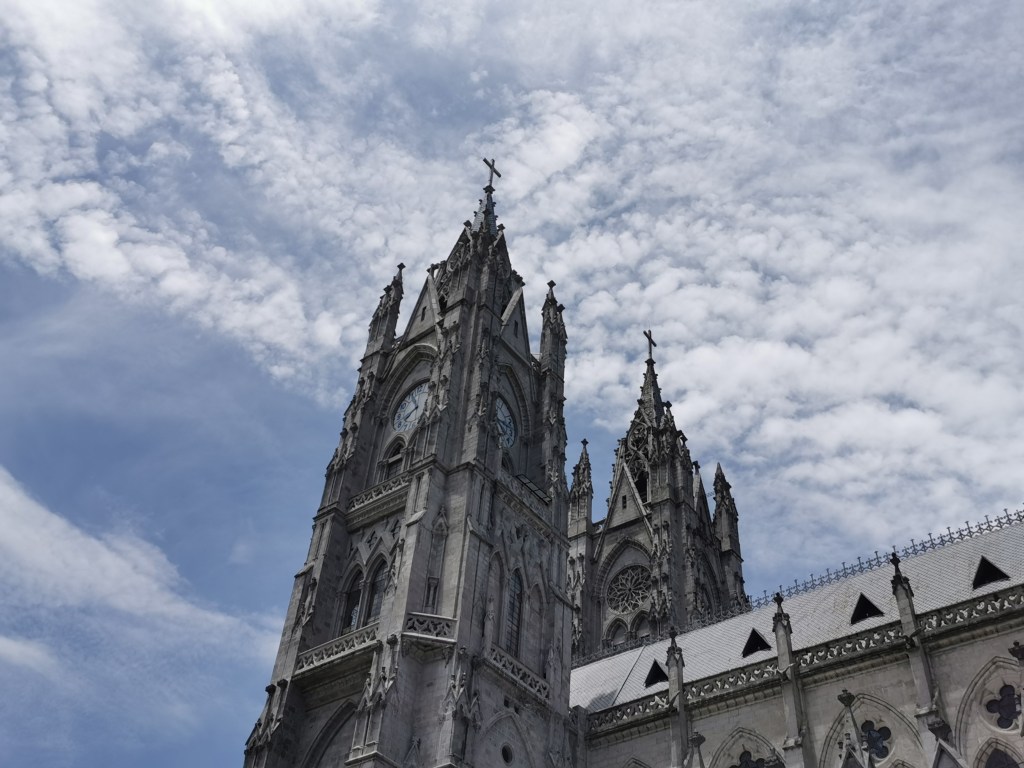
Normally going up the tower of a church takes about fifteen minutes and provides you with a nice view around. It is a nice activity but not one that will live long in the memory. Climbing the towers of the Basilica del Voto Nacional was different – it was fun and was probably our favourite activity in Quito itself.
The Basilica is pretty new and despite the fact that it has been consecrated and is in use, it is not actually technically finished. You can enter the main part of the building but we never actually went there. To get to the towers you need to take a separate entrance (which is to the left hand-side of the picture above). You need to buy a ticket from a nearby stall and make sure you get the right one or you could end up paying twice (luckily we had been fore-warned about this on the free walking tour).
As you can see from the photo, there are towers on both sides of the building and you can enter all of them through the same entrance. The main towers on the left hand-side of the photo can be accessed by climbing up a lot of stairs or, to a certain point, by using the elevator. These, however, are not your usual church towers. There is a gift shop where you can buy Ecuadorian souvenirs; there are some rooms that are rented out for various activities (there were flyers for language courses and dance classes); an art exhibit that includes photos from across Ecuador takes up some of the highest spaces; and there is a cafe where you can have a drink and enjoy the view.
More fun, however, was the trip to the tower on the right hand-side of the photo, known as the Condor Tower. Firstly, you can access an outside part of the roof, which gives you a better view of the statues. Unlike many churches, where gargoyles protrude from the stone work, this basilica has statues of native animal species that can be found in the highlands, the Amazon basin and the Galapagos Islands. Once you are finished enjoying the views, you can make your way into the inside of the roof. This is part of the structure that is not finished and there is only a thin walkway that leads to the other side of the building. Here is the first of several metal ladders that allow you to access the Condor Tower. At this point I must note that if you are afraid of heights or suffer from vertigo, then this activity is not for you. Everyone else, it is definitely worth the climb. I found the views from this tower even better than the others, mainly because your view of Quito now includes the other towers as well. You also get a nice photo opportunity of having the Virgen del Panecillo positioned in-between the two main towers. When you’re finished you need to make your way back from whence you came to the exit.
Given that the entrance is only a couple of dollars, we would definitely recommend spending an hour or so here.
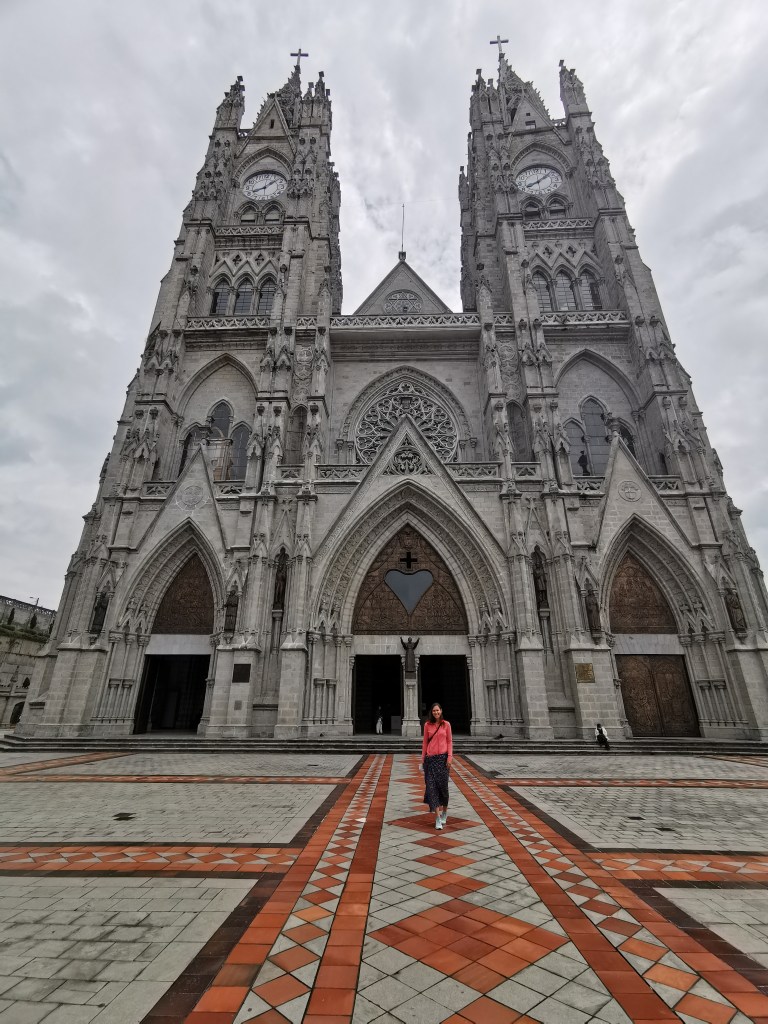
The entrance to the towers is on the left hand-side of this photo 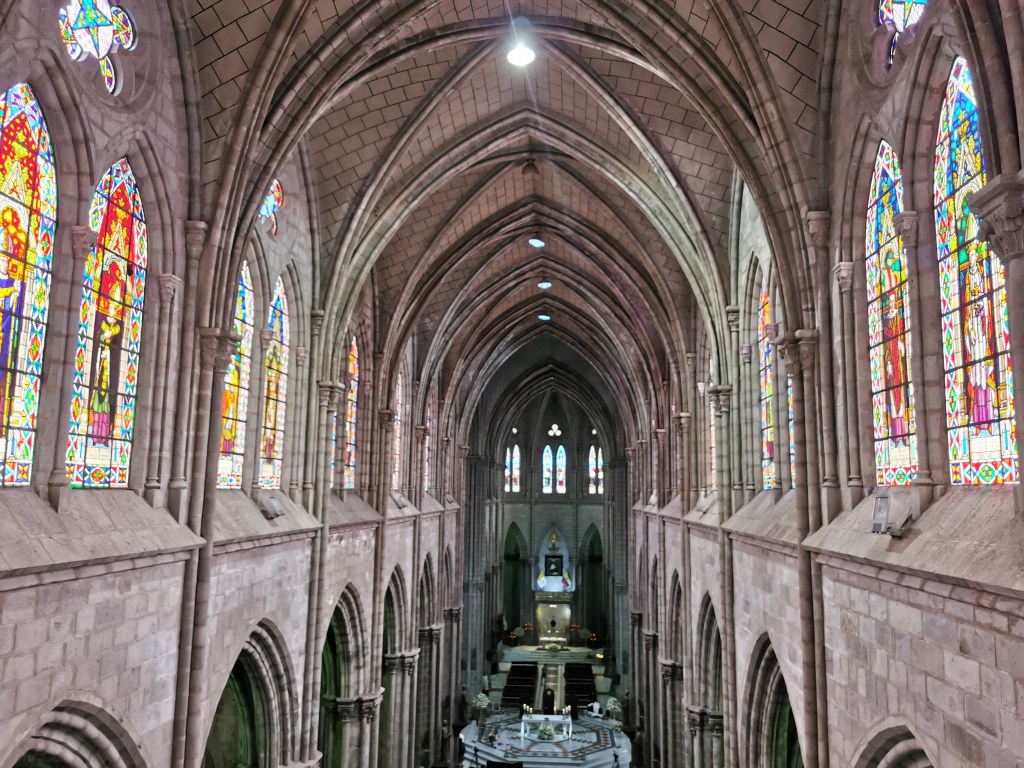
The walk up allows you to see inside the basilica… 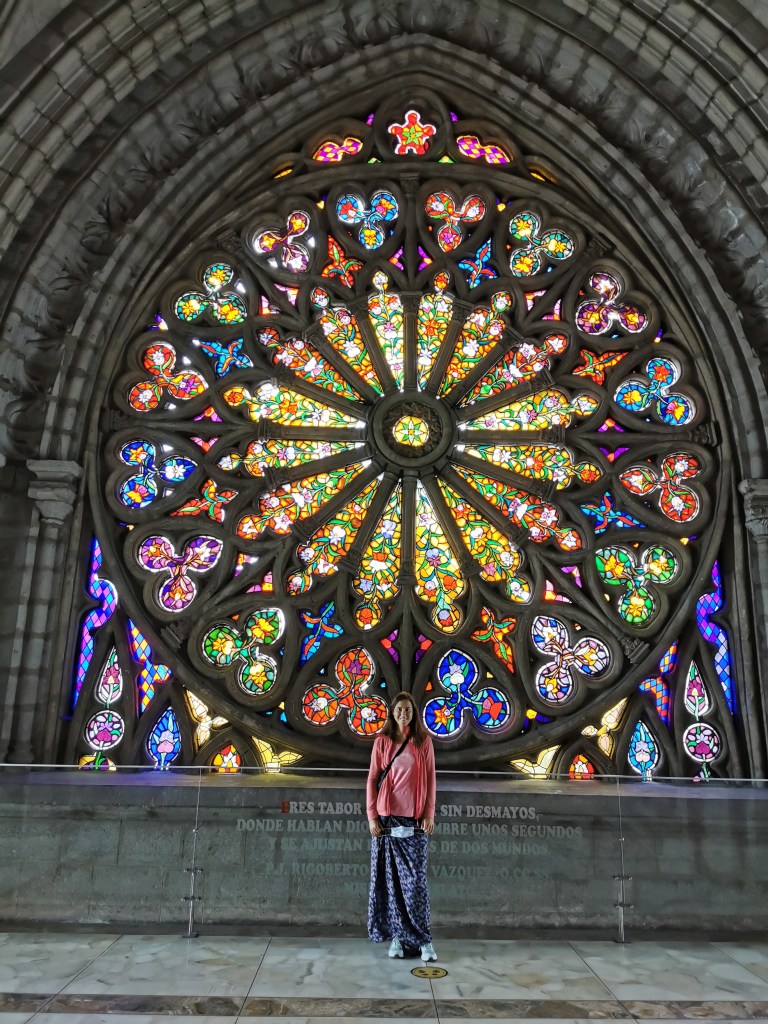
… and get a close look at the feature window 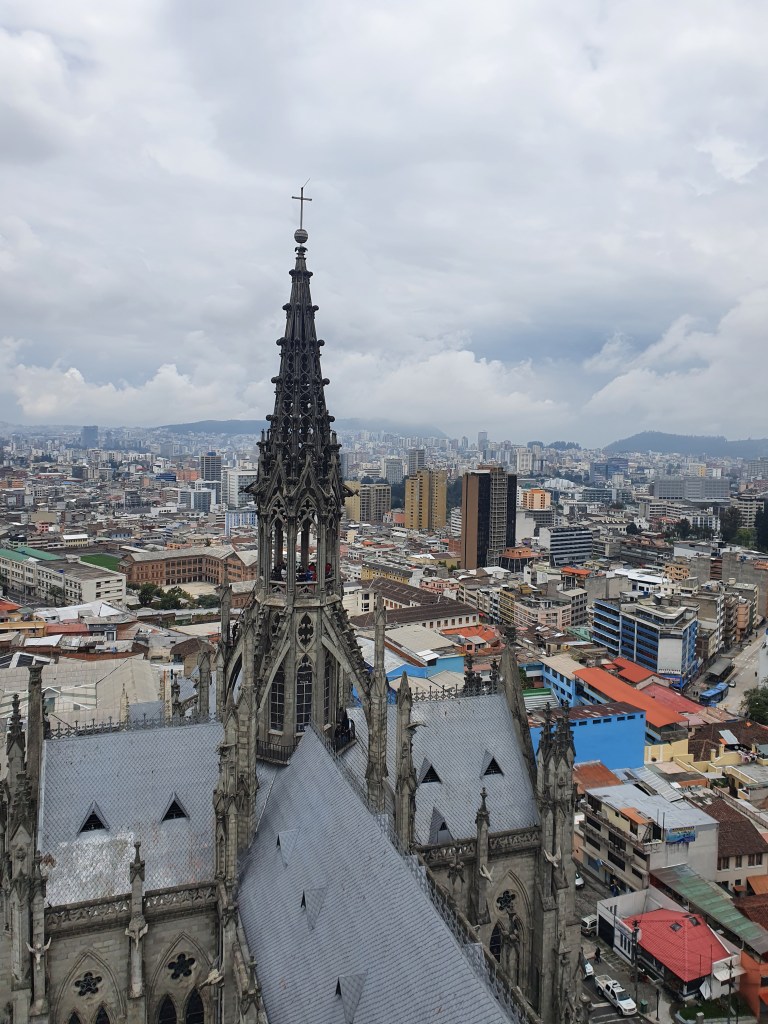
The Condor Tower 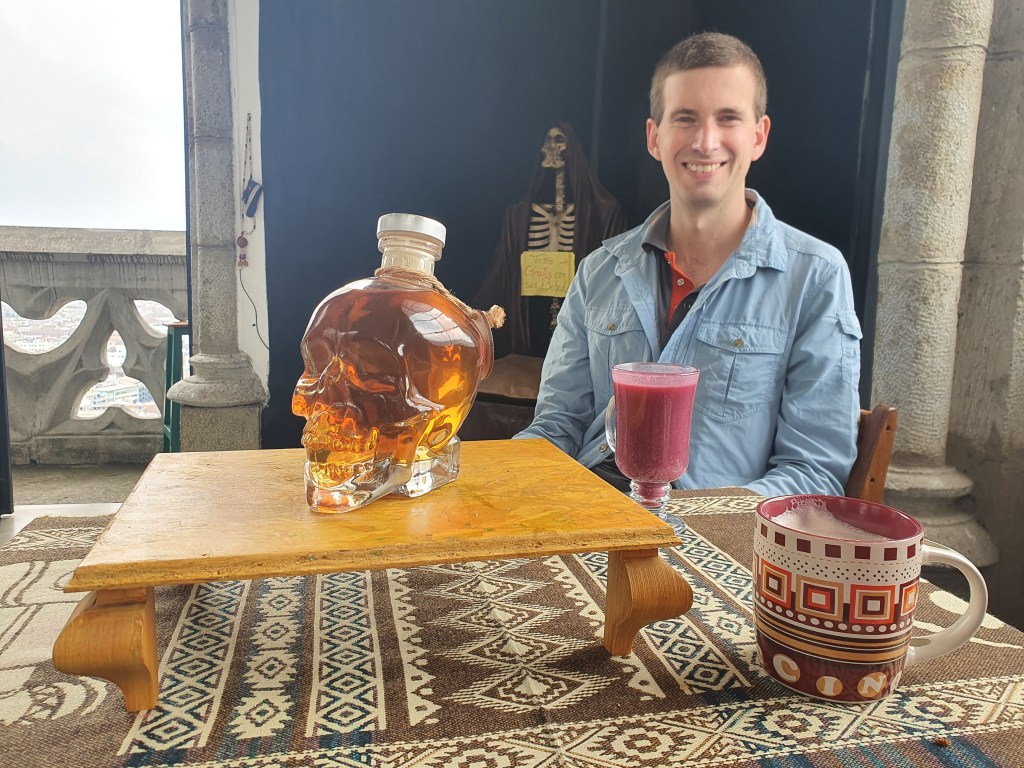
There is a quirky cafe in the tower where you can have a drink and enjoy the view 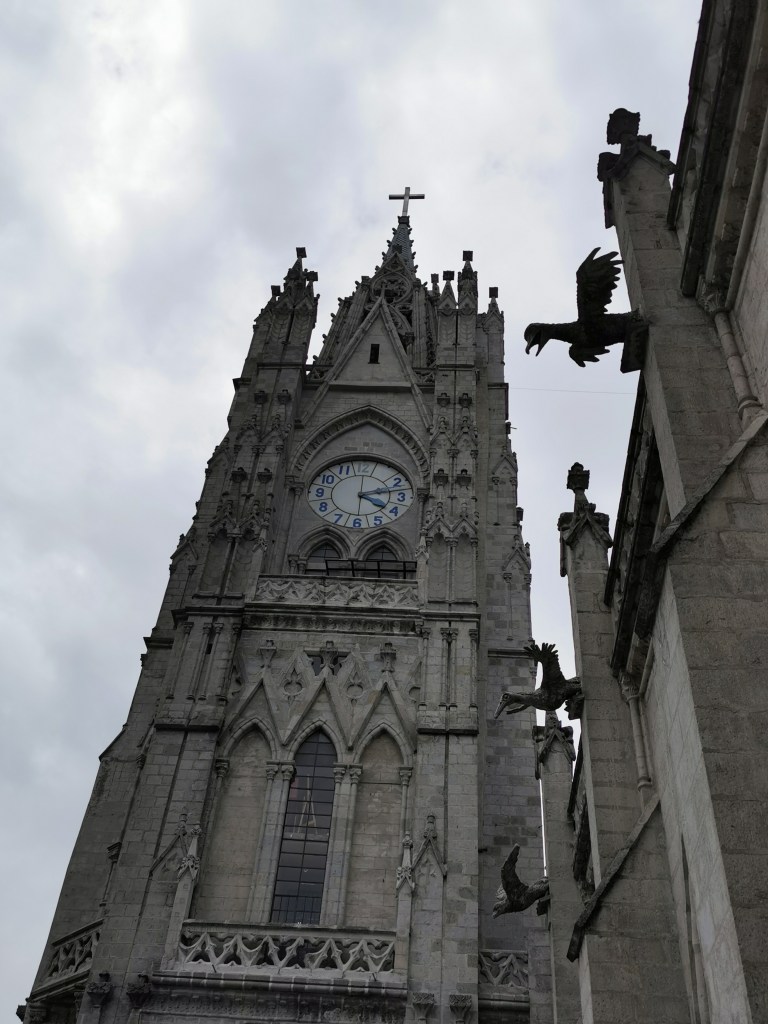
Instead of gargoyles, there are statues of animals from Ecuador and the Galapagos Islands 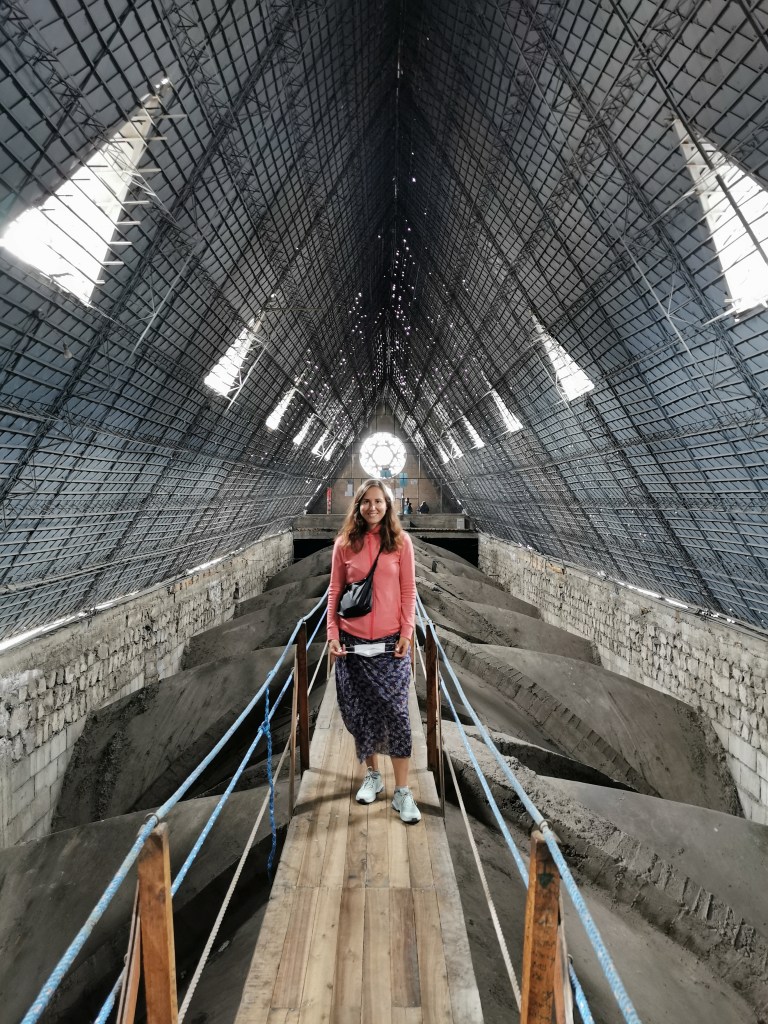
Walking through the roof of the basilica 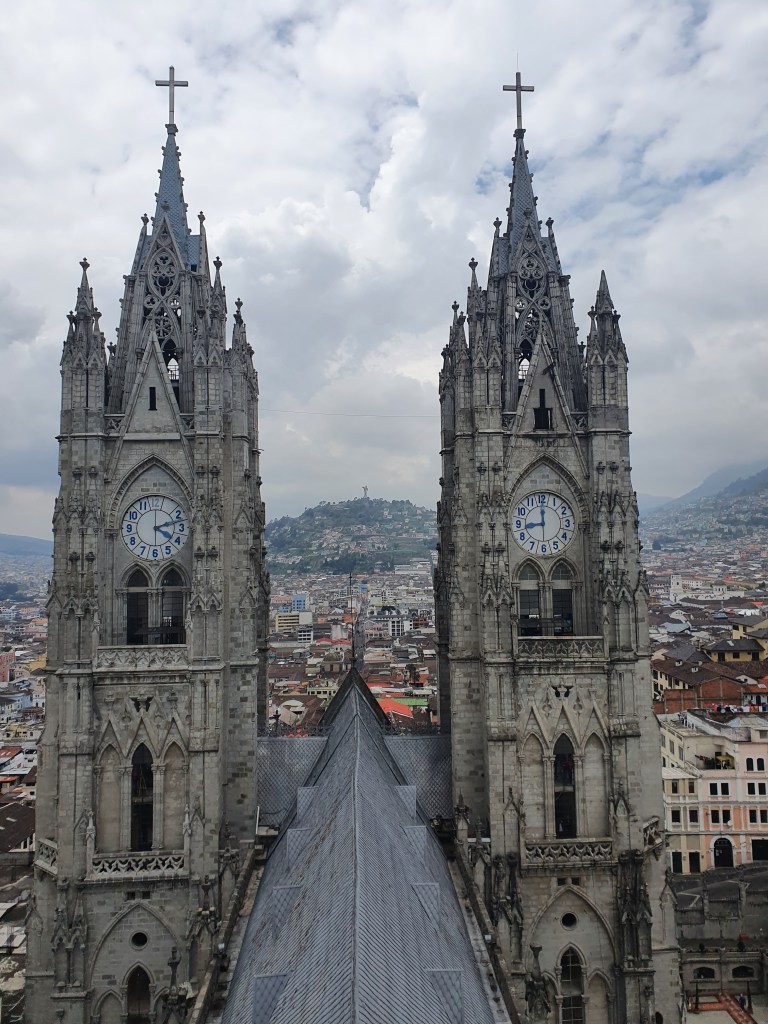
The view from the Condor Tower
Have a look around some of the churches
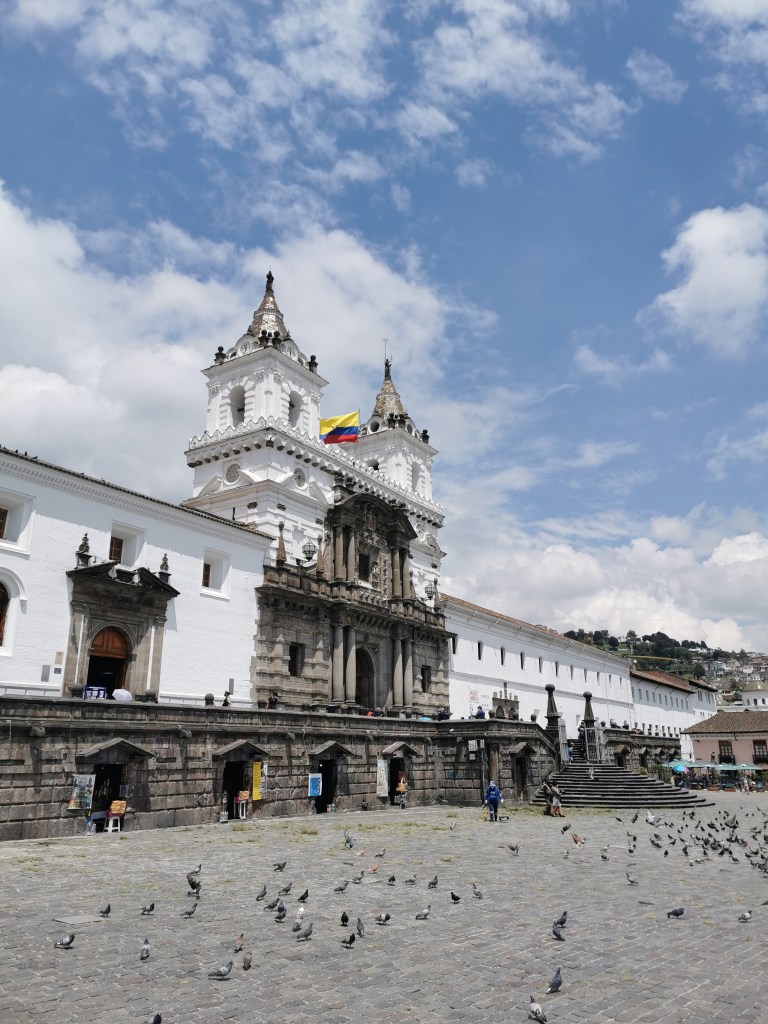
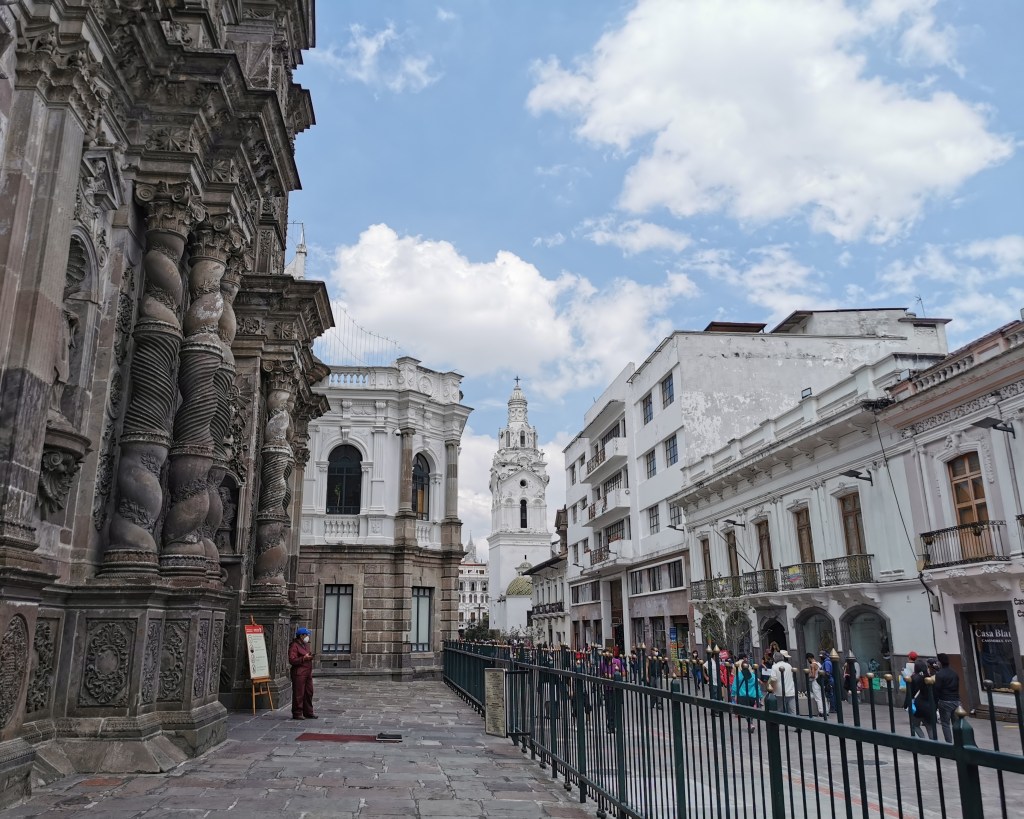
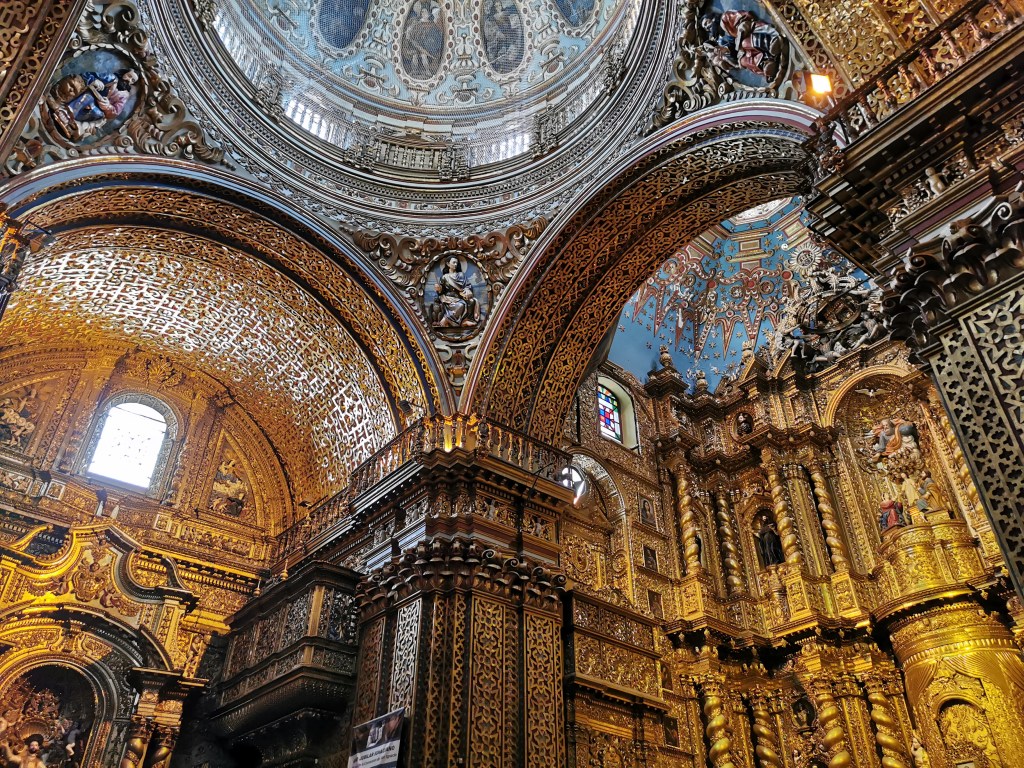
Quito has a very high density of churches and this is especially true in the area around the historical centre. Whether you want to look inside or just admire the architecture from the street, there are so many options.
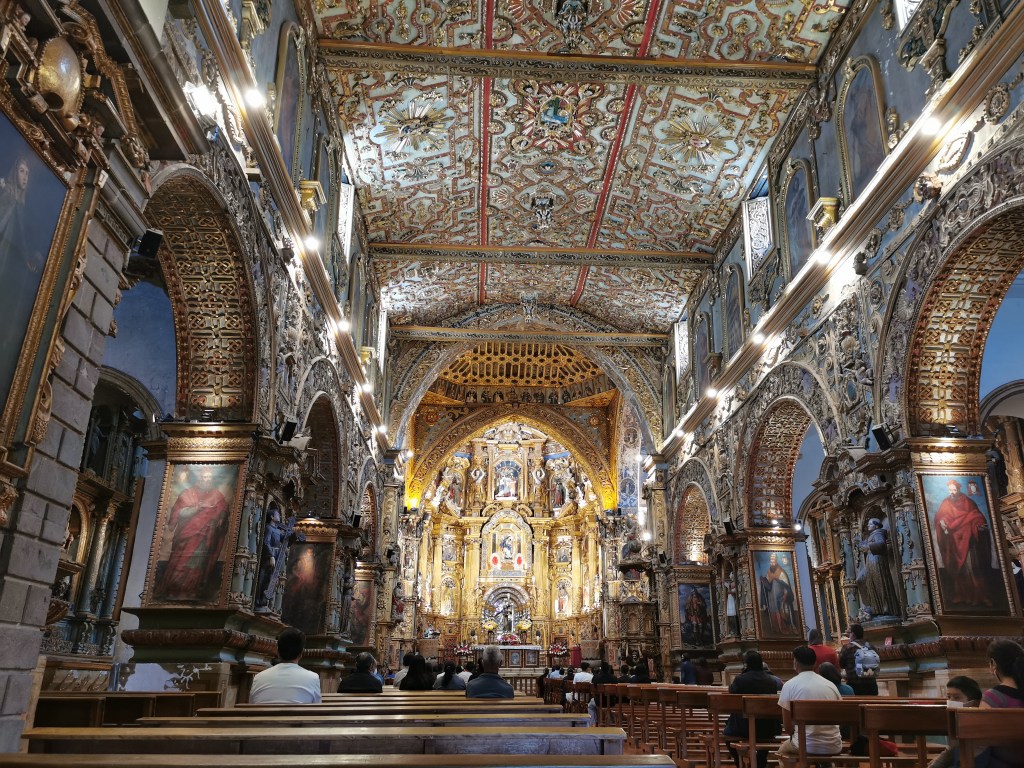
I’ve already mentioned the Basilica in this post but we also visited the Church of San Francisco and the Iglesia de la Company de Jesus, whilst wandering past several others during our time in the city. The former is famed for its size and impressive decorations and sculptures, whilst the latter is renowned for its golden interior.
Even if you’re not interested in religious artwork, it is hard to imagine that you still wouldn’t be impressed by the imposing structures everywhere you walk.
Take the TeleferiQo into the mountains
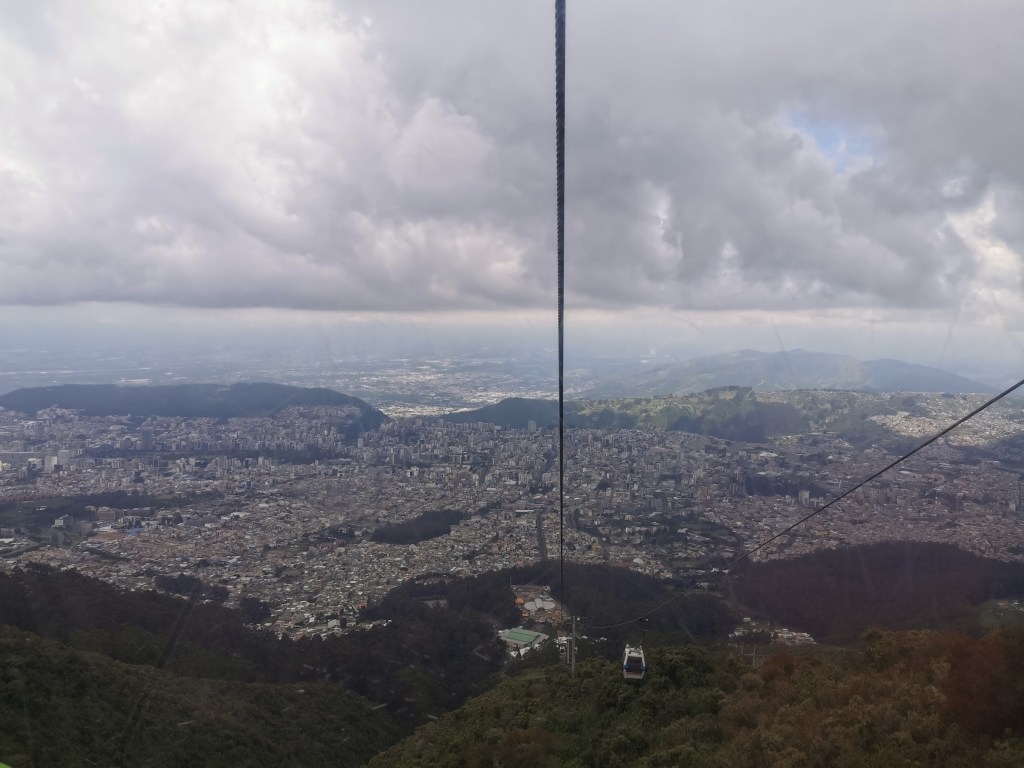
Taking the TeleferiQo into the hills above Quito, and possibly walking to the summit of the Rucu Pichincha volcano, are supposed to be amongst the very best activities to do in Quito. But we had a bit of a nightmare in our attempts to do so.
When we first arrived to Quito it was the main thing we wanted to do in the city. Quito, however, is arguably the highest capital city in the world (there is an argument as to whether La Paz or Sucre is the official capital of Bolivia) and thus we felt it was important to acclimatise before attempting any high level walking. The cable car takes you to about 4000m above sea-level and the 10km round-trip hike to the summit of the volcano obviously takes you even higher. Thus we planned on leaving this activity till just before leaving Quito. This turned out to be a mistake. The day we planned on doing the trip, the TeleferiQo was closed for renovations. The other times we were in Quito were mainly just short transit stops or there were mass protests in the city. So it got to the final day that we would be in Quito and we still hadn’t done this major attraction.
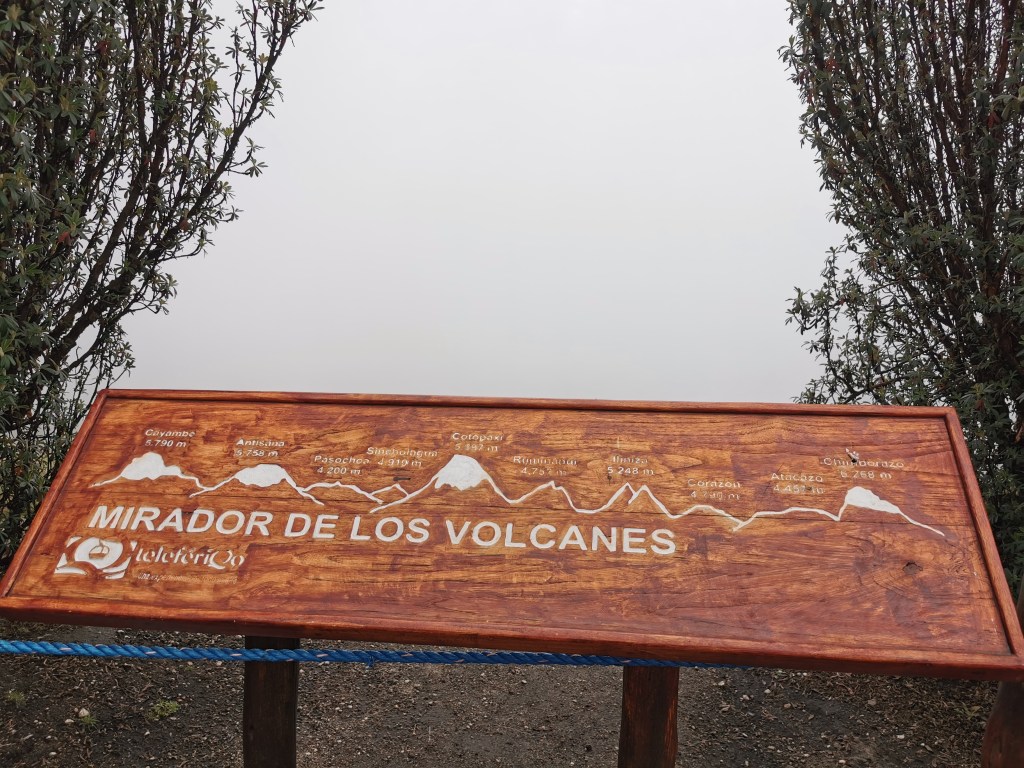
On this day, we opened the curtains to… cloud. Thick, low-lying cloud. Normally the mornings in Quito had good weather and the rain and thunderstorms came in around lunch time. On this day, however, the weather was just rubbish all day. But, as it was our last chance, we decided to still get the cable car up the mountain and to have a look around, even though there was no point in doing the hike.
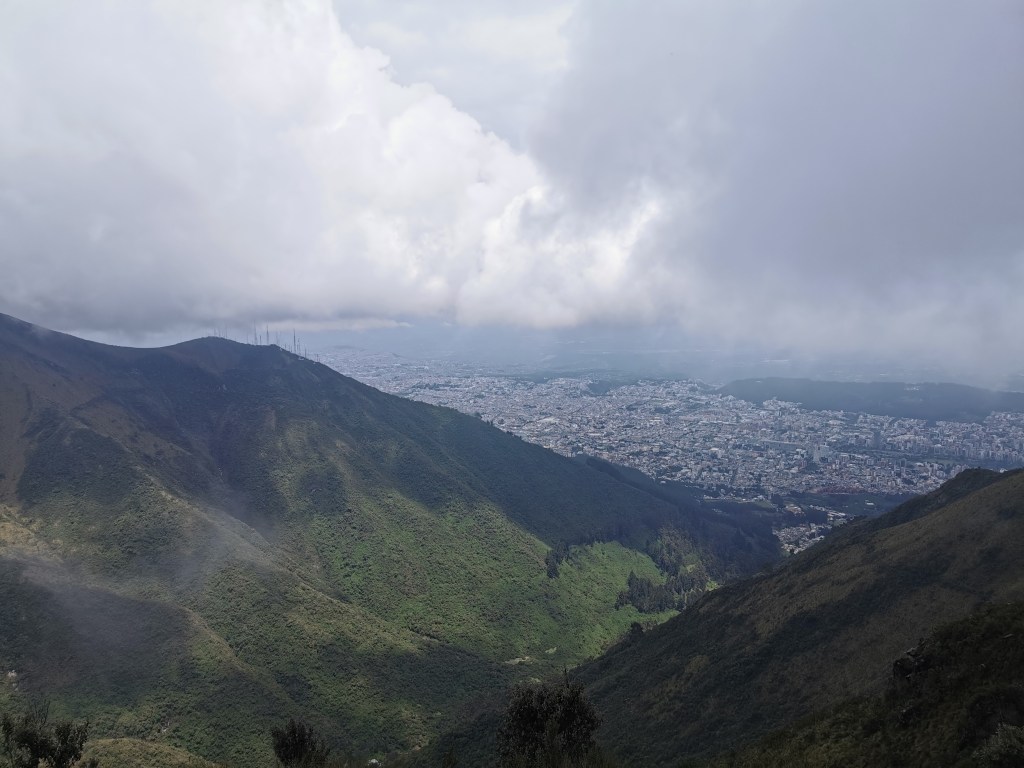
When our taxi reached the cable car station the weather seemed to be improving so we were hopeful as we started ascending the mountainside. We actually had nice views until we got to about two thirds of the way up, and then the cloud started getting thicker and thicker. At the top there is a cafe and shop and if you walk for five to ten minutes along the tracks there is another smaller cafe where you can get some snacks and hot drinks. As we walked along there was an occasional break in the clouds, meaning you got glimpses of the city below, but they were few and far between and they didn’t last for long.
Even the famous swing, home to many an instagram picture, could not escape the gloom. It’s name actually translates as the ‘Swing in the Clouds’ and it out did itself on this day.
We still wandered for a bit and the glimpses we caught made us certain that on a nice day this would be an amazing place to come. It was just a shame that it hadn’t worked out for us this time.

Visit the Virgen del Panecillo
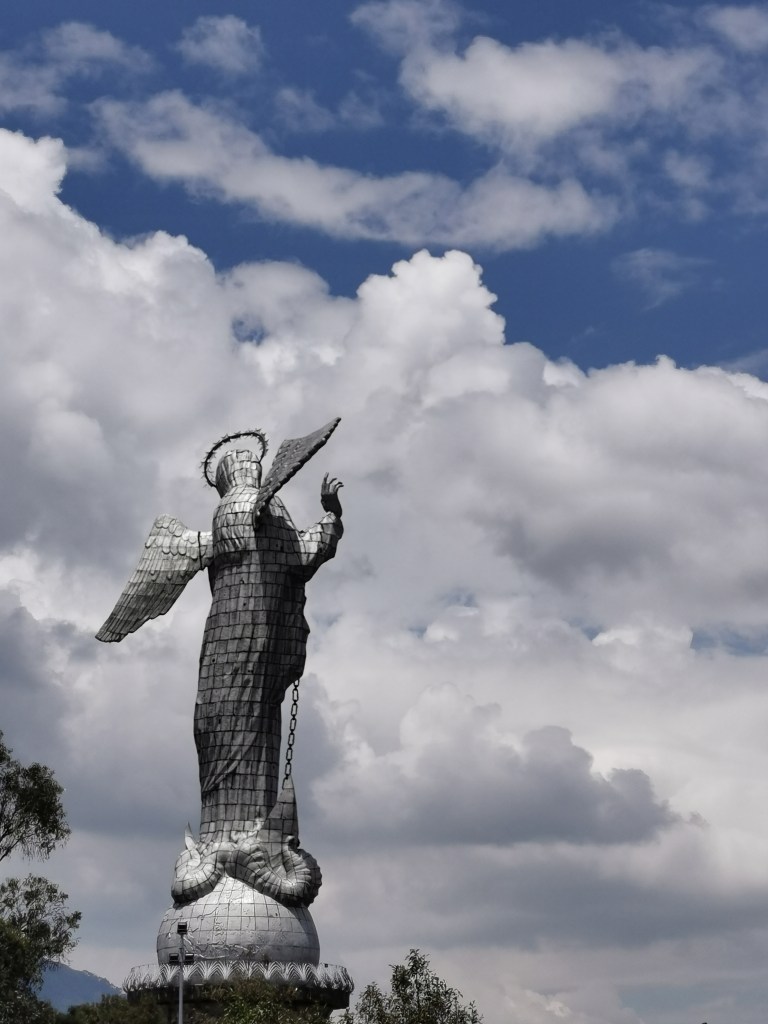
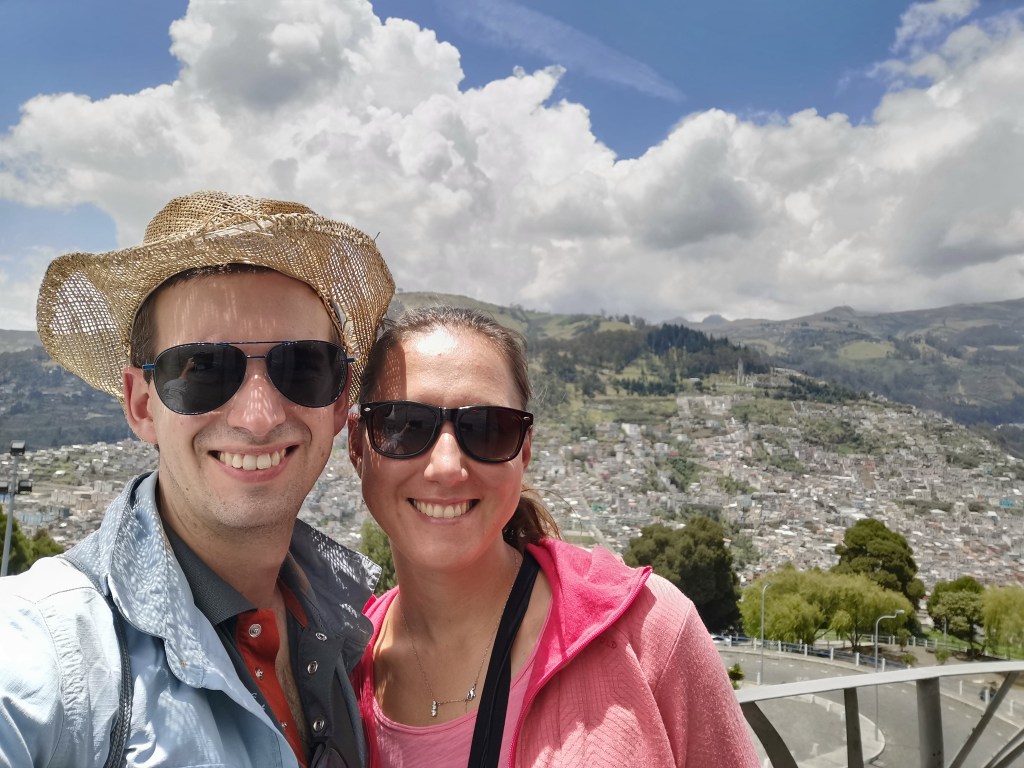
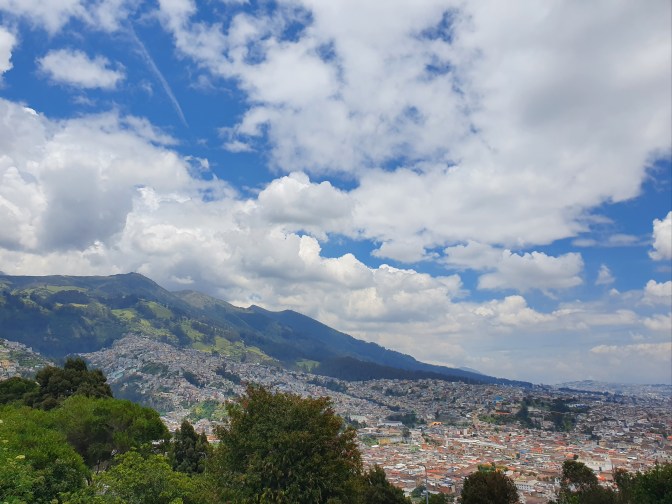
On the day that we had wanted to take the TeleferiQo and it was closed for renovations, we instead decided to visit another viewpoint over the city, the hill that is home to the Virgen del Panecillo.
We were advised not to walk up the hill, due to the risk of muggings, so we took a taxi to the summit. Here you can go inside the statue for a couple of dollars or just walk around and enjoy the extensive views over the city. There are also some stalls selling souvenirs and street food.
This is a pleasant way to spend an hour or so but is not a must-do attraction. The views over the city are nice but to be honest, the statue looks nicer from a distance and is better to have included in your photos rather than being stood next to it.
Enjoy the restaurants
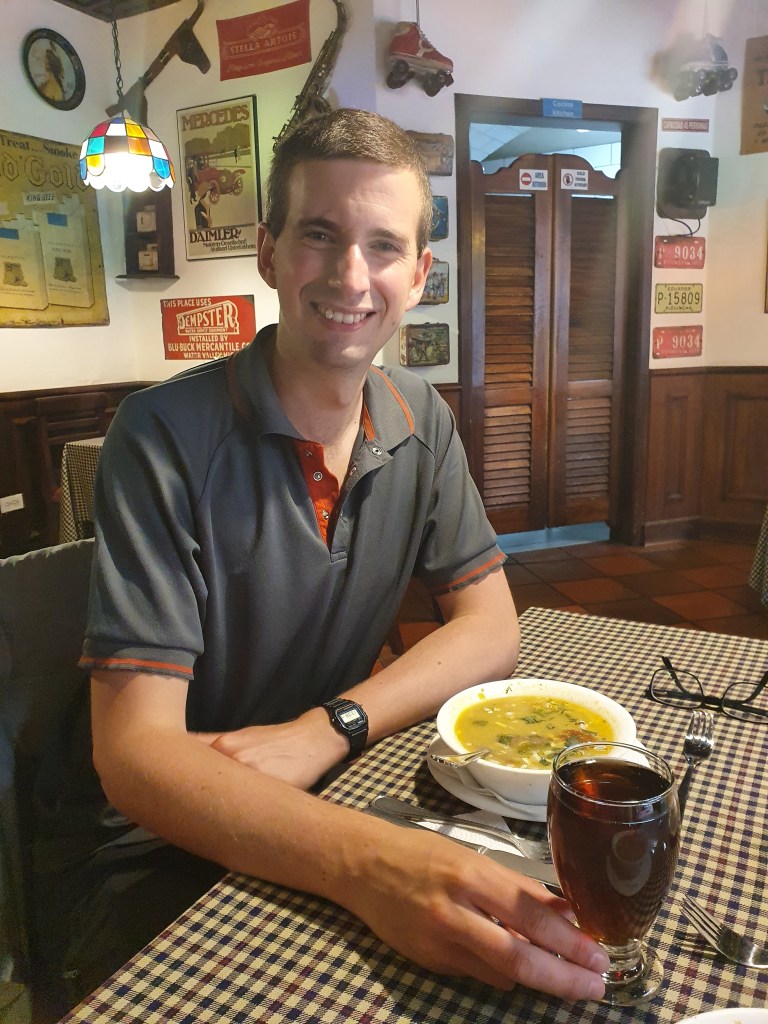
We ate at multiple places during our time in Quito but two stood out enough to be mentioned here.
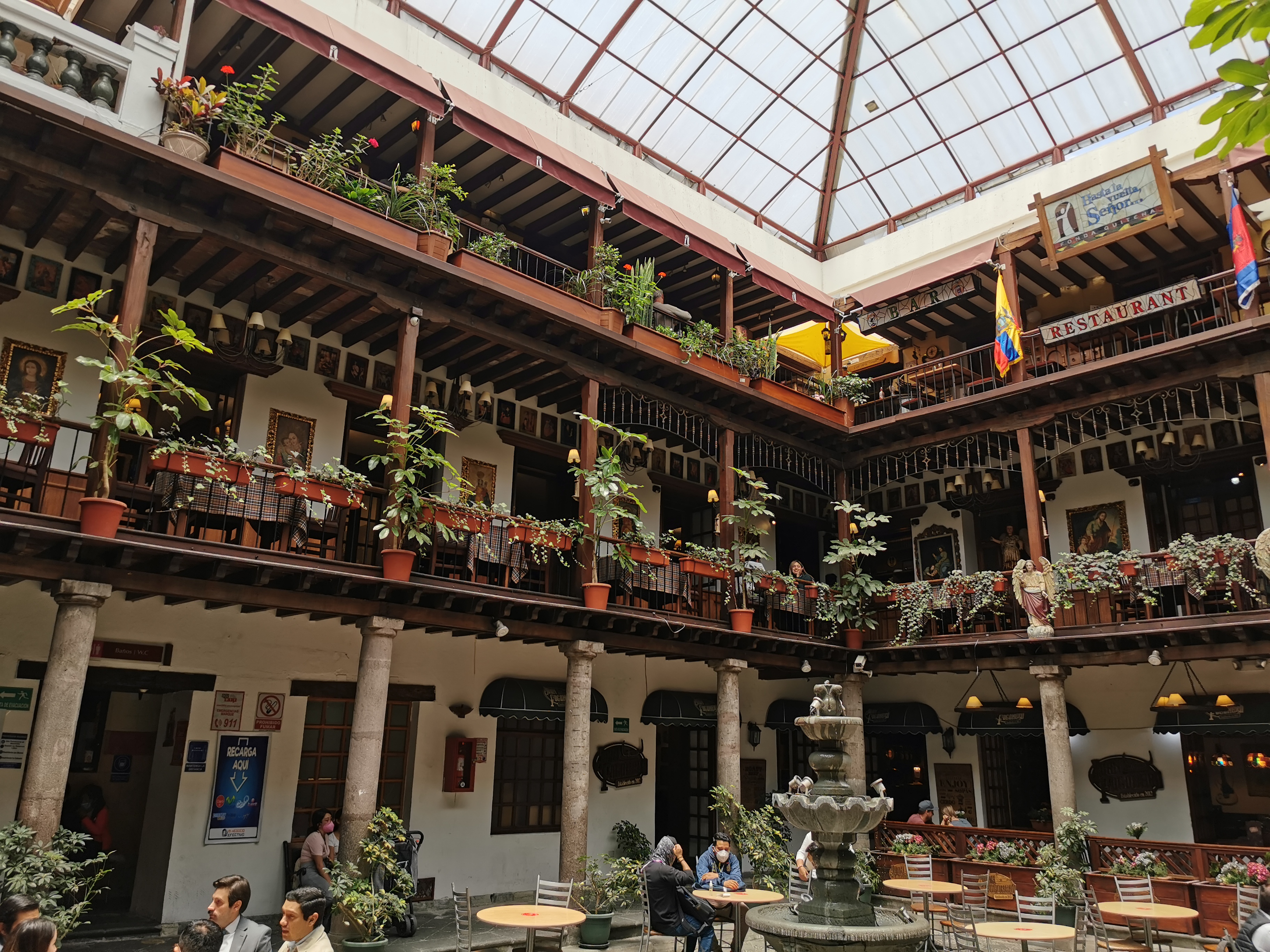
Juan Fogonero – this cosy restaurant is positioned on the ground floor of the nice hidden courtyard that we visited during the free walking tour. It is right next to the Plaza Grande in the historical centre. We thought it might be expensive due to its location but it still did a ‘Menu of the Day’, which is more common in smaller local eateries. For next to nothing you get a soup, a main, and a juice and they were very tasty. We came back a second time and the dishes were different from the previous occasion, which made it even better. So with its local food options and nice setting, this place is definitely worth a look if you’re wanting to eat like an Ecuadorian.
Cafe San Blas – if you want a change from the local fare then you could do a lot worse than checking out this place. When we first went there it seemed that it was closed but it turns out you have to ring the bell and they will let you in. The restaurant itself is very small but they do a very good selection of food, including pizza and pastas. During my time in South America, the standard of ‘Italian food’ has generally been very low but we both thoroughly enjoyed the meals on offer at Cafe San Blas. Whilst it is not the cheapest place we ate at in Quito, I don’t think it was expensive for what you got. One negative is that the area around the restaurant is supposedly not the safest but if you do not want to go there yourself, they do offer a take away and delivery service for a bit extra.
Take a day-trip
As well as being an interesting city in its own right, Quito boasts a good location for visiting other attractions in the vicinity. During our time there we took two-day trips:
‘Middle of the World’ Day Trip
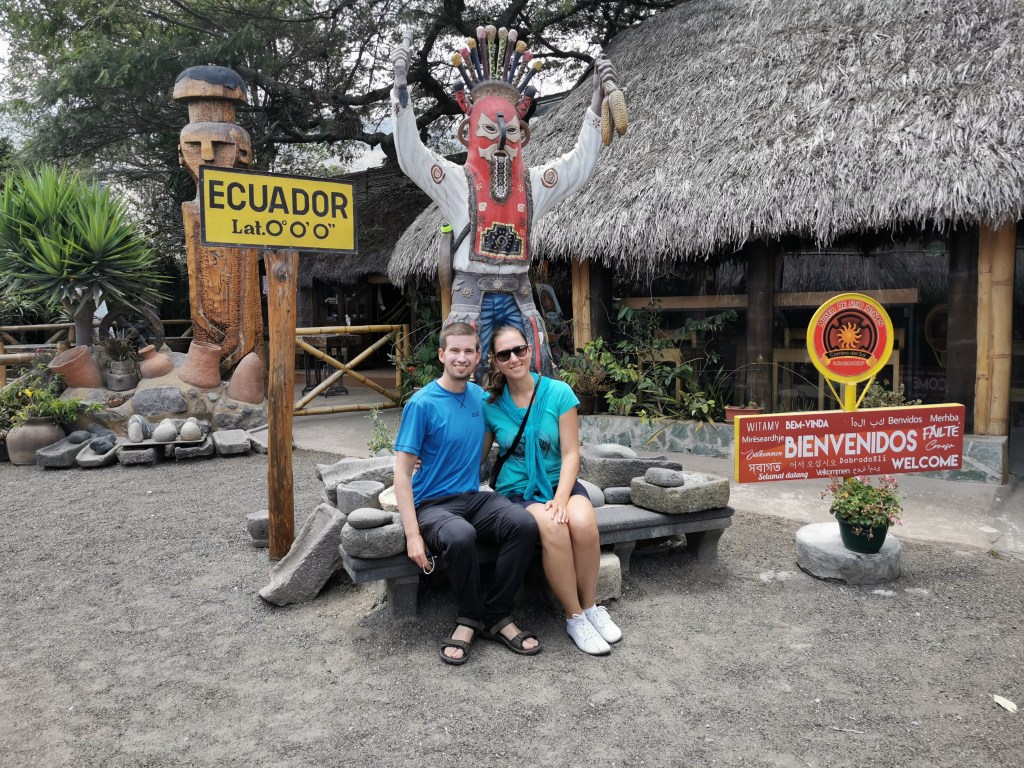
This day trip didn’t even take a day, we left fairly late in the morning and were back by mid / late afternoon. This is a completely touristy trip and yet it was really good fun.
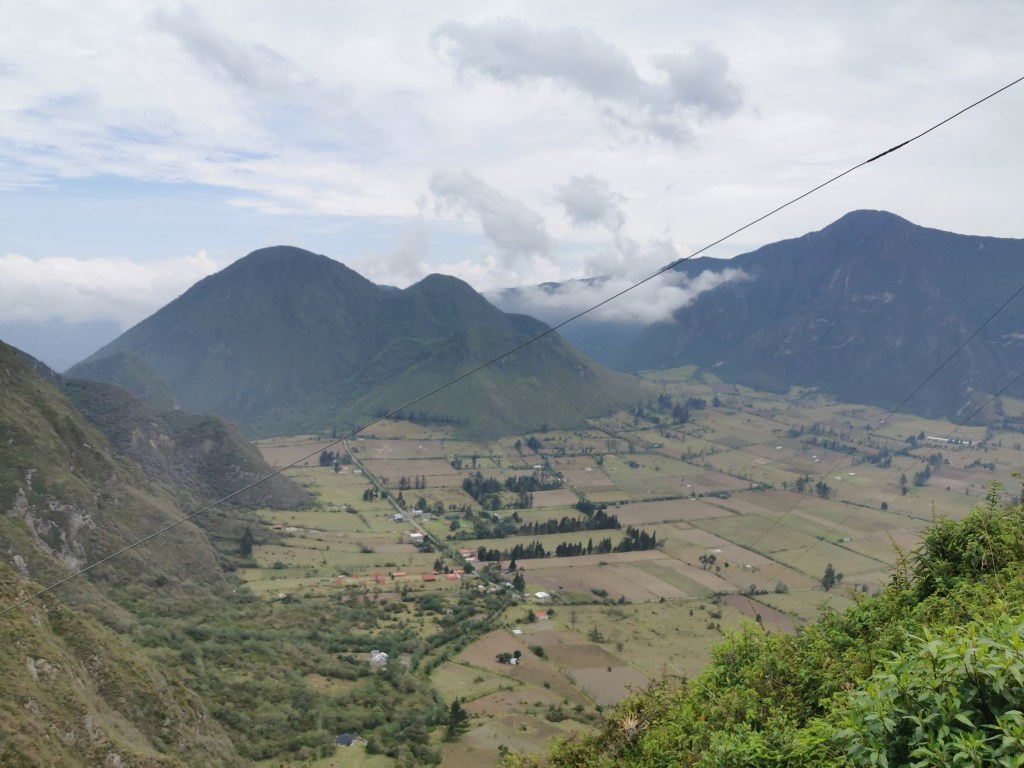
The trip is broken into four main parts. The first is a trip to the viewpoint overlooking the Pululahua Crater. This is a vast volcanic crater that is now home to an extensive farming community. The views were nice and we spent about ten minutes looking out over the crater before moving on.
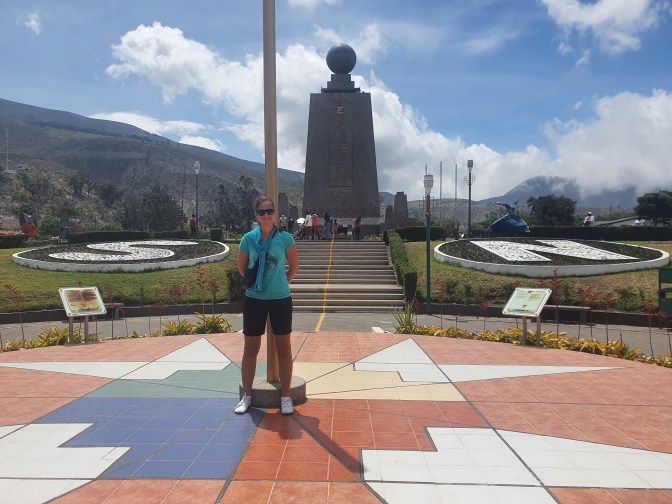
The second stop was at the Museo Intiñan. This outdoor museum includes a variety of exhibits and activities that either focus on the traditional culture of the local area or the fact that this museum is located on the equator. The setting is nice and we saw our first hummingbird flitting amongst the flowers. The activities are very cheesy and scientifically questionable but still very fun. These include trying to balance an egg on a nail (you get a certificate if you manage it 🙂 ) and walking in a straight line with your eyes closed. There is also a tub of water so that you can see it draining in different directions if you are north or south of the equator line painted on the ground. The guided tour lasts for about 45 minutes and we thoroughly enjoyed it.
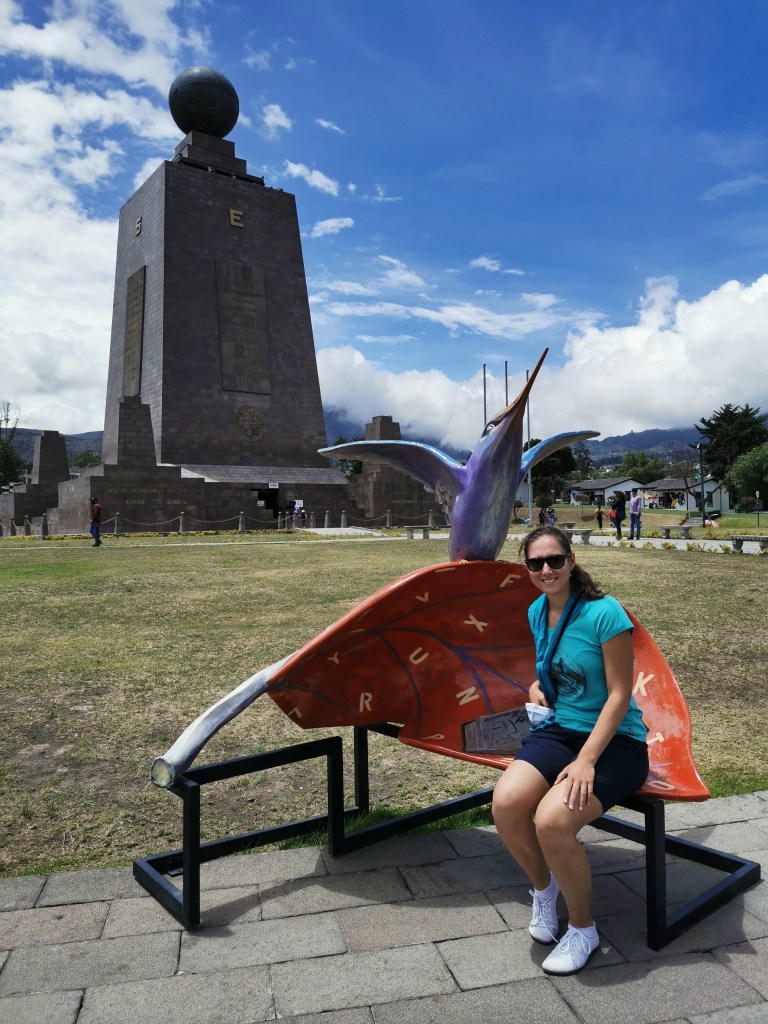
The third stop is to the Mitad del Mundo monument. This is supposed to be the grand monument to being at the middle of the world. But as technology has advanced it turns out that it’s in the wrong place – the desired location is actually closer to the Intiñan Museum. The monument itself houses a museum to all of the areas and local indigenous groups from Ecuador. We read through a few but we didn’t really have the time nor the inclination to go through all of them. The views from the top of the monument were nice and were probably the best bit about this part of the trip. There are other exhibits but we didn’t have time to check them out so we don’t know if they’re worth a look or not. We met people who came to this area just to visit this site but, having been there, I don’t think we would recommend it unless it’s part of a tour like the one we participated in.
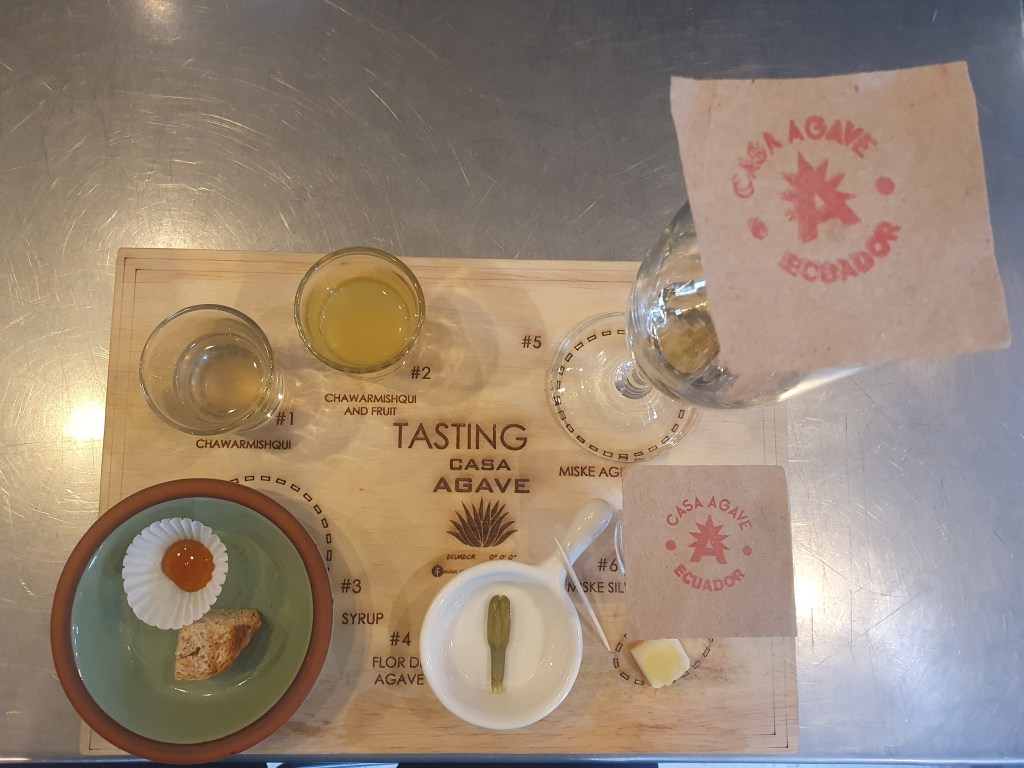
The last part of our day tour took us to Casa Agave, a place where they make different products from agave. To be honest, I wasn’t too fussed about going here but it turned out to be a nice little tour. They start outside, talking about the plant and how it is looked after and farmed. The surrounding hillside had been covered in the plants but a fire had devastated the patch. To help with the regeneration of the hill, one member of your group is asked to pot a small plant that will be added to the nursery. Afterwards, you head inside and they take you through how agave was used by the indigenous communities and the significance to their cultures. You then get a peak into their lab. The main product made at the site is Miske, which is similar to Tequila but not made in Mexico. In the lab, they take you through the process of making this and the other products, such as sirup and juice. The final part is a tasting session, where you get to try the different products along with a couple of miske-cocktails. All in all, it was a nice way to round off the tour before heading back to the hostel.
Just as a side-note, the entrances to the museum, monument and Casa Algave were not included in the price of the transport, so please factor this in if you decide to try out a tour like this. And whilst this tour is a very touristy thing to do, we had a good day and think it’s worth giving it a go.


Otavalo Day Trip
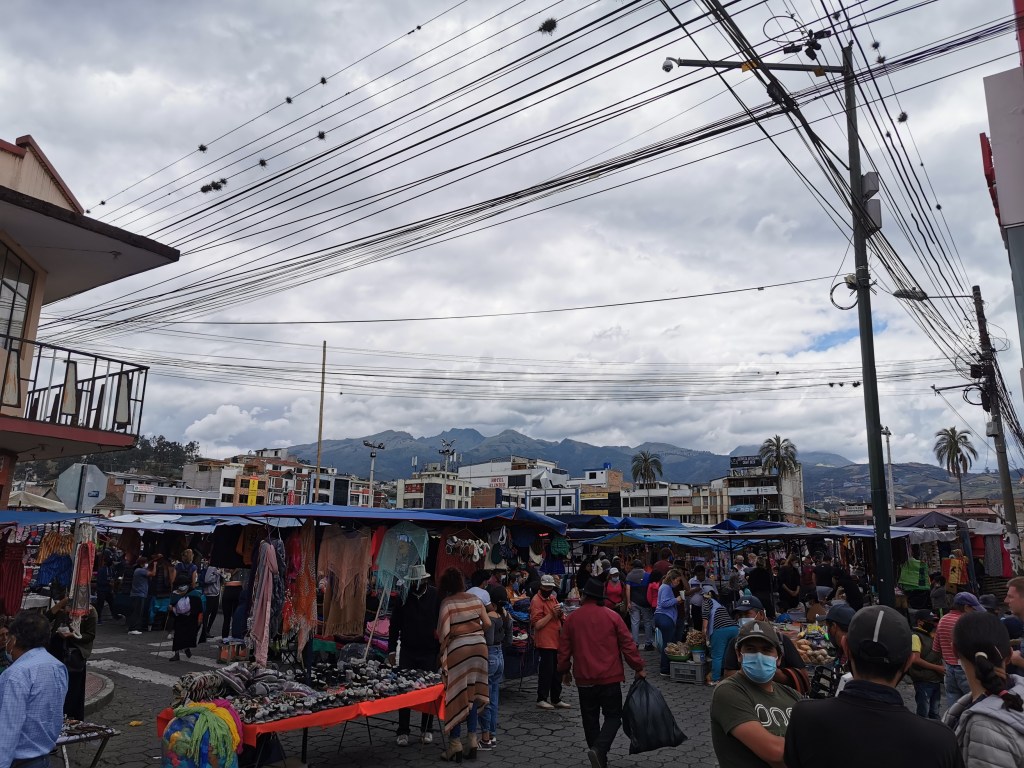
One of the things we wanted to visit whilst we were in Quito was Laguna Cuicocha. When we asked the tour desk about this at our hostel, we were assured that the only real way to see it as a day trip, and without staying closer to the lake, was to go on an ‘Otavalo Day Trip’. This turned out not to be true, it was just the only way that they offered, but we’ll get onto that in a bit.
The tour generally runs on a Saturday, as that is the day that the famous handicraft market in Otavalo is at its biggest. And after an early pickup, this was our first stop. The guide drops you off and you have an hour or so to wander round before you meet up again at a pre-arranged point and time. If you like markets then I am sure that the one in Otavalo would be impressive. There are hundreds of stalls arranged over a large area in the centre of the town. They sell everything from food to touristy souvenirs but it mainly seemed to be locally weaved clothes and Panama hats. Given that neither Radka or myself particularly like markets and that we don’t have space for souvenirs anyway, we didn’t particularly enjoy our time there. The constant noise of sellers trying to get you to come to their stalls was a little overwhelming and after a while we just found a spot to sit and watch it going on around us, whilst no longer being involved. We found this to be more interesting.
The next stop on the tour was the town of Cotacachi, which is famed for its leather work. We were dropped off at the end of the main street and given time to look at the shops. For the same reasons as above, this was not an activity for us but we did manage to find an ATM with no fees, Banco del Austro, which proved to be useful for our remaining time in Ecuador. Afterwards, we had lunch in Cotacachi, which was included in the price and was very enjoyable.
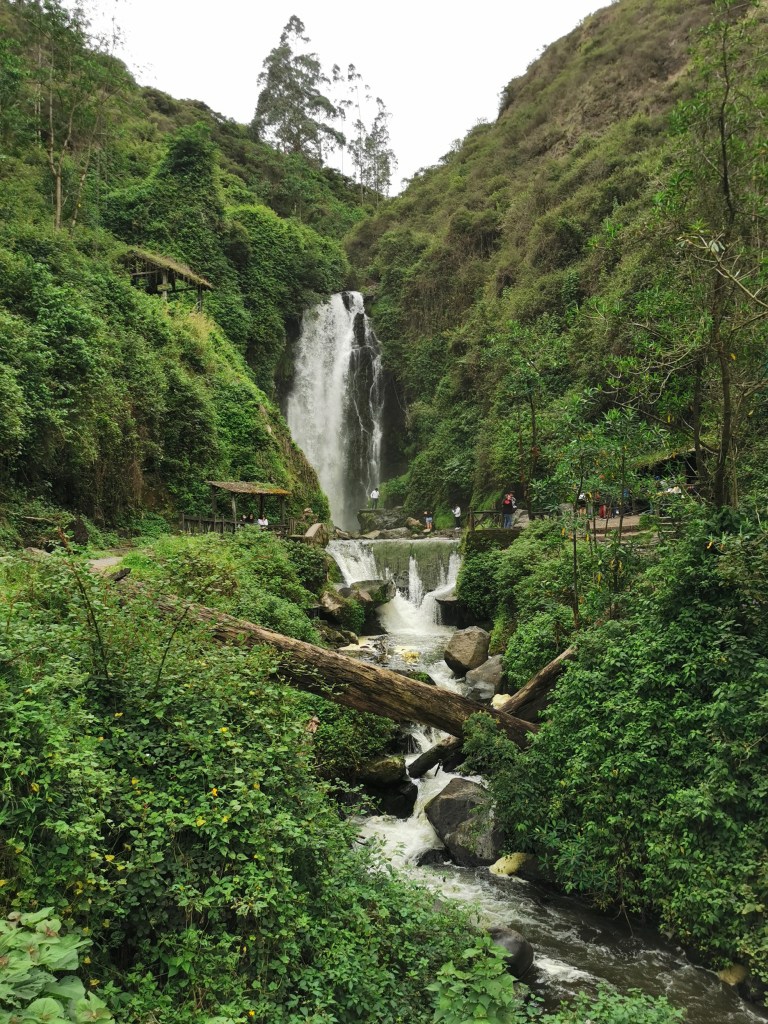
The third stop was to visit the Peguche Waterfall. The easy walk amongst the trees was pleasant and the waterfall itself was nice, but if you have spent any time travelling in South America then you will have seen similar or better examples.
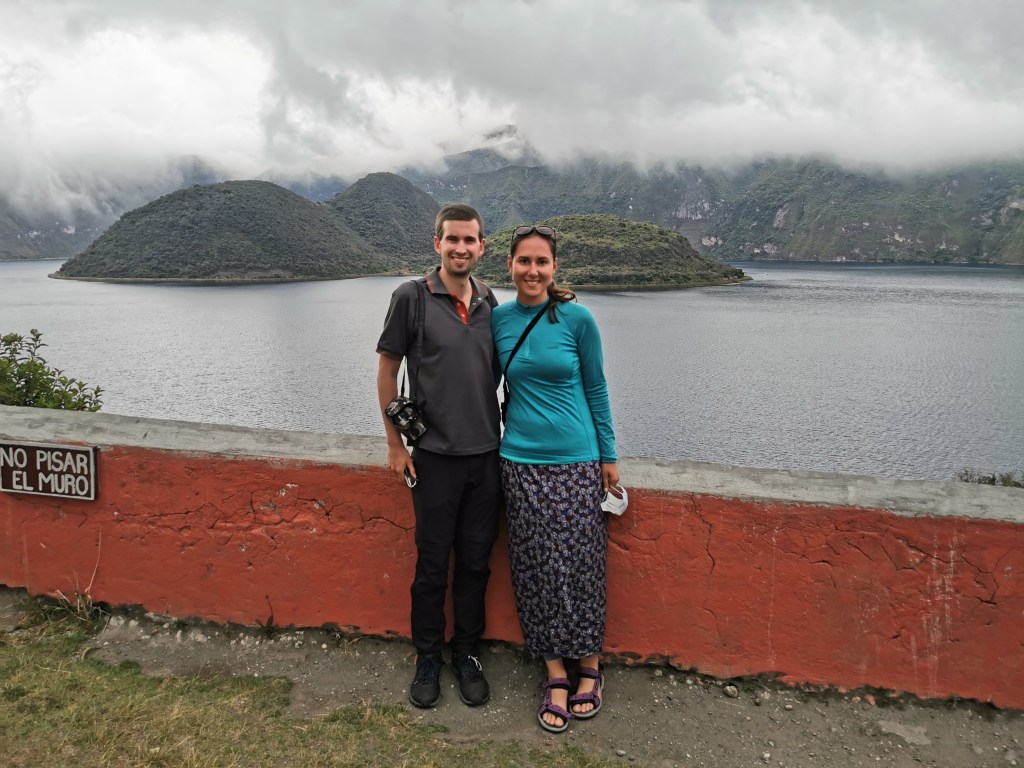
After returning to the car, we were finally on our way to Laguna Cuicocha. We stopped in the carpark of a restaurant overlooking the lake but as the day had progressed the weather had predictably gotten worse. So by the time we got to the lake, there was heavy cloud set over the whole area. This made the lake rather a disappointing spectacle. Having said that, we were lucky to see it at all. As we watched, low-lying cloud started sweeping across the lake and after ten or so minutes, we could no longer see it. As we stood there I was chatting to the guide about how it was a shame about the weather, as we were looking forward to seeing it. He told me that we should have done a hiking tour that spends half a day just walking part way around the crater. This would have suited us perfectly and we were pretty annoyed at our hostel for not mentioning it was possible. I understand from a business perspective that they wanted us to book a tour through them but given that we were staying at their hostel, surely they should be making us aware of more suitable options?
So, overall we were very disappointed with this tour. It cost 50 US dollars per person and we did not enjoy our day. But having said that, we booked it for the wrong reasons rather than there being a problem with the tour itself. If you enjoy markets or you are wanting to purchase some souvenirs then this would be an interesting trip for you.
There are many other day trips that you can do from Quito as well. Notable examples include Cotopaxi, Quilotoa, and Mindo but we did them independently after leaving Quito, so I’ll write about them in later posts.
Final thoughts
Hopefully, this post has given you a few ideas about activities that you can do when you visit Quito. Whilst definitely being an important transport hub, it is also an interesting and attractive place to visit in its own right.
 Brit and Czech Abroad