1st – 4th May 2025
Whilst we had both been lucky enough to visit Norway previously, we had never explored the capital city, Oslo. When we got some KLM vouchers due to a cancelled flight, we therefore took the opportunity to have a long weekend having a look around. If you would like to get some ideas about places to visit in Oslo, then please read on…
Contents
- Getting to the City Centre from the Airport
- Things to do
- Final Thoughts
Getting to the City Centre from the Airport
Getting to the city centre from the airport is fairly straight forward and there are several options. There is, of course, the option of getting a taxi, but given that airport taxis are always excessively expensive (we can only imagine in a country such as Norway) we only thought about it as a last resort. Luckily, we did not have to explore that option further given that it was easy to get a train to the centre. Although, even with the train there is more than one option. You can get the express service, that goes directly to the centre but is more expensive, or you can get a normal train, which does make a couple of other stops on the way. However, when we looked into it further, there was less than a five minute difference between the two, so obviously we went with the normal train. One thing to note is that the name of the station; Oslo Central Station in English or Oslo Sentralstasjon more locally; is not written on the map. It is simply called Oslo S, but rest assured that it is the same place!
Whilst still not cheap (about 11 EUR one way per person), I assume getting the train was still a better option that getting a taxi. Depending on your schedule, however, you may want to consider including this journey into your thoughts when debating on whether to get an Oslo Pass. The journey on the normal train is included with the pass. Whilst we did not end up getting one of the passes, it is certainly an option to look into, as you could end up saving money – which is not a bad thing considering how expensive Oslo is!
Things to do
Whilst we were only in Oslo for two full days we were determined to see as much as possible. So please read on to find out some of the activities you can pack into a long weekend.
Take a Walking Tour
As those of you who have read some of my other posts will already know, I really like taking a ‘free-walking tour’ as a way of getting my bearings in a new place and learning something about the culture and history. The concept of a free-walking tour is that you do not pay anything upfront, but you are expected to make a donation of your choosing at the end of the tour. I do feel that this setup encourages the guides to give you their best. A quick google search showed several options available for this type of tour but we ended up going with Free Tour Oslo, and they provided a reasonable tour that covered the main sites and a tour guide who was very pleasant and clear whilst speaking. We did feel the pace of the tour was a little slow, and by that I mainly mean the information provided and the lengths of the stops rather than the walking speed. It would also have been nice to hear more local stories rather than just the facts given.
The route taken can be seen here, but I’ll just run through some of the main sights:
Bjørvika
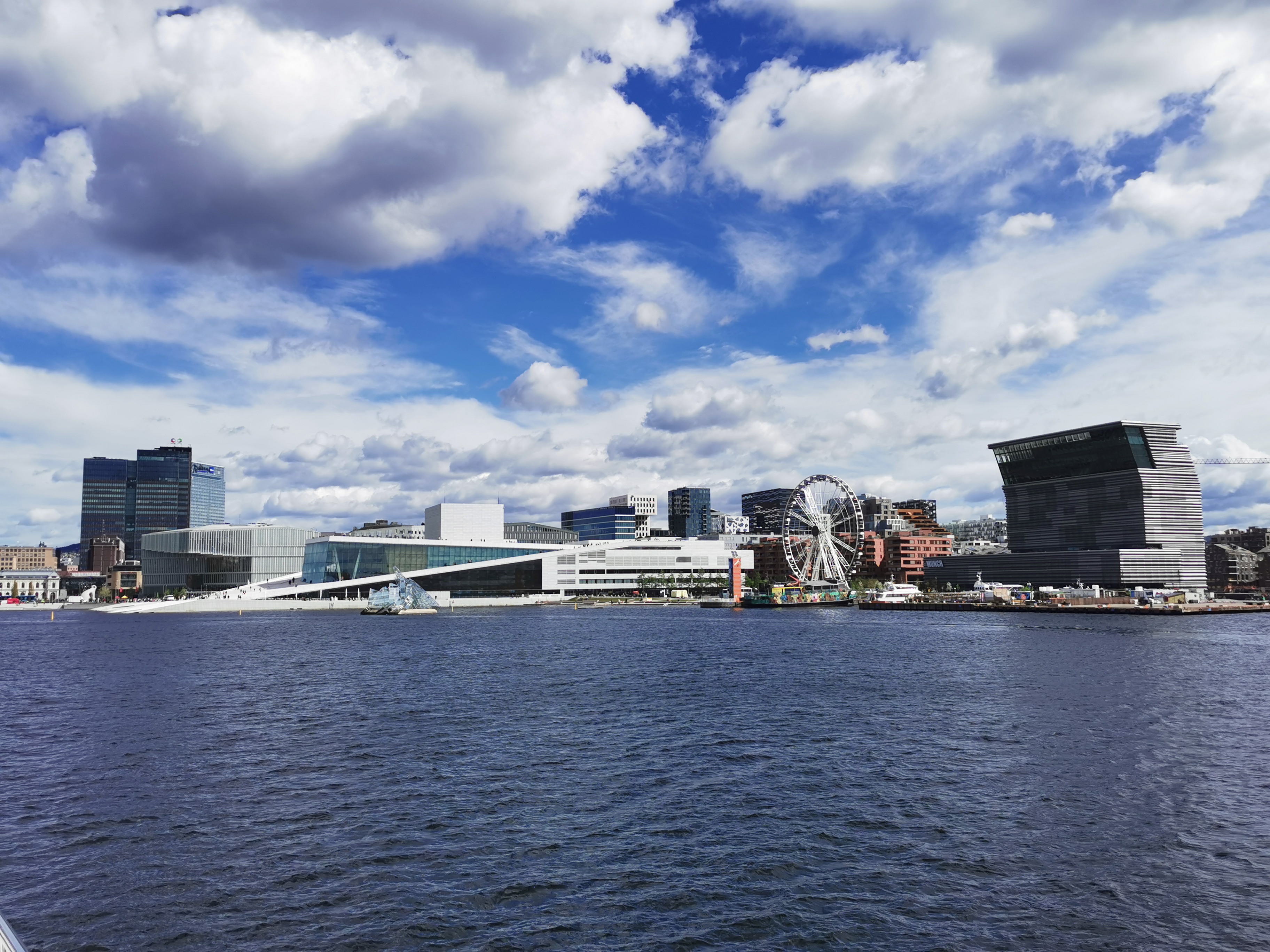
This revitalised port district houses the architectural gem that is the Opera House. This vast building is designed to look like an iceberg breaking through the calm waters of the bay and I will discuss this beautiful building further a little later on. Bjørvika is also home to the Munch Art Gallery, which houses the works of the renowned artist, Edvard Munch, who boasts the Scream painting as one of his more famous works. We didn’t end up visiting the gallery, but we were tempted to go to the restaurant on the top floor – there would have been amazing views of the bay. As a side-note, it was only when I was looking into the museum that I realised that the inspiration for the mask in the Scream spoof horror movies actually came straight from the painting. It seems so obvious now and yet it had never clicked!
One more thing that was in this area that we would have liked to have tried if we’d had more time was the floating saunas. These structures were found directly on the water, and could be rented as either private saunas or as a spot in a public one. Once you’d spent enough time sweating inside, you simply jumped into the bay to cool off.
The Akershus Fortress
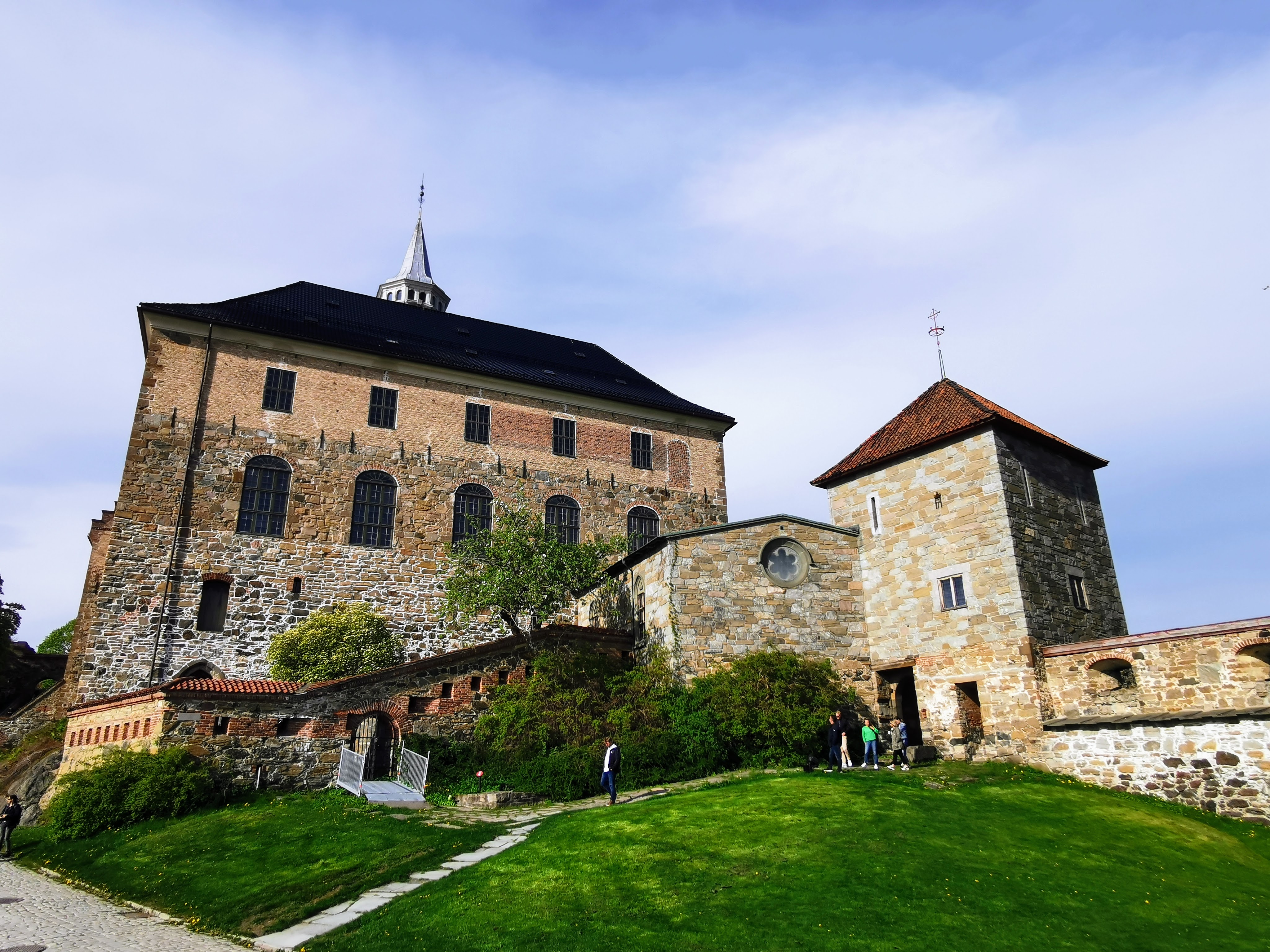
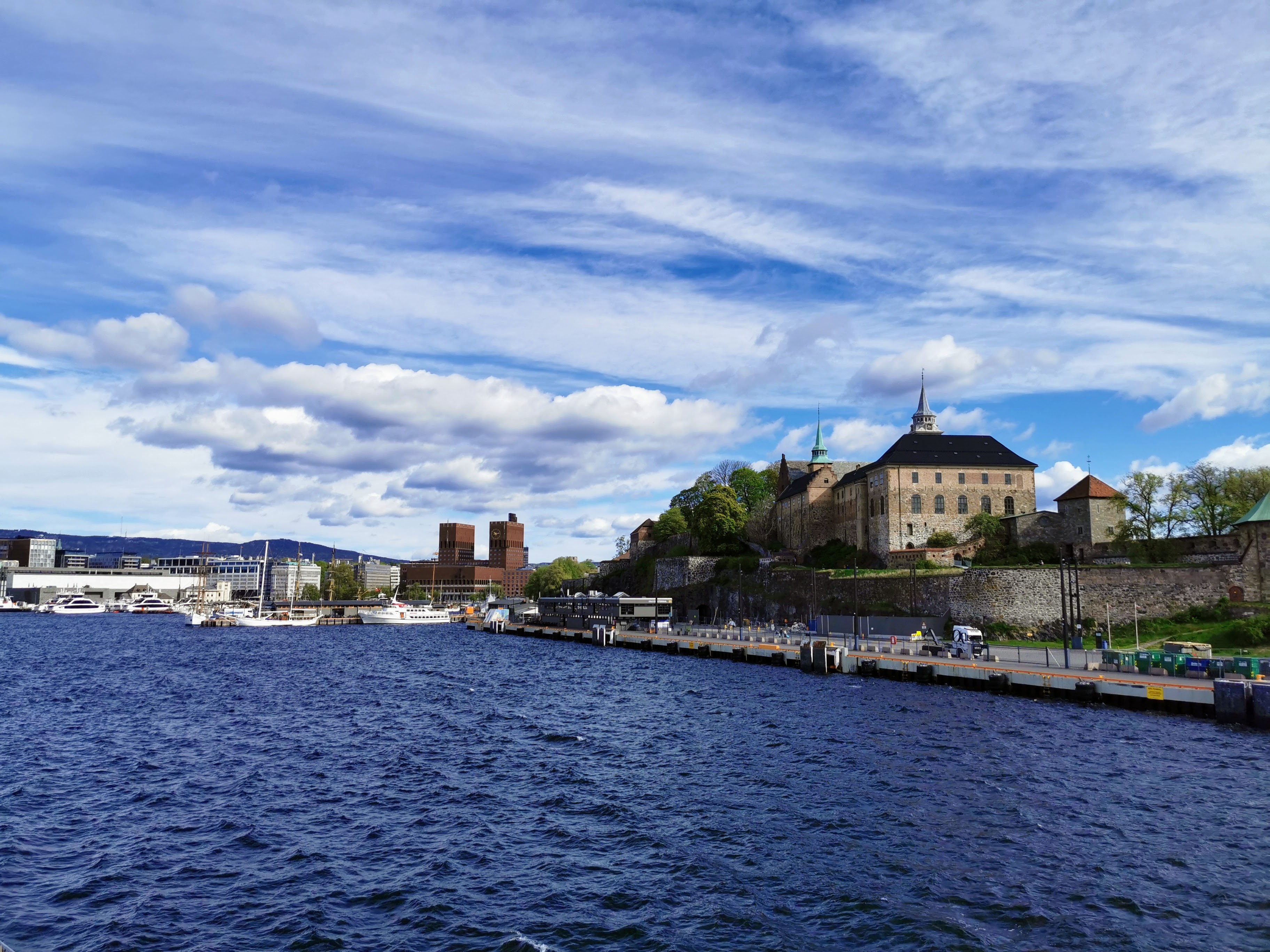
After leaving the Bjørvika district, we ventured on to the Akershus Fortress. This vast complex has been used in various guises for hundreds of years, and still houses parts of the modern Norwegian army. But it is now also a very pleasant place to go for a stroll, with open green spaces and views out over the Pipervika Bay. There are also a couple of smaller museums in the complex, but we did not end up visiting them during our stay.
Pipervika Bay
After the fortress, the next building that draws your eyes along Pipervika Bay is the Oslo City Hall. This imposing building is probably not the greatest to look at but is very nice to visit inside, which I will again discuss further down the page. One of the bells has been removed from its bell tower and is hanging by the jetties. You can actually ring the bell by stepping on a switch to the right hand side as you look out across the water.


The Royal Palace
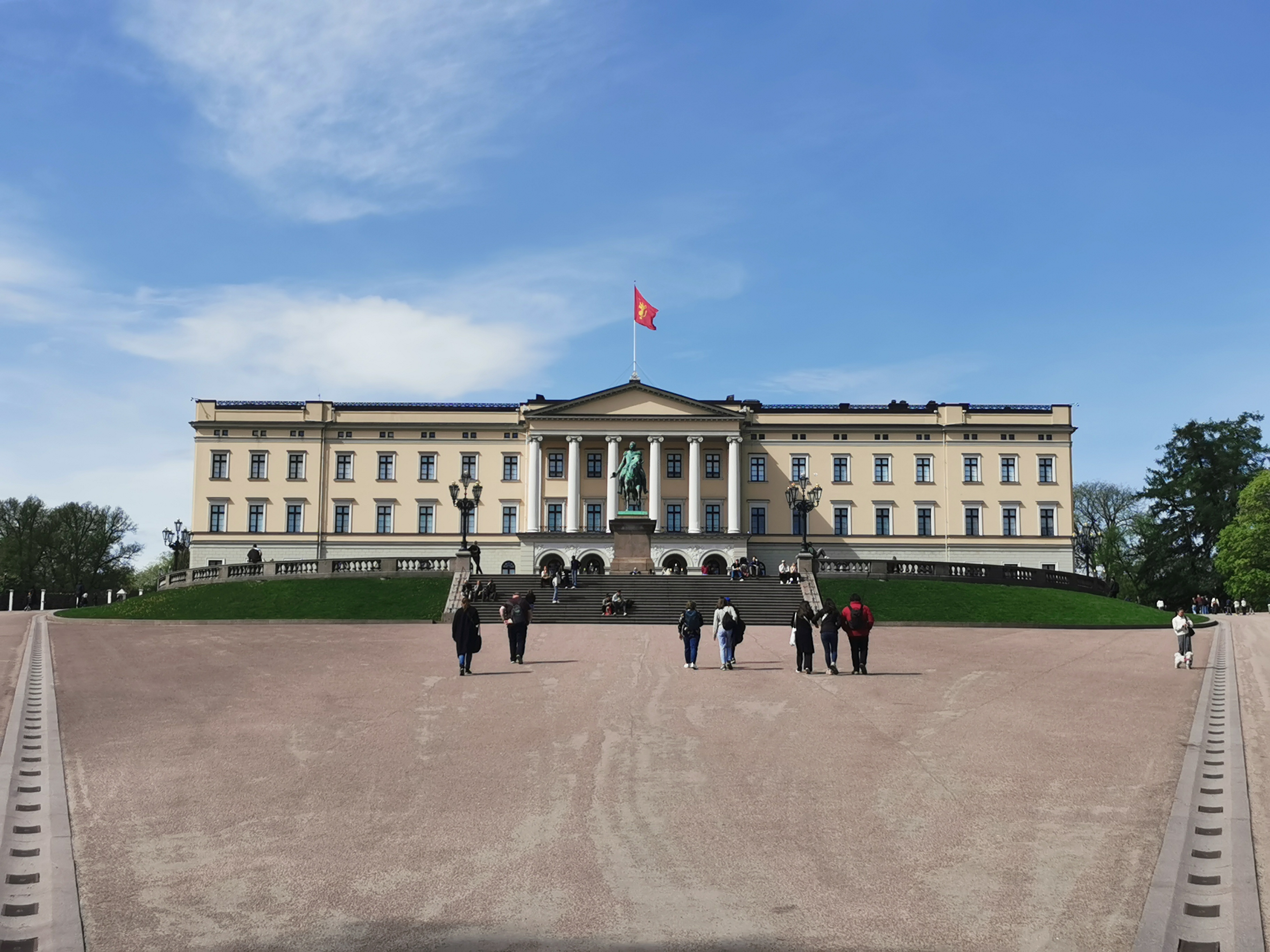
To end the tour, we walked up through Stortingsparken and Karl Jonas Street to arrive at the Royal Palace. This impressive building is set on a hill and is surrounded by parkland. We were even in time to see the changing of the guard. It was here that we discussed how Norway acquired its modern Royal Family. I was shocked to hear how recent it was (1905). As a fan of historical fiction, I’ve read my fair share of books from the ‘age of the vikings’ and there was always mentions of the Norse and the Kingdom of Norway; so I had no idea that Norway has been annexed to either Sweden or Denmark for most of the intervening time period. The fact that Norway as a modern independent country has only existed for a bit over 100 years was very surprising!
Take a Boat Trip around the Fjord
Being situated right on the bay, exploring the waters and islands around Oslo is one of the main things to do whilst visiting. There are two main ways of doing this; either use the ferry to go island hopping (also included with the Oslo Pass) or to book more of a ‘guided tour’, which has a set route and doesn’t stop anywhere. A more detailed description can be found here at A Couples Calling blogpost. We used this post to get an idea about what we might want to do, as it writes about a lot of the attractions you can see in Oslo.
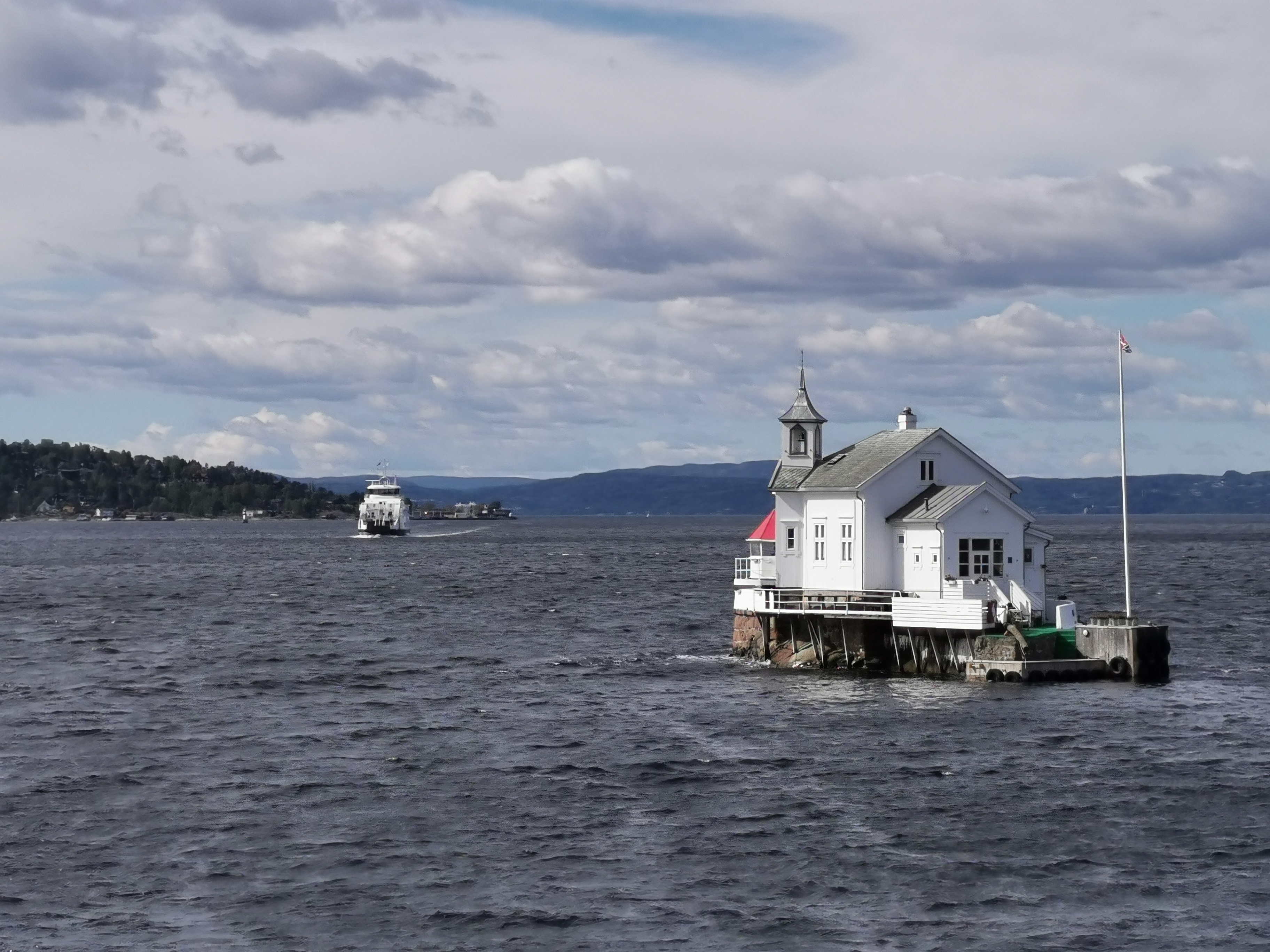
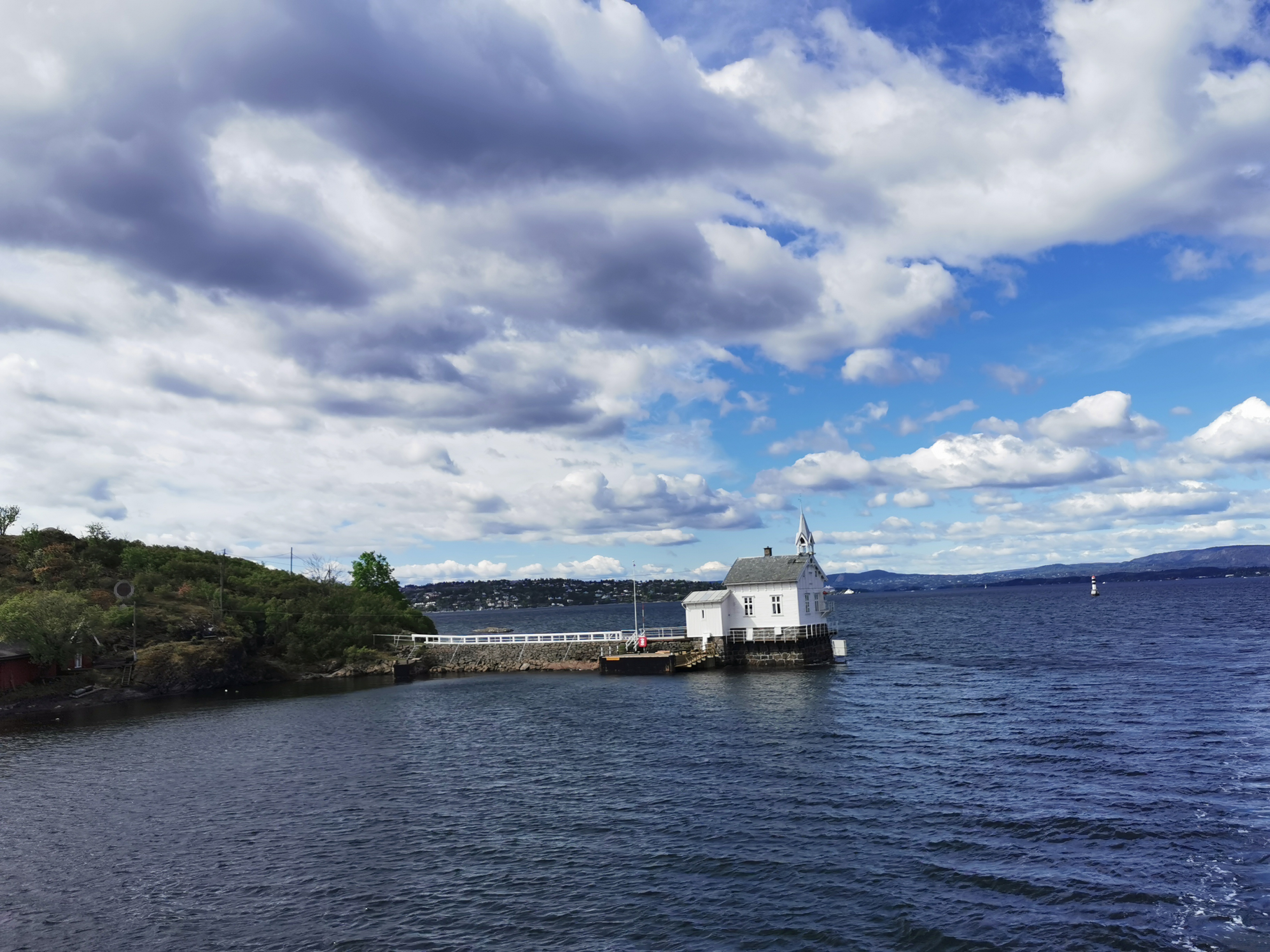
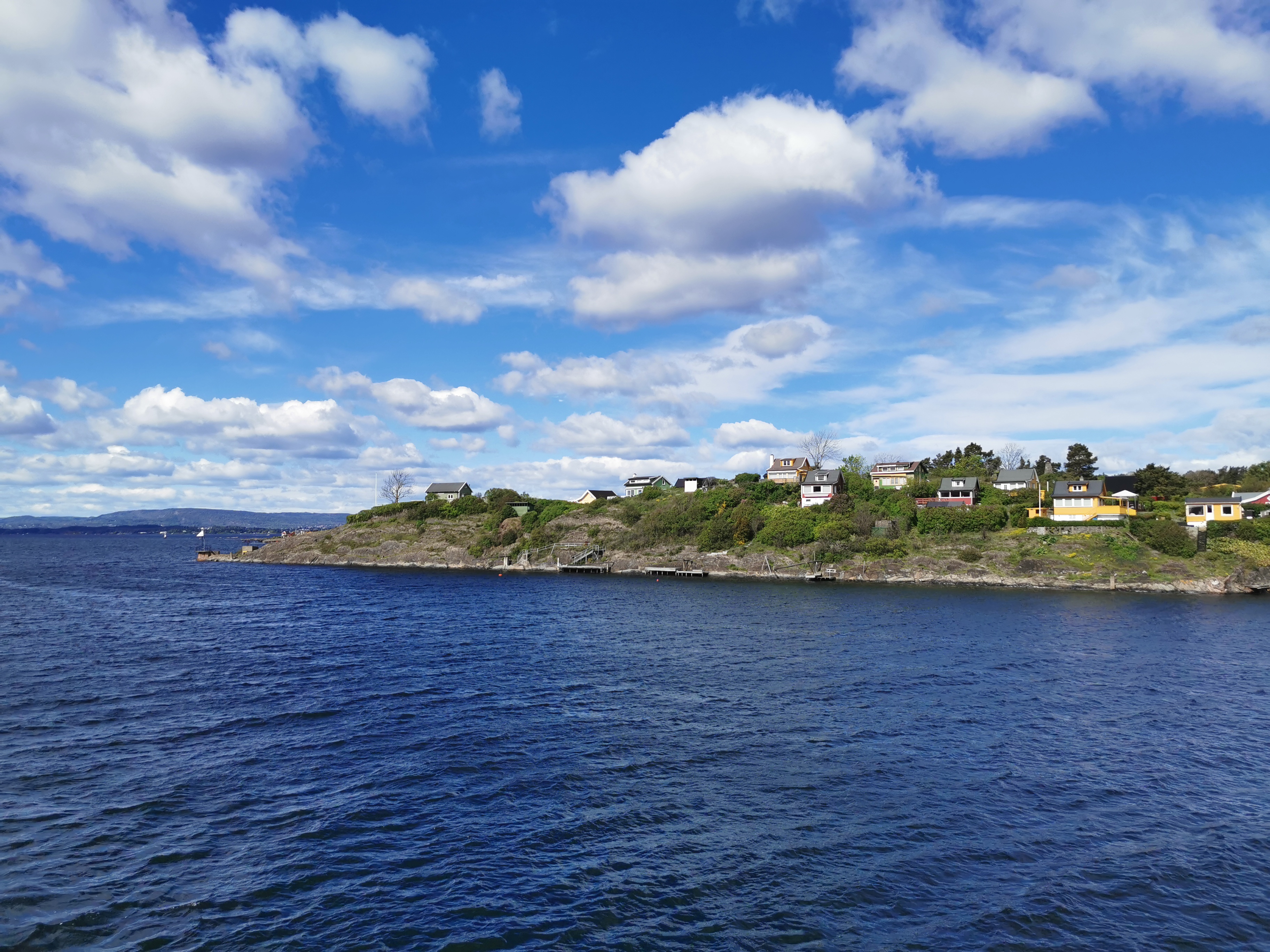
We decided just to do the two hour guided tour. There are multiple companies that operate these types of tour that all seemed to do the same sort of itinerary, so in the end we just went with the one that was closest to our hotel. And we were very pleased with our choice. Fjord Cruise Oslofjord, is located next to the Opera House in Bjørvika rather than most of the boats, which leave from the docks at Pipervika Bay. And the boat itself is very interesting. It is an electronic catamaran and its weird shape and layout means that it is very easy to walk around outside and get views from different parts of the boat. There is also a large indoor section with huge windows, so there is the best of both worlds. The ‘guided tour’ part comes from downloading an app, so please get this sorted before you set off as there won’t be any information given over the speakers. The trip itself was very pleasant, with the boat skirting along the bays of the city and the Bygdøy Peninsula (more on that later) before weaving its way through the myriad of small islands that lay just off the coast. These islands have pretty little painted houses dotted over them, and whilst it may have been nice on a sunny day to have a walk there, I didn’t really feel that I was missing out by not doing so. However, the setting made for a very peaceful trip, with the gentle waves lapping against the boat and the Eider Ducks flying overhead (affectionately known as ‘Cuddy’s Ducks’ where I’m from in reference to St. Cuthbert). Taking the boat we did also had the advantage of seeing the Opera House and the surrounding buildings from the water as we came back into dock. So, if you have a nice day weather-wise, this is definitely something you should consider doing. You can see the route of the boat (and a few more photos) by clicking here.
Visit the museums on the Bygdøy Peninsula
One of the things I was most looking forward to visiting in Oslo was the Viking Museum with its excavated viking longship. I should have done my research, however, as the museum has been shut since 2021 and won’t open again until 2027! There are still plenty of museums open to visitors, however, and we visited a couple on the Bygdøy Peninsula.
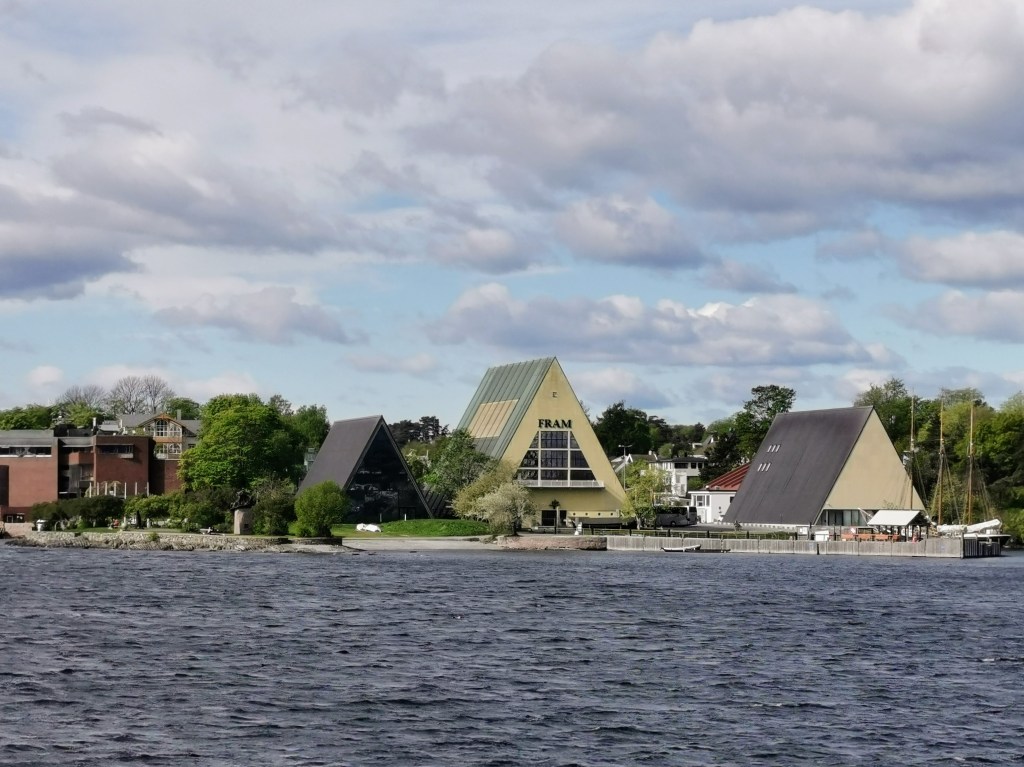
Whilst you can get to the peninsula by bus, we chose to take the ferry from the jetty at Pipervika Bay. This is another trip that is included in the Oslo Pass. As is the entrance to both of the museums we visited.
The first of which was the Fram Museum. This large complex is dedicated to sharing information about the history of Norwegian Polar exploration. There are plenty of exhibits detailing the journeys of pioneering explorers such as Fridtjof Jansen and Roald Amundsen. There’s lots of information present in multiple languages that would take hours to properly digest.
The jewel in the museum’s crown, however, is definitely the Fram itself. This ship is the centre piece of the museum, with all of the other exhibits arranged around it. The Fram is a very famous ship in terms of polar exploration, taking part in expeditions to both the North and South Poles. It was designed to be the strongest wooden ship in the world, able to withstand the crushing sea-ice near the North Pole. You can follow the one-way system to explore the different parts of the ship and imagine the conditions on one of the expeditions.

The museum was very interesting and is definitely recommended to anyone who is interested in the peak of polar exploration or in the arctic and antarctic regions themselves, and it is definitely worth the fee you need to pay to enter.
Just a minutes walk away was our second destination, the Kon-Tiki Museum. I wasn’t really sure what to expect from this place, having never heard of the Kon-Tiki voyage. And yet I ended up really enjoying it. The concept of a small group of men having a traditional raft built like those of the ancestors of modern-day Peruvians and then putting it to sail into the South Pacific, blindly hoping to end up Polynesia is just crazy. Throw in facts such as most of them having no experience on boats and that the main guy, the Norweigen Thor Heyerdahl, couldn’t even swim, takes it to the realms of fiction. And yet it really happened and it worked! Learning about their voyage was really interesting. I like to think of myself as a fairly adventurous person and yet stories like this really bring into focus what the mindset and fearless attitude of a real explorer are.
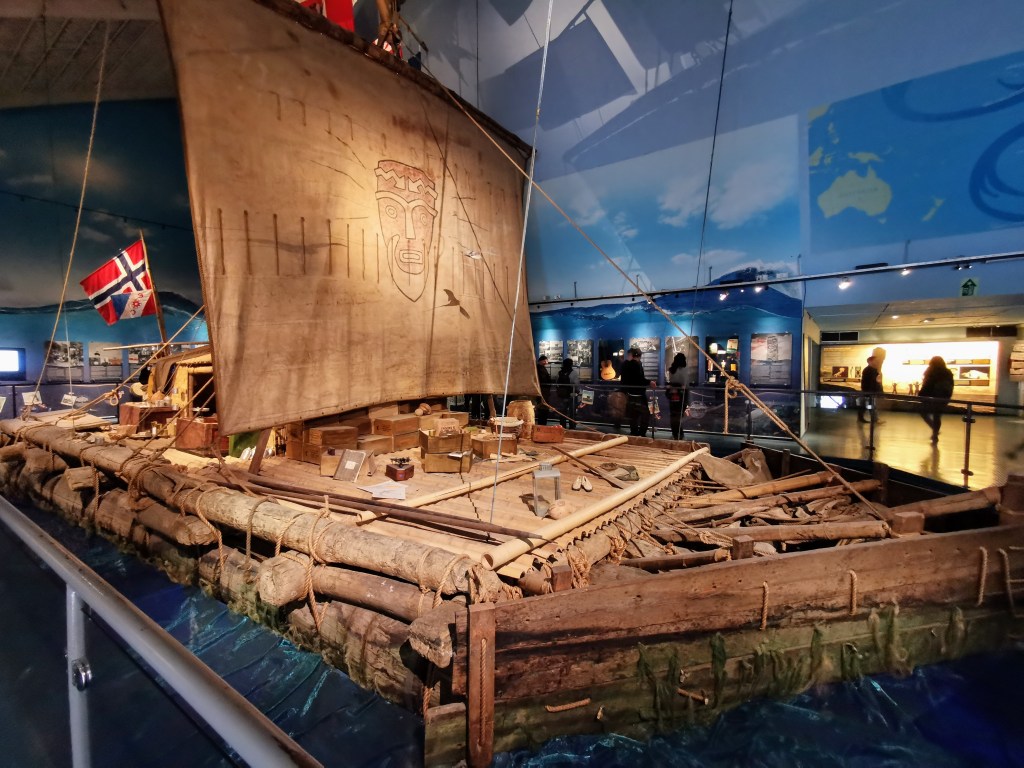
Along with the raft and information about the Kon-Tiki voyage; there are artefacts from the Polynesian islands where they ended up and information about other voyages, which are linked in style to the original voyage or to members of the Kon-Tiki team. This museum is also definitely worth visiting and the two of them combined make a perfect destination for a rainy afternoon.
Visit the City Hall
The City Hall on the Pipervika Bay really does not look like much on the outside; in fact I’d go as far as to say that it is one of the ugliest city halls I’ve seen on my travels. And yet during our free-walking tour, we were told that we should go inside and that we’d change our minds. And the guide was right.
Despite being a working building, tourists are permitted to go inside and have a wander around during the day. There is no booking and no fee – you just have to wait in the queue that forms around the back of the building (the one opposite to the bay). Despite seeming quite long, the queue moved quickly and by the time we’d finished clapping along with everyone else for the newly married couple who had just exited the building, we were almost inside. After passing through the scanners you are outside the main hall, where they host events, and you are surrounded by interesting murals and designs. After going up the stairs to the right, you then pass through a serious of impressive rooms with bold paintings and frescos. And when you can pull your eyes away from the decorations, you can look out the windows to the pleasant view of the bay down in front of you.
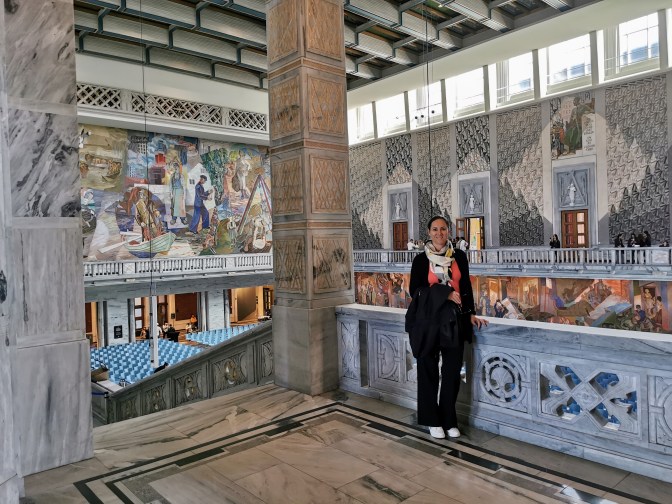

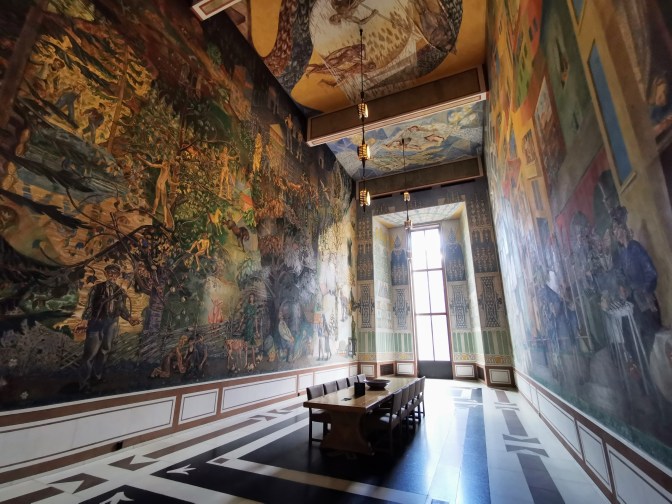

Once you’re inside, you can do the circuit very quickly, or you can take your time and enjoy it more, but either way it’s worth seeing – especially for free!
Walk on top of the Opera House
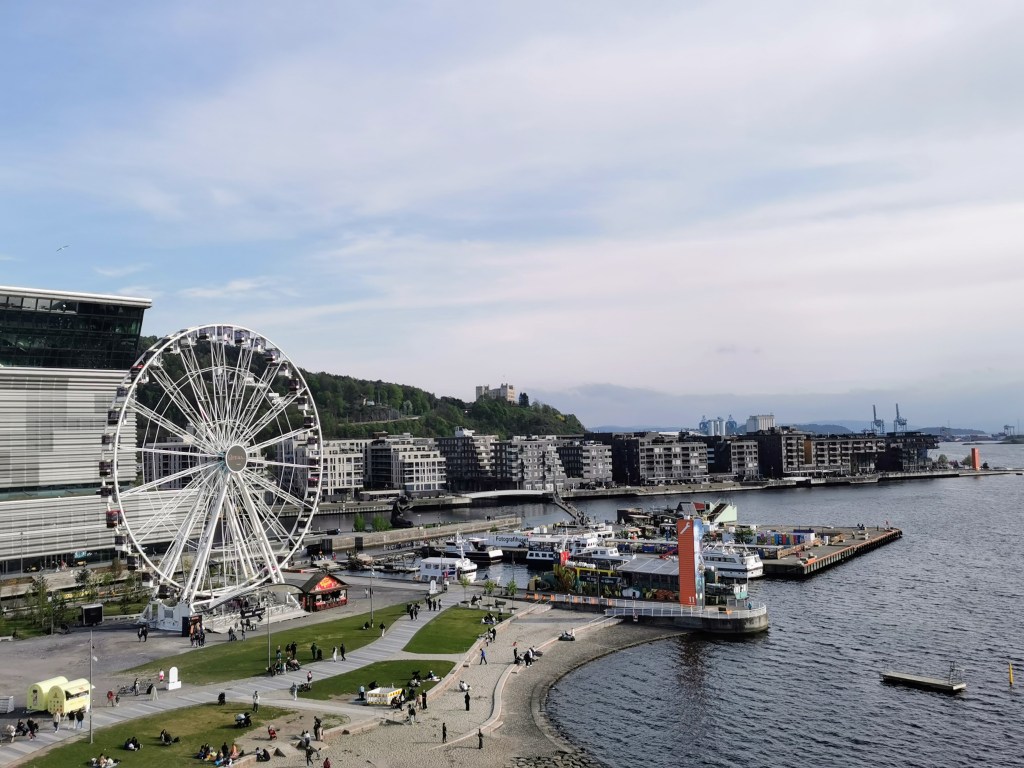
Opinions are always divided on such buildings, but I liked the look of the Opera House. It provided something that was different and yet seemed to fit with the water of the bay. It is made from Italian marble and white granite and has a distinctive angular appearance.

Whilst I’m sure it would be nice to look around the inside or listen to a performance, we only visited to walk on the roof. This is a very popular activity to do for tourists and locals alike and as we approached we had to navigate around a large group of dancers who were practising their tango – they were obviously some sort of club and were very good. The steps up to the roof are easily accessible, with no gates or formal entrances. We actually just walked straight up the slope next to the steps but if it had been wet there’s no way we would have managed due to the steepness and how slippery it would have been.

When we made it to the roof there was another dance club going on, this one with less people, slower dancing and seemingly more for beginners. The views of the bay or towards the city were very pleasant and definitely worth the stroll up, whilst the activity also falls under the ‘budget-friendly’ category.
Walk through Ekebergparken
Oslo is quite a green city and is home to many parks, with Frognerparken, including the Vigeland Sculpture Park, probably being the most famous. However, we skipped this attraction and instead hopped on a bus to the Ekebergparken. This is another sculpture park and offers panoramic views of the city and bay.
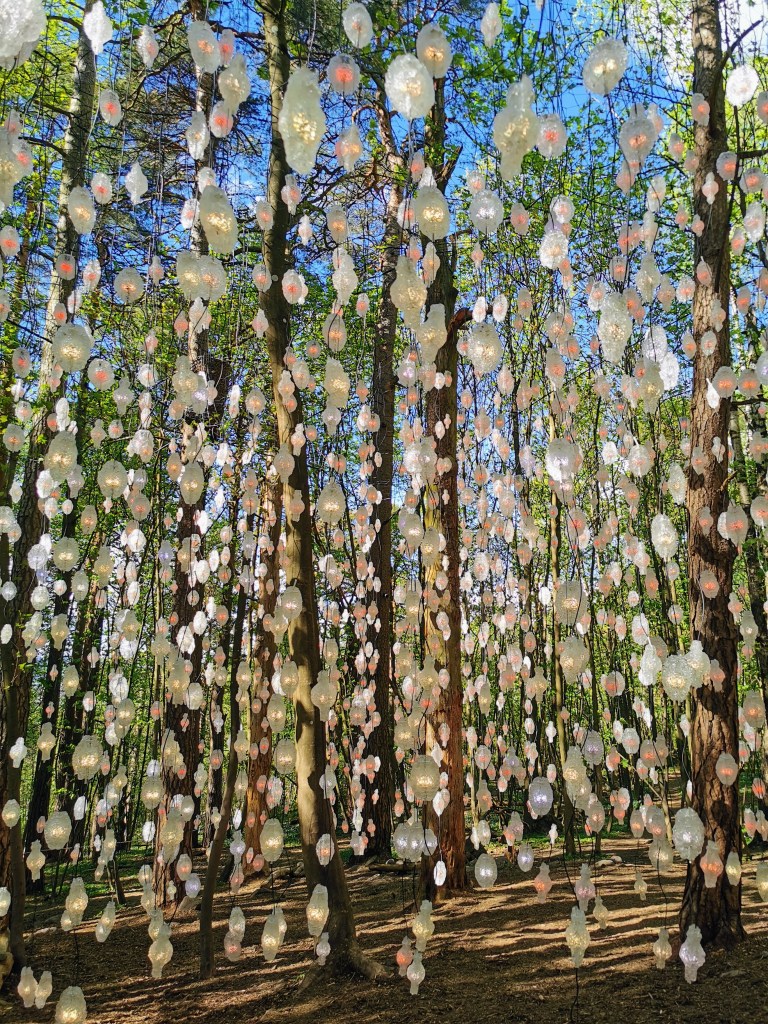
We arrived by the tram to the Ekebergparken station, but there are also buses that can get you close by. From there we had a very pleasant walk through the trees and fields, stopping to admire (or often to stare in a confused manner) at the many pieces of artwork that line the walkways. The first one that stood out to us was the Nordic Pixel Forest by Pipilotti Rist. This was an interesting installation of hanging lights that you could walk through. We were there in the middle of the day but I can imagine it being quite magical once the sun has set.
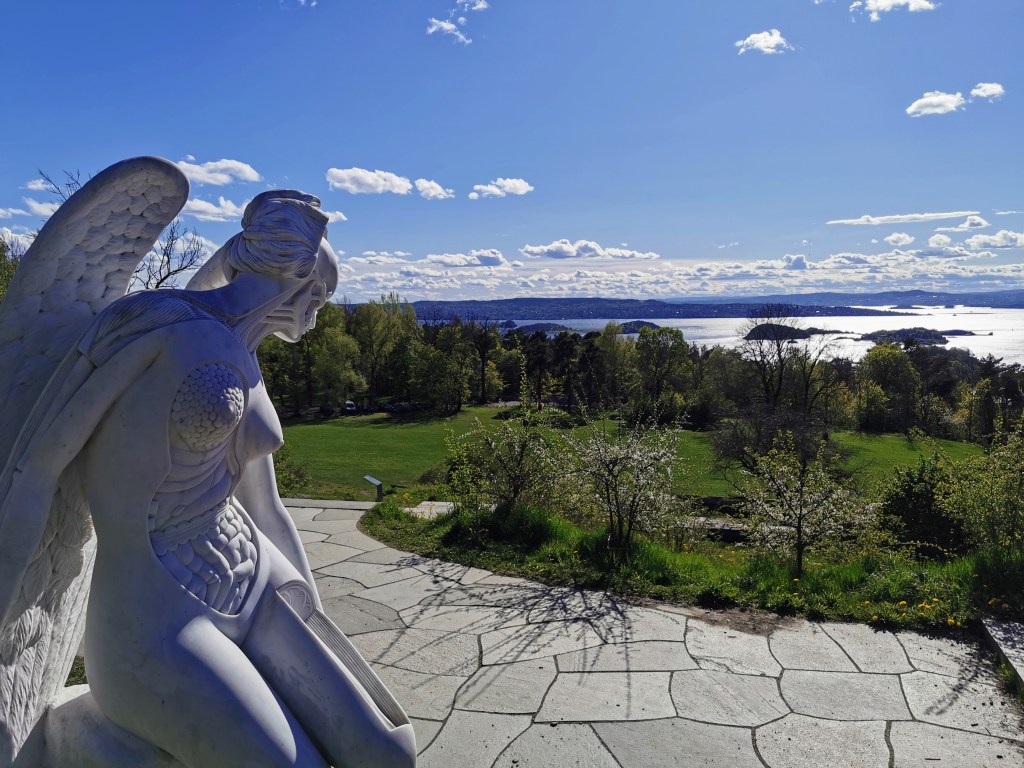
After walking a bit further, the trees opened up and you were treated to lovely vistas over the bay. Also enjoying these views was the Anatomy of an Angel by Damien Hirst. This was certainly an interesting sculpture, with the contrast between the divine and the human.
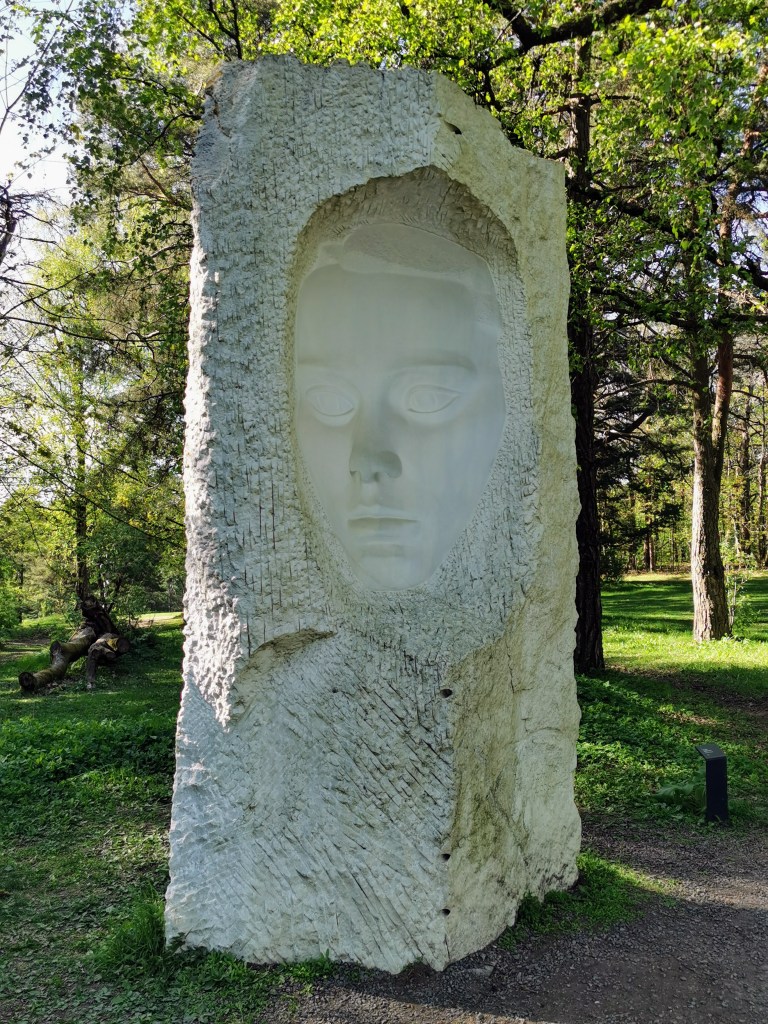
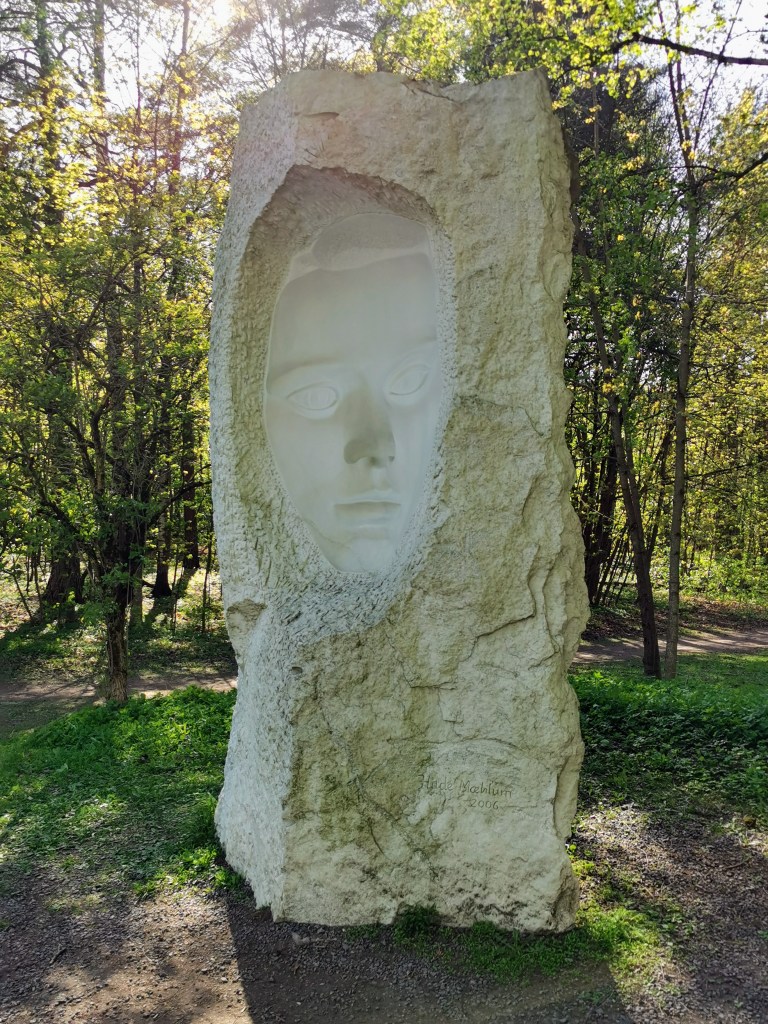
After looping around the fields and heading back into the trees I was impressed with another sculpture, this time Konkavt ansikt by Hilde Mæhlum. Like certain paintings, the eyes of the ‘Concave Face’ would seem to follow you as you walked past but in contrast to the paintings, the whole face ended up looking the opposite way. It was very impressive!
Having finished our loop in the park, we decided to walk back to the city centre, taking the steep path past the point that it is reported that Edvard Munch was first inspired to the paint The Scream, before walking through the Baglerbyen district, with it’s colourful houses, and passing by the pretty Gamlebyen gravlund. Instead of going back to our hotel, we continued our walk to the Mathallen Oslo indoor food market for dinner, but more on that in a bit… It had been a very pleasant few hours and is certainly worth a look on a sunny day.
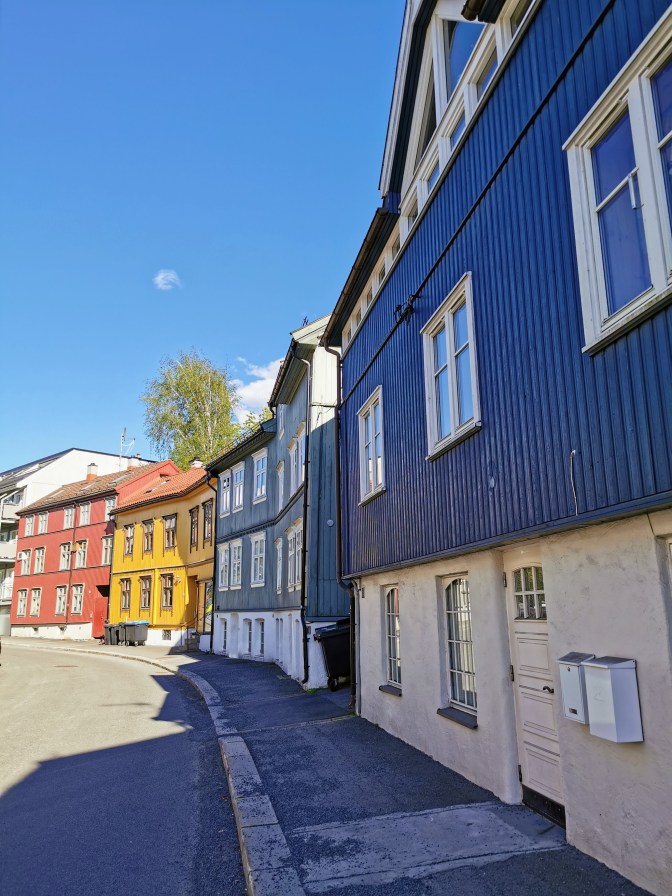
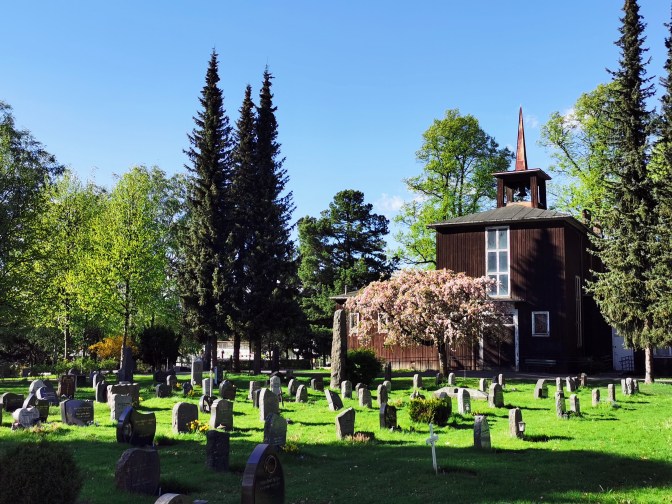
To see our walking route, please click here.
Admire the Artwork and Sculptures everywhere
Given that I’ve just spend multiple paragraphs talking about sculpture parks, I admit it’s a bit odd that I’m now devoting a whole section to more statues, but they were just everywhere. You couldn’t walk for ten minutes without coming across something, from more traditional statues to rather weird works of art. We saw quite a few on the free walking tour and then even more as we wandered around ourselves. There was a reason for some, such as those dotted around the Tjuvholmen district, which houses the Astrup Fearnley Museum Of Modern Art. Whilst others just appeared out of no where.
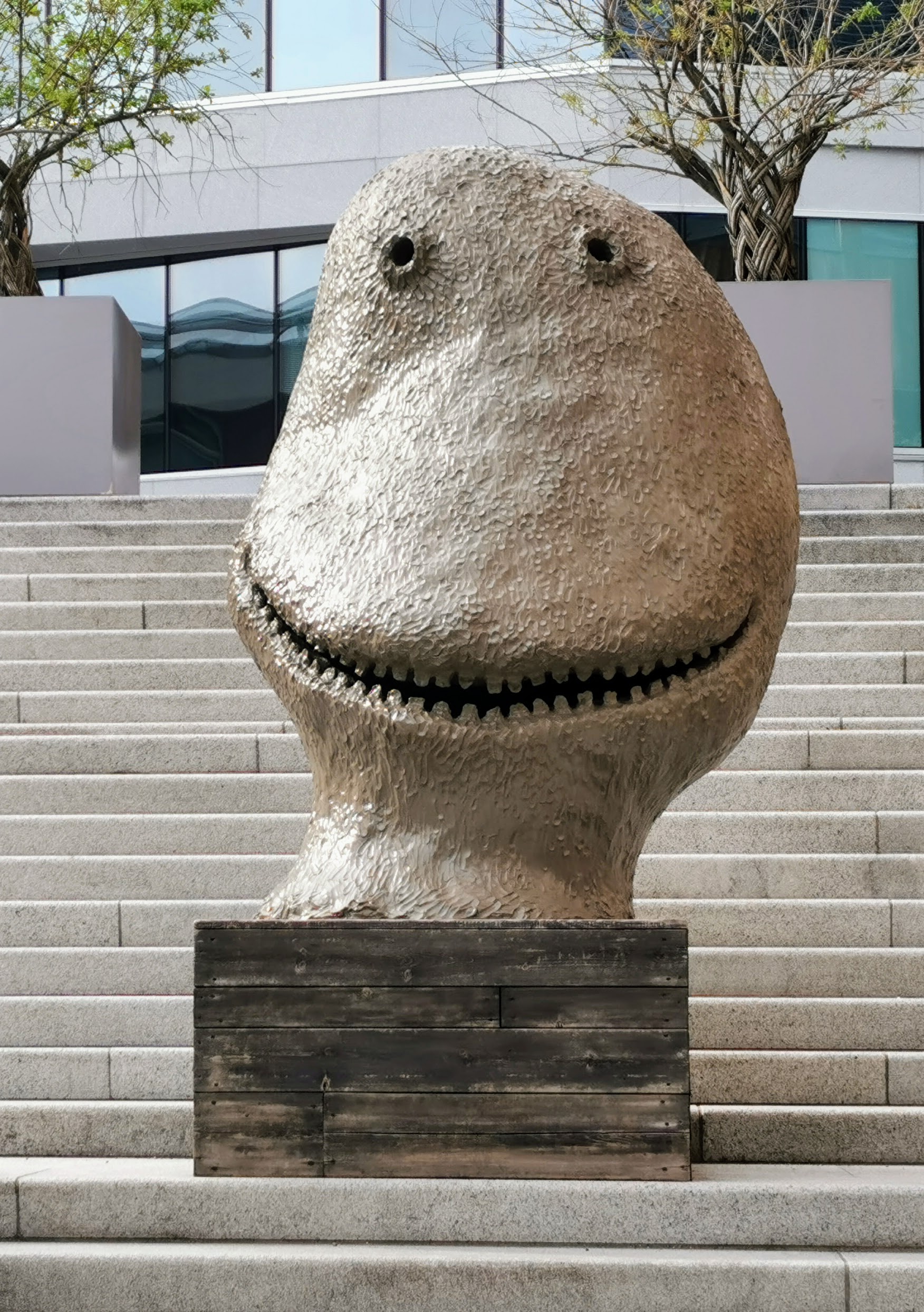
The Tjuvholmen district was a pleasant place to walk to, with its new apartment blocks situated on a peninsula sticking out into the bay. However, as befits a museum of modern art, the sculptures were all a bit odd. They included a pair of large metal spheres that were supposed to be eye balls looking out into the bay (I’ll leave you to your own interpretation) and a weird blob of a character that looked like it had been made by a child.

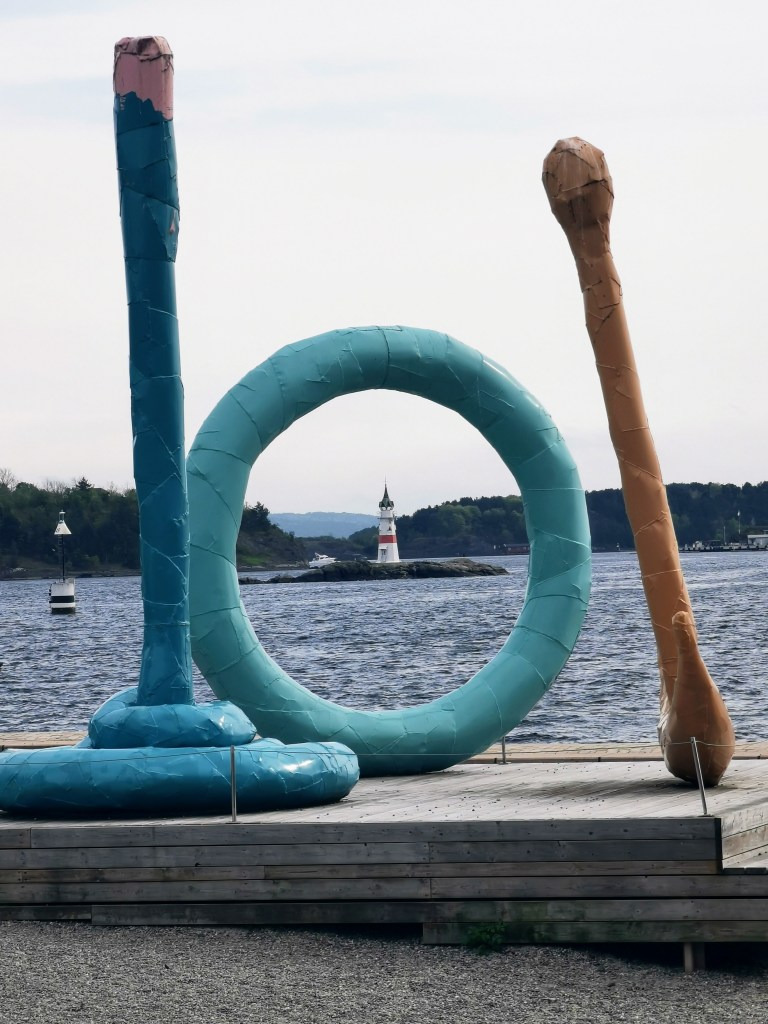
There was also a strange installation by the water that at least had the benefit of framing the lighthouse out in the bay.
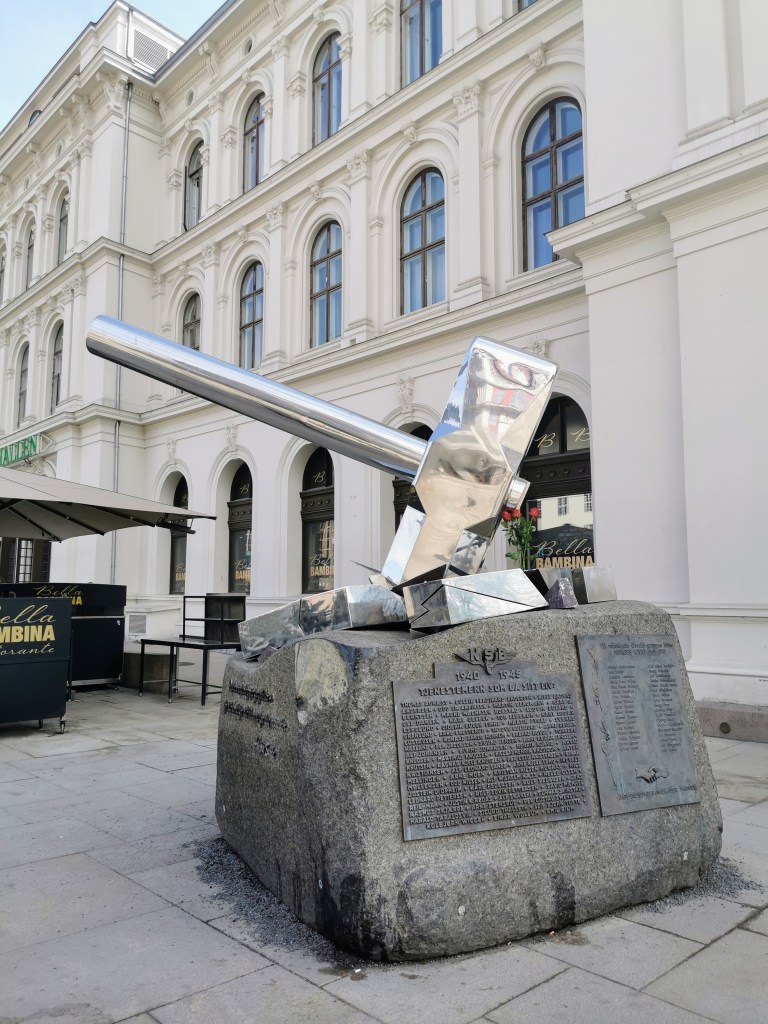
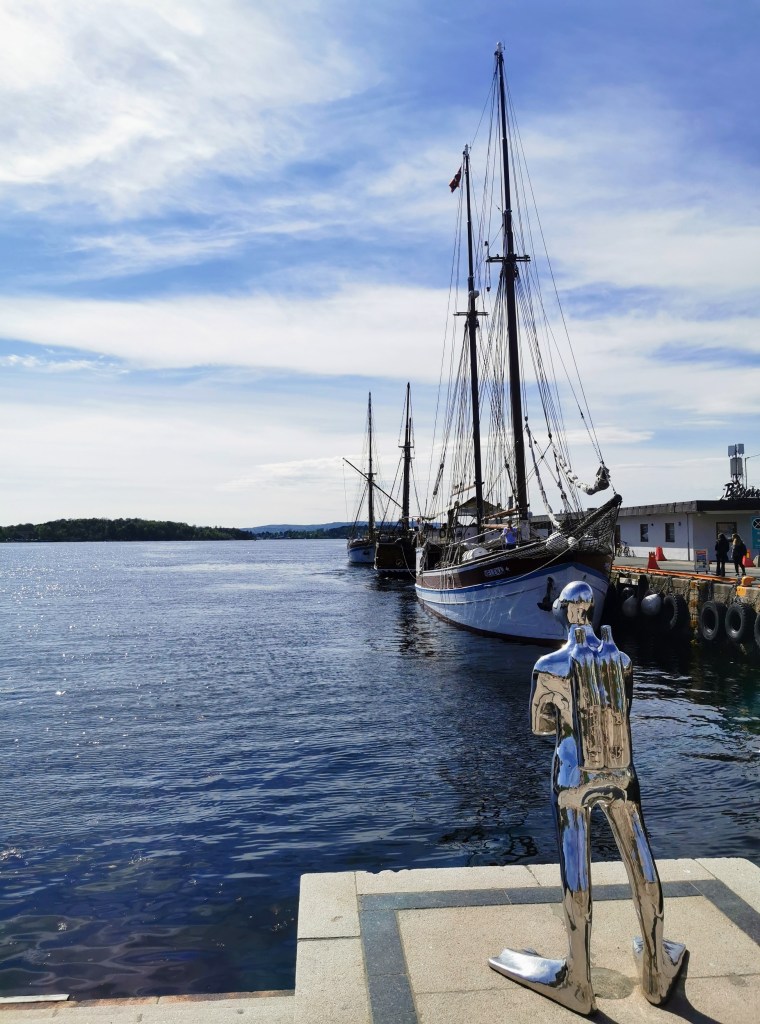
Whilst I haven’t been particularly complimentary about the art work above, there were of nice ones spread throughout the city. I found the hammer design of the war memorial very elegant and I quite liked the quirky scuba diver that was looking out into the bay.
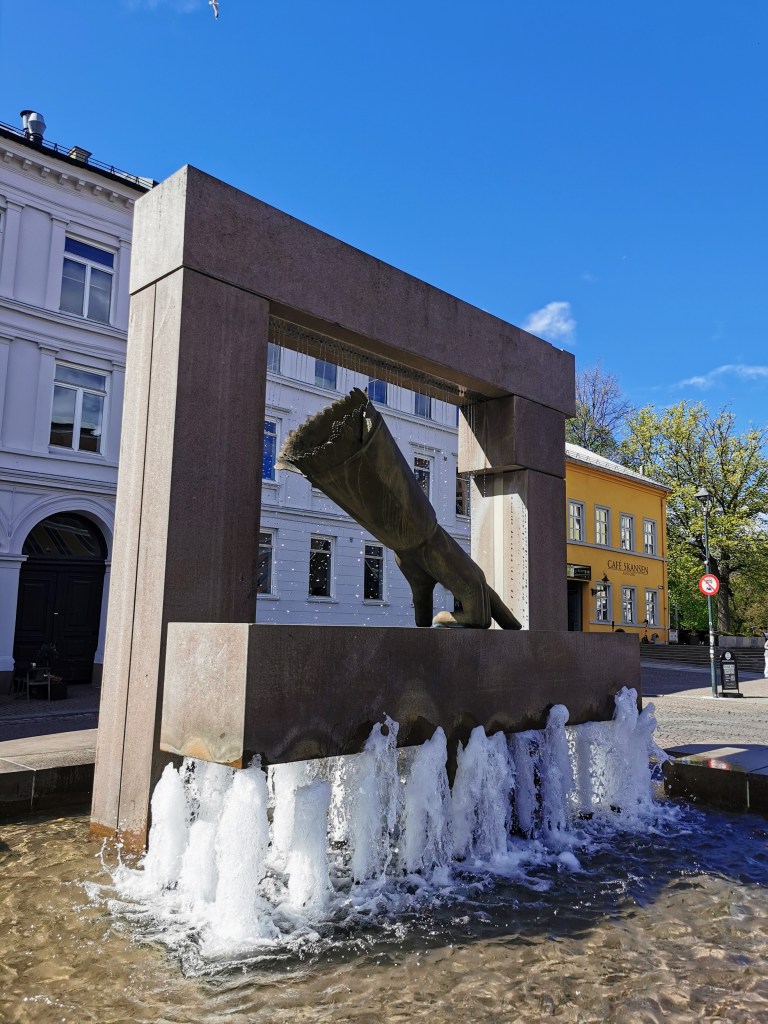
There is also an interesting statue in the middle of Christiania Torv Square, where a pointing glove symbolises the spot where King Christian IV in 1624, after a fire had devastated the city, supposedly pointed to and declared that he would remake the city form that point and name it after himself. Hence, Oslo changing its name to Christiania (or Kristiania), a change which lasted for over 300 hundred years until it reverted to its original name in 1925.
As a pair, we are not particularly into artwork in general and we wouldn’t normally spend our time visiting galleries or going out of our way to find specific works of art, and yet even we enjoyed wandering Oslo’s streets and coming across all of the different examples of creativity. And we didn’t have to put any effort into being able to do so.
Visit one (or more) of the Food Halls
One of the down-sides in visiting Oslo is certainly the expense and the main facet of our trip where we noticed was when we were buying food. So, visiting one of Oslo’s many food halls was part curiosity and part wanting to look after our wallets. We’d read good things about Oslo Street Food and Barcode Street Food, but having really enjoyed sampling reindeer during our trip to Finnish Lapland earlier in the spring, we wanted to find somewhere we could have another try. A fairly quick internet search directed us to Helt Vilt in the Mathallen Oslo food market. This market was a bit further away from the city centre and took us at least half an hour to walk there by following the path next to the Akerselva river from near our hotel by the train station. The walk was pleasant enough, but unless you’ve got plenty of time on your hands and it’s a nice day, it’s probably worth working out how to get there on public transport.
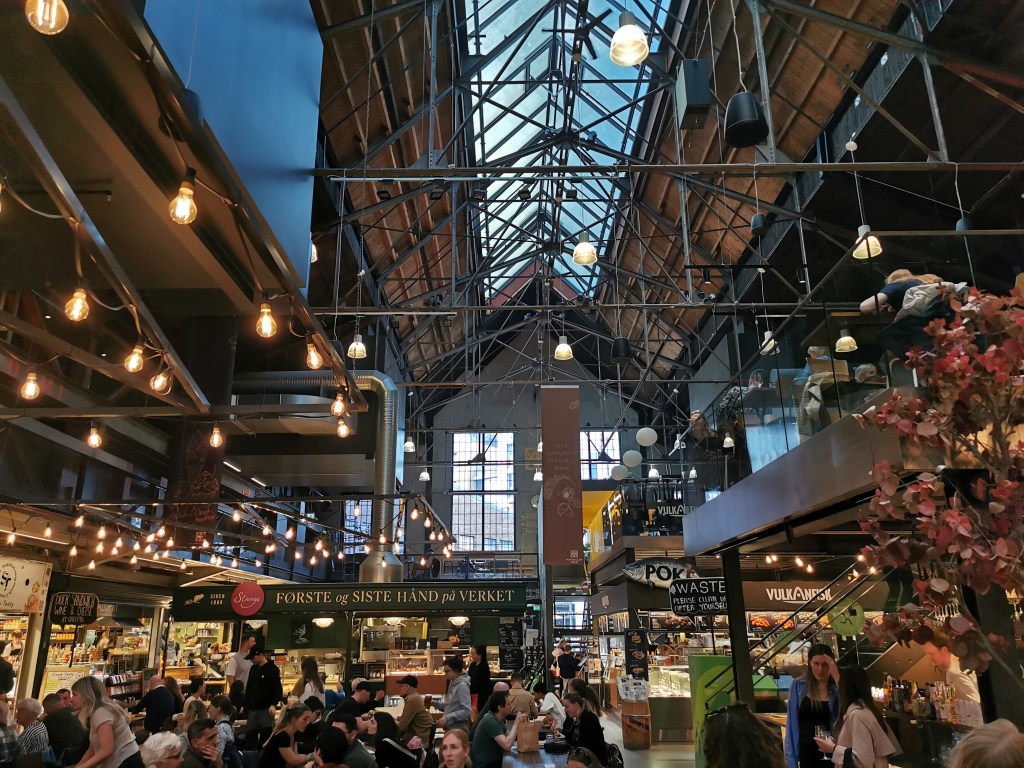
The hall itself was in a very interesting building that was a working industrial steel construction plant until the 1960s. There were dozens of shops and small eateries and it was already busy with people despite the early hour at which we’d arrived. In hind sight, it was probably lucky that we were there so early as I’m not sure we would have gotten a table later on without a reservation – needing a reservation in a food hall hadn’t even crossed our minds!
Helt Vilt was situated near the entrance and just off to the right from the main entrance. It was cosy and had a nice combination of being a bit gimmicky, with its glowing reindeer-head lamps, but also bringing in a bit of a traditional aesthetic. The food was really good, with us both choosing the reindeer meat, mashed potatoes and lingonberries. They also had a small but nicely balanced selection of different local beers to accompany it with. The meal was still quite expensive, but not as bad as a ‘proper restaurant’ and was just what we were hoping for.
Final Thoughts
Despite arriving in the evening of the 1st of May and leaving quite early on the morning of the 4th, we feel we made the most of our two full days in the Norweigen capital. Oslo was a very pleasant city with a good variety of activities that you can do. There is a nice blend of architectural and artistic interest along with the natural settings of the bay and the green parks. And despite the Viking Museum being closed for renovations, there were still plenty of interesting museums that could be explored.
It may have been influenced by the fact that we had nice weather when we were there, but I got the feeling that Oslo would be a very nice city to live in, so long as you could afford it! As a tourist, however, I enjoyed our time there but I don’t really have any inclination to go back (apart from maybe to see the Viking Museum once it opens again). So, I guess a long weekend was the perfect amount of time to spend there.
I hope you’ve found the suggestions interesting and thank you for reading it!
 Brit and Czech Abroad
A very busy but enjoyable couple of days for you both. Good weather always helps 😊. You certainly made the most of your time there. Good photos.
LikeLike
Hi Richard, thank you for all the useful advice. We are going to visit Norway for the first time next May (ironic, as Phil is a quarter Norwegian) and we will certainly keep it all in mind!
LikeLike